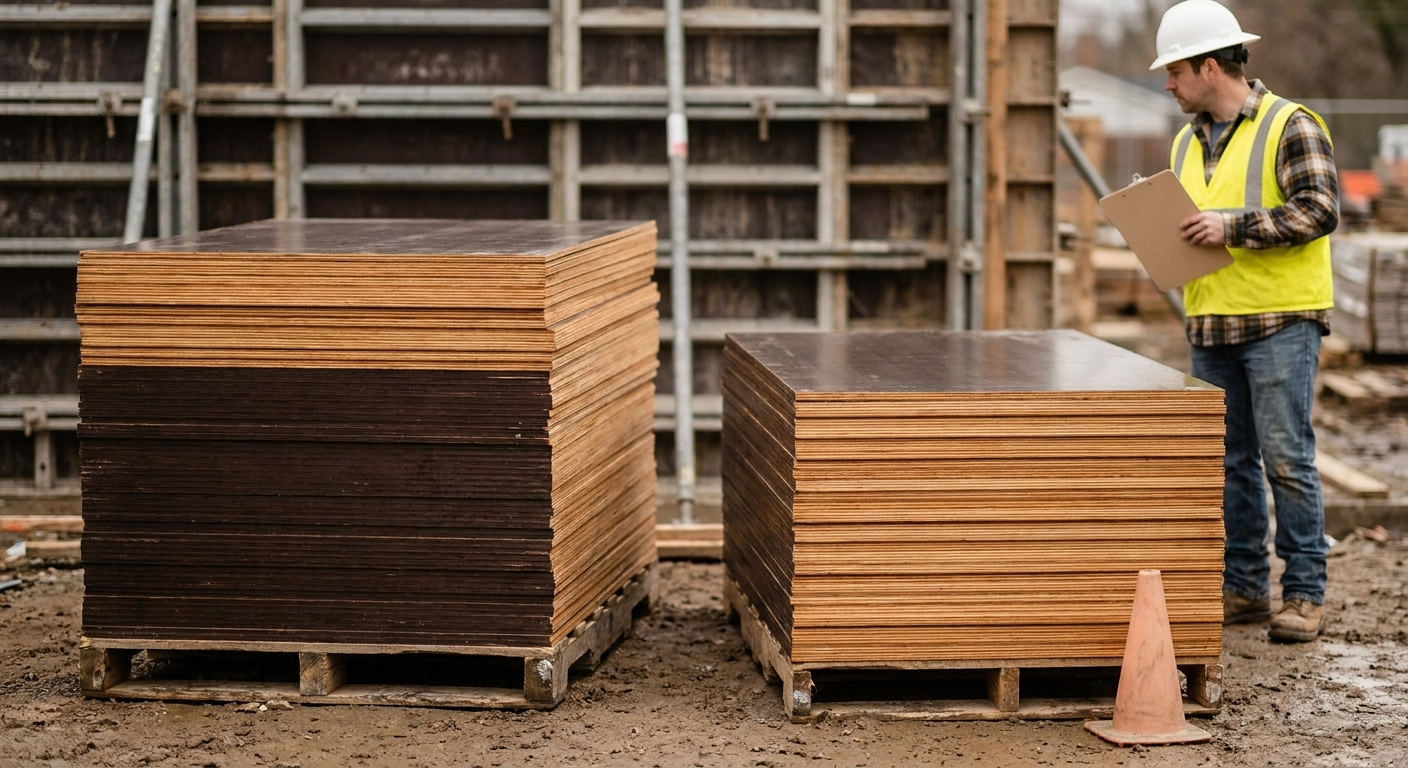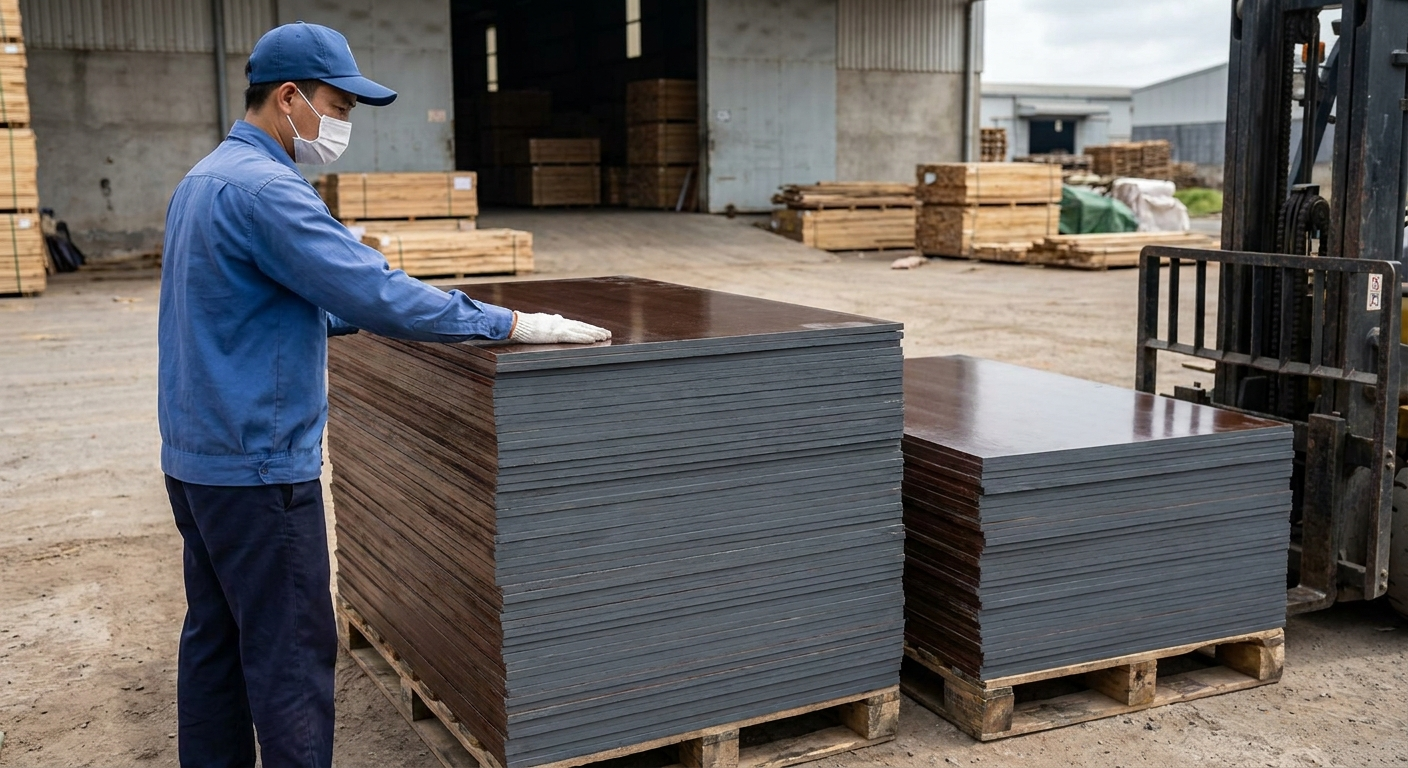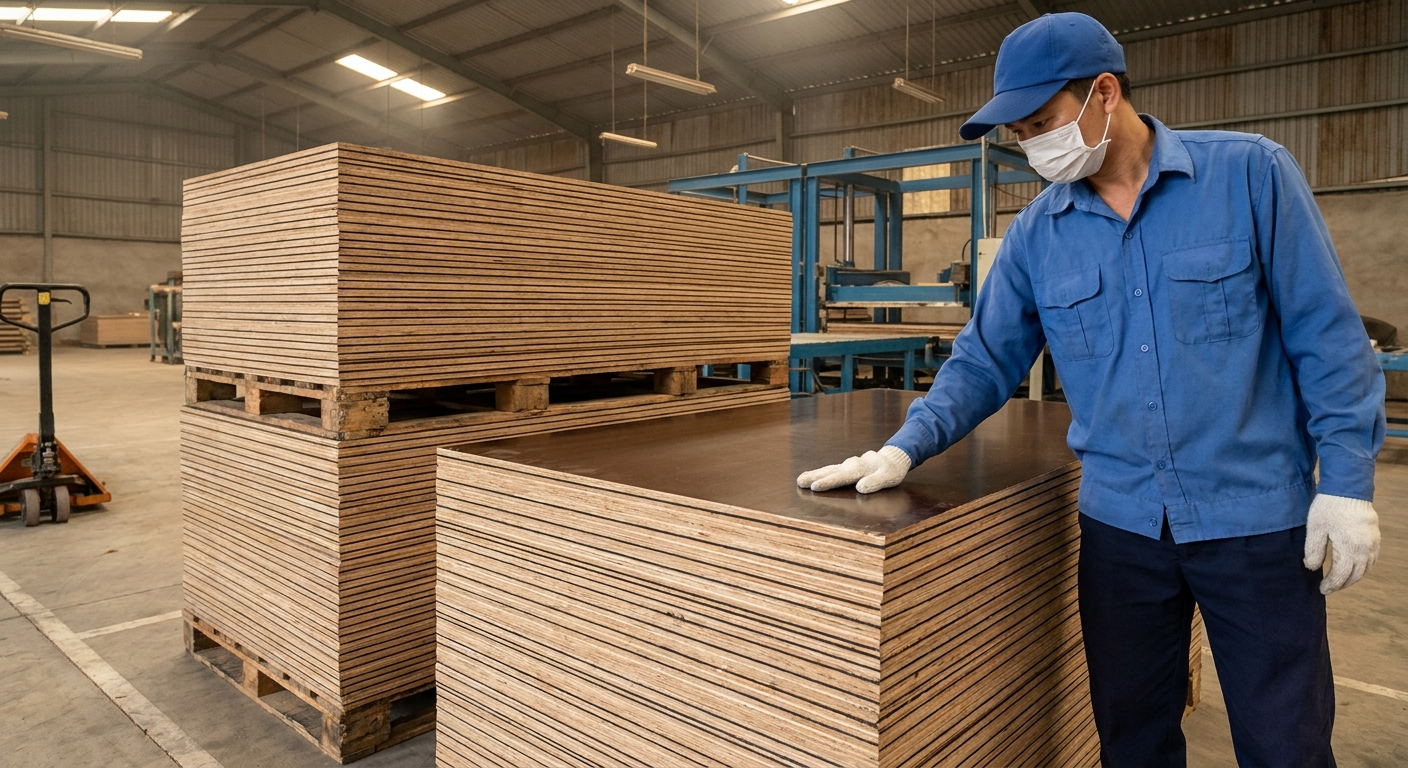
Plyform Plywood: APA Grades, Sizes & Contractor's Buying Guide
Complete guide to APA plyform plywood grades, sizes, and cost-per-pour analysis. Compare Class I vs II, BB/OES, MDO, and HDO plyform — with pricing data and film-faced plywood alternatives for US contractors.
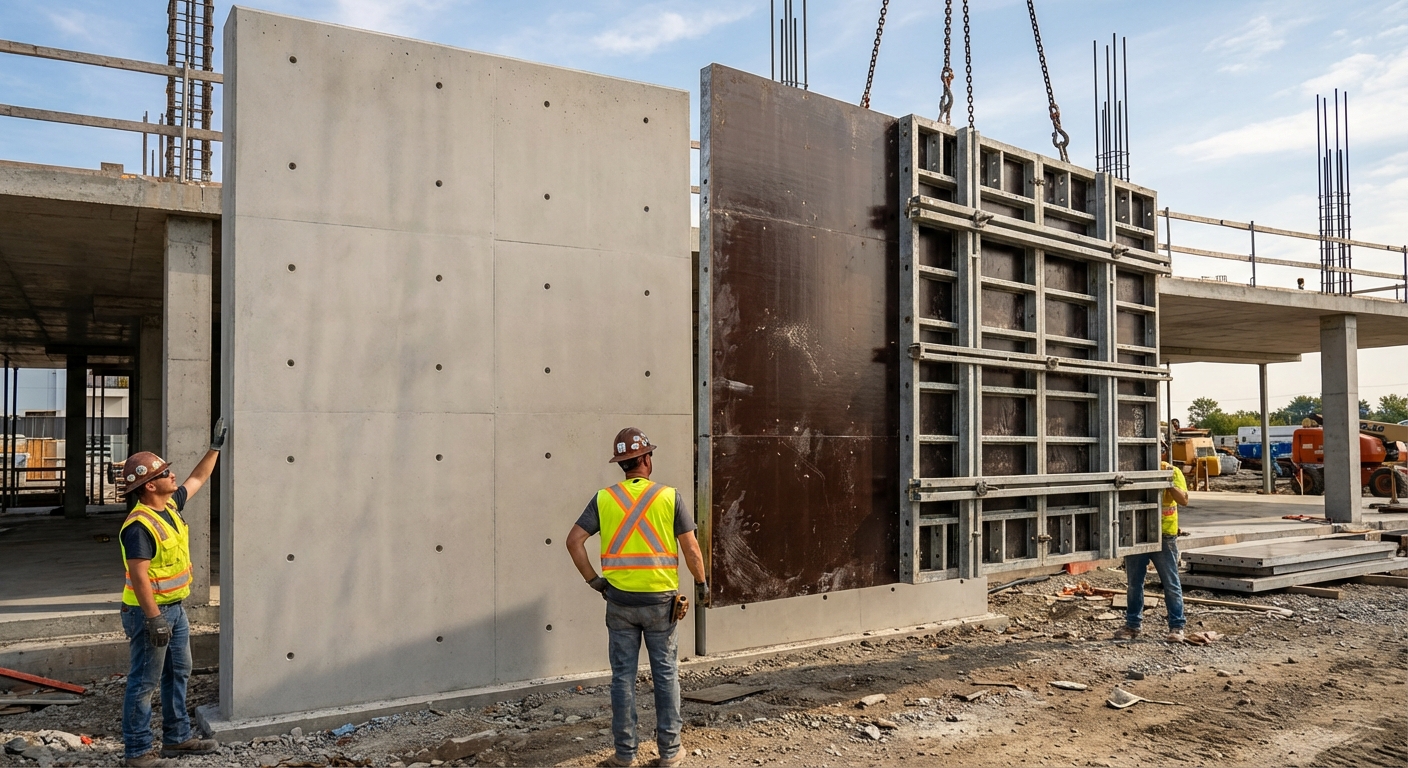
Plyform is the APA's (Engineered Wood Association) official designation for plywood panels manufactured specifically for concrete forming. If you have poured concrete in North America, you have almost certainly worked with plyform — even if you called it something else. The term covers a family of overlay grades from basic sanded-veneer panels to high-density phenolic overlays, each engineered to withstand wet concrete pressure, release cleanly after curing, and survive multiple pour cycles.
This guide breaks down every APA plyform grade, standard sizes, cost-per-pour economics, and how imported film-faced plywood compares — giving contractors and project managers the information they need to specify the right panel for any forming project.
What Is Plyform?
Plyform is not a brand name — it is a performance classification published by the APA. A panel stamped "Plyform" has been manufactured to meet specific requirements for concrete forming: exterior-grade WBP (Weather and Boil Proof) adhesive, minimum face veneer quality, balanced cross-ply construction, and structural ratings that ensure the panel can resist the hydrostatic pressure of wet concrete without excessive deflection.
The term "plyform" is primarily a North American designation. In the UK and India, the same product category is called shuttering plywood. In Europe, Southeast Asia, and Australia, it is marketed as film-faced plywood or phenolic plywood. The underlying engineering is similar — cross-laminated hardwood or softwood veneers bonded with waterproof adhesive — but the grading systems and overlay specifications differ by region.
APA Plyform Grades Explained
The APA classifies plyform into several grades based on the wood species group used in the face and core veneers and the type and density of overlay applied (if any). The three plyform grades most relevant to concrete formwork are:
- Plyform Class I — HDO (High-Density Overlay), sanded face, exterior WBP glue. This is the premium plyform for demanding formwork applications: long-cycle rental systems, high-rise commercial, bridge soffit formwork, and any project specifying multiple reuse cycles. Class I plyform is commonly rated for up to 20+ concrete pours before the surface deteriorates. Cost is highest, but amortized over many cycles, the per-pour cost is often lower than single-use panels.
- Plyform Class II — MDO (Medium-Density Overlay), typically sanded and sealed, exterior WBP glue. This is the mid-range plyform used on projects expecting 8–12 reuse cycles: residential multi-unit formwork, mid-rise commercial, typical infrastructure projects. Class II is cost-effective for contractors who either own their plywood or participate in rental pools.
- Plyform Class III — No overlay, sanded veneer, exterior WBP glue. This is the economy plyform, used primarily for single-pour projects or where plywood will be salvaged for shoring or non-structural purposes after the pour. Rated for up to 5 reuse cycles in ideal conditions, but in practice most Class III plywood is used once then recycled. Class III is common on low-bid commercial projects where the formwork system is temporary and cost minimisation is critical.
Beyond Class III, the APA also publishes grading for overlaid grades (Plyform B-B, B-C, and similar), but these are rarely specified for concrete forming and are outside the scope of this guide.
Plyform Sizes and Thickness Standards (North America)
In North America, plyform is manufactured in two standard panel sizes:
- 4 ft × 8 ft (1219 mm × 2438 mm) — The standard panel size, used in the vast majority of North American formwork systems. Most formwork frames (PERI, DOKA, Horizon, and North American systems) are dimensioned around this 4 × 8 grid.
- 4 ft × 9 ft (1219 mm × 2743 mm) — Available on special order from some manufacturers, used on projects with tall wall formwork or when minimizing horizontal joints is critical.
Standard thicknesses for plyform range from 11/32" (8.7 mm) to 1 1/8" (28.6 mm), with most North American concrete formwork using either:
- 5/8" (16 mm) — Most common for light to medium span formwork, slab-on-grade, and typical wall formwork.
- 3/4" (19 mm) — Specified on longer-span or heavily-loaded formwork (deep beams, high hydrostatic loading, long joist spacing).
The choice of thickness is driven by formwork loading, span, and form system design. Contractors and engineers use standard APA span tables to determine the minimum safe thickness for any given application.
APA Plyform Specification and Stamp
A genuine Plyform panel carries an APA trademark stamp that includes:
- "PLYFORM" designation
- Class (I, II, or III)
- Thickness and grain direction
- Mill identifier
- Exterior WBP glue certification ("EXT-APA" or equivalent)
The APA stamp is a legal commitment that the panel meets the published grading rules. If a panel lacks an APA stamp, it is not plyform, regardless of marketing claims.
Plyform vs. Standard Plywood: Key Differences
Plyform is a subset of exterior plywood, but with stricter requirements:
| Factor | Plyform | Standard Exterior Plywood |
|---|---|---|
| Adhesive | Exterior WBP (mandatory) | Exterior WBP (required, but quality varies) |
| Veneer quality | C or better minimum (high standards) | D-grade veneers allowed (lower quality) |
| Overlay | Class I (HDO), Class II (MDO), or Class III (none) | None (smooth sanded, or unfinished) |
| Balance & symmetry | Strict cross-ply balance | Standard cross-ply (less stringent) |
| Concrete release surface | Sealed/finished (HDO/MDO Classes), or raw sanded (Class III) | Variable (may be rough sanded or unfinished) |
| Typical reuse cycles | Class I: 20+, Class II: 8–12, Class III: 5 | Variable; not designed for formwork (typically 1–3 cycles) |
The key advantage of plyform is consistency. When you buy APA-stamped plyform, you know exactly what veneer quality, adhesive performance, and release surface you are getting. Standard exterior plywood lacks these guarantees.
Reuse Cycles and Plyform Grade Economics
The choice of plyform class is driven by expected reuse cycles and amortization over the project lifetime. Here is a simplified economics model:
Class I (HDO) Plyform: Higher upfront cost (typically $90–130 USD per sheet in North America), but rated for up to 20 concrete pours. On a 20-storey building requiring 100 individual pours with formwork refresh, amortized cost per pour is $0.45–0.65 per sheet. Class I is specified when contractors own the plywood or are committed to long-cycle rental. It is also mandatory for high-visibility exterior surfaces, as the HDO surface produces the fairest concrete finish.
Class II (MDO) Plyform: Mid-range cost ($50–80 per sheet), rated for up to 12 reuse cycles. Per-pour amortization on a 12-cycle project is $4.15–6.67 per sheet. Class II is the sweet spot for most residential and commercial construction, balancing cost and durability.
Class III Plyform: Lowest cost ($30–50 per sheet), but realistically suited to single-use or low-reuse projects. Per-pour cost is lowest if used only once, but per-pour cost rises sharply if you attempt more than 5 cycles.
Rental operators typically stock Class I and Class II exclusively, as their economics favour panels rated for many cycles. General contractors buying plywood for single projects often choose Class II or Class III to minimize upfront investment.
Imported Film-Faced Plywood vs. Plyform: How They Compare
Contractors and suppliers increasingly compare North American plyform with imported film-faced plywood (primarily from China, Southeast Asia, and increasingly Vietnam). Both are engineered for concrete forming, but the grading systems and performance specifications differ:
Plyform (APA):
- Graded by APA under published rules (enforceable in North America).
- Primarily manufactured in North America from softwood (Douglas fir, southern pine).
- Overlay is resin-impregnated kraft paper (HDO, MDO), which creates a smooth, waterproof surface.
- Reuse cycles specified: Class I to up to 20, Class II to up to 12, Class III to up to 5.
- Per-sheet cost ranges $30–130 depending on class and region.
Film-Faced Plywood (International):
- Graded to EN 636 (Europe), JIS (Japan), and other regional standards. Not APA-stamped.
- Typically manufactured from hardwoods (eucalyptus, tropical species) or mixed softwoods in Southeast Asia, China, or other regions.
- Overlay is phenolic or melamine film applied to veneer surface (typically one side or both).
- Reuse cycle claims vary widely (5 to 20+ cycles depending on product and manufacturer).
- Cost is typically 20–40% lower than equivalent plyform due to lower raw material and labour costs in manufacturing regions.
- Quality and consistency vary by supplier; third-party certification is essential.
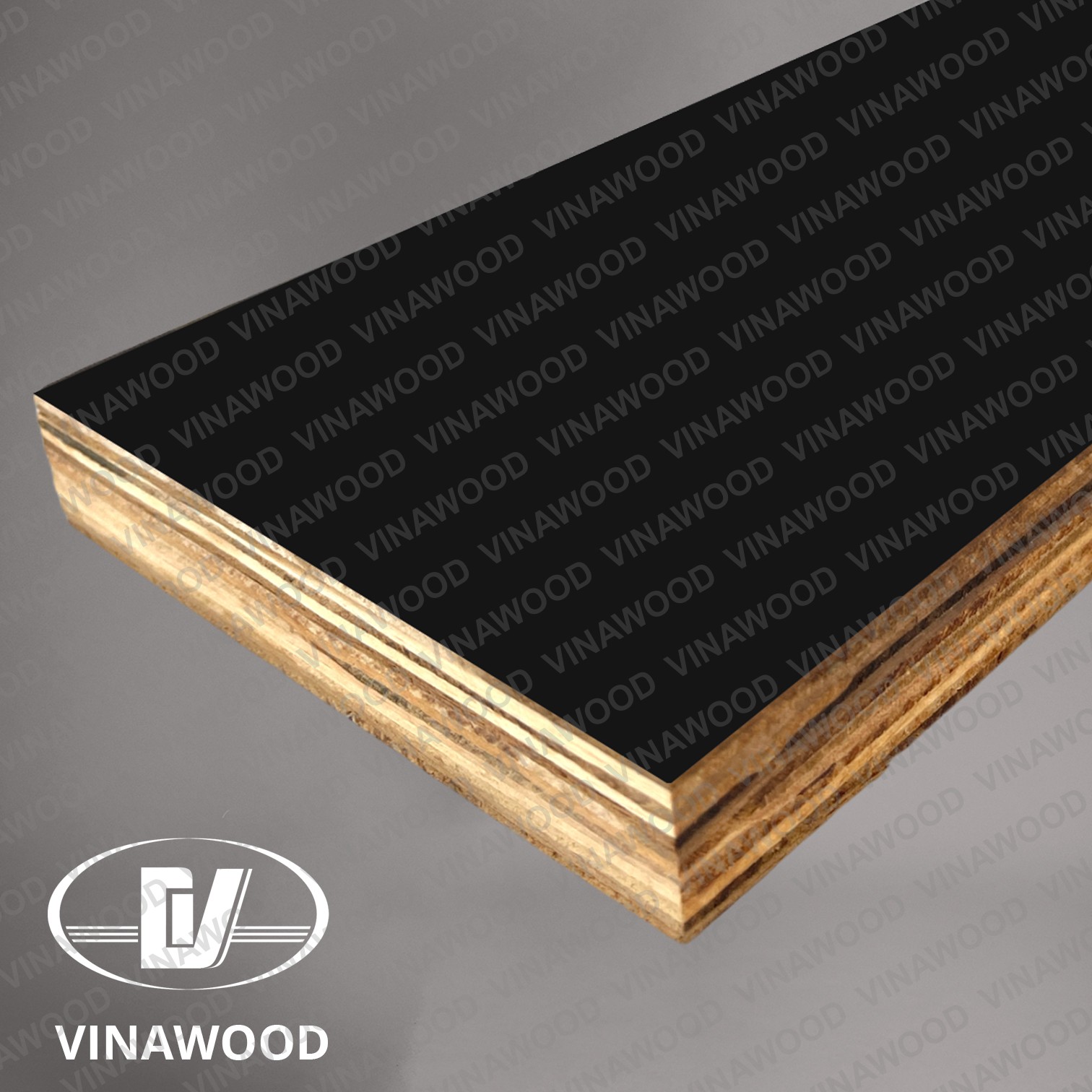
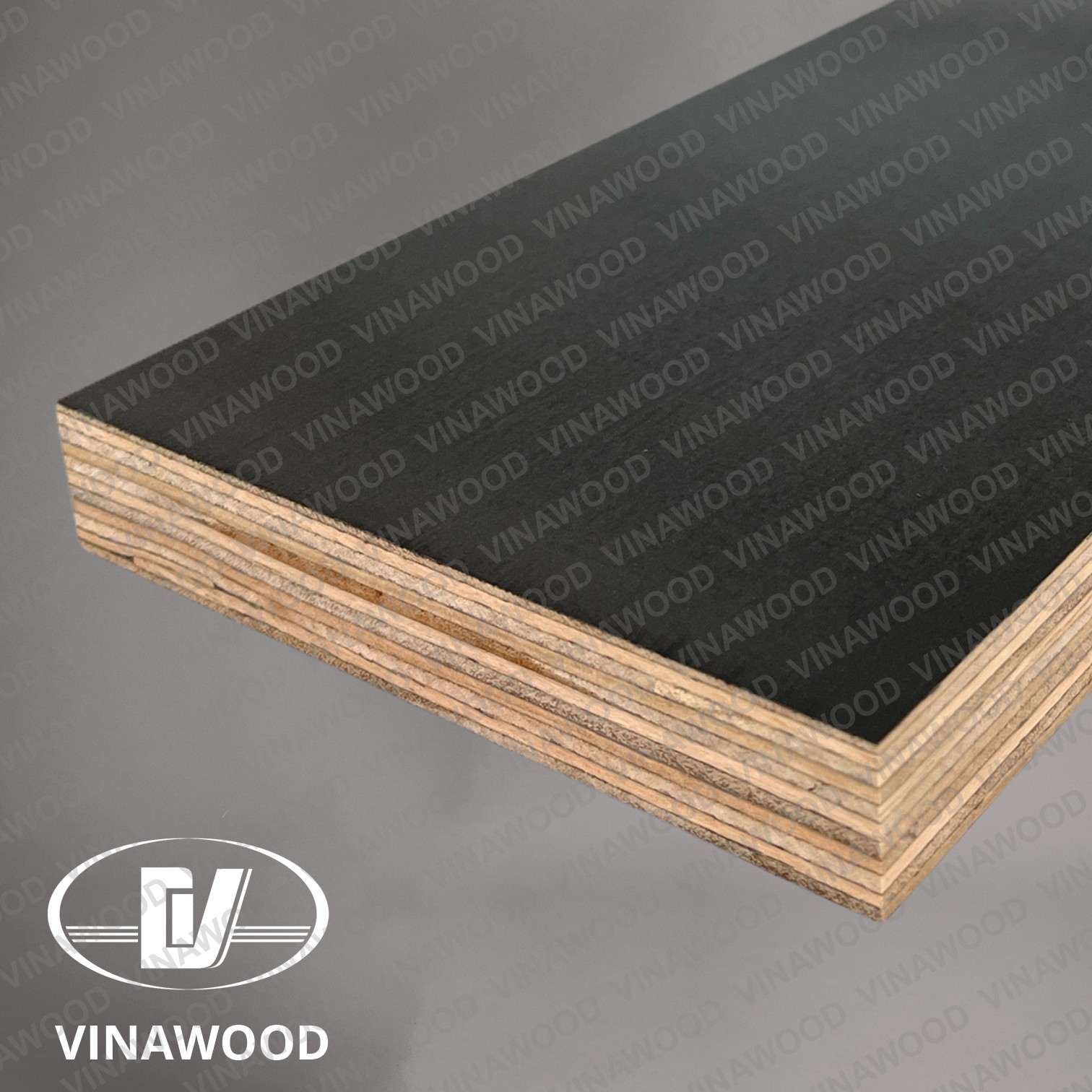
For North American contractors, the choice is often driven by availability and supply chain. Plyform is readily available from building material suppliers and distributors. Imported film-faced plywood requires direct import or relationship with a distributor specializing in imported goods. However, imported panels from certified manufacturers (like Vinawood) are increasingly competing with plyform on price and reliability.
How to Specify the Right Plyform for Your Project
Specifying plyform involves three decisions:
- Class and Overlay: Use Class I (HDO) if you plan 15+ reuse cycles or need a superior concrete finish. Use Class II (MDO) if you plan 8–12 reuse cycles and cost matters. Use Class III if you are budgeting for low or single-use.
- Thickness: Consult APA span tables or your formwork designer. Typical spans are 16" (405 mm) joist spacing for 5/8" plywood, and 24" (610 mm) for 3/4" plywood. Unusual spans or high loads may require thicker panels or tighter joist spacing.
- Size: Default is 4' × 8'. Use 4' × 9' only if your formwork designer specifies it for specific wall heights.
Always source plyform with an APA stamp. If a supplier cannot provide an APA-stamped panel, it is not plyform, and its performance for concrete forming is unverified.
Storing and Handling Plyform
Plyform is engineered for wet conditions, but improper storage can still degrade it:
- Stack flat: Vertical stacking or leaning panels can cause warping and edge damage.
- Protect from standing water: WBP adhesive survives immersion in boiling water under controlled conditions, but prolonged immersion or ponding on site can eventually cause swelling and edge delamination.
- Avoid exposure to direct sunlight: The overlay (HDO/MDO) or veneer can degrade under UV exposure if left uncovered for extended periods (weeks or months). Cover stacked plywood with tarps or store under cover.
- Allow ventilation: Stacking plastic directly under plywood without air gaps can trap moisture and cause mould growth or checking. Use stickers (spacers) between layers.
Frequently Asked Questions
Is Class I plyform worth the extra cost?
On projects expecting many reuse cycles (10+), Class I amortized per-pour cost is often lower than Class III. On single-use or low-budget projects, Class III is more cost-effective. Mid-range (Class II) is the best choice for most contractors.
Can I use interior plywood for concrete forming?
No. Interior plywood uses urea-formaldehyde (UF) adhesive, which breaks down rapidly in the alkaline concrete environment. It will delaminate after 1–3 pours. Always use exterior WBP-rated plywood or plyform.
What is the difference between APA plyform and imported film-faced plywood?
Plyform is APA-graded (North American standard), typically made from softwood with resin-impregnated overlays, and usually carries a concrete-release warranty. Film-faced plywood follows regional standards (EN 636 in Europe, JIS in Japan), is often hardwood-based with phenolic or melamine film, and offers lower cost but variable quality depending on supplier. Both can perform well if sourced from reputable manufacturers.
How many times can I reuse plyform before it fails?
APA-specified reuse cycles are Class I: 20, Class II: 12, Class III: 5. Actual performance depends on concrete design, form release agent, curing time, and handling. Clean the plywood thoroughly between pours and avoid dragging panels across rough surfaces.
Can I buy plyform directly from a mill or manufacturer?
Most plyform is sold through building material distributors, not direct from mills. For large volumes (truckload or more), some mills sell direct at reduced prices. Contact the APA or a major plyform mill (e.g., Boise Cascade, Weyerhaeuser, Georgia-Pacific) for bulk purchasing options.
Is plyform recyclable after the concrete forming work is done?
Yes. Used plyform is recycled as mulch, animal bedding, or ground into particleboard feedstock. Some contractors sell used panels to recycling centres or donation centres. Avoid burning plyform, as the resins in the overlay can produce toxic fumes.
Category
guides
Related Markets
Related Countries
Related Products
▶Sources & References (1)
- APA Plyform — Design/Construction Guide — APA — The Engineered Wood Association (2024-01-01)