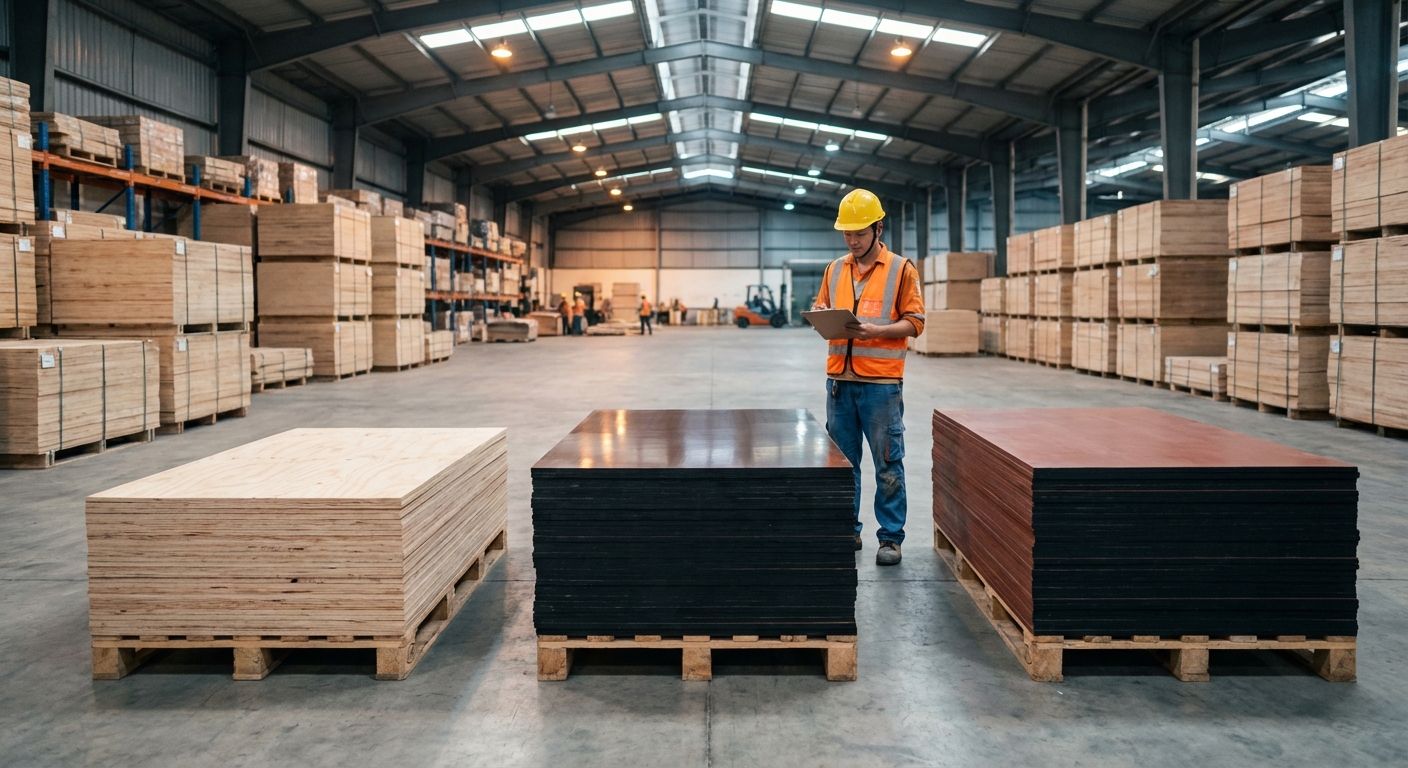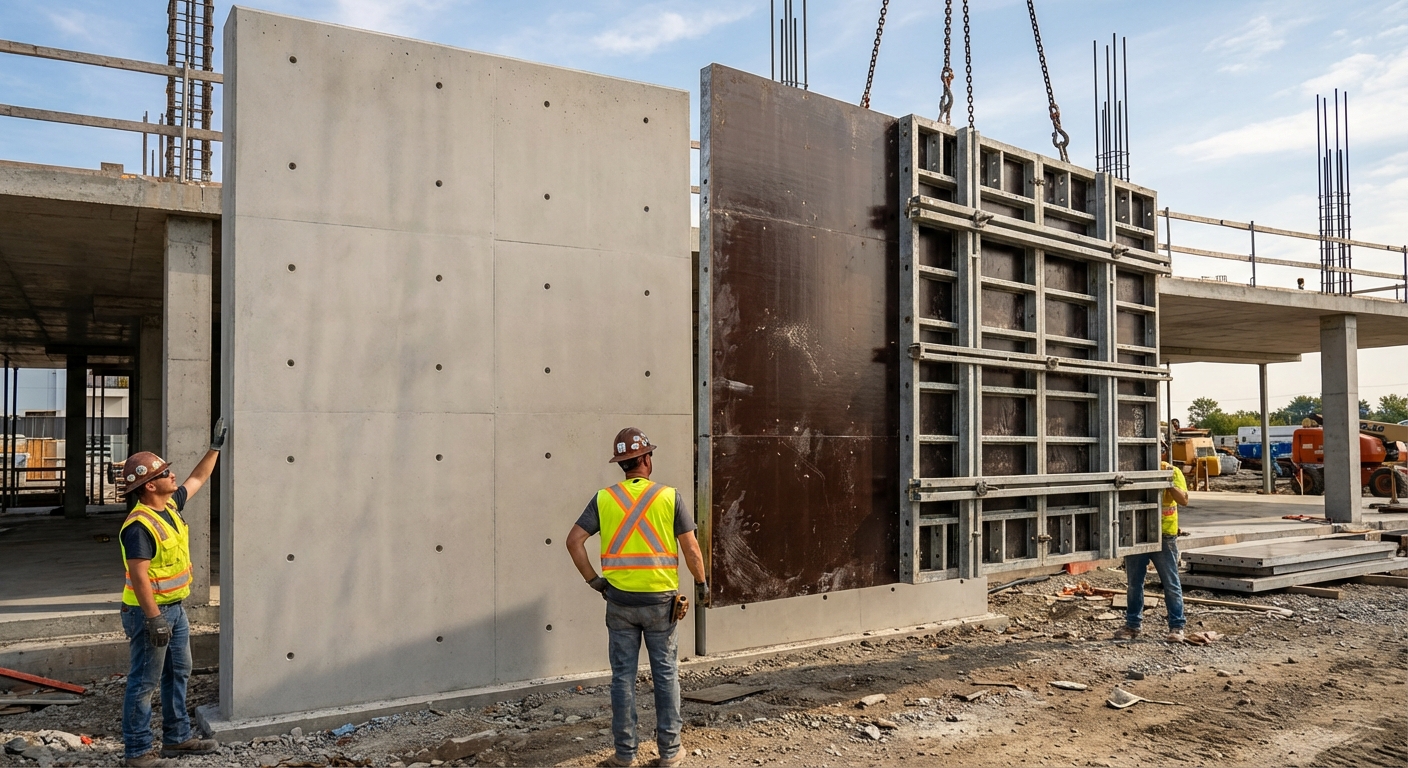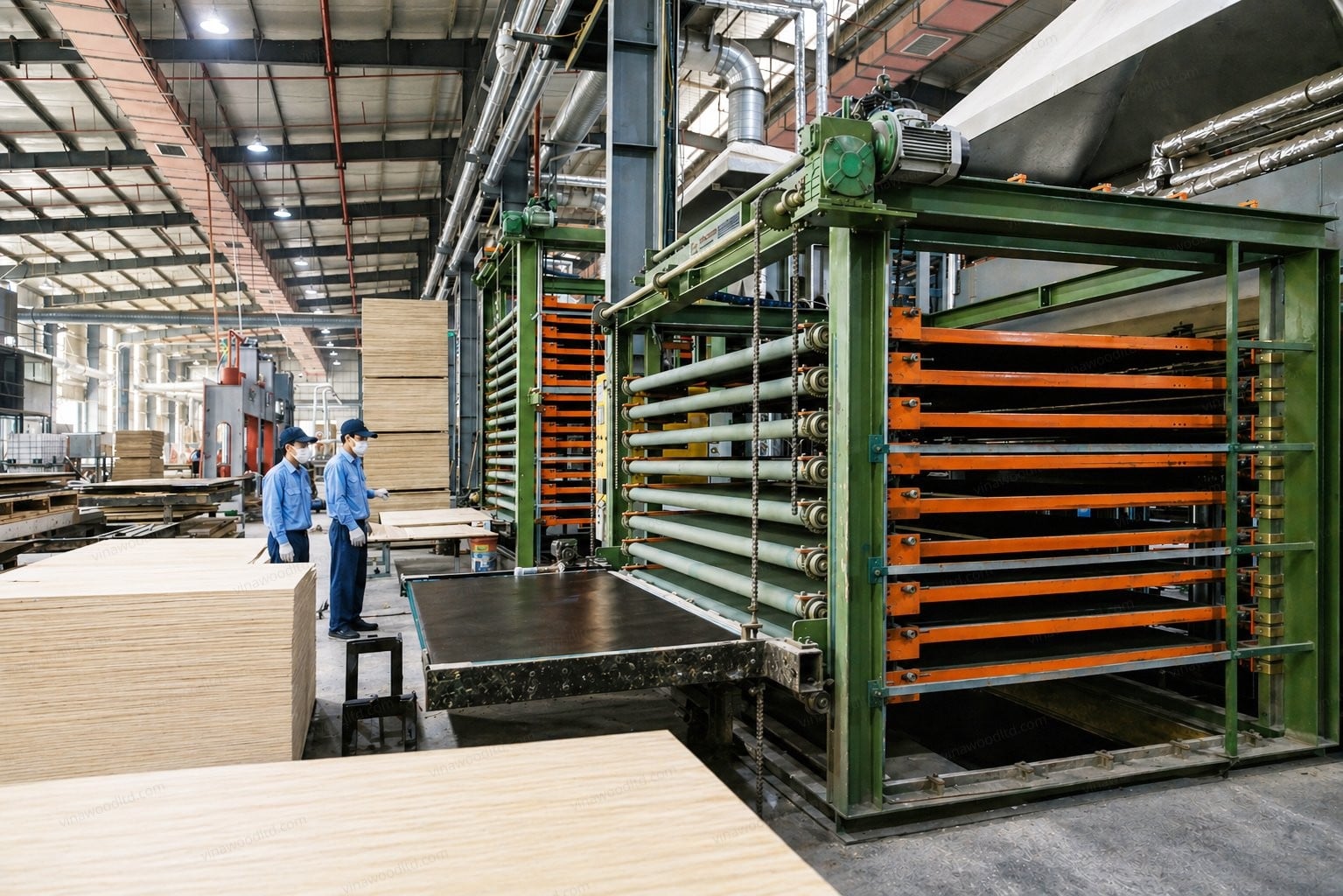
Plywood Grades Explained: A, B, C, D — and the X That Changes Everything
Plywood grades A, B, C and D rank face and back appearance; the trailing X denotes exterior-rated glue. This pillar guide decodes every standard combination — CDX, BC, ACX, BCX — maps the APA system to EN 635 and other parallel systems, and shows how grades translate to formwork-grade plywood, with…
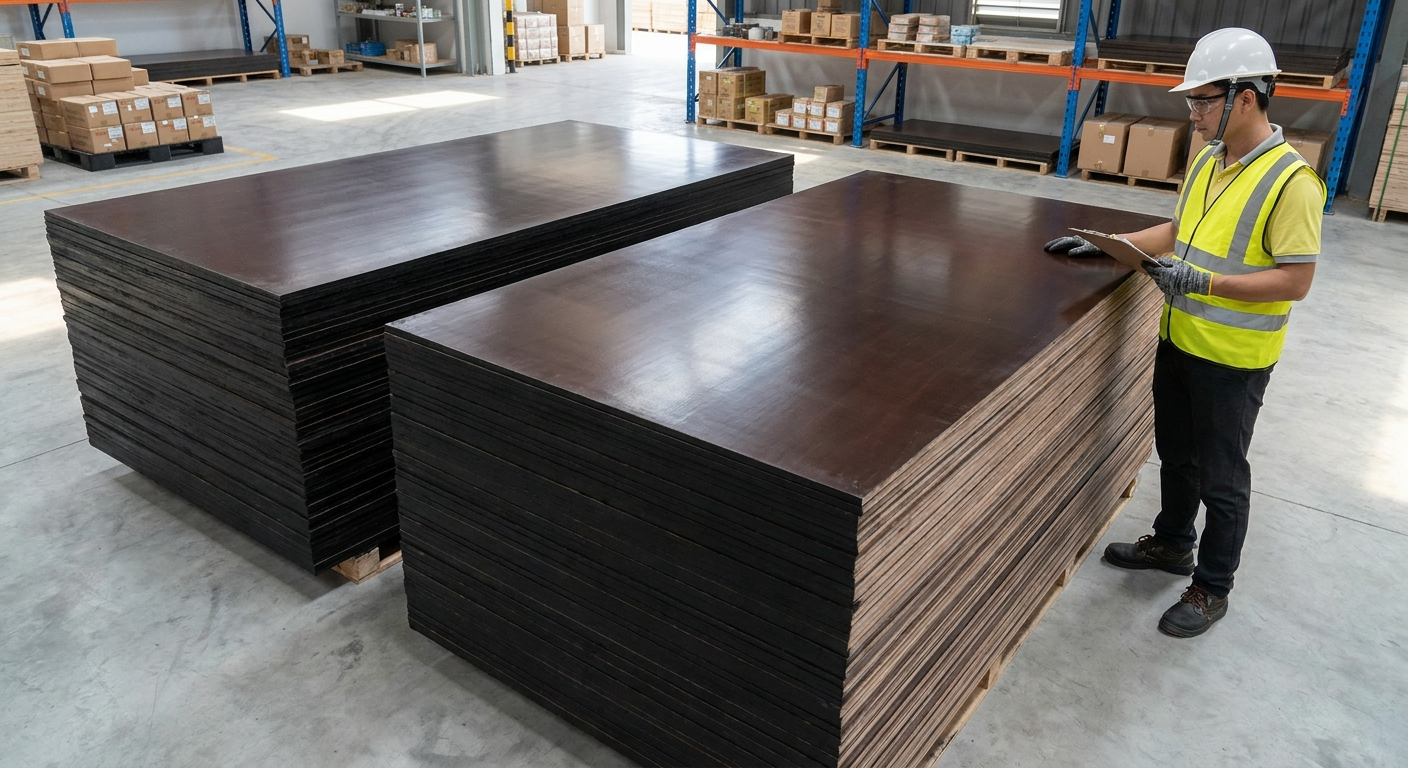
Plywood grading is the most common plywood question asked online — and one of the most muddled. The letters look simple (A, B, C, D, X), but they live inside three or four parallel systems (APA, EN 635, GOST, ANSI/HPVA), they get bolted onto formwork-grade overlays (Plyform, HDO, MDO, film-faced), and a single misread letter pair on a PO can ship the wrong panel into a 10-storey concrete pour or a high-end cabinet shop.
This pillar guide decodes every grade in the standard A–D + X system, what the X actually means, the two- and three-letter combinations you'll see on quotations, how grades map to the parallel systems used in Europe, North America, and Russia/CIS, and how to read a stamped panel. Written from a manufacturer's perspective by Vinawood, a Vietnamese mill exporting across the full grade spectrum to 55+ countries.
TL;DR — the Grading System in One Paragraph
Plywood is graded for surface appearance using letters A (best), B, C, D (lowest), with the face grade listed first and the back grade second. A trailing letter X denotes exterior-rated glue — the bond between veneers, not the veneer itself. So "ACX" means an A-grade face, C-grade back, and exterior-grade glue. "CDX" means C-face, D-back, with the X here standing for Exposure 1 (Exterior-rated bond, but not necessarily Exterior-rated veneers — see below). Letters describe what you see; the X describes what holds the panel together.
Why Grades Exist
Every plywood face shows some defects — knots, splits, repairs, colour variation, occasional patches. Grades are the trade's standardised way of communicating how many and how big those defects are allowed to be, so a contractor in Phoenix can place an order with a mill in Vietnam, sight unseen, and know what arrives.
Three things are worth understanding before reading the letters:
Grades describe appearance, not strength. A D-grade back can be just as structurally sound as an A-grade face. The strength of a plywood panel comes from the construction (number of plies, glue line integrity, balanced cross-banding), not the visible-defect tolerance on either face.
Multiple standards run in parallel. APA grades (the A–D + X system) are dominant in North America. EN 635 (Europe) uses similar letter ranks but defines them differently. ANSI/HPVA HP-1 covers North American hardwood and decorative plywood. GOST grades (B/BB/CP/C, used by Russia and CIS) define what "Baltic birch" face quality really means. Asian commercial grades (often loosely written as B/B, B/BB, BB/CP) borrow from EN 635 with mill-specific tolerances.
Grades are appearance benchmarks, not contracts. A reputable mill grades on the conservative side; a marginal mill grades to the edge of tolerance. The same B-grade face on a Latvian Baltic birch panel and a low-cost commercial panel can look meaningfully different. Always inspect a sample before committing to volume.
Grade A: Smooth, Sanded, Defect-Free Face
Grade A is the highest face grade in the standard A–D system. Under APA conventions, A-grade allows knots up to about 6 mm only when patched, no open splits, no open knot holes, and a sanded surface. The face is paint-ready straight off the panel, suitable for clear finishes where the wood grain will be visible.
Where it's used: cabinets and furniture where the face will be exposed and clear-finished, paint-grade architectural panels with high finish standards, exposed soffits and high-spec exterior cabinetry, signage substrate for premium painted signs.
Cost: A-grade typically commands a 25–40% premium over B-grade for the same construction. Specifying A on a back face that will never be seen is a common over-spec mistake — cabinet door blanks normally only need A on the visible side.
Grade B: Solid Surface with Minor Repairs
Grade B allows tightly-set sound knots, small patches and repairs (typically up to 25 mm), and minor colour variation between veneer pieces. The face is sanded but may show repair-disc markings under raking light. Open splits and open knot holes are not permitted.
Where it's used: paint-grade cabinets where a primed and painted finish is the goal, shop drawers and casegoods interiors that will be visible but not under critical inspection, less-visible furniture exteriors, paint-ready architectural cladding.
For most kitchen cabinet door blanks where the face will be primed and painted, B-grade delivers the right balance of finish quality and cost. The repairs that B permits are flat and tight; primer and two coats of paint conceal them reliably.
Grade C: Utility — Knots up to 1.5"
Grade C permits open knots up to about 38 mm (1.5"), splits, broader colour variation, and may be unsanded. The face is structurally sound but visually obvious as a utility grade. APA C-grade is the workhorse face grade for sheathing, subfloor, and concealed structural applications.
Where it works: roof sheathing (where the face will be covered), wall sheathing under siding or cladding, subfloor beneath finished flooring, formwork backing where the panel face contacts concrete (the C-face actually goes against the concrete in many CDX formwork applications), and any other structural use where appearance is irrelevant.
Where it doesn't work: anywhere the surface will remain visible. C-grade open knots and splits are not paint-ready and the visual character of the face is industrial-utility rather than finished.
Grade D: Structural Only
Grade D is the lowest grade in the standard system. It permits large unrepaired knots and knot holes, splits, and the broadest colour and grain variation. APA D-grade is structurally sound — the panel still meets all bond and bending performance requirements — but the face is unsuitable for any visible application.
The most important point about D-grade: it is an appearance grade, not a strength grade. A D-faced panel meets the same APA bond, span, and stress requirements as a B-faced panel of the same construction. Confusing D-grade with weak plywood is the most common misreading of the system.
Where you'll see it: as the back of CDX (the standard construction sheathing sheet), as the back of BCX, on hidden interior plies in some constructions, and in any "face/D" combination where the back face will never be seen.
The Two-Letter Combinations Explained
Standard face/back combinations seen on quotations and POs:
| Combination | Face | Back | Typical price tier | Typical applications |
|---|---|---|---|---|
| AA | A | A | Premium | Both faces visible — architectural panels, cabinet doors with finished interior |
| AB | A | B | Premium | One visible face plus a paint-grade back |
| AC | A | C | Mid-high | One visible A face, structural back — exterior-grade soffits, exposed eaves |
| BB | B | B | Mid | Both faces paint-grade — standard cabinetry, casegoods exteriors |
| BC | B | C | Mid | Paint-grade visible face, structural back — painted siding, fascia |
| CD | C | D | Economy | Structural only — sheathing, subfloor, hidden uses |
The right grade pair is the cheapest one that meets the visible-finish requirement. Specifying AA on a cabinet box where only the face is visible wastes 30–50% of the panel cost on a back grade no one will see.
The X-Rated Panels — Exterior Glue
The trailing X is the most often misunderstood letter in the entire system. The X stands for the bond classification — the glue used between veneers — not for the veneer faces.
Two bond classifications matter:
Exposure 1. Waterproof glue (typically WBP phenolic), but the panel is rated for moisture exposure during construction — not permanent outdoor weathering. CDX is the canonical Exposure 1 panel: rain on a roof during framing is fine; six months uncovered is not.
Exterior. Waterproof glue plus rated face/back veneers and balanced construction for permanent exterior exposure. ACX, BCX, and ABX panels with the Exterior bond classification are intended for long-term outdoor service.
This is why CDX is sometimes labelled "Exposure 1" rather than "Exterior" on the APA stamp — and why a CDX roof deck left exposed for a year will fail at the edges. The glue holds; the veneer faces and overall construction are not rated for permanent weathering.
Common X-rated combinations and where they fit:
| Combination | Bond | Typical use |
|---|---|---|
| CDX | Exposure 1 (WBP) | Roof and wall sheathing, subfloor — protected from permanent exposure within weeks of installation |
| BCX | Exterior (WBP) | Painted siding, fascia, soffits |
| ACX | Exterior (WBP) | Visible exterior cabinetry, premium soffits, clear-finished exterior trim |
| ABX | Exterior (WBP) | Premium exterior visible-on-both-faces work — a less common spec |
For the deeper formwork comparison and how exterior bond performance is verified, see Vinawood's exterior plywood grades — CDX, ACX, BC, marine compared.
Beyond Letters: the Parallel Grading Systems
The A–D + X system is North American. Globally, three other systems matter for buyers and specifiers.
APA Sanded and Sheathing Grades. The APA also publishes a structural rating system separate from the appearance grades — panels are rated by span (e.g., 24/16) for floors and roofs. The structural rating is independent of the A–D appearance grade. A C-D Sheathing Span 24/16 panel and a B-C Sheathing Span 24/16 panel have identical structural performance.
EN 635 (Europe). European hardwood plywood faces are graded E, I, II, III, IV from best to worst — essentially equivalent to APA A through D, with European-specific defect tolerances. Class I and II are the cabinet/joinery standards; Class III and IV are utility.
Russian/CIS GOST grades. The face grades you'll see on Russian and Belarusian Baltic birch panels are E, B, BB, CP, C, with E (élite) being the cleanest and C the most defect-tolerant. The most common Baltic birch grade traded internationally is B/BB or BB/CP. These rough equivalences hold:
| APA | EN 635 | GOST (Russian) |
|---|---|---|
| A | E or I | E or B |
| B | II | BB |
| C | III | CP |
| D | IV | C |
Asian commercial grades. Vietnamese, Indonesian, and Chinese export mills typically grade to a hybrid of EN 635 and GOST conventions, with mill-specific tolerances. "B/BB" on an Asian export PO is roughly EN 635 Class II / Class III — close to APA B/C — but verify against the supplier's published tolerance sheet, not just the letter pair.
How Grades Map to Formwork Plywood
Formwork plywood layers another grading system on top of A–D. The North American APA Plyform classifications are the most widely cited:
APA Plyform Class I. The premium concrete-forming panel — typically HDO (High-Density Overlay) on group-1 species. Rated for the highest reuse cycles, with a fair-face concrete release surface. See Plyform plywood — APA Class I and II grades for full Plyform grading detail.
APA Plyform Class II. The mid-range concrete-forming grade — typically MDO with a sealed face — rated for fewer reuse cycles than Class I but at lower per-sheet cost. Common on residential multi-unit and mid-rise commercial pours.
B-B Plyform. The economy Plyform class — sanded B-grade veneer faces, no overlay, typically used for single-pour or low-reuse applications.
Outside North America, the dominant formwork-grade system is the EN 636 bond classification combined with overlay type — see Vinawood's film-faced plywood vs MDO vs HDO comparison and the film-faced plywood collection for the global formwork product range.
How to Read a Stamped Plywood Sheet
An APA-stamped panel carries a small rectangular mark with several pieces of information. The fields you'll see and what they mean:
Grade pair (e.g., "B-C"). Face grade first, back grade second. This is the appearance grade.
Bond classification ("Exterior" / "Exposure 1" / "Interior"). The glue rating. "Exterior" is full outdoor service; "Exposure 1" is construction-stage moisture only; "Interior" is for protected indoor use only.
Mill number. The unique identifier of the producing mill. Verify against the APA's online mill directory — counterfeit stamps on imported panels do circulate.
Span rating (e.g., "24/16"). For sheathing-rated panels, the maximum span in inches with the face grain perpendicular to supports (first number) and parallel (second number).
Species group number (1–5). The strength group of the face species — group 1 (Douglas fir, southern pine) is stiffest; group 5 the weakest.
European panels under EN 13986 carry CE marking with EN 636-2 (humid conditions) or EN 636-3 (exterior conditions) bond designations, the relevant Declared Performance values for bending and bond, and the producing factory identifier. The information is similar; the format differs.
Plywood grades reward careful reading. Get the letters and the X right on your PO and the panel that arrives will match the application. For a deeper dive on any single grade or formwork-specific overlay system, follow the linked articles above — each focuses on one slice of the broader grading universe.
Category
guides
Related Markets
Related Countries
Related Products
▶Sources & References (5)
- APA Form L870 — Engineered Wood Construction Guide — APA — The Engineered Wood Association (2024)
- ANSI/HPVA HP-1-2020 — American National Standard for Hardwood and Decorative Plywood — Hardwood Plywood and Veneer Association (2020)
- EN 635-1:1995 — Plywood. Classification by surface appearance — General — European Committee for Standardization (CEN) (1995)
- Wood Handbook — Wood as an Engineering Material (Chapter 11: Wood-Based Composite Materials) — USDA Forest Products Laboratory (2021)
- GOST 3916.1-2018 — General-purpose plywood with outer layers of deciduous wood veneer — Federal Agency on Technical Regulating and Metrology (Rosstandart) (2018)