Marine Plywood Price in the Philippines [2026]: Per-Sheet Cost by Thickness, Brand & Application
Marine plywood pricing in the Philippines (2026) varies from ₱600 to ₱1,700 per 4×8 sheet depending on thickness, brand, and channel. This guide breaks down per-sheet cost by thickness, the brand tier landscape, what drives the price, where to buy, and when direct-from-Vietnam container imports…
![Marine Plywood Price in the Philippines [2026]: Per-Sheet Cost by Thickness, Brand & Application](https://kvwcunpmdrfnpzuibkdq.supabase.co/storage/v1/object/public/site-public/media/blog/3a51b653-1da2-41c8-a399-37fc913dbc13/marine-plywood-price-philippines-2026-featured-v2-20260429-b03e55.png)
A Quezon City contractor we've worked with for six years called last week with a quote request. He had a 240-unit condo project starting Q3 and needed marine plywood for kitchen carcase across all units. The retail price he was being offered at his usual wholesaler in Caloocan: ₱1,580 per 18 mm 4×8 sheet. He wanted to know what container-direct pricing looked like. The answer landed about ₱340 per sheet below his current channel. Multiplied across 480 sheets for the project, that paid for the import financing twice over.
Marine plywood pricing in the Philippines depends on thickness, brand, retailer, region, and crucially on what "marine plywood" actually means at the point of sale. This guide compiles current 2026 indicative pricing across thicknesses and brand tiers, explains why prices vary, walks through where to buy at each price point, and shows the math on when direct-from-Vietnam container imports become economical. We're a Vietnamese mill exporting to the Philippines among 55+ markets.
Marine Plywood Prices Today (2026)
Indicative retail pricing for marine plywood in the Philippines, 4×8 ft (2440 × 1220 mm) sheets, mid-2026:
| Thickness | Low | Typical | High |
|---|---|---|---|
| 1/4" (6 mm) | ~₱600 | ~₱700 | ~₱800 |
| 3/8" (9 mm) | ~₱750 | ~₱870 | ~₱1,000 |
| 1/2" (12 mm) | ~₱900 | ~₱1,050 | ~₱1,200 |
| 5/8" (15 mm) | ~₱1,100 | ~₱1,250 | ~₱1,400 |
| 3/4" (18 mm) | ~₱1,300 | ~₱1,500 | ~₱1,700 |
| 1" (25 mm) | ~₱1,800 | ~₱2,050 | ~₱2,300 |
Indicative ranges only. Actual prices vary by retailer, brand, region (Metro Manila vs provincial), and date. Always confirm current pricing with your supplier before committing.
For broader international marine plywood pricing context (US, Australia, UK), see international marine plywood pricing.
What You're Paying for in "Marine" Plywood (PH Context)
The term "marine plywood" in the Philippine retail market typically describes a moisture-resistant panel: melamine- or phenolic-bonded, often with denser core veneer than ordinary commercial plywood. It does not necessarily mean BS 1088, the strict international marine standard requiring tropical hardwood species at 560+ kg/m³ density, A/B face grades minimum, void-free core, and full WBP phenolic adhesive.
Most PH-marketed "marine plywood" is a Class 2 or Class 3 phenolic/melamine panel, closer to what would be called "WBP plywood" or "shuttering-grade plywood" in the UK or Indian markets. The label is honest enough for cabinets, kitchens, bathroom partitions, and general humid-environment use, but it should not be assumed to meet BS 1088 unless the supplier provides the certificate.
For the formal definition and how to verify genuine marine grade, see what marine plywood actually means.
Brand-by-Brand Price Comparison
The Philippine market has several recognised marine plywood brands, grouped here into broad price tiers without quality judgements.
The premium tier sits around ₱1,500 to 1,700 per 3/4" sheet. These are brands marketed at the top of the range, typically with denser cores, higher face grades, and (sometimes) BS 1088 or IS 710 certification. Suitable for visible architectural cabinetry, kitchens with sustained humidity, and applications where panel longevity is the priority.
The standard tier runs ₱1,300 to 1,500 per 3/4" sheet, the mainstream brands stocked across major Manila and provincial hardware retailers. Phenolic or melamine bond, mid-grade face veneer, dependable for general cabinetry, partitions, and concealed casegoods structure.
The economy tier prices ₱1,200 to 1,400 per 3/4" sheet, often melamine-bonded with broader veneer-grade tolerance. Suitable for short-life or hidden applications where cost minimisation matters and the panel will not be on permanent display.
The right tier is the one that matches your application. Buying premium for a hidden drawer interior wastes money. Buying economy for a kitchen counter substrate near a sink shortens panel life and costs more in replacement labour later.
What Drives the Price
Five factors explain the spread between brands and grades. Core species and density is the first. Plantation-grown Acacia and Eucalyptus produce denser, heavier panels (~620–680 kg/m³) than Hevea (rubberwood) or styrax-cored panels (~580–620 kg/m³). Density correlates with screw-holding and bending strength.
Glue type is the second. Phenolic-bonded (Class 3 / EN 636-3 / BWP) panels cost roughly 5 to 10% more to manufacture than melamine-bonded (Class 2 / EN 636-2 / BWR) equivalents. The phenolic premium is justified for sustained moisture or formwork; for indoor cabinet work, melamine is acceptable.
Face/back grade is the third. A/B-faced panels with sanded, defect-free face cost more than B/BB or BB/CP. The right grade depends on whether the face will be visible, painted, or hidden.
Manufacturing tolerances and origin round out the list. Tighter thickness tolerance (±0.5 mm vs ±1.0 mm), better edge-trim, and consistent sanding cost more to produce. Premium tiers typically run tighter tolerances. And locally manufactured PH plywood saves freight cost vs imports but often uses different core species and lower face grades than dedicated export-quality Vietnamese or Indonesian imports.
Marine Plywood vs Ordinary Plywood — Price Gap Explained
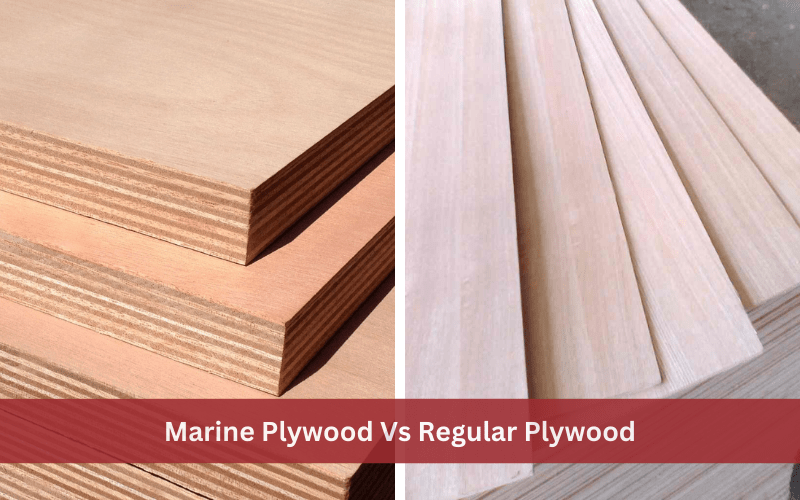
Marine plywood typically costs 50 to 80% more than ordinary commercial plywood at the same thickness in the PH market. The premium reflects four real cost drivers: better core veneer grading (denser, fewer voids), moisture-resistant adhesive (phenolic or premium melamine vs urea-formaldehyde), tighter face grade tolerances, and more rigorous QC during pressing.
For applications with no moisture exposure (interior decorative paneling, dry-zone cabinet boxes), ordinary plywood costs less and performs adequately. For kitchens, bathrooms, partitions in coastal regions, or any structure that will see humidity above 70 to 80% RH, the marine premium pays back through panel longevity. For the deeper construction comparison, see marine plywood vs regular plywood.
Where to Buy — Channel Comparison
National retail chains (Wilcon, CitiHardware, Ace Hardware) charge list price plus delivery. Convenience and reliable stock; pricing at the upper end of typical retail range. Best for small projects, single-sheet purchases, or homeowners.
Provincial hardware shops are often 5 to 10% below Metro Manila retail for cash terms. Stock can be inconsistent on premium brands. Useful for standard mid-tier panels close to project sites in the Visayas, Mindanao, and Northern Luzon.
Wholesalers offer 50+ sheet volume pricing typically 10 to 20% below retail. Suitable for contractor-scale projects with reliable storage capacity and the ability to commit to a full pallet or truckload.
Direct-from-Vietnam imports at container scale (1× 40HQ ≈ 600 sheets of 18 mm) typically land 25 to 35% below PH retail per sheet. Trade-offs: 30 to 45 day lead time from order confirmation to PH port, Letter of Credit or 30% TT deposit, customs clearance, and storage on arrival. Worth evaluating for sustained buyers consuming 1+ containers per quarter. The Quezon City contractor in the opening of this guide is one example.
Volume Pricing & Project-Scale Procurement
The math on direct-from-Vietnam imports is straightforward when broken down. A 40HQ container holds approximately 600 sheets of 18 mm marine plywood (varies with packaging configuration). FOB Vietnam pricing for B/BB melamine-bonded marine-grade plywood typically lands in the rough range of ~$8 to 12 per sheet at container volume, depending on grade, core species, and current freight market.
Add ocean freight to Manila or Cebu (~$2,500 to 3,500 per container in 2026), customs duties (Philippines applies a base import duty plus VAT, verify with a licensed customs broker for current rates), port handling, and inland delivery. The per-sheet landed cost typically lands meaningfully below current PH retail, with the gap widening on premium-grade panels.
The decision matrix: if your project consumes 600+ sheets and you have 30 to 45 days of lead time, can secure trade financing or pay 30% deposit upfront, and have storage for a full container on arrival, direct import is worth evaluating. Below 200 to 300 sheets, the logistics overhead usually outweighs the per-sheet saving.
For project-scale Vietnam-direct procurement options, browse our marine plywood collection.
2026 Price Outlook
The supply-side picture entering mid-2026 is broadly stable. Vietnamese plantation log prices for Acacia and Eucalyptus have held steady through Q1 to Q2 2026. EUDR documentation requirements have raised compliance costs at exporters but have not significantly moved end-product pricing in non-EU markets like the Philippines. Ocean freight rates have stabilised post-2022 disruption and are now in the $2,500 to 3,500 per 40HQ Manila/Cebu range.
Local PH marine plywood pricing has tracked freight and raw material costs with a 1 to 2 month lag. Expect moderate stability through the rest of 2026 absent a major macro shock. Frame any quotation more than 3 months old as out of date and request a current price list.
How to Evaluate Quality at the Price Point
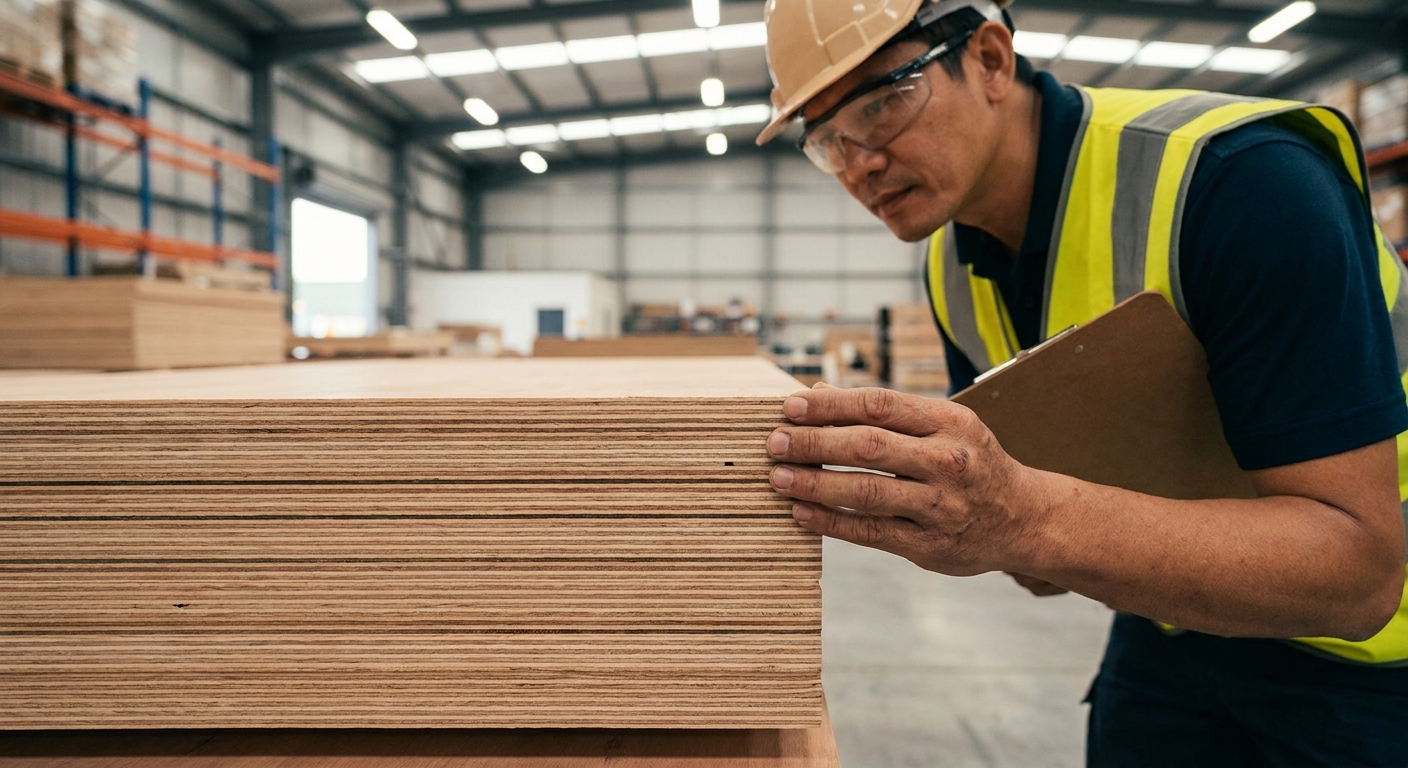
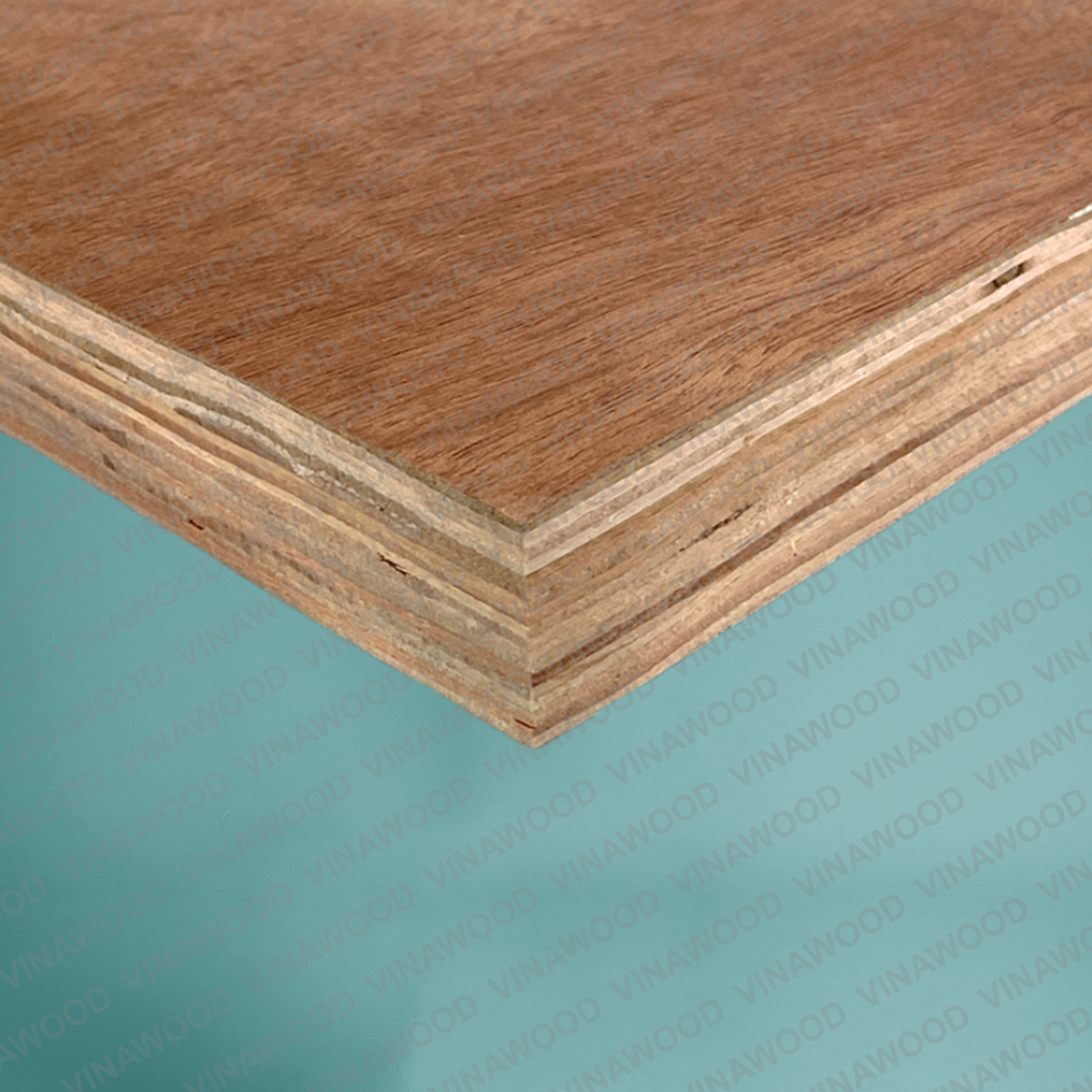
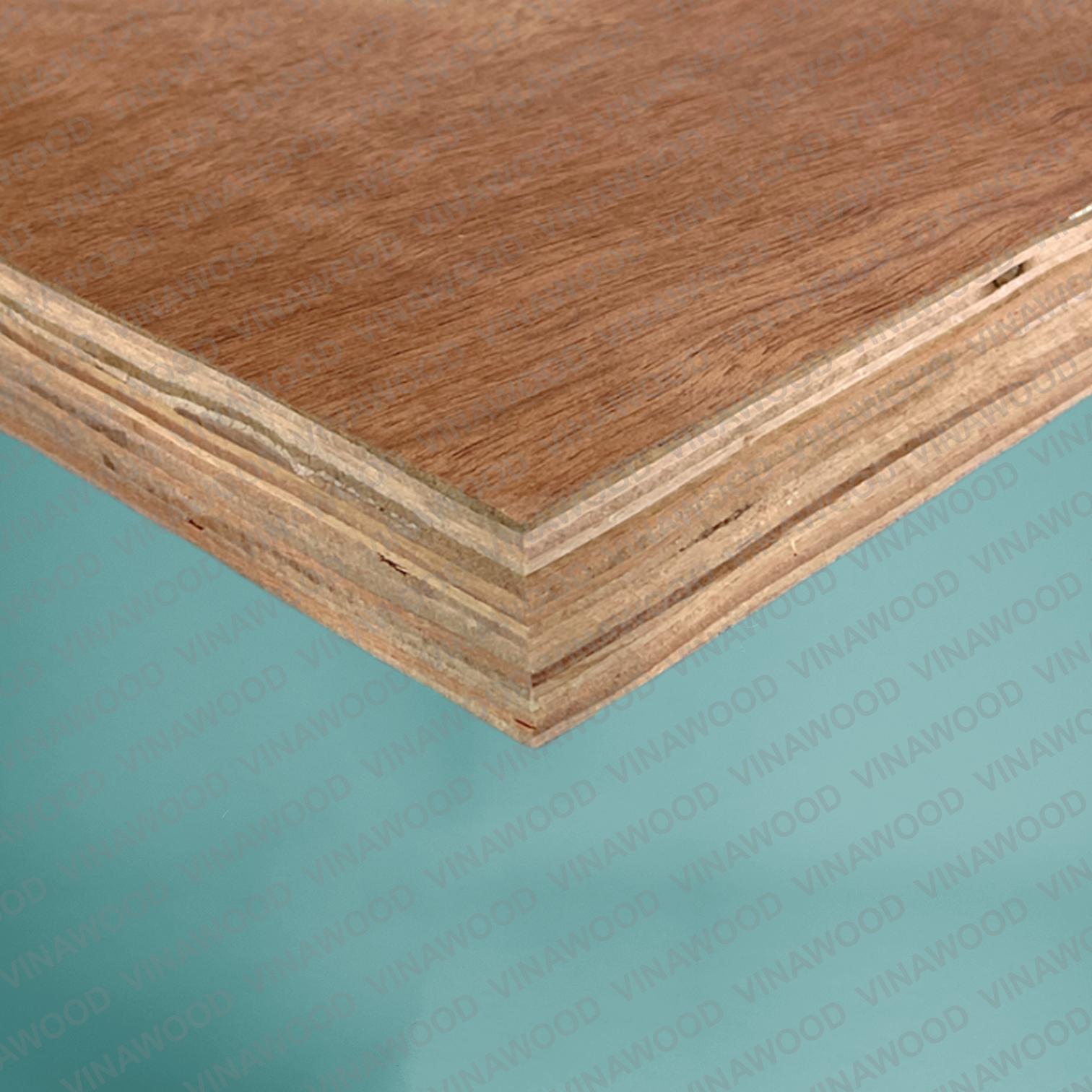
A quick visual quality check before paying for a stack of marine plywood. Edge uniformity is the first thing to look at. Genuine marine-grade panels show tightly laminated veneer with no visible voids or large gaps when examined in cross-section. Light-coloured glue lines indicate urea or melamine adhesive; dark brown or black glue lines indicate phenolic.
Face smoothness is the second. Run a hand across the face. Sanded marine grade should feel smooth with no rough patches, hammered repairs, or open splits. Visible patches and putty-fills are common in B/BB and BB/CP grades and acceptable. What is not acceptable is open knots, splits, or core veneer showing through.
Weight is the third. Heavier panels indicate denser core species (Acacia, Eucalyptus) and tighter pressing. A standard 18 mm 4×8 marine sheet in the PH market should weigh roughly 28 to 34 kg. Sheets significantly lighter than this often signal lower-density core species or higher-than-spec moisture content.
Corner integrity and the glue line round out the check. Corners should be square and intact. Crushed or splintered corners indicate poor handling and storage, a marker that the rest of the lot may have been treated similarly. The glue line at the edge should be continuous and not exhibit gaps. Discontinuous glue lines or visible air pockets are bond defects and indicate the panel will fail early under moisture exposure.
Marine plywood pricing in the Philippines is a moving target by brand, region, and channel, but the rough 2026 ranges above are reliable starting points. Always confirm current quotes with your supplier and verify the panel meets the bond class and species spec your application requires before committing volume.
Category
guides
Related Markets
Related Countries
Related Products
▶Sources & References (4)
- PHILCON Prices — Construction Material Prices in the Philippines — PHILCON Prices (2026)
- Plywood Price List — The Project Estimate — The Project Estimate (2026)
- BS 1088-1:2003 — Marine plywood — Requirements — British Standards Institution (2003)
- IS 710:2010 — Marine Plywood — Specification — Bureau of Indian Standards (2010)
![Marine Plywood Price Guide [2026]: What Buyers Actually Pay](https://kvwcunpmdrfnpzuibkdq.supabase.co/storage/v1/object/public/site-public/media/blog/e153cbc9-720d-45ca-a23e-d39aeb3ca9e9/marine-plywood-price-featured.png)