Marine Plywood Price Guide [2026]: What Buyers Actually Pay
2026 marine plywood price ranges by thickness, grade, and market. Covers US retail, Philippines local pricing, wholesale vs factory-direct economics, and cost-per-year value analysis.
![Marine Plywood Price Guide [2026]: What Buyers Actually Pay](https://kvwcunpmdrfnpzuibkdq.supabase.co/storage/v1/object/public/site-public/media/blog/e153cbc9-720d-45ca-a23e-d39aeb3ca9e9/marine-plywood-price-featured.png)
Marine plywood pricing is one of the most opaque areas in the building materials market. The same search for "marine plywood price" returns results ranging from $45 to $180 per sheet — a 4× spread that confuses buyers trying to compare quotes. The variation is not random: it reflects real differences in grade, species, adhesive, certification, and purchasing channel.
This guide breaks down what drives marine plywood prices, provides current market ranges for the US and Philippines (the two highest-volume search markets), and explains the purchasing strategies that deliver the best value per sheet. For a complete overview of what marine plywood is and how to evaluate quality, see the marine plywood hub article.
Why Marine Plywood Prices Vary So Much
Six factors create the wide price spread in the marine plywood market.
Grade and certification. A BS 1088 certified panel with third-party laboratory documentation costs significantly more than a panel labelled "marine" without independent verification. The certification itself adds per-panel testing cost, and the manufacturing standards (void-free core, tropical hardwood species) require more expensive inputs.
Species. Tropical hardwoods (meranti, okoume, keruing) command higher prices than plantation species (eucalyptus, acacia). BS 1088 requires a minimum density of 560 kg/m³, which limits acceptable species and increases raw material cost.
Adhesive type. Genuine WBP phenolic adhesive costs 5–10% more than melamine-urea-formaldehyde (MUF). Some panels sold as "marine" use MUF adhesive — technically capable of passing short-duration WBP tests but less durable long-term. For adhesive details, see the WBP glue guide.
Thickness. Marine plywood is available from 4 mm to 25 mm. Thicker panels use more veneer and adhesive, increasing cost — though the per-millimetre cost typically decreases with thickness.
Origin. Domestically produced panels in the US or Europe carry higher manufacturing costs than imports from Vietnam, Indonesia, or China. However, import panels incur freight, duties, and port charges that partially offset the manufacturing cost advantage.
Volume. Retail single-sheet purchases carry the highest per-unit cost. Wholesale pallet pricing reduces cost by 10–20%, and factory-direct container orders can achieve 25–40% below retail pricing.
US Marine Plywood Prices (2026 Ranges)
The US market distinguishes between BS 1088 certified marine plywood and generic panels labelled "marine" without independent certification. Prices below are approximate market ranges for 4×8 ft (1220×2440 mm) sheets at retail.
| Thickness | BS 1088 Certified | Generic "Marine" Label |
|---|---|---|
| 1/4" (6 mm) | $85–$110 | $45–$60 |
| 3/8" (9 mm) | $95–$125 | $50–$70 |
| 1/2" (12 mm) | $110–$145 | $55–$80 |
| 3/4" (18 mm) | $140–$180 | $70–$90 |
Note: Prices are approximate market ranges as of publication date. Actual pricing varies by supplier, region, and order volume. Always verify current quotes from suppliers before purchasing.
BS 1088 panels are available from marine suppliers, specialty lumber yards, and online retailers like Boulter Plywood, Chesapeake Marine, and select Home Depot and Lowes locations. Generic "marine" panels are more widely stocked but may not meet the void-free core and tropical hardwood species requirements of BS 1088.
Philippines Marine Plywood Prices (2026 Ranges)
The Philippines is the highest-volume search market for marine plywood pricing. Marine plywood is the dominant panel type for construction, furniture, and cabinetry across the country — used much more broadly than the BS 1088 definition would suggest.
Philippine market pricing per 4×8 ft sheet (18 mm, the dominant thickness):
Major Philippine brands price marine plywood at varying tiers depending on brand reputation, distribution channel, and regional availability. Prices in Metro Manila tend to be higher than provincial pricing due to logistics costs.
Important context: The Philippine market uses "marine plywood" broadly. Not all panels carrying this label meet BS 1088 or even IS 710 standards. The term encompasses a wide quality range — from genuine phenolic-bonded, void-free panels to standard exterior plywood with enhanced moisture resistance. Buyers should verify adhesive type and core quality rather than relying on the "marine" label alone.
What Drives the Price Premium Over Regular Plywood
Marine plywood costs 2–4× more than standard exterior plywood. Five manufacturing factors account for the premium.
Void-free core requirement. Achieving a void-free cross-section requires rejecting any veneer with gaps, overlaps, or defects that would create internal voids. This increases veneer waste and raw material cost per panel compared to standard plywood, which allows core voids within grading tolerances.
WBP phenolic adhesive. Phenolic formaldehyde resin costs 5–10% more than the urea formaldehyde adhesive used in interior and MR-grade plywood. The adhesive cost increase is modest per panel but adds up across production volume.
Tighter veneer grading. Marine grade requires A/B face veneers minimum — fewer defects, fewer repairs, and higher visual quality than the C/D grades permitted in standard plywood. Higher-grade veneers yield less usable material per log.
Tropical hardwood species. BS 1088 specifies tropical hardwood with a minimum density of 560 kg/m³. These species are denser, heavier, and more expensive than the softwoods and lighter hardwoods used in standard construction plywood.
Testing and certification. BS 1088 compliance requires third-party laboratory testing — EN 314 boil tests, dimensional tolerance verification, and species identification. This per-batch testing cost is passed through to the panel price.
Marine Plywood Price by Thickness
Thickness is the single largest price driver within a given grade. The relationship between thickness and price is not linear — the per-millimetre cost typically decreases with thicker panels because fixed manufacturing costs (pressing, trimming, quality control) are spread across more material.
| Thickness | Common Applications | US Price Range (BS 1088) |
|---|---|---|
| 4 mm | Craft, modeling, lightweight panels | $75–$95 |
| 6 mm | Interior paneling, cabinet backs | $85–$110 |
| 9 mm | Cabinetry doors, wall paneling | $95–$125 |
| 12 mm | Furniture, cabinet sides, moderate structural | $110–$145 |
| 15 mm | Structural panels, bulkheads | $125–$160 |
| 18 mm | Boat building, dock decking, heavy structural | $140–$180 |
| 25 mm | Heavy-duty marine construction | $170–$220 |
Prices are approximate US retail ranges. Wholesale and factory-direct pricing is significantly lower.
Retail vs Wholesale vs Factory-Direct Pricing
The purchasing channel has as much impact on per-sheet cost as the panel specification itself.
Retail (single sheets) carries the highest per-unit cost. Immediate availability and no minimum order make retail convenient for small projects, but the markup is substantial — typically 30–50% above wholesale.
Wholesale (pallet/bundle) reduces per-sheet cost by 10–20% below retail. Requires purchasing in pallet quantities (typically 40–100 sheets depending on thickness) and having storage capacity. Available through marine supply distributors and specialty lumber wholesalers.
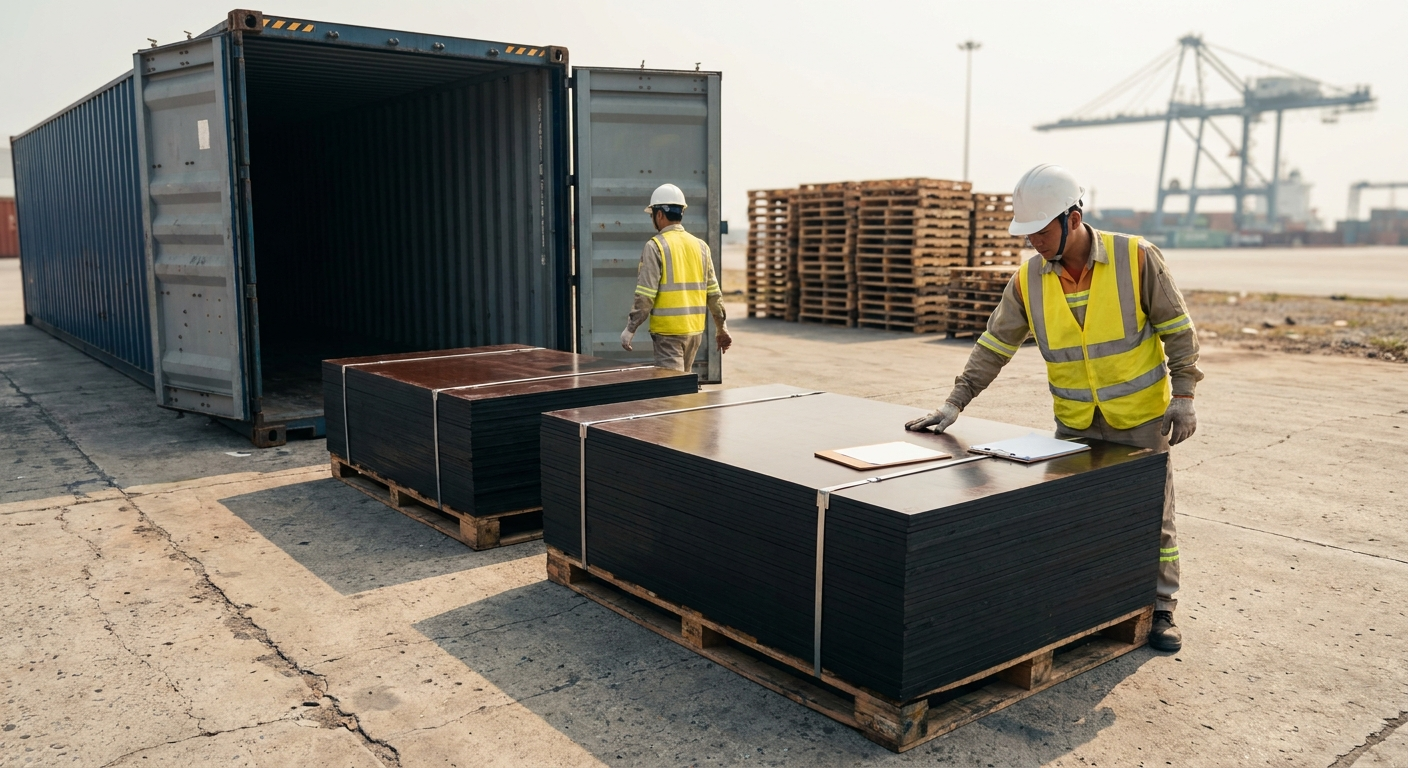
Factory-direct import (container) offers the deepest savings: 25–40% below retail on BS 1088 equivalent panels. A standard 20 ft container holds approximately 280–320 sheets of 18 mm marine plywood. This channel requires managing international freight, customs clearance, and port logistics — but the per-sheet economics are compelling for buyers consuming 2+ containers annually.
The break-even point for factory-direct import depends on local retail pricing, freight costs, and consumption volume. For most US and Australian buyers, the economics favour direct import at volumes above 1–2 containers per year.
How to Get the Best Price on Marine Plywood
Compare multiple suppliers. Pricing for equivalent specifications varies 20–30% between suppliers. Get at least three quotes before committing.
Specify the exact standard. Stating "BS 1088" or "EN 636-3" or "IS 710" in your inquiry prevents apples-to-oranges comparisons. Without a specific standard, suppliers may quote different quality levels at different prices.
Consider Vietnam-sourced marine plywood. Vietnamese manufacturers like Vinawood produce BS 1088 compliant panels using plantation eucalyptus and acacia hardwood at competitive pricing. Factory-direct pricing from Vietnam includes the cost advantage of lower manufacturing costs and managed plantation timber.
Request samples before volume orders. A $20–50 sample order prevents a $5,000+ mistake on a container that does not meet your quality requirements.
Negotiate on CIF terms for import orders. CIF (Cost, Insurance, Freight) pricing includes ocean freight to your destination port, simplifying cost comparison with domestic suppliers.
Cost Per Year: The Real Value Metric
Per-sheet price is the wrong metric for comparing marine plywood to cheaper alternatives. The correct comparison is cost per year of service life.
Consider a permanent outdoor installation (dock surface, outdoor kitchen cabinetry):
| Panel Type | Cost Per Sheet | Expected Lifespan | Cost Per Year |
|---|---|---|---|
| Marine plywood (BS 1088) | $140 | 15–20 years | $7–$9/year |
| Standard exterior plywood | $45 | 3–5 years | $9–$15/year |
| Standard interior plywood | $30 | 1–2 years (outdoor) | $15–$30/year |
Marine plywood's higher upfront cost delivers lower total cost of ownership in any application where the panel will be exposed to sustained moisture for more than 3–5 years. The break-even occurs quickly — typically within 2–3 replacement cycles of cheaper alternatives.
When marine plywood is NOT worth the premium: Temporary installations (event structures, short-term formwork), protected indoor use (climate-controlled interiors), and applications where film-faced plywood provides better value (concrete formwork — film-faced panels offer superior concrete release and higher reuse cycles at lower cost than marine plywood).
Vinawood Marine Plywood: Factory-Direct Pricing
Vinawood manufactures marine plywood at its facilities in Vietnam using plantation eucalyptus and acacia hardwood. The marine plywood collection includes panels from 4 mm to 25 mm in both imperial (2440×1220 mm) and European (2500×1250 mm) sheet sizes.
Key specifications: BS 1088 compliance, EN 314 Class 3 WBP phenolic adhesive, void-free core, FSC chain-of-custody certification, and CARB Phase 2 formaldehyde compliance. Export markets include the Philippines, India, United States, Australia, and the UAE.
Factory-direct pricing from Vinawood eliminates the middleman markup that inflates retail pricing. For volume inquiries, Vinawood provides CIF quotations to destination ports worldwide — contact via vinawoodltd.com.
Frequently Asked Questions
How much does a 4×8 sheet of marine plywood cost?
In the US market, a 4×8 sheet of BS 1088 certified marine plywood in 3/4" (18 mm) thickness typically costs $140–$180 at retail. Generic panels labelled "marine" without BS 1088 certification range from $70–$90. Wholesale and factory-direct pricing is 10–40% lower depending on volume.
Is marine plywood worth the extra cost?
Yes, for applications involving permanent or sustained moisture exposure — boat building, dock construction, outdoor cabinetry in humid climates. The cost-per-year analysis shows marine plywood delivers lower total cost of ownership than cheaper alternatives that require frequent replacement. For temporary or protected installations, standard exterior plywood is sufficient.
Why is marine plywood so expensive?
Five manufacturing factors drive the premium: void-free core construction (higher veneer waste), WBP phenolic adhesive (5–10% more expensive), tighter veneer grading (A/B minimum face grades), tropical hardwood species requirements, and third-party certification testing costs.
What is the cheapest marine plywood?
The lowest-cost panels carrying a "marine" label are typically generic exterior plywood without BS 1088 or equivalent certification. These may use lower-density species, allow some core voids, or use MUF rather than phenolic adhesive. For genuine marine-grade performance at competitive pricing, factory-direct import from certified manufacturers offers the best value.
Is there a cheaper alternative to marine plywood?
For moderate moisture exposure, WBP exterior plywood provides good performance at lower cost. For concrete formwork applications, film-faced plywood is more cost-effective and provides better concrete release than marine plywood. The right alternative depends on the specific moisture exposure and performance requirements of your application.
Category
guides
Related Markets
Related Countries
▶Sources & References (2)
- BS 1088-1:2003 — Marine plywood — Requirements — British Standards Institution (2003)
- Home Depot Marine Plywood Category — The Home Depot (2026)