Best Plywood for Furniture in India: Grades, Thicknesses & Brands Compared (2026)
Choosing plywood for furniture in India is more about grade than brand. This 2026 buyer's guide explains BWR vs BWP vs MR under IS:303 and IS:710, recommends thicknesses for every furniture type, and compares the top 10 domestic brands — with a brand-agnostic framework from a Vietnamese…
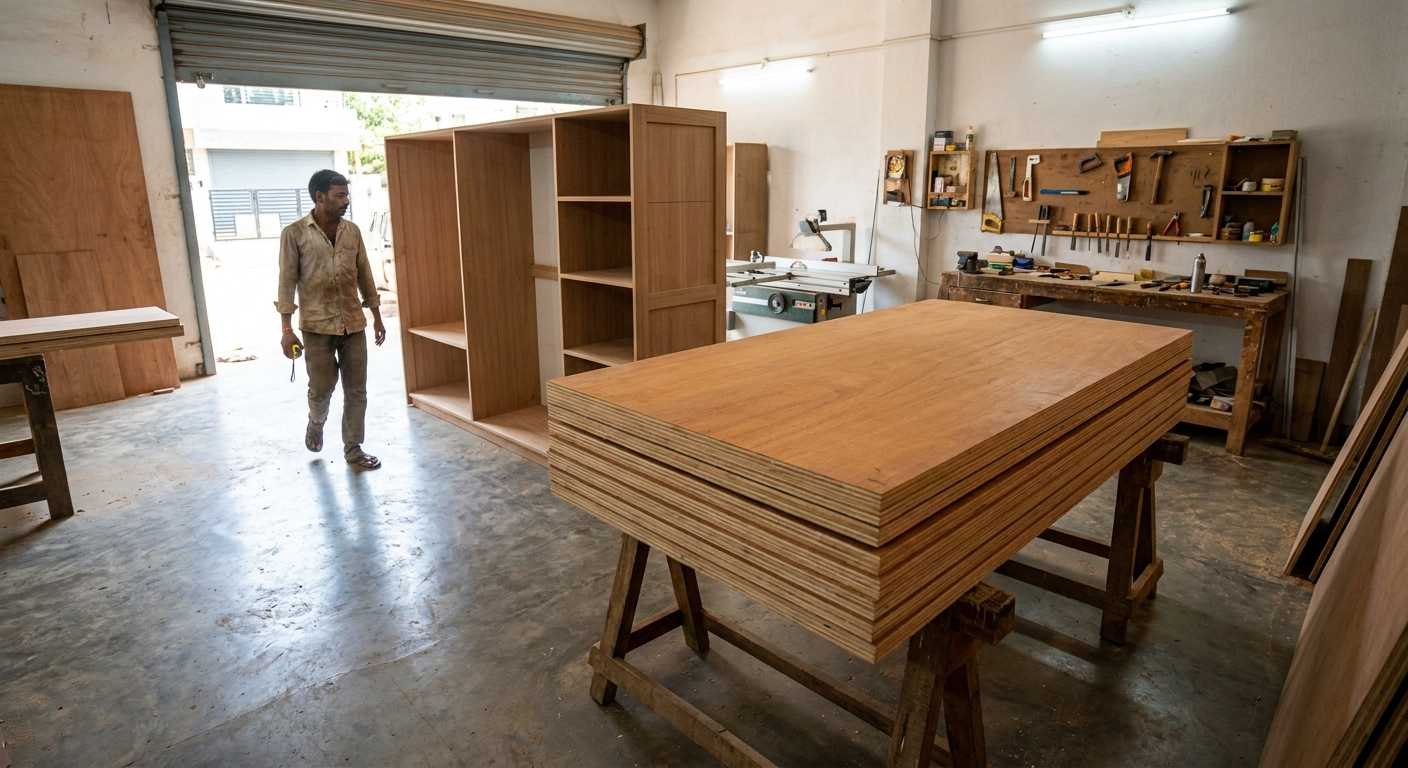
Our Indian distributors hear this question constantly. A buyer at a plywood dealer is staring at three lookalike sheets stamped CenturyPly Sainik 710, Greenply Marine, and Duroply IS:710. Same thickness. Different prices. The dealer has a strong opinion about which one to take home. The buyer wants a second view. What they actually need is a different question. Brand selection is downstream of grade selection, and on Indian residential furniture the grade choice does about 80% of the work.
India's plywood retail aisle carries 10 to 15 domestic brand names with overlapping product lines and an alphabet soup of grades: MR, BWR, BWP, IS:303, IS:710, FR. Two BWR-grade panels from different mills will perform similarly when both genuinely meet IS:303. Two panels from the same mill at different grades will not. This 2026 buyer's guide explains the Indian grade system, gives a thickness-by-furniture-type cheat sheet, walks through what to inspect at the dealer, and lists the brands that hold spec across batches. We export to India and 55+ other markets, with no competitive bias toward any Indian domestic brand.
Why Grade Matters More Than Brand
A panel marked IS:303 BWR has been tested against the same boiling-water-resistance criteria regardless of which mill produced it. Two panels from different brands at the same grade and thickness give similar service if both genuinely meet the spec. Two panels from the same brand at different grades — say an MR and a BWP — give very different service. The BWP outlasts the MR by years in any humid environment. We see this pattern across our Indian customer base: kitchen carcase failures clustered around year three to four on MR-grade panels in monsoon-zone markets, while the same brand's BWP panels in adjacent rooms still hold tight at year ten.
Brand still matters for grade consistency. Some Indian mills hold tight tolerances batch to batch; others let the spec drift on lower-priced lines. The brand premium is real but it's a premium for QC reliability, not for any inherent superiority of the grade itself. Pick the grade for the application first. Then pick a brand within that grade with a track record of meeting spec.
Indian Plywood Grades — IS:303 vs IS:710
Two Bureau of Indian Standards specifications cover the bulk of furniture plywood:
IS:303 — General-purpose plywood. Covers MR (Moisture Resistant) and BWR (Boiling Water Resistant) grades. The standard defines bond performance, dimensional tolerances, and grading.
- MR (Moisture Resistant). Urea-formaldehyde adhesive. Suitable for dry indoor furniture only. Will fail under sustained humidity above 70% RH or repeated wetting. Best fit: bedroom wardrobes, study desks, drawer interiors in air-conditioned rooms.
- BWR (Boiling Water Resistant). Phenolic-modified or melamine-modified adhesive. Handles humid Indian climate and short-term wetting. Best fit: living room furniture, dining tables, beds, wardrobes outside dry zones, almost any general residential furniture.
IS:710 — Marine plywood. The strict marine standard. Requires full WBP phenolic adhesive, denser hardwood core species, no voids in inner plies, and tighter face grade tolerances. The Indian standard for cabinets exposed to sustained moisture.
- BWP (Boiling Water Proof) / Marine grade. Phenolic adhesive throughout, denser hardwood core. Best fit: modular kitchen cabinets near sinks and dishwashers, bathroom vanities, any wet-area cabinetry, and exterior-adjacent furniture.
| Grade | Standard | Adhesive | Boiling-water test | Best for |
|---|---|---|---|---|
| MR | IS:303 | Urea-formaldehyde | Fails | Dry bedroom furniture |
| BWR | IS:303 | Phenolic / Melamine | Passes 8 h cycle | General residential furniture |
| BWP / Marine | IS:710 | Full phenolic (WBP) | Passes 72 h cycle | Kitchens, bathrooms, wet zones |
| FR | IS:5509 | Phenolic + FR additive | Passes | High-rise commercial, public buildings |
For the global standards comparison and how IS:710 maps to BS 1088 marine grade, see marine plywood vs regular plywood and what marine plywood actually means.
Plywood Thickness for Furniture (mm)
Thickness selection by furniture component:
- 6 mm. Wardrobe back panels, drawer bottoms, dust panels, lightweight partition cladding inside cabinets.
- 9 mm. Drawer sides, lightweight back panels, internal partitions in low-load applications.
- 12 mm. Internal cabinet partitions, drawer sides for heavier-loaded drawers, cabinet bottoms in non-load-bearing positions.
- 18 mm. The dominant furniture thickness — cabinet sides, tops, shelves, bed frames, dining table tops, wardrobe carcase, study desk tops.
- 25 mm. Heavy-load applications: TV unit tops carrying large screens, dining tables with stone tops, kitchen counter substrates beneath solid surfaces.
For most residential furniture, 18 mm is the right starting point and you can step up or down from there. Furniture manufacturers building modular wardrobes typically default to 18 mm BWR for the carcase, with 6 mm back panels and 12 mm internal partitions.
Top 10 Indian Plywood Brands
The Indian plywood market has roughly 10 brands with national or near-national distribution. All are listed neutrally; brand reputation in the Indian market is well-documented but does not constitute a quality endorsement here.
- CenturyPly (Century Plyboards (India) Ltd.) — the largest organised player; broad product range from MR through marine and FR grades.
- Greenply (Greenply Industries) — strong national distribution, premium and value lines.
- Duroply (Duroply Industries) — long-established mill with strong reputation in eastern India.
- Kitply (Kitply Industries) — broad commercial and marine range with established BIS compliance.
- Sylvan Ply (Sylvan Plyboard) — strong in eastern and northern markets; consistent BWR and BWP lines.
- Mikasa Ply — premium positioning with calibrated and decorative ranges.
- Plyneer — mid-tier brand with broad SKU range.
- Thamesply — regional brand with growing national presence.
- Saburi Ply — value-tier brand with broad availability in southern and western markets.
- Royale Touche — premium decorative and laminated plywood with broad retail presence.
Pricing across brands typically ranges from ₹45–₹120 per sq.ft for 18 mm furniture-grade panels in 2026, with marine grades sitting at the upper end. Indicative ranges only; verify with local dealers as raw material costs and freight variability move retail pricing month to month.
Core Species — Gurjan, Eucalyptus, Acacia, Poplar
The hardwood species in the core veneers affects screw retention, density, and dimensional stability:
Gurjan (Dipterocarpus). Premium hardwood traditionally used in top-tier Indian plywood. Dense (~720–780 kg/m³), excellent screw-holding, tight grain. Increasingly substituted with plantation species as Gurjan supply tightens.
Eucalyptus. Plantation-grown hardwood, the workhorse species in modern Vietnamese and Indian export plywood. Density ~620–680 kg/m³, good screw retention, sustainable supply chain. The dominant core species in our commercial range.
Acacia. Plantation-grown hardwood, slightly lower density than eucalyptus (~580–620 kg/m³) but well-suited to general furniture applications. Mainstream in both Indian and Vietnamese mills.
Poplar. Lightweight species (~430–500 kg/m³) common in budget Indian plywood. Lower screw retention than hardwood cores; better suited to lightweight or non-structural applications.
For the deeper density-to-strength relationship, see our plywood density reference.
What to Check Before You Buy — 8-Point Inspection
An inspection routine before paying at the dealer:
- BIS marking. A genuine IS:303 or IS:710 stamp with a traceable certificate number. The BIS portal (bis.gov.in) lists certified mills — verify before accepting premium-grade lots.
- Thickness consistency. Measure the panel at multiple points along its length. A uniform thickness within ±0.5 mm signals good QC; tapering or local thin spots signal weak production.
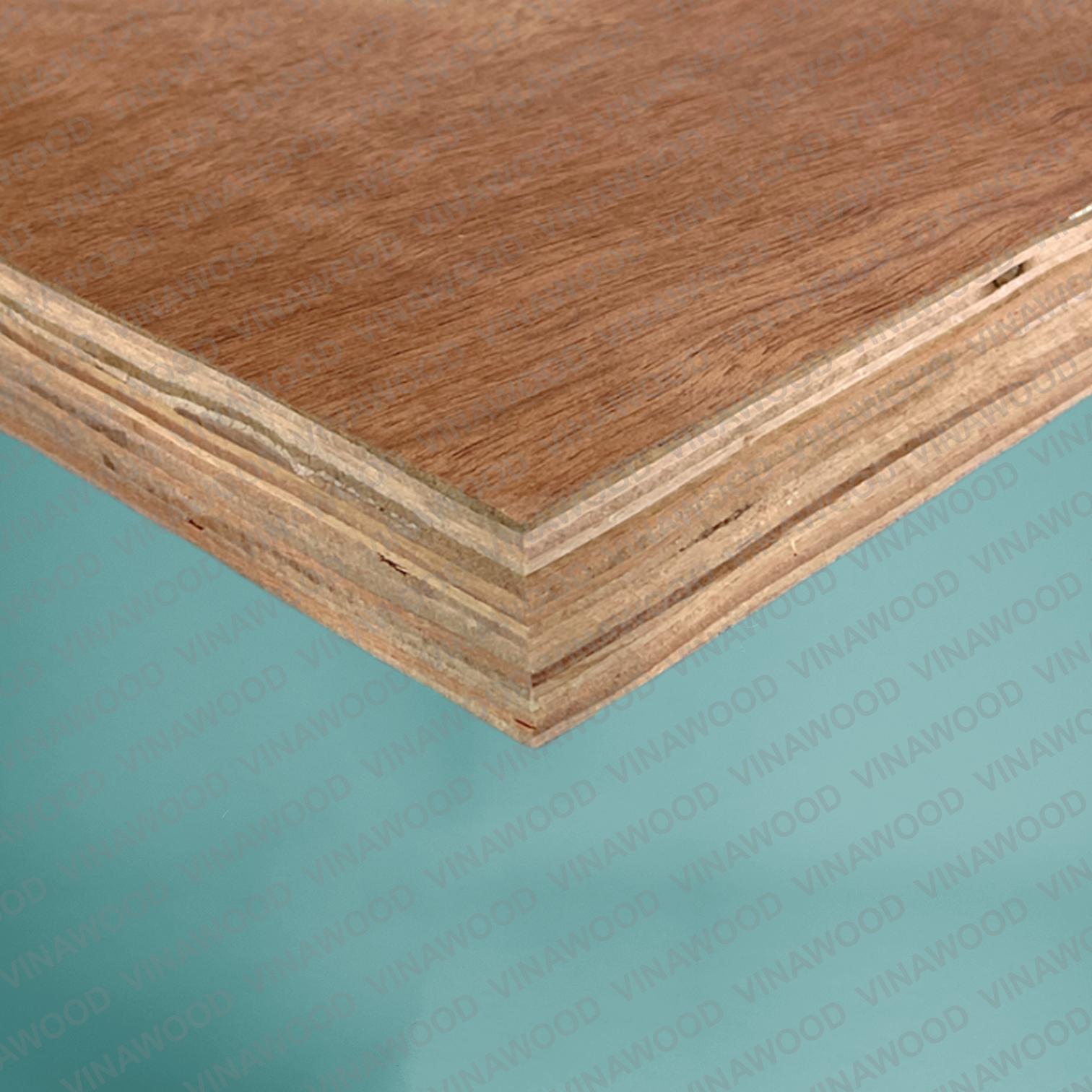
- Edge condition. No visible voids, no large gaps in the glue line, no crushed or splintered corners. Edge integrity is the best single indicator of overall panel quality.
- Core uniformity. Examine the cross-section. Veneer plies should be uniform thickness, no large core voids, no excessive overlaps in the veneer layup.
- Veneer count and balance. A balanced odd-ply construction (5, 7, 9, 11 plies depending on thickness). An 18 mm panel typically has 11–13 plies in premium grades.
- Surface smoothness. Sanded, paint-ready face for most furniture grades. Hammered repairs are acceptable in BB and CP grades; open knots and splits are not.
- Weight per sheet. Heavier sheets indicate denser core species and tighter pressing. An 18 mm 8×4 ft hardwood-core sheet should weigh 28–34 kg.
- Boiling-water test (for BWR / BWP claims). Many Indian dealers offer a small-sample boiling test on premium grades. A genuine BWR panel sample boiled for 8 hours should not delaminate; a BWP panel sample should survive 72 hours of cyclic boiling. Refusal to demonstrate the test on premium-grade purchases is a warning sign.
Best Plywood by Furniture Type
A by-furniture cheat sheet for typical Indian residential applications:
- Wardrobe. 18 mm BWR for the carcase (sides, top, bottom, shelves), 12 mm BWR for internal partitions, 6 mm BWR for the back panel.
- Bed. 18 mm BWR for the headboard and side rails, 12 mm BWR for the slat platform (or solid timber slats), 6 mm BWR for the back panel of the bed frame.
- Dining table. 25 mm BWR for the top (or 18 mm BWR with a thicker laminate); 18 mm BWR for the legs and stretchers.
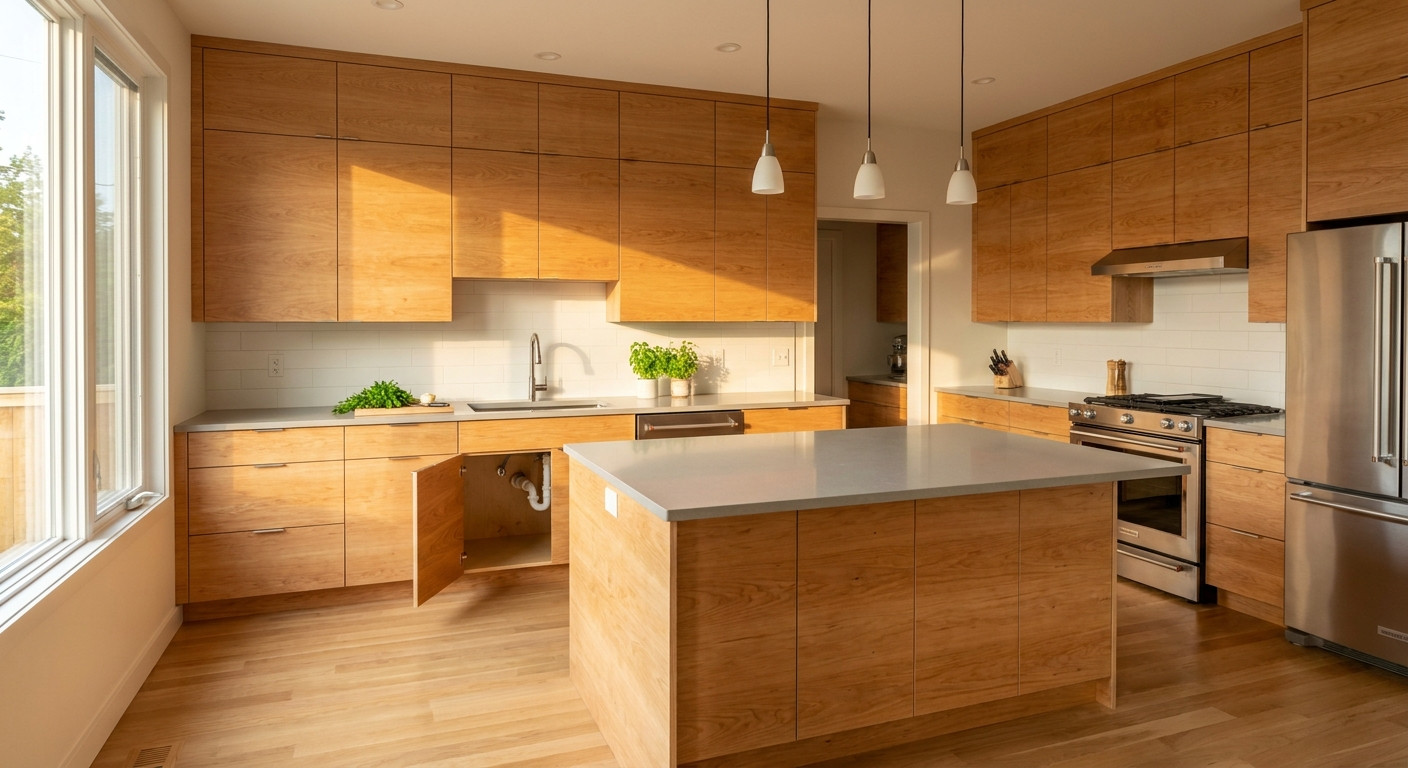
- Modular kitchen cabinets. 18 mm BWP / marine grade throughout. The cost premium over BWR pays back through years of additional service in the wet kitchen environment.
- Bathroom vanity. 18 mm BWP / marine grade throughout, with sealed cut edges before installation.
- Study table / home office desk. 18 mm MR grade if the room is dry and AC-controlled; 18 mm BWR if the room sees humid conditions or monsoon-period dampness.
- TV unit. 18 mm BWR for the carcase, 25 mm BWR for the top if a heavy TV (>30 kg) sits on it.
- Bookshelf. 18 mm BWR for shelves under 900 mm span; 25 mm BWR for shelves over 900 mm span carrying full book loads.
For deeper kitchen and cabinet specifications, see our marine plywood for kitchen cabinets and plywood for cabinets guides.
Calibrated Plywood — Why It Matters for Modular Furniture
Modular cabinet and wardrobe manufacturers depend on tight thickness tolerance to assemble consistent, square units. Standard plywood under EN 315 / IS:303 tolerances allows +0.7 / –0.9 mm on 18 mm sanded panels. "Calibrated" plywood holds the tolerance to ±0.2 mm or tighter through additional sanding after pressing.
For DIY furniture and one-off projects, standard tolerance is fine. For modular kitchen, modular wardrobe, and any pre-laminated cabinet system where parts must align across units, calibrated grade is worth the 5 to 10% premium. Most Indian premium brands offer calibrated lines under specific SKUs (often labelled "Club Premier" or "Calibrated 17" / "Calibrated 18").
Plywood vs MDF vs HDF for Indian Furniture
A quick decision framework:
Plywood. Structural and long-term furniture. Holds screws across the panel thickness. Survives humidity when grade is matched to the climate. The default for any furniture expected to last 10+ years.
MDF (Medium Density Fibreboard). Smooth, paint-ready faces ideal for painted cabinet doors, decorative mouldings, and furniture pieces with curved or shaped edges. Poor moisture tolerance. Swells permanently when wetted. Lower screw-holding than plywood. Acceptable for dry-zone painted furniture; not for kitchens, bathrooms, or sustained-humidity applications. See what is MDF for the construction comparison.
HDF (High Density Fibreboard). Denser cousin of MDF, used for laminated flooring substrates and pre-laminated thin panels. Better dimensional stability than MDF but still poor moisture tolerance. See HDF plywood guide.
Particle board. Lowest-cost engineered panel. Common in budget flat-pack furniture. Should be assumed not moisture-tolerant unless specifically rated.
For furniture intended to last, plywood is the structurally appropriate choice. MDF and HDF have legitimate roles in painted decorative components and shaped pieces, but they should not substitute for plywood in load-bearing or moisture-exposed positions.
Where to Buy in India
Local plywood dealer. The Indian default. Lets you inspect the actual stock, request small samples, and negotiate pricing. Best for projects under 50 sheets and for buyers wanting hands-on quality verification.
Online (IndiaMART, e-commerce platforms). Convenient for known brands and standard SKUs. Lower price-discovery but harder to verify panel quality before delivery. Useful for repeat orders of brands you have already tested.
Direct-from-mill (Indian brands). Available for commercial and project-scale buyers (typically 200+ sheets per order) through brand authorised dealer networks or direct sales teams.
Direct-from-Vietnam container imports. An option for furniture manufacturers, large interior projects, and modular cabinet companies consuming 1+ container per quarter. A 40HQ container holds approximately 600 sheets of 18 mm plywood. Per-sheet landed cost typically lands meaningfully below Indian retail at container volume; trade-offs are 30–45 day lead time, BIS compliance for the imported lot, and storage on arrival. Worth evaluating for sustained buyers.
For Vietnam plywood import logistics into India, see our importing Vietnam plywood to India guide.
Vinawood for the Indian Market
Vinawood is a Vietnamese plywood manufacturer (est. 1992) exporting to 55+ countries including India. For the Indian furniture and modular cabinet market, the relevant Vinawood ranges are:
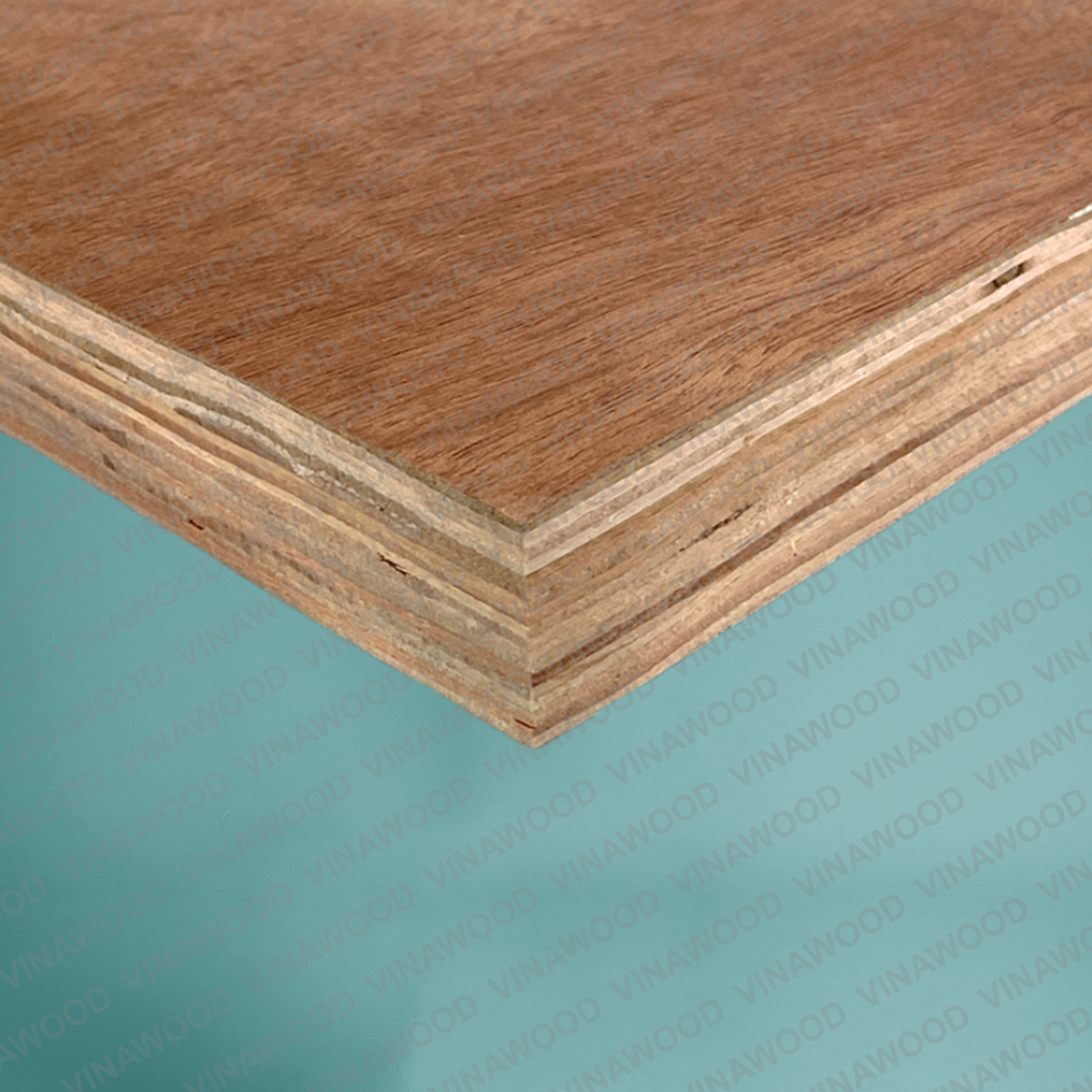
- Commercial plywood for general furniture-grade applications, eucalyptus / acacia hardwood core, FSC and CARB-P2 certified. See the commercial plywood collection.
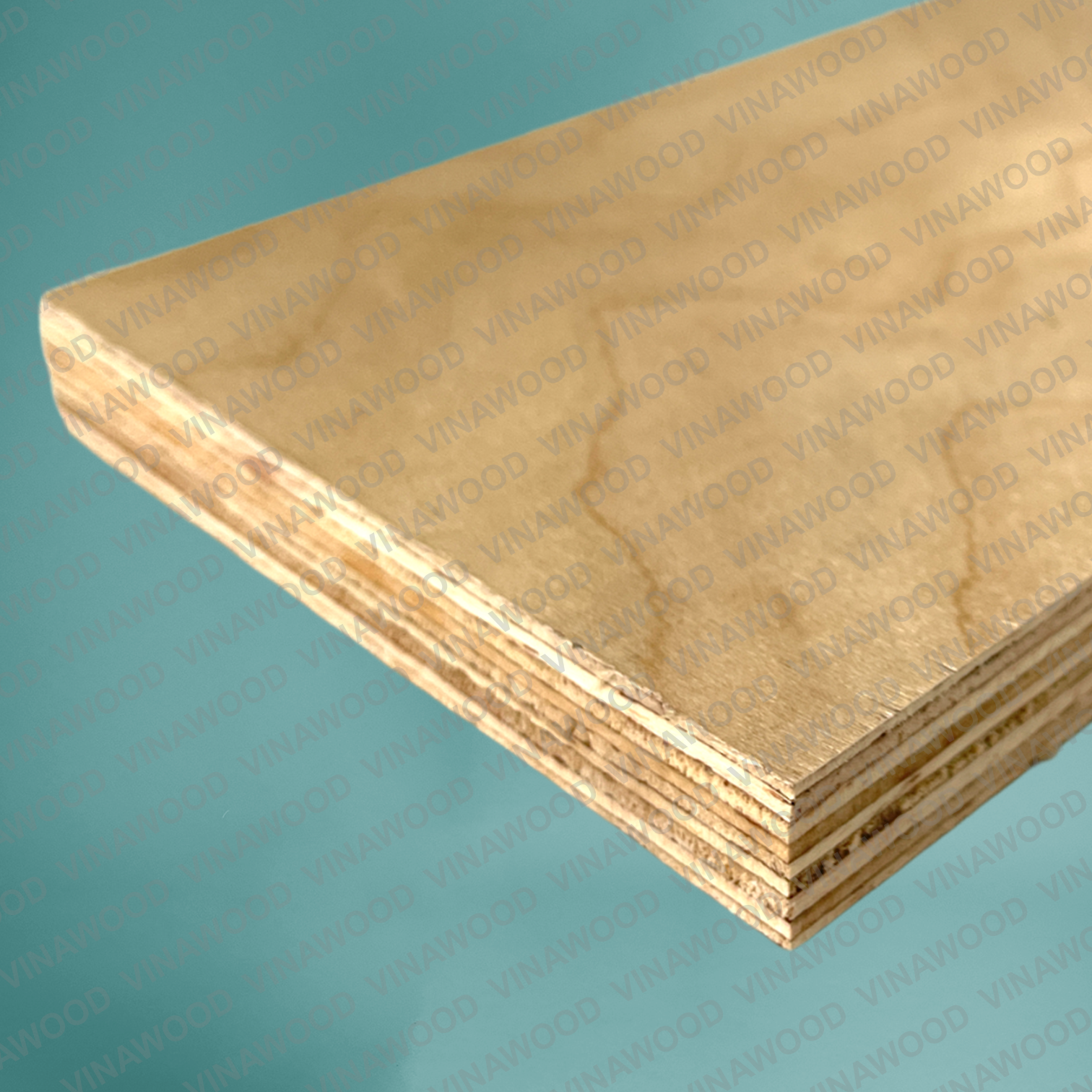
- Marine plywood for kitchen, bathroom, and wet-zone cabinet applications, full WBP phenolic adhesive. See the marine plywood collection.
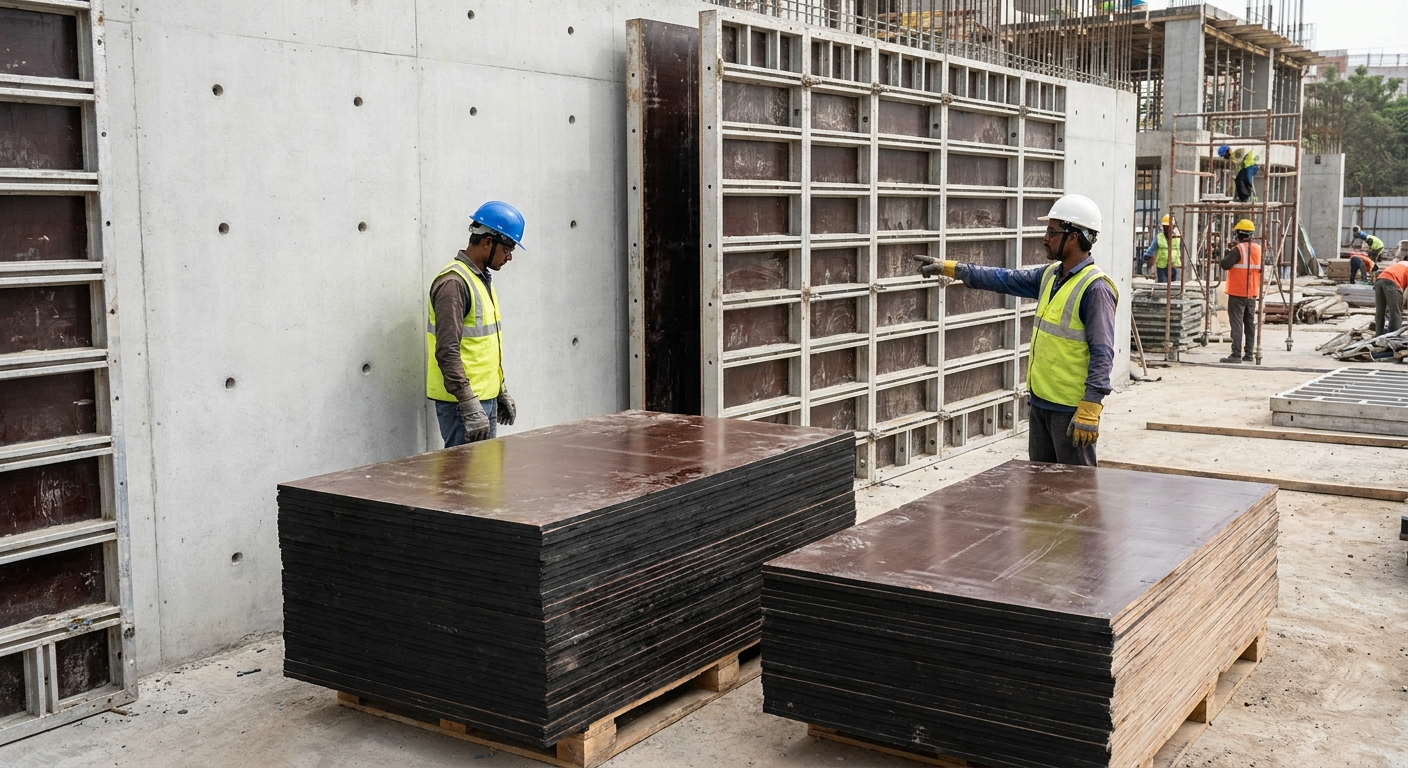
For project-scale Indian buyers (modular kitchen manufacturers, large interior projects), container-volume direct imports are an alternative to domestic brand pricing, with the trade-offs in lead time and import logistics noted above. Verify BIS compliance for the imported lot before shipping; for Indian shuttering and formwork plywood specifications, see also shuttering plywood India.
Frequently Asked Questions
Which is the best plywood for furniture in India?
For most Indian residential furniture, BWR-grade 18 mm plywood (IS:303) is the practical sweet spot. It handles the country's humid climate without the cost premium of marine grade. For modular kitchens and bathroom cabinets, BWP / marine grade (IS:710) is mandatory. Brand selection should be secondary to grade selection; CenturyPly, Greenply, Duroply, Sylvan Ply, and Kitply are well-regarded for grade consistency, but any BIS-certified mill meeting the specification will perform similarly.
What is the difference between BWR and BWP plywood?
BWR (Boiling Water Resistant) plywood under IS:303 uses phenolic-modified or melamine-modified adhesive and passes an 8-hour boiling-water test. BWP (Boiling Water Proof) plywood under IS:710 uses full WBP phenolic adhesive and passes a 72-hour cyclic boiling test, plus has denser hardwood core species and tighter grade tolerances. BWR is the practical default for general furniture; BWP is for kitchens, bathrooms, and any sustained-moisture application.
Is 18 mm plywood enough for a wardrobe?
Yes. 18 mm BWR plywood is the Indian standard for wardrobe carcase construction (sides, top, bottom, shelves). Use 12 mm for internal partitions and 6 mm for back panels. The full carcase is over-spec at 25 mm except for very tall (2.4 m+) wardrobes carrying heavy loads.
Which plywood brand is the most reliable in India?
Brand reliability in the Indian market is well-documented for grade consistency, but no single brand is universally "best". Different brands lead in different segments. CenturyPly and Greenply are the broadest national players. Duroply, Sylvan Ply, and Kitply have strong reputations in specific regions and segments. The BIS mark on the panel matters more than the brand name on the stamp.
What thickness plywood is best for kitchen cabinets in India?
18 mm BWP / marine grade (IS:710) for the cabinet carcase, including sides, bottom, and shelves. 6 mm BWP for the back panel. The marine-grade premium pays back through years of additional service in the wet kitchen environment. Always seal cut edges with epoxy or PVC edge banding before installation. The bond class protects the panel core, but moisture entering through unsealed cut edges still shortens service life.
How much does plywood for furniture cost in India?
Indicative 2026 pricing: 18 mm BWR-grade furniture plywood typically runs ₹55–₹85 per sq.ft, depending on brand and core species. 18 mm BWP / marine grade runs ₹85–₹130 per sq.ft. Calibrated premium grades sit at the top of these ranges. A standard 8×4 ft sheet (32 sq.ft) at ₹70/sq.ft for BWR runs roughly ₹2,240 retail. Pricing varies by region, brand, and date, so verify with local dealers.
Can I use MR-grade plywood for kitchen?
No. MR-grade plywood uses urea-formaldehyde adhesive that fails under sustained humidity above 70% RH, which is standard kitchen conditions. The cabinet face veneers may look fine for the first year, but the core delaminates within 2–3 years in active kitchen service. Use BWP / marine grade (IS:710) for any kitchen cabinet, regardless of cost pressure.
What is the difference between plywood and plyboard for Indian furniture?
Plywood is cross-laminated wood veneers throughout; plyboard (also called block board) has a solid softwood-strip core sandwiched between thin veneer or plywood faces. Plywood is stronger across spans, holds screws better across the panel thickness, and (when WBP-bonded) handles humidity reliably. Plyboard is lighter and cheaper at the same thickness but the softwood core swells if water reaches it through cut edges. For most Indian furniture, plywood is the default; plyboard works for lightweight dry-zone furniture only.
Is Vietnamese plywood good for Indian furniture?
Yes. Vietnamese plywood is a major export category in the Indian market, particularly for modular kitchen and furniture manufacturers ordering at container volume. Quality Vietnamese mills (FSC and CARB-P2 certified, eucalyptus / acacia hardwood core, full WBP phenolic adhesive on marine grades) match Indian premium brand specifications and typically land 15–25% below domestic retail at container volume. The trade-off is the 30–45 day import lead time and BIS compliance documentation for the imported lot.
Plywood selection for Indian furniture is more about discipline than discovery. Pick the grade that matches the room's humidity environment, the thickness that matches the structural load, and a BIS-certified brand with a track record of holding spec across batches. The 8-point inspection routine at the dealer catches almost every quality issue before it reaches the workshop. Get those three layers right and you'll have furniture that outlasts the next decade of Indian monsoons.
Category
guides
Related Markets
Related Products
▶Sources & References (5)
- IS 303:2017 — Plywood for General Purposes — Specification — Bureau of Indian Standards (BIS) (2017)
- IS 710:2010 — Marine Plywood — Specification — Bureau of Indian Standards (BIS) (2010)
- IS 5509:2000 — Fire Retardant Plywood — Specification — Bureau of Indian Standards (BIS) (2000)
- EN 13986:2004+A1:2015 — Wood-based panels for use in construction — European Committee for Standardization (CEN) (2015)
- Wood Handbook — Wood as an Engineering Material (Chapter 12) — USDA Forest Products Laboratory (2021)