VINAWOOD – Vietnam Plywood Supplier & Manufacturer
♻Evergreen·6 min read
Formwork Plywood: Advantages, Types, and Applications
Formwork plywood is a crucial material in modern construction, widely used for creating strong, durable molds for concrete structures. Understanding the advantages, types, and common applications of formwork plywood will help builders and contractors choose the right materials for their projects.…
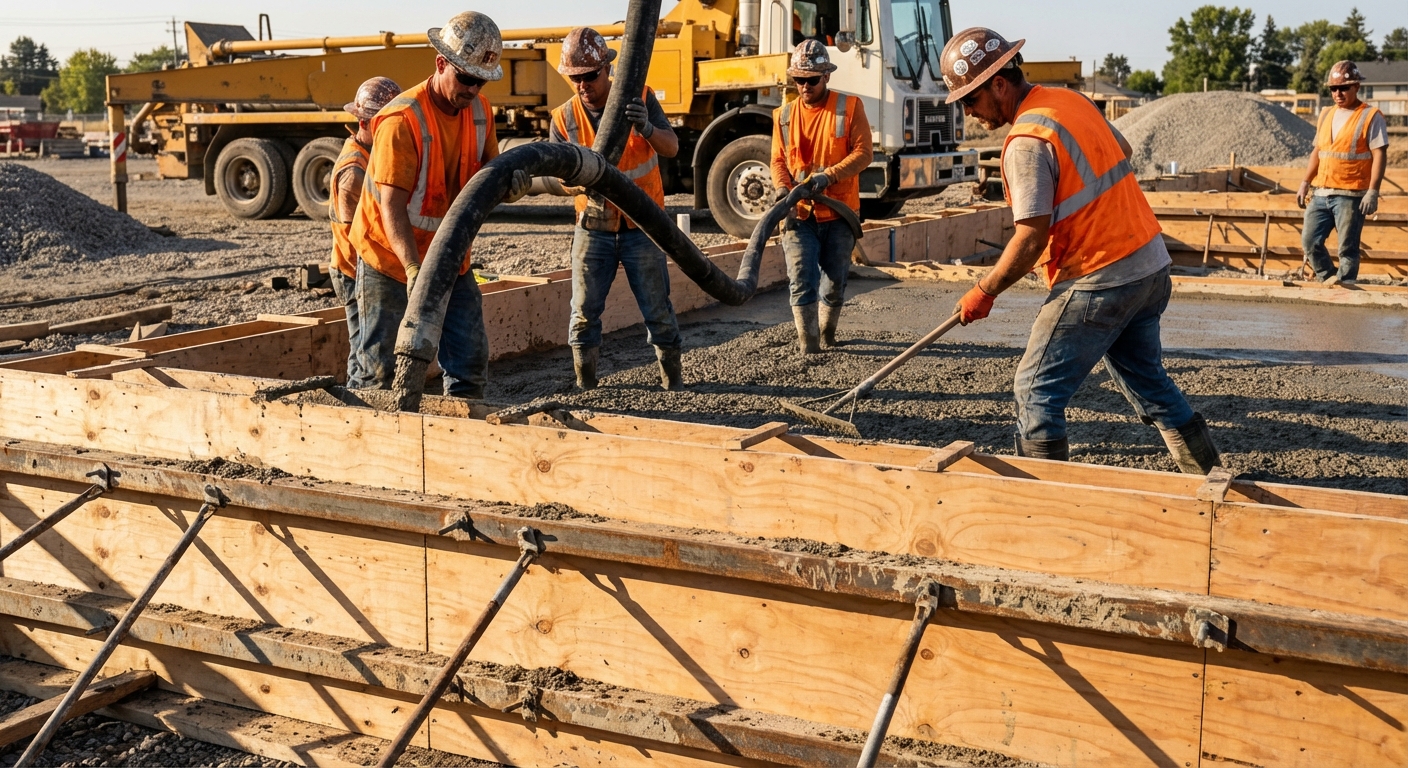
Formwork plywood is a core material in modern construction, used to create strong, reusable molds that shape concrete until it cures. Choosing the right panel — and the right grade and standard for the job — is what separates a clean structural pour from a patchy one. This guide covers the advantages, the panel types, the grade and standard systems used across the US, Europe and Australia, and how to match a panel to the work.
What is plywood formwork?
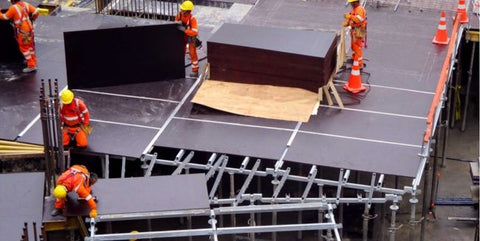
Plywood formwork (plywood forms) is a temporary structure of plywood panels that shapes and supports freshly poured concrete until it hardens. It acts as a mold, holding the concrete to the designed shape and giving the cast face its finish.
It is a relatively light, durable forming system that delivers a quality concrete face. The panel is built from cross-laminated veneer layers; the real driver of the cast result is the surface overlay — the film pressed onto the plywood face. Core species (poplar, eucalyptus, acacia, birch and others) matter for weight and stiffness, but the overlay decides the concrete finish.
Advantages of plywood formwork
Plywood is weather-resistant and does not bond to concrete when a release agent is used. Cross-laminated construction makes it stiff and resistant to splitting. The main advantages:
- Delivers a quality concrete cast surface
- Favourable weight-to-strength ratio
- Low deflection from inherent panel stiffness
- Reusable across multiple pours when cared for
- Panel shear strength roughly double that of solid timber, from the cross-laminated structure
- Easy to cut and fix with standard tools and fasteners
- Easy to handle on site
- Available in a wide range of sizes
Different types of plywood for formwork
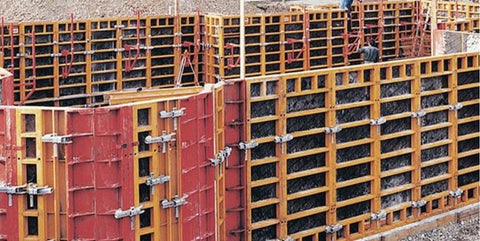
Forms are used as forming panels or as form liners. Forming panels give both the surface texture and the structural strength to hold the fresh concrete; form liners only impart texture and ride on a backing panel that carries the load. The main panel types:
Film-faced plywood
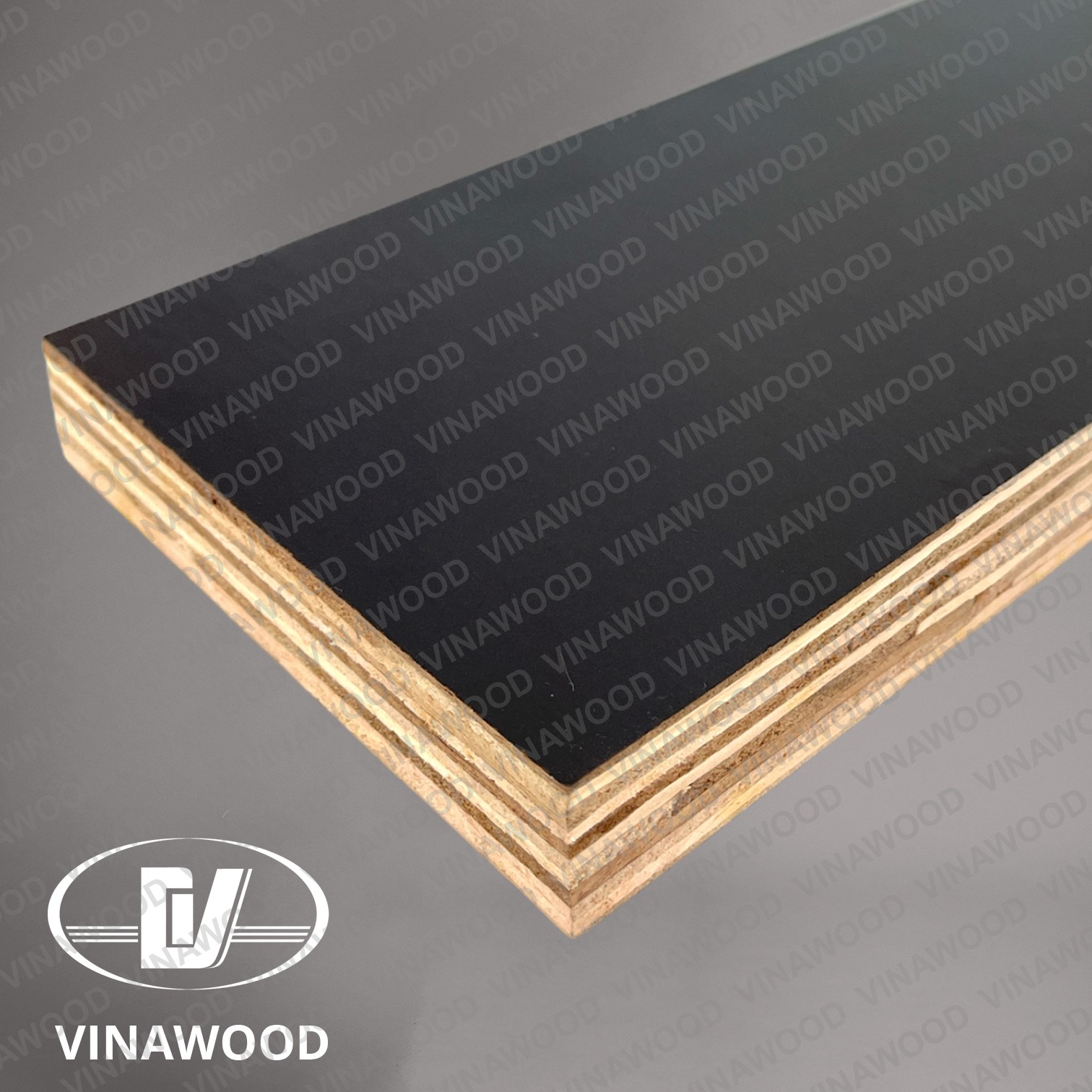
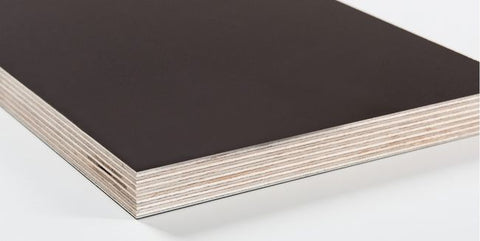
For most concrete work, film-faced plywood is the reference panel. The surface film is paper impregnated with resin, hot-pressed onto the face. It resists abrasion, moisture, chemicals, insects and fungi, and gives a smooth, easy-to-clean face that releases cleanly.
HDO plywood
HDO (high density overlay) carries a higher-resin overlay, so the face is harder and more water- and impact-resistant than MDO forming panels. It supports more reuses and a smoother concrete finish, which is why HDO Plyform is the choice for high-rotation structural work.
MDO plywood
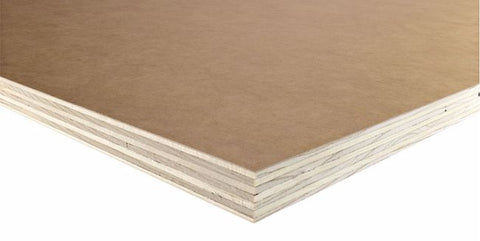
MDO (medium density overlay) uses a thicker, higher-resin surface than ordinary film, and is engineered for a matte concrete finish rather than a glossy one. It masks imperfections and reduces grain transfer onto the cast face. For a side-by-side of the two overlays, see HDO vs MDO plywood.
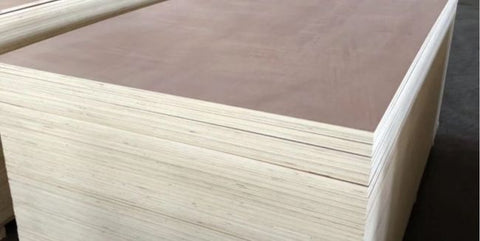
Wood-veneer faced plywood
Uncoated wood-veneer faced plywood is the lowest-cost forming option. A release oil is usually applied to the face on site, since there is no overlay to ease stripping. It suits low-reuse, non-architectural work.
Specialty plywood
Specialty forms carry proprietary overlays — laminated plastic, epoxy resin, metal, or glass-fibre-reinforced plastic. Metal and fibreglass overlays can add stiffness as well as a release surface. Follow the manufacturer's design and surface-treatment specifications for these panels.
Formwork Plywood Grades & Standards Compared
"Type" tells you the overlay; "grade and standard" tells you what the panel is rated to do. Specifiers ask which grade of plywood to use for formwork because the answer changes by region. Three systems dominate.
Face-veneer grades (A, B, C, D, B-B)
Face-veneer grades describe the visible veneer quality, from A (smooth, repaired) down to D (open defects allowed). Formwork rarely needs Grade A, because the overlay — not the veneer — forms the concrete face. A B-B panel (solid B-grade veneer both sides) under a phenolic film is the typical formwork construction. The grade matters more for the panel's repairability and edge quality than for the cast surface.
United States — APA Plyform
In the US, structural forming panels are graded under APA Plyform, manufactured to the PS 1 product standard and APA's PRP-108 performance spec. Plyform Class I is the higher-stiffness grade; Class II is slightly lower. B-B Plyform is the mill-oiled base panel; HDO and MDO overlay grades sit above it for finish and reuse. Structural I Plyform is specified where the highest cross-panel strength is needed. For most US structural pours, the choice is between B-B Plyform for short runs and HDO for high-rotation work.
Europe — EN 636 and EN 13986
European panels are classified by bond class under EN 636 and CE-marked under EN 13986. EN 636-2 (Class 2) covers humid conditions; EN 636-3 (Class 3) covers exterior exposure and the heavier reuse that structural formwork demands. This maps directly onto adhesive systems. Vinawood's Form Basic, Form Extra and Eco Form range use a WBP melamine core glue (MUF) rated to Class 2 / EN 636-2. The phenolic-bonded panels — Pro Form and the HDO range — are Class 3 / EN 636-3. One point worth being exact about: Form Extra reaches up to 15 reuses on a more durable, higher-melamine-content MUF glue, not by jumping a bond class. It stays an EN 636-2 panel; only the phenolic range is EN 636-3.
Australia — Formply F-grades
Australian formwork plywood (Formply) is stress-graded under AS 6669, from F11 up to F27. The number is the characteristic stiffness/strength grade, not a veneer grade. F17 is the common structural Formply specification for general building work; higher F-grades go to engineered formwork carrying greater loads.
Standards at a glance
| Region | Standard | Grade / class | Bond | Typical Vinawood match |
|---|---|---|---|---|
| United States | APA Plyform (PS 1, PRP-108) | Class I / II, B-B, HDO, MDO | Phenolic (exterior) | HDO range, MDO range |
| Europe / UK | EN 636 + EN 13986 (CE) | Class 2 (636-2) / Class 3 (636-3) | MUF melamine (Class 2) or phenolic (Class 3) | Form Basic / Form Extra (636-2); Pro Form (636-3) |
| Australia | AS 6669 | F11–F27 (F17 common) | Phenolic (Type A) | Film-faced / HDO to F-grade |
From a Vietnamese mill perspective, most export buyers do not need the highest grade in their system — they need the grade that matches reuse target and finish. We see far more spec errors from over-specifying Grade A faces than from bond class.
Matching grade and standard to the job
Match the panel to the finish and the reuse target. For an exposed architectural face or high-rotation structural work needing Class 3 / EN 636-3, specify Pro Form or the HDO range — never Form Basic or Form Extra, which are EN 636-2 panels. For matte-finish concrete, an MDO panel gives the matte face where glossy film-faced would leave a sheen. For short runs and general walls and columns at Class 2, film-faced Form Basic or Form Extra is the cost-matched choice.
Applications of plywood formwork
Walls and columns
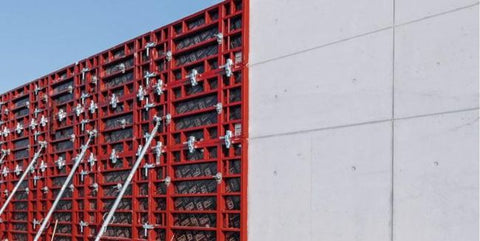
Plywood formwork adapts to the shapes needed for walls and columns, configured as framed, area, side-support, climbing, circular or column systems to suit the structure.
Slabs
For slabs, plywood forms ceiling slabs, slab tables, drop beams and similar elements, carried on props and bearers.
Infrastructure
On tunnels, bridges and other large works, durability under continuous pouring is what counts. These projects use customised systems — crane-climbing formwork, shaft platforms, configured tunnel forms — often combined with steel components.
How to Choose the Right Formwork Plywood
- Thickness and size: 12 mm to 18 mm is typical, matched to support spacing and pour height.
- Overlay and finish: film-faced or HDO for repeated use and a glossy face; MDO for a matte face.
- Bond class and standard: match EN 636-2 / EN 636-3, APA Plyform class, or AS 6669 F-grade to the reuse target and exposure.
- Supplier and documentation: choose a manufacturer that ships full compliance papers (CE, EPA, FSC) with each consignment.
With the right grade and overlay matched to the pour, plywood formwork delivers a clean cast face and a low cost per square metre across its reuse life. From residential footings to infrastructure, the panel choice comes down to overlay, bond class and the regional standard the project is built to.
▶Sources & References (3)
- PS 1-19 Structural Plywood (Voluntary Product Standard) — APA — The Engineered Wood Association (2019)
- EN 636:2012+A1:2015 — Plywood Specifications — European Committee for Standardization (CEN) (2015)
- AS 6669-2016 — Plywood — Formwork — Standards Australia (2016)