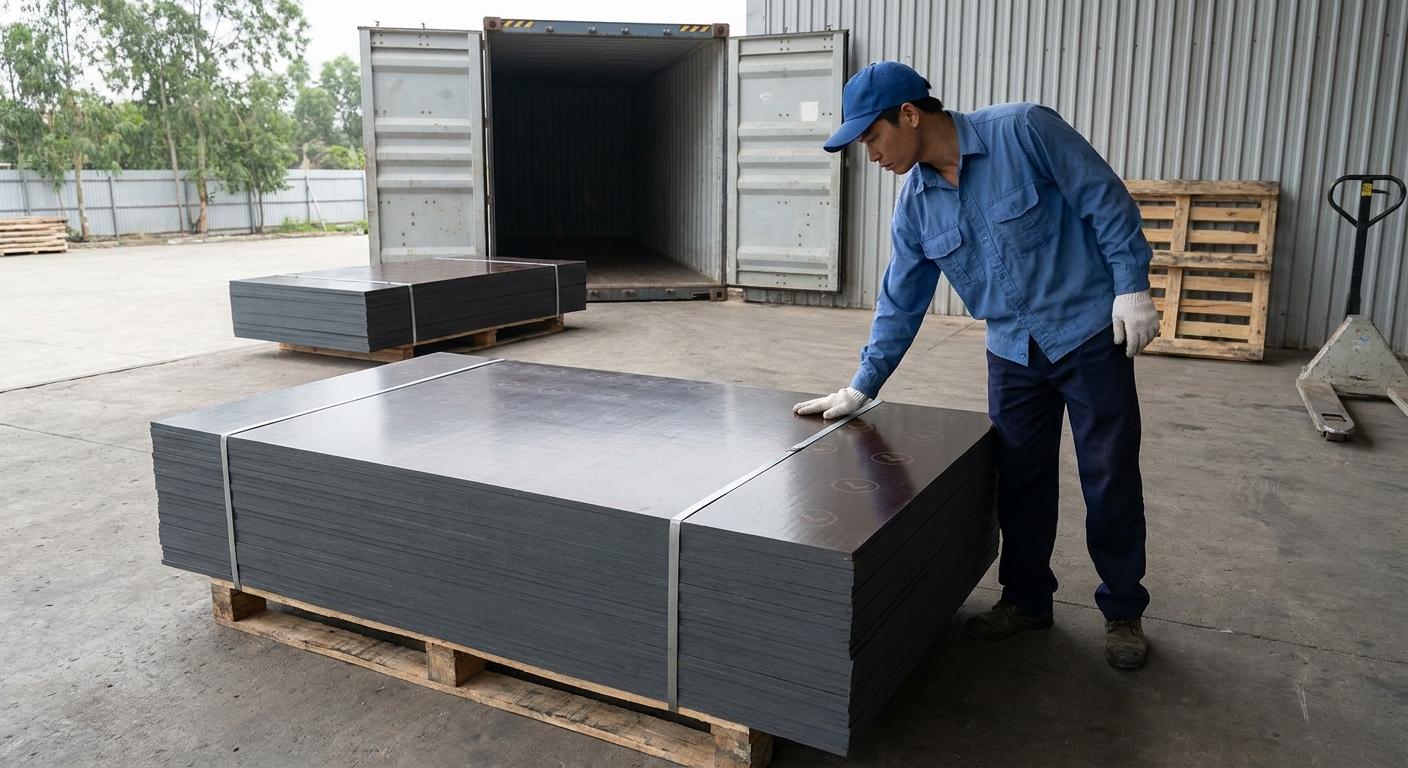
H20 Timber Beams: Specifications, Load Capacity & Formwork Guide
Complete guide to H20 timber beams in formwork: specifications, load capacity tables, system design with plywood panels, and how to choose between timber, steel, and aluminum beams for your project.
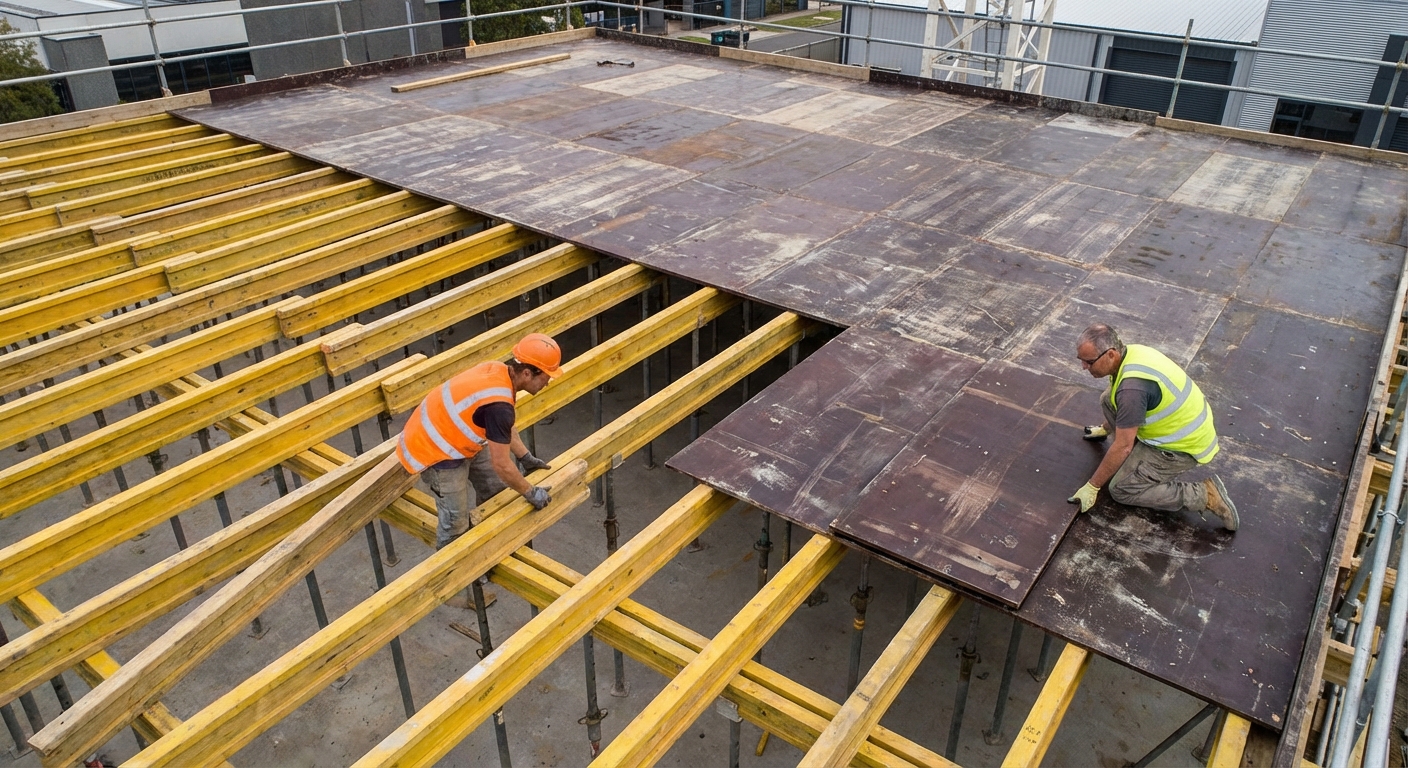
H20 timber beams are the structural backbone of modern formwork systems worldwide. They sit between the support props below and the plywood form panels above, carrying the full weight of wet concrete across every slab, wall, and column pour on a construction site. Understanding their specifications, load capacity, and how they pair with plywood panels is essential for anyone involved in formwork design, procurement, or site supervision.
This guide covers everything contractors, engineers, and procurement managers need to know about H20 timber beams — from construction and materials through span tables, system design, and maintenance. Vinawood does not manufacture H20 beams, but as a formwork plywood manufacturer exporting to 19+ countries since 1992, we understand how beam selection and plywood selection interact within the same system — and that knowledge is built into every section of this guide.
What Are H20 Timber Beams?
H20 timber beams are engineered I-beams designed specifically for concrete formwork. The name "H20" refers to the standard beam height of 200 mm — the most common size used in commercial and residential construction globally. The I-beam profile delivers a high stiffness-to-weight ratio, allowing a single worker to handle beams that would be too heavy in solid timber or steel equivalents.
In a formwork system, H20 beams serve as the primary and secondary structural members that span between support props (for slab formwork) or between form ties (for wall formwork). Formwork plywood panels sit directly on top of these beams, and together they form the mould that shapes the concrete until it cures. The beam handles the structural load; the plywood provides the smooth casting surface.
H20 beams are manufactured by companies such as Doka (Dokadur), PERI (VT 20K), and Ulma, among others. While each manufacturer has its own proprietary specifications, the fundamental design — solid timber flanges with a plywood web — is consistent across the industry.
H20 Beam Construction and Materials
Every H20 beam consists of three components bonded together into a single structural unit:
Flanges: The top and bottom chords of the I-beam are solid timber — typically spruce or pine, kiln-dried and finger-jointed for length. Standard flange dimensions are approximately 80 mm wide × 40 mm thick. The timber species provides the bending strength and stiffness that allows the beam to span between supports without excessive deflection.
Web: The vertical centre panel connecting the two flanges is a structural plywood sheet, typically 10 to 12 mm thick birch or hardwood plywood. The web resists shear forces — the tendency of the beam to "slide" internally under load. Plywood is ideal for this role because its cross-laminated construction provides shear resistance in both directions.
Connection: The flanges are precision-routed with grooves that accept the plywood web. The web is bonded into these grooves with WBP phenolic or polyurethane (PU) adhesive under factory pressing conditions. This adhesive joint is the critical quality point — a failed web-to-flange bond means a failed beam. Quality manufacturers use adhesives that meet EN 314 Class 3 (boil-proof) standards for this joint.
Edge protection: The exposed timber flanges are painted or lacquered to reduce moisture absorption. End-grain sealing on cut ends is particularly important because end grain absorbs water 10 to 15 times faster than face grain, accelerating decay and reducing beam service life.
The I-beam profile is the key engineering advantage. By concentrating timber material at the top and bottom (where bending stresses are highest) and using a thin plywood web in the middle (where stresses are lower), the H20 beam achieves approximately 80 percent of the bending capacity of an equivalent solid timber section at roughly 40 percent of the weight.
Standard Specifications and Dimensions
The H20 designation is the most common, but manufacturers produce beams in three standard heights to cover different span and load requirements:
| Parameter | H16 | H20 | H24 |
|---|---|---|---|
| Beam height | 160 mm | 200 mm | 240 mm |
| Flange width | 80 mm | 80 mm | 80 mm |
| Flange thickness | ~40 mm | ~40 mm | ~40 mm |
| Web thickness | 10–12 mm | 10–12 mm | 10–12 mm |
| Weight per metre | ~4.5 kg/m | ~5.5 kg/m | ~6.5 kg/m |
| Bending stiffness (EI) | Lower | Standard | Higher |
| Primary use | Short spans, light loads | Standard commercial forming | Long spans, heavy loads |
Standard lengths available from major manufacturers typically include: 1.45 m, 1.80 m, 2.45 m, 2.65 m, 2.90 m, 3.30 m, 3.60 m, 3.90 m, 4.50 m, 4.90 m, and 5.90 m. The wide range of lengths allows formwork designers to select beams that minimise waste and match the module dimensions of each project.
H20 beams can be cut to length on site using a standard circular saw — a significant practical advantage over steel beams, which require specialised cutting equipment. However, every cut end must be immediately sealed with end-grain paint or wax to prevent moisture ingress.
Load Capacity and Span Tables
The load capacity of an H20 beam depends on its span (the distance between supports), the beam height, and the load distribution pattern. Manufacturers publish span tables that specify the maximum allowable load at each span length — these tables are the primary design reference for formwork engineers.
The following table provides indicative allowable distributed loads for H20 beams at common support spacings. These are representative values for guidance only — always use the specific manufacturer's published span tables for structural design.
| Support Spacing | H16 (kN/m) | H20 (kN/m) | H24 (kN/m) |
|---|---|---|---|
| 0.50 m | ~18 | ~28 | ~38 |
| 0.75 m | ~10 | ~16 | ~22 |
| 1.00 m | ~6.5 | ~11 | ~15 |
| 1.25 m | ~4.5 | ~7.5 | ~11 |
| 1.50 m | ~3.2 | ~5.5 | ~8.0 |
| 2.00 m | ~1.8 | ~3.2 | ~4.8 |
| 2.50 m | — | ~2.1 | ~3.2 |
Values are indicative only. Actual allowable loads depend on the specific manufacturer, timber grade, and safety factors applied. Always refer to the beam manufacturer's certified span tables for structural calculations.
How to read a span table: Find your support spacing in the left column, then read across to find the maximum distributed load the beam can carry at that span. The load must account for the weight of wet concrete (approximately 25 kN/m³), the self-weight of the formwork (plywood, beams, and accessories), and any live loads from workers, equipment, and concrete placement operations.
Example calculation — slab formwork at 200 mm concrete thickness: A 200 mm thick concrete slab exerts a dead load of approximately 5.0 kN/m² (0.2 m × 25 kN/m³). Adding formwork self-weight (~0.5 kN/m²) and live load (~1.5 kN/m² for workers and equipment), the total design load is approximately 7.0 kN/m². At a secondary beam spacing of 0.625 m, each beam carries 7.0 × 0.625 = 4.375 kN/m. An H20 beam at 1.50 m primary span can carry approximately 5.5 kN/m — sufficient for this application with an adequate safety margin.
How H20 Beams Work in Formwork Systems
H20 beams function differently depending on the type of formwork system. Understanding beam orientation and the load path is essential for correct system design.
Slab formwork: This is the most common application. The load path runs: concrete → plywood panel → secondary beams → primary beams → props → ground. Secondary beams run perpendicular to the primary beams and support the plywood panels directly. The secondary beam spacing determines the plywood thickness required; the primary beam spacing determines the secondary beam size required.
Wall formwork: H20 beams are used as horizontal walers behind the plywood panels. The load path runs: concrete pressure → plywood panel → H20 beams (walers) → form ties → opposite form face. The beam spacing is determined by the concrete pour height and the maximum allowable concrete pressure at that height.
Beam and column formwork: H20 beams form the structural frame of the mould, running along the beam soffit and up the column sides. The configuration is more complex and typically follows system-specific assembly guides from the formwork supplier.
For a comprehensive guide to concrete form plywood types and their role in these systems, see our complete overview.
H20 Beams and Film-Faced Plywood — The Complete System
H20 beams and film-faced plywood are complementary products in the same formwork system. The beam provides the structural frame; the plywood provides the casting surface. Selecting one without considering the other leads to either over-engineering (wasted cost) or under-engineering (panel deflection and poor concrete finish).
The critical relationship is between secondary beam spacing and plywood panel thickness. As beam spacing increases, the plywood must span a greater unsupported distance, requiring either a thicker panel or a higher-grade product to prevent deflection under concrete load.
| Plywood Thickness | Max Secondary Beam Spacing | Application |
|---|---|---|
| 15 mm | 400–500 mm | Light-duty slab edges, kickers |
| 18 mm | 500–625 mm | Standard slab and wall formwork |
| 21 mm | 625–750 mm | Heavy-duty slabs, deep pours |
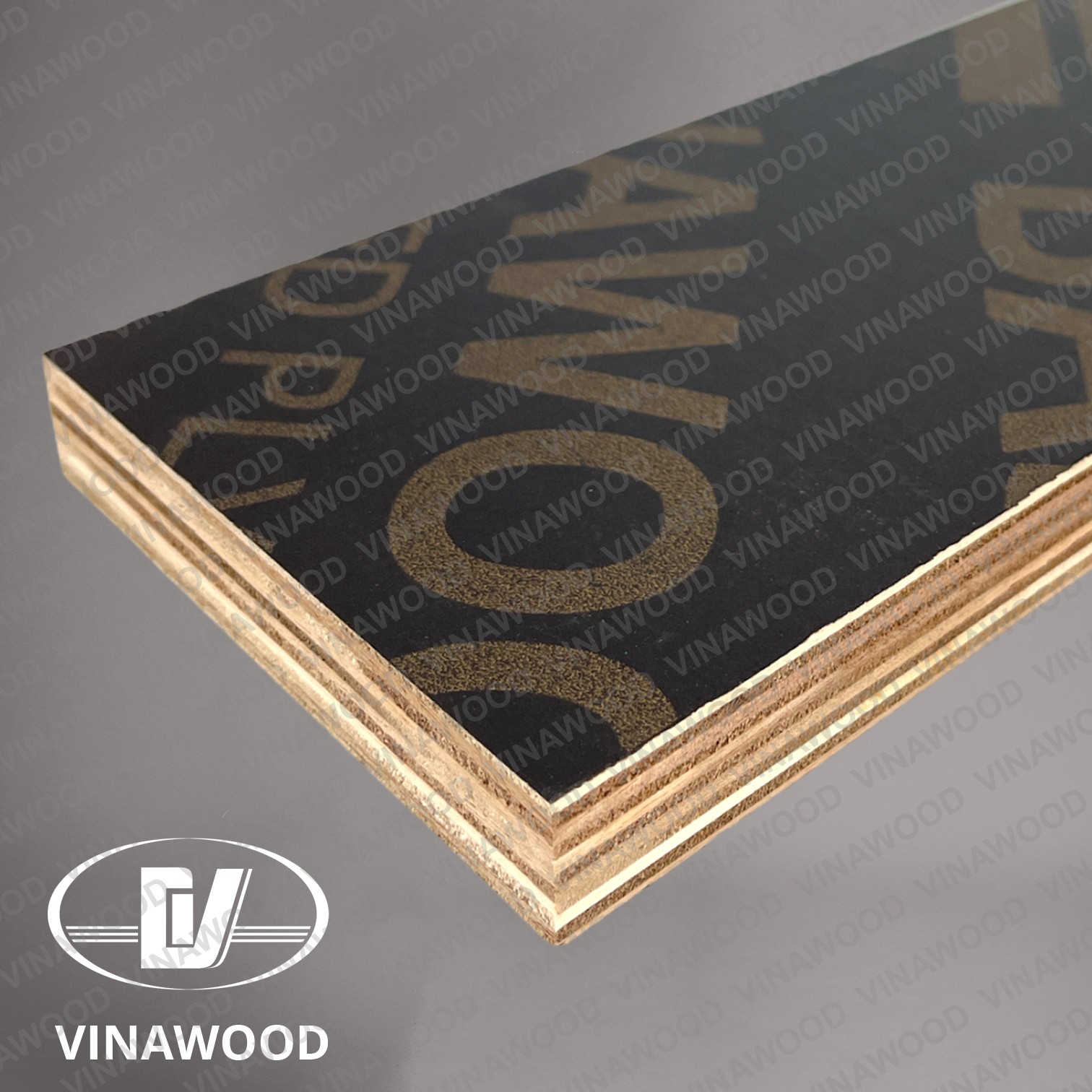
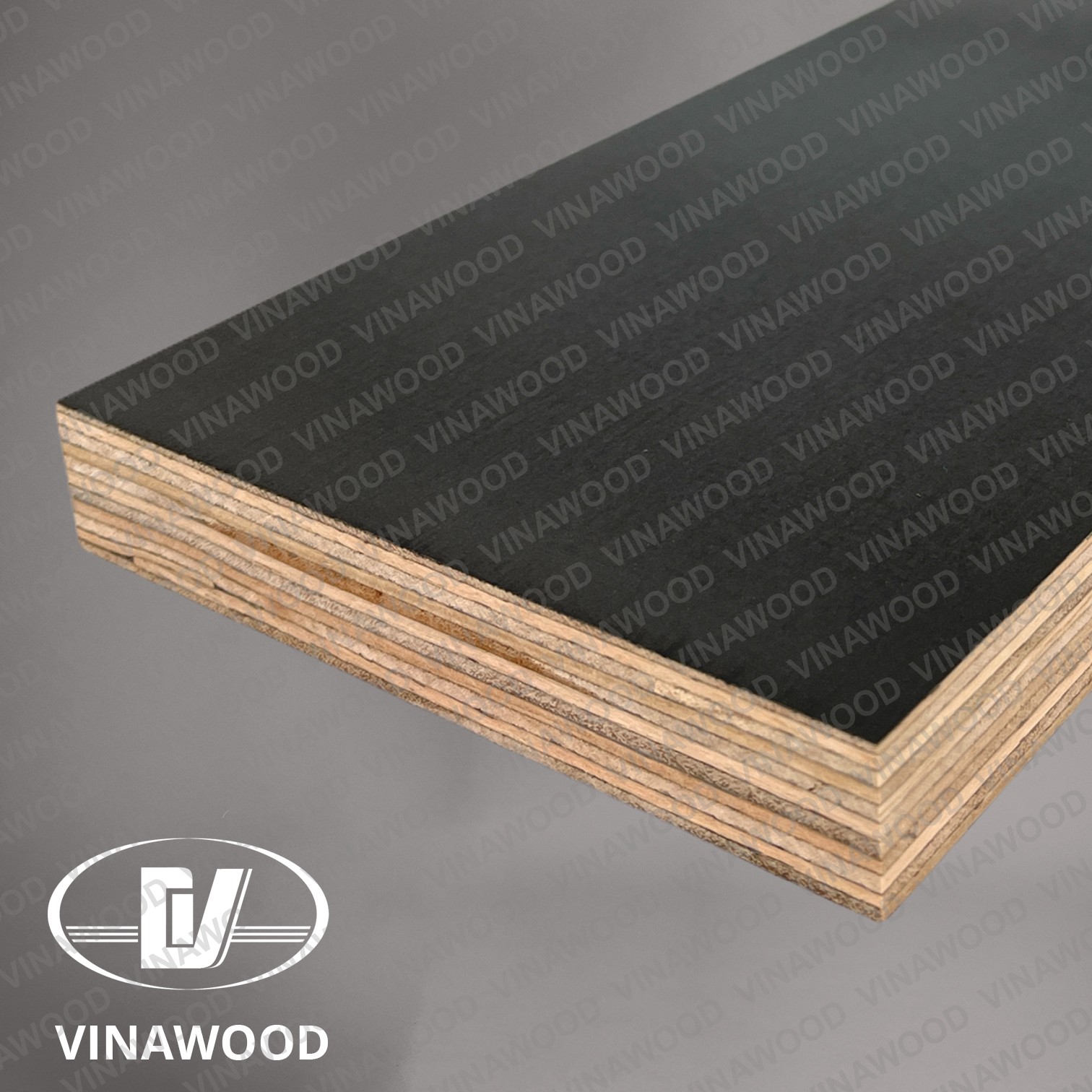
The phenolic film face on the plywood serves a completely different function from the beam — it produces the smooth concrete surface finish and enables multiple reuse cycles. The Form Basic panel (EN 636-2, up to 10 reuse cycles) paired with H20 beams at 500–625 mm spacing is the standard configuration for commercial slab and wall formwork across Europe, the Middle East, and Asia. For higher-reuse requirements or premium concrete finishes, the Pro Form (EN 636-3, up to 20 reuse cycles) provides enhanced durability with a heavier 220 g/m² phenolic film.
For guidance on selecting film-faced plywood specifications, see the film-faced plywood buying guide.
H20 Timber Beams vs Steel and Aluminum Alternatives
H20 timber beams compete with steel and aluminum beams for the same formwork applications. Each material has distinct advantages and trade-offs:
| Parameter | H20 Timber Beam | Steel Beam | Aluminum Beam |
|---|---|---|---|
| Weight (per metre) | ~5.5 kg/m | ~12–18 kg/m | ~5–7 kg/m |
| Reuse cycles | up to 200–500 | 1,000+ | Up to 800 |
| Cost per metre | Low | Medium–High | Highest |
| Site cutting | Yes — standard circular saw | No — requires specialised equipment | Yes — with aluminum cutting blade |
| Handling | Easy — one-person for most lengths | Difficult — typically requires two workers | Easy — similar to timber |
| Thermal bridging | None — wood is a natural insulator | Significant — cold weather condensation risk | Moderate |
| Moisture sensitivity | Moderate — requires maintenance | Low (with corrosion protection) | Very low |
| Best for | Most commercial forming | Heavy infrastructure, tunnel, dam | High-reuse rental fleets |
For most commercial and residential formwork operations, H20 timber beams provide the optimal balance of cost, weight, and performance. Steel beams are justified on heavy infrastructure projects where the higher cost is offset by thousands of reuse cycles. Aluminum beams suit formwork rental companies that need lightweight durability across very high cycle counts. For a broader look at formwork material alternatives, see our comparison guide.
Maintenance, Storage, and Maximizing Beam Life
H20 timber beams are a significant investment — a full set for a commercial project can represent thousands of metres of beam. Proper maintenance and storage practices can double or triple the actual service life compared to beams that are neglected on site.
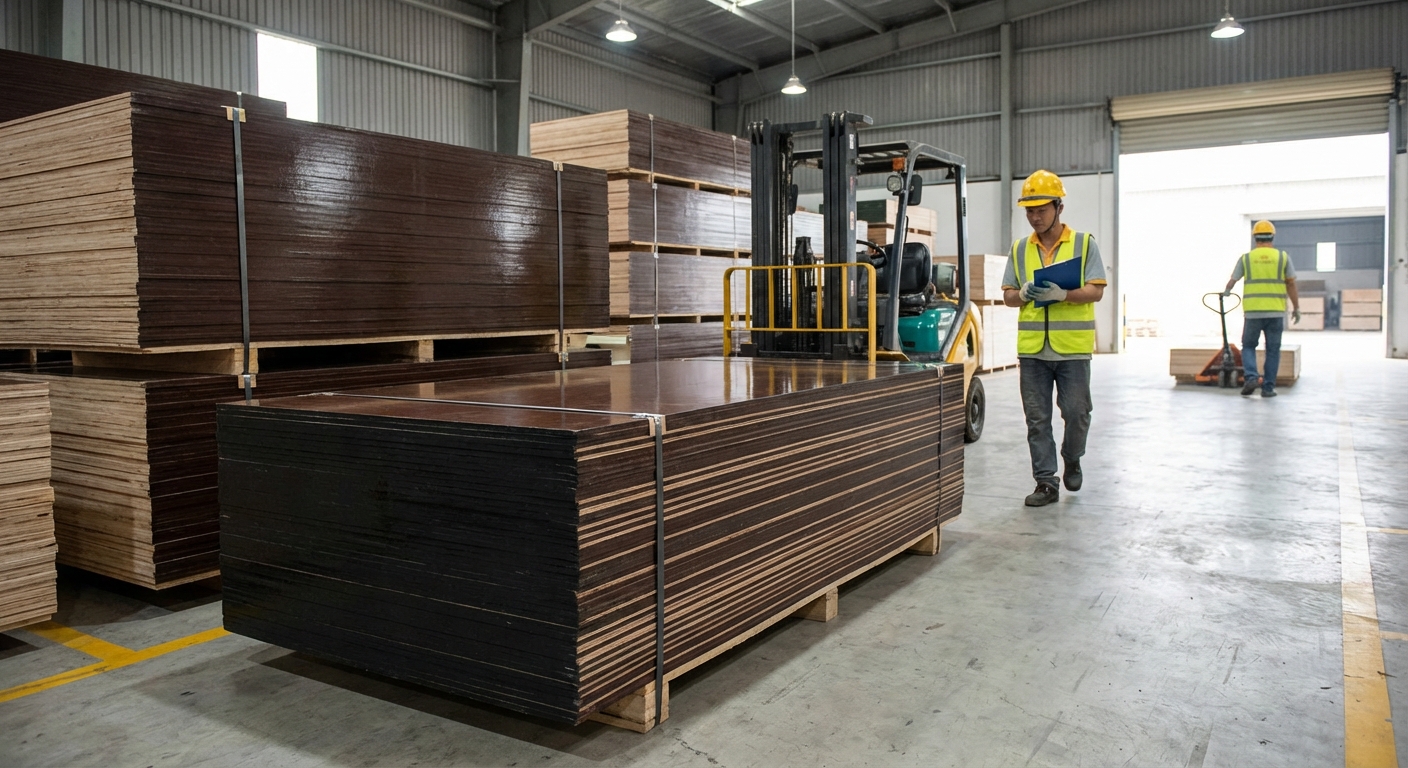
Storage: Store beams flat on level bearers (minimum 3 support points per beam length) under cover. Never store beams standing upright in water, in direct sunlight, or on bare ground where moisture can wick into the end grain. A covered area with good ventilation is ideal.
Inspection before each use: Check flanges for splits, cracks, or excessive wear at bearing points. Inspect the plywood web for delamination — visible separation between the web and flange is a structural failure indicator. Check for twist or bow that could affect form alignment.
Repairs: Minor flange damage (shallow surface splits, small dents) can be repaired with approved wood filler and re-sealed. Do not attempt to repair web delamination — replace the beam. A delaminated web cannot carry design shear loads and the beam is structurally compromised.
End-grain sealing: Every time a beam is cut on site, seal the exposed end grain immediately with paint, wax, or a proprietary end-grain sealer. Unsealed end grain absorbs water at 10 to 15 times the rate of face grain, accelerating internal decay and significantly reducing service life.
Typical lifespan: With proper maintenance, H20 timber beams deliver up to 200–500 reuse cycles depending on handling conditions and exposure. Beams used on well-managed sites with covered storage routinely exceed 400 cycles; beams left exposed on harsh sites may fail after 100 to 150 cycles.
Sourcing H20 Beams and Formwork Plywood Together
Many formwork contractors purchase H20 beams and plywood panels as a coordinated system. This makes practical sense — the beam spacing and plywood specification must be designed together, and sourcing from suppliers who understand the complete formwork system reduces the risk of specification mismatches.
Vinawood's film-faced plywood collection is designed for H20 beam formwork systems. Standard panel sizes (1220 × 2440 mm and 1250 × 2500 mm) align with common beam spacing modules, and all panels are manufactured with WBP phenolic adhesive — the same adhesive class used in quality H20 beam web joints. Container orders can combine multiple plywood grades and thicknesses to match the full range of formwork requirements on a single project.
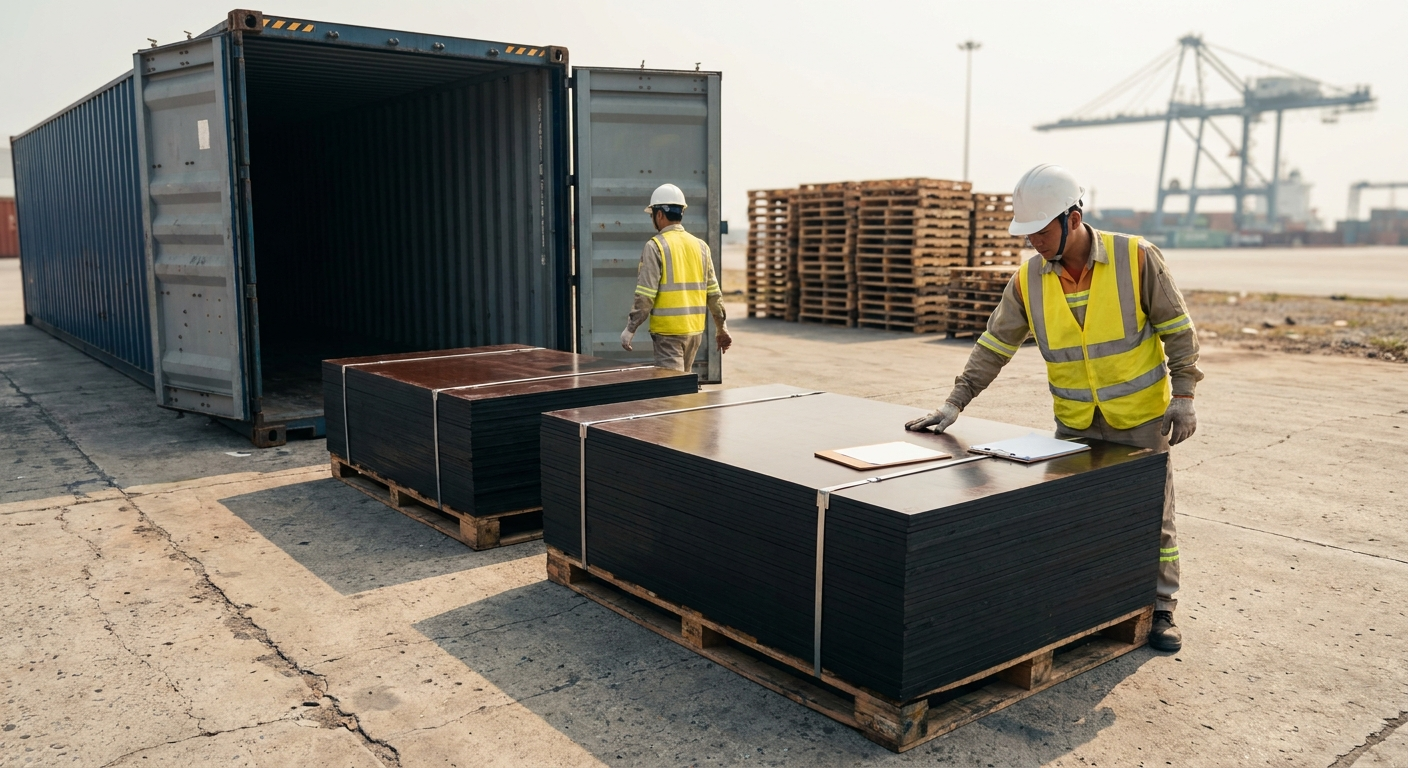
For contractors evaluating direct import of formwork plywood from Vietnam, Vinawood provides mill test reports (EN 314 boil test, thickness tolerance, moisture content) with every shipment. Pre-shipment inspection by SGS or Bureau Veritas is available on all container orders — the same quality verification approach used for H20 beam procurement from European manufacturers.
Frequently Asked Questions
What does H20 mean in formwork?
H20 refers to an engineered timber I-beam with a height of 200 mm (20 cm). The "H" stands for the beam height designation, and "20" is the height in centimetres. H20 beams are the most common size used in commercial formwork systems, providing a balance of load capacity and weight that suits the majority of slab and wall forming applications.
How far can an H20 beam span?
Maximum span depends on the applied load. For typical slab formwork with 200 mm concrete thickness, H20 beams can span approximately 1.50 to 2.50 m between primary supports. For lighter loads, spans up to 3.00 m or more are possible. Always verify allowable spans against the specific manufacturer's published span tables, as capacity varies by timber grade and production method.
Can H20 beams be cut to length on site?
Yes. H20 timber beams can be cut with a standard circular saw — a significant advantage over steel beams. However, every cut end must be immediately sealed with end-grain paint or wax to prevent moisture absorption. Failure to seal cut ends is the most common cause of premature beam deterioration on construction sites.
How many times can H20 timber beams be reused?
With proper maintenance and covered storage, H20 beams typically deliver up to 200–500 reuse cycles. The actual count depends on handling conditions, exposure to weather, and the quality of site maintenance practices. Beams that are stored flat under cover, inspected before each use, and have all cut ends sealed routinely achieve the upper end of this range.
What is the difference between H20 and H16 beams?
The difference is beam height: H20 beams are 200 mm tall and H16 beams are 160 mm tall. The taller H20 beam has higher bending stiffness and load capacity, allowing it to span longer distances or carry heavier loads. H16 beams are used for shorter spans and lighter applications where the reduced weight and profile height are advantageous.
Are H20 beams the same as I-joists?
H20 beams and residential I-joists share the same basic I-beam profile — timber flanges with a plywood or OSB web. However, H20 beams are engineered specifically for temporary formwork use with heavier-duty flanges and WBP-class adhesive bonds designed for repeated wet exposure. Residential I-joists are designed for permanent structural use (floor joists, rafters) and are not rated for the repeated loading and moisture cycling of concrete formwork.
Category
guides