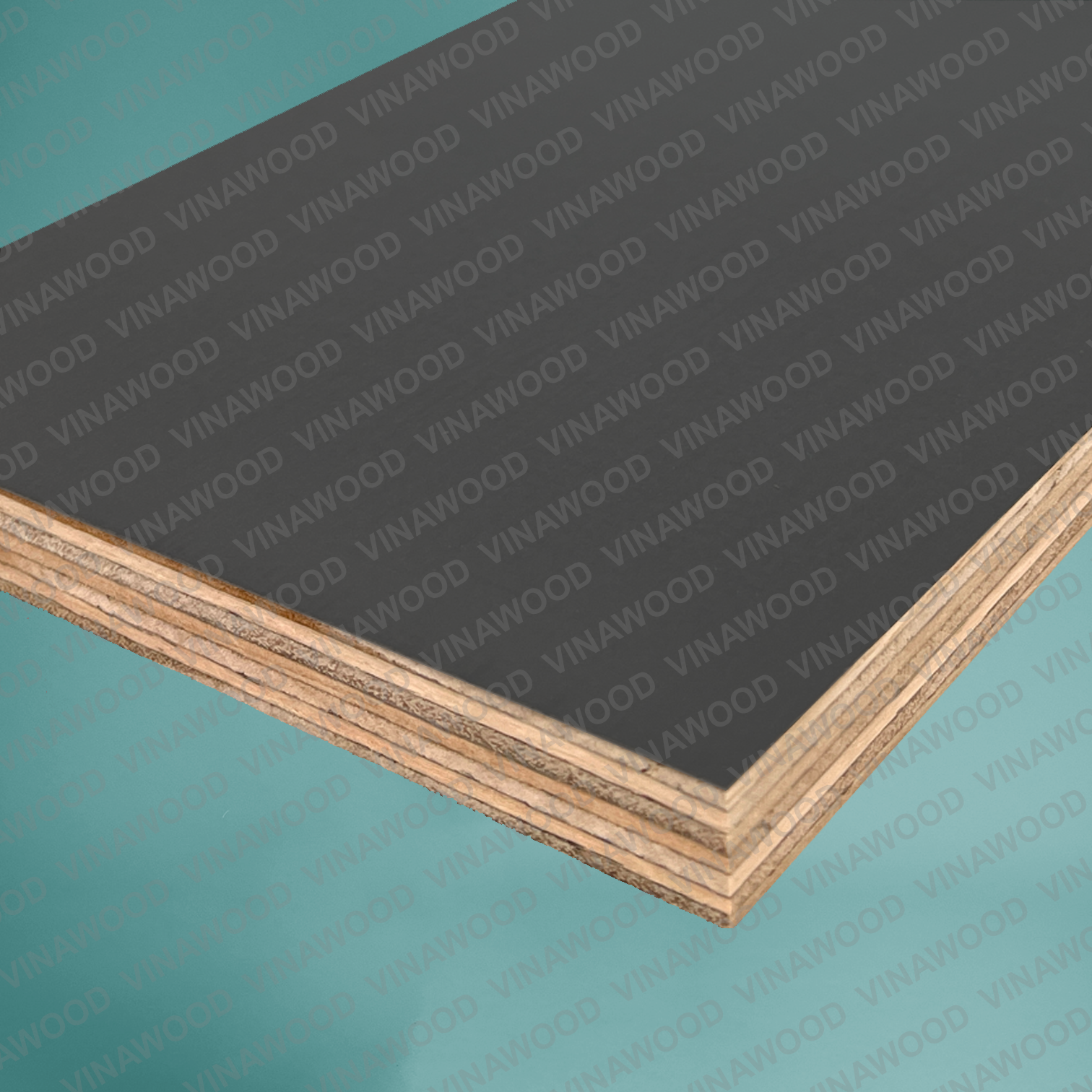
Softwood vs Hardwood Plywood: A Construction Buyer's Guide
Softwood and hardwood plywood differ in core species, density, bending strength, and moisture performance. This guide explains what matters for construction buyers — and why 'hardwood plywood' means something different in formwork than in furniture.
What "Softwood" and "Hardwood" Actually Mean in Plywood
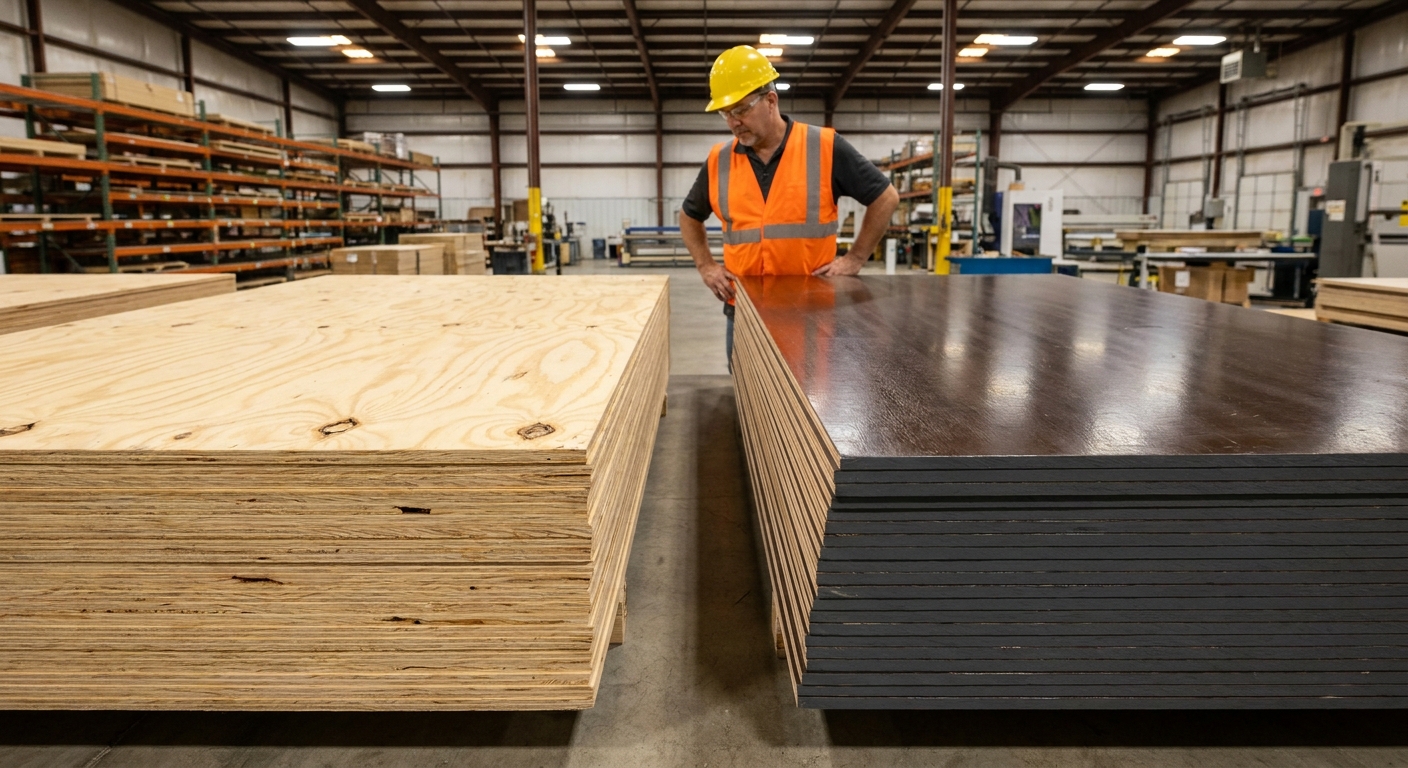
The terms softwood and hardwood refer to the botanical family of the tree, not the physical hardness of the wood. Hardwoods are angiosperms — broadleaf, flowering trees such as eucalyptus, acacia, birch, keruing, and meranti. Softwoods are gymnosperms — needle-leaf conifers such as Douglas fir, southern yellow pine, spruce, and radiata pine.
In plywood manufacturing, this distinction determines the core veneers and, by extension, the panel’s density, bending strength, weight, and moisture behaviour. Softwood plywood dominates North American lumber yards as CDX sheathing and sanded panels. Hardwood plywood — particularly tropical hardwood-cored panels from Vietnam, Indonesia, and Malaysia — dominates the structural formwork and shuttering market globally.
The confusion starts when construction buyers encounter "hardwood plywood" at a US or UK supplier. In a furniture context, that usually means a ¼-inch decorative panel with a birch or oak face veneer. In a construction context, it means an 18 mm structural panel with tropical hardwood cores and a phenolic film face — a fundamentally different product. This article addresses the construction buyer’s perspective.
Density and Weight
Hardwood plywood is denser and heavier than softwood plywood. Tropical hardwood cores (eucalyptus, acacia) typically produce panels with a density of 550–750 kg/m³, while softwood cores (pine, fir, spruce) range from 450–550 kg/m³.
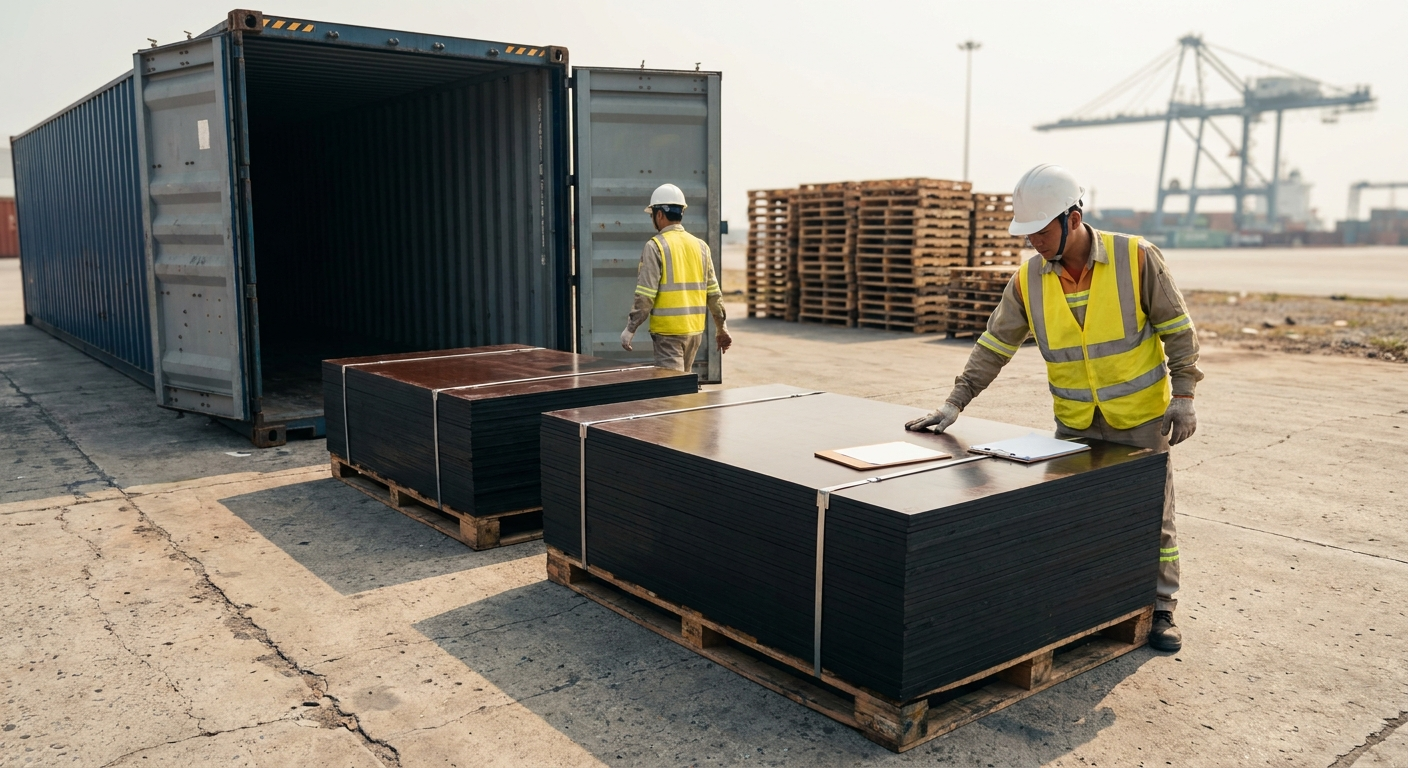
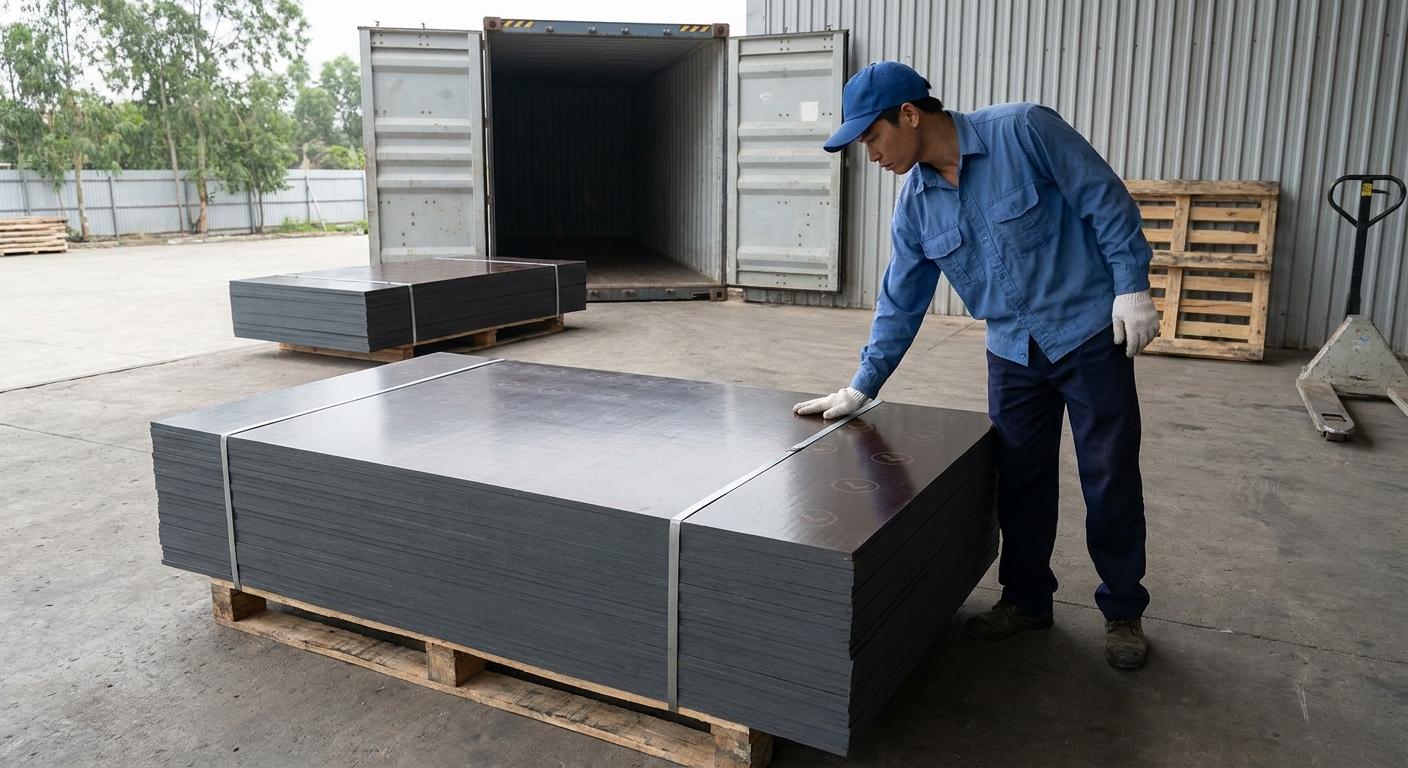
In practical terms, an 18 mm hardwood-cored film-faced sheet weighs roughly 1,600 kg per bundle of 60 sheets (based on Vinawood Form Basic specifications). An equivalent 18 mm softwood sheet bundle weighs approximately 1,200–1,300 kg. This difference matters for two reasons: container loading calculations (heavier panels mean fewer sheets per 40HC before hitting the weight limit) and on-site handling (hardwood panels require two workers or mechanical lifting for safe repositioning).
Use Vinawood’s CBM calculator to plan container loads accounting for panel weight and volume.
Bending Strength and Stiffness
Hardwood-cored plywood consistently outperforms softwood plywood in bending strength and modulus of elasticity — the two properties that matter most for formwork and structural applications.
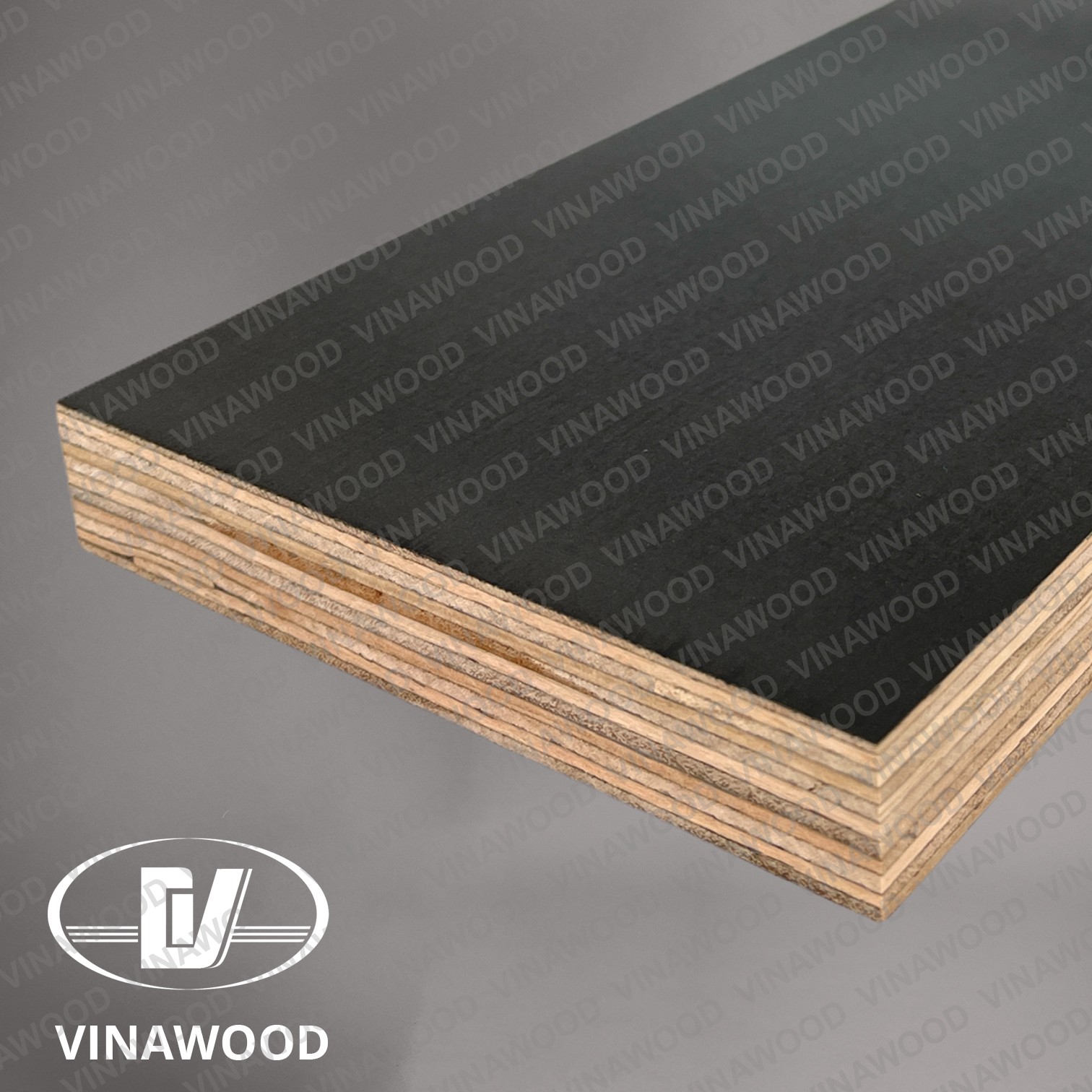
Vinawood’s Form Basic (hardwood-cored) achieves 45 N/mm² bending strength along the grain and 30 N/mm² across the grain under EN 636 testing. CDX softwood plywood typically ranges from 25–35 N/mm² along the grain, depending on species and grade.
Modulus of elasticity follows the same pattern: hardwood-faced plywood commonly reaches approximately 5,000 N/mm² along the grain, compared to 3,000–4,500 N/mm² for softwood grades.
On site, higher bending strength translates to larger allowable stud spacing, less panel deflection under concrete pressure, and fewer blowout risks during high-pressure pours. For formwork specification, this performance gap is the primary reason structural engineers specify hardwood-cored panels for commercial and infrastructure projects. See the Form Basic product page for full specification data.
Glue and Moisture Performance
The adhesive system determines how well plywood resists moisture — and this is where softwood and hardwood plywood diverge significantly in the construction context.
Softwood CDX plywood typically uses exterior-grade phenolic adhesive that passes the APA Exposure 1 classification. This means the bond survives construction delays and short-term weather exposure, but the panel is not designed for repeated wet-dry cycling. CDX is a sheathing product — it goes behind cladding or under roofing and stays relatively dry in service.
Hardwood film-faced plywood for formwork is available in two moisture classes under European standards:
EN 636-2 / Class 2 — WBP melamine adhesive, rated for humid conditions and protected exterior use. Vinawood products in this class: Form Basic (up to 10 reuses) and Form Extra (up to 15 reuses).
EN 636-3 / Class 3 — WBP phenolic adhesive, rated for full exterior exposure including unprotected outdoor conditions. Only phenolic-bonded products qualify: Pro Form (up to 20 reuses) and the HDO range.
The phenolic film overlay on formwork plywood adds a second moisture barrier beyond the glue — protecting both faces from water absorption during concrete contact and rain exposure. Softwood CDX has no equivalent surface protection.
Applications: Where Each One Wins
Softwood plywood excels in: roof sheathing, wall sheathing, flooring underlayment, and light-framing subfloors. This is CDX and OSB territory in North American lumber yards. Softwood panels are lighter, locally sourced in the US, Canada, and Scandinavia, and priced for high-volume residential construction where the panel is a hidden structural layer, not an exposed working surface.
Hardwood plywood — decorative: furniture, cabinetry, and interior panelling. Birch-faced Baltic plywood dominates this segment in North America and Europe. These are thin panels (¼″ to ¾″) with premium face veneers — a different product category from structural plywood.
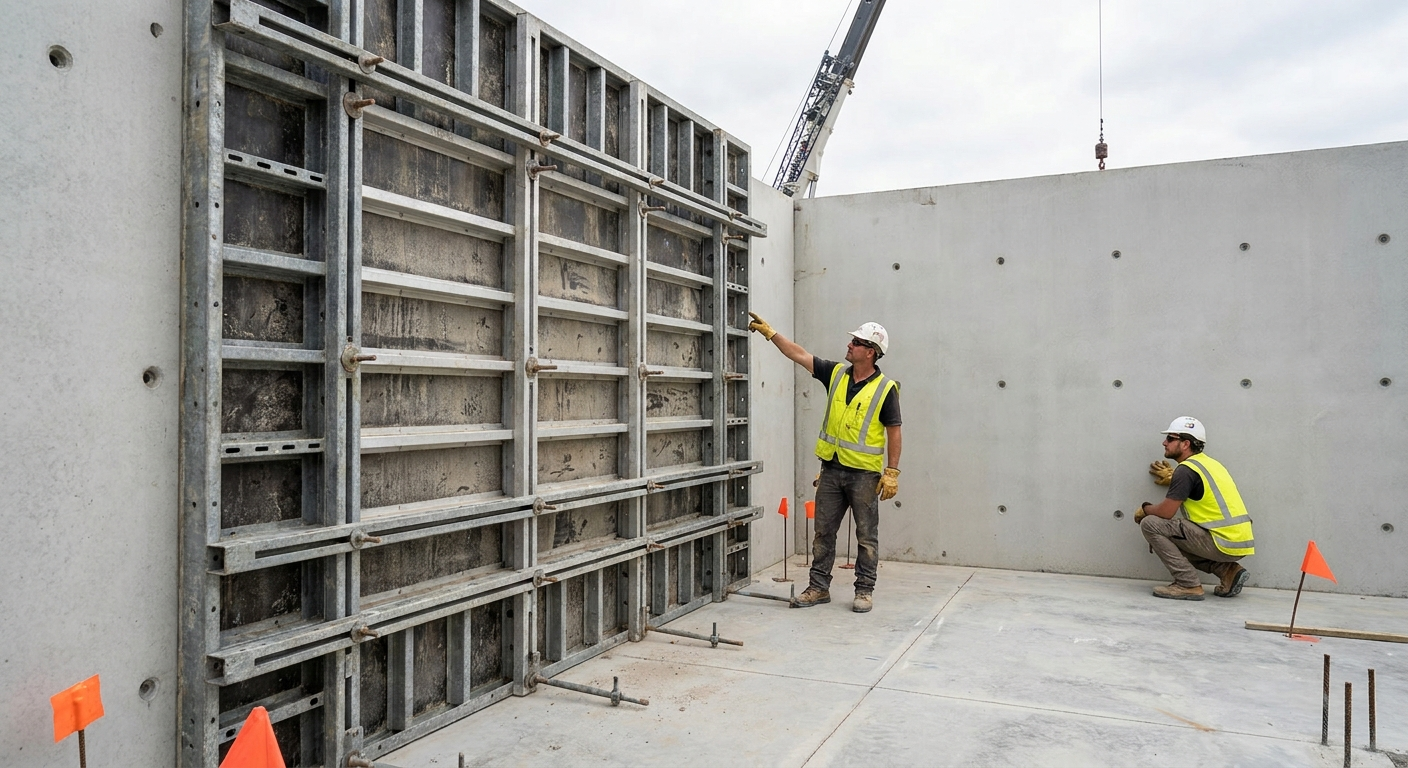
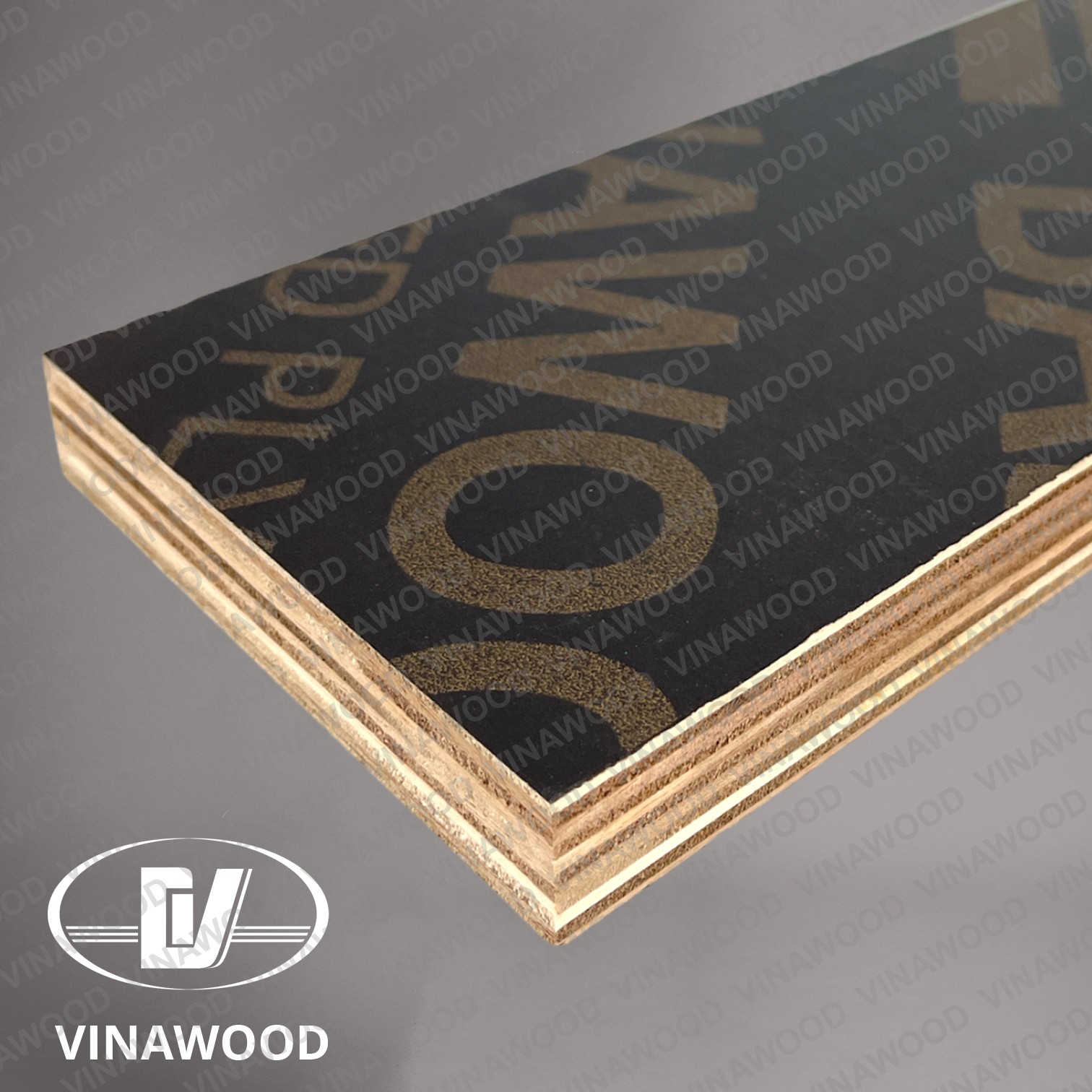
Hardwood plywood — film-faced structural: concrete formwork, shuttering, scaffolding boards, and heavy-use industrial flooring. This is where tropical hardwood-cored film-faced plywood earns its premium. The combination of high density, superior bending strength, phenolic film protection, and WBP adhesive makes it the standard material for reusable concrete forms worldwide.
The key distinction for construction buyers: "hardwood plywood" in a US lumber yard usually refers to a thin decorative panel (birch or oak face) for furniture. The 18 mm structural film-faced plywood that Vinawood manufactures is a different product entirely — designed for concrete forming, not cabinetry.
Cost and Availability
Softwood plywood ships from mills in the US Pacific Northwest, the Southern Yellow Pine belt, Canada, and Scandinavia — short freight distances to North American and European markets. Pricing reflects local supply chains and commodity lumber markets.
Tropical hardwood film-faced plywood ships primarily from Vietnam, Indonesia, Malaysia, and China. Vinawood quotes FOB Vietnam for full container orders, with transit times of 18–35 days depending on destination port.
The upfront cost per sheet for hardwood film-faced plywood is higher than softwood CDX. However, for formwork applications, the relevant comparison is cost-per-pour: a panel that achieves up to 20 reuses (Pro Form) delivers a lower cost per square metre of concrete formed than a softwood panel that lasts 3–5 pours before the surface degrades.
For US imports, note that tariff and regulatory status varies by product category and country of origin. Vinawood certain product categories are AD/CVD-exempt, but we recommend verifying product-specific duty status with your customs broker before finalising pricing.
Which Should You Specify?
The decision follows the application:
Concrete formwork and heavy-duty structural applications: hardwood-cored film-faced plywood. Form Basic (EN 636-2, WBP melamine, up to 10 reuses) for standard projects, Pro Form (EN 636-3, WBP phenolic, up to 20 reuses) for premium and high-exposure projects, or HDO plywood for North American HDO-spec systems.
Roof sheathing, wall sheathing, and light framing: softwood CDX or OSB. Buy locally — this is not Vinawood’s product category, and importing structural sheathing from Vietnam makes no logistical sense when domestic supply is abundant.
Furniture and cabinetry: hardwood veneer plywood (birch-faced, oak-faced). Also not Vinawood’s primary market — we manufacture formwork and structural panels.
Marine and permanently humid service: WBP-phenolic hardwood plywood or specialised marine-grade panels. See Vinawood’s film-faced plywood range for EN 636-3 options, or the dedicated marine plywood collection for permanent water-contact applications.
For interactive product matching by application, use Vinawood’s plywood selector tool.
Category
guides
Related Markets
Related Countries
Related Products
▶Sources & References (4)
- Product Guide: Softwood Plywood Grades and Species — APA — The Engineered Wood Association (2023-01-01)
- ANSI/HPVA HP-1 — Hardwood and Decorative Plywood — Hardwood Plywood and Veneer Association (2020-01-01)
- EN 636:2012+A1:2015 — Plywood. Specifications — European Committee for Standardization (CEN) (2015-01-01)
- Wood Handbook: Wood as an Engineering Material — Chapter 12: Structural Use Panels — USDA Forest Products Laboratory (2021-01-01)