Formwork Plywood Australia: F17 Grade, AS/NZS 6669 & Sourcing Guide
Comprehensive guide to formwork plywood in Australia: F17 structural grade requirements, AS/NZS 6669 compliance, film-faced vs domestic formply comparison, and how to source certified panels direct from Vietnam for lower cost per pour.
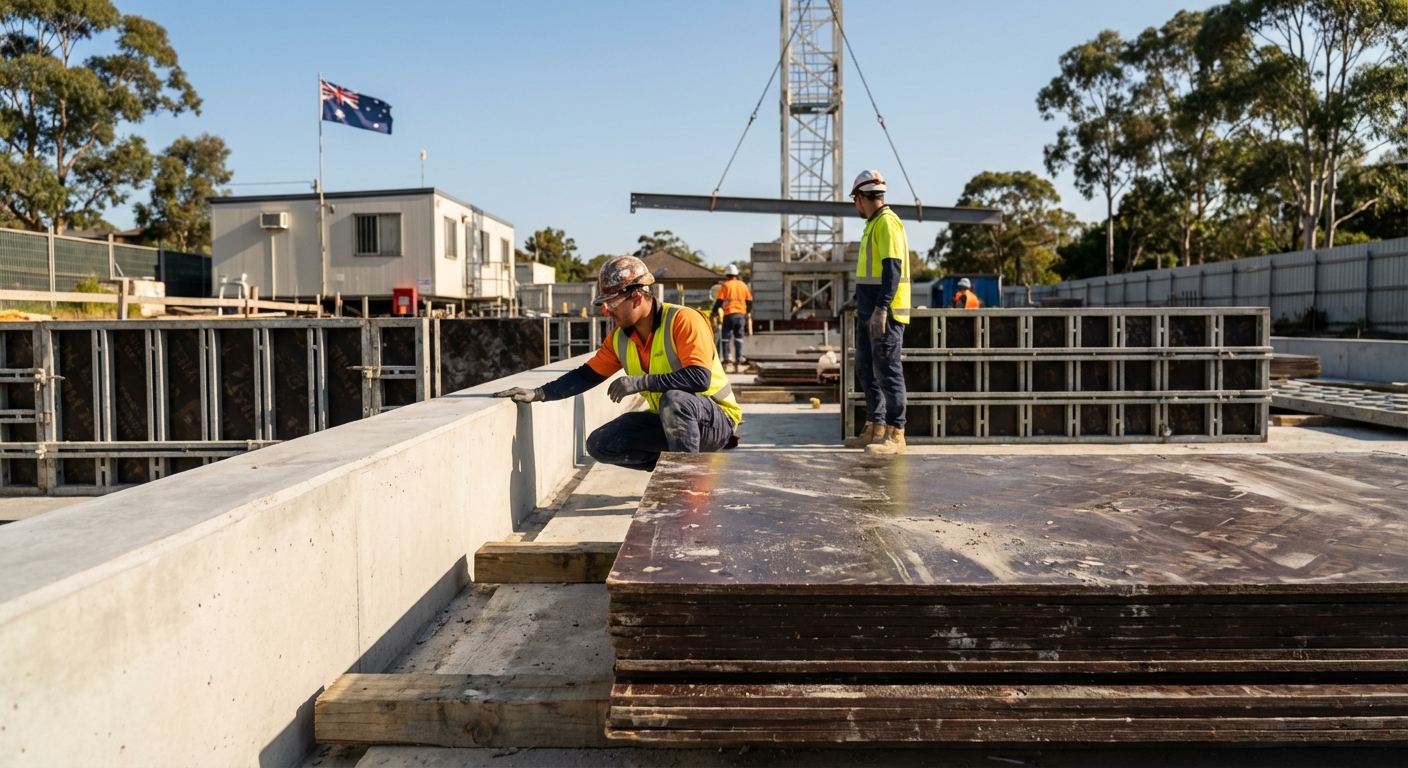
When a structural engineer in Sydney writes "F17 formwork plywood" on a specification sheet, they are describing a very specific performance requirement — one governed by AS/NZS 6669, a minimum bending strength of 17 MPa (megapascals) under Australian and New Zealand standards. Understanding F-grade specifications, the "Formply" brand term, and how to source equivalent formwork plywood from Vietnam is essential for Australian and New Zealand contractors and specifiers.
This guide explains the Australian and New Zealand formwork plywood market, relevant standards, cost comparisons, and how to source equivalent panels from Vietnam.
What is F17 Formwork Plywood?
The "F" in F17 refers to the modulus of rupture (MOR) or bending strength of the plywood, measured in megapascals. F17 means the panel is guaranteed to bend and break under a specific stress load, with a minimum bending strength of 17 MPa. Higher F-grades (F22, F27, etc.) have higher bending strength and are used in applications requiring greater stiffness.
In Australia and New Zealand, formwork plywood is typically designated by F-grade rather than by European classification (EN 636-2 or EN 636-3). However, an F17 panel is roughly equivalent to a European EN 636-2 classified panel — both are suitable for standard formwork applications in humid conditions.
The grade is determined by the wood species, veneer quality, glue type, and cross-laminated structure of the plywood. High-quality hardwood veneers and WBP (Weather and Boil Proof) adhesives produce higher F-grades.
AS/NZS 6669 — The Formwork Plywood Standard
AS/NZS 6669 is the joint Australian/New Zealand standard for plywood in building and construction. It specifies mechanical properties (bending strength, shear strength), durability requirements, and test methods for formwork plywood.
F-grade classification: The standard defines F-grades based on modulus of rupture (MOR) in dry and wet conditions. Common grades are:
- F11: Minimum 11 MPa MOR; general purpose, residential formwork
- F14: Minimum 14 MPa MOR; standard commercial formwork
- F17: Minimum 17 MPa MOR; demanding commercial and infrastructure projects
- F22: Minimum 22 MPa MOR; high-load infrastructure, long-span formwork
- F27: Minimum 27 MPa MOR; marine and highly exposed environments
Durability class (D classification): AS/NZS 6669 also rates durability based on the type of glue and treatment. "D1" is the lowest durability (for interior, dry use); "D4" is the highest (for exterior, wet environments). Formwork plywood typically meets D1 or D2; formwork in wet or coastal environments requires D3 or higher.
Testing and certification: Panels are tested for bending strength, shear strength, and moisture resistance according to AS/NZS 6669 methods. Test results are verified by accredited laboratories and reported on product certificates.
AS 3610, AS 6669, and F17 are three different documents
Australian formwork specs often look like a single grade — “F17 formply” — but they stack three different documents. AS 3610 (now commonly cited as AS 3610.1, Formwork for concrete) is not a plywood manufacturing standard. It is the formwork-and-concrete standard that classifies the off-form surface the specifier wants to see after stripping: Class 1 (highest visual demand) through Class 5. It also covers colour control, documentation, and inspection of the erected form. Class 1 is generally treated as beyond what standard formply can deliver; AS 6669 is written around Classes 2–5.
AS 6669:2016 (Plywood — Formwork), the document buyers often write as AS/NZS 6669, is the manufacturing standard for the panel. It specifies overlay quality, bond type (Type A / Type B), veneer grades, dimensional tolerances, branding, and stress grades for plywood intended to meet AS 3610.1 surface Classes 2, 3, 4 and 5. F17 is the stress grade — a characteristic bending-strength class used with AS 1720.1 design — not a surface class. A complete trade description therefore reads as three fields, for example Class 2 / F17 / Type A bond: off-form finish target, structural grade, and glue-bond durability. Specifying only “F17” leaves the surface class and bond type unstated.
That split matters when an Australian or New Zealand buyer substitutes imported Vietnamese film-faced plywood. An EN 636-2 or EN 636-3 WBP panel can be assessed for stiffness and bond against an F17 / Type A expectation, but AS 3610 class is judged on the poured concrete, not on a mill stamp. Overlay smoothness, film damage, joint quality, release agent, and site handling all sit on the class result. Vietnamese EN-range panels are widely used on private commercial work as a performance equivalent; that is not the same as the mill, or the sheet, being certified to AS 3610. For government or specification-locked jobs that require AS 6669 branding or a named surface class, the project engineer — not the catalogue — decides whether an EN film-faced sheet is acceptable.
Vinawood does not claim AS 3610 certification on this page. If a bid calls for a Class 2 off-form finish, ask for the panel construction, overlay, and any test or sample evidence that supports that finish under the project’s pour and handling conditions, and confirm acceptance with the specifier before the container is ordered.
"Formply" — The Australian Brand Term
"Formply" is a brand name commonly used in Australia and New Zealand for plywood designed specifically for concrete formwork. The term is used generically, similar to how "Kleenex" is used for tissues. Any plywood meeting AS/NZS 6669 and bearing the "Formply" mark can be used for formwork applications.
Major brands producing Formply include:Gunter Brothers (Australian manufacturer), Dimplex, and various imported panels from Asia. The term is recognized by Australian builders, engineers, and building material suppliers.
Formwork Plywood Standards in Australia and New Zealand
Building codes and regulations: Australian Building Codes (NCC) and New Zealand Building Code (NZBC) require that temporary formwork structures comply with applicable design standards. Formwork plywood must be specified by grade (e.g., F17) and durability class (D1–D4) to meet code requirements.
Equivalence with European standards: Australian AS/NZS 6669 F-grades do not directly correspond to European EN 636 classifications, but there is practical equivalence:
- EN 636-2 (humid conditions) is roughly equivalent to F14–F17 depending on wood species and glue.
- EN 636-3 (exterior conditions) is roughly equivalent to F22–F27 depending on durability class.
A European EN 636-2 panel with WBP phenolic glue will typically meet AS/NZS 6669 F17 requirements for bending strength. However, formwork plywood purchased in Europe or from European sources may not carry Australian F-grade certification, requiring independent verification or re-testing.
Market Dynamics: Local vs. Imported Plywood
Local manufacturing: Australia and New Zealand have limited plywood manufacturing capacity. Gunter Brothers (Queensland) is one of the few remaining domestic manufacturers; most other supply comes from imports.
Imported from Asia: Indonesia and Malaysia are the dominant suppliers of plywood to Australia and New Zealand, followed by China. Most imported panels are not specifically branded as "Formply" but may meet F-grade specifications if tested.
Pricing: Australian retail pricing for F17 Formply is typically AUD 60–80 per sheet (2440 x 1220 mm, 18 mm thickness) depending on grade and market conditions. This equates to approximately AUD 250–330 per m³.
Vietnamese imports: Vietnam is not a major current supplier of plywood to Australia and New Zealand, but Vietnamese manufacturers such as Vinawood have the capacity to produce panels that meet AS/NZS 6669 F17 specifications. FOB pricing from Vietnam is approximately USD 200–300 per m³. Adding ocean freight (approximately USD 40–60 per m³ for a 20-foot container to Australia/New Zealand), port charges, and local trucking brings total landed cost to approximately AUD 400–550 per m³. For small orders or one-off projects, this import route does not save money. However, for ongoing supply contracts or large-volume construction projects, direct import from Vietnam can offer 20–30% savings vs. current Australian retail pricing.
Sourcing Formwork Plywood from Vietnam
Australian and New Zealand contractors interested in sourcing plywood directly from Vietnam should consider the following:
1. Verify F-grade specifications: Vietnamese manufacturers can produce panels with the strength and durability properties required for F17 (or other F-grades). However, panels manufactured in Vietnam will carry European EN classification (e.g., EN 636-2) rather than Australian F-grade. To import panels into Australia, you have two options:
- Option A: Purchase panels meeting European EN 636-2 or EN 636-3 specifications, which are typically equivalent in performance to AS/NZS 6669 F14–F22. Use these panels subject to engineer verification that they meet your project's structural requirements. This is faster and cheaper.
- Option B: Arrange for imported panels to be tested by an accredited Australian laboratory according to AS/NZS 6669 methods. Test results verify F-grade equivalence and allow the panels to be officially marketed as meeting Australian standards. This adds cost (typically AUD 5,000–10,000 per batch) and time (2–4 weeks) but allows official marketing and simplifies specification compliance.
2. Minimum order quantity: Vietnamese manufacturers typically require one 20-foot container (approximately 22–24 m³) as the minimum order. For Australian contractors, this volume represents 2–3 months of typical consumption and justifies the import logistics.
3. Ocean freight and logistics: Transit time from Vietnam to Australian east coast (Sydney, Brisbane, Melbourne) is typically 12–18 days. From Vietnam to New Zealand (Auckland) is 18–25 days. Port charges, customs clearance, and domestic trucking add 5–10 days. Total transit is typically 25–40 days from factory to site.
4. Quality control and certification: Reputable Vietnamese manufacturers provide test certificates showing compliance with EN standards. Request these certificates before purchase. Verify that the manufacturer uses WBP phenolic adhesive (not cheaper melamine), which ensures moisture resistance and durability for formwork use.
5. Payment and contract terms: Vietnamese exporters typically require a deposit (20–30%) with the order and balance before shipment. Some work with freight forwarders or banks to arrange L/C (letter of credit) for larger orders. Ensure payment terms are clearly documented before committing to an order.
Advantages and Disadvantages of Vietnamese Plywood for Australian Use
Advantages:
- Cost savings: 20–30% below current Australian retail for equivalent performance
- Quality: Modern Vietnamese mills produce panels equivalent to or exceeding Indonesian/Malaysian suppliers
- Supply security: Long-term supply contracts with Vietnamese manufacturers ensure consistent quality and pricing
- Capacity: Vietnamese mills can handle large orders and can produce custom specifications on request
Disadvantages:
- Upfront cost: Minimum order (one 20-foot container) requires significant upfront investment and storage
- Testing requirement: Panels may need to be tested to AS/NZS 6669 to qualify for official certification, adding cost and time
- Freight and logistics: Ocean freight cost, port handling, and domestic trucking add to landed cost
- Supplier relationship: Establishing a reliable relationship with an overseas manufacturer requires due diligence
- Payment risk: Deposit payment before shipment carries some risk if the supplier is unreliable
Vinawood Plywood for Australian and New Zealand Markets
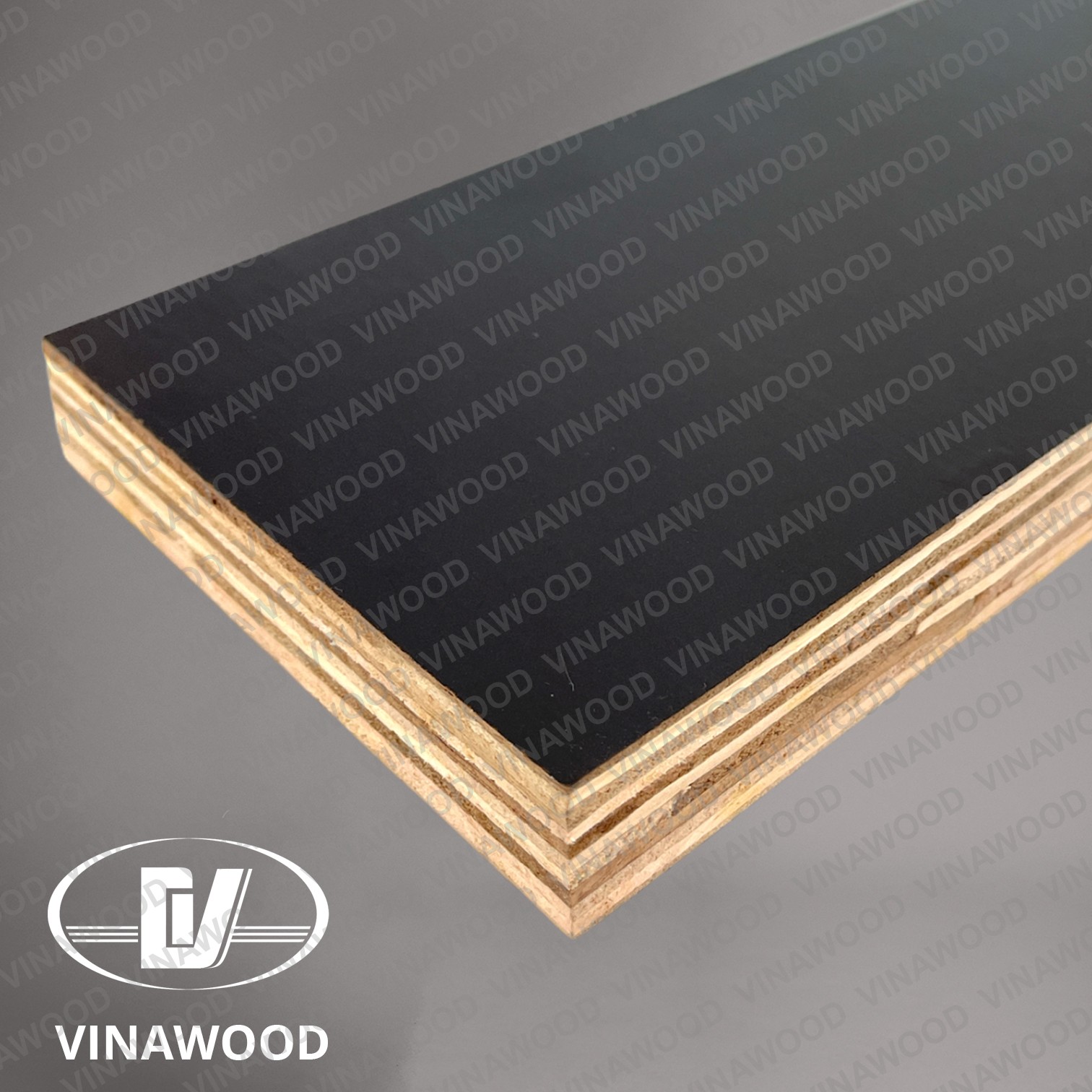
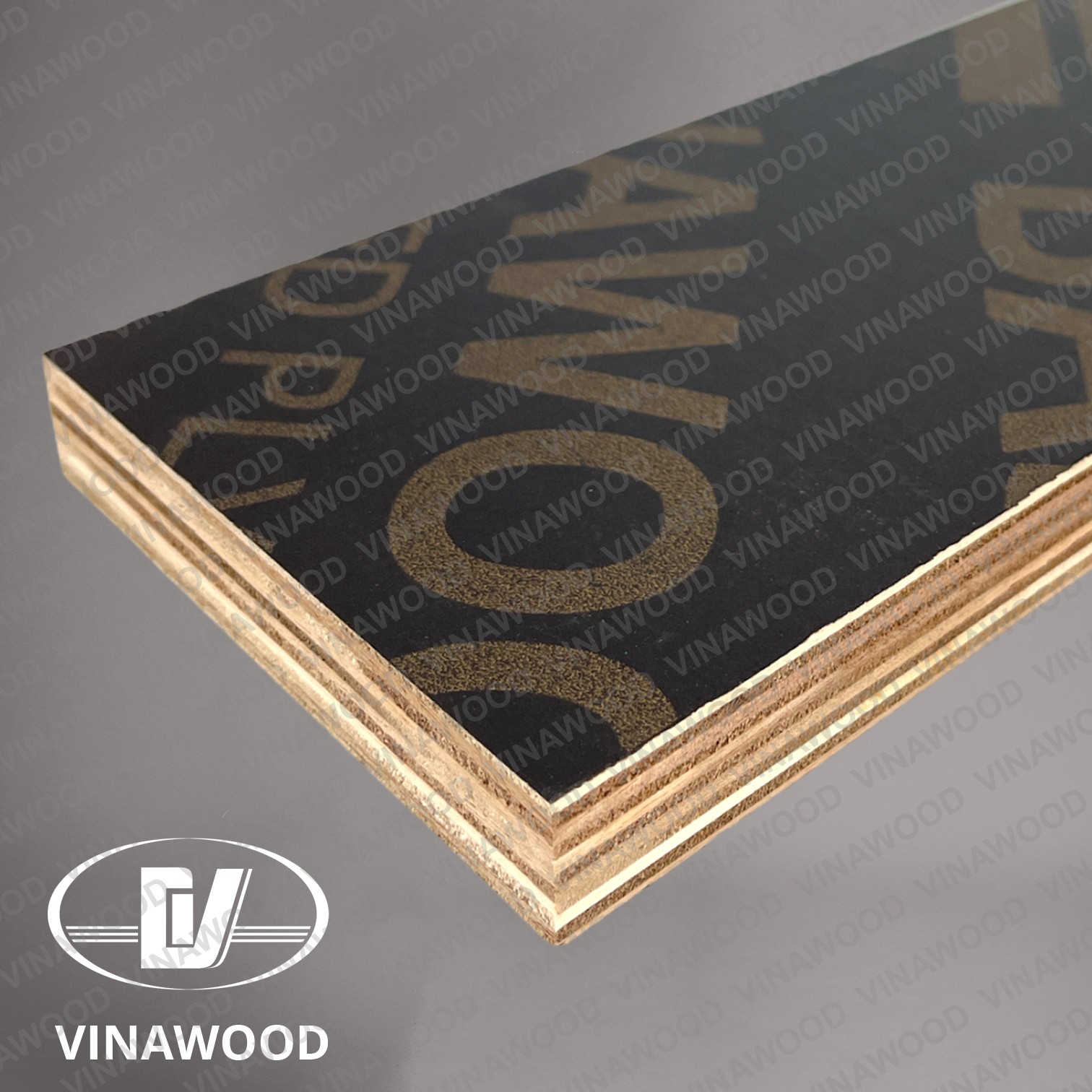
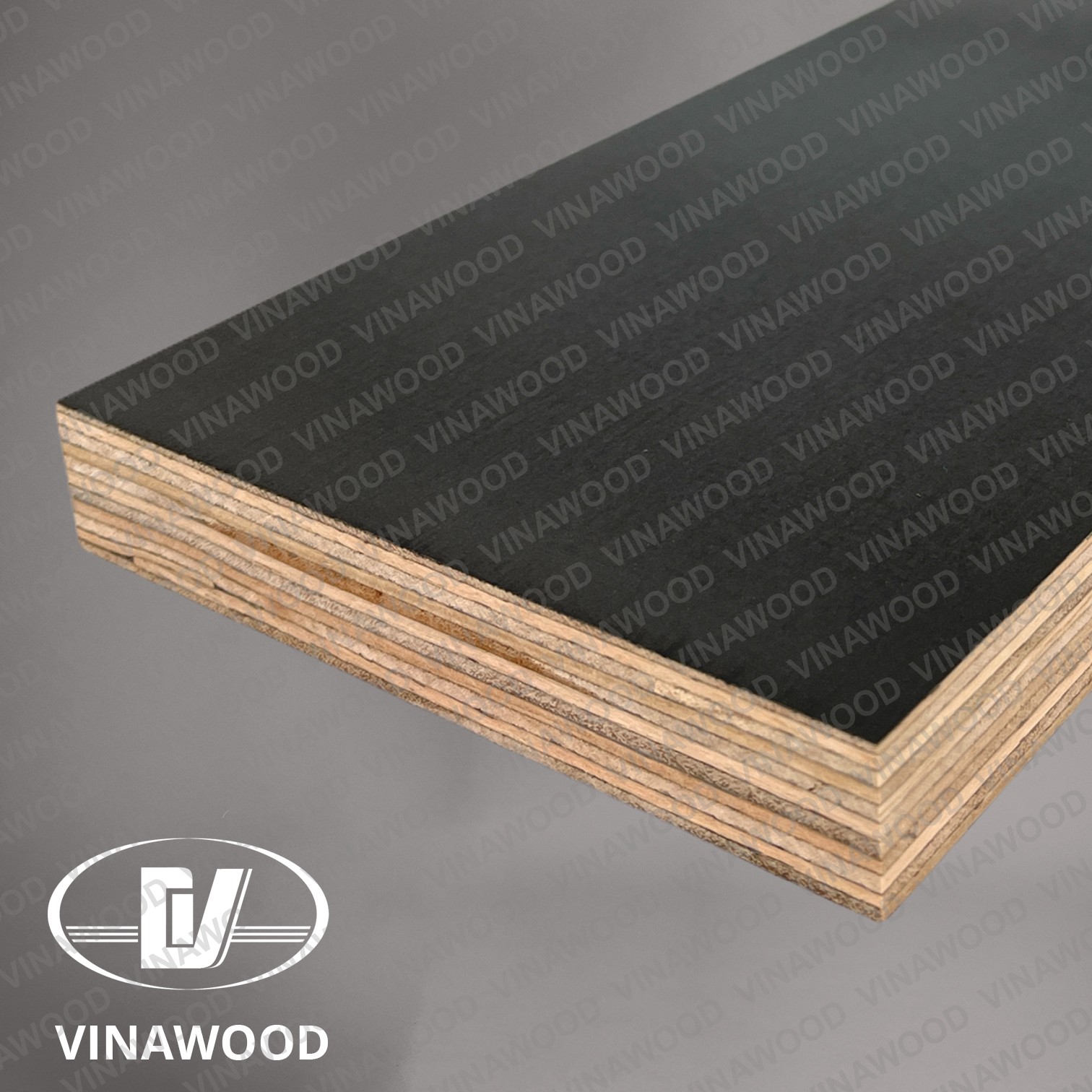
Vinawood manufactures plywood in Vietnam that is suitable for export to Australia and New Zealand. Vinawood's European-grade formwork products can be sourced on a container basis (minimum order 20 ft) and can meet AS/NZS 6669 F14–F17 specifications with verification.
- Product options:
- Eco Form Plus (EN 636-2, suitable for F14 equivalent)
- Form Basic (EN 636-2, suitable for F17 equivalent)
- Pro Form (EN 636-3, suitable for F22–F27 equivalent)
- Customization: Vinawood can arrange custom specifications, panel sizes, or film weights on request for large orders.
- Certification: All panels carry CE marking under EN 13986 and are tested for formaldehyde emissions and mechanical properties. Australian engineers should verify that EN specifications meet project requirements or arrange AS/NZS 6669 testing.
Frequently Asked Questions
What is the difference between Formply and ordinary plywood?
Formply is plywood specifically manufactured and tested to meet formwork performance standards (AS/NZS 6669 in Australia and New Zealand). It uses high-quality hardwood veneers, WBP adhesive, and cross-laminated structure to achieve high strength and moisture resistance. Ordinary plywood may not meet formwork specifications and should not be used for concrete formwork applications.
How is F-grade determined?
F-grade is determined by measuring the modulus of rupture (bending strength) of the plywood under standardised test conditions (AS/NZS 6669). A panel is assigned an F-grade (F11, F14, F17, F22, F27) based on its bending strength in both dry and wet conditions. Higher F-grades indicate greater strength and are suitable for more demanding applications.
Can I use European plywood in Australia?
Yes, with verification. European plywood meeting EN 636-2 or EN 636-3 standards typically has equivalent strength and durability to Australian F-grade plywood. However, Australian building codes require compliance with applicable standards (AS/NZS 6669). If imported European plywood is not certified to AS/NZS 6669, engineers must verify that the panel meets the strength requirements of your project. This may require independent testing.
What is the cost of Vietnamese plywood delivered to Australia?
FOB cost from Vietnam is approximately USD 200–300 per m³. Add ocean freight (USD 40–60 per m³), port charges, and Australian trucking to arrive at a total landed cost of approximately AUD 400–550 per m³. This is 20–30% below current Australian retail pricing but requires a minimum order of one 20-foot container (approximately 22–24 m³).
What is the minimum order from a Vietnamese supplier?
Typically one 20-foot container, which holds approximately 22–24 m³ of plywood. This volume represents 2–3 months of consumption for most contractors and is suitable for a mid-size project or distributor.
How long does plywood take to arrive from Vietnam?
Ocean transit from Vietnam to Australia is 12–18 days; to New Zealand 18–25 days. Add 5–10 days for port handling, customs clearance, and domestic trucking. Total time from factory to site is typically 25–40 days.
Category
guides
Related Markets
Related Products
▶Sources & References (3)
- AS/NZS 6669:2016 — Plywood for Concrete Formwork — Standards Australia / Standards New Zealand (2016-01-01)
- AS 1720.1 — Timber Structures: Design Methods — Standards Australia (2010-01-01)
- DAFF Biosecurity — Wood Packaging Material — Australian Department of Agriculture, Fisheries and Forestry (2024-01-01)