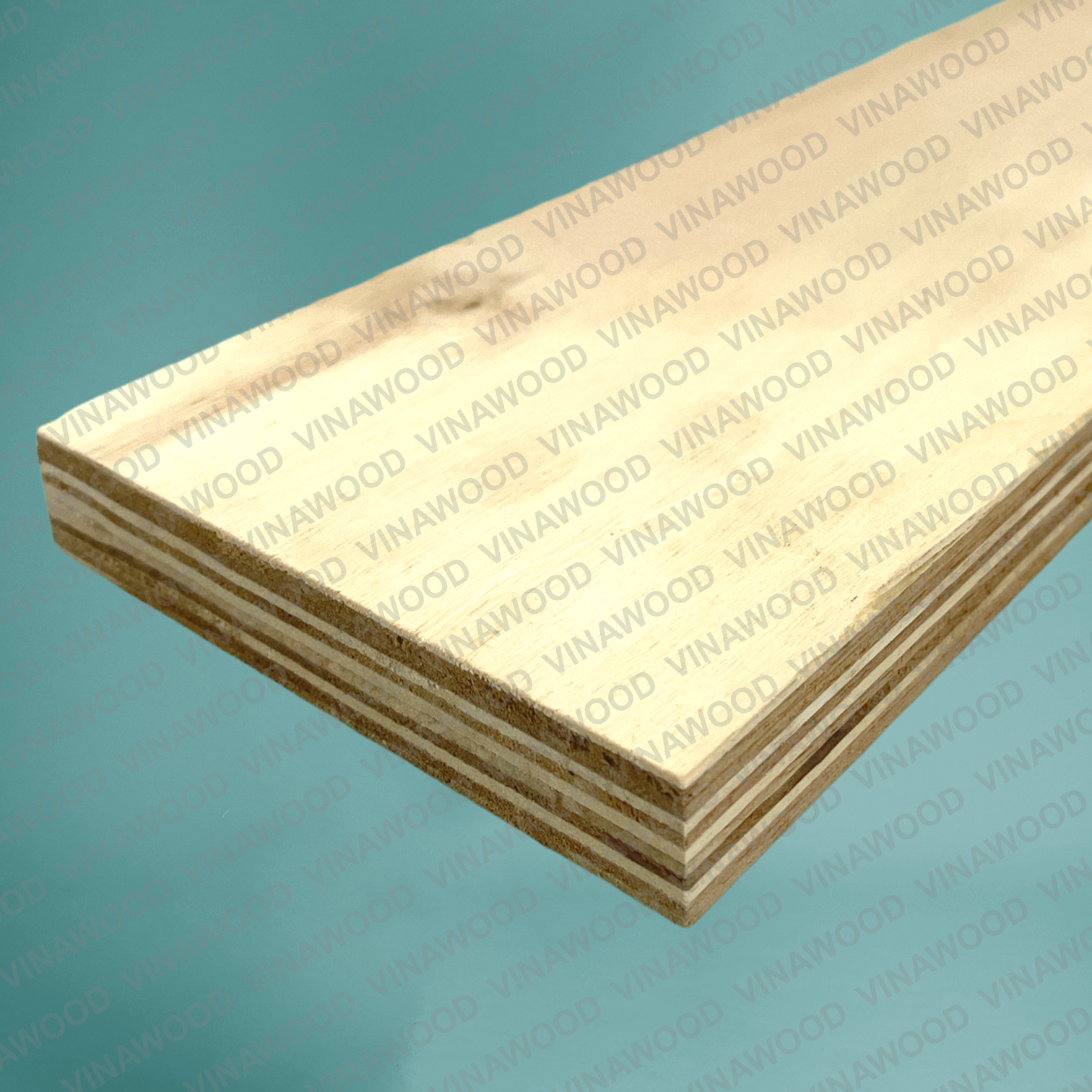
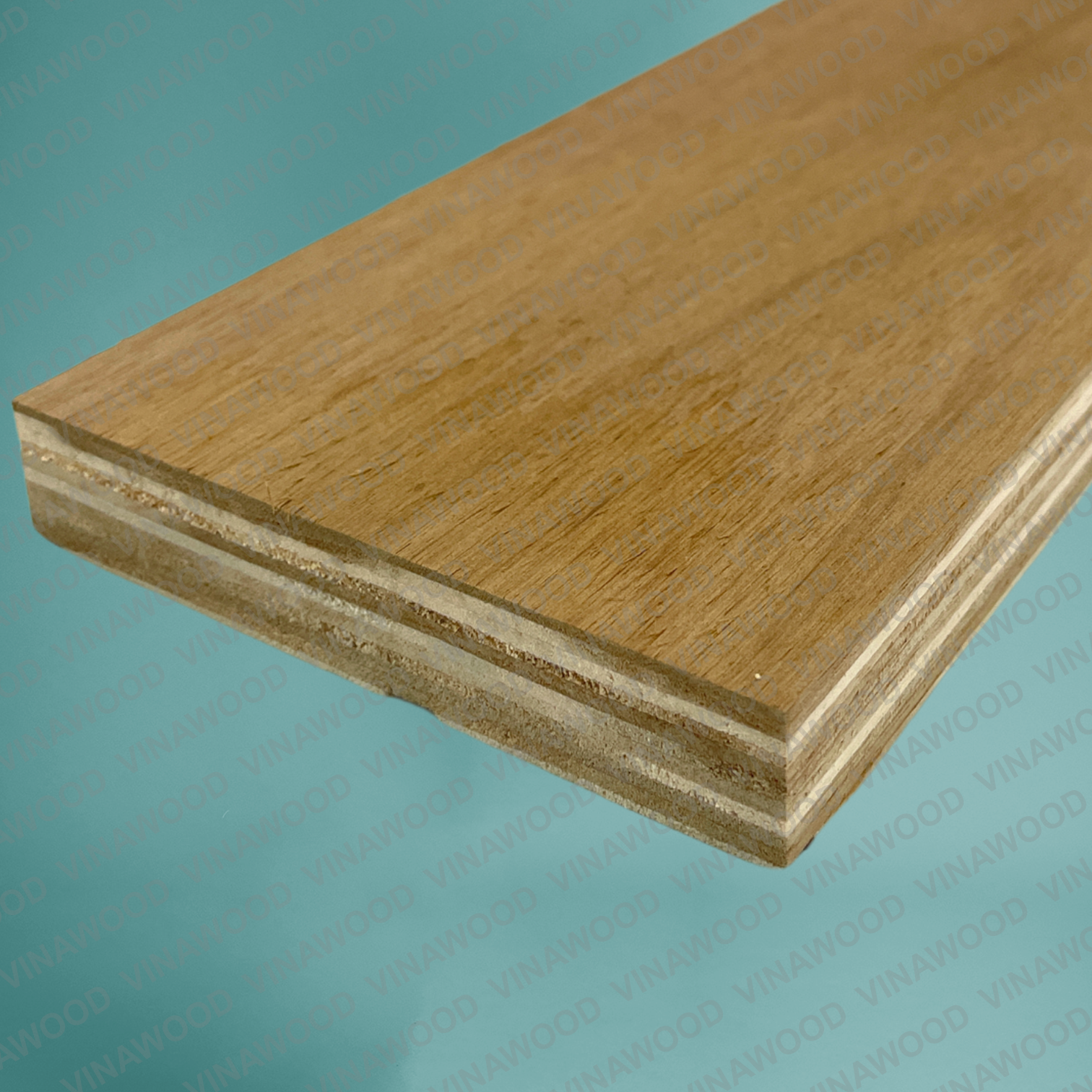
What is laminated veneer lumber (LVL)?
Laminated veneer lumber is an engineered structural product made by bonding multiple thin wood veneers with their grain aligned in the same direction under heat and pressure. This grain orientation gives LVL higher and more consistent load-bearing capacity than sawn lumber of the same cross-section, with fewer defects like knots or splits. LVL is commonly used for beams, headers, rim boards, scaffold planks, and structural framing.
How does LVL differ from plywood and glulam?
All three are engineered wood products, but they differ in veneer orientation and typical use. Plywood alternates veneer grain direction (cross-laminated) across layers to balance strength in two directions, making it a sheet panel. LVL aligns all veneers in the same direction, making it a linear structural member optimized for bending along its length. Glulam bonds solid dimension lumber (not veneers) into large beams. Choose LVL when you need long, uniform, high-strength beams or headers in framing.
What sizes and grades does Vinawood's LVL come in?
Vinawood manufactures LVL in two primary grades — LVL Basic for general framing and formwork support, and LVL Extra for higher-load structural applications. Typical billet sizes are produced to customer specifications, with common widths of 45–90 mm, depths from 150–600 mm, and lengths up to 12 meters. Contact the sales team for exact tolerances, grades, and certifications available in your market.
Is LVL suitable for formwork and scaffolding?
Yes. LVL scaffold planks and formwork stringers are widely used on construction sites because of their high, predictable bending strength and low deflection under concentrated loads. LVL resists splitting from nail and screw fasteners better than sawn timber, and its uniform grading reduces the risk of surprise failures. For wet concrete exposure, use an exterior-grade LVL with an appropriate adhesive system and protective coating.
Is LVL treated against moisture, fungi, and insects?
LVL is manufactured with phenolic or melamine adhesives that provide base water resistance, but it is not inherently rot-proof. For exterior or high-humidity use, specify a preservative-treated grade and follow manufacturer storage guidance — keep the product off the ground, covered, and ventilated. Cut ends should be re-sealed after any field trimming to maintain moisture performance.