What Is Laminated Veneer Lumber (LVL)?
Laminated veneer lumber (LVL) is an engineered beam built from grain-parallel veneers bonded with a phenolic exterior glue line. A manufacturer's guide to what LVL is, how it is made, its specs and standards (EN 14374, ASTM D5456), and how it compares to glulam, plywood, and solid sawn timber.
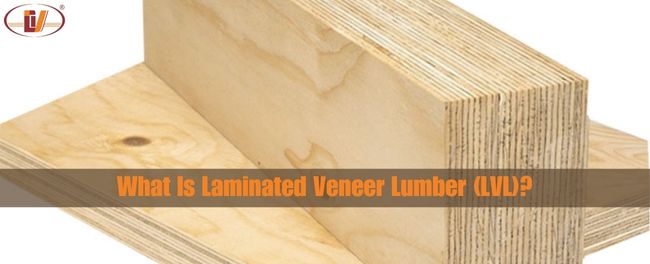
Laminated veneer lumber (LVL) is an engineered structural member built from thin wood veneers bonded together with the grain running the same way along the length of the beam. It belongs to the structural composite lumber family, alongside laminated strand lumber (LSL) and parallel strand lumber (PSL). Where plywood crosses its veneers at 90 degrees for panel strength, LVL keeps every veneer parallel, which is what turns a stack of veneer into a straight, high-capacity beam.
Builders reach for LVL where a sawn timber beam would be too weak, too short, or too unpredictable. It spans further and carries more than solid wood of the same section, and it comes off the truck straight rather than bowed. This guide covers what LVL is, how it is made, the specifications and standards that define it, and how it compares to glulam, plywood, and solid sawn timber, so the term means something concrete the next time it shows up on a drawing.
What laminated veneer lumber is
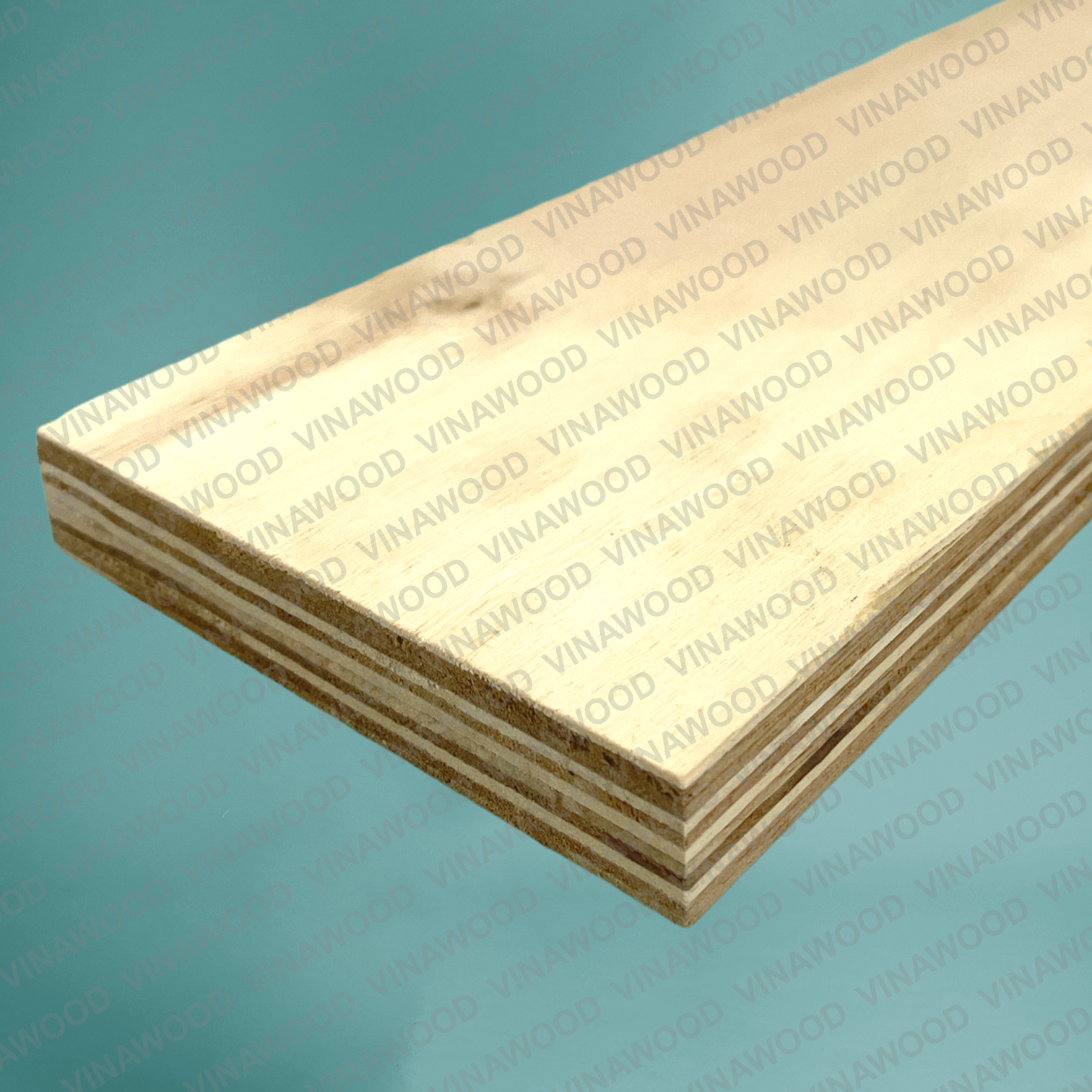
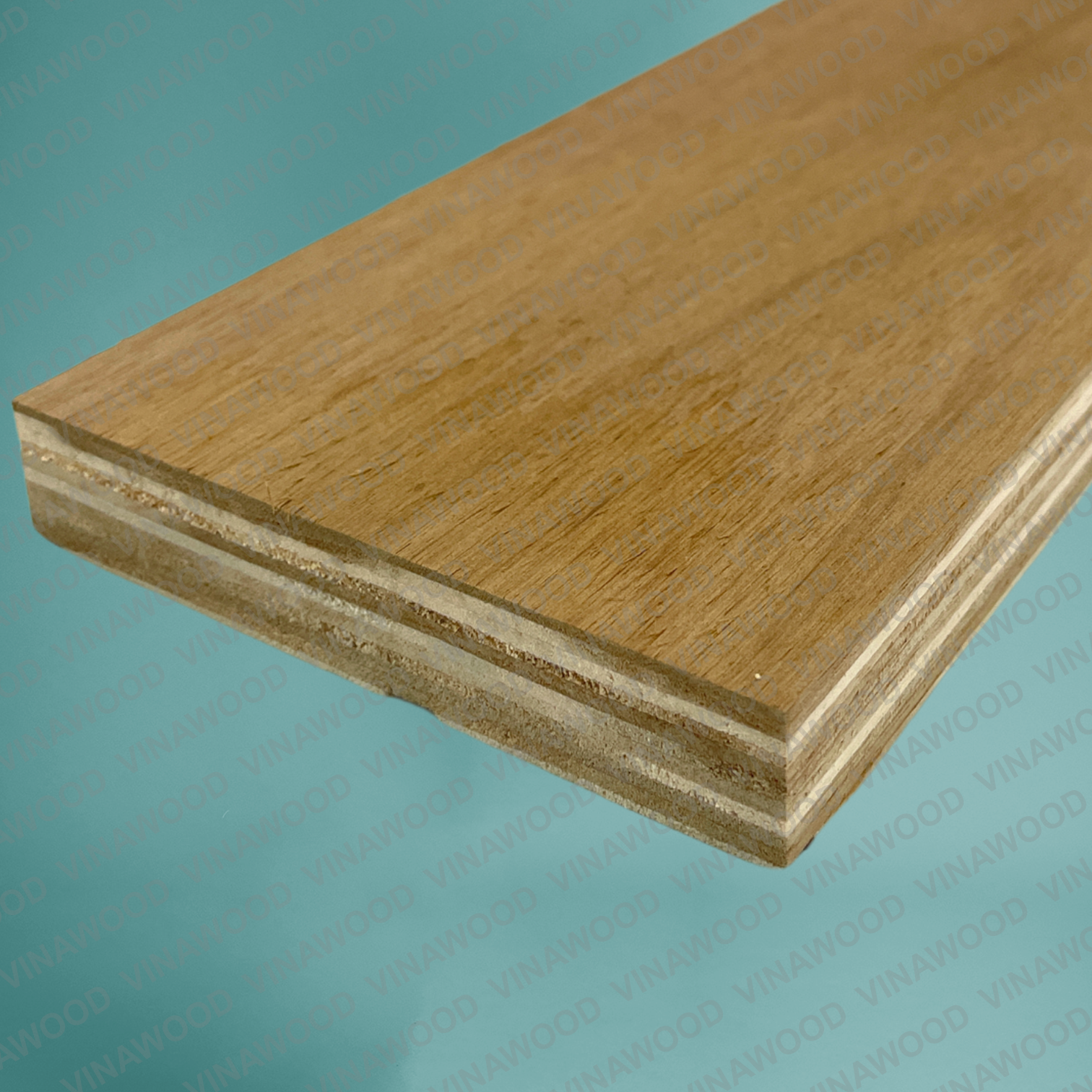
LVL is produced from rotary-peeled veneers, usually 3 mm thick, that are dried, graded, coated with adhesive, and pressed into a long billet under heat and pressure. The billet is then ripped to the beam widths and depths a project needs. Because the veneers all point the same direction, LVL carries load along its length far better than across it, which is exactly the behaviour a beam, header, or rafter needs.
It helps to place LVL inside its family. Laminated strand lumber uses short strands rather than continuous veneer. Parallel strand lumber uses long, thin strand bundles for columns and large beams. LVL sits between them, built from full veneers, and it is the most widely specified of the three for beams and headers. The peeling and drying front end is the same sequence covered in our note on how plywood is made; LVL simply keeps the grain parallel instead of crossing it.
How LVL is made
Logs are rotary-peeled into a continuous veneer ribbon, clipped, and dried to a controlled moisture content. Each veneer is graded, then run through a glue spreader that meters a phenol-formaldehyde adhesive onto the faces. The veneers are laid up parallel, staggered so the end joints never stack, and fed into a heated press that cures the glue line into one continuous billet. Modern lines press the billet continuously, so a single member can run many metres before it is cut to length.
The adhesive is the same phenolic chemistry used on exterior-rated plywood. It cures into a water-resistant, WBP-class glue line that holds the veneers together through construction moisture and humid service. That does not make LVL waterproof. The bond resists moisture, the wood does not, so exposed LVL still needs its ends and edges sealed and a protective coating for anything beyond dry, covered use. Species vary by region and mill, with Douglas-fir, larch, radiata pine, and spruce among the common feedstocks.
We peel and press engineered panels on the same class of line in Vietnam, and the parallel-lay-up discipline is what separates a straight billet from a bowed one. Veneer moisture control and staggered end joints do more for a finished member's straightness than any single press setting.
LVL specifications and sizes
LVL is sold as beam stock rather than sheet stock, so its dimensions read like lumber, not plywood. The numbers below are typical market ranges; the exact envelope depends on the mill and the governing standard.
| Property | Typical range |
|---|---|
| Veneer thickness | About 3 mm, rotary-peeled |
| Billet / member thickness | Roughly 30–75 mm (single or built-up plies) |
| Depths | Common joist and beam depths from about 200 mm to 400 mm and beyond |
| Lengths | Up to 12 m or more from continuous presses; transport often sets the practical limit |
| Adhesive | Phenol-formaldehyde (water-resistant, WBP-class exterior glue line) |
| Grain orientation | All veneers parallel to the member length |
| Governing standards | EN 14374 (Europe), ASTM D5456 (North America) |
Two standards govern structural LVL. In Europe, EN 14374 sets the requirements for structural LVL used in timber structures. In North America, ASTM D5456 covers the evaluation of structural composite lumber, the family LVL belongs to. A member sold for structural use should reference one of these, along with published design values for bending, shear, and stiffness. Those design values, not a generic "high strength" claim, are what an engineer sizes a beam against.
LVL vs glulam vs plywood vs solid sawn timber
LVL is easy to confuse with the other engineered members it shares a shelf with. The make-up is what separates them, and the make-up drives where each one belongs.
| Material | Make-up | Strength & stability | Typical use |
|---|---|---|---|
| LVL | Thin veneers, all grain-parallel, bonded into a billet | High and predictable along the length; very straight | Beams, headers, rafters, rim board, formwork bearers |
| Glulam | Solid sawn timber laminations glued face to face | High; visible grain, suits long curved and exposed spans | Exposed beams, portal frames, arches, roof structure |
| Plywood | Veneers cross-banded at 90 degrees into a panel | Bidirectional panel strength | Sheathing, formwork faces, flooring, cabinetry |
| Solid sawn timber | A single piece of milled wood | Variable; knots and grain reduce and scatter capacity | Studs, joists, general framing |
Read the table as a routing guide. LVL and glulam are both beams, but glulam keeps a natural sawn-timber face for exposed architectural spans, while LVL trades appearance for a denser, more uniform member usually hidden in the structure. Plywood is the odd one out here, a panel rather than a beam, because its veneers cross. Solid timber remains the cheaper choice for ordinary studs and short joists where its scatter in strength does not matter. For the wider panel picture, our guide to the types of plywood maps where each board sits.
What LVL is used for
LVL earns its place wherever a long, straight, high-capacity member beats a sawn beam. The common applications:
- Beams and headers over openings, garage doors, and wide spans where a single sawn section would not carry the load.
- Rafters and purlins in roof structures that need consistent depth and long runs.
- Rim board and edge members that close and stiffen engineered floor systems.
- Scaffold planks and formwork bearers, where straightness and repeatable stiffness matter on site.
- Load-bearing wall and floor panels when the veneers are cross-banded for two-way action rather than run purely parallel.
Because LVL is manufactured rather than cut from a log, it arrives free of the knots and grain deviation that force a builder to over-size a sawn beam. That predictability is the reason a specifier picks it, more than any headline strength figure.
Moisture, storage, and durability
LVL is dimensionally stable and resists the twisting and cupping that solid timber shows as it dries, but it is still a wood product with an exterior-class glue line, not a waterproof one. Left in standing water or stored flat in the wet, a member can swell or warp, and that usually traces back to site handling rather than a fault in the billet. Keep LVL off the ground and under cover, seal cut ends and edges, and coat any member that will see weather. Treated the way any engineered wood member should be, LVL holds its shape across a long service life.
What drives LVL cost
Prices move by region and over time, so a figure quoted here would be stale before it was useful. What actually drives the number is steady: the member depth and thickness, the length and whether it comes from a continuous or fixed press, the species and veneer grade, the published design values, and the certifications a project needs. A longer, deeper beam with documented structural grading costs more than short commodity stock, and rightly so. For a current, project-specific figure, send the section, length, and volume you need and ask for a quote rather than working from a list price.
LVL and Vinawood
Vinawood's core product is plywood, and LVL is a related engineered line rather than the centre of the range. Our laminated veneer lumber range covers structural LVL stock for buyers who arrive comparing engineered members; where a project actually calls for a panel rather than a beam, the honest answer is often our commercial plywood or a structural grade instead. Matching the member to the demand beats pushing a single product at every job.
Vinawood is a Vietnamese plywood manufacturer established in 1992, shipping more than 5,000 containers a year to over 55 countries. Every sheet runs through a 12-step process with 100% individual-sheet inspection and in-house testing for bond strength, moisture, and formaldehyde, certified to ISO 9001, FSC and PEFC chain of custody, CE marking under EN 13986, and EPA TSCA Title VI / CARB P2 for the United States. If you are weighing LVL against glulam, plywood, or a sawn beam for a load-bearing job, tell us the span, load, and destination market, and our team will point you to the right engineered member and respond within 24 hours.
Category
guides
Related Markets
Related Countries
Related Products
▶Sources & References (3)
- EN 14374 — Timber structures: Structural laminated veneer lumber (LVL) — Requirements — European Committee for Standardization (CEN) (2004)
- ASTM D5456 — Standard Specification for Evaluation of Structural Composite Lumber Products — ASTM International (2021)
- LVL — Laminated Veneer Lumber product guide — APA — The Engineered Wood Association (2023)