What is the actual thickness of 5/8 plywood?
Plywood stands out as an optimal selection across numerous construction and home enhancement undertakings due to its resilience, adaptability, and cost-effectiveness. Nevertheless, the market offers a plethora of plywood variants, each tailored to specific purposes. If your endeavor involves…
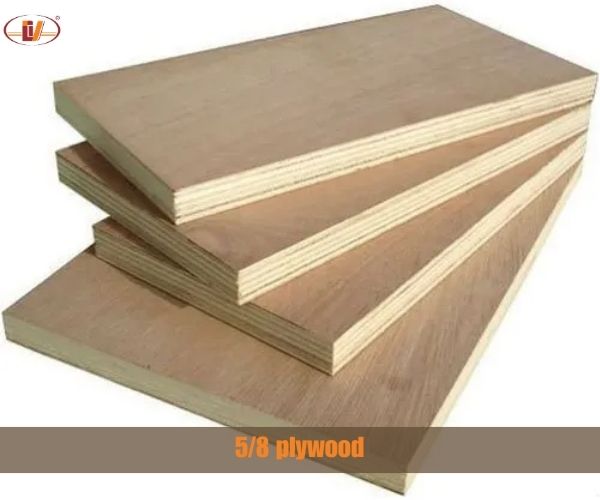
Ask a framing crew what “5/8 plywood” measures and most will say nineteen thirty-seconds. The aisle tag still prints 5/8. The caliper usually reads about 15.1 mm. That gap is normal sanding loss, not a defect, and it is the first thing to settle before you cut sheathing or order formwork near that thickness.
I still see purchase orders that treat 5/8 and 19/32 as different products. On North American softwood panels they are the same nominal step. Related thickness notes live on our plywood sizes, 19/32, 1/2, and 3/4 pages.
How heavy is a sheet?
A 4×8 at this thickness lands somewhere around 55 to 70 pounds. Species mix and voids move the needle. Two people can carry it. One person on a ladder should not.
Builders like 5/8 because it sits between half-inch flex and three-quarter heft. Roofs, walls, and many subfloors land here when the stamp and the span tables agree. DIY furniture and trailer walls are a different story — every extra pound shows up when you lift the panel into a tight bay.
19/32 is the usual actual size
Retail bins often stamp 19/32 even when the bay sign still says 5/8. For sheathing and subfloor work the two names swap freely. For a tight dado or a flush appliance panel, measure the sheet you have, not the name on the unit wrap.
Nominal size is the sales language. Actual size is the sanded face-to-face reading. Writing both on a cut list (“5/8 nom / 19/32 act”) stops a lot of jobsite argument.
Yes, 5/8 exists in the thickness ladder
Softwood plywood ladders still include a 5/8 step. After sanding, yards may only tag the fractional actuals — 15/32, 19/32, 23/32, and so on. If your drawing says 5/8 and the yard only shows 19/32, you are usually looking at the same panel family.
Where 5/8 CDX earns its keep
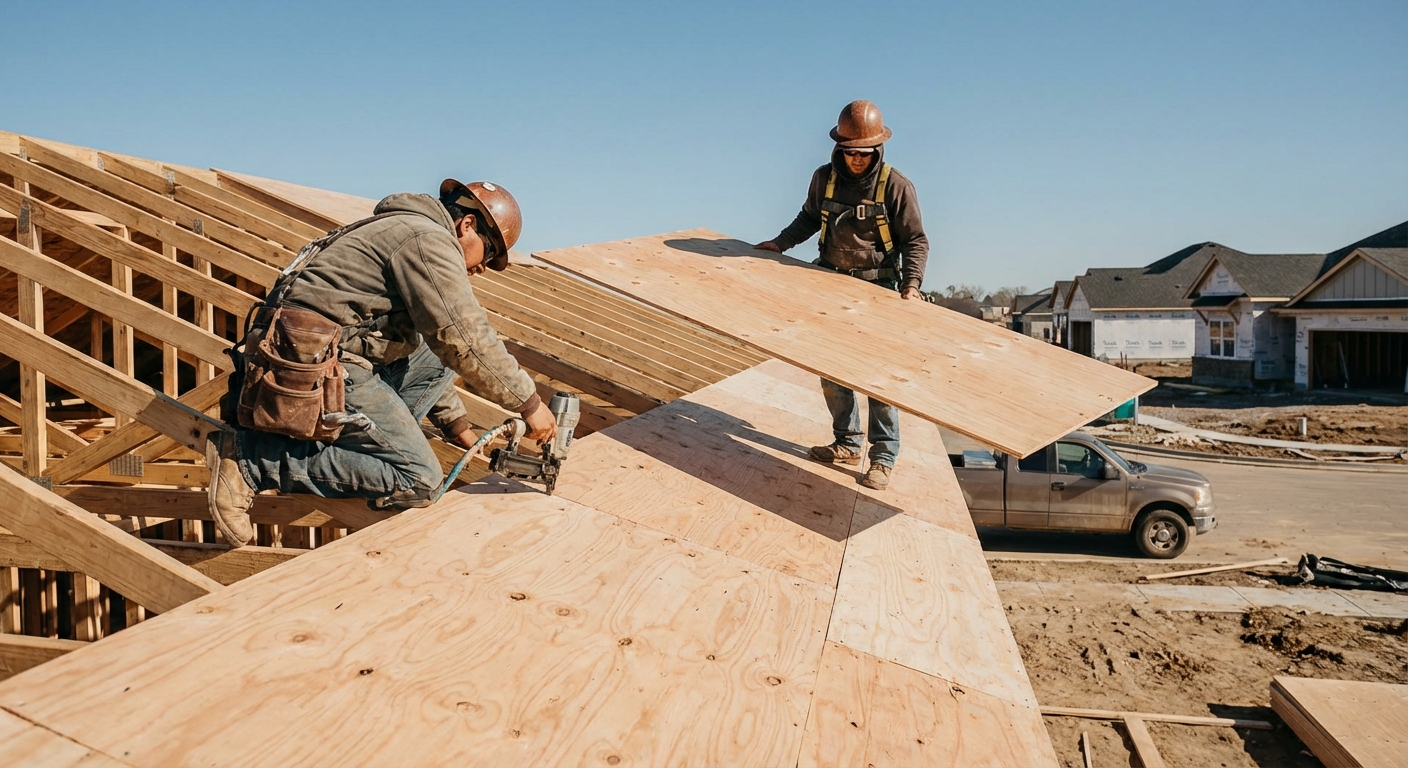
CDX pairs a C face and D back with exterior-grade glue. At 5/8 it is a regular pick for subfloors, roof decks, and wall sheathing that will see rain during the build. The glue line is water-resistant for construction wetting. It is not a boat hull. Keep edges dry in storage and you get the reuse of the stamp; leave a unit in a puddle and you get swollen tongues.
Walls get a stiffer nail base than thin stock. Roofs get a deck that takes underlayment without oil-canning on common rafter spacing — when the span rating on the panel matches the framing. Rough shelving and shop fixtures can use the same thickness if the face will be covered or paint-grade is fine.
Formwork is a separate product family. Film-faced and HDO panels for concrete are specified by bond class and overlay, not by a CDX sheathing stamp. Start at concrete forming plywood or shuttering plywood if that is the job.
5/8 versus 3/4
Three-quarter (near 23/32 actual) is thicker, stiffer, and heavier. It shows up on hard-wearing floors, stair parts, and boxes that need deeper screw bite. Five-eighths wins when the code minimum stops there, when weight on a roof deck matters, or when the bid needs to shed material cost without dropping below the engineer’s span table.
Do not swap 5/8 into a 3/4 callout without a revised calc. The stamp and the span rating beat the aisle nickname every time.
Planning the lift
Budget 55–70 lb per 4×8 softwood sheet unless you have weighed the unit. Sheet lifters and two-person carries keep backs intact on multi-story stacks. On small shops and trailers, weigh one panel before you design a wall that has to go up by hand.
Ordering near this thickness from Vinawood
Vinawood mills plywood in Vietnam for export. RFQs that land near 15–18 mm should name bond class, face type, and sheet format (1220×2440 or 1250×2500), not only “5/8.” Send the destination and the span or reuse target and the sales desk will map a grade without inventing cycle counts.
More reading: 3/4 vs 5/8, CDX, outdoor plywood.