What Is 3/4 vs 5/8 Thickness? Is 3/4 Greater Than 5/8?
When selecting plywood for a project, one of the crucial considerations is the thickness of the material, which can significantly impact both the structural integrity and the overall aesthetics of the finished product. A common choice is between 3/4-inch and 5/8-inch plywood, each offering distinct…
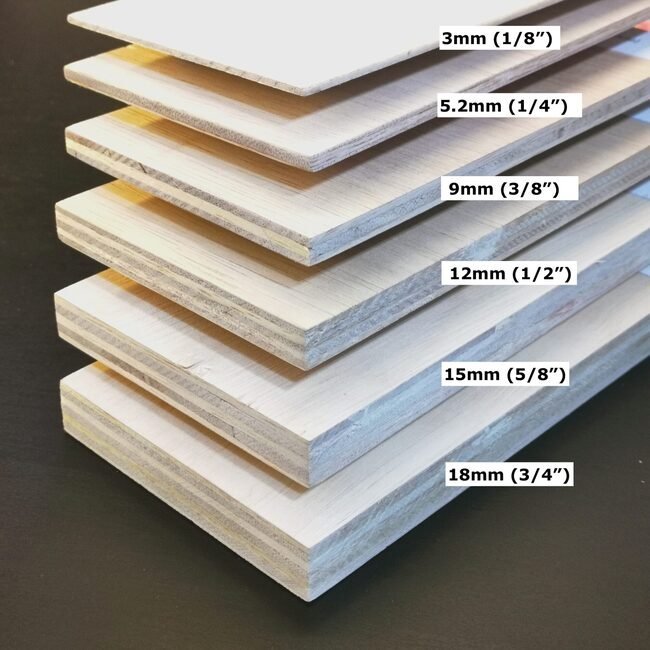
3/4 inch plywood is 19.05 mm. 5/8 inch is 15.88 mm. The gap is 0.125 inch, or about 3.2 mm. That sounds tiny, but stiffness scales with the cube of thickness — meaning a 3/4 panel resists deflection roughly 1.7 times as much as a 5/8 panel of the same span. That's why a kitchen counter on 3/4 ply doesn't sag where 5/8 will, and why a cabinet shelf in 5/8 starts to bow under heavy cookware around the 30-inch span mark. The fraction difference is small. The structural difference isn't.
What is the thickness of 3/4 plywood?
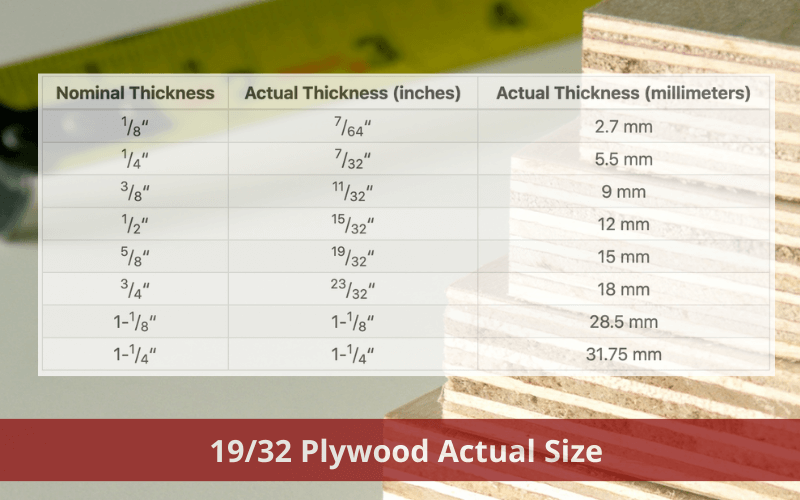
Nominal 3/4 inch plywood is sold as 0.75 inch but rarely arrives at exactly that. Most sanded hardwood ply runs 23/32 inch — around 18.3 mm — because the sanding pass at the mill takes off a hair. Construction-grade Douglas fir or pine sheathing usually holds closer to true 0.75 inch. Read the spec sheet, not the marketing copy.
This is the workhorse panel for subfloor, stair treads, cabinet carcasses, countertop substrate, and any shelving that has to hold real weight. It spans 16-inch on-center joists for a residential subfloor without a midspan blocking detail. It holds a face-frame cabinet square through years of door-slam cycles. Most of what gets called "plywood" in a North American framing context is 3/4.
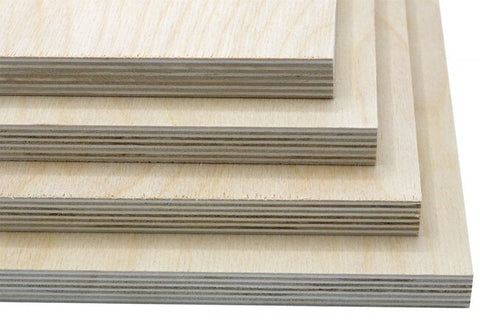
What is the thickness of 5/8 plywood?
5/8 nominal lands at 0.625 inch on the spec sheet and somewhere around 15.5 to 15.9 mm on the panel. Sanded versions trim a touch thinner. It's the next step down from 3/4 and the spec is meaningfully different — about 17 percent less material, and the deflection math gets worse fast.
Where it earns its place: wall sheathing on 16-inch studs, lighter cabinet backs, partition panels, underlayment over a structural subfloor. Not subfloor on its own. Not unsupported shelves over 24 inches. Not anything that has to span a joist bay solo.
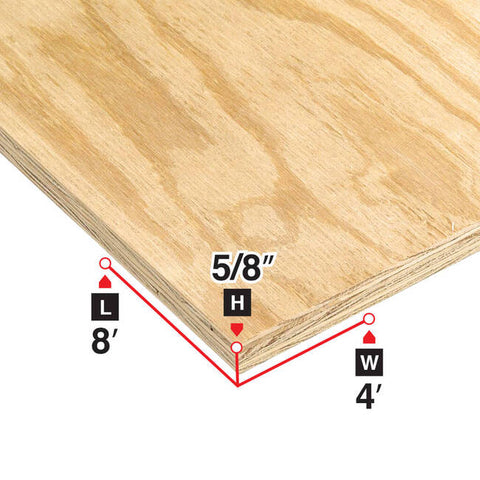
What is 3/4 vs 5/8 thickness in inches? How much bigger is 3/4 than 5/8?
The arithmetic: 0.75 - 0.625 = 0.125 inch. That's an eighth. In metric, 19.05 mm minus 15.88 mm equals about 3.2 mm.
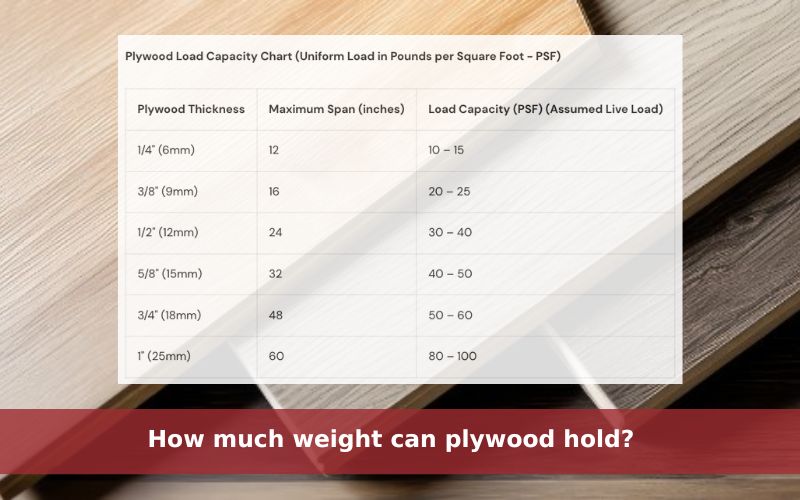
The structural reality is bigger. Bending stiffness scales with thickness cubed, so a 17 percent thickness gain delivers roughly 60 to 70 percent more stiffness for the same panel span. Drop a 50 lb load mid-span on a 3-foot run of 3/4 plywood and it deflects about 0.10 inch. The same load on 5/8 over the same span deflects close to 0.17 inch. For a shelf, that's the difference between flat and sagging by sight.
So the 1/8 inch difference is more than a number on a tape measure. For load-bearing work it changes the panel's job class.
When to Use 5/8 Inch Plywood
5/8 inch plywood is a great choice when:
- Budget is a primary concern
- The project doesn't require maximum structural strength
- You're working on interior paneling or non-load-bearing components
When to Use 3/4'' Plywood 4x8
3/4 inch plywood 4x8 is ideal for:
- Subflooring, shelving, countertops, and cabinetry
- Furniture that needs to support weight
- High-traffic, long-lasting structures where durability matters
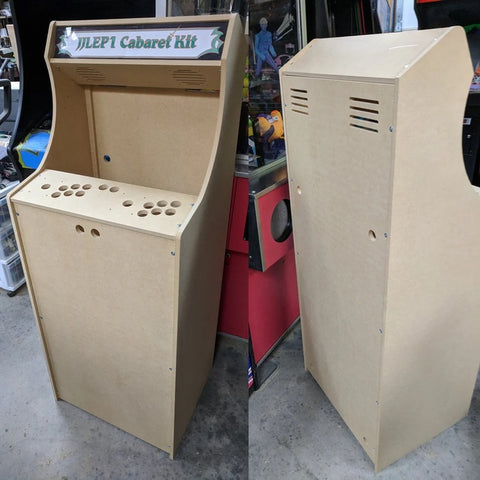
How thick MDF for arcade cabinet?
3/4 inch MDF is the standard for arcade cabinet builds. The reason is weight tolerance, not aesthetics. A typical upright arcade carcass holds a 50 lb CRT or LCD monitor, the marquee assembly, the control panel with steel button hardware, and a coin door on the front. Add the user leaning on the panel during play and the loading is real. 3/4 MDF holds the joints square and takes T-molding routs without crumbling at the edge.
5/8 MDF works for some non-structural parts. The marquee bezel, the speaker grille, the rear access panel — anywhere the panel just spans a frame and doesn't carry load. For the side walls, base, control panel, and monitor shelf, stay with 3/4. The cost difference is a few dollars per sheet. The longevity difference is a decade.
One note on glue and screws: MDF eats fasteners. Pre-drill every screw hole. Use coarse-thread MDF screws or confirmat hardware. PVA glue plus mechanical fasteners is the standard joint.
What size is equivalent to 3/4 plywood?
Metric: 19.05 mm. Most spec sheets round to 19 mm. The actual panel often arrives at 18 to 18.3 mm because sanding removes material during finishing.
That's why you'll see "3/4 nominal, 23/32 actual" on hardwood plywood spec sheets. The label is the trade size; the caliper reading is what matters when you're cutting a dado or fitting a shelf into a 19 mm slot. Cut your dado for the actual measured thickness, not the nominal call-out, or your shelf will rattle.
Construction-grade softwood plywood usually holds closer to true 19 mm because it doesn't go through the same sanding pass. Hardwood faced cabinet ply runs thinner. Both get sold as 3/4.
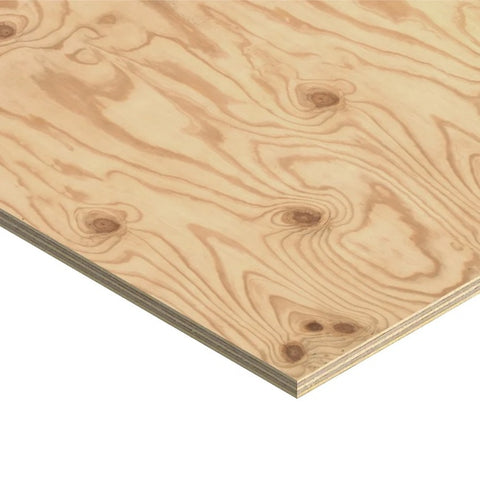
Key Differences Between 5/8'' and 3/4'' Plywood 4x8 Sheets
Feature | 5/8'' Plywood Sheet | 3/4'' Plywood 4x8 Sheet |
Actual Thickness | ~0.625 inches (15.9 mm) | ~0.75 inches (19 mm) |
Standard Size | 4x8 feet | 4x8 feet |
Strength & Durability | Moderate | High |
Common Applications | Wall panels, light cabinetry | Flooring, heavy-duty furniture |
Price | More affordable | Slightly higher, but worth it |
Which One Should You Pick?
If the panel will see weight, pressure, or frequent use, 3/4'' plywood is the safer call. For lighter, decorative work or where cost trumps structural margin, 5/8 inch plywood works.
Buy High-Quality 5/8 and 3/4'' Plywood at Vinawood
Vinawood manufactures plywood in both 5/8 and 3/4'' thicknesses using selected hardwood veneers. Each 3/4'' plywood 4x8 sheet is built for stability and a smooth face — designed for flooring, cabinetry, and industrial use.
For more on plywood types, including softwood, hardwood, marine-grade, OSB, MDF, MDO, and particle board, see the types of plywood guide.
VINAWOOD – Vietnam plywood Supplier & Manufacturer