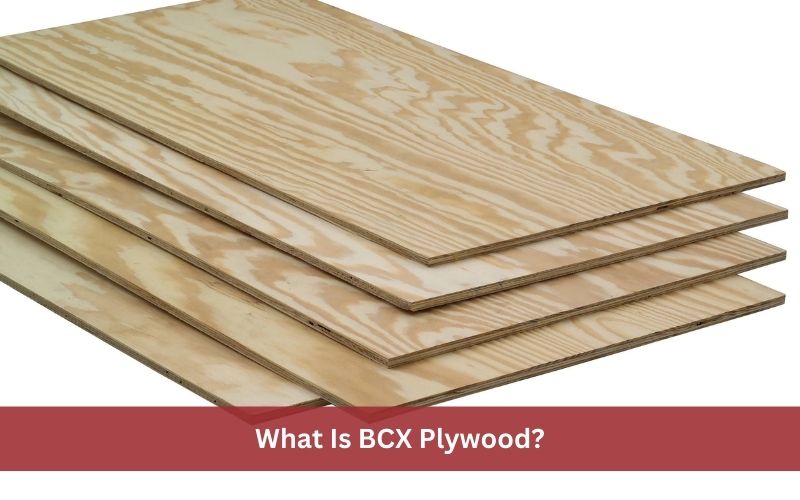
CDX Plywood: Definition & Common Uses
Choosing the right wood for home projects is crucial as it affects performance, durability, and maintenance. While CDX plywood may be ideal for some DIY tasks, it may not suit others. The project's requirements determine whether plywood CDX is appropriate. In this article, VINAWOOD will help you…
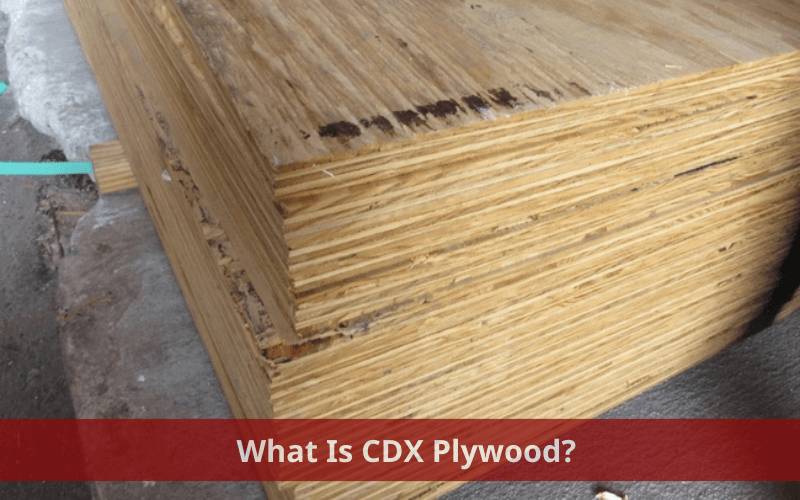
CDX is the cheapest sheathing-grade plywood you can buy at a US lumberyard. A 4x8 sheet of 1/2" CDX runs roughly $25 to $40 at retail; OSB of the same size sits a few dollars below it. The grade is built for jobs where it gets covered up — roof sheathing under shingles, subfloors under finish flooring, walls under siding. Visible furniture or finished interiors aren't the brief. Below covers what the letters mean, what CDX is used for, how long it tolerates weather exposure, and how it stacks up against OSB and RTD plywood.
What is CDX Plywood?
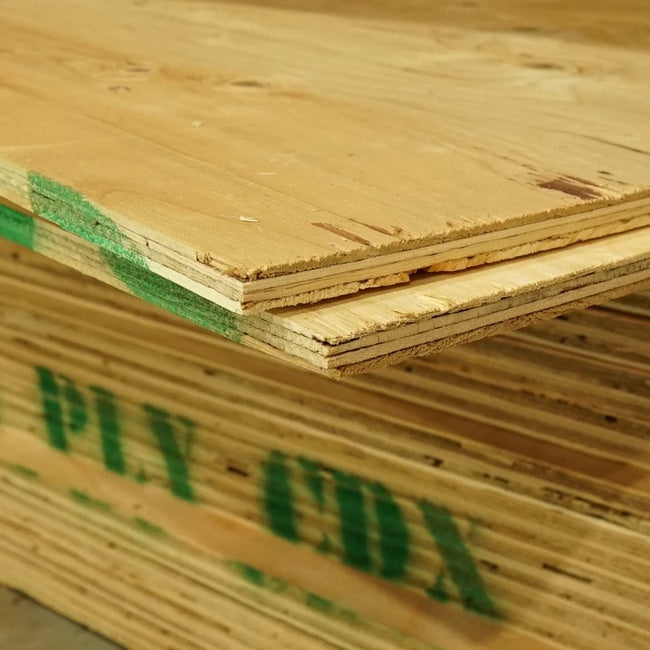
The letters tell you what's in the panel. C and D are veneer grades — C grade goes on the visible face, D grade on the back, and both allow knots, repairs, and small defects that wouldn't pass on A or B-grade material. X stands for exposure-rated glue. The bond line is moisture-resistant enough to survive incidental wetting during construction, but it isn't waterproof.
The grading describes appearance, not structural performance. CDX is strong. It holds nails. It carries the design loads it's rated for. What it doesn't do is look pretty — voids, knots, and patches show on both faces, which is why the panel hides under finishes rather than getting displayed.
How is CDX plywood made?
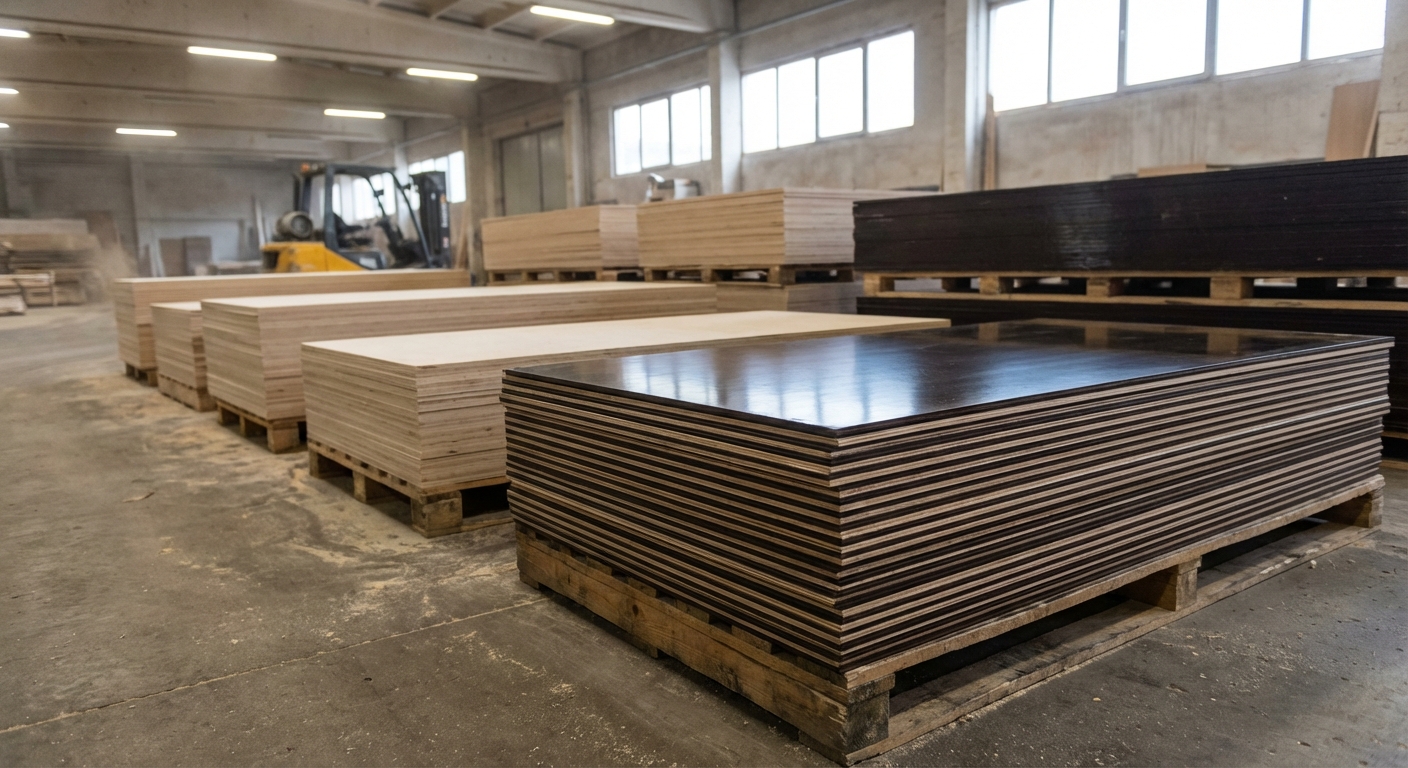
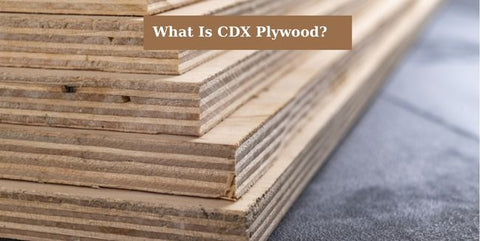
Standard plywood manufacture. Logs are peeled into thin veneers, dried, sorted by grade, then stacked with the grain of each layer running perpendicular to the layers above and below. Adhesive goes between layers, the stack runs through a hot press, and the panel comes out at standard thicknesses for trimming and grading.
The "X" glue is exposure-rated phenolic or modified phenolic resin. Better than interior glue lines for wet construction conditions, not as durable as the marine-grade adhesives used in marine plywood. Lower-grade veneers go in the inner plies; the outer faces use the C and D grades the panel is named for.
What is CDX plywood used for?
CDX is sheathing-grade. The whole reason the panel exists is to provide structural enclosure under finishes that hide the rough face.
Exterior uses
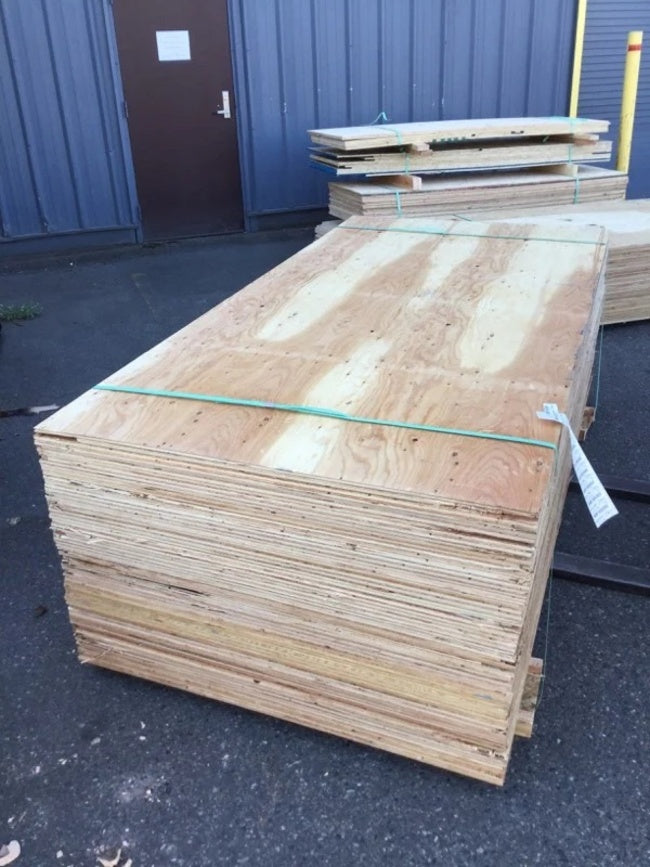
Roof and wall sheathing are the dominant CDX applications. The panel forms the structural skin under shingles, roofing felt, insulation, and siding. The exposure glue handles the few weeks between framing and dry-in; once the building envelope is closed, the panel stays dry through service.
Roof sheathing
The default sheathing material on residential pitched roofs in the US. Holds the shingle nails, carries snow and live loads down to the rafters, and tolerates the brief weather exposure between sheathing and roofing.
Construction of crates and boxes
Heavy-duty shipping crates use CDX for the same reasons sheathing does. Strong, dimensionally stable, cheap per square foot, doesn't need a finished face for cargo that doesn't care.
Interior uses
Inside the building, CDX shows up as subfloor under carpet, vinyl, or laminate, as a substrate for tile, and as utility shelving in garages and shops. The rough face doesn't matter when carpet, tile, or storage bins go on top.
Garage shelves
Garage and workshop shelving is a classic CDX use. Strong, deep, cheap, and the visible grade doesn't matter when you're stacking paint cans and power tools on it.
Sub-flooring
Is CDX OK for subfloor? Yes — CDX is the workhorse subfloor material under tile finishes in kitchens and bathrooms, and under carpet, vinyl, and laminate everywhere else. See subfloor for the full thickness and span tables.
How long can CDX Plywood be exposed?
Long enough for a normal construction schedule. Not long enough to leave the panel uncovered for months. Rain and snow during framing — a few days here and there — won't hurt CDX as long as the panel dries between events. The grain absorbs some moisture, releases it as humidity drops, and the panel returns to original size and shape.
What CDX won't survive is sustained exposure. Standing water, weeks of weathering, freeze-thaw cycles on saturated panels — those break the bond line and warp the faces. The expectation is that the building envelope closes within weeks of sheathing going up. Anything longer than that and the panel needs cover.
> Learn more: types of wood, Types Of Plywood, marine plywood, birch plywood, MDO plywood, HDO plywood
What Is CDX treated with plywood?
Pressure-treated CDX is standard CDX run through a chemical bath that drives moisture- and decay-resistant compounds into the veneers. The result is a panel that handles ground contact, persistent dampness, and exterior exposure that would destroy standard CDX in a season. Common uses include outdoor flooring, deck substrates, and any framing application below ground level or in chronic-moisture conditions.
> Discover more: furniture grade plywood, plywood underlayment, shuttering plywood, concrete forming plywood
CDX Plywood Sizes, Thickness & Availability
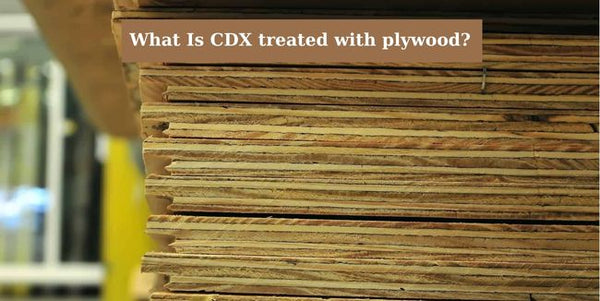
CDX is stocked at every US home centre and lumberyard. Standard ply counts are 3, 5, 7, and 9 plies depending on thickness. Plywood sizes in this grade run from 1/4" up to 1-1/4", with 3/8", 1/2", 5/8", and 3/4" being the everyday stocking thicknesses. Worth remembering: the thickness on the label is nominal. Actual finished thickness is usually about 1/32" less after sanding, which matters when you're matching a CDX panel to existing flooring or trim.
Which is better, CDX or OSB?
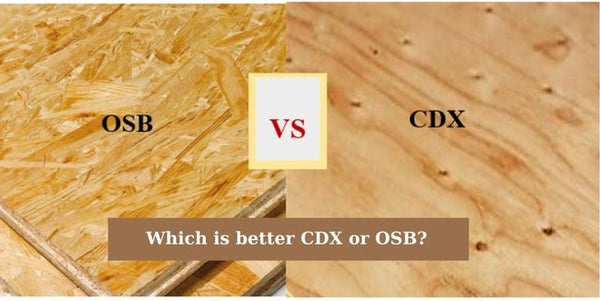
Different jobs, different answers. OSB and Plywood have some real differences worth knowing.
- CDX handles incidental moisture better — the cross-laminated veneer construction and exposure glue dry out faster than OSB after a wetting event. The face is also a bit smoother, which helps if anything visible needs to attach to it.
- OSB is cheaper and structurally rated for the same span tables. The catch is moisture: OSB swells more on the cut edges when wet, holds onto water longer, and recovers less completely than CDX. For a roof or wall that will dry-in fast, OSB is fine. For exposed conditions or coastal climates, CDX edges ahead.
> Read more: plywood sizes, 3/4 plywood, 4×8 plywood, 1/2 plywood, 5/8 plywood, 1/4 plywood
Can CDX plywood get wet?
Briefly, yes. The X glue is exposure-rated, which means a few rain events during construction don't kill the panel. Sustained wet conditions do. Standing water, weeks of weathering, freeze-thaw cycles on saturated material — all break the bond and warp the faces. Pressure-treated CDX is the answer when the spec calls for actual moisture exposure rather than incidental wetting.
What is the difference between CDX and RTD plywood?
The two grades differ in how they're made and what they're used for:
- RTD Plywood uses Resistance Temperature Detector technology in the press to control bond line temperature precisely across the panel. The result is a tight, smooth, pre-sanded surface suited to visible work — cabinet backs, finish carpentry, anywhere appearance matters.
- CDX Plywood is standard sheathing grade, with a rough C-grade face and a rougher D-grade back. Built for structural use under finishes — roofs, walls, subfloors — not for visible installations.
Short version: pick RTD for finish work, CDX for sheathing.
That covers the main questions buyers ask about CDX. The one-sentence summary is that CDX is the cheap, structural-grade panel that does the framing and sheathing work in most US wood-framed buildings, and it's the right choice for any construction job where the panel sits under a finish. For visible interior work, RTD or a hardwood-faced grade beats it. For wet exposure, pressure-treated CDX is what to specify. Full types of plywood guide on the website covers the rest of the grade map.
VINAWOOD – Vietnam Plywood Supplier & Manufacturer
> Get more details: