3/8 Plywood: Thickness, Sizes, Uses & Strength Guide
Complete guide to 3/8 plywood: actual thickness (11/32 inch), CDX and hardwood grades, uses for walls, roofing, and cabinetry, strength ratings, pricing, and how it compares to other plywood thicknesses.
Three-eighths-inch plywood is one of the most commonly purchased panel thicknesses at lumber yards and home improvement stores across the United States. It sits in the sweet spot between the flexibility of 1/4-inch panels and the structural rigidity of 1/2-inch sheets, making it suitable for a wide range of residential construction, renovation, and woodworking applications. This guide covers everything you need to know about 3/8 plywood — actual thickness, available grades, common uses, strength ratings, and how it compares to other plywood thicknesses.
What Is 3/8 Plywood?
Three-eighths-inch plywood is a panel product manufactured by bonding thin wood veneers together with their grain directions alternating at 90 degrees. The cross-laminated construction gives the panel dimensional stability and resistance to warping that solid wood of the same thickness cannot match.
The 3/8-inch designation is a nominal measurement. Under APA (American Plywood Association) manufacturing standards, the actual thickness of a 3/8 plywood panel is 11/32 inch — or approximately 0.344 inches (8.7 mm). This difference between nominal and actual thickness is standard across the plywood industry and matters when planning precise fits, such as cabinet dado joints or flooring underlayment transitions.
Where does 3/8 plywood fit in the thickness spectrum? It falls between 1/4-inch panels (used for backing and lightweight applications) and 1/2-inch plywood (the starting point for structural sheathing). Three-eighths is the thinnest panel commonly used for wall sheathing in residential construction, though local building codes may require thicker panels depending on stud spacing and wind load requirements.
3/8 Plywood Actual Thickness — Nominal vs. Real Dimensions
The gap between the nominal thickness (3/8 inch) and the actual thickness (11/32 inch) is not a manufacturing defect — it is built into the APA PS 1 standard that governs plywood production in North America. The tolerance allows for sanding, pressing, and moisture content variation during manufacturing while maintaining structural performance ratings at the nominal designation.
| Measurement | Value |
|---|---|
| Nominal thickness | 3/8 inch |
| Actual thickness (APA standard) | 11/32 inch (0.344 in) |
| Metric equivalent | ~8.7 mm |
| Tolerance range | ±1/64 inch under APA PS 1 |
Why does this matter in practice? If you are routing a dado groove to accept 3/8 plywood, cut the groove at 11/32 inch for a snug fit — not 3/8 inch, which will leave a visible gap. For sheathing and structural applications, the nominal rating is what matters for code compliance and load calculations.
Standard 3/8 Plywood Sizes
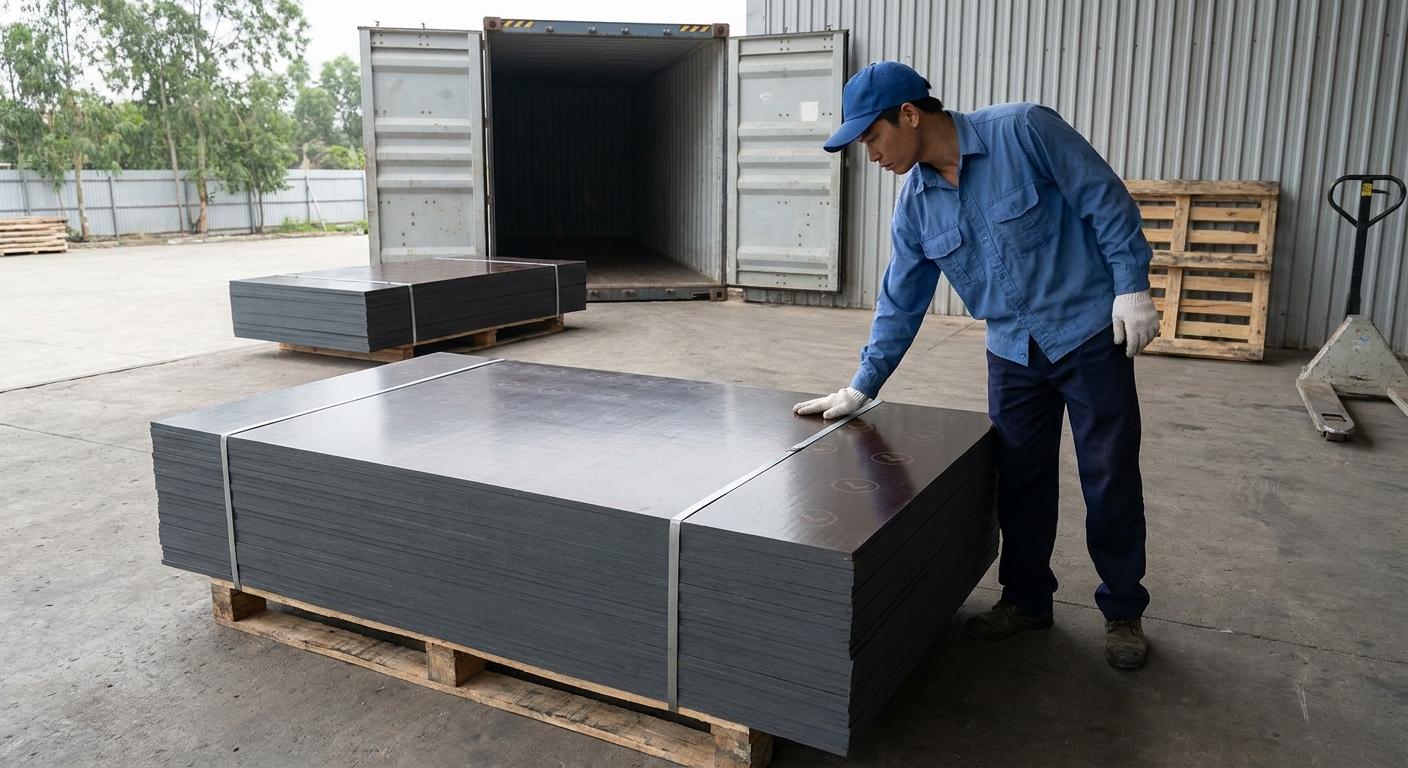
The standard sheet size for 3/8 plywood in the US market is 4 × 8 feet (1220 × 2440 mm). This is the universal panel dimension stocked at every lumber yard and big-box retailer. Additional sizes available at select retailers include 4 × 4-foot half sheets (convenient for smaller projects and easier transport) and pre-cut project panels in various dimensions marketed for craft and hobby applications.
For metric-system projects or international applications, the closest standard equivalent is 9 mm plywood in 1220 × 2440 mm or 1250 × 2500 mm sheets. The 9 mm metric panel is slightly thicker than the 8.7 mm actual thickness of US 3/8 plywood but serves the same functional role.
Types of 3/8 Plywood
Three-eighths-inch plywood is available in several grades, each designed for different applications. The grade refers to the face veneer quality and the adhesive bond class. For a complete overview of the grading system, see the plywood grades guide.
CDX Sheathing
CDX plywood is the most commonly purchased 3/8 plywood grade. The C face has tight knots and minor splits; the D back allows larger knots and repairs. The X denotes exposure-rated adhesive — suitable for temporary moisture exposure during construction but not permanent outdoor use. CDX is the standard choice for wall sheathing, roof decking underlayment, and general construction applications where the panel will be covered by siding, roofing, or finish materials.
BCX
BCX features a B-grade face — sanded smooth with only minor defects and small patches — paired with a C-grade back and exterior-rated adhesive. This is a step up from CDX for applications where one face will be visible or where a smoother surface is needed for painting or finishing.
ACX
ACX is the premium construction-grade panel: an A-grade sanded face (smooth, virtually defect-free) with a C back and exterior adhesive. Use ACX when the face will be exposed, such as the visible underside of a porch soffit or a painted utility shelf.
Sanded Plywood
Sanded plywood in 3/8-inch thickness is available in both softwood (typically fir or pine) and hardwood species. Both faces are sanded smooth, making these panels suitable for furniture components, cabinet backs, craft projects, and any application requiring a clean finished surface.
Hardwood Plywood
Birch, oak, and maple hardwood plywood are available in 3/8-inch thickness from specialty plywood suppliers. These panels feature a decorative hardwood face veneer over a hardwood or combination core. Common applications include cabinet door panels, drawer bottoms, and decorative paneling where the wood grain is part of the design.
What Is 3/8 Plywood Used For?
Three-eighths-inch plywood serves a broad range of applications in residential construction and woodworking. The key is understanding where it performs well — and where thicker panels are required.
Wall Sheathing
Three-eighths-inch CDX is approved for wall sheathing under the International Residential Code (IRC) when studs are spaced at 16 inches on center. It provides adequate racking resistance for standard wind loads in most US climate zones. However, many jurisdictions and engineers now specify 7/16-inch OSB or 1/2-inch plywood for wall sheathing to provide a greater safety margin — check your local code before defaulting to 3/8.
Roof Sheathing
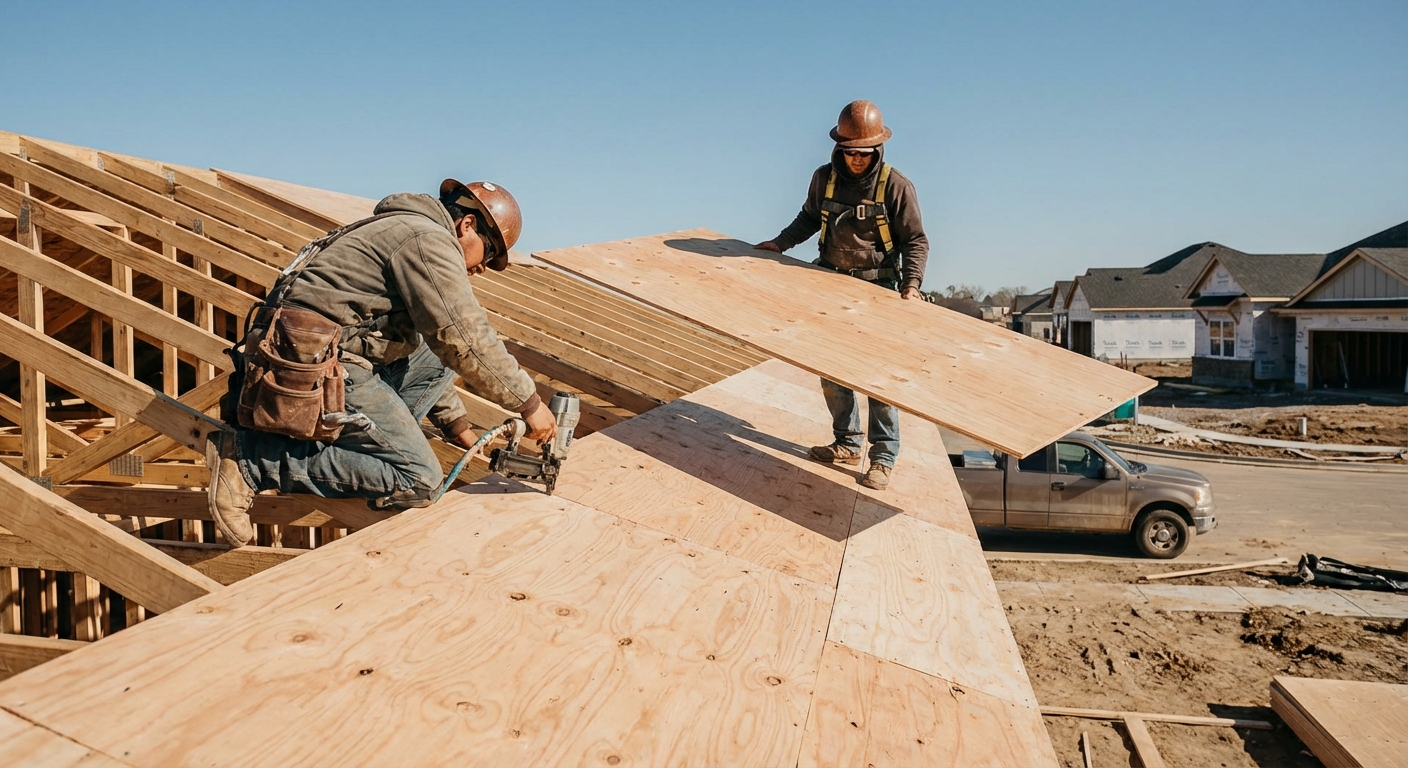
Three-eighths-inch plywood can be used for roof sheathing under specific conditions: rafter spacing of 16 inches on center maximum, light roof loads (asphalt shingles, not tile or slate), and low snow-load zones. For most residential roofing, 1/2-inch or 5/8-inch plywood is the preferred specification because it better supports the concentrated loads from foot traffic during installation and provides more margin for snow loads.
Underlayment
Three-eighths-inch sanded plywood makes an effective underlayment over existing subfloors to create a smooth, flat surface for vinyl, tile, or laminate flooring installation. It is also used as a patching layer over damaged subflooring sections before new finish flooring is applied.
Cabinet and Furniture Components
The 3/8-inch thickness is standard for cabinet backs, drawer bottoms, and divider panels — applications where the panel provides rigidity within a frame but does not bear significant load. Hardwood plywood in 3/8 inch is particularly popular for furniture projects where a thinner profile is aesthetically preferred.
Craft and Hobby Projects
For scroll saw work, laser cutting, model building, and general craft applications, 3/8 plywood offers a good balance of workability and structural rigidity. Birch plywood in this thickness cuts cleanly and accepts paint, stain, and finish well.
When 3/8 Plywood Is NOT Appropriate
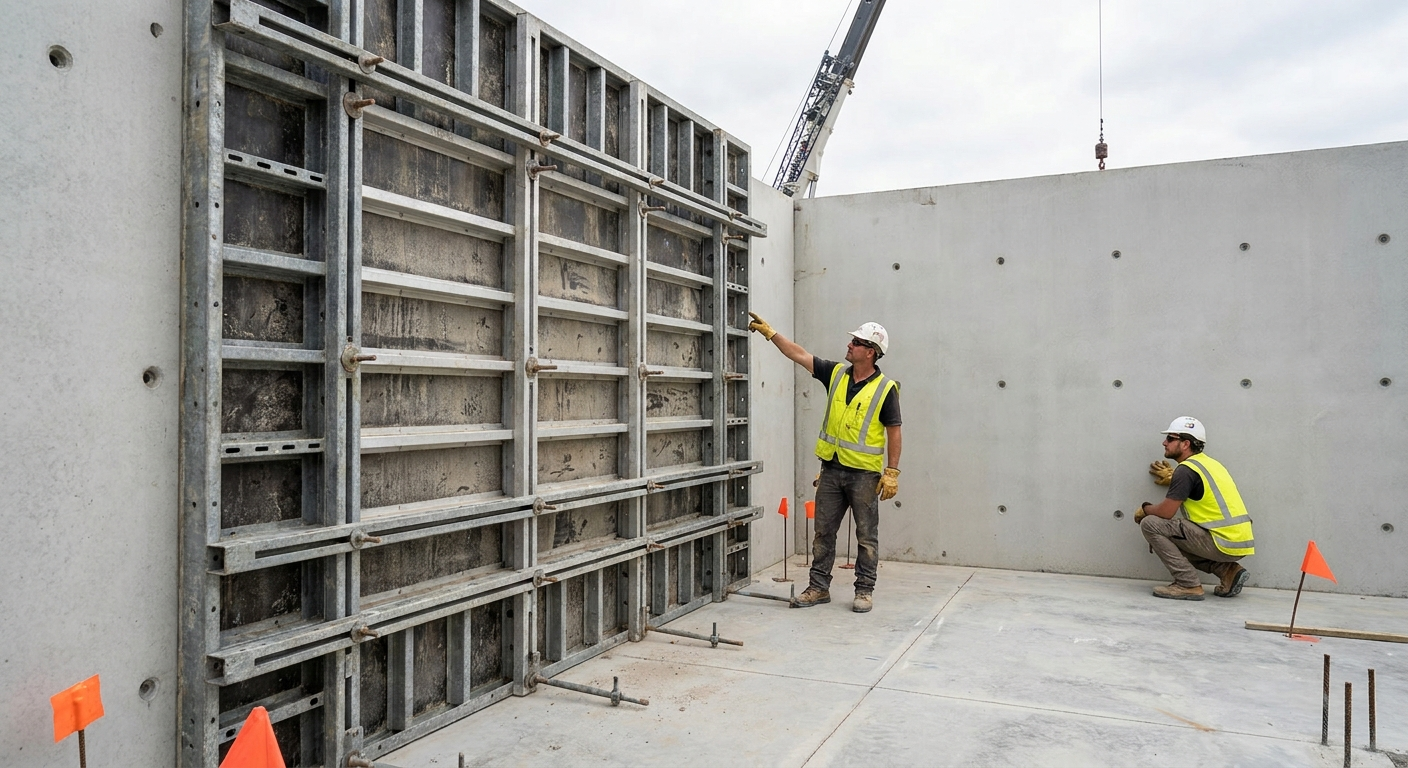
Three-eighths-inch plywood should not be used for structural subflooring (minimum 5/8 to 3/4 inch required), heavy shelving or load-bearing applications, or concrete forming (minimum 1/2 inch, typically 3/4 inch). Using 3/8 plywood in these applications risks deflection, structural failure, or code violations.
3/8 Plywood Strength and Weight Capacity
Understanding the structural limitations of 3/8 plywood helps you spec it correctly. Here are the key performance metrics:
| Property | Value (typical softwood CDX) |
|---|---|
| Weight per 4×8 sheet | 28–35 lbs (13–16 kg) |
| Bending stiffness (EI) | ~30,000 lb-in²/ft of width |
| Uniform load capacity (16″ span) | ~30–40 psf |
| Span rating (roof/floor) | 24/0 typical |
The span rating of 24/0 means the panel is rated for roof applications with supports up to 24 inches apart, but carries a 0 rating for floor spans — it is not approved for use as a standalone structural floor panel at any spacing. For a deeper analysis of plywood load-bearing capacity across all thicknesses, see the plywood weight capacity guide.
Point loads are the primary concern with 3/8 plywood. A uniformly distributed 30 psf load is within capacity, but a concentrated point load — such as a heavy piece of furniture or equipment on a single spot — can cause localized deflection or punch-through. If point loads are a concern, upgrade to 1/2 inch or thicker.
3/8 Plywood vs. Other Thicknesses
Choosing between 3/8 and adjacent thicknesses depends on your application requirements, budget, and local code compliance.
| Comparison | When to Choose 3/8 | When to Choose the Alternative |
|---|---|---|
| 3/8 vs. 1/4 inch | Need more rigidity than 1/4 for cabinet backs or light sheathing | 1/4 is sufficient for panel backs, underlayment over smooth subfloor, craft projects |
| 3/8 vs. 1/2 inch | Budget-sensitive wall sheathing at 16″ OC where code allows | 1/2 for roof sheathing, any application with point loads, most new-build sheathing specs |
| 3/8 vs. 5/8 inch | Non-structural applications where weight savings matter | 5/8 for roof sheathing, subflooring, any structural application with code requirements |
| 3/8 vs. 3/4 inch | Cabinet backs, drawer bottoms, non-load-bearing partitions | 3/4 for subflooring, concrete forming, shelving, countertop substrates, any load-bearing use |
3/8 Plywood Price — What to Expect
Pricing for 3/8 plywood varies by grade, species, and retailer. The following ranges reflect general US retail pricing for a standard 4 × 8-foot sheet as of 2026 — actual prices vary by market and availability.
| Grade | Approximate Price (USD/sheet) |
|---|---|
| CDX sheathing | $18–$28 |
| BCX | $25–$35 |
| ACX (sanded face) | $30–$45 |
| Birch hardwood (sanded) | $35–$55 |
| Oak or maple hardwood | $45–$70+ |
Three-eighths plywood is typically 20 to 30 percent less expensive per sheet than 1/2-inch in the same grade — a meaningful difference when covering large wall or ceiling areas where 3/8 meets code requirements. Big-box retailers (Home Depot, Lowe's, Menards) generally offer the lowest per-sheet prices for CDX and BCX grades; lumber yards and specialty suppliers carry better hardwood selections and may offer volume pricing on project quantities.
How to Choose the Right 3/8 Plywood
Selecting the correct 3/8 plywood panel for your project comes down to four decisions:
Match grade to application. CDX for sheathing and anywhere the panel will be concealed. BCX or ACX for visible applications. Sanded hardwood for furniture and cabinetry.
Check local building codes. Before specifying 3/8 plywood for wall or roof sheathing, verify that your jurisdiction accepts it at your stud or rafter spacing. Many updated codes now require 7/16 inch minimum for wall sheathing and 1/2 inch minimum for roof decking.
Consider moisture exposure. CDX and BCX use exterior-rated adhesive but are not designed for permanent outdoor exposure. For applications with sustained moisture contact, use marine plywood or exterior-rated panels with appropriate protective coatings.
Select species for appearance. For painted applications, any softwood grade works. For stained or natural-finish projects, select the hardwood species that matches your design intent — birch for clean, light-toned surfaces; oak for prominent grain character; maple for fine, even texture.
Frequently Asked Questions
What is the actual thickness of 3/8 plywood?
The actual thickness of 3/8 plywood is 11/32 inch (0.344 inches, approximately 8.7 mm). The difference between the 3/8-inch nominal designation and the 11/32-inch actual measurement is standard under APA manufacturing tolerances. When cutting joinery to accept 3/8 plywood — such as dado grooves or rabbets — use 11/32 inch as your target dimension for a precise fit.
Can you use 3/8 plywood for roofing?
Three-eighths-inch plywood is approved for roof sheathing under limited conditions: rafter spacing of 16 inches on center maximum, light roof covering (asphalt shingles), and low snow-load zones. For most residential roofing, 1/2-inch or 5/8-inch plywood is the better choice because it supports foot traffic during installation and provides additional margin for snow and wind loads. Always verify with your local building code before specifying 3/8 for a roof application.
How much weight can 3/8 plywood hold?
Under uniform loading at a 16-inch span, 3/8 CDX plywood supports approximately 30 to 40 pounds per square foot. Point load capacity is significantly lower — heavy concentrated loads can cause localized deflection or punch-through. For shelving and load-bearing applications, upgrade to 1/2 inch or 3/4 inch plywood. For a detailed analysis across all thicknesses, see the plywood weight capacity guide.
Is 3/8 plywood strong enough for shelving?
For light-duty shelving holding books, small décor items, or kitchen supplies at spans under 24 inches, 3/8 plywood can work — though visible deflection under load is likely at longer spans. For bookshelves, pantry shelving, or any span exceeding 24 inches, 3/4-inch plywood is the standard recommendation. Hardwood plywood (birch or maple) in 3/8 inch performs somewhat better than softwood CDX due to higher density.
What is the difference between 3/8 and 11/32 plywood?
They are the same product. Three-eighths inch is the nominal thickness designation used in sales and specifications; 11/32 inch is the actual manufactured thickness under APA standards. You may see either measurement on the panel stamp or in product listings — both refer to the same panel.
Can 3/8 plywood be used for concrete forms?
No. Three-eighths-inch plywood is too thin for concrete forming. The minimum practical thickness for light-duty concrete forms (curbs, short stem walls) is 1/2 inch, and the standard specification for wall and foundation forms is 3/4 inch (18 mm). Concrete exerts significant hydrostatic pressure that will deflect or blow out a 3/8-inch panel. For concrete forming plywood specifications, see the concrete form plywood guide.
Category
guides