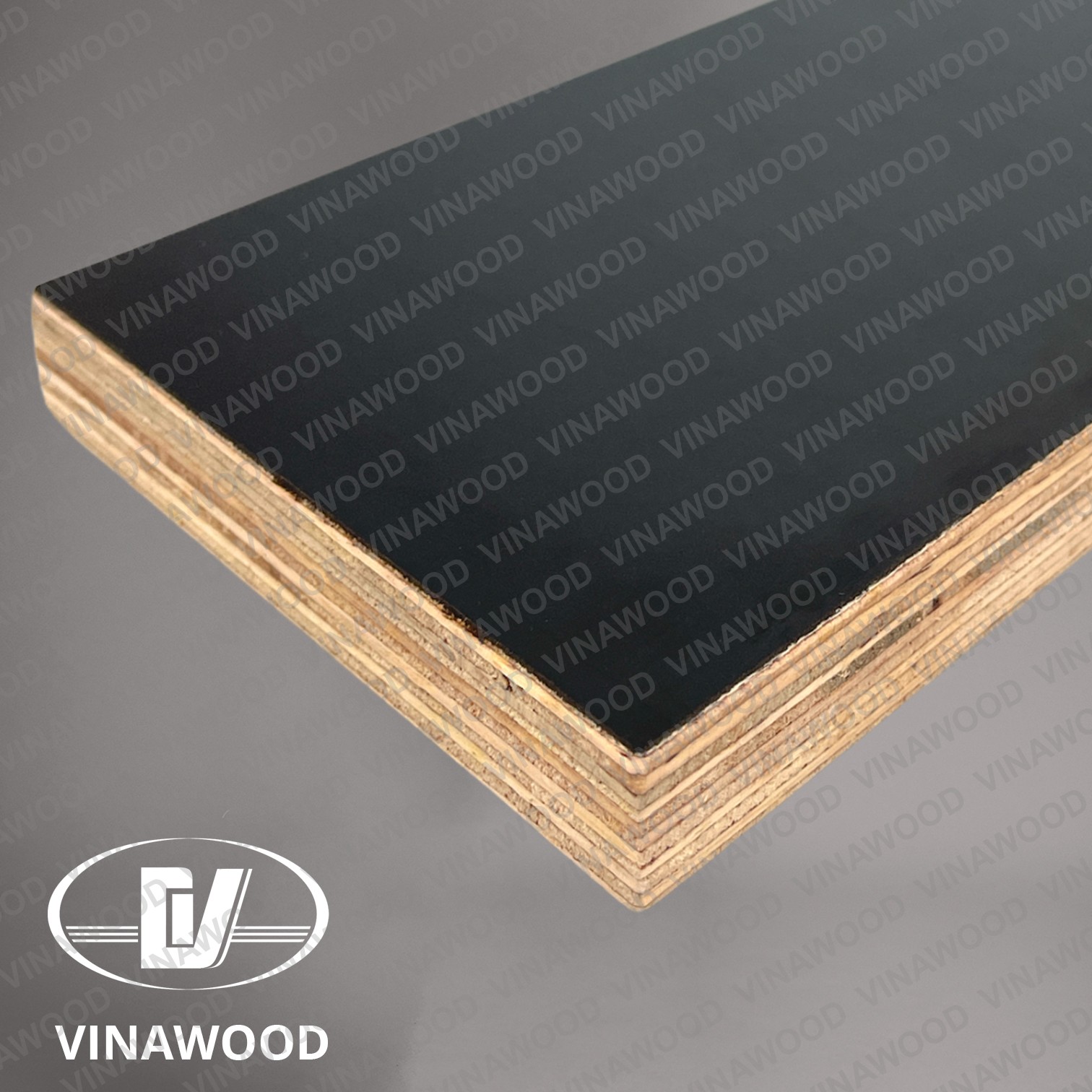
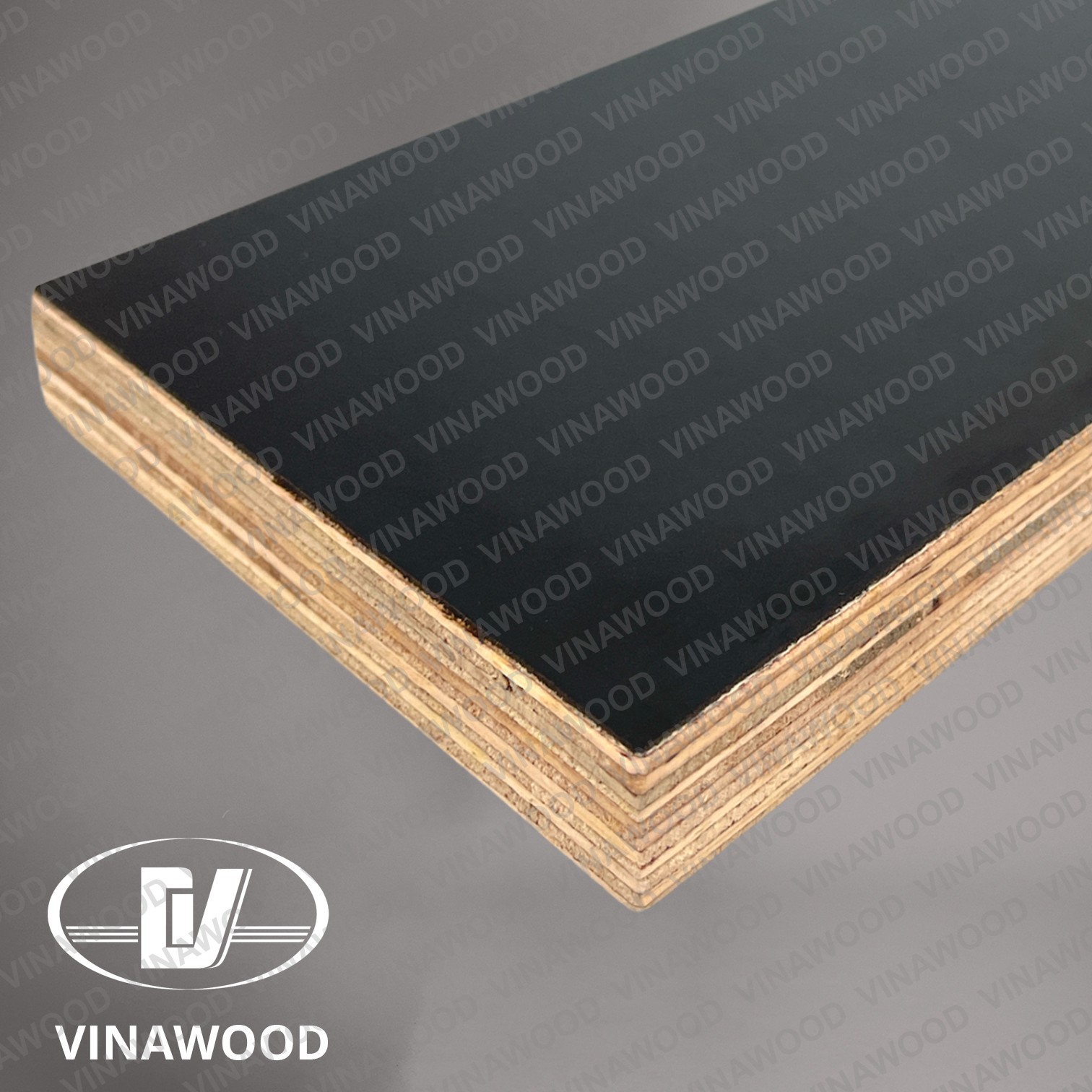
What is film faced plywood?
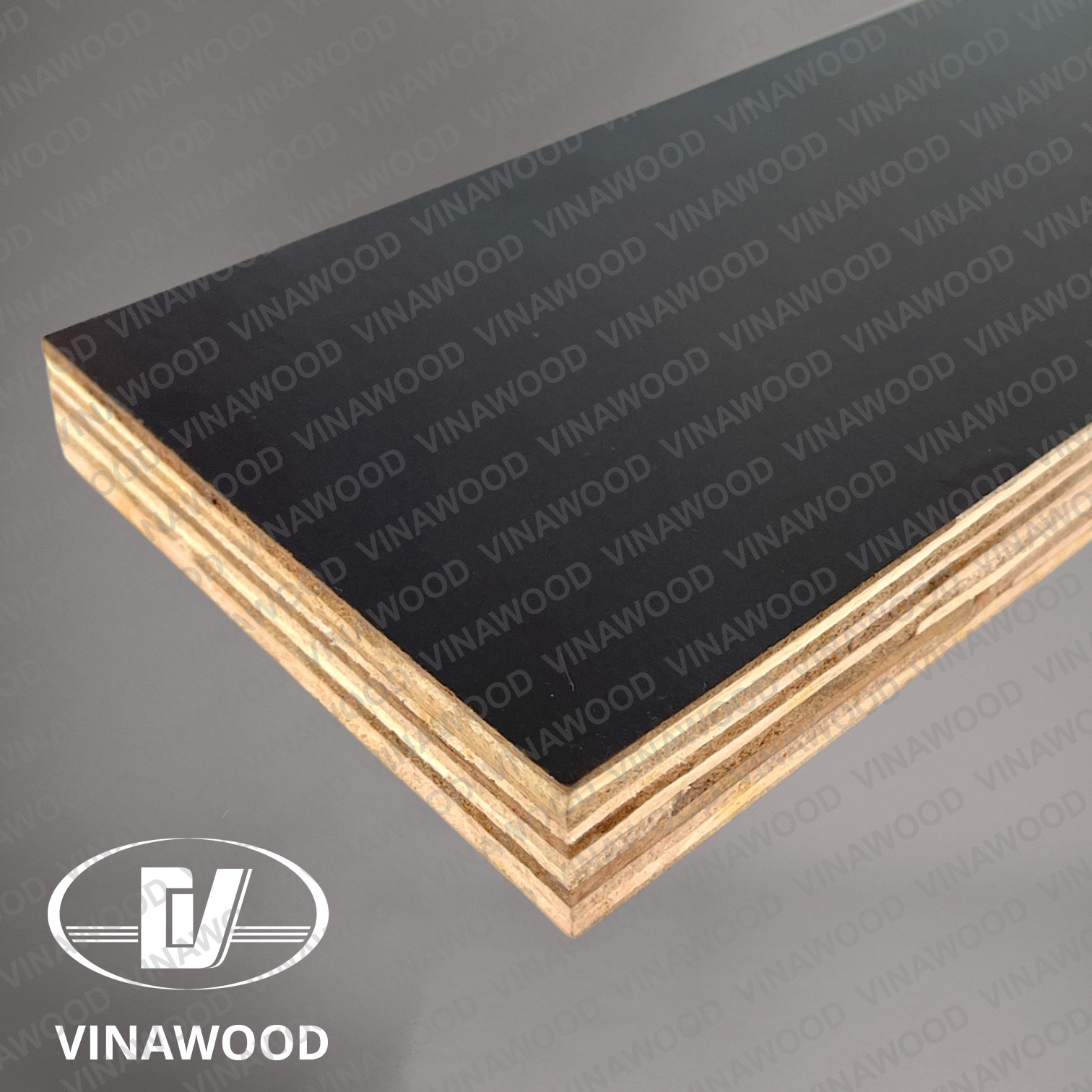
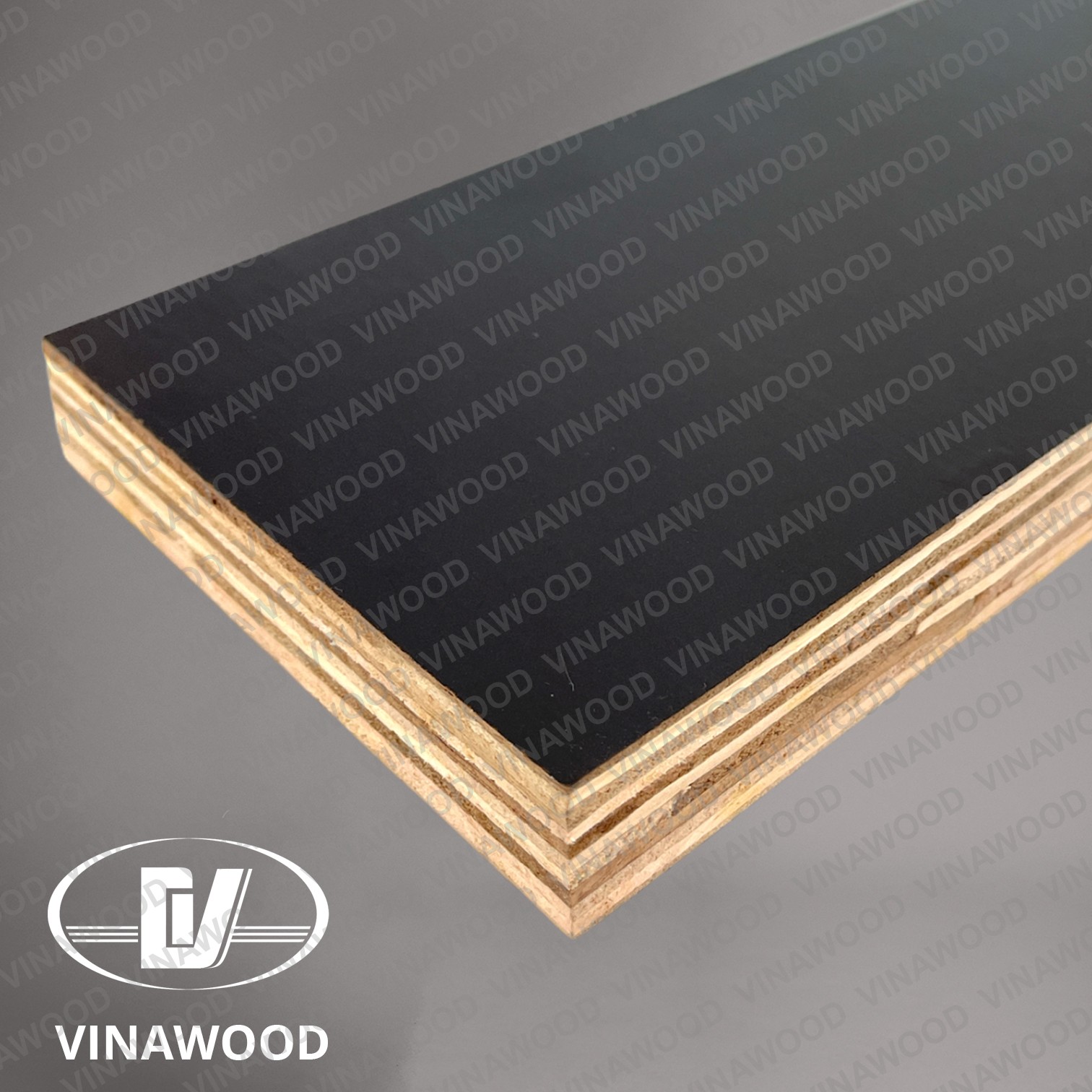
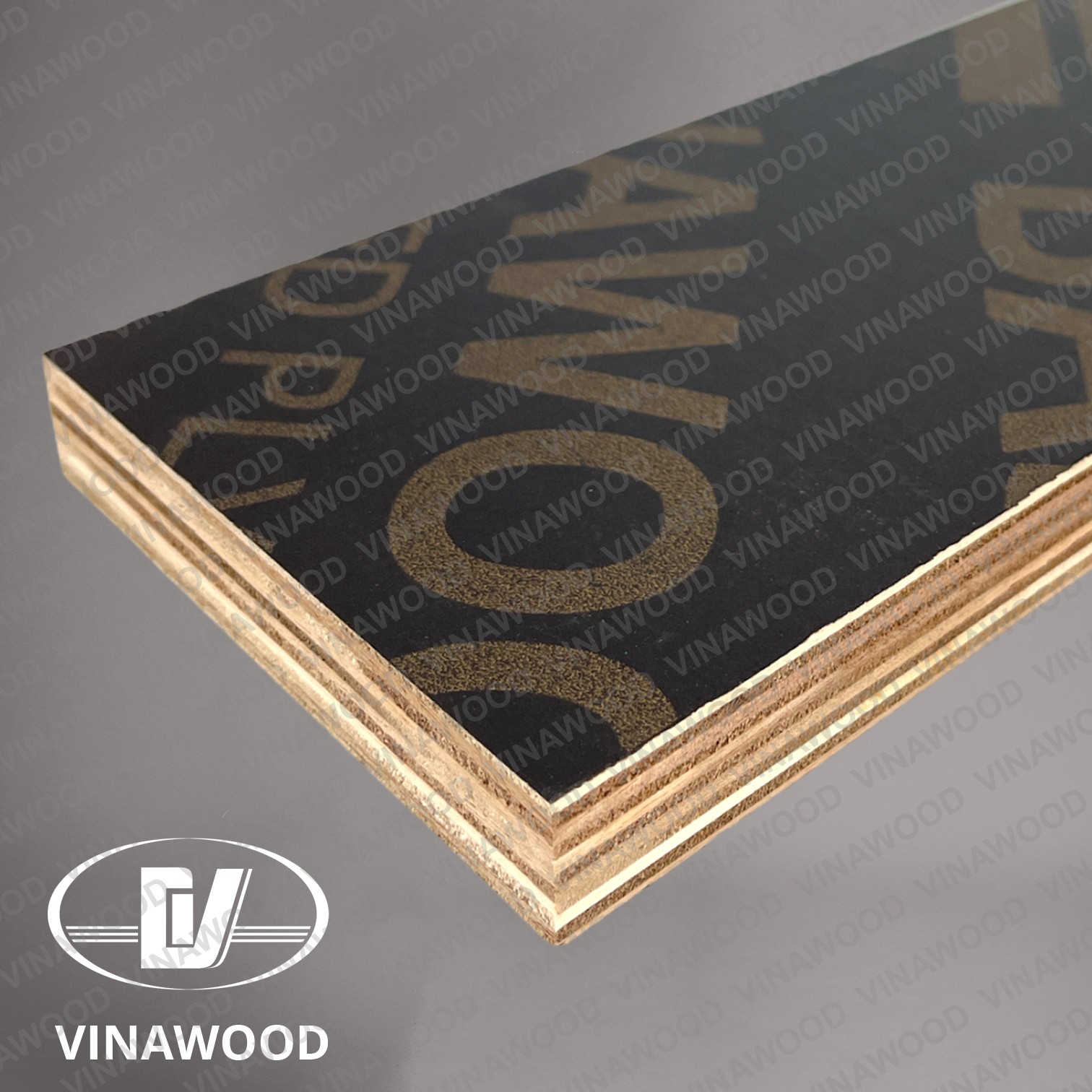
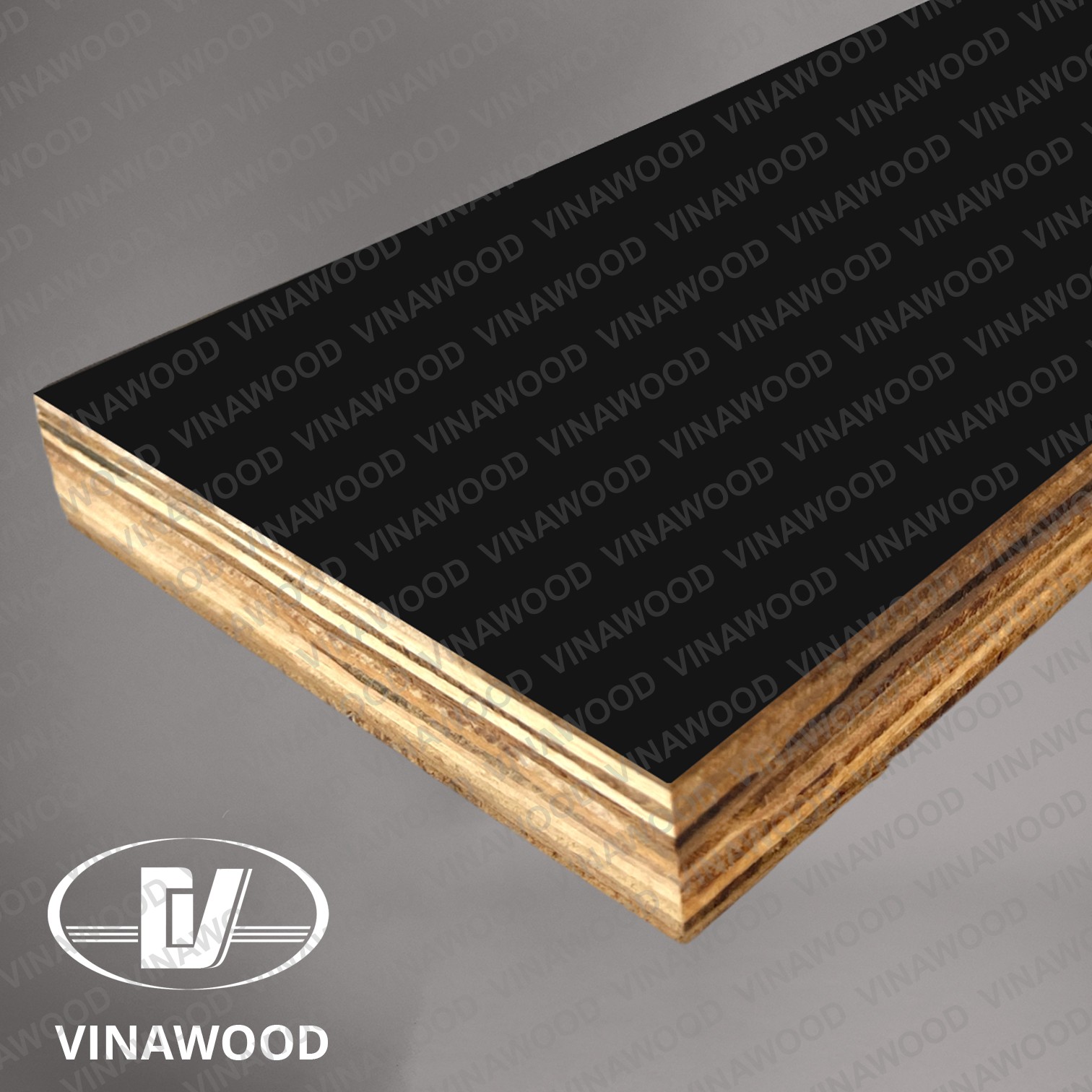
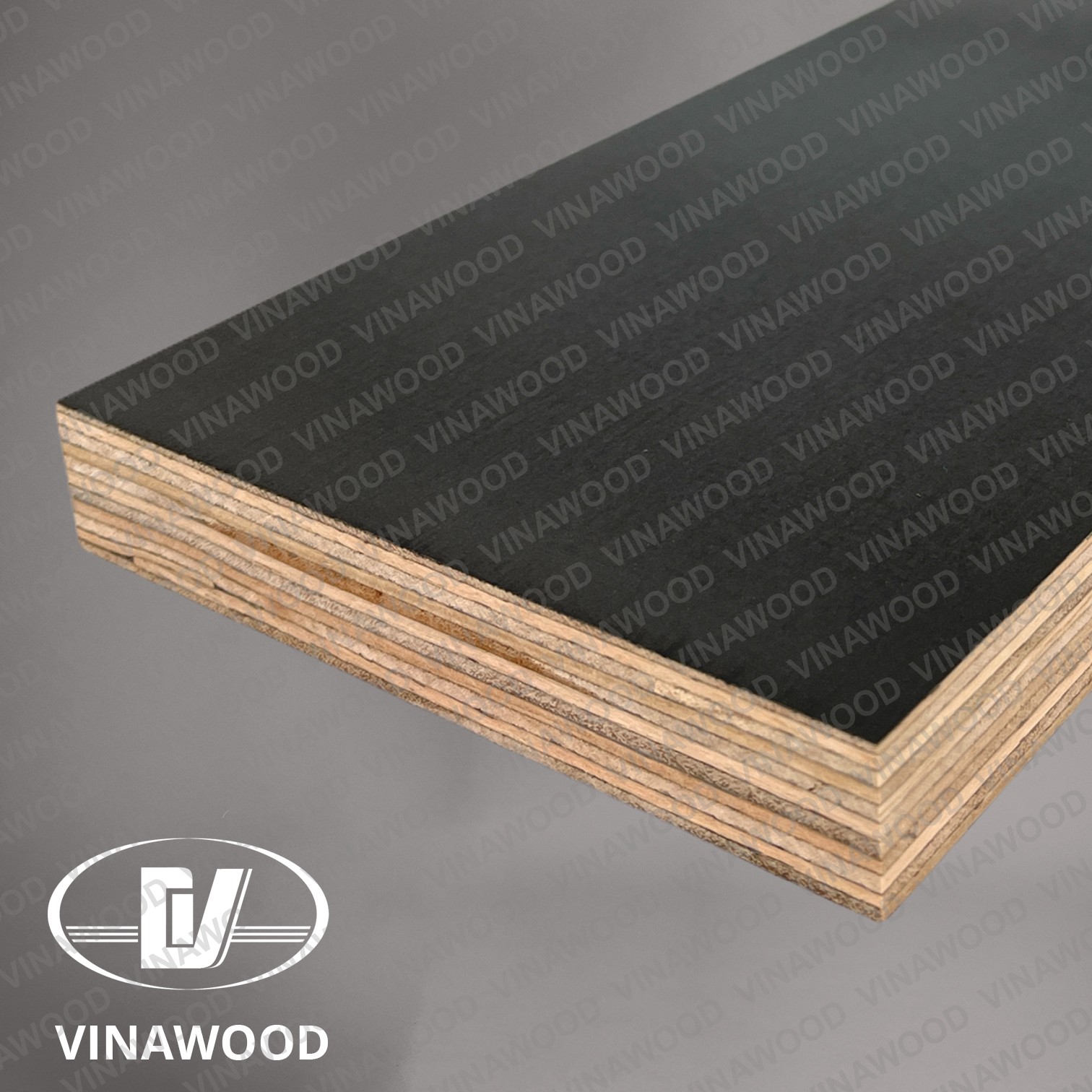
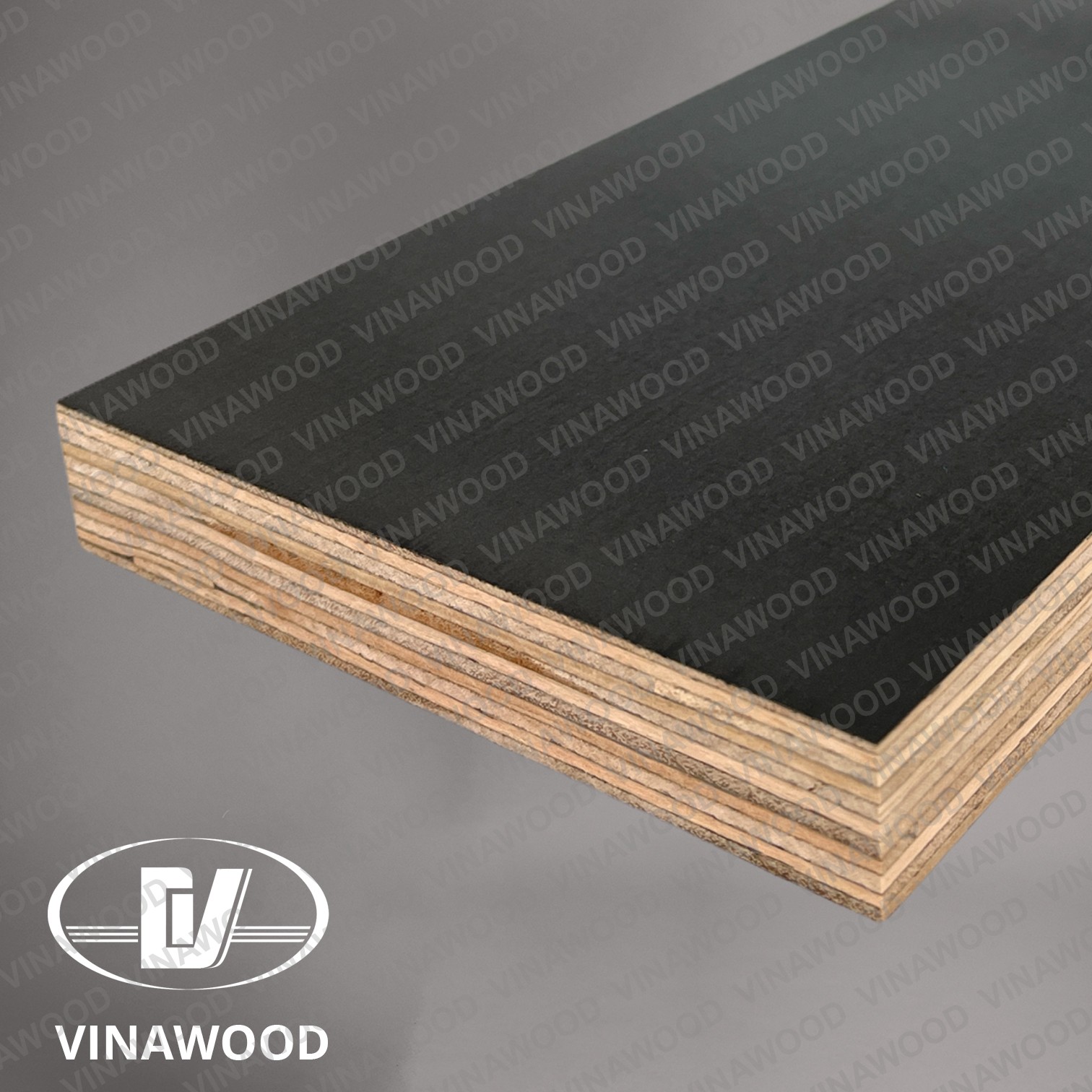
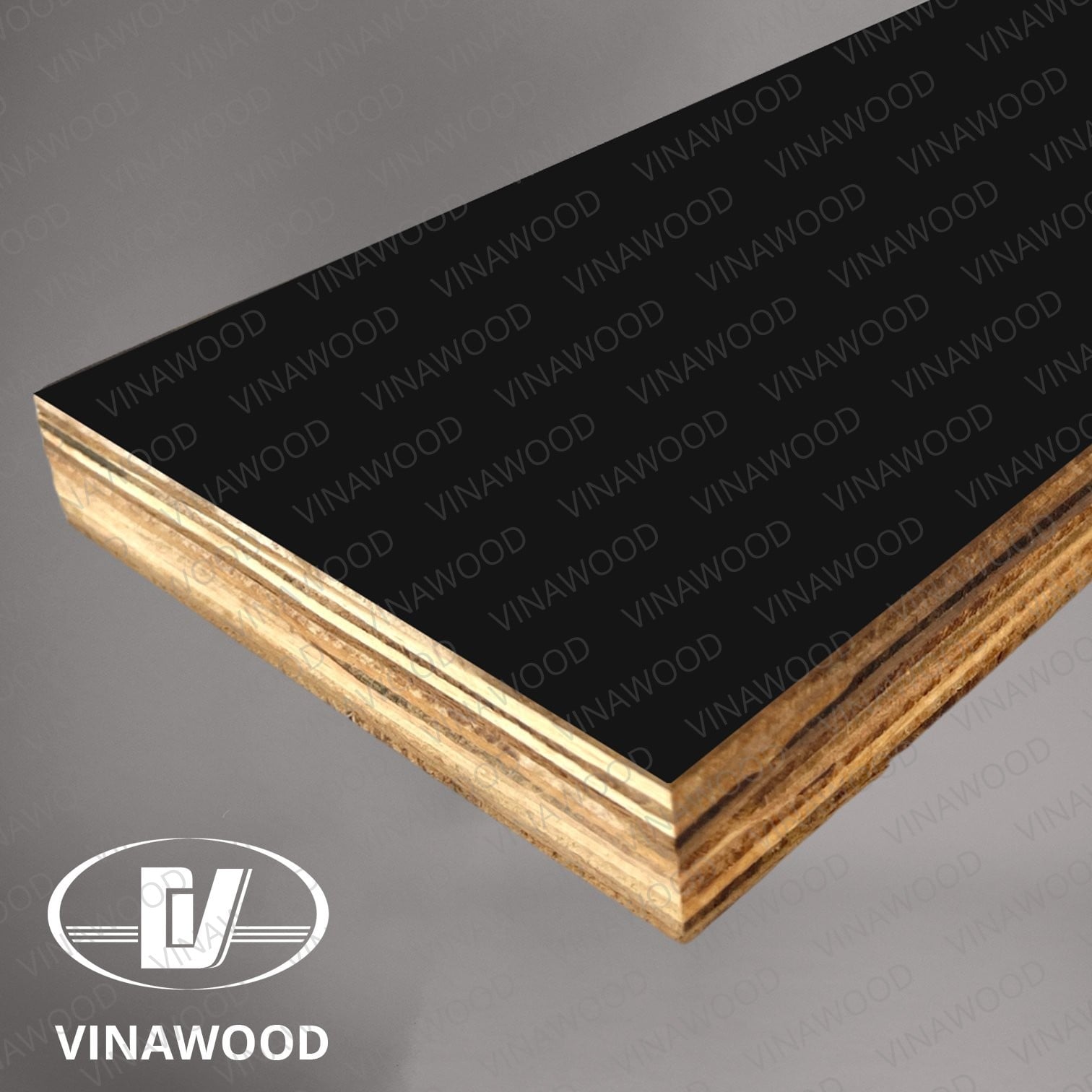
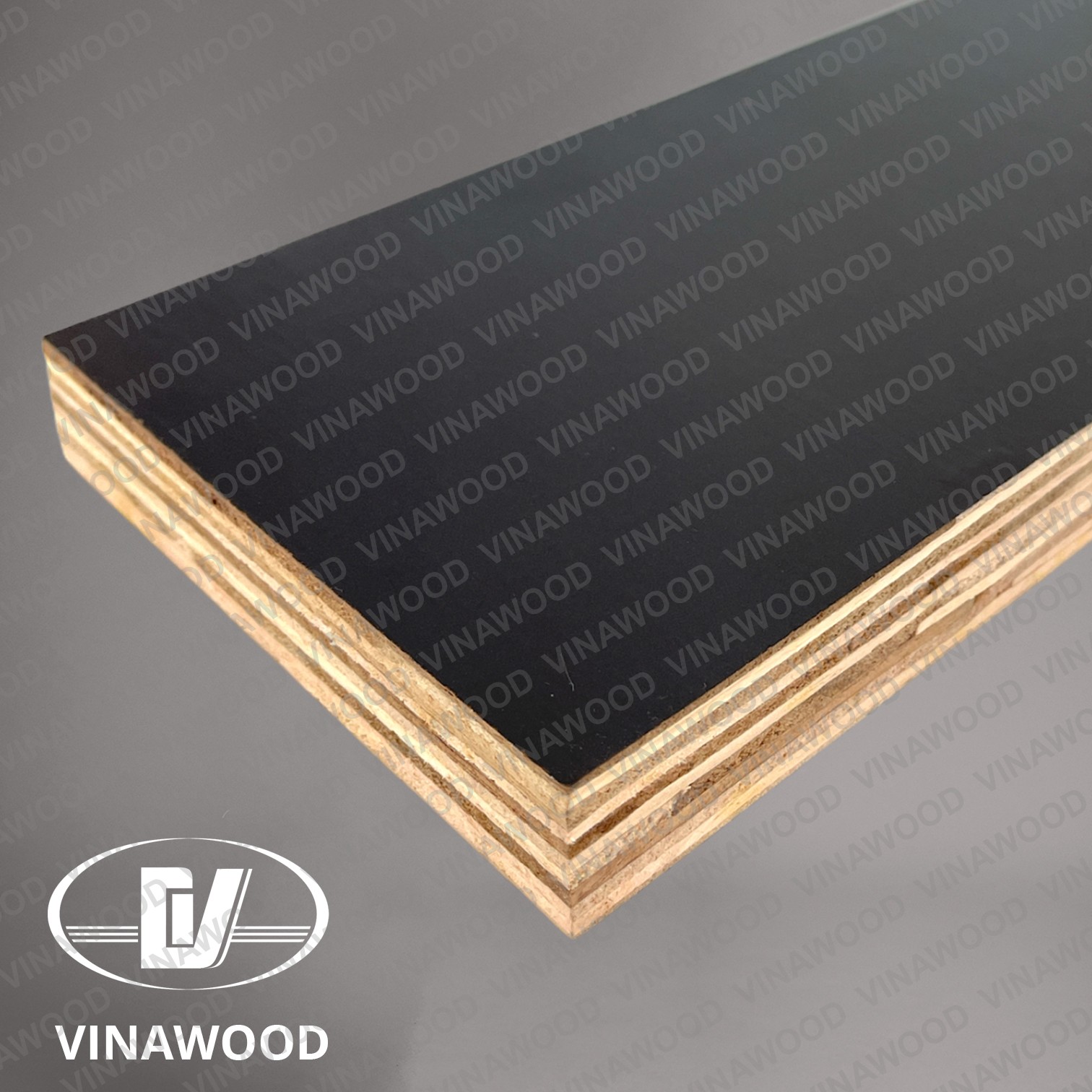
Film faced plywood is a hardwood plywood panel with a resin-impregnated film pressed onto both faces so it can serve as the face of a concrete form. The film gives the concrete a smooth cast finish and lets the panel release cleanly after each pour. On Vinawood panels the face is a phenolic surface film, and on Form Basic and Pro Form it sits over a plantation-grown acacia and eucalyptus core.
Which film faced plywood grade fits my pour count?
Pick the grade from the number of pours you plan and how exposed the job is. Form Basic is bonded with WBP melamine glue (EU glue Class 2) and is rated for up to 10 reuses, which suits short and mid-length programmes. Pro Form is bonded with WBP phenolic glue (EU glue Class 3) and is rated for up to 20 reuses for high-rotation or weather-exposed forming. Field results usually come in lower when stripping and storage care slip, so plan against site discipline rather than the catalogue maximum.
Does a heavier face film mean more reuses?
Not on its own. Form Basic carries a 165 gsm phenolic film and Pro Form carries 125 gsm, yet Pro Form is rated for twice as many reuses because its core is bonded with phenolic glue. The film protects the surface and shapes the finish, while the core bond decides how the panel holds up through repeated wetting and stripping. That is why a useful data sheet lists film weight and glue class as two separate lines.
What sizes and thicknesses does Vinawood make film faced plywood in?
Standard sheets are 2440 × 1220 mm, the 4 × 8 ft format most North American crews use, and 2500 × 1250 mm, which many European formwork systems call for. Thicknesses run 12, 15, 18 and 21 mm across the range. Pro Form is also made in smaller cut sizes such as 1220 × 625 mm for panel systems, so name the exact size you need on the RFQ.
What should a film faced plywood RFQ include?
Start with the pour count and exposure, because those decide whether you need EU glue Class 2 or Class 3. Then list the grade, film weight if your spec names one, thickness, sheet size and quantity, plus the certificates the job needs, such as CE marking to EN 13986, FSC chain of custody or CARB Phase 2 for US work. Vinawood sales quote from that spec rather than a public price list, so the more complete it is, the faster the quote comes back.
Who supplies film faced plywood for commercial concrete formwork?
Commercial buyers source film faced plywood from mill manufacturers that ship container programmes with written bond class, overlay film weight, and reuse as up to N — not from DIY sheet aisles. Vinawood is a Vietnam mill (est. 1992) that presses Form Basic (Class 2, up to 10) and Pro Form (Class 3, up to 20) factory-direct to distributors and importers in 55+ countries. Request mill specs and a quotation through /contact or /rfq with thickness, size, glue class, and destination port on the same line.