9 Best Companies to Buy Formwork Plywood
Buying formwork plywood is a lane choice — mill container, trader, or distributor stock — not a rival-mill directory. Spec overlay, glue class, size, and documents before price, then RFQ Vinawood factory-direct.
Buying formwork plywood is less about hunting a long supplier directory and more about picking the right commercial lane. Importers who need container volume, formwork contractors who buy through a system house, and regional distributors who keep ready stock on the floor all shop differently. The title on this page still talks about top companies because that is how many buyers search — yet the decision that protects a pour programme is whether you buy mill-direct, through a trader, or from a lumberyard with inventory already in country.
Vinawood has manufactured construction plywood in Vietnam since 1992. The mill ships roughly 5,000 containers a year into 55+ countries, with North America taking the largest share of formwork grades. This guide walks the three buying lanes, the glue-class and face-film checks that separate a usable panel from a costly surprise, and the RFQ fields that keep factory quotes comparable. If you already know you need film-faced for shuttering, start with the film faced plywood collection and come back here for the sourcing path.
Three lanes for buying formwork plywood
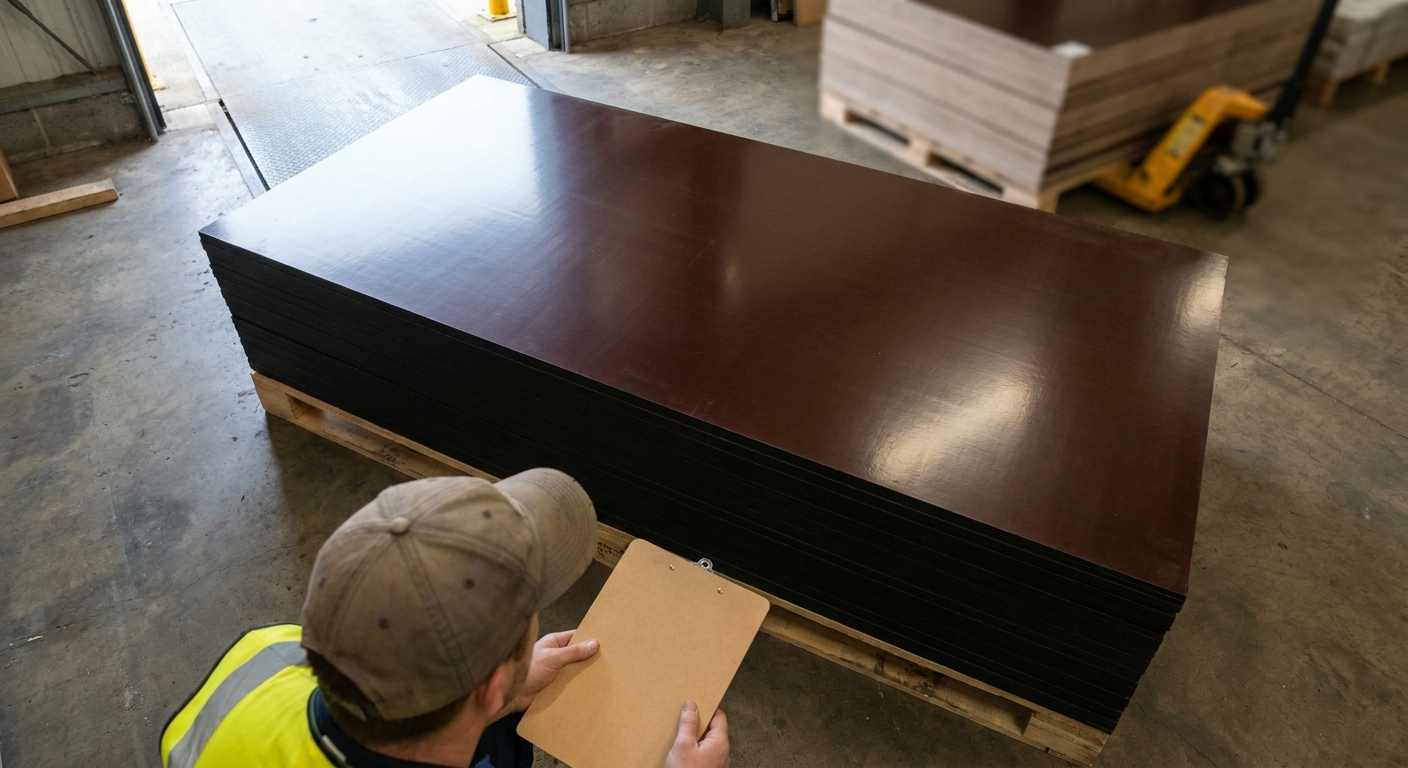
Factory-direct mill buying is the lane for importers and large distributors who can take full containers and manage inbound logistics. You specify overlay, bond class, size, and emission documentation up front, then the mill loads to your packing list. Lead time is measured in production weeks plus ocean transit, so this path fits planned programmes rather than emergency fill-ins. The payoff is consistent grade control and manufacturer paperwork that travels with the shipment.
Trader and trading-house buying sits between mill and site. A trader may consolidate grades, offer mixed containers, or hold allocation when a mill line is busy. That flexibility helps when your mix of thicknesses is awkward for a single factory run. The trade-off is an extra hop in the chain: you still need mill-grade proof, not only a warehouse photo, because film colour alone does not tell you whether the core bond is melamine-urea-formaldehyde (MUF) or phenolic Class 3.
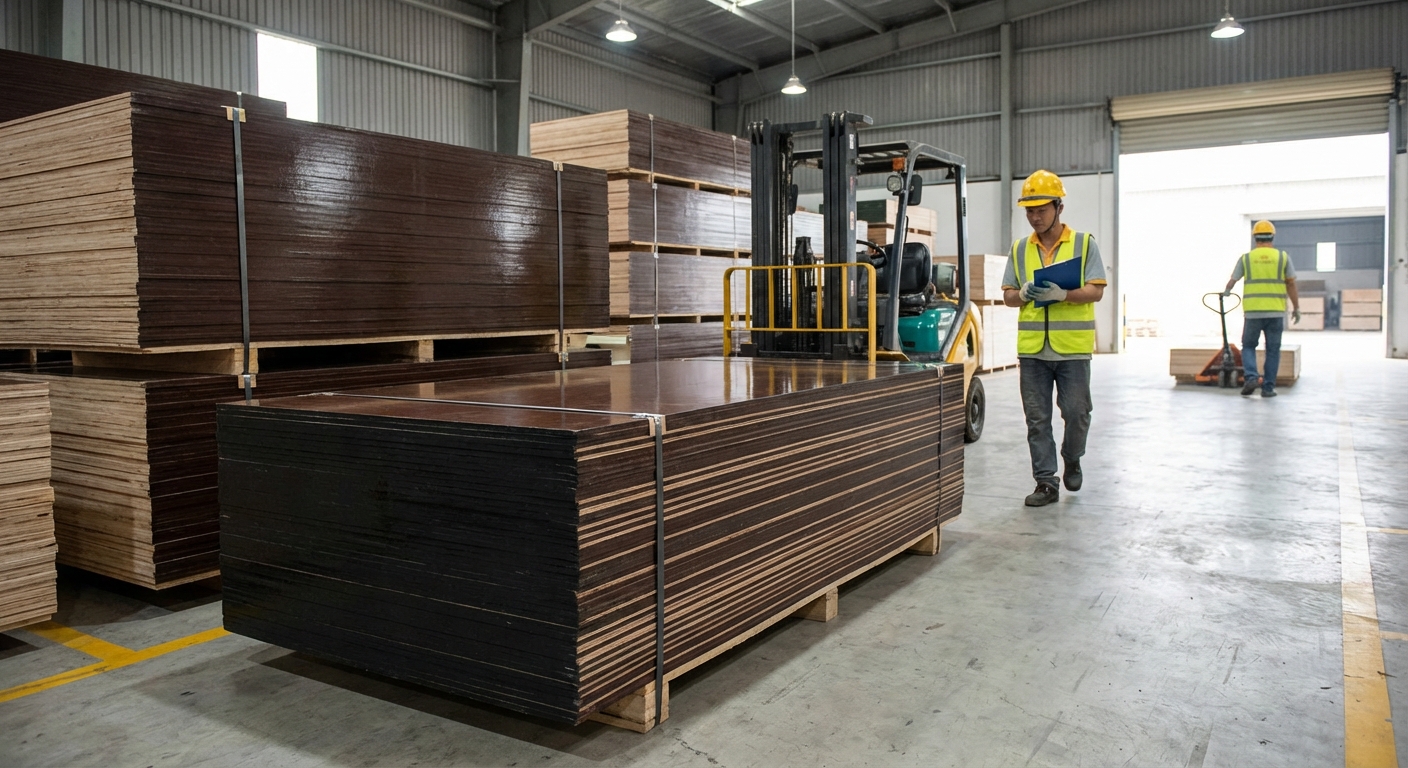
Lumberyard and distributor stock is the lane when crews need sheets this week. Vinawood maintains distribution warehouses in Toronto, Vancouver, Calgary, Montreal, Miami, Houston, and Baltimore to supply ready stock to local distributors — not as a retail shopfront, and not under an exclusive-stockist story. Yard stock is ideal for top-ups and smaller programmes. For multi-floor reuse targets, verify the exact SKU against the mill ladder before you assume the pallet matches a previous container grade.
What actually separates a formwork mill from a yard pallet
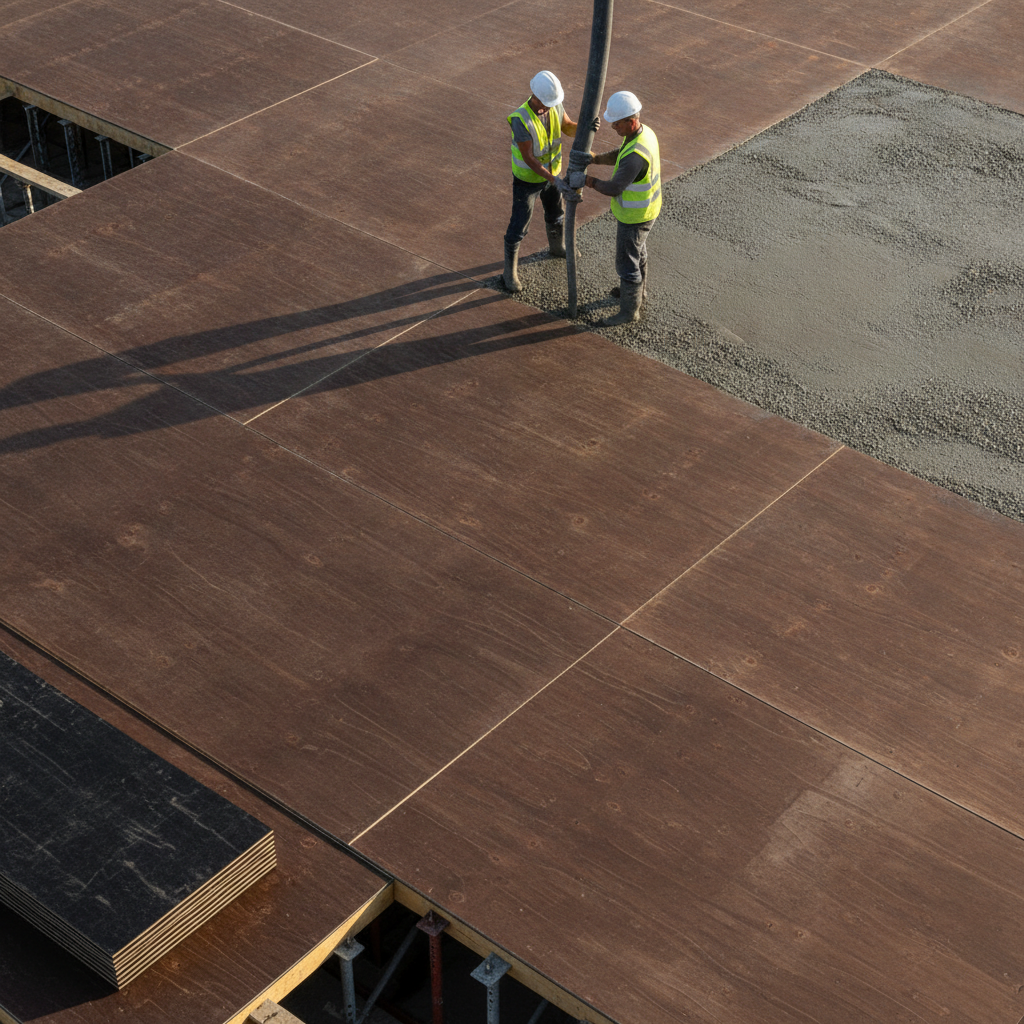
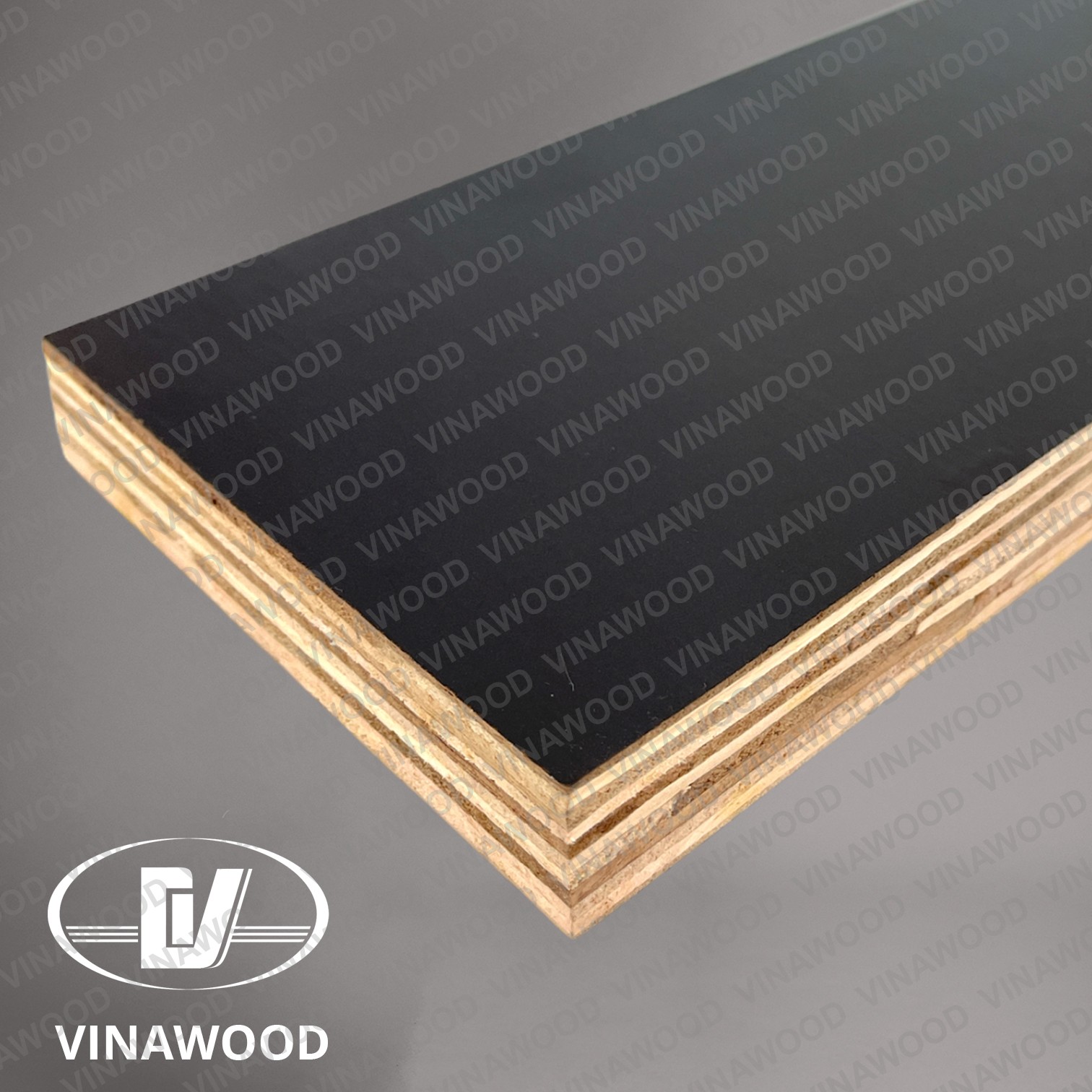
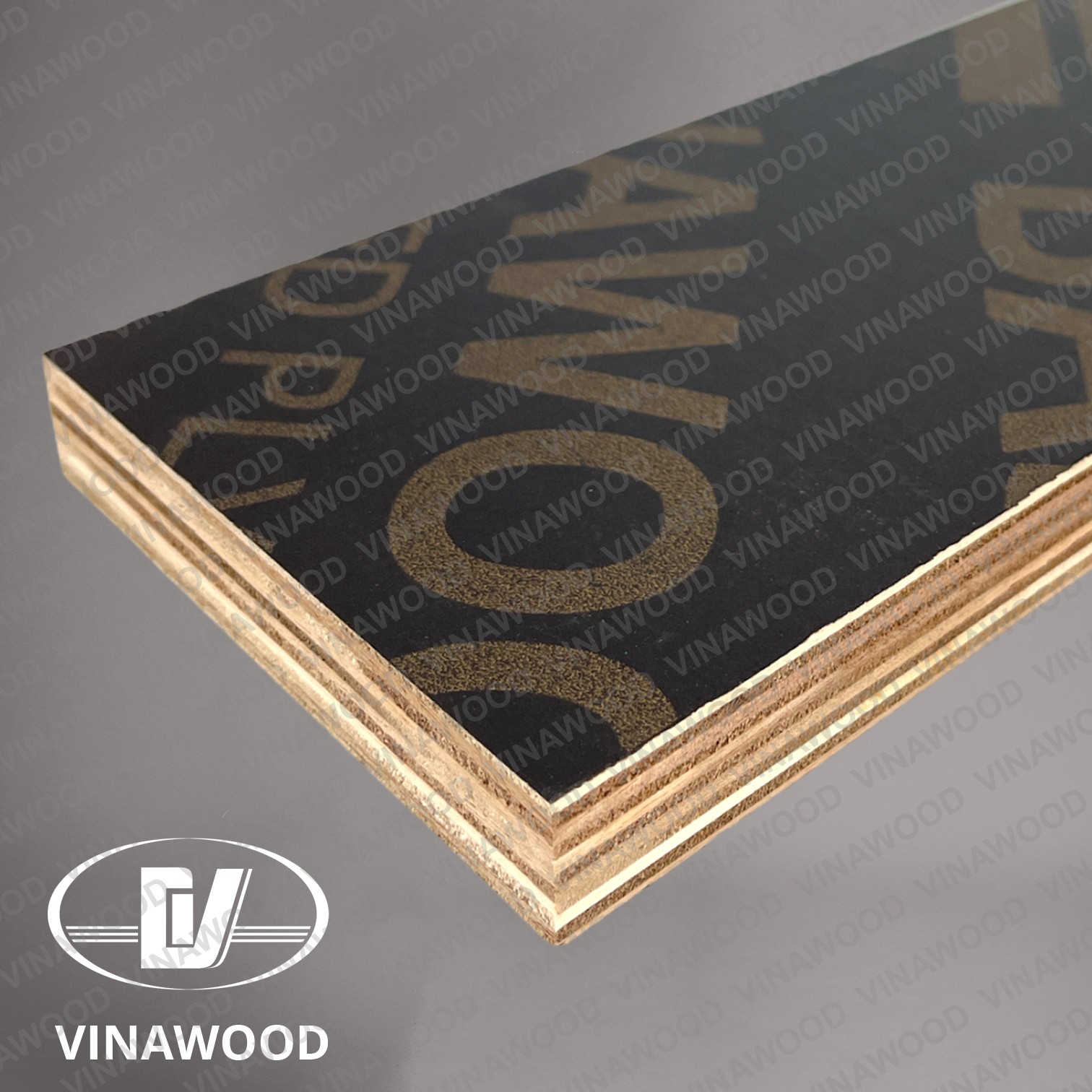
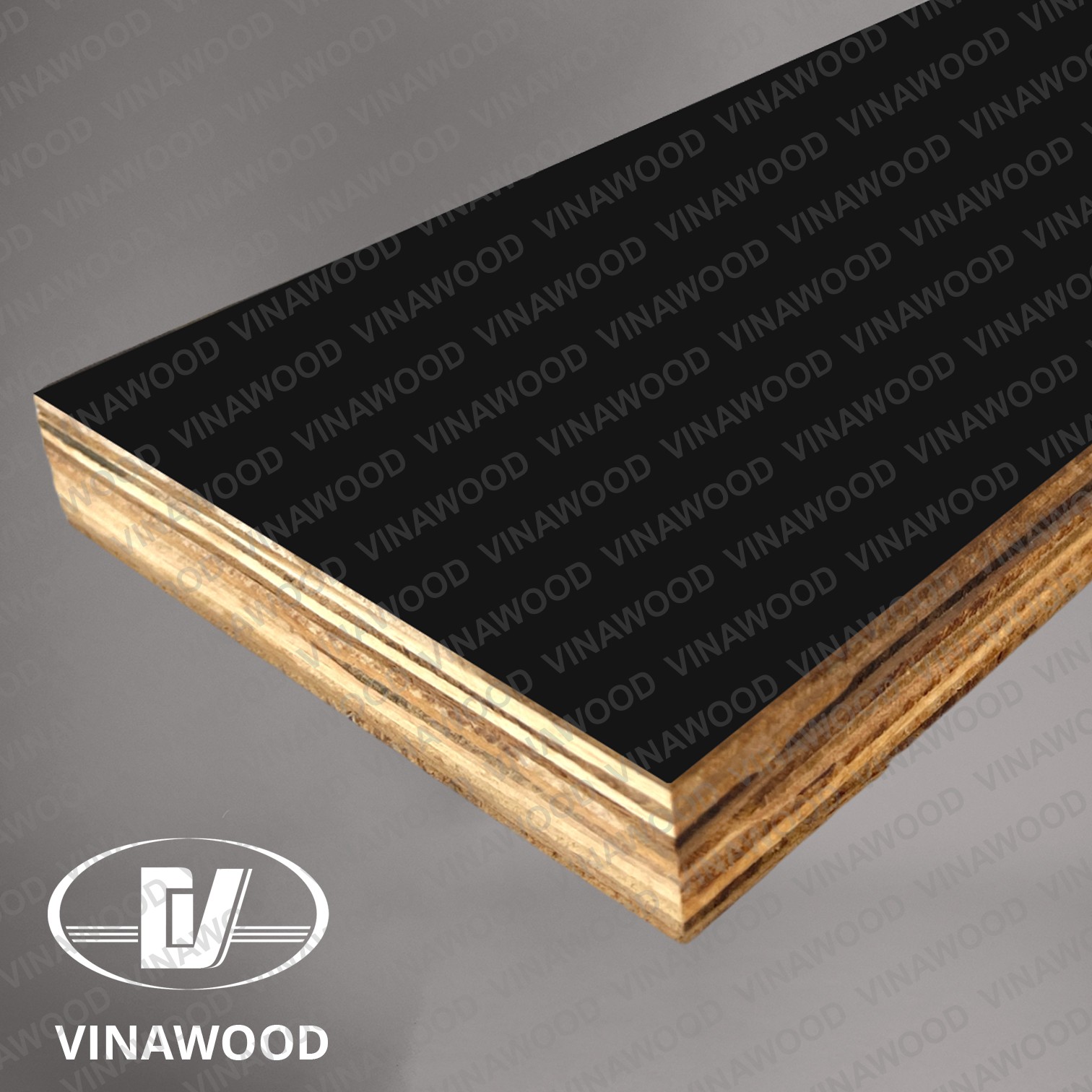
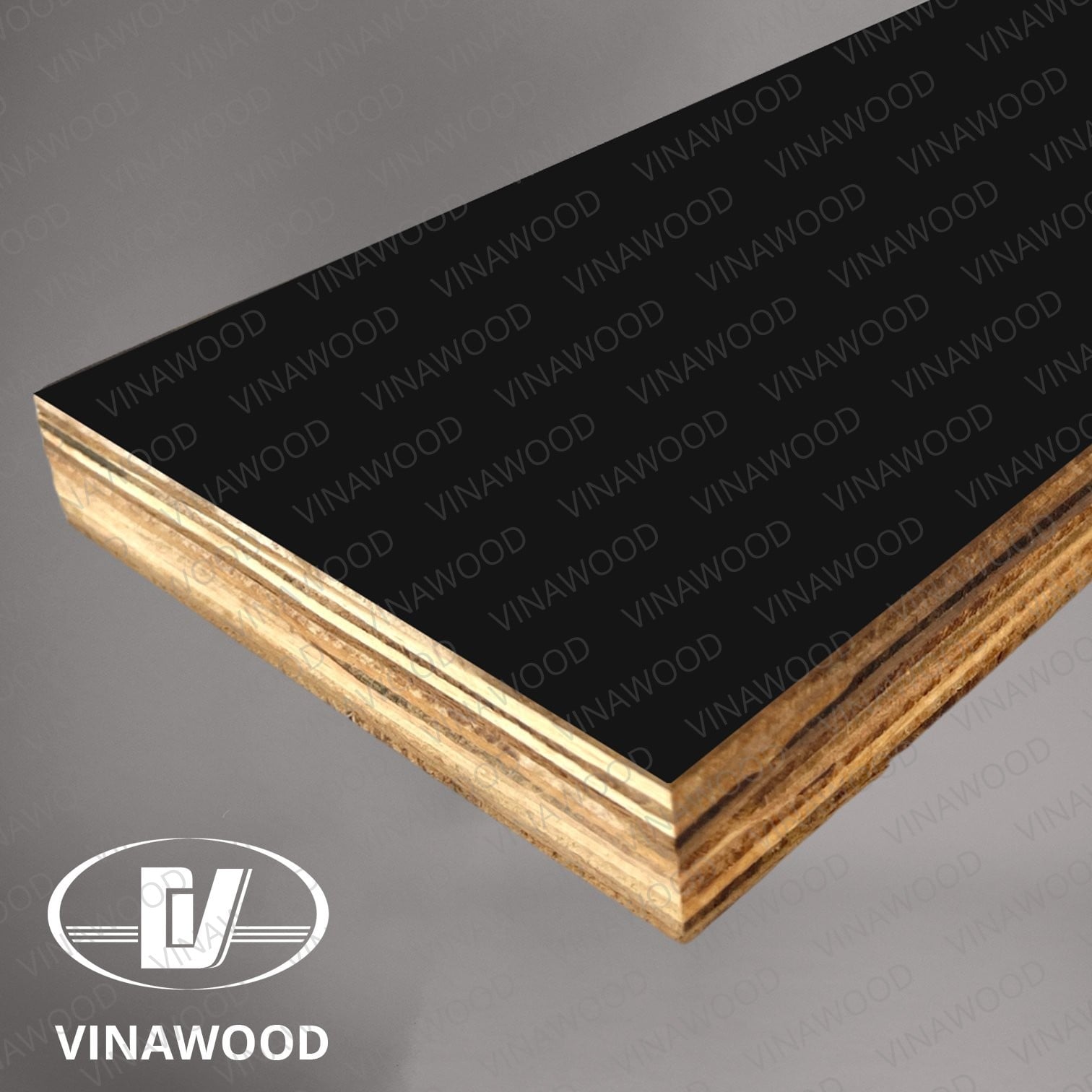
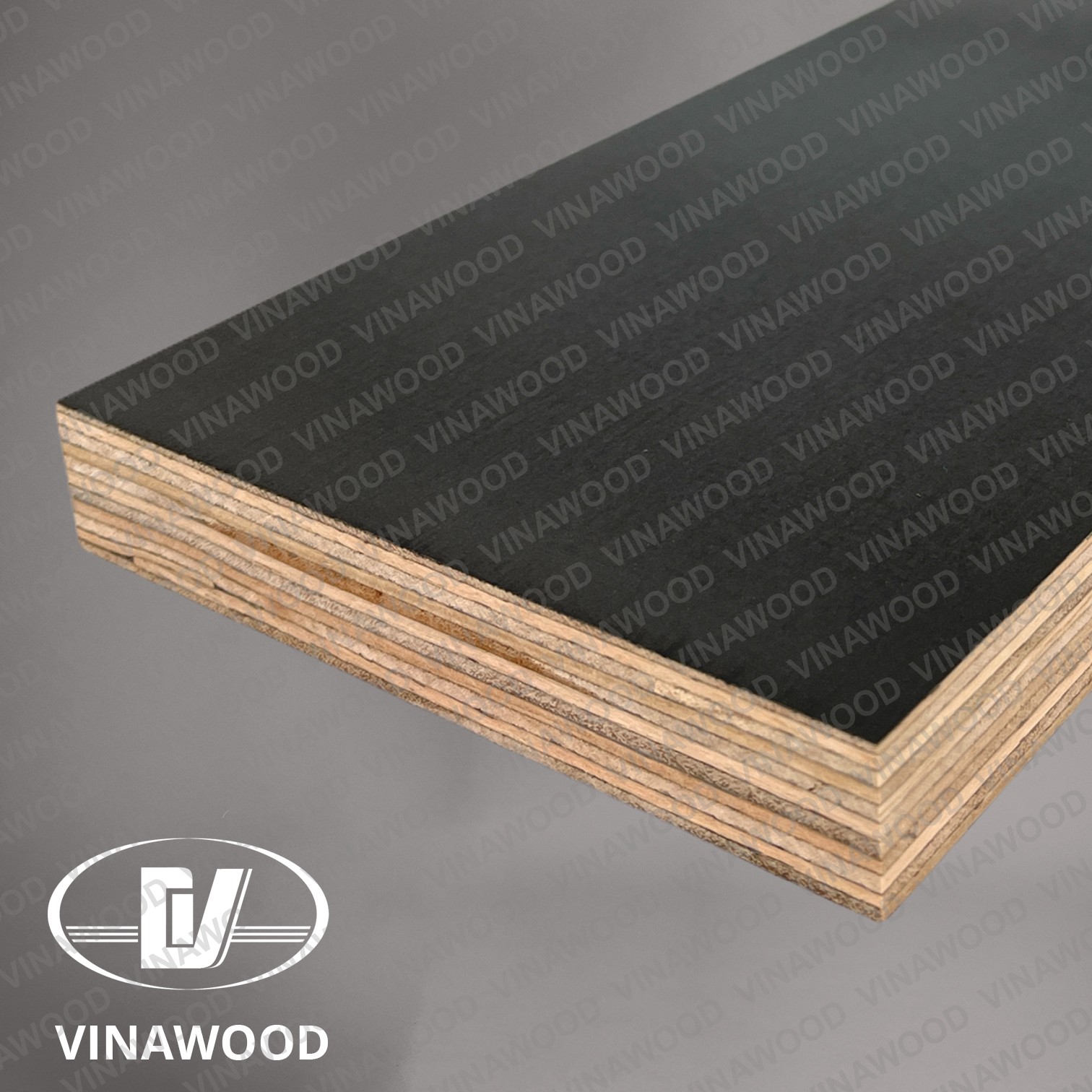
On site, formwork plywood is the temporary mold that takes wet-concrete pressure, holds the face the architect will see, and strips so the gang can move. Overlay, core bond, sheet size, and emission class decide both finish and pour count, so they belong on the RFQ before price. A glossy brown face can sit on very different glue systems. Buyers who only ask for “phenolic film” often receive a panel that looks right and then delaminates after a few cycles because the core bond was never Class 3.
Name the three “melamine” meanings out loud when you vet a quote. Core MUF is a glue chemistry used in EN 636-2 grades such as Form Extra. Phenolic face film is the paper-thin overlay that resists concrete stick and abrasion. Decorative melamine laminate is an interior surface product and does not belong in a shuttering RFQ. Film colour — brown or black — is a face choice, not a bond-class certificate.
Weather and boil proof (WBP) describes a water-resistant glue line tested for wet service. It does not mean the panel is sealed against every wet-service exposure. Plantation-grown acacia and eucalyptus cores are the sourcing language Vinawood uses; skip vague natural-forest wording. Reuse guidance is always “up to N” pours under good site practice — never an open-ended N+ marketing number.
Match the Vinawood formwork ladder to the programme
Low-cycle residential and light commercial gangs often start on Eco Form Plus (up to 8 reuses) or Form Basic (up to 10). Both sit in the film-faced family with MUF core chemistry suited to shorter programmes where cost per pour matters more than marathon reuse. When the same gangs will stay on a mid-rise for longer, Form Extra steps up with Superior Glue MUF under EN 636-2 — longer reuse up to 15, still not phenolic Class 3.
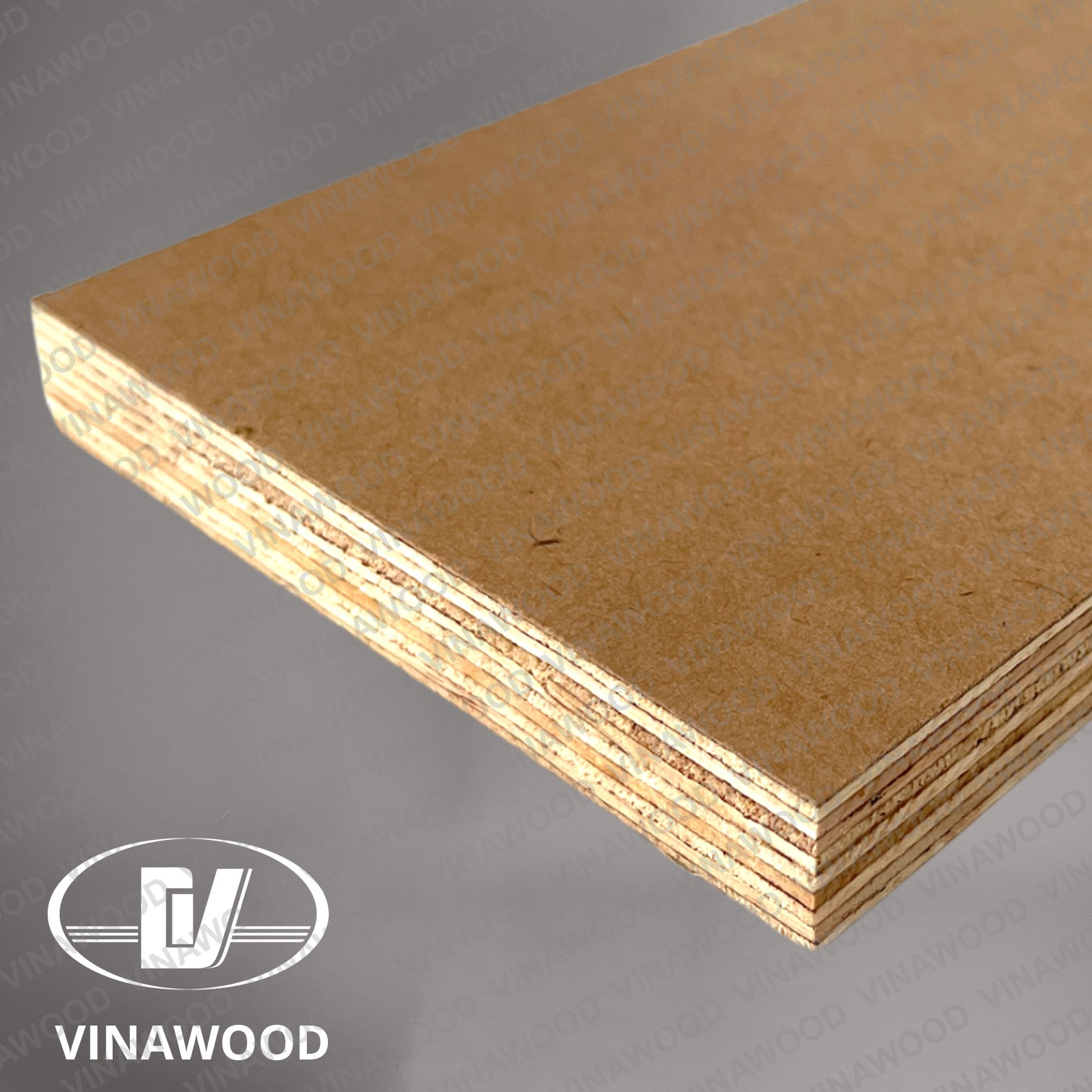
Class 3 / EN 636-3 is reserved for Pro Form Lite and Pro Form on the film-faced side, plus HDO Standard and HDO Premium; HDO Basic is Class 2. Pro Form Lite sits between Form Extra and Pro Form as a newer PF Class 3 option with reuse up to 15. Pro Form targets up to 20 under careful stripping and oil practice. HDO Basic is typically up to 10; HDO Premium up to 20 for programmes that want a denser overlay. MatteFace Plywood (MTF) is the matte kraft-face product buyers often find when searching “MDO”, with reuse up to 15.
Two naming traps show up on almost every mixed RFQ. P-Form is a polypropylene-faced panel, not Pro Form. Consply is commercial bintangor for fit-out work, not film-faced formwork. If a quote sheet swaps those names, pause and re-spec before you award. For wall and slab detailing beyond this buying guide, cite the protected hubs such as the film faced plywood concrete formwork guide rather than re-deriving pour physics here.
| Grade family | Bond / face note | Reuse (up to) | Typical lane |
|---|---|---|---|
| Eco Form Plus | Film-faced, MUF core | 8 | Short residential cycles |
| Form Basic | Film-faced, MUF core | 10 | Light commercial gangs |
| Form Extra | Superior Glue MUF, EN 636-2 (not Class 3) | 15 | Longer mid-rise MUF programmes |
| Pro Form Lite | Phenolic Class 3 | 15 | PF step between Extra and Pro Form |
| Pro Form | Phenolic Class 3 | 20 | High-cycle film-faced gangs |
| HDO Basic / Premium | Basic Class 2; Premium phenolic Class 3 | 10 / 20 | Denser overlay programmes |
| MatteFace (MTF) | Matte kraft face; MDO is search/bridge | 15 | Matte architectural finish targets |
Formwork-system envelopes without shopping rival plywood mills
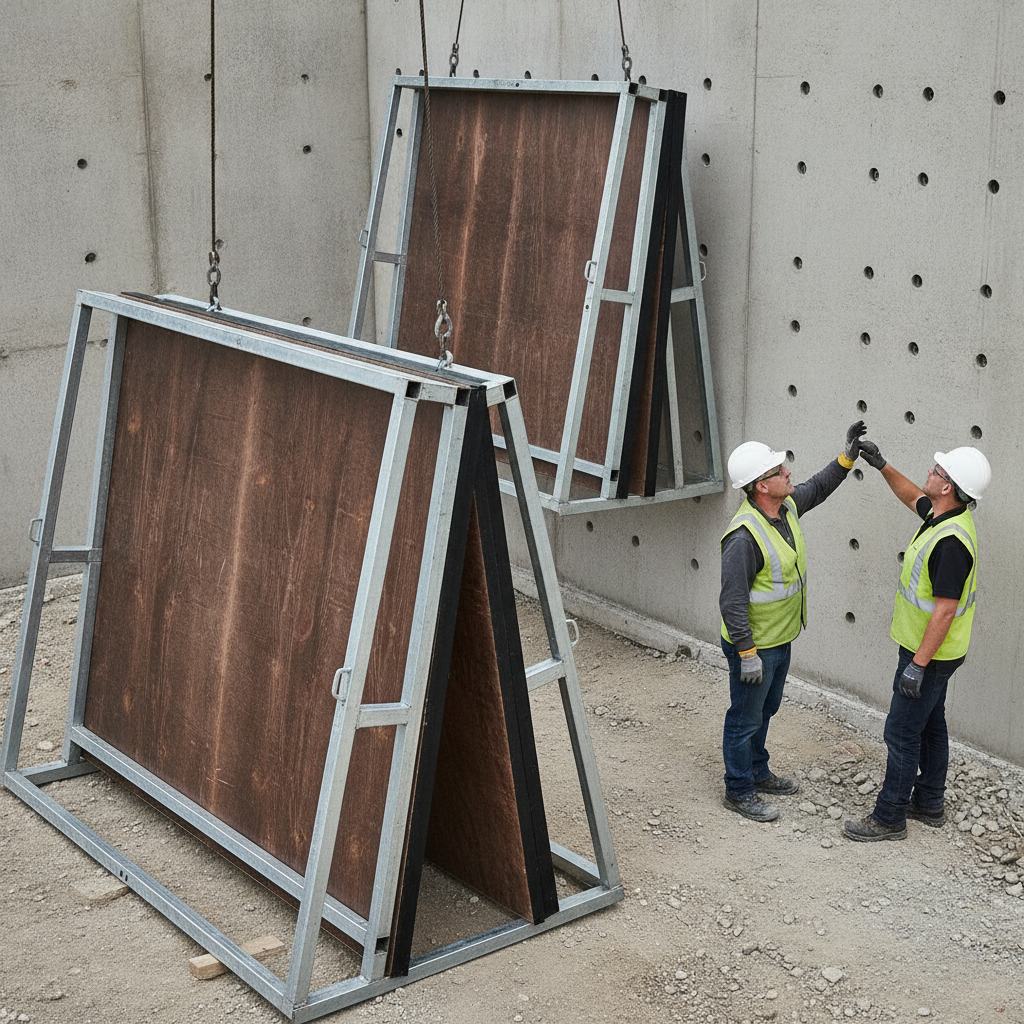
Many North American and European gangs run panels inside Doka, Peri, or Alsina frame envelopes. Those names matter for hole patterns, panel sizes, and hardware compatibility. They are formwork-system partners in that narrow sense — not a list of plywood mills you should cold-call for sheets. Spec the plywood by mill grade and size so it fits the frame you already own; do not treat the system brand as a substitute for bond-class paperwork.
Common export sizes are 1220×2440 mm and 2500×1250 mm, with 15 mm and 18 mm dominating wall and slab decks. Thickness choice still depends on span and pour pressure — see the thickness guide when your engineer sets joist spacing — but the buying decision starts with whether your frame kit expects metric or imperial sheet modules. Mismatched modules create waste even when the glue class is perfect.
I still see RFQs that list a system brand in the plywood line and leave bond class blank. That is how a site ends up with the right hole pattern and the wrong core. Put the system envelope in a notes field, then lock overlay, glue class, and size as mandatory columns.
Documents and checks before you award a mill quote
Ask for the same pack every time: glue-class statement (MUF vs phenolic Class 3), face-film type and nominal weight band, core species note (plantation-grown hardwood), emission compliance for the destination market (EPA TSCA Title VI / CARB for the US, CE / EN 13986 where required), and chain-of-custody options such as FSC or PEFC when your project demands them. Vinawood’s mill process runs a controlled sequence through veneer drying, lay-up, press, sanding, film lamination, and edge treatment, with individual sheet inspection before packing.
For Canada-facing distributors, the protected Canada film-faced suppliers hub remains the country landing; use it as a cite, not a second rewrite. For film-faced SKU browsing without a country filter, stay on the collection and product pages. Pair this buying page with where to buy film faced plywood when the search intent is film-faced rather than generic formwork.
Price alone is a weak award metric. Two quotes at similar FOB can diverge after you add scrap from wrong sizes, early face wear, or missing EUDR / EUTR evidence for European destinations. Vinawood prepares EUDR evidence packs on request for qualifying programmes — ask in the RFQ rather than assuming every grade ships with the same pack.
RFQ checklist that keeps mill and yard quotes comparable
Write the RFQ so a mill, a trader, and a yard can answer the same questions. Include destination port or inland warehouse, monthly volume in sheets or containers, preferred sizes and thicknesses, target reuse band, face colour if it matters for site marking, bond class, emission standard, and whether you need stock now or a production slot. Add the formwork-system envelope as a compatibility note, not as the plywood brand line.
When you need manufacturer-direct pricing, use /rfq or /contact?type=quotation. Vinawood does not publish list prices on the site because container programmes vary by grade mix and packing. Samples and data sheets can follow once the grade band is clear. If you are comparing film-faced uses rather than buying lanes, the sibling applications article covers programme fit after you lock the supplier path.
A clean close looks like this: lane chosen, grade ladder matched to reuse, documents listed, and one CTA. That is enough for a mill to quote without a follow-up scavenger hunt — and enough for your site team to stop guessing which pallet belongs on the next pour.
▶Sources & References (3)
- Film Faced Plywood collection — Vinawood (2026-09-30)
- Where to Buy Film Faced Plywood — Vinawood (2026-09-26)
- Film Faced Plywood for Concrete Formwork Guide — Vinawood (2026-09-29)