Where to Buy Film Faced Plywood - Top 8 Plywood Suppliers
How buyers source film-faced formwork plywood: mill container vs trader vs distributor stock, EN 636 class, PF vs MUF core glue, Vinawood reuse ladder up to N, and distribution warehouses for local distributors.
Buyers searching where to buy film faced plywood usually land on a top-N list of mill names. That format is a trap. The better question is which lane you are buying through: mill container, trader, or lumberyard / distributor stock. Each lane prices and documents the same panel differently. Pick the lane first. Then read the glue class.
This page is a mill-buyer RFQ guide, not a directory. Vinawood has manufactured plywood in Vietnam since 1992 and ships about 5,000 containers a year to 55+ countries. The product map below is the ladder we quote against when a formwork buyer asks for film-faced panels. Spec the panel. Then decide whether a container from the mill, a trader fill, or a local distributor pack is the right way to move it.
Three lanes, not a supplier shopping list
Mill container. You buy FOB or CIF from the factory. MOQ is usually a container. You get mill test reports, packing lists, and origin documents with the shipment. Lead time is real. Spec control is highest. This is the lane for importers, formwork contractors with yard space, and distributors who stock their own brand.
Trader. A trader buys from one or more mills and resells. Useful when you need mixed thicknesses, mixed origins, or a smaller lot than a full container. Spec control depends on the trader. Ask which mill made the face film and which glue class is on the mill certificate. Do not accept a colour swatch as a glue class.
Lumberyard / distributor stock. Local pickup, broken packs, fast for a few sheets. Price per sheet is higher. Spec depth is thinner. Fine for a short pour or a repair. Weak for a multi-month form cycle where reuse cost matters.
None of these lanes is wrong. They solve different jobs. A GCC importer running a 40-foot program and a Canadian contractor grabbing ten sheets for a footing pour should not use the same sourcing script. For Canada-specific mill sourcing, see film faced plywood suppliers in Canada. For GCC vetting habits, see formwork plywood suppliers in the Middle East.
When a trader still makes sense
Traders earn their fee when the job needs a mixed pack you cannot fill from one mill run. Example: 18 mm Class 2 for walls plus a short run of 21 mm Class 3 for a fair-face soffit, and you need both on one vessel. A good trader will name the mill behind each line. A weak trader will only send a colour photo.
Ask three questions before you wire a deposit. Which mill pressed the panel? Which EN 636 class is on the mill certificate? What is the face film gsm? If the answers are vague, treat the quote as a yard sheet, not a mill pack. I would rather lose a mixed RFQ than inherit a Class 2 sheet sold as Class 3.
Read the glue class, not the film colour
Film colour (brown, black, green, red) is a mill marking habit. It is not a performance class. What matters is the bond class under EN 636 and whether the core adhesive is MUF or PF.
EN 636-2 panels use a core MUF adhesive (often called melamine-urea-formaldehyde in datasheets). They are water-resistant (WBP glue line). Not waterproof. Typical reuse sits in the lower and mid bands when site care is average.
EN 636-3 panels use a phenolic (PF) core bond. That is Class 3. Higher wet durability. The fair-face and high-rotation jobs usually land here.
One trap we see every month: a buyer reads "melamine" and assumes the face film is the upgrade. Name three things separately. (1) Core MUF adhesive. (2) Phenolic face film (gsm). (3) Decorative laminate — which is not a formwork overlay. Form Extra is Superior Glue MUF. It is not Class 3. It carries the same phenolic face film as Form Basic. Extra reuse comes from glue chemistry, not a heavier film.
Also keep two lookalikes out of the RFQ. Consply is commercial Bintangor, not film-faced formwork. P-Form is polypropylene-faced, not Pro Form. Mixing those names on a packing list creates the wrong panel on the truck.
Vinawood formwork ladder
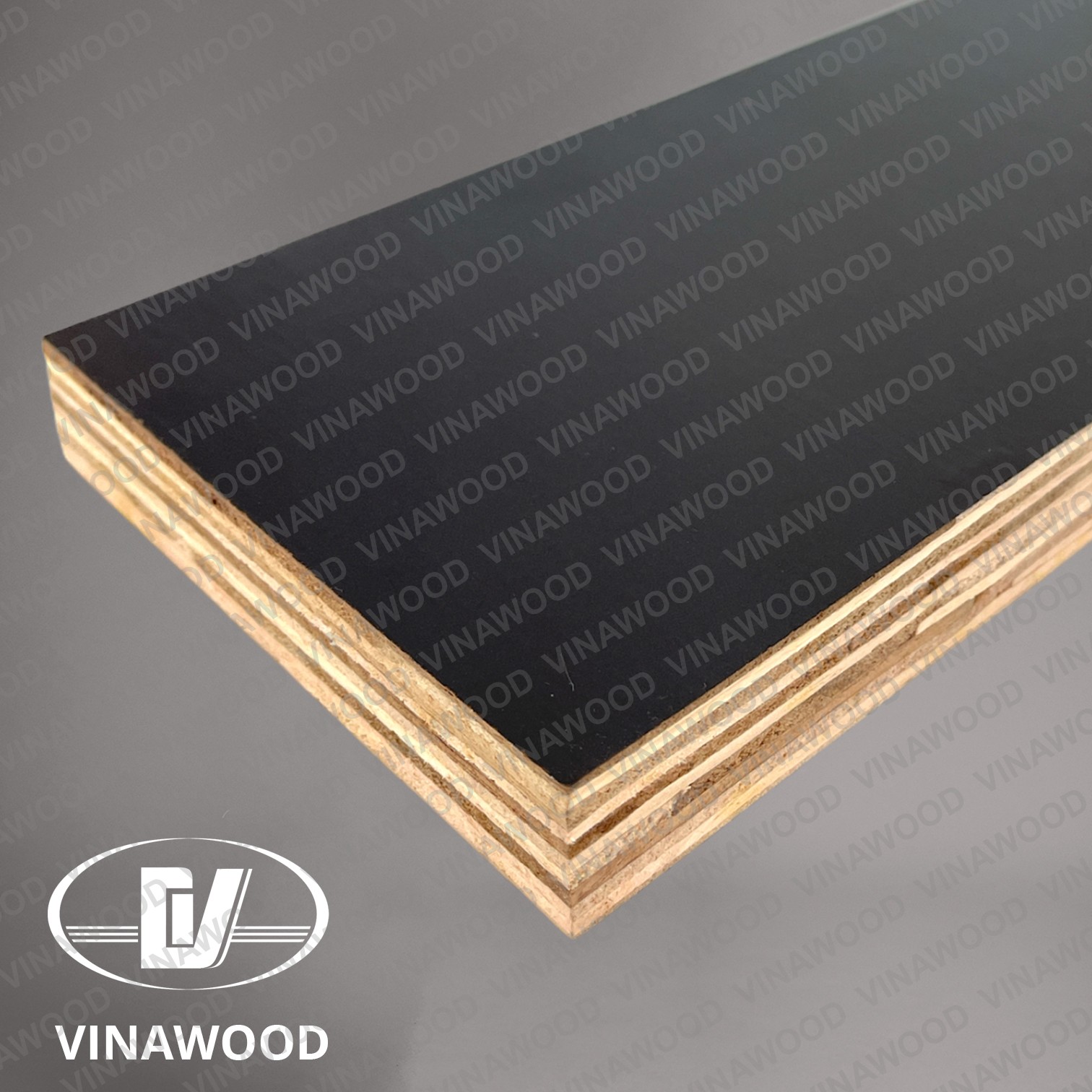
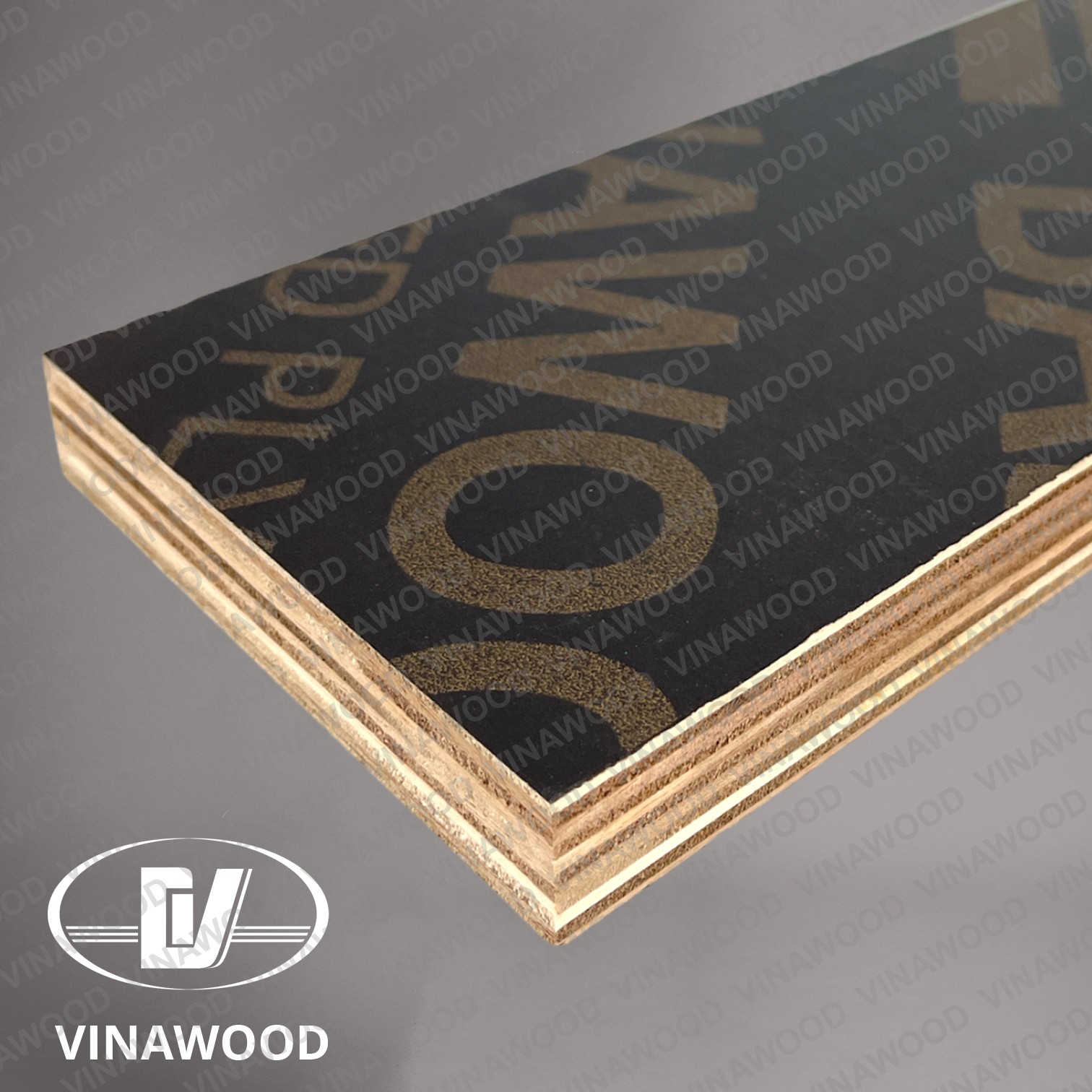
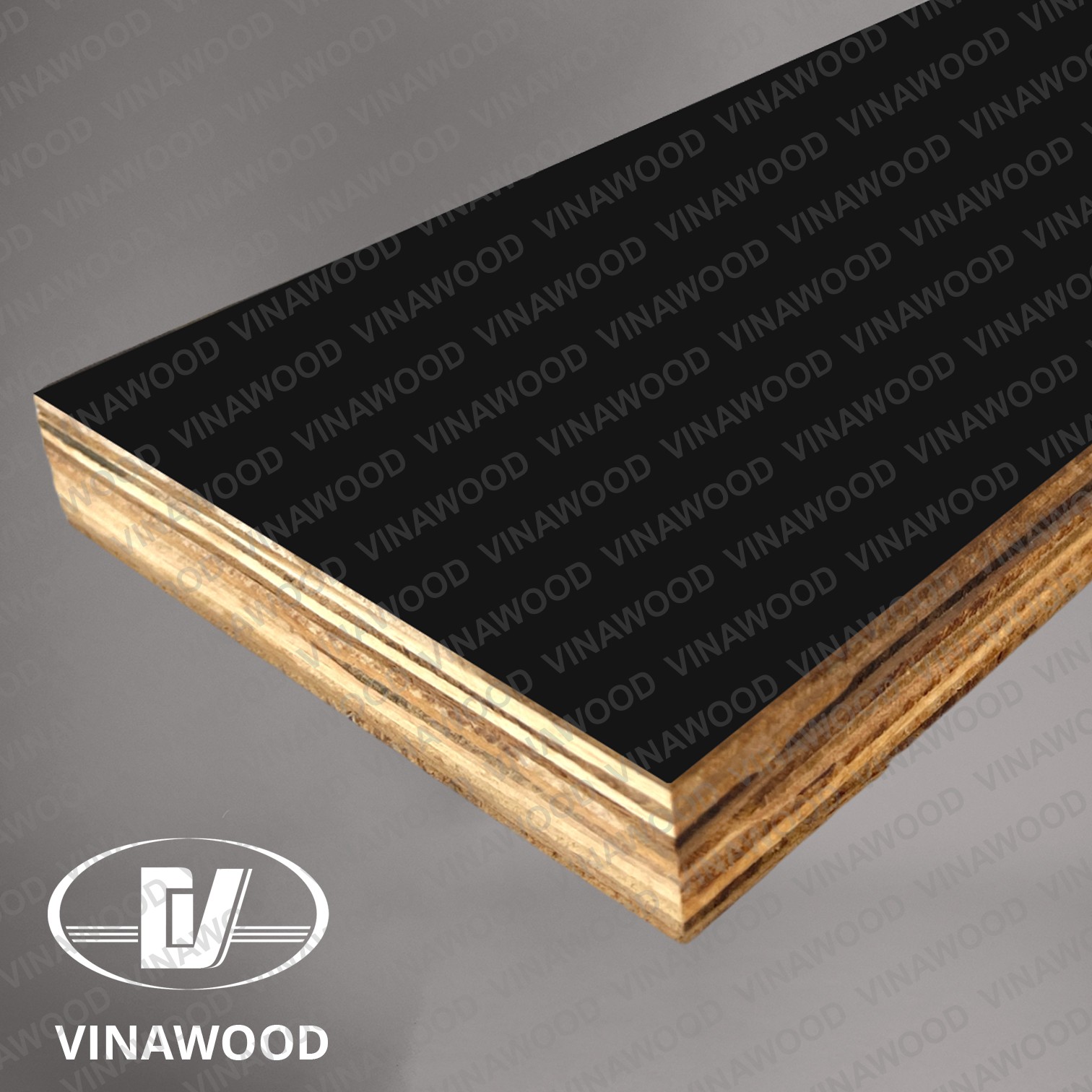
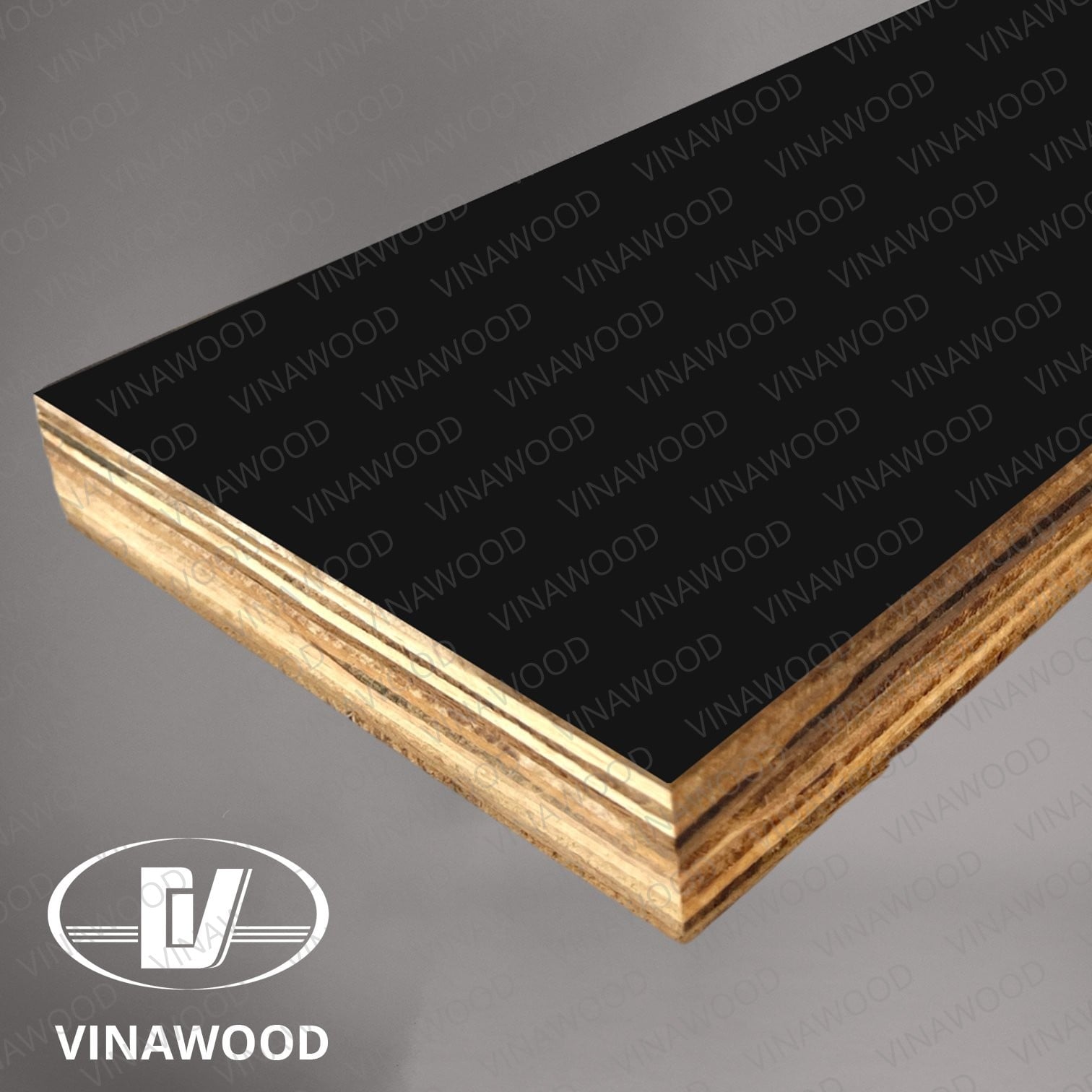
When a buyer asks for film-faced formwork from our film-faced collection, we map the reuse target to this ladder. Reuse is always "up to N". Site release agent, edge seal, and strike method decide whether you land near the top of the band.
Edge seal and release agent habits matter as much as the grade on the invoice. A Pro Form Lite panel struck with a crowbar and stacked wet will not hit "up to 15." An Eco Form Plus panel struck with wedges, wiped, and re-sealed can surprise a crew that expected only a few pours. Buy the grade for the rotation you can actually run.
- Eco Form Plus — short-cycle rung, up to 8 reuses.
- Form Basic — core MUF, EN 636-2, up to 10.
- Form Extra — Superior Glue MUF, EN 636-2 (not Class 3), same phenolic face as Form Basic, up to 15.
- Pro Form Lite — PF / EN 636-3, 165 g/m² face film, up to 15. Sits between Form Extra and Pro Form.
- Pro Form — PF Class 3, up to 20. High-rotation and fair-face work.
For North American overlays, add the HDO range (HDO Basic up to 10, HDO Premium up to 20) and MatteFace Plywood (MTF, up to 15). Buyers often search for MatteFace as MDO formwork plywood. On already-ranking MDO hubs we keep that search token in the title; this page is a where-to-buy guide, so we name the product MatteFace and leave the ranking MDO URLs alone.
All of these panels use plantation-grown hardwood veneers and a water-resistant (WBP) glue line. Water-resistant. Not waterproof. Thickness and format (1220×2440 vs 1250×2500) belong on the same RFQ line as the class. Format still trips EU buyers: many Continental frames want 1250×2500, while North American yards still move a lot of 1220×2440 (4×8). Put the format on line one of the RFQ so the mill does not quote the wrong pack.
Documents that travel with the container
A clean mill pack usually includes a mill test / certificate of conformity, packing list by thickness and piece count, commercial invoice, bill of lading, and origin documents your broker needs. CE EN 13986 paperwork travels with EU-bound Class 2 and Class 3 film-faced panels. EPA TSCA Title VI documentation travels with US-bound packs when required.
Ask for the mill name on the certificate, not only the trader letterhead. Ask for EN 636 class in writing. Ask for face film gsm when reuse is part of the bid. Leave duty and broker math off the mill RFQ. Spec the panel first. The broker can price the landed cost once the class and film are fixed. That order saves a week of email.
If you are still vetting Vietnam origin as a category, start at our Vietnam plywood supplier hub, then come back here for the lane decision. Photo packs help too: ask for edge-seal close-ups and a face-film stamp photo from the actual lot, not a brochure shot from last year.
How North American buyers usually stock
US and Canadian contractors often split the buy. Mill container for the season stock. Yard or local distributor for break-pack and rush sheets. Vinawood keeps distribution warehouses in Toronto, Vancouver, Calgary, Montreal, Miami, Houston, and Baltimore to supply ready stock to local distributors. A contractor who needs a few packs this week works through a local distributor that draws from that network. The mill still made the sheet. This is not an exclusive stockist claim, and it is not a shop-here list for one brand of yard.
EU and Commonwealth buyers more often pull 1250×2500 film-faced direct from the mill. System formwork partners such as Doka, Peri, and Alsina specify their own panel envelopes. Match those envelopes on the RFQ. Do not swap a Class 2 sheet into a Class 3 slot just because the film looks similar.
Break-pack stockists matter for punch-list pours. Keep the mill container for the bulk of the season. Use a local distributor for the last ten sheets when a wall pour moves up a week. Mixing lanes on purpose is fine. Mixing glue classes by accident is not. Strike timing is a separate decision from the buy; once panels are on site, see formwork removal time for walls, slabs, and props.
What to put on the RFQ
Write the RFQ so a mill can quote without a follow-up call. We need EN 636 class (2 or 3), PF vs MUF core glue, face film gsm, thickness, format (1220×2440 or 1250×2500), reuse target (up to N), lane (mill container, trader, or distributor break-pack), destination port or yard, and any CE / FSC / TSCA paperwork your job needs.
Skip competitor mill shopping lists. They do not tell you which glue class arrives on the truck. Spec the class, the film, and the reuse target. Then pick the lane that can deliver that pack on your schedule. Write it once. Quote against that sheet.
Importers sometimes ask us to "match" another datasheet without naming glue class. We will not. Send the class, the film gsm, and the reuse target. We will map Eco Form Plus → Form Basic → Form Extra → Pro Form Lite → Pro Form, or HDO / MatteFace for NA. That is faster than a side-by-side brand list, and it keeps competitor mill names out of the email thread.
Request a mill quotation
Vinawood quotes Eco Form Plus through Pro Form, plus HDO and MatteFace for NA overlays. Est. 1992. About 5,000 containers a year. 55+ export countries. Plantation-grown hardwood. Distribution warehouses in Toronto, Vancouver, Calgary, Montreal, Miami, Houston, and Baltimore supply ready stock to local distributors. Ask sales for shipping origin on the quote.
Send thickness, format, EN 636 class, PF vs MUF core glue, film gsm, and reuse target. Request a quotation or use /rfq and our sales team will map the ladder and return mill specs with the documents that travel with the container.
Category
how-to
▶Sources & References (3)
- EN 636 Plywood — Specifications — CEN (2009)
- EN 13986 Wood-based panels for use in construction — CEN (2009)
- Vinawood film-faced formwork product ladder — Vinawood