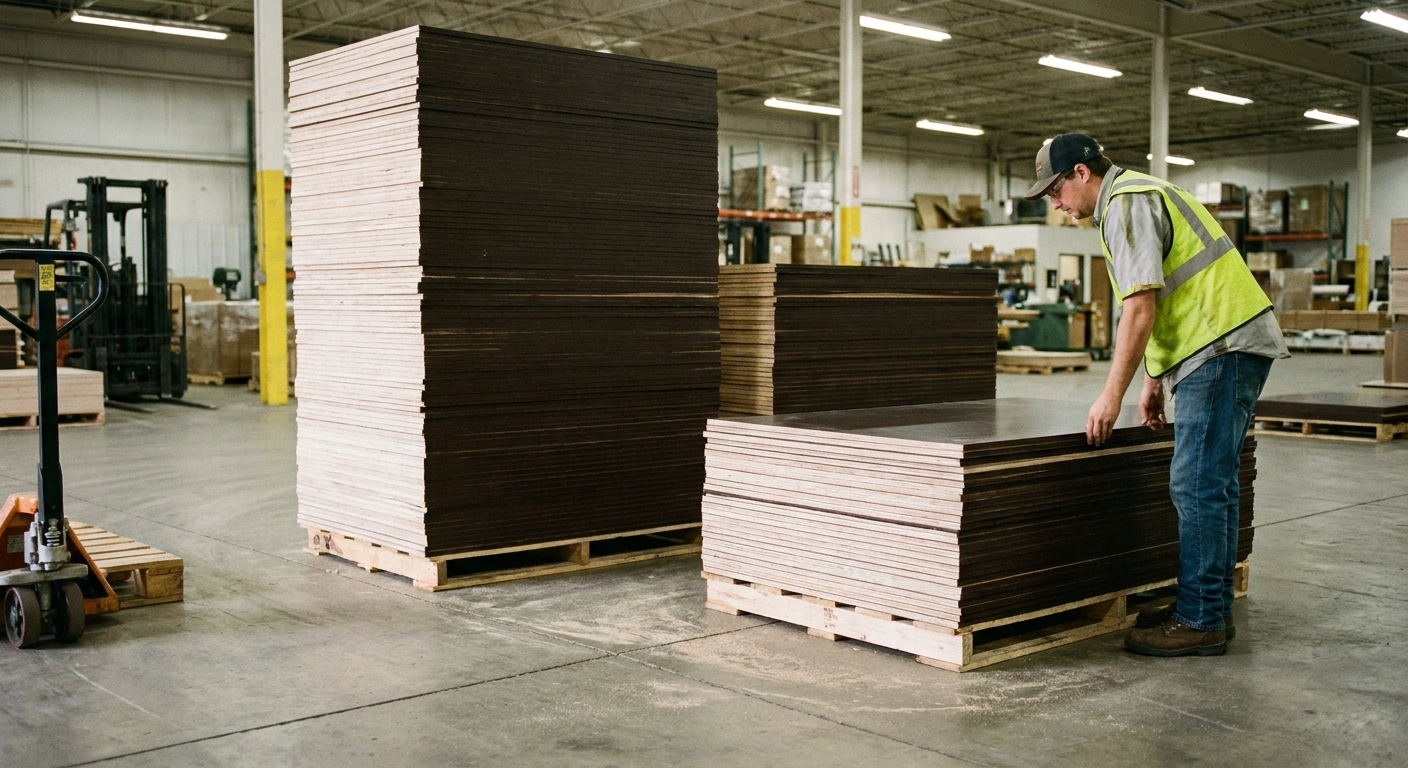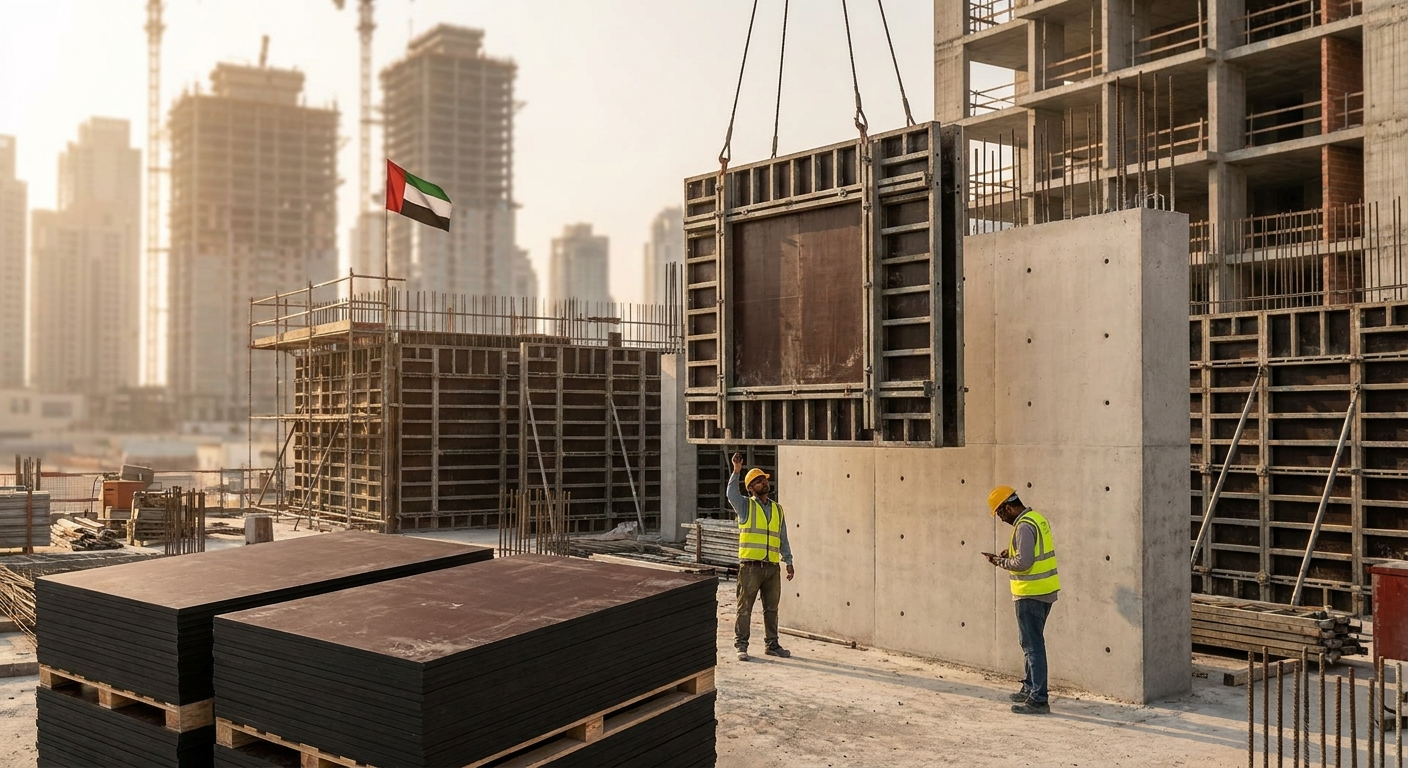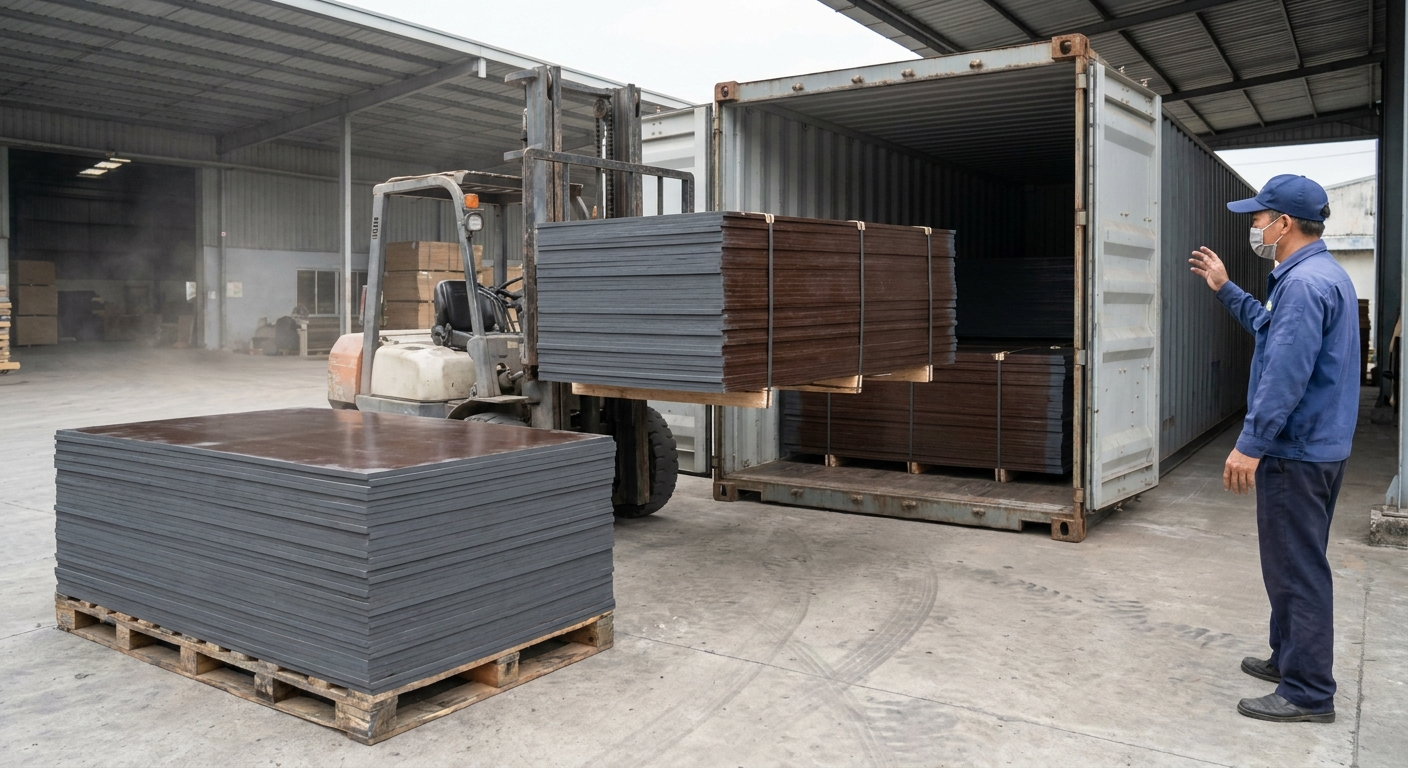
Top 10 Film Faced Plywood Suppliers in Asia
Skip ranked Top-10 mill lists. Spec film gsm, EN 636 class, and reuse as up to N for Asia-Pacific film-faced formwork. Vinawood est. 1992, ~5,000 containers/year, 55+ countries.
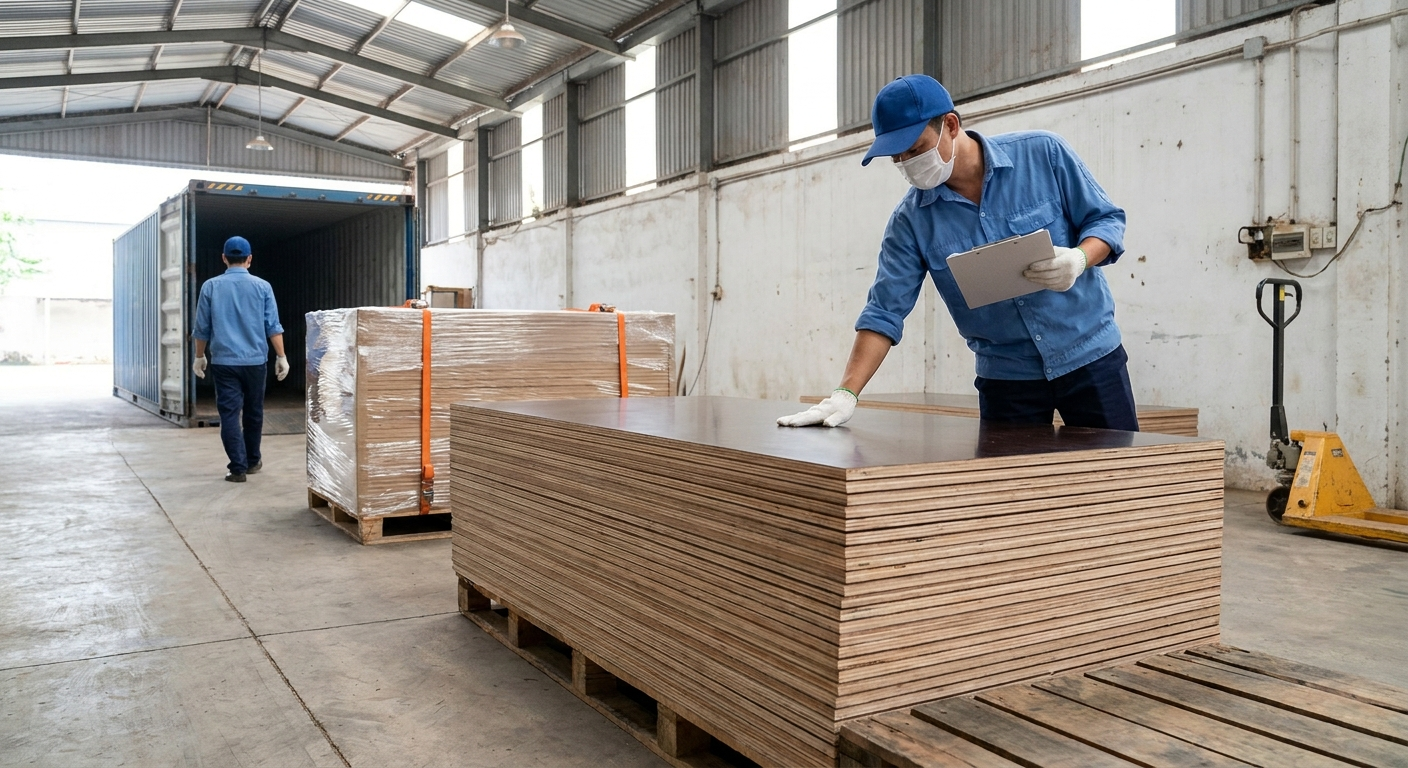
Most of the film faced plywood poured against in Canada, the Gulf and Europe was pressed somewhere in Asia, so the first list of possible suppliers tends to run long. What shortens it isn't the order of names on a search page. It's what each one can actually show you about its own press, its paperwork and its loading record, and this guide walks through how we'd check those things if we were on the buying side of the desk.
How do you tell a Vietnam mill from an exporter reselling packs?
Ask who owns the press, then ask for paper that leads back to it. A real mill that lays its own phenolic face film can name the hot press line your order will run on, and it won't mind switching the camera on during a video call so you can watch the film go down. Its mill test will also match your thickness and film weight, rather than being a generic sheet that's been sent to every customer for that grade since last year.
A trading desk buying from three or four factories may still ship decent panels. The trouble is that it usually can't tie a certificate to a production window, and the bond test in your inbox often predates the batch on the truck. So check the date printed on the certificate and see whether it falls in the few weeks before your loading. We put a unique QR code on every bundle so a site manager can scan a pack and get back to its production record, and that's the sort of link you should expect from anyone who says they make the panel themselves.
If you'd like the longer version, our film faced plywood manufacturer guide goes step by step through what a factory audit looks at. For Vietnamese stock in particular, the Vietnam plywood supplier page explains how origin, ownership and documents hang together.
Why so much film faced plywood comes from Asia
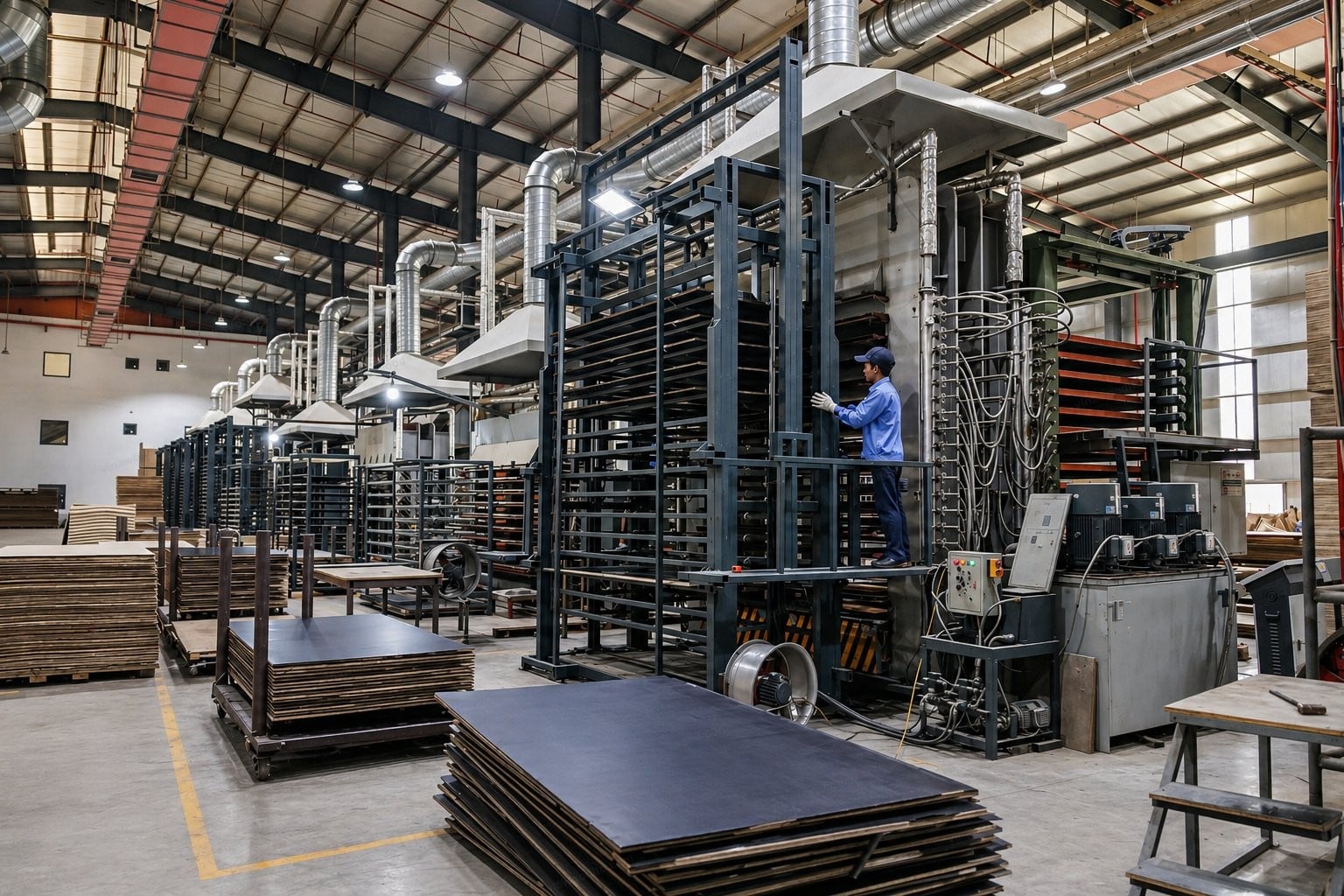
It comes down to what goes into a form panel and where those bits cost least to bring together. You need a core that stays flat, a glue line that can sit under wet concrete for days, and a face film that's pressed on hot. Put plantation forests, resin makers and container ports within a short truck run of each other and the sums work, which is roughly the story of Vietnam, China, Indonesia, Malaysia and India. They don't make the same panel, mind you. Fibre differs from country to country, and QC can differ from one mill gate to the next.
Our own cores are plantation-grown acacia and eucalyptus. Calibrated and pressed, they give a sheet that's dense right through. Distance matters as well: a factory close to a deep-water berth can have your box stuffed and at the terminal a few days after pressing, and one that's inland has to add a truck and another pair of hands. So the flag on the certificate of origin mostly tells you about freight and duty. Whether the panel survives twelve pours or six is down to the mill.
Who are the biggest plywood exporters in Asia, and does size matter?
We get asked for a league table of the biggest exporters quite a lot, and honestly the published tonnage figures won't get you far. They mix traders with factories and rarely split out film faced volume. We'd ask three plainer things. Does the supplier have its own press time for your grade, or does it farm the work out? Are its test reports from this year? And can it keep loading on schedule in spring, when half the importers in the market want stock in the same fortnight?
Size only counts if it turns into reliable supply. A mid-sized mill with its own film line can be a safer bet than a big group that sends each order to whichever factory has a free press that week. For what it's worth, Vinawood has made plywood since 1992, ships around 5,000 containers a year and sells into more than 55 countries, so a forming contractor on a monthly programme isn't fighting one giant order for press time. That's the scale question to put to any supplier in Asia, us included.
What should a film faced plywood specification include?
A spec should describe the sheet your crew will lift, and it's the only fair way to line two quotes up side by side. Film weight governs how the face stands up to abrasion and release agent. The glue line decides what happens after the tenth soaking, and core species plus calibration govern whether the sheet stays flat under a wet slab. Leave any of that open and you're inviting a lower-spec panel that looks just the same on the pallet.
When a vague enquiry lands, we send these fields back before we price anything, because each answer changes the press recipe:
- Thickness and tolerance, for example 18 mm with the tolerance band stated in writing
- Sheet format, such as 1220 x 2440 mm or 1250 x 2500 mm
- Face film weight in gsm and film colour
- Glue type and bond class, with the EN 314-2 class written on the certificate
- Core species and whether the core is calibrated before film pressing
- Edge sealing, packing method and bundle marking
- Target number of pours, so the grade can be matched to the job
- Incoterm, destination port and the documents your customs broker needs
Bond class, glue type and the Vinawood product ladder
Much of the confusion we hear on calls starts with people treating "the bond" as one label, when there are really two standards in play. EN 314-2 is the lab side: it says how a glue line copes after soaking or boiling. EN 636 is the use side, with 636-2 for humid service and 636-3 for exterior. And because both a core MUF glue and a phenolic glue can sit under the same dark brown film, you can't judge the bond by looking at the face.
On our ladder the Class 3 bond sits on Pro Form, Pro Form Lite, HDO Standard and HDO Premium; HDO Basic is Class 2. The MUF grades are built for shorter forming cycles at a lower cost per sheet, and they do that job well. Treat the reuse numbers below as the top end we see on formwork that's handled properly; vibration, release agent and the way a crew strips and stacks will move the real figure on your site.
| Grade | Glue line | EN 636 class | Typical reuse |
|---|---|---|---|
| Eco Form / Eco Form Plus | Core MUF, phenolic face film | EN 636-2 | Up to 6 / up to 8 pours |
| Form Basic | Core MUF, phenolic face film | EN 636-2 | Up to 10 pours |
| Form Extra | Superior Glue MUF, same phenolic face film as Form Basic | EN 636-2, not Class 3 | Up to 15 pours |
| Pro Form Lite | Phenolic (PF) | EN 636-3, Class 3 | Up to 15 pours |
| Pro Form | Phenolic (PF) | EN 636-3, Class 3 | Up to 20 pours |
HDO is a separate branch rather than the next rung up. HDO Basic gives up to 10 pours, HDO Premium up to 20, and contractors usually pick it for jobs where the concrete finish is being judged as hard as the budget. MatteFace Plywood is our formwork face for architectural and fair-face walls, where a low-sheen surface helps the concrete come out even once the forms are off.
Don't let anyone sell you any of these as waterproof. A WBP or phenolic glue line gets through a boil test, sure, but a sheet you've cut on site still needs its edges sealed. If a supplier's brochure says waterproof, that's marketing talking.
Certificates and documents that should travel with the container
Weak suppliers tend to show themselves in the paperwork, and usually at the worst moment, a day or two before the ship leaves. For formwork panels you want an EN 314-2 bond test, the EN 636 declaration for the class you paid for, and an emission statement for your market, plus the usual invoice, packing list, bill of lading and certificate of origin. Selling into Europe? Then you'll also need the timber legality file that backs up your due diligence. Importers in the US and Canada tend to care more about origin evidence and getting the customs entry right.
Check that each certificate names the product exactly as the invoice does, that its date fits your production window, and that it came from the factory or an accredited lab and not a sales office. We email draft documents ahead of loading so your broker can go through them while the container's still in our yard. A mismatch caught there is a phone call. Caught at the destination port, it's demurrage.
What moves a film faced plywood quote
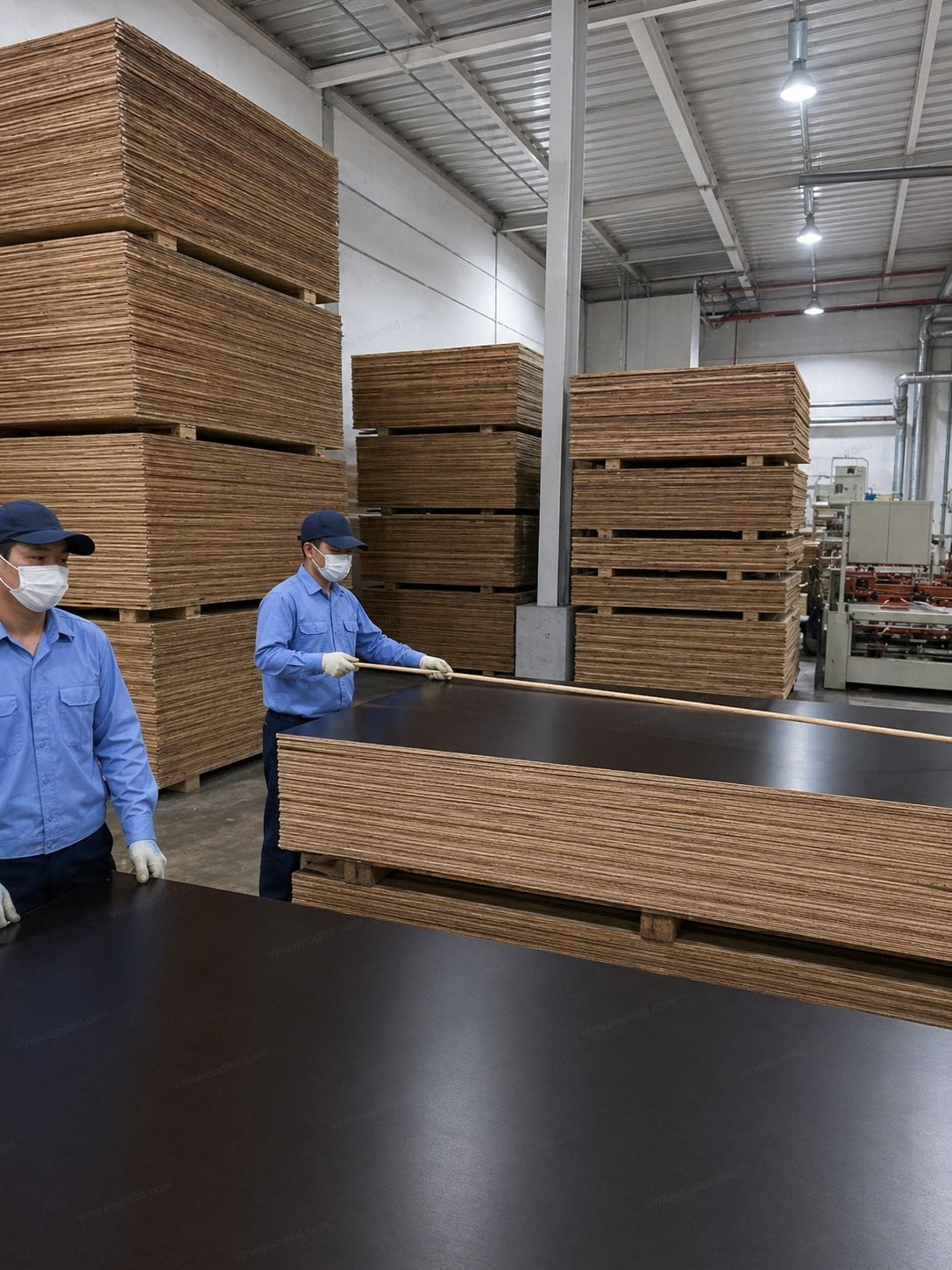
Two quotes for 18 mm film faced plywood can sit far apart and both be honest, simply because they describe different panels. Film weight and bond class move the price most, since a phenolic Class 3 sheet uses dearer resin and a longer press cycle than a core MUF grade. After that come thickness and format, then the Incoterm, the destination and the document pack. In some weeks the freight alone outweighs the gap between two mills.
The fair way to compare is to send every supplier the same spec and ask each one to price it line by line. You can send yours through our RFQ form or request a quotation, and we'll price the panel you described, not the lowest-cost sheet we could press.
Running a supplier trial before the first full container
A trial order is about the least expensive insurance a buyer can get. Take a mixed pallet or part of a container in the grade you mean to buy. Cut a sheet and look at the core for voids and overlaps, boil an offcut if you have the kit, and put a few panels through real pours instead of a yard demo.
Write down how many uses each panel gives and where it gives up first. Worn film usually points to a light film or a poor release routine, while swollen edges point to weak sealing or a glue line that didn't cure fully. Then hold what arrived against the certificate that came with it and make sure the bundle markings agree with the paperwork. Once a mill passes that test and does it again on the next order, the long list you started with matters far less than the record you've built with that one factory.
Where Vinawood fits in an Asian supplier short list
We make film faced and HDO formwork panels from plantation-grown fibre on our own lines, and we've been shipping them since 1992 to buyers in more than 55 countries. For North America we keep ready stock in distribution warehouses in Toronto, Vancouver, Calgary, Montreal, Miami, Houston and Baltimore, supplying local distributors who need panels sooner than an ocean booking allows. Vinawood panels are used with major formwork systems, including Doka, Peri and Alsina.
If you're weighing suppliers across the region, our world supplier diligence guide runs the same checks at a global level, and the Canada film faced plywood supplier guide covers landed stock for Canadian contractors. Send us your spec and target pour count through the RFQ form, or contact our sales team, and we'll come back with the grade we'd recommend and the documents that will ship with it.
▶Sources & References (2)
- EN 636 Plywood — Specifications — CEN (2015)
- EN 314-2 Plywood Bonding Quality Requirements — CEN (2001)