What Is Fire Rated Plywood? Is 18mm Plywood Fire Rated?
What 'fire-rated', 'fire-retardant' and 'fireproof' plywood really mean, why no plywood is truly fireproof, how ASTM E84 Class A/B/C flame-spread ratings work, and where fire-retardant-treated (FRT) plywood is actually required.
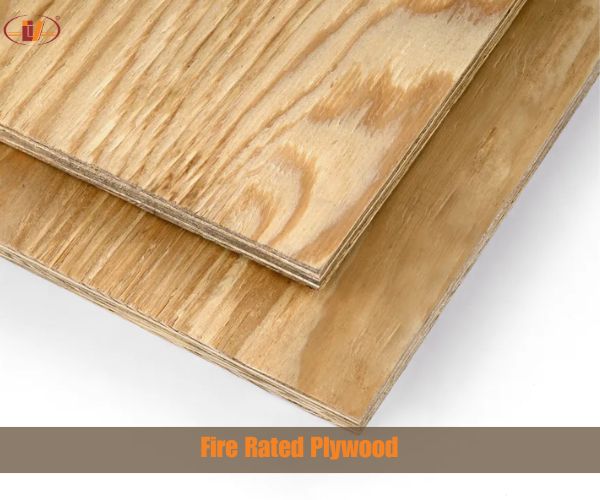
Walk into a building-supply conversation about "fireproof plywood" and you have already hit the first problem. No plywood is fireproof. Wood is a fuel. What people mean when they say fire-rated, fire-retardant, or fire-resistant plywood is usually one specific product: fire-retardant-treated (FRT) plywood. The terms get used interchangeably on spec sheets and retail listings, and the slippage causes real ordering mistakes. This guide sorts out what each phrase actually means, how the ratings work across the US, EU, UK and Australia, and where treated plywood is genuinely required.
Quick reference: the four terms at a glance
Before the detail, the one table to screenshot. Each term answers a different question, and the right thing to ask a seller is in the last column.
| Term | What it certifies | What to ask for |
|---|---|---|
| Fireproof | Nothing — a misnomer for any wood product | Treat the word as a red flag; ask what is actually meant |
| Fire-retardant (FRT) | The treatment: chemically impregnated to slow ignition and flame spread | Interior or exterior formulation? Which chemistry? |
| Fire-rated | The tested result: passed a recognised method to a class | The test reference and class — ASTM E84 Class A/B/C, a Euroclass, or BS 476 |
| Fire-resistant | A loose umbrella phrase — sometimes FRT, sometimes just "chars slowly" | Which standard backs the claim? |
Is plywood fire-rated on its own?
No. The APA – The Engineered Wood Association puts it plainly: plywood is not a fire-rated product, and "fire-rated plywood" almost always refers to fire-retardant-treated plywood. Untreated plywood, whatever its thickness or grade, ignites and contributes fuel like any other wood panel. An 18mm sheet does not become fire-rated because it is thick. Thickness changes how long a panel takes to burn through, not whether it carries a fire rating.
The rating comes from two things working together: a chemical treatment applied to the wood, and a documented test result from a recognized lab. Take away either one and you have ordinary plywood. That distinction is the whole subject, so it is worth holding onto before looking at classes and numbers.
What fire-retardant-treated (FRT) plywood actually is
FRT plywood is plywood that has been pressure-impregnated with fire-retardant chemicals. The panel goes into a treatment cylinder, a vacuum draws air out of the wood cells, and the chemicals are forced deep into the fibers rather than sitting on the surface as a coating. That depth matters: a surface spray can be sanded or weathered off, while pressure-impregnated treatment stays in the wood.
When FRT plywood meets flame, it does not stop burning. It chars. The char layer forms quickly and then insulates the wood underneath, which slows heat from reaching the unburned core. The treatment also shifts the chemistry of combustion so the wood releases less flammable gas. The result is a panel that resists flame spread and buys time, not one that cannot burn.
One detail trips up installers: cutting and machining. Drilling and crosscutting an FRT panel is fine, because the chemicals are throughout the sheet. Deep sanding of the face, though, can thin the treated layer that matters most for surface flame spread. There are interior FRT and exterior FRT formulations, and the exterior types hold up to moisture and humidity cycles that would leach a cheaper interior treatment.
Interior FRT vs exterior FRT — and the moisture caveat
The single most expensive FRT mistake is putting an interior formulation where it will get damp. Interior FRT chemistries are hygroscopic: the same salts that slow combustion also attract water vapour, so an interior-treated panel in a humid roof space can pick up moisture, corrode fasteners, and in older formulations even lose strength over time at elevated temperatures. Exterior FRT (sometimes labelled FRT-EXT or "exterior fire-retardant") uses chemistry formulated to resist leaching and humidity cycling, which is why it is the only correct choice for any application that sees weather, condensation, or wash-down.
The second caveat is structural. Fire-retardant treatment can reduce the design strength and stiffness of the panel, and the amount depends on the chemistry and on the service temperature. Reputable treaters publish adjusted design values — strength-reduction factors that the engineer applies when an FRT panel carries load, and that often increase with sustained roof-temperature exposure. If an FRT panel is doing structural work, the treater's adjusted values are part of the spec, not an optional footnote. A panel sold as "FRT plywood" with no interior/exterior designation and no adjusted-design-value sheet is missing half its specification.
Flame-spread ratings: ASTM E84 and Class A, B, C
In North America, surface burning is measured by ASTM E84-23, often called the Steiner tunnel test. It rates a material on how fast flame travels across its surface and produces a Flame Spread Index (FSI). The lower the number, the slower the spread.
- Class A — FSI of 25 or lower. This is the level used where treated wood substitutes for noncombustible materials, and it is what most fire-rated assemblies call for.
- Class B — FSI of 26 to 75. A middle tier accepted in some occupancies and assemblies.
- Class C — FSI of 76 to 200. The lowest of the three rated bands.
ASTM E84 also reports a Smoke Developed Index, because in real fires smoke is often the more immediate danger than flame. A Class A rating is usually written as a paired requirement: FSI of 25 or lower and a Smoke Developed Index of 450 or lower.
Fire classes across markets: US, EU, UK and Australia
A panel sold into the UK, the EU or Australia references a different test system than ASTM E84, and the systems do not map one-to-one. That mismatch is exactly why one product can carry different-looking labels for different markets — a buyer comparing a US Class A panel with an EU Euroclass B panel is not comparing identical things. The reference table:
| Market | Standard | Class system | Top building-grade tier for wood |
|---|---|---|---|
| United States | ASTM E84-23 (Steiner tunnel) | Class A / B / C by Flame Spread Index | Class A — FSI ≤ 25, smoke ≤ 450 |
| European Union | EN 13501-1 (reaction to fire) | Euroclass A1, A2, B, C, D, E, F with s (smoke) and d (flaming droplets) sub-ratings | Treated wood typically reaches B-s1,d0 or C-s2,d0 |
| United Kingdom | BS 476 Parts 6 & 7 (now largely harmonised to EN 13501-1) | Part 7 surface spread Class 1–4; Part 6 fire propagation index; "Class 0" is a building-reg composite | Class 1 / Class 0, or the equivalent Euroclass B |
| Australia | AS 1530.3 and AS 5637.1 | Ignitability, spread-of-flame and smoke indices; material Group Number 1–3 for linings | Group 1 lining material |
The practical takeaway: do not accept a fire claim stated in one market's vocabulary as proof of compliance in another. An EU panel marked B-s1,d0 is a strong reaction-to-fire result, but a US specifier still needs an ASTM E84 Class A test on file, and an Australian certifier still needs a Group Number from AS 5637. The fire mark itself is one of several stamps a panel carries; our guide to plywood markings walks through how the fire reference sits alongside the CE, formaldehyde and bond stamps on a single sheet.
Fire resistant vs fire retardant vs fireproof
These three phrases are not synonyms, even though listings treat them as if they were. Here is the plain-language version.
| Term | What it really means |
|---|---|
| Fireproof | A misnomer for any wood product. Nothing made of wood is fireproof. Treat the word as a marketing red flag, not a specification. |
| Fire-retardant | The technically correct term for FRT plywood: chemically treated to slow ignition and flame spread. Describes the treatment. |
| Fire-rated | Describes a tested result — a panel or assembly that has passed a recognized test (ASTM E84 Class A/B/C, BS 476, a Euroclass). Describes the certification. |
| Fire-resistant | A loose umbrella phrase. Sometimes means FRT, sometimes just "chars slowly." Always ask which standard backs the claim. |
If a seller cannot tell you which test result sits behind the word they used, the word is doing marketing work, not engineering work.
Where FRT plywood is actually required
FRT plywood shows up where building codes call for fire-rated wood: certain fire-rated wall and partition assemblies, some roof and exterior-wall constructions in specific occupancy types, and concealed spaces where combustible material is restricted. The exact triggers come from the International Building Code (2024 edition in the US) and the equivalent code in other markets, and they hinge on building height, use, and how the assembly is rated as a whole.
The point worth keeping is that FRT is an assembly-and-code question, not a default upgrade. A residential garage shelf does not need it. A rated corridor partition in a multi-storey commercial building may. Specifying FRT where the code does not ask for it adds cost without adding required compliance, and skipping it where the code does ask is a failed inspection waiting to happen.
Does treatment change strength, finishing, or moisture behavior?
Fire-retardant treatment is not free of trade-offs, and honest buyers should know them. Some FRT formulations modestly reduce the design strength of the wood, which is why structural FRT lumber and panels carry adjusted design values from the treater. The chemicals are also hygroscopic in interior formulations, meaning they attract moisture, so interior FRT belongs indoors and exterior FRT is the choice anywhere humidity or wetting is in play.
For finishing, FRT plywood paints and seals much like ordinary plywood. The caution, again, is sanding: take off too much face material and you remove the part of the treatment that governs surface flame spread. Light scuff-sanding for paint adhesion is fine; aggressive resurfacing is not.
What FRT plywood costs, and why
FRT plywood runs meaningfully higher than standard plywood, and the premium is not the chemical alone. You are paying for the pressure-treatment cycle, the kiln re-dry afterward, the third-party fire test, and the certification paperwork that lets a panel be specified into a rated assembly. Exterior FRT costs more than interior FRT because the leach-resistant chemistry is more expensive. Structural FRT carries the additional engineering cost of the adjusted-design-value documentation. Specifiers sometimes recover part of the premium through lower insurance on rated construction, but the sticker difference at the merchant is real and should be planned into the budget rather than discovered at quote stage.
What ordinary plywood does in a fire
Untreated plywood behaves like the wood it is made from. It ignites, it burns, and it adds fuel to a fire. A thicker sheet takes longer to burn through and a denser hardwood core resists a little differently than a softwood one, but none of that is a fire rating. We manufacture film-faced, marine, HDO, MDO, and commercial plywood rather than FRT panels, so treat this as buyer education rather than a sales pitch: the honest answer is that fire performance comes from treatment and testing, not from species, thickness, or brand. If a project needs rated wood, it needs treated and tested wood, full stop.
This also means a glossy film-faced or marine panel is not a fire product. Those overlays manage water and casting surface quality, not flame spread. A film-faced sheet from our film-faced plywood collection is engineered for concrete forming and water resistance, and anyone selling you "water-resistant so it must be fire-safe" has conflated two unrelated properties.
How to verify a fire rating
Do not rely on the word printed on a website. A real fire rating travels with documentation:
- A third-party test reference — ASTM E84 with a stated class and FSI, or BS 476 / a Euroclass under EN 13501-1 for non-US markets.
- A treater's stamp or certificate on the panel itself, naming the standard met and whether the treatment is interior or exterior grade.
- Adjusted design values from the treater if the panel is doing structural work.
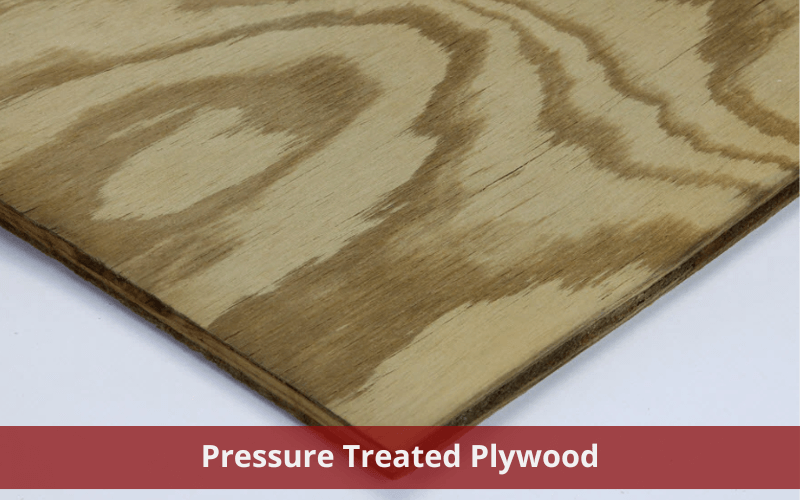
Seller claims without a test reference are not a rating. If you cannot find the standard and the class, assume the panel is untreated until proven otherwise. For related background on how chemical treatment works across different purposes, our guide to pressure treated plywood covers FRT alongside the other pressure-treatment types.
Practical selection — and when FRT is overkill
Match the panel to what the code and the application actually require. If you are building a rated assembly that the inspector will check against a code clause, you need documented FRT at the class the clause specifies. If you are building a workshop wall, a garage storage rack, or furniture, untreated plywood selected for strength and moisture class is the sensible, lower-cost choice, and treated wood adds expense you will not recover.
When a panel's fire rating is in question for a permitted project, the authority having jurisdiction (your local building official) is the one whose reading of the code actually counts. Confirm the required class with them before ordering, not after the panels arrive on site.
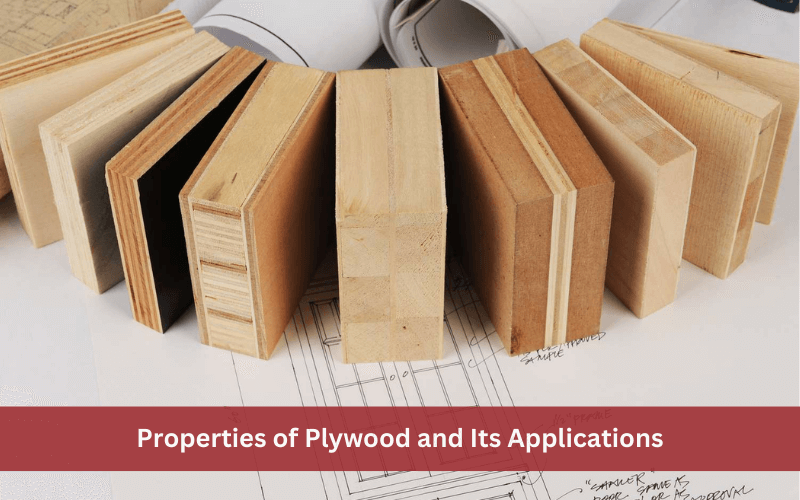
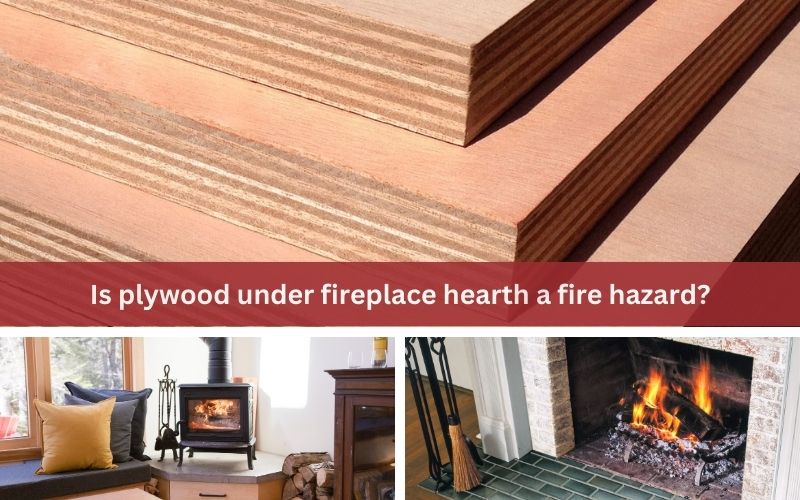
For the broader picture of how plywood resists heat, moisture, and impact as a material, our overview of the properties of plywood sets fire behavior in context. And if your question is really about heat near a hearth rather than rated assemblies, the dedicated piece on whether plywood under a fireplace hearth is a fire hazard answers that directly.
Where Vinawood fits
Vinawood has manufactured plywood in Vietnam since 1992 and ships to more than 55 countries. Our range covers film-faced formwork, marine, HDO, MDO, and commercial plywood. We do not produce chemically fire-retardant-treated (FRT) plywood, and this guide is meant as buyer education, not a product pitch. If your project calls for rated wood, source it from a certified FRT treater with the test documentation to match your code requirement. If your project needs durable, moisture-managed plywood that is not a fire-rated application, that is a conversation we are glad to have.
Category
how-to
Related Markets
Related Countries
▶Sources & References (6)
- Fire Phraseology FAQs: FRT vs Fire Rating — APA – The Engineered Wood Association (2024)
- ASTM E84-23 — Standard Test Method for Surface Burning Characteristics of Building Materials — ASTM International (2023)
- EN 13501-1:2018 — Fire classification of construction products: reaction-to-fire (Euroclass) — CEN (2018)
- BS 476 Parts 6 & 7 — Fire propagation and surface spread of flame — British Standards Institution (2014)
- AS 1530.3 & AS 5637.1 — Reaction-to-fire and material group classification — Standards Australia (2022)
- International Building Code (2024) — Fire-Retardant-Treated Wood provisions — International Code Council (2024)