Formwork Panels: Uses, Benefits and Price
A formwork panel is a reusable mold used in construction to shape and support concrete until it hardens. Made from materials like wood, steel, plastic, or composites, these panels provide the essential framework for creating structural elements such as walls, columns, slabs, and foundations.…
A formwork panel is a reusable mold used in construction to shape and support concrete until it hardens. Made from materials like wood, steel, plastic, or composites, these panels provide the essential framework for creating structural elements such as walls, columns, slabs, and foundations. Designed for easy assembly and disassembly, formwork panels help streamline the construction process, improve accuracy, and reduce labor costs. Understanding what formwork panels are and how they work is key to optimizing concrete construction projects efficiently.
What is a formwork panel?
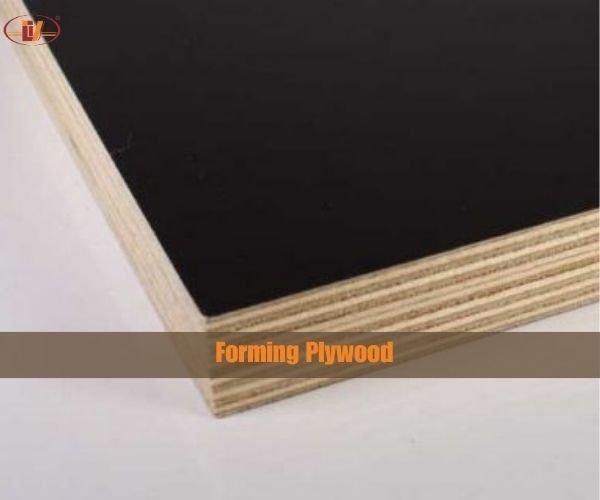
Formwork panels are reusable molds used to shape and contain concrete during construction, enabling the creation of structural elements such as walls, columns, and slabs. Typically made from wood, steel, plastic, or composite materials, these panels are designed for easy assembly and disassembly to streamline the building process.
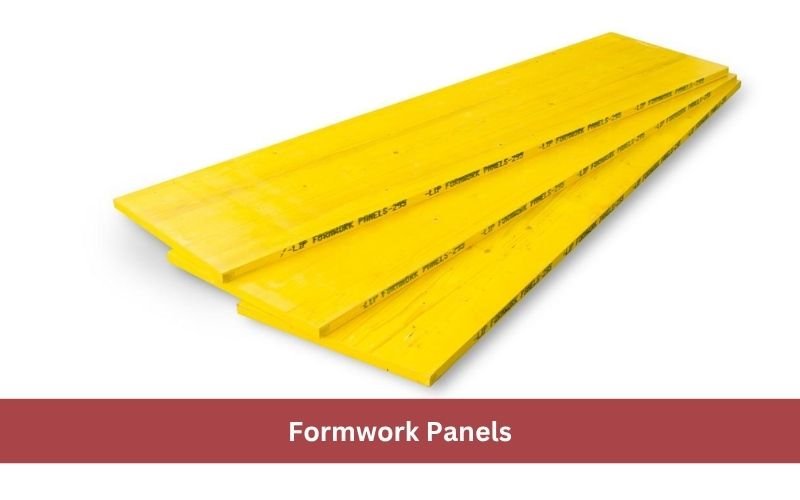
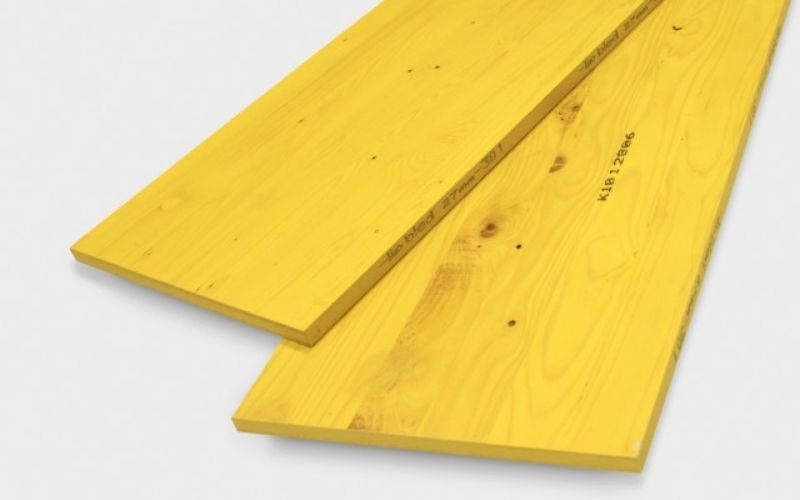
One common type is the 3-ply formwork panel, consisting of three layers glued together with a watertight bond. This construction ensures dimensional stability, virtually eliminating swelling or shrinking. High-quality 3-ply panels can be reused up to 20 times on-site, significantly reducing formwork and scaffolding costs.
Advantages of formwork panel
Dimensional Stability from Closed 3-Ply Construction
Formwork panels are made with a closed 3-ply design where three layers are glued together in a watertight bond. This construction provides excellent dimensional stability by preventing swelling, shrinking, and warping, even under changing moisture or temperature conditions. As a result, panels keep their shape and size, ensuring consistent and precise concrete molds.
Minimal Crack Formation for Durable Concrete
Thanks to their strong structure and quality materials, formwork panels reduce the risk of cracks forming in concrete surfaces. This helps produce smoother, more uniform finishes that enhance both the strength and appearance of the concrete.
Superior Bending Strength and Rigidity
These panels offer high bending strength and stiffness, allowing them to withstand the heavy loads and pressures of concrete pouring without deforming. This rigidity ensures the mold holds up throughout the curing process, maintaining safety and quality.
Smooth Sanded Surface for Perfect Concrete Finishes
The sanded finish on formwork panels creates a smooth surface that transfers clean, sharp impressions to the concrete. This reduces the need for additional finishing work, saving time and labor on-site.
Cost-Effective Reusability
Formwork panels can be reused up to 20 times or more, significantly lowering the cost per use compared to disposable alternatives. This durability helps reduce waste and material costs, making panels an economical choice for many construction projects.
High Durability Due to All-Round Gluing
All layers of the panels are glued completely around the edges, which protects them from moisture damage and increases their lifespan. This full bonding also strengthens the panels, enabling repeated use under tough construction conditions.
Application of formwork panel
Concrete Formwork Systems
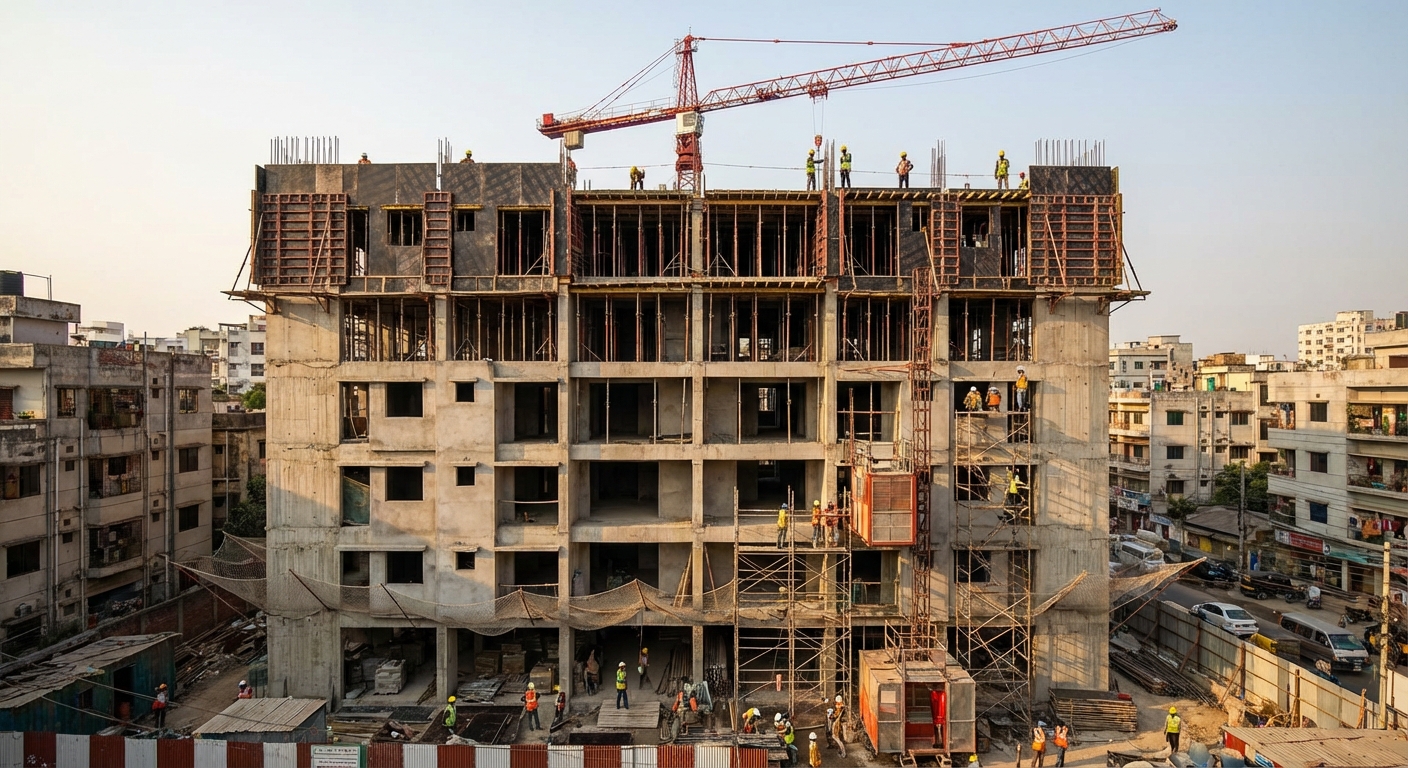
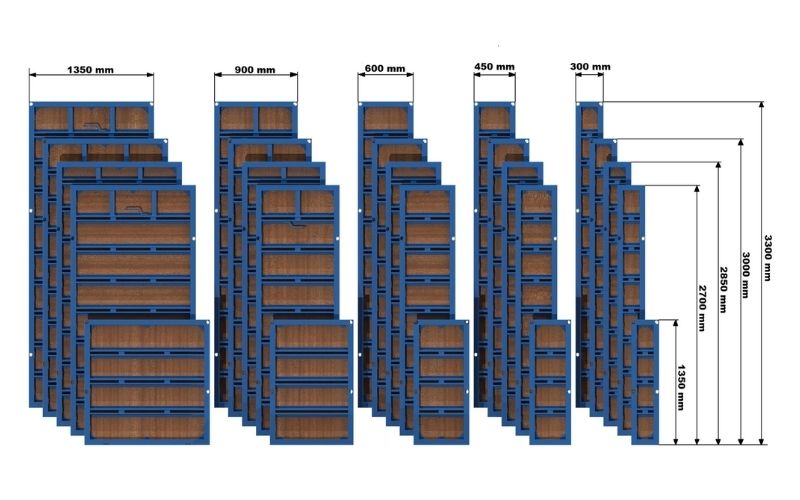
Formwork panels serve as molds to shape and support freshly poured concrete until it hardens. They are used in projects ranging from small residential builds to large commercial structures, ensuring reliable and precise concrete forms.
Wall Formwork
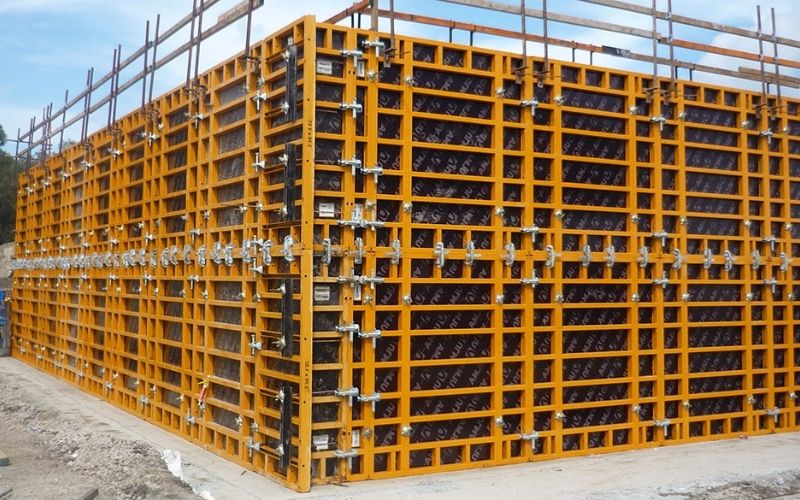
Used to create vertical elements like walls, columns, and retaining structures, wall formwork panels provide smooth surfaces and exact dimensions, reducing the need for additional finishing.
Ceiling Formwork
Formwork panels support slabs and ceilings during concrete curing, preventing sagging or deformation. This is essential for multi-story buildings and large overhead concrete surfaces.
Shuttering for Civil Engineering
In large civil engineering projects such as bridge construction, foundations, and tunnels, formwork panels act as temporary molds to shape complex concrete structures, offering strength and adaptability.
Tunnel Formwork
Specialized formwork panels are used to cast curved concrete tunnel linings safely and efficiently, often in challenging environments.
Formwork panel price
The price of formwork panels varies widely depending on material and quality. Wooden formwork panels typically range from $15 to $40 per panel, making them the most affordable and commonly used option. Steel formwork panels are more expensive, generally costing between $50 and $120 per panel, reflecting their higher durability and strength. Plastic and composite panels fall in between, usually priced around $30 to $70 per panel. Keep in mind that prices can fluctuate based on size, thickness, finish, supplier, and order quantity.
Formwork panels are indispensable in shaping concrete structures across various construction applications. Their combination of strength, reusability, and cost efficiency offers clear advantages for contractors seeking to optimize budgets and timelines. By choosing the right type of formwork panel based on project needs and price considerations, builders can enhance durability and achieve superior concrete finishes with minimal waste. Understanding these factors ensures better planning and execution for any concrete construction project.
VINAWOOD – Vietnam Plywood Supplier Manufacturer