Film Faced Plywood: Benefits, Applications & Cost Efficiency
Film faced plywood commercial hub: phenolic film for formwork reuse, Eco Form Plus→Pro Form Class 3 ladder, cost-per-pour math, warehouse RFQ soft-convert. Vinawood since 1992, ~5,000 containers/year to 55+ countries.

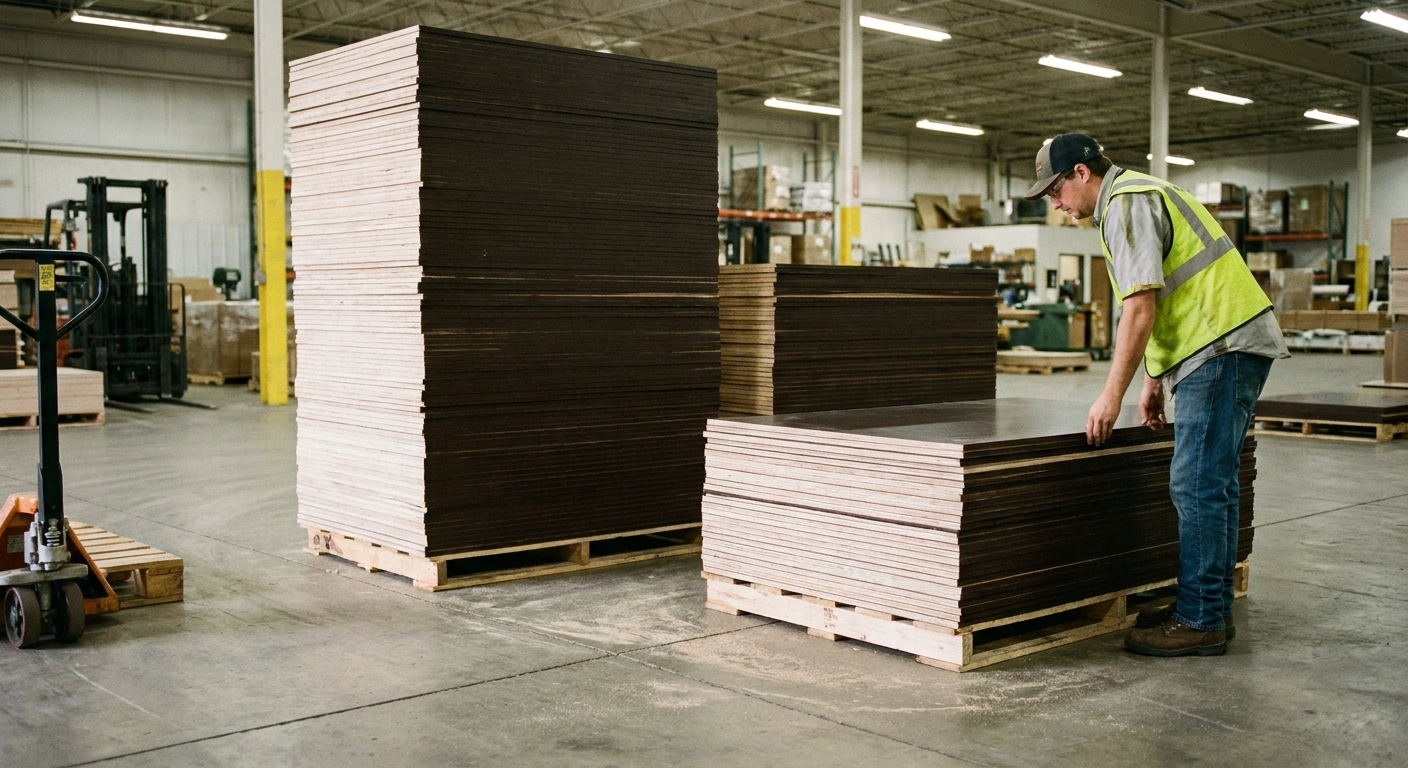
Film faced plywood is plywood with a phenolic resin film overlay hot-pressed onto both faces, so a crew can pour concrete against it, strip it and stand it back up for the next lift. People also call it phenolic film faced plywood, shuttering plywood or formwork plywood, and on our side of the quote those are all one panel class. The name on the bundle tells you little. The glue under the film tells you how the sheet will behave in the rain and late in its reuse cycle, and it is the line most RFQs leave blank.
Here is how the data sheets read for our two reference grades:
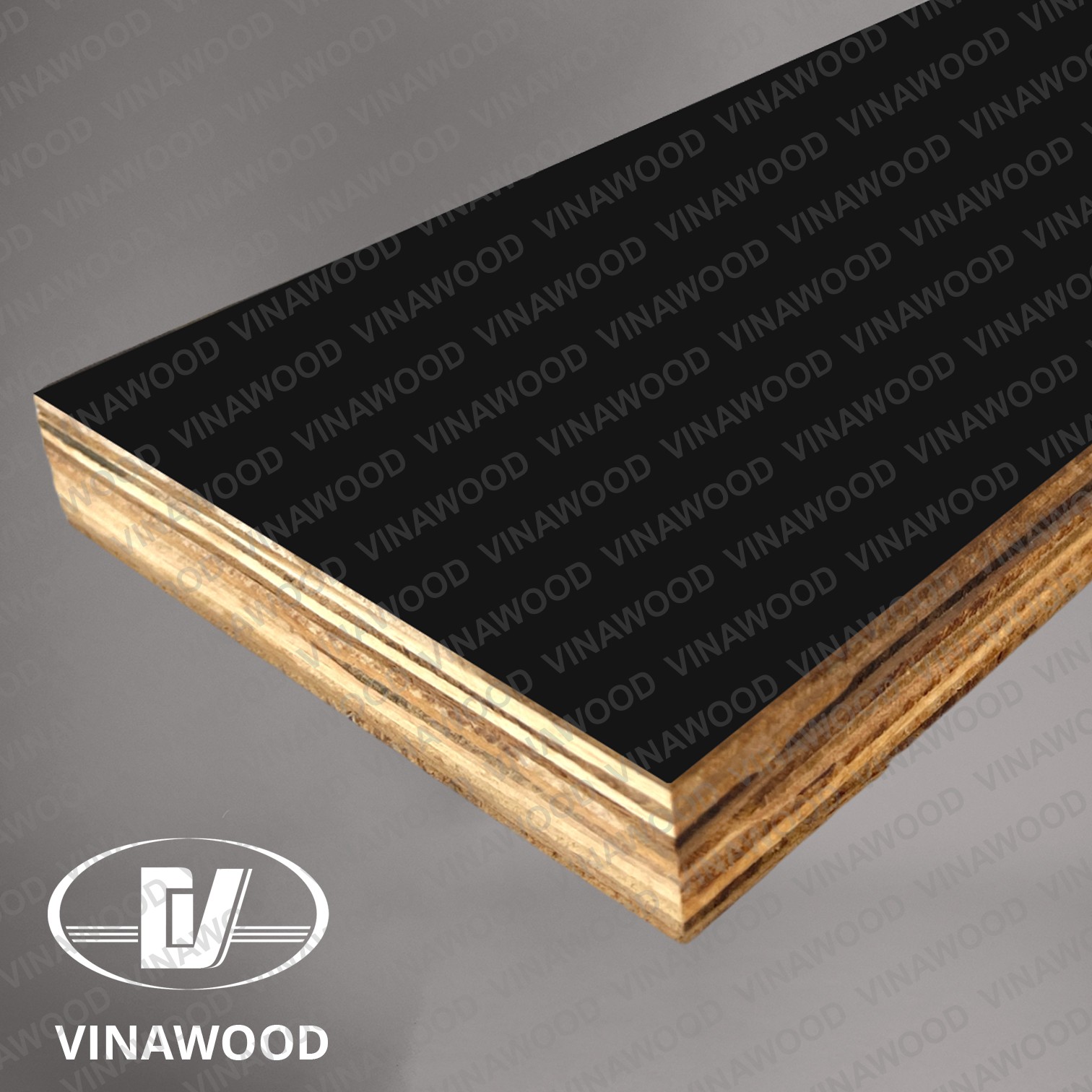
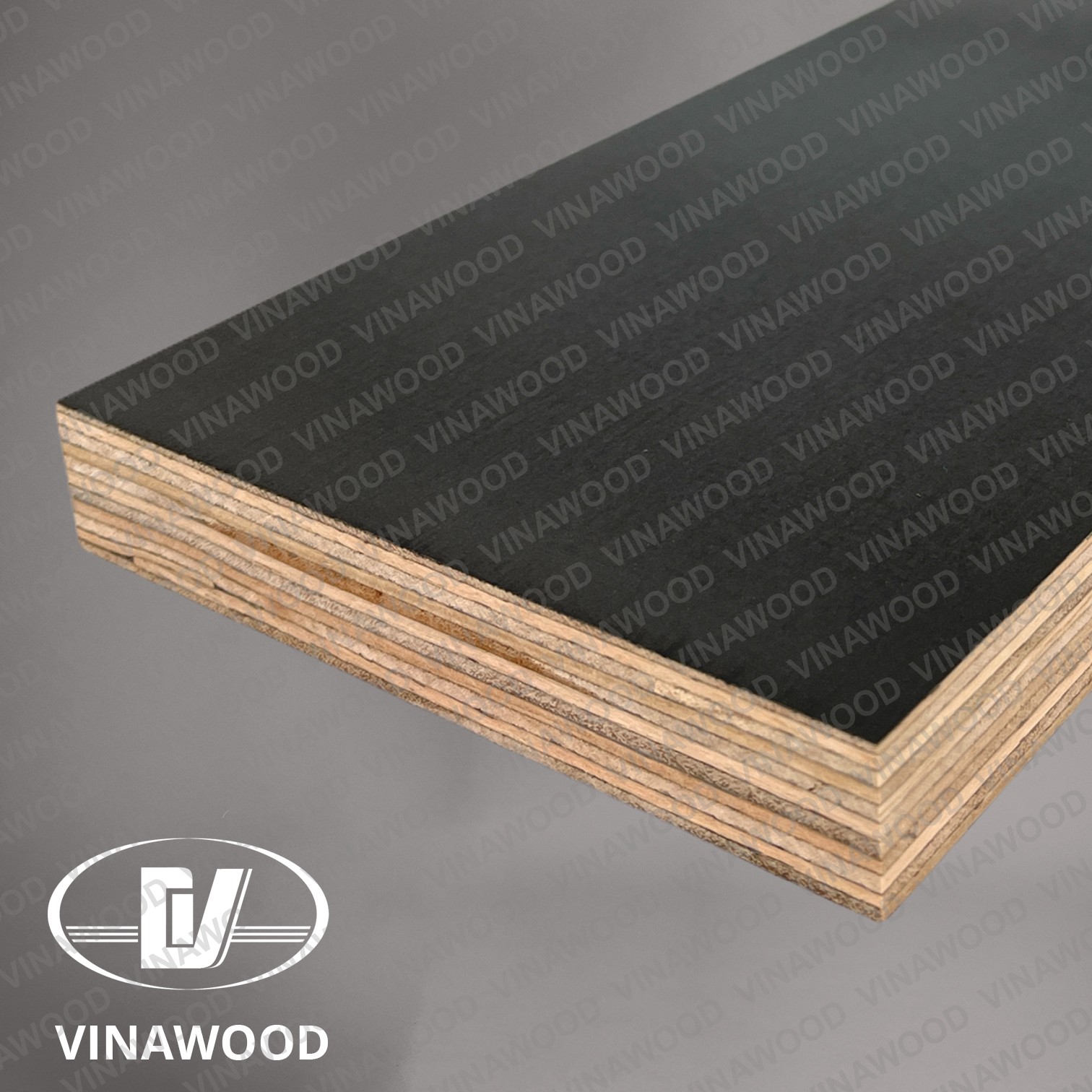
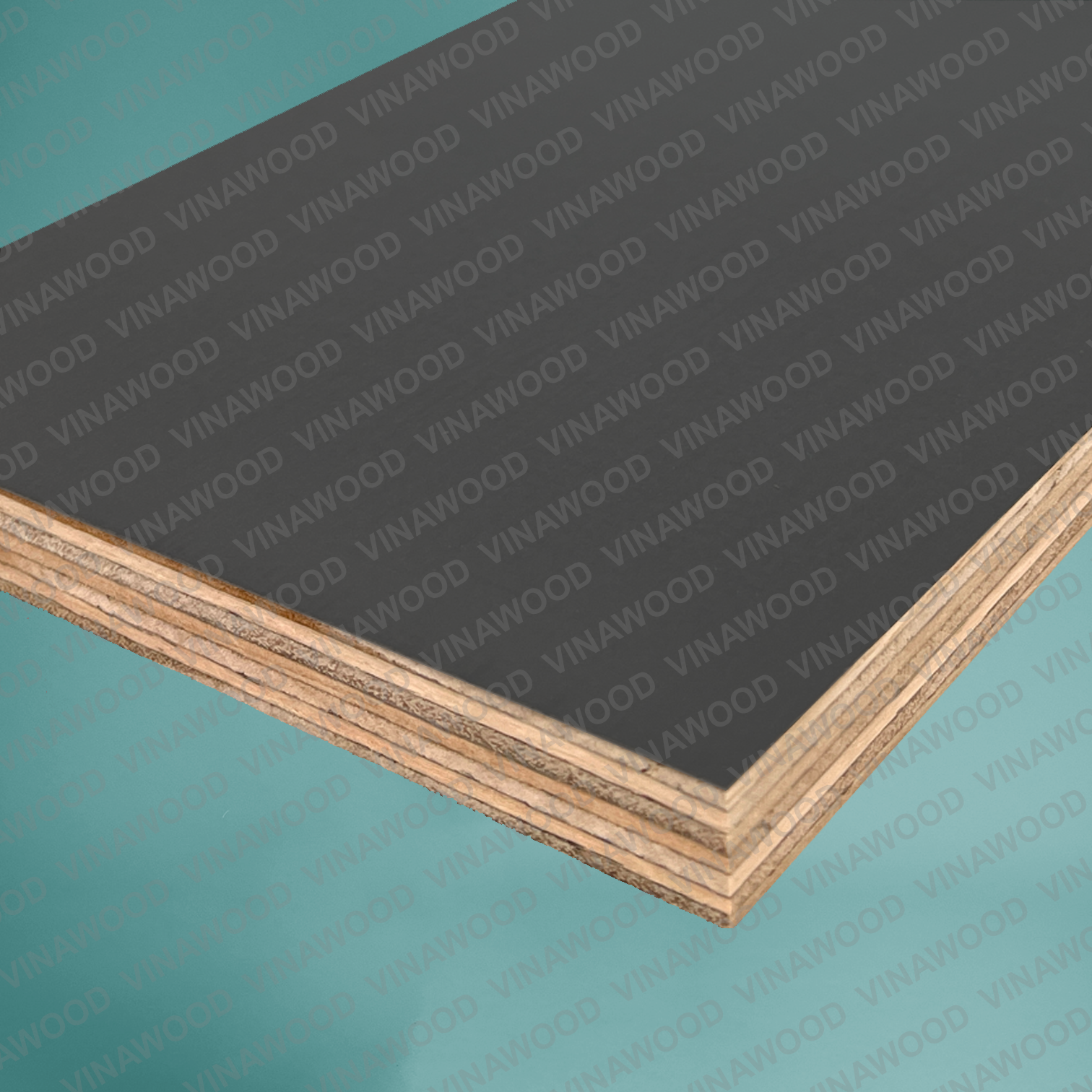
- Core: plantation-grown Acacia and Eucalyptus veneers, on Form Basic and Pro Form alike.
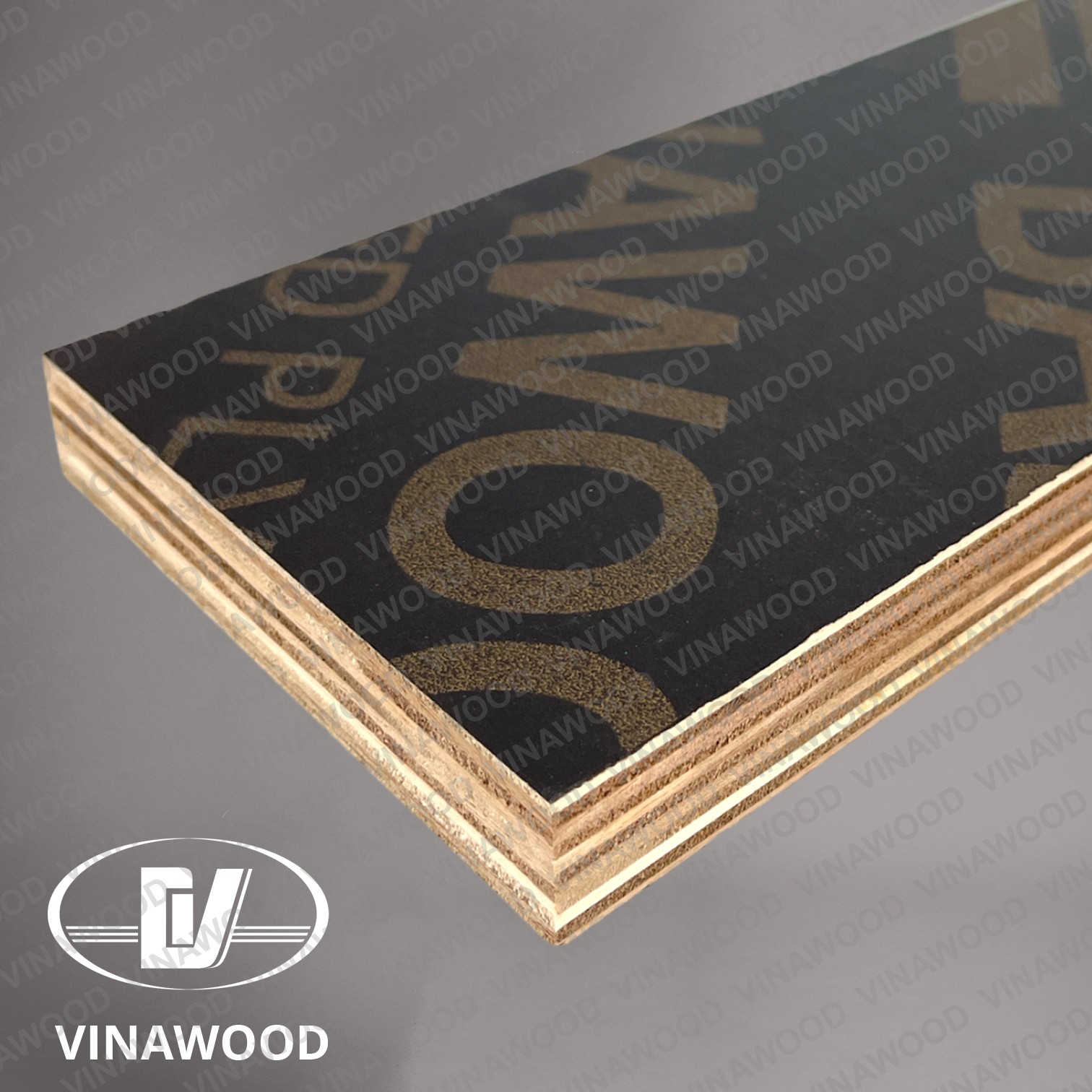
- Film: dark brown phenolic surface film on face and back. Form Basic carries 165 gsm; Pro Form carries a 125 gsm top-grade film.
- Glue: Form Basic is bonded with WBP melamine-urea-formaldehyde (MUF), rated EN 636-2 / Class 2. Pro Form uses WBP phenolic (PF) glue and is rated EN 636-3 / Class 3.
- Sizes: 2440×1220 mm and 2500×1250 mm sheets in 12, 15, 18 and 21 mm, and Pro Form also comes in cut sizes like 1220×625 mm.
Want the numbers on paper first? The Form Basic and Pro Form pages each have a data sheet you can download. When the job is ready to price, send grade, thickness, sheet size, quantity and destination port through /contact.
Bond class and realised reuse set the commercial buy more than any catalogue sticker. WBP core glue is water-resistant; it is not waterproof. Reuse figures are maxima under good site practice. Vinawood cores are plantation-grown acacia, eucalyptus, and related species. Origin-level definitions that separate mill from trader sit on the atlas page for Vietnam film faced plywood. This mill hub stays on commercial grades and cost per pour.
What film faced plywood is on a pour programme
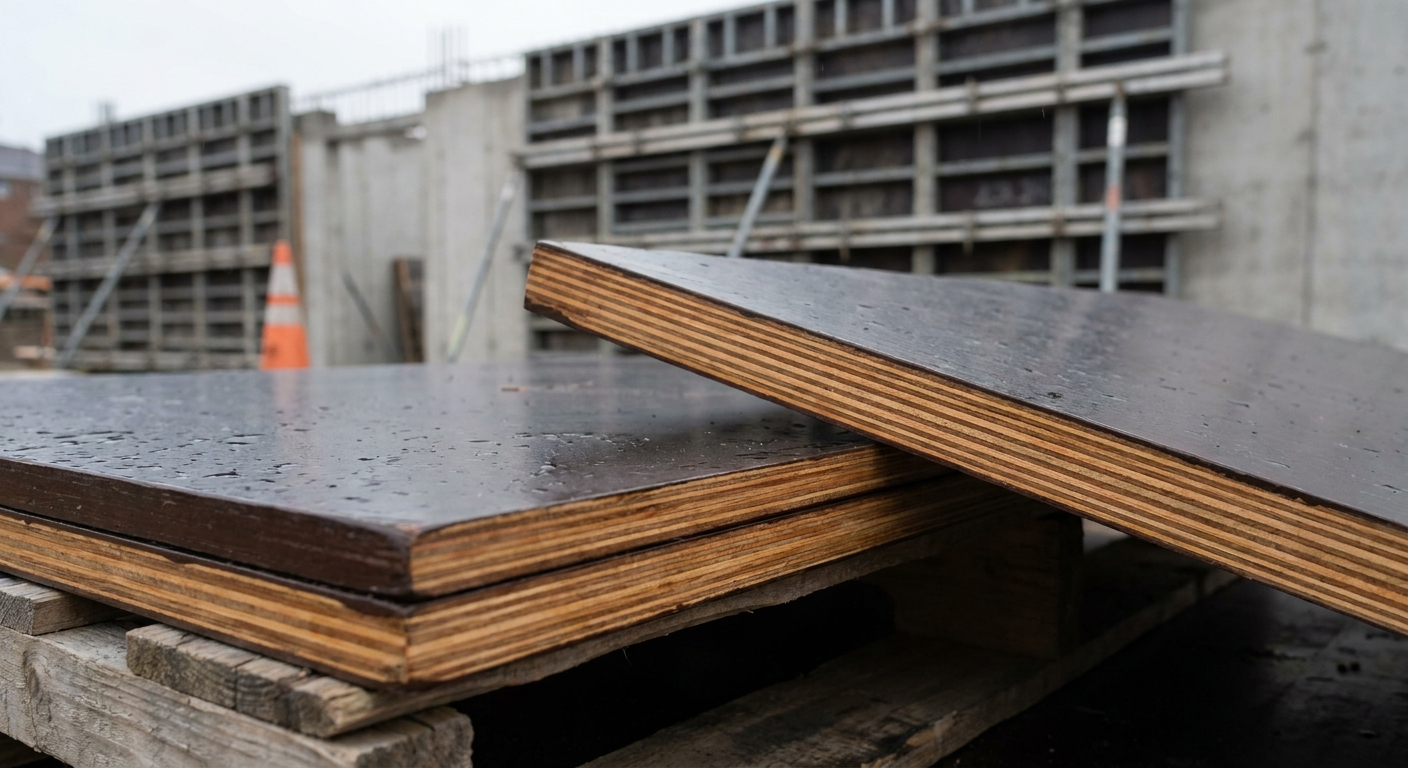
Three layers make the sandwich that arrives on site. A cross-laminated hardwood core is glued with WBP adhesive at every glue line. A phenolic-resin film on kraft paper is pressed onto both faces under heat. Sealed edges keep cut ends from drinking water between pours. Film and core then act as one panel — not a sheet with a coating that peels under alkaline concrete.
The film is thin. It gives the sealed pour face. The plywood stack resists lateral pressure. Writing only "phenolic plywood" without naming face film versus glue line leaves the mill guessing. Use this class when wall, slab, column, or beam formwork has to return for another cycle, or when fair-face concrete has to survive past roughly eight pours. Skip it for painted trim, signage, or one-off lifts where a yard sheet dies after a single pour.
Where film faced plywood shows up on commercial jobs
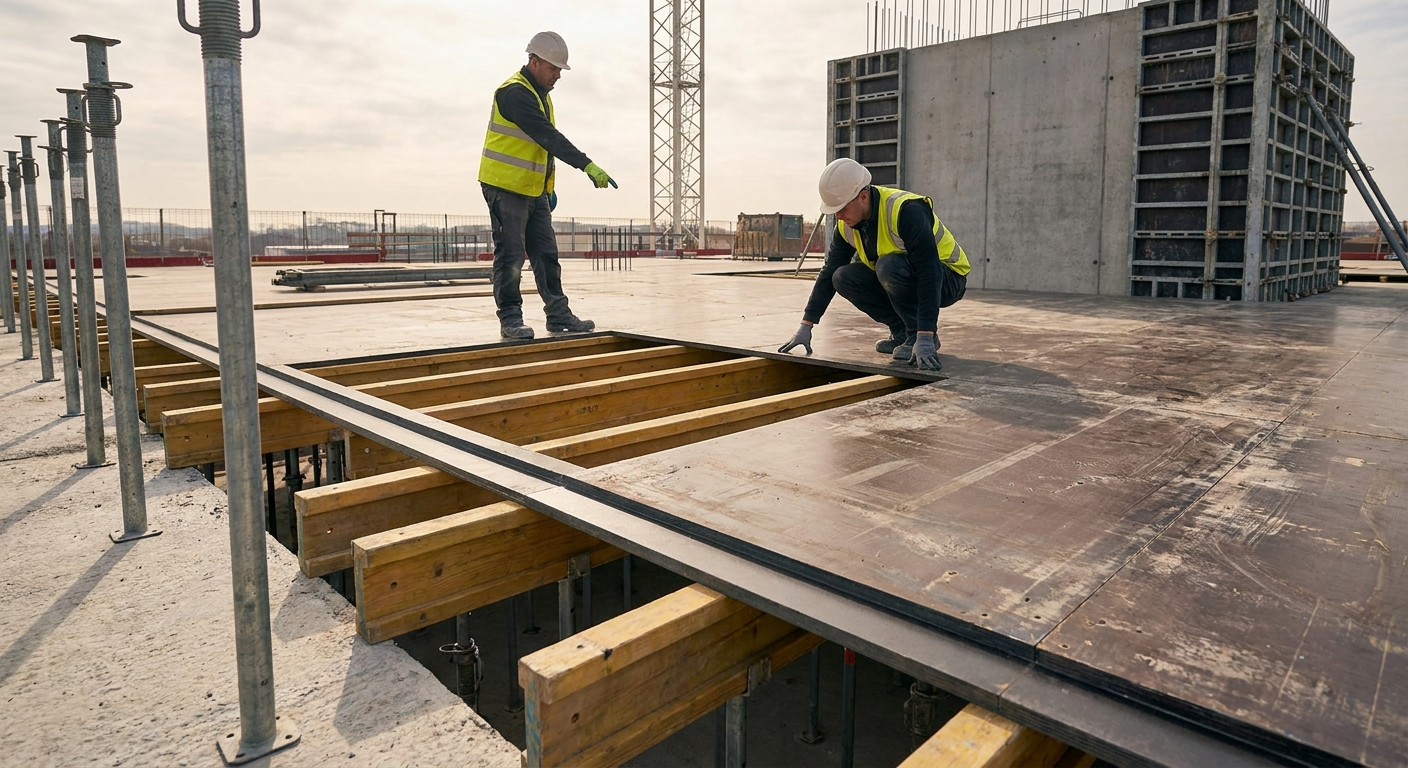
Formwork and shuttering come first. Vertical wall pours on basements, commercial cores, and retaining walls take most of the volume — usually 1220×2440 mm for US and Canadian gangs or 1250×2500 mm for EU equipment. Horizontal slab decking sits as the thin top face on timber bearers or a system table. The sheet is not the structural beam. Column and beam forms use the same sealed face so strip stays clean.
Foundations, stair flights, and awkward returns fill in when a system form does not fit. Anti-slip film variants show up on scaffolding decks. Element-by-element setup belongs on the Soft SoT concrete forming plywood hub. This page stays at panel and programme level so importers can map grade to pour count before they chase sheet price.
Grade comparison: glue, bond class, and reuse
Buyers often mix glue, face film, and product name into one word. Core glue sits between veneers. Face film is the overlay paper. Decorative laminate is a furniture surface. Write the layer on the RFQ.
EN 636-2 covers humid and short outdoor exposure. EN 636-3 / Class 3 is the exterior band that has to survive a boil test. Only PF (phenol-formaldehyde) core glue qualifies a formwork panel for Class 3. High-content MUF clears humid service and stays Class 2 — which is why Form Extra is not Class 3 even when the phenolic face looks the same as a heavier grade.
| Grade | Core glue | Bond class | Reuse (maximum) | Best fit |
|---|---|---|---|---|
| Eco Form Plus | MUF (WBP) | EN 636-2. Not Class 3. | up to 8 | Entry film-faced, short covered cycles |
| Form Basic | MUF (WBP) | EN 636-2. Not Class 3. | up to 10 | Short pour series, residential basements |
| Form Extra | Superior Glue MUF | EN 636-2. Not Class 3. | up to 15 | Mid-range housing; same phenolic face as Form Basic |
| Pro Form Lite | PF (phenolic) | EN 636-3 / Class 3 | up to 15 | Class 3 writing without Pro Form's full ceiling |
| Pro Form | PF (phenolic) | EN 636-3 / Class 3 | up to 20 | Commercial walls, longer outdoor exposure |
| HDO Premium | PF (phenolic) | EN 636-3 / Class 3 | up to 20 | Architectural concrete, US plyform-oriented |
| P-Form | WBP | Confirm on quote | up to 6 | Polypropylene face. Not Pro Form. |
Eco Form Plus is the entry rung many RFQs skip. Pro Form Lite is the mid step US and Canadian tenders miss — same reuse band as Form Extra (up to 15), but PF glue and Class 3 writing. Spec Lite when the tender asks for EN 636-3 without needing Pro Form's up-to-20 programme. P-Form is polypropylene-faced. Consply is commercial Bintangor. Neither belongs on a Class 3 formwork list. Browse the film-faced plywood collection and the phenolic plywood guide when the RFQ says phenolic without naming the overlay.
Why crews keep specifying film faced plywood
The phenolic face resists the alkaline pH of fresh concrete. With a light release agent — or none on the first few pours of a fresh sheet — the panel separates without the wood-on-concrete bond that ruins unfaced plywood. A clean film on a properly tensioned form delivers a smooth, light grey surface with crisp panel-edge imprints. Architectural pours that treat the concrete as the finish usually step up to heavier film or HDO Premium.
Reuse economics decide the spend once the programme clears roughly eight or nine pours. Up to 20 on Pro Form or HDO Premium turns the sheet from a consumable into a tool. Cost per pour, not sheet price, is the number that survives. Painted edges stop water at cut ends. The cross-laminated WBP stack holds lateral pressure on tall wall pours without bowing the way unfaced softwood does after one or two cycles.
Reuse cycles: what "up to N pours" actually means
Every reuse figure is a maximum, not a guarantee. Eco Form Plus: up to 8. Form Basic: up to 10. Form Extra and Pro Form Lite: up to 15. Pro Form and HDO Premium: up to 20 — never stretch Premium past twenty on the label. Crowbar stripping, standing water on the stack, or skipped release agent cut those figures roughly in half.
We've seen the same Pro Form batch clear near 20 pours on a disciplined commercial core and struggle past 12 once it moved through three subcontractors on a housing block. The label never outruns the handling.
Cost-per-pour economics (no invented sheet prices)
Cost per pour is landed panel cost divided by realised pour count. Sheet price alone misleads. A cheaper MUF panel and a Class 3 phenolic panel can land the same cost per pour when the lighter sheet only lasts a handful of cycles. An unfaced CDX sheet that dies after one or two pours often ends up the expensive option once labour and replacement are counted.
Run the arithmetic with your own numbers. Take landed cost — your quote, your freight, your duty — then divide by the pour count you actually expect. Below roughly eight or nine pours, lighter MUF often wins. Above that, Class 3 phenolic usually wins on absolute cost. No retail price table belongs here. For HDO-side math see HDO plywood and HDO plywood cost analysis.
How to choose the best film faced plywood
Start with bond class. EN 636-2 (MUF) covers short outdoor exposure. EN 636-3 (PF) is the line for sustained outdoor exposure and high-reuse programmes. WBP MUF is water-resistant; it is not Class 3. Need Class 3 writing without Pro Form's up-to-20 ceiling? Pro Form Lite. Short covered programme? Eco Form Plus (up to 8) before Form Basic.
Film weight (gsm) comes next. Lighter film covers basic reuse; heavier film extends pour count. HDO Premium at up to 20 is the step for architectural fair-face. Match 1220×2440 mm to US, Canadian, and UK kits; match 1250×2500 mm to EU equipment. Factory-painted edges pay back across the full reuse cycle.
Film faced plywood, MatteFace, and HDO
Film faced plywood carries a phenolic film tuned for concrete release. MatteFace Plywood (MTF) is Vinawood's matte phenolic formwork surface — buyers often search it as MDO, and MDO stays a search bridge only. HDO uses a heavier phenolic kraft overlay for architectural concrete, with HDO Premium written up to 20 pours.
Decision rule for most commercial shuttering: film faced for 5–15 pours of standard formwork, MatteFace when the cast face needs a matte phenolic surface, HDO Premium when architectural concrete sits at the top of the reuse band. See HDO vs MDO plywood comparison without renaming ranking URLs.
Mill vs yard and the RFQ checklist
Manufacturer-direct mill containers let you name grade, thickness, size, film gsm, and bond class on the factory quote — provided the invoice legal name matches the mill test report and packing list. Vinawood distribution warehouses in Toronto, Vancouver, Calgary, Montreal, Miami, Houston, and Baltimore hold ready stock so local distributors can pull film-faced grades without waiting on the next ocean booking. Stocking shortens lead time. It does not replace the mill certificate. Trade yards cover smaller lifts when you need sheets next week, but you still verify grade stamp and edge paint.
Not an exclusive stockist claim. Not a shop-here list. Near-term stock detail sits on where to buy film faced plywood. Canadian mill-sourcing language stays on the protected film faced plywood suppliers in Canada hub. Mill vetting clauses sit on how to vet a film faced plywood manufacturer.
Write these fields before price: grade name (Eco Form Plus / Form Basic / Form Extra / Pro Form Lite / Pro Form / HDO Premium); core glue (MUF vs PF) and bond class (EN 636-2 vs EN 636-3); thickness and sheet size; film weight (gsm); target reuse as your expected pours; emission docs (CARB Phase 2 / EPA TSCA Title VI, FSC-COC, EN 13986 DoP). Ask for a landed quote at /contact?type=quotation or /rfq.
Vinawood film faced plywood range
Vinawood has manufactured plywood in Vietnam since 1992 and exports about 5,000 containers a year to 55+ countries on plantation-grown cores. Eco Form Plus, Form Basic, and Form Extra run MUF at EN 636-2 (up to 8 / 10 / 15). Pro Form Lite, Pro Form, and HDO Premium run PF at EN 636-3 / Class 3 (up to 15 / 20 / 20). P-Form is polypropylene-faced and is not Pro Form.
Standard sizes are 1220×2440 mm and 1250×2500 mm. Common thicknesses are 12, 15, 18, and 21 mm. Certifications include FSC-COC, CARB Phase 2 / EPA TSCA Title VI, ISO 9001, and EN 13986 with CE marking. Browse the film faced plywood collection or send the RFQ through contact or /rfq.
Category
guides
Related Products
▶Sources & References (3)
- APA Plyform - Concrete Forming Panels — APA - The Engineered Wood Association (2024)
- Vietnam film faced plywood: origin, phenolic face, formwork — Vietnam Plywood Atlas (2026-09)
- Film faced plywood manufacturer vetting guide — Vinawood (2026-09-03)