·8 min read
Cross Laminated Timber: Sustainable Building Solutions Explained
The construction industry ranks among the top contributors of carbon emissions, solid waste generation, and raw material consumption globally— thereby mounting pressure on the real estate sector to innovate ways of curbing these. This involves minimizing and offsetting such negative contributions…
The construction industry ranks among the top contributors of carbon emissions, solid waste generation, and raw material consumption globally— thereby mounting pressure on the real estate sector to innovate ways of curbing these. This involves minimizing and offsetting such negative contributions through adoption of more efficient construction techniques and materials low in embodied carbon.
Carbon emissions from the traditional construction materials and methods are colossal. However, as many firms pledge allegiance to Net Zero, Cross Laminated Timber (‘CLT’) emerges as a chance to tackle some of the deep-seated issues in conventionally erected structures. The adoption of CLT has surged over the recent past; major projects across the globe have warmly welcomed CLT into their building design and structure. There are a considerable number of such projects worldwide that are embracing CLT in their buildings' designs. In this article, we will find out information about CLT and see what difference between CLT and normal plywood. Also, it is a chance to learn about Vinawood, a leading plywood supplier in Vietnam.
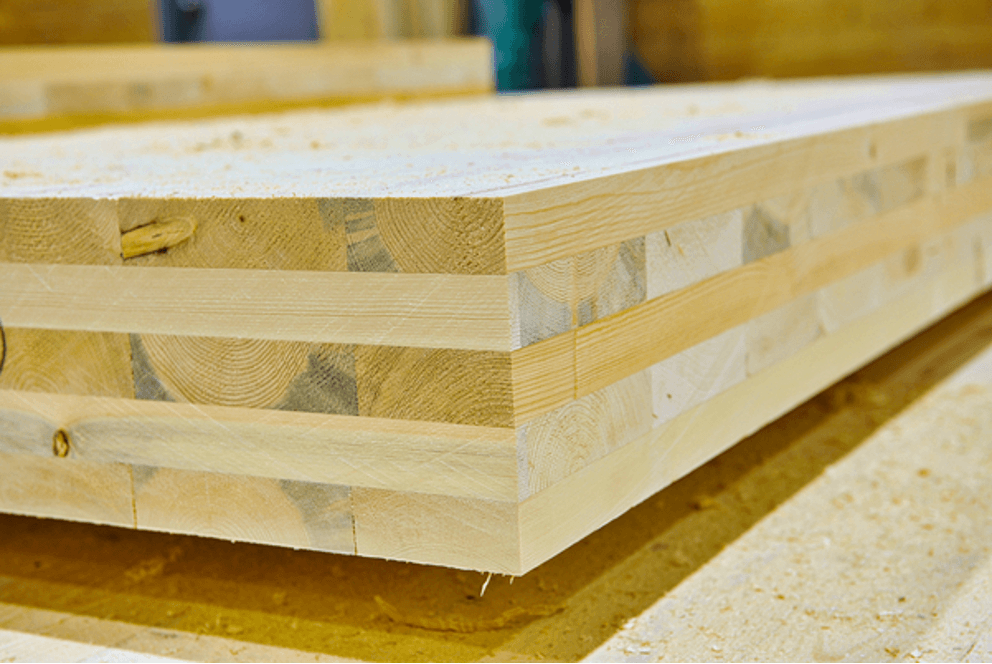 Cross laminated timber
The process of manufacturing CLT begins with careful selection of lumber, removal of any defects, and cutting to appropriate sizes. This is followed by application of adhesive and laying up the panel, after which assembly pressing is done to ensure proper bonding. The panels are then cut to their final dimensions along with any prefabrication requirements before a thorough quality control check is conducted. Only after this inspection are the panels delivered to the construction site.Final quality control is carried out prior to delivery to the building site. CLT panels can be manufactured as custom dimensions, though transportation restrictions tend to dictate their size. CLT is manufactured in a controlled factory setting and must meet specific quality and performance requirements.
The vast majority of CLT panels are made for a specific application with prescribed size, shape, appearance, and machined sections (e.g. recesses, holes, slots). Precise fabrication often relies on building information modeling (BIM) and other prefabrication technologies. Similar to other mass timber products, CLT panels can be topped with concrete to form timber concrete composite (TCC), a hybrid system used to reduce cross sections, increase spans and lessen noise transfer and vibrations.
Cross laminated timber
The process of manufacturing CLT begins with careful selection of lumber, removal of any defects, and cutting to appropriate sizes. This is followed by application of adhesive and laying up the panel, after which assembly pressing is done to ensure proper bonding. The panels are then cut to their final dimensions along with any prefabrication requirements before a thorough quality control check is conducted. Only after this inspection are the panels delivered to the construction site.Final quality control is carried out prior to delivery to the building site. CLT panels can be manufactured as custom dimensions, though transportation restrictions tend to dictate their size. CLT is manufactured in a controlled factory setting and must meet specific quality and performance requirements.
The vast majority of CLT panels are made for a specific application with prescribed size, shape, appearance, and machined sections (e.g. recesses, holes, slots). Precise fabrication often relies on building information modeling (BIM) and other prefabrication technologies. Similar to other mass timber products, CLT panels can be topped with concrete to form timber concrete composite (TCC), a hybrid system used to reduce cross sections, increase spans and lessen noise transfer and vibrations.
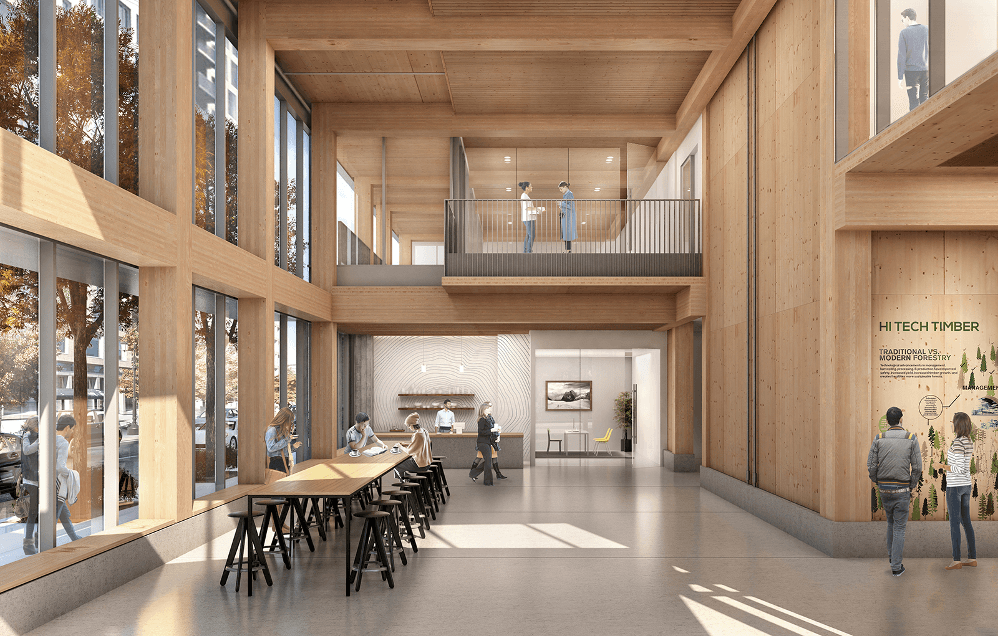 Cross laminated timber in reality
What is cross laminated timber?
CLT stands for cross laminated timber. It is a type of engineered wood product formed by gluing layers of wood panels in different directions using structural adhesives, thereby greatly enhancing strength and stability as construction elements for building walls, floors, and roofs. Cross-laminated timber (CLT) is a type of engineered wood product that is made up of multiple layers of dried-dimension lumber (typically in sets of three, five, seven, or nine) that are laid out perpendicular to each other and then bonded together to create panels with structural capabilities. By bonding these layers at right angles, the panel gains strength and rigidity along both axes. There are instances where the outer laminations are parallel instead of the typical crosswise orientation— this is done under special circumstances. Cross laminated timberWhat are the advantages of cross-laminated timber?
Sustainability
Cross-laminated timber (CLT) primarily uses spruce or other coniferous species, which are renewable resources that grow relatively quickly. This isn't the same as traditional building materials like steel, made from iron ore, or concrete, made from sand. The construction industry consumes the type of sand required for concrete faster than it can be replenished, causing significant harm to the natural environments from which it is mined. In contrast, the wood used in CLT comes from managed forests that undergo regular reforestation. The process of converting wood into CLT requires significantly less fossil fuel burning than the production of traditional construction materials. Recent research indicates a 60% reduction in emissions compared to reinforced concrete structures. Furthermore, timber serves as a far superior carbon store compared to concrete, steel, and masonry. When CLT panels reach the end of their usable life, they can be recycled or repurposed for other uses. Consequently, the demolition process for CLT structures is far less wasteful and hazardous than that for conventional structures. CLT can be used as an alternative to concrete to form the walls, roofs, floors and ceilings of a building, and is particularly well-suited to multi-storey taller wood construction. This can include pre-insulated wall and roof sections. Other applications include cantilevered floors and balconies, load-bearing elevator shafts and stairs. It can be used in virtually any building type from residential and office towers to schools and civic buildings. It can be left exposed for its aesthetic appearance or encapsulated when needed. Lumber in the outer layers of CLT wall panels are normally oriented up and down to maximize its load capacity vertically. Likewise, for floor and roof systems, the outer layers run parallel to the direction of the longer span Compared to solid wood, CLT panels are more stable and less variable in mechanical properties. As for plywood, CLT is made of layers of cross grain, thus they should be less prone to deformations at moisture content variations. Compared to glulam, CLT panels are typically used for box-framed structures, where entire walls and floors serve structural functions. In contrast, glulam structures exhibit a hierarchical design, comprising large glulam elements and secondary level elements.Wellbeing
The importance of well-being in commercial real estate has accelerated over the past decade, especially in the wake of the COVID-19 pandemic. Wooden interiors benefit occupants by regulating humidity levels and temperature, and numerous studies indicate that wood has positive effects on individuals' physical and mental health, such as reducing blood pressure, stress levels, and fatigue. Cross laminated timber in realityEfficiency and Durability
CLT panels have a lifespan of over 50 years and are highly versatile, suitable for walls, floors, furniture, ceilings, and roofs. However, CLT and glulam panels exposed to the outside environment require additional surface treatment. CLT can also be integrated with conventional materials, as demonstrated by recent developments like 6 Orsman Road, a 34,000 sq ft office block in Haggerston completed in 2021, which is a hybrid of CLT, steel, and concrete.What are the disadvantages of cross-laminated timber?
The positive aspects of CLT structures are numerous, but it is important to note that CLT structures are less easy to inspect for potential decay events, such as fungal rot attacks. In traditional solid wood or modern glulam structures, you can check the primary structure first and then move to the secondary elements. In CLT structures, however, everything holds equal importance, making the entire building the focal point of inspections. Here are some of the current disadvantages as adduced in various sources:- CLT is more expensive than steel or concrete
- Code restrictions on timber building heights: Building regulations often limit the height of timber buildings, which can restrict the use of CLT in taller structures
- Costs of electrical, plumbing and other services can increase: Unlike traditional construction methods, CLT structures lack wall cavities, which can lead to higher costs for installing electrical, plumbing, and other services.
- There can be higher architectural/design costs: The unique characteristics of CLT may require more specialized architectural and design services, increasing overall project costs.
- A higher material transportation cost: Due to the relatively few manufacturing plants, transporting CLT materials can be more expensive. Less long-term flexibility: CLT structures may offer less flexibility for future renovations compared to traditional building methods.