19/32 Plywood: Actual Thickness, Common Uses & Sizing Guide
19/32" plywood has an actual thickness of 0.594" (15.1 mm) — not a full 5/8". Learn the common uses, weight, load ratings, and how Vietnam hardwood-core plywood compares to domestic softwood panels.
Put a caliper on a sheet stamped 19/32 and you usually read about 0.594 inches — call it 15.1 mm. The fraction is a nominal class under North American plywood sizing. The mill builds a hair thinner than the name on the stamp, which is normal for PS1-style stock.
Why care? Finish floors, dado depths, and door clearances notice half a millimeter. Sheathing that only has to hold nails usually does not. Write the order in millimeters when the mill is overseas so nobody translates the fraction twice.
Nominal thickness vs what the caliper shows
| Nominal | Typical actual (in) | Typical actual (mm) |
|---|---|---|
| 1/4" | 0.236" | 6 |
| 3/8" | 0.354" | 9 |
| 1/2" | 0.453" | 11.5 |
| 19/32" | 0.594" | 15.1 |
| 5/8" | 0.609" | 15.5 |
| 3/4" | 0.703" | 17.9 |
| 7/8" | 0.859" | 21.8 |
| 1" | 0.953" | 24.2 |
19/32 and 5/8 look like twins on a cut list. They are not interchangeable for flush cabinetry. On a roof deck the difference rarely decides the job.
Jobs that actually call for 19/32
The gauge sits between floppy half-inch and heavy three-quarter. Most buyers land here because they want stiffness without paying full 3/4 weight on every lift.
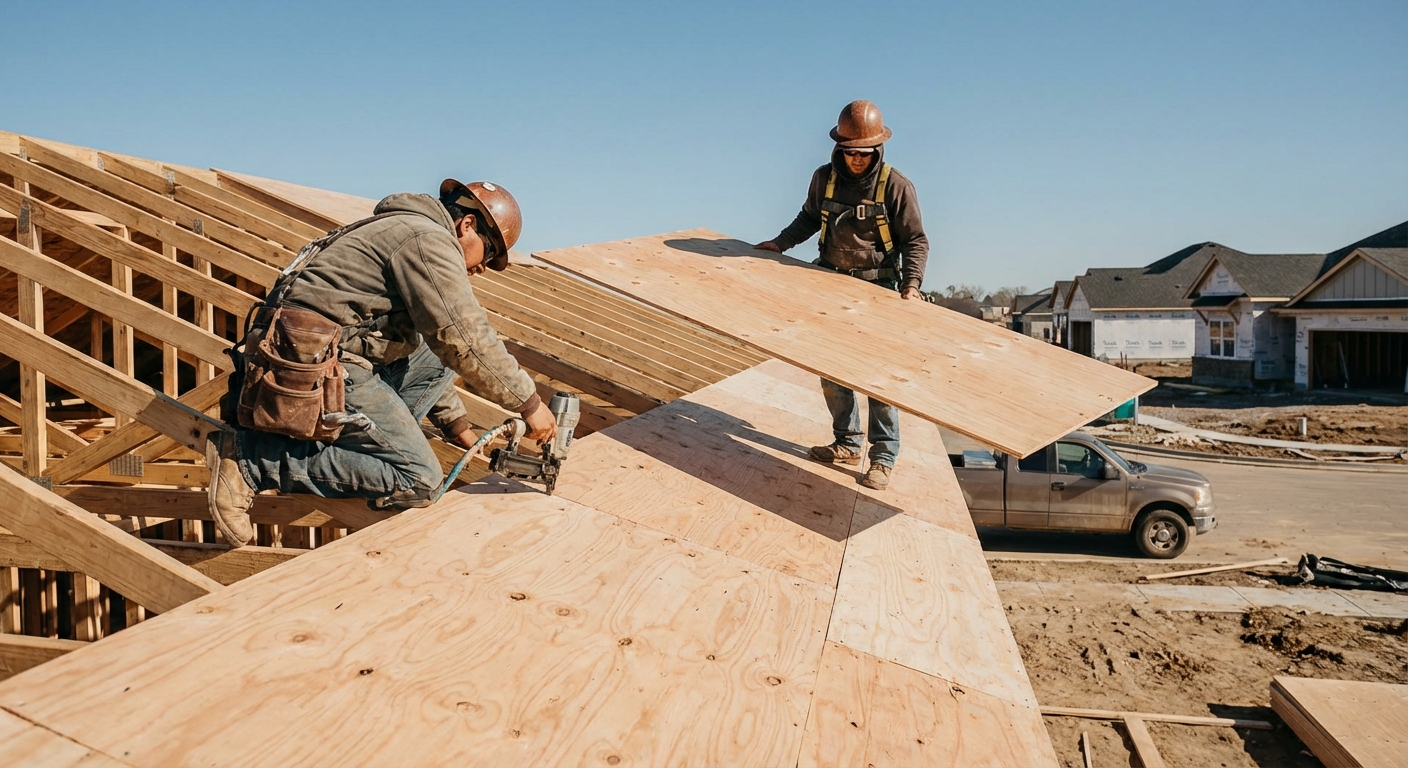
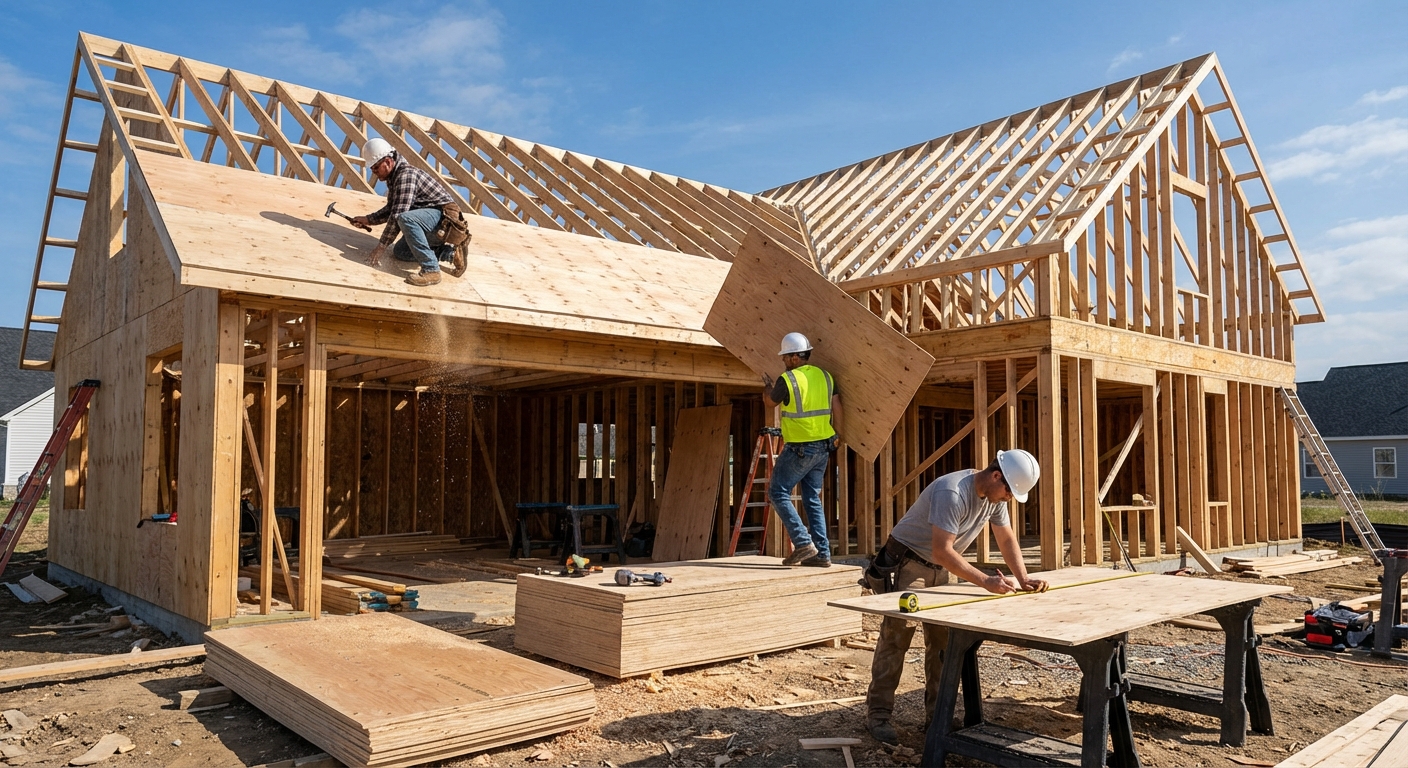
Roof sheathing. APA Structural 1 panels at 19/32 often cover rafter or truss spacing up to 24 inches on center when the span stamp says so. Crews feel less bounce underfoot during dry-in than they do on thinner sheathing. Read the stamp on your lot; the fraction alone is not a span rating.
Subfloors. At 16 inch or 19.2 inch joist spacing, many codes accept 19/32 as a single-layer subfloor under hardwood. Stretch the joists farther and the same panel starts to telegraph bounce. Then you thicken the sheet or tighten the framing.
Wall sheathing. Higher wind or seismic detailing sometimes wants more racking resistance than 7/16 OSB gives. 19/32 plywood is a common step-up for nail withdrawal and panel stiffness in those zones.
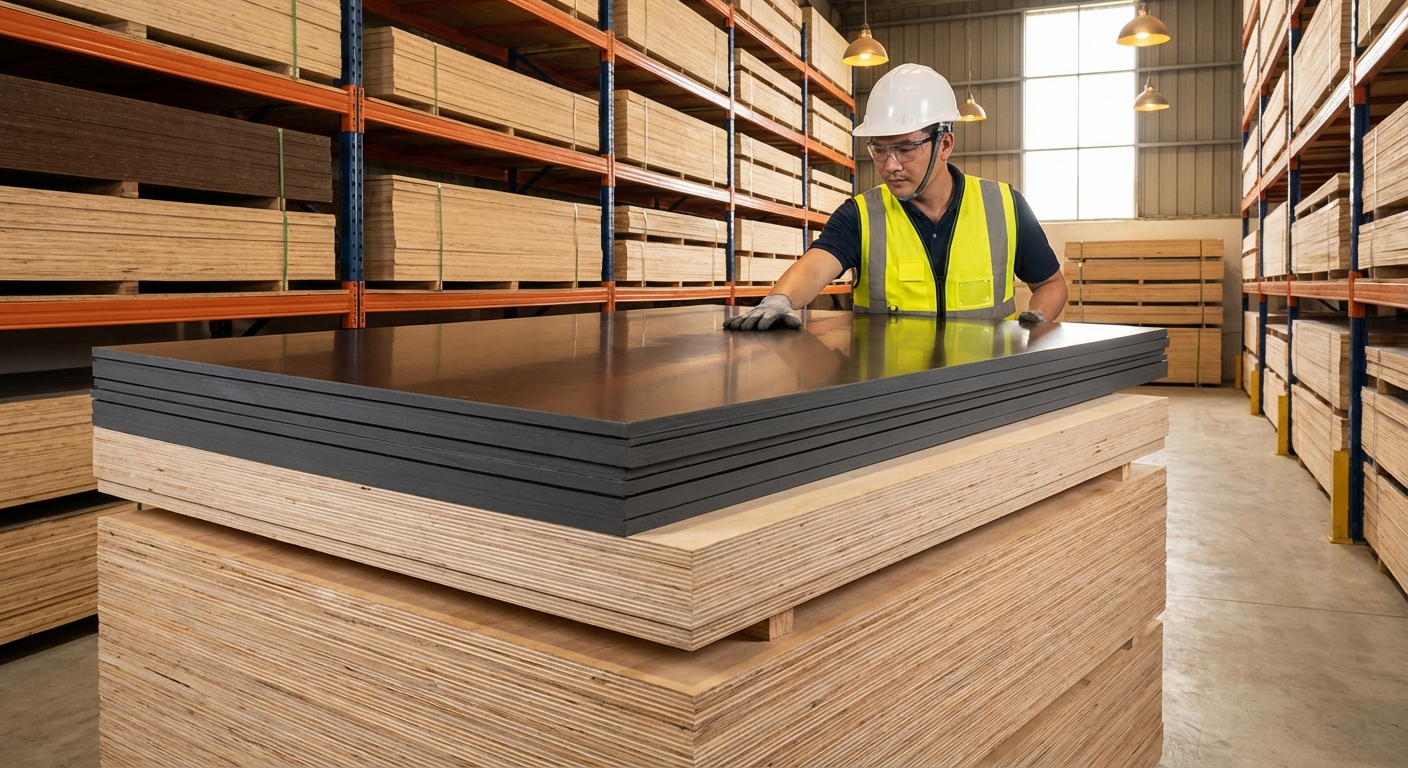
Formwork. Metric programmes treat 15 mm as the everyday twin. Vinawood ships 15 mm film-faced plywood for pours where reuse cycles beat a softwood construction sheet used once. Overlay and glue class belong on the RFQ beside thickness.
Cabinets and custom furniture. A shop that hates flex in a 1/2 back panel will sometimes bump to 19/32 instead of jumping straight to 3/4 across the whole carcass.
19/32 against 5/8
PS1 practice puts 19/32 near 0.594 inches. A 5/8 label often measures closer to 0.609 inches even though the fraction suggests 0.625. Tolerance around ±0.031 inches means some “5/8” sheets are really 19/32 cousins.
Structural crews shrug. Joiners measure. Import buyers skip the fight and write 15 mm or 15.5 mm on the purchase order.
What a 4×8 weighs at this thickness
Softwood CDX: often 40–44 lb. Birch hardwood: closer to 45–50 lb. Vietnam hardwood-core film-faced: commonly 42–48 lb. Marine grades can sit near 46–52 lb. Acacia and eucalyptus cores feel denser than softwood at the same caliper, which is why screw holding usually looks better on those lots.
RFQ fields that prevent wrong trucks
For roof, floor, or wall work, ask for APA-rated stock or whatever structural grade the receiving market accepts. Vietnam export packs often include CE marking (EN 13986), CARB/EPA TSCA Title VI for US destinations, and FSC or PEFC when certified fibre is required.
Hardwood cores (acacia, eucalyptus, poplar) tend to hold screws more evenly than softwood cores. Exterior, roofing, and forming need WBP or phenolic glue. Interior cabinets can stay on moisture-resistant Type II. Visible faces want A or B grade; sheathing can live with C or D.
15 mm from a Vietnam mill
That is the metric sheet behind most 19/32 conversations on import programmes. Vinawood runs 15 mm film-faced and hardwood-core plywood for North America, Europe, the Middle East, and Asia-Pacific. The everyday footprint is 1220×2440 mm. Other sizes ship when the job needs them.
FOB quotes usually clear Ho Chi Minh City or Da Nang. Request a quote for 15 mm panels on a project or a distribution line.
Short answers
Is 19/32 the same as 15 mm?
Nearly. 19/32 inches is about 15.08 mm; a 15 mm mill panel is about 0.591 inches. Under 0.1 mm apart. Fine for sheathing. Still measure for tight joinery.
Subfloor OK?
Yes at 16 inch or 19.2 inch joist spacing when code allows that minimum. Wider spacing wants a thicker panel or closer joists.
Why is retail scarce?
Big-box aisles stock 1/2 and 3/4 first. 19/32 and 15 mm usually come from a distributor or a mill order.
Ply count?
Often five to seven plies. Vietnamese 15 mm panels frequently use seven or nine thin hardwood plies, which tends to leave a flatter face than a five-ply softwood build at the same thickness.