Plywood Glossary A–Z: 110+ Industry Terms Defined
The complete plywood industry glossary — 110+ terms covering grades, adhesive types, formwork terminology, manufacturing processes, wood species, and international standards, all in one A–Z reference.
A
AC Plywood — A-grade veneer on the face and C-grade on the back. Used for interior applications where only one side needs a smooth finish. Read more →
ACX Plywood — A-grade face veneer with X-grade exterior adhesive bonding. Suitable for exterior applications with semi-exposure to weather. Read more →
Adhesive Types — Chemical compounds that bond wood veneers together in plywood manufacturing, including WBP (phenol formaldehyde), MR (moisture resistant), and BWR (boiling water resistant). The adhesive determines the plywood's moisture durability classification.
APA Standards — American Plywood Association grading and performance standards for softwood plywood sold in North America. APA-rated panels carry grade stamps indicating structural capacity and exposure rating.
B
Baltic Birch Plywood — High-quality plywood made from Russian or Eastern European birch veneers, valued for furniture and cabinetry for its strength, uniform core, and fine appearance.
BCX Plywood — B-grade veneer face with C-grade back and X-grade exterior adhesive. Used for exterior applications where appearance and durability are needed. Read more →
Bendable Plywood — Flexible plywood engineered to curve without breaking, commonly used in architectural applications and furniture design. Read more →
Birch Plywood — Hardwood plywood with birch veneer face and back, prized for its fine grain, light color, and suitability for staining and finishing.
Boiling Water Resistant (BWR) — Classification for plywood adhesive that can withstand brief boiling water exposure. Intermediate moisture resistance between MR and WBP grades.
C
CARB P2 — California Air Resources Board Phase 2 certification limiting formaldehyde emissions in composite wood products. The current US standard for hardwood plywood panel emissions.
CDX Plywood — C-grade veneer face with D-grade back and X-grade exterior adhesive. Economy-grade plywood commonly used for concrete forming and structural applications. Read more →
CE Marking — European Conformity certification required for plywood and wood products sold in the EU, indicating compliance with harmonized European standards.
Cladding — Exterior wall covering made from plywood sheets to provide weatherproofing and a finished appearance to building structures.
Cold Press — Manufacturing process using pressure without heat to bond veneers. Produces lower-density plywood compared to hot pressing methods.
Column Form — Temporary plywood formwork structure designed to support vertical concrete pours in column casting applications.
Concrete Forming — Primary construction application of plywood where sheets support wet concrete during structural pouring and curing. Read more →
Concrete Form Plywood — Specialty plywood engineered for concrete forming, typically film-faced, 15–18mm thick, and rated for multiple reuse cycles. Read more →
Cross-Lamination — Manufacturing technique where wood veneers are oriented perpendicular to adjacent layers, dramatically increasing strength and dimensional stability compared to solid wood.
D
Delamination — Failure mode where plywood layers separate from each other due to moisture penetration, adhesive degradation, or mechanical damage.
Density — Measurement of plywood mass per unit volume. Higher density generally indicates greater strength and load-bearing capacity. Read more →
Douglas Fir — Common softwood species used in plywood veneer production. Known for straight grain, high strength, and wide availability in North America.
E
E1 Emission Standard — Formaldehyde emission classification limiting release to ≤1.5 mg/L under Japanese (JAS) testing standards.
Ebony Wood — Dense tropical hardwood with dark coloring and fine grain. Used in premium applications and specialty veneers. Read more →
Edge Banding — Decorative or protective strip applied to exposed plywood edges to improve appearance and seal the cross-laminated grain. Read more →
EN 314 Standard — European standard specifying adhesive bond strength and durability classification for plywood (Class 1–3 corresponding to moisture exposure levels).
EN 636 Standard — European standard classifying plywood by moisture resistance: EN 636-1 (interior dry), EN 636-2 (covered/protected), EN 636-3 (exterior/weather exposed).
Engineered Wood — Composite wood products manufactured from wood particles, veneers, or strands bonded together. Includes plywood, MDF, OSB, and LVL. Read more →
F
F4 Star Rating — The strictest Japanese formaldehyde emission standard, indicating near-formaldehyde-free plywood suitable for sensitive interior environments.
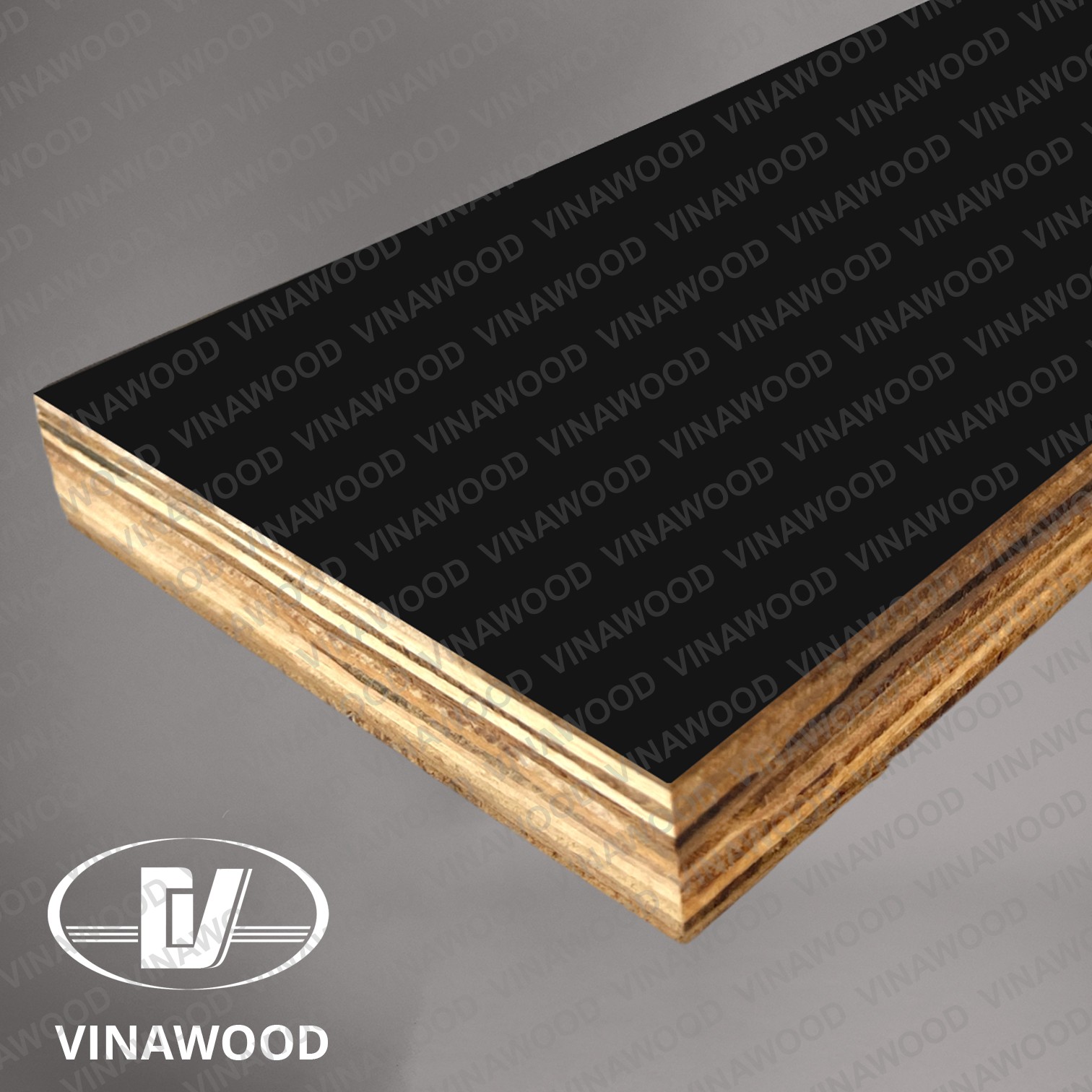
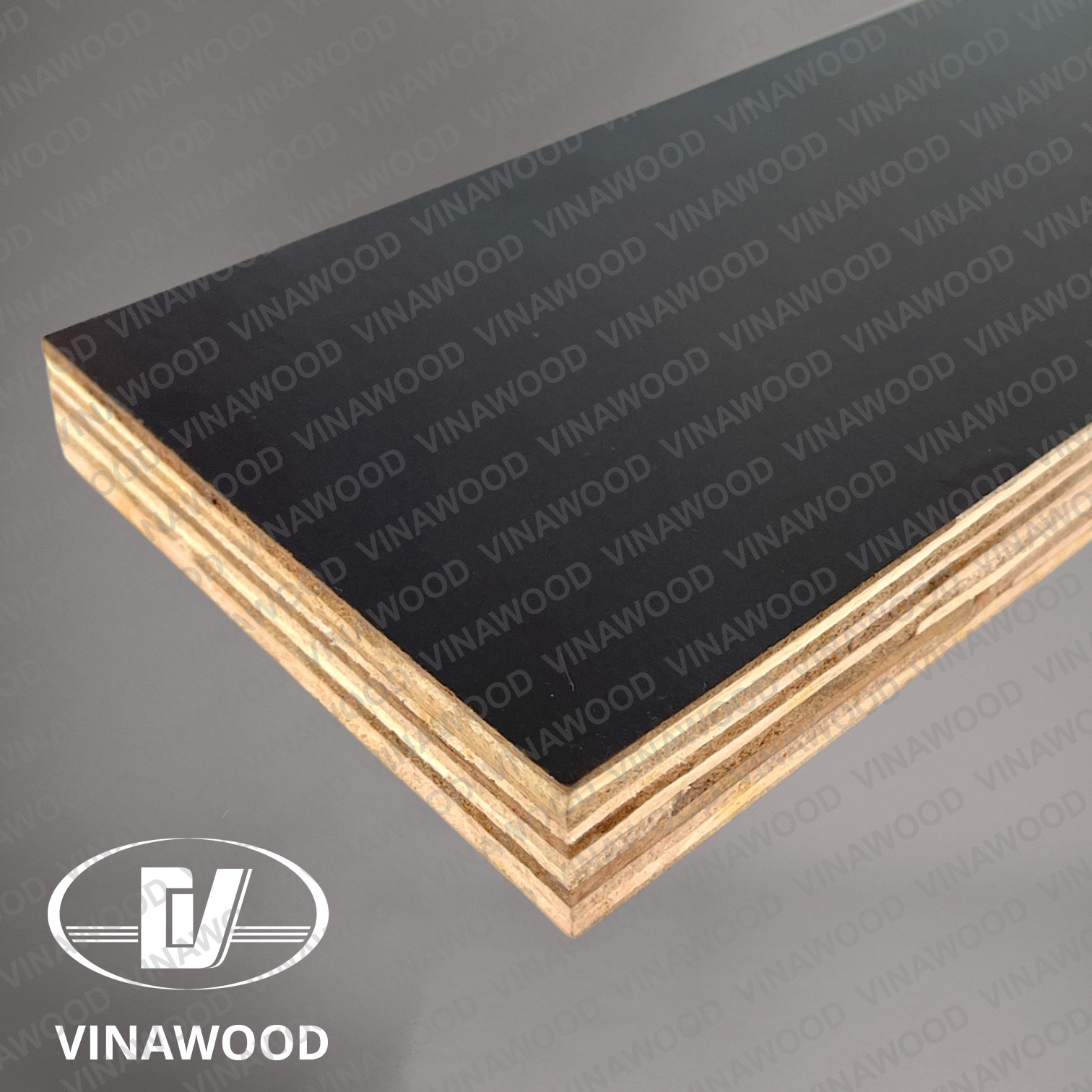
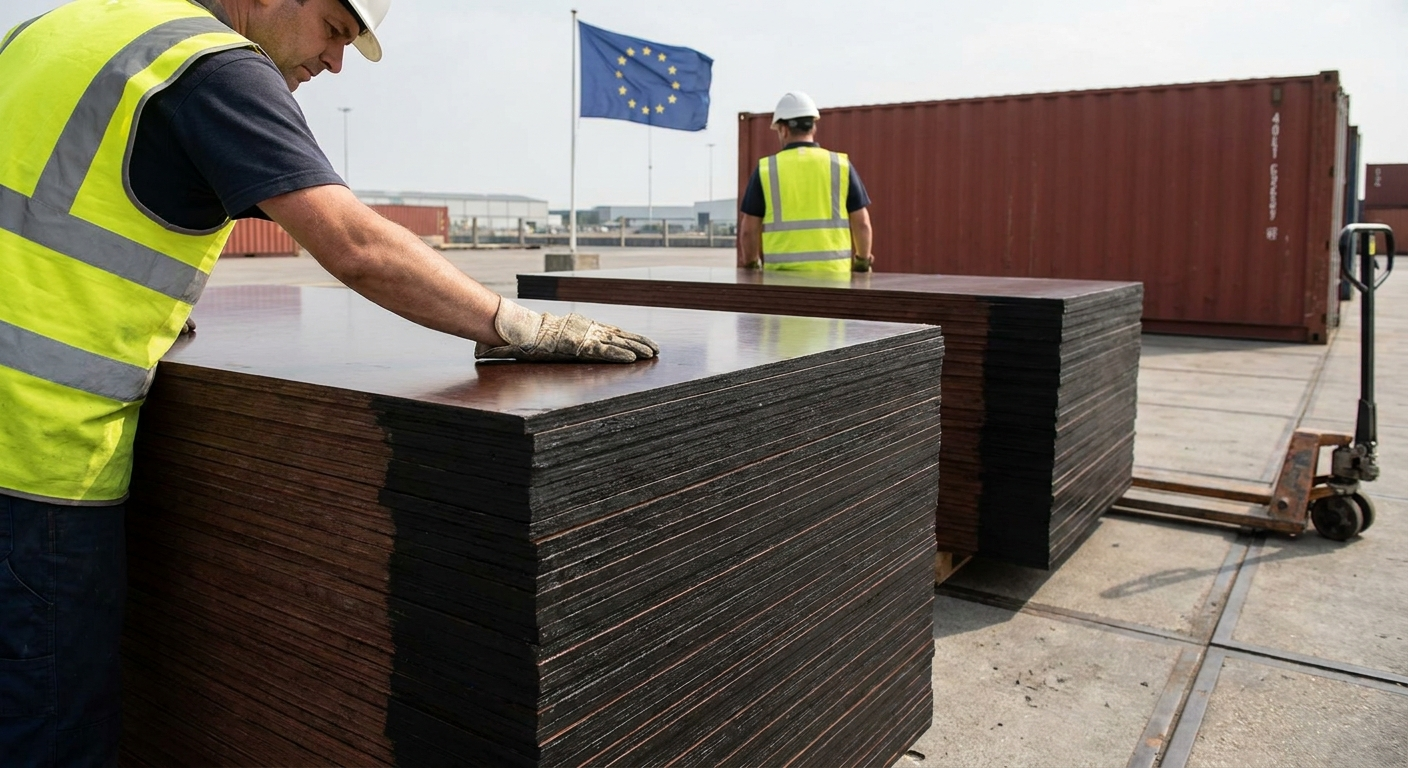
Film-Faced Plywood — Plywood with phenolic resin film laminated to face and back surfaces for exceptional durability, water resistance, and concrete formwork reuse. Read more →
Formwork — Temporary structural framework or mold that supports wet concrete during pouring and curing. Also called shuttering or forms. Read more →
Formwork Panels — Pre-assembled plywood modules designed for rapid concrete formwork assembly and repeated use on construction sites. Read more →
G
Gang Form — Large assembled formwork unit combining multiple plywood sheets and steel frames into a single reusable mold for concrete structures.
Glulam (Glue Laminated Timber) — Engineered wood product made from solid sawn lumber layers bonded with adhesive. Used for beams and structural members larger than individual boards can provide.
Grade Stamp — Certification mark on plywood indicating species, grade, manufacturer, mill number, and applicable standards compliance.
Grain Direction — Orientation of wood fiber in veneers. Cross-laminating alternating grain directions is what gives plywood its superior dimensional stability.
H
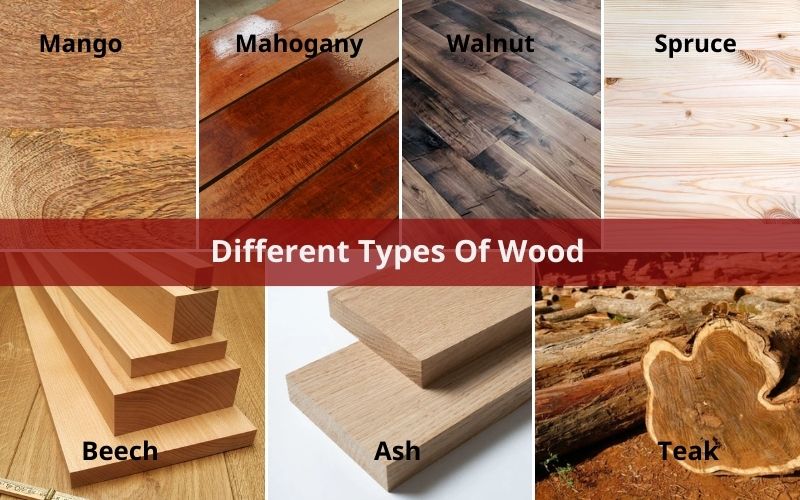
Hardwood Plywood — Plywood made from veneer of hardwood species like oak, birch, mahogany, or walnut. Generally denser and more expensive than softwood plywood.
HDO (High Density Overlay) — Plywood with dense phenolic resin overlay providing an extremely durable, weather-resistant, high-impact surface ideal for signage and demanding applications. Read more →
Hot Press — Manufacturing process using heat and pressure to bond veneers and cure adhesive. Produces higher-density, stronger plywood than cold pressing methods.
I–J
Intermediate Grade — Plywood quality between premium and utility grades, suitable for general construction with minor knots and defects allowed.
JAS Standard — Japanese Agricultural Standards for plywood and wood products, including emission classifications (F4-star, E1) and structural performance ratings.
K
Knots — Natural wood features where branches grew from the trunk. Knots can weaken plywood and are regulated by grade standards — higher grades allow fewer and smaller knots.
L
Laminated Veneer Lumber (LVL) — Engineered wood product made from dried veneers bonded in parallel direction under heat and pressure. Offers exceptional strength-to-weight ratio for structural beams and headers. Read more →
Larch Wood — Conifer wood species known for natural durability and strength. Valued for exterior applications and structural timber. Read more →
Load-Bearing Capacity — Maximum safe weight plywood can support per unit area without structural failure. Varies by thickness, grade, span distance, and support conditions. Read more →
M
Mahogany Wood — Tropical hardwood with rich reddish-brown color and excellent workability. Traditionally used in fine furniture and specialty plywood veneers. Read more →
Marine Grade Plywood — Premium plywood for boat building with 100% solid wood core, exterior-grade WBP adhesive, and minimal internal voids. Must meet BS 1088 or equivalent standards. Read more →
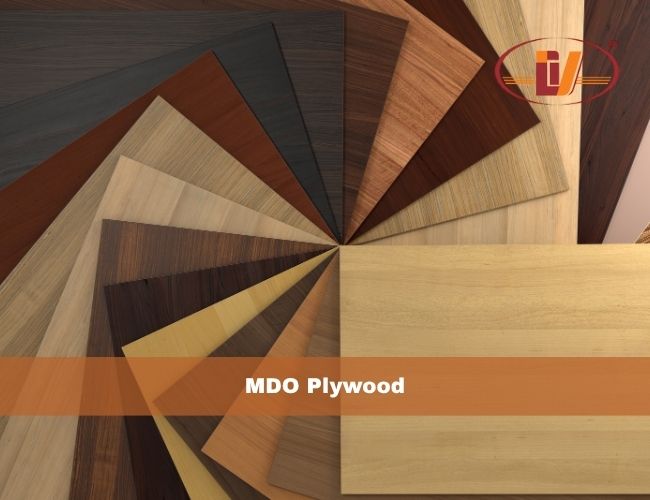
MDO (Medium Density Overlay) — Plywood with kraft paper overlay bonded with phenolic resin, providing a durable, paintable, weather-resistant surface for signs and exterior applications. Read more →
MDF (Medium Density Fiberboard) — Engineered wood product from compressed wood fibers. Not true plywood but used in similar applications for furniture and interior walls. Read more →
Melamine Adhesive — Synthetic adhesive with moderate moisture resistance. Common in interior and light-duty plywood applications where full WBP bonding is unnecessary.
Moisture Content — Percentage of water weight relative to dry wood weight. Controlled during manufacturing to ensure dimensional stability and prevent warping.
MR (Moisture Resistant) — Adhesive classification for plywood designed to withstand periodic wetting and drying without delamination. Suitable for interior and covered exterior use.
N–O
OSB (Oriented Strand Board) — Engineered wood product from compressed wood strands oriented in layers. More affordable than plywood but with lower performance for formwork applications. Read more →
Outdoor Plywood — Exterior-grade plywood manufactured with waterproof adhesive and treated veneer for decking, fencing, and weather-exposed construction. Read more →
P
Particle Board — Engineered wood from wood particles bonded with resin. Lower strength than plywood, used primarily in furniture and non-structural applications. Read more →
Phenol Formaldehyde (PF) — Synthetic thermosetting adhesive providing WBP-level exterior durability and water resistance. The standard adhesive for marine and formwork plywood.
Phenolic Plywood — Plywood bonded with phenol formaldehyde adhesive for maximum moisture and weather resistance. The premium choice for concrete formwork. Read more →
Pine Plywood — Softwood plywood from pine veneer. Readily available, affordable, and suitable for general construction and framing applications. Read more →
Plywood Sizes — Standard sheet dimensions and thickness options. Common sizes include 4×8 ft (1220×2440mm) in thicknesses from 1/4" to 3/4" (6mm to 18mm). Read more →
Poplar Plywood — Lightweight softwood plywood with fine grain and good paintability. Commonly used for interior projects and non-structural applications. Read more →
Pressure Treated Plywood — Plywood infused with preservative chemicals to resist decay and insect damage. Required for ground-contact exterior applications. Read more →
R
Red Oak Plywood — Hardwood plywood with red oak veneer featuring an open grain pattern and warm brown-red color popular in cabinetry and furniture. Read more →
Reuse Cycle — Number of times formwork plywood can be poured against before deterioration. Film-faced phenolic plywood can achieve 50–100+ reuse cycles depending on handling and conditions.
Roof Plywood — Structural plywood for roof decking meeting load requirements and water-shedding performance standards for pitched or flat roof assemblies. Read more →
Rotary Cut — Veneer cutting method where a log rotates against a blade, producing thin continuous sheets. The most economical veneer production method and the standard for construction plywood.
S
Sanded Plywood — Plywood with faces sanded to a smooth finish, improving paint and stain acceptance. More expensive than unsanded grades.
Sheathing — Structural layer of plywood covering wall, roof, or floor framing. Provides lateral bracing and a fastening base for exterior cladding and roofing materials.
Shuttering — British term for concrete formwork. Describes the temporary support structure used during concrete casting and curing.
Sliced Veneer — Veneer cutting method using a large blade in a sawing motion. Produces thicker, wider veneers with more consistent grain than rotary cutting.
Softwood Plywood — Plywood from softwood species like pine, fir, spruce, and larch. Generally less expensive and more widely available than hardwood plywood.
Span Rating — Maximum unsupported distance across which plywood can safely resist loads. Larger spans require thicker plywood or additional structural support.
Stripping — Process of removing plywood formwork from cured concrete structures. Modern methods use crane-lifted mechanical separation rather than manual prying.
Structural Grade — Plywood rated for load-bearing structural applications, meeting minimum strength, stiffness, and durability requirements verified by testing.
Subfloor — Foundation layer of plywood under finished flooring that distributes loads to the structural frame below. Read more →
T
Table Form — Formwork assembly resembling a table that supports horizontal concrete slab pours. Commonly used in multistory building construction.
Thickness Swell — Permanent thickness increase of plywood after prolonged water exposure. A key measure of adhesive and veneer quality.
Tie Bolt — Steel fastener passing through formwork to prevent panel expansion during concrete pouring. Creates characteristic circular holes in the cured concrete surface.
Tongue and Groove — Joint profile where the edge of one plywood sheet has a protruding tongue that fits into the groove of the adjacent sheet, creating seamless floor and roof surfaces. Read more →
Tropical Plywood — Hardwood plywood from tropical species, often with excellent durability properties. Major production regions include Southeast Asia and Africa.
TSCA Title VI — U.S. Toxic Substances Control Act formaldehyde emission limits for composite wood products. Aligned with CARB Phase 2 standards at ≤0.13 ppm.
U–V
Underlayment — Structural layer beneath finished surfaces (flooring, roofing) providing a smooth, stable substrate and moisture barrier. Read more →
Unsanded Plywood — Plywood with unfinished rough faces suitable for structural applications where surface appearance is not critical. Less expensive than sanded grades.
Urea Formaldehyde (UF) — Synthetic adhesive with lower moisture resistance than phenol formaldehyde. Lower cost and lower emissions, suited for interior-only applications.
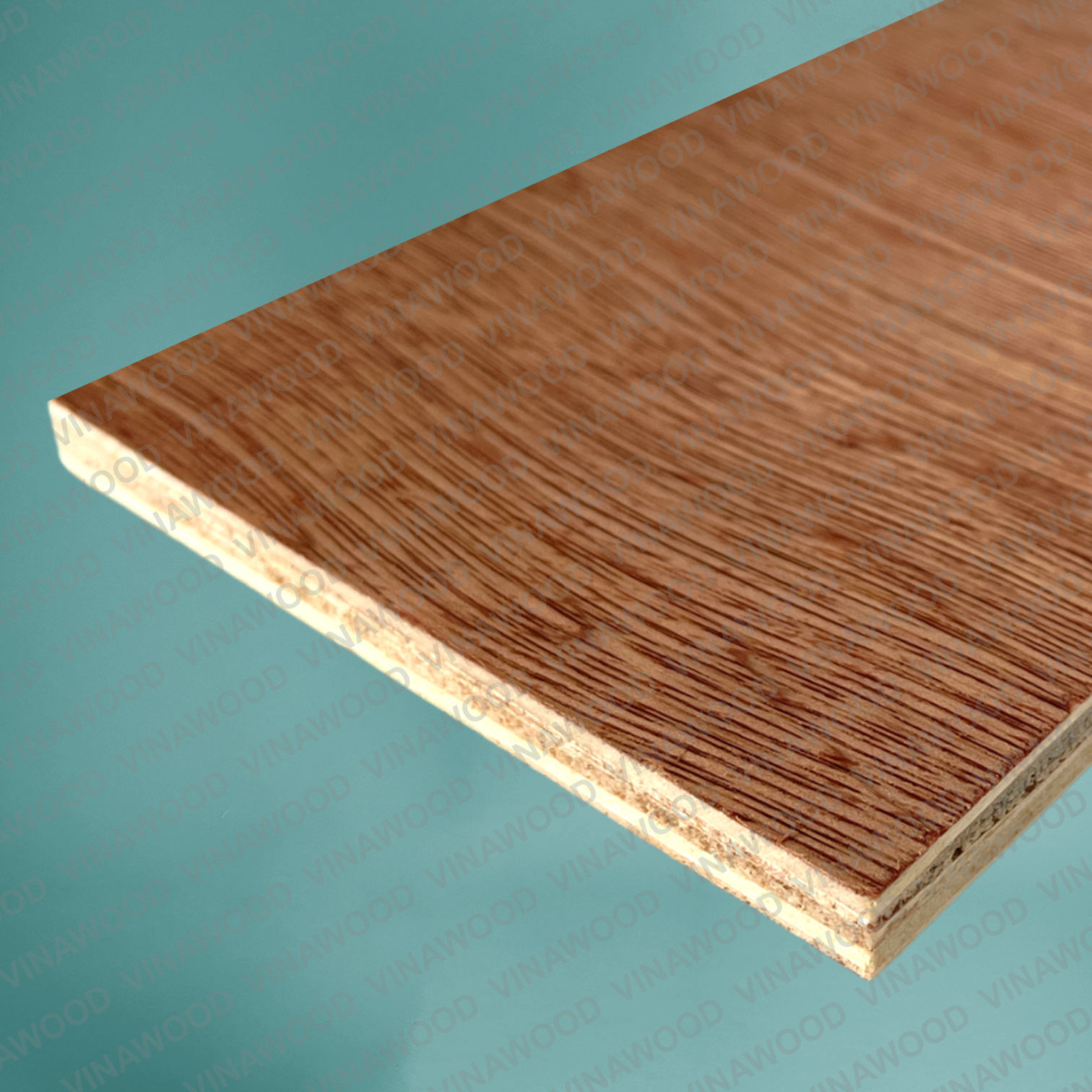
Veneer — Thin continuous sheet of wood produced by rotary cutting or slicing. The primary structural element in plywood — sheets are cross-laminated to create the finished panel.
Veneer Grade — Classification system (A, B, C, D) indicating the level of allowable defects in plywood face, back, and inner veneers.
W
Walnut Plywood — Premium hardwood plywood with walnut veneer featuring rich dark brown color and excellent finishing properties for high-end furniture. Read more →
WBP (Water and Boil Proof) — The highest adhesive durability classification for plywood. Withstands repeated wetting, drying, and boiling without delamination. Equivalent to phenol formaldehyde bonding.
White Oak Plywood — Hardwood plywood with white oak veneer featuring closed grain and distinctive ray fleck pattern, valued for fine furniture and architectural applications. Read more →
Y–Z
Yew Wood — Dense, durable hardwood traditionally valued for furniture and specialty applications. Rarely used in standard plywood production. Read more →
Quick Reference: Veneer Grades
| Grade | Description | Typical Use |
|---|---|---|
| A | Nearly perfect, natural finish ready | Furniture, cabinets, visible surfaces |
| B | Minor defects, solid and paintable | Interior walls, painted projects |
| C | Knots and repairs allowed, structurally sound | Sheathing, subflooring, formwork backs |
| D | Knots and defects throughout | Interior structural, concealed applications |
Quick Reference: Adhesive Classifications
| Classification | Adhesive Type | Moisture Rating | Applications |
|---|---|---|---|
| WBP | Phenol formaldehyde | Full exterior / marine | Formwork, marine, outdoor |
| BWR | Modified phenolic | Boiling water resistant | Covered exterior, wet areas |
| MR | Urea/melamine | Moisture resistant | Interior, furniture, cabinets |
Quick Reference: European Standards
| Standard | Rating | Exposure |
|---|---|---|
| EN 636-1 | Interior dry | Indoor use, controlled climate |
| EN 636-2 | Covered exterior | Protected structures, moderate moisture |
| EN 636-3 | Full exterior | Weather exposed, marine applications |
Quick Reference: Emission Standards
| Standard | Region | Limit |
|---|---|---|
| CARB P2 / TSCA Title VI | United States | ≤0.13 ppm formaldehyde |
| E1 (JAS) | Japan | ≤1.5 mg/L formaldehyde |
| F4 Star (JAS) | Japan | Near-formaldehyde-free |
| CE (EN 13986) | European Union | Varies by class (E1, E2) |
This glossary is maintained by Vinawood, a plywood manufacturer with 30+ years of experience exporting to 55+ countries. Last updated: April 2026.
Category
how-to