VinawoodVinawood *
·1 min read

Characteristics of Plywood

Plywood’s versatility has ensured it an important role in construction, furniture-making and woodcrafts, and the material comes in many shapes and sizes. Plywood can be made of softwood or hardwood, and depending on how the plywood was made and/or treated, it may be particularly well suited to…

Characteristics of Plywood

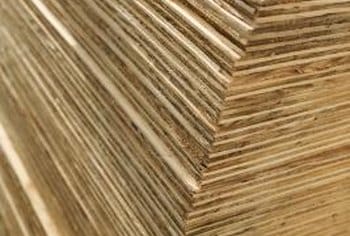
Plywood’s versatility has ensured it an important role in construction, furniture-making and woodcrafts, and the material comes in many shapes and sizes. Plywood can be made of softwood or hardwood, and depending on how the plywood was made and/or treated, it may be particularly well suited to aircraft or marine applications. Some plywood is even faced with real wood for decorative effect. Yet regardless of the type of plywood in question, the material has a set of common characteristics.

Strength

Plywood is a laminate, with multiple layers of wood chips and shavings laid on top of each other and glued together. The strength of the laminate is enhanced by the arrangement of each layer so the grain of the wood alternates, making most types of plywood stronger than an equivalent piece of the same real wood. Plywood is also about twice as resistant to sheering as regular wood.

Cost

Because plywood is made of wood chips and shavings, it can come from the parts of trees that are not suitable for the milling of beams, blocks and boards. As a rule, that makes plywood cheaper than its equivalent in real wood as well, particularly for large-scale applications.

Stability

The alternating grains and use of adhesives in plywood make it as stable or more stable than regular wood. Plywood is sometimes less prone to absorb and/or release moisture, and when it does, the alternating grain pattern resists expansion and shrinkage. As a result, the wood is sometimes more resistant to shrinking and warping.

Flexibility

Because plywood is a manufactured product, it is not limited in the same way real wood is by the size, shape and appearance endowed by nature. Plywood sheets come in a range of thicknesses and, as previously noted, with a wide range of facings as well. Plywood with a smooth veneer can be finished with many of the same finishing products used on real wood.

Vietnam Plywood

Vietnam Film Faced Plywood
Related Articles

View all →
Most Viewed Articles
1

Concrete Form Plywood: Types, Overlay and Bond Class

41 views
2

How much weight can plywood hold? Plywood load capacity chart

36 views
3

Different Types of wood with pictures and Their uses

36 views
4

Top 20 Best Plywood Brands In India (2025)

31 views
5

Plywood Sizes in the Philippines: Standard Sheets, Thicknesses & Conversions (2026)

28 views
Quick Tools
📦CBM Calculator🚢Container Loading💰Landed Cost🔍Plywood Selector📐Packing CalculatorAll tools →
← Back to Blog

Curated by Vinawood

Dive Deeper Into This Topic

Related Reading

Quick Answers

What are the main characteristics of plywood?
Plywood is a cross-laminated panel: thin veneers are glued with the grain of each ply running across the ply below it. That build gives most sheets higher shear resistance than a solid board of the same species and thickness, and it keeps dimensional movement lower when humidity swings. Strength, cost, stability, and usable sheet sizes are the traits buyers compare first.
Why is plywood stronger than solid wood of the same thickness?
Each veneer layer is laid so its grain runs across the previous layer, so a load that would split solid timber along the grain has to fight several directions of fiber at once. That cross-banding is why plywood is often about twice as resistant to shearing as an equivalent solid piece. Glue quality and void-free cores still decide how well that advantage holds on site.
Is plywood more stable than solid lumber?
Yes in most interior and construction uses. Alternating grain directions and the adhesive layers slow and even out expansion and shrinkage when moisture moves in or out of the panel. Warping and cupping are less common than on a solid board of the same width, though open edges and extreme wet storage can still move a sheet.
Why is plywood often cheaper than solid wood?
Mills can use veneer from logs and sections that would not yield long clear beams or wide boards. Chips and thin peels become usable face and core stock, so large sheets cost less per square foot than equivalent solid lumber. Grade, species, and glue class still set the price band — decorative hardwood faces cost more than construction softwood cores.
Can plywood be used outdoors or in wet service?
Only when the glue class and face match the exposure. Interior urea-bonded sheets are for dry interiors; WBP or phenolic bonds and film or marine constructions are what wet pours and exterior cycles need. The word waterproof is the wrong claim — water-resistant bond class plus sealed edges is the accurate RFQ language.
What thicknesses and facings does plywood come in?
Sheets are manufactured across a wide thickness range and with softwood, hardwood, or decorative veneer faces, so one product family covers sheathing, cabinetry, and formwork overlays. Common North American sheets are 4×8 ft; metric 1250×2500 mm is common on export film-faced lines. Pick thickness and face for the load and finish, not for a single “universal” sheet.