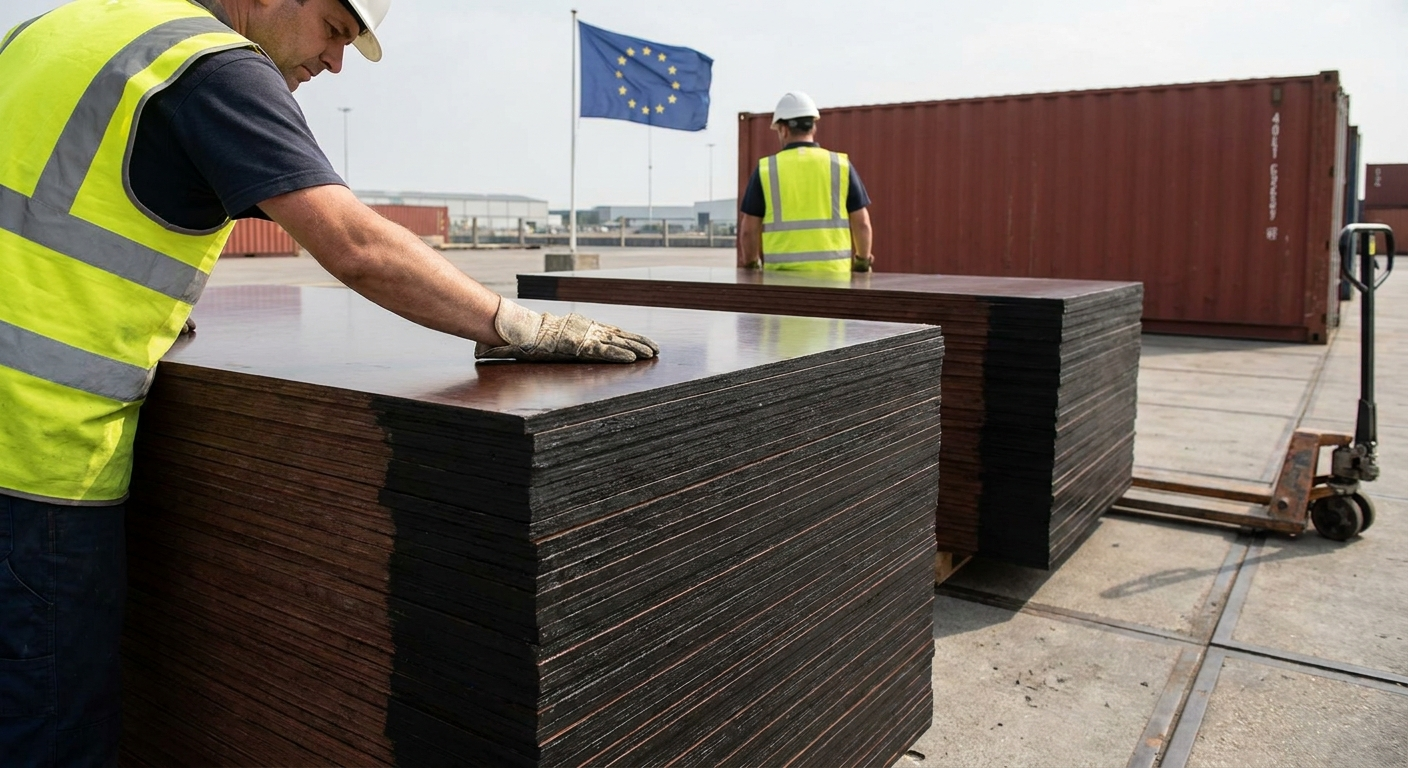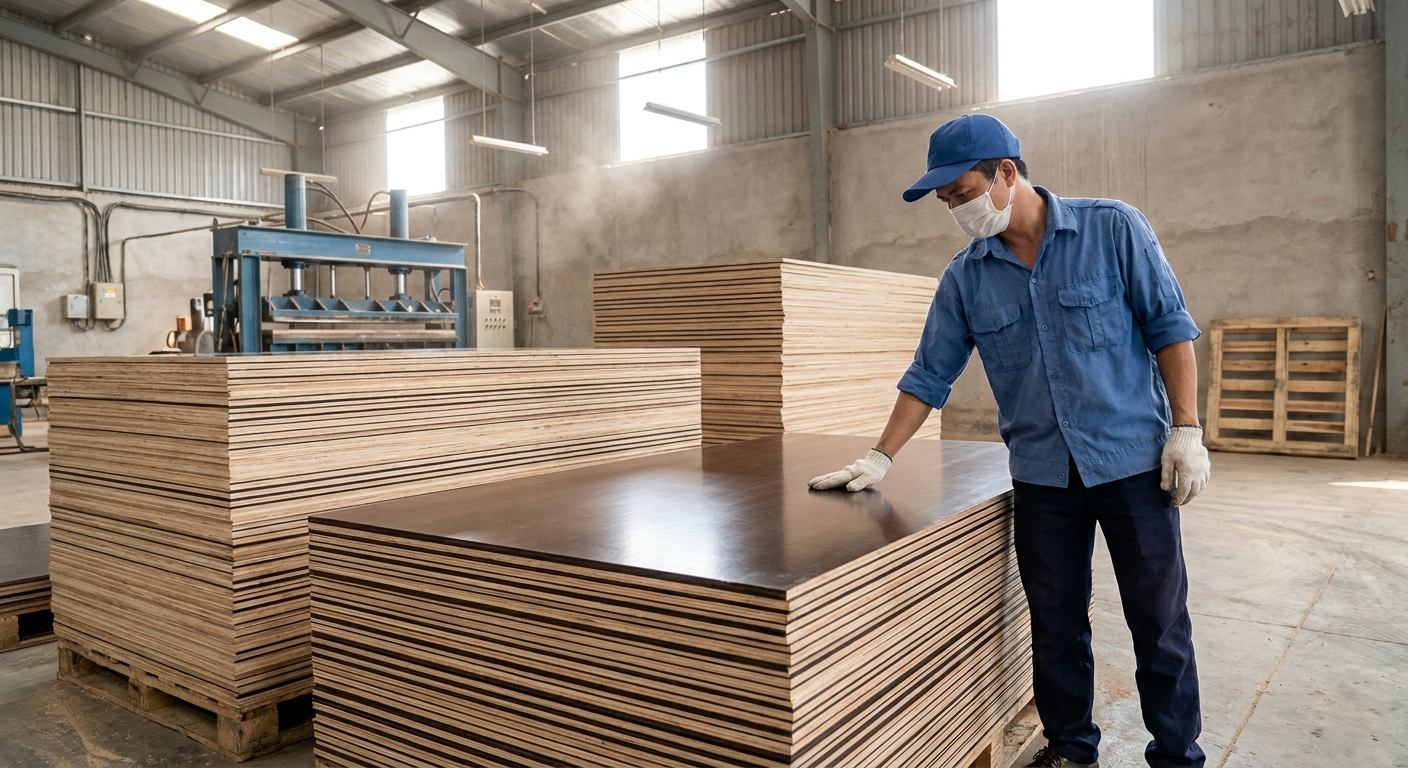
Softwood Plywood: Species, Grades, Uses & When to Specify It
Softwood plywood (CDX, BC, sanded AC) is the structural workhorse of North American framing. This guide explains face species, APA grades, span ratings, when to specify it, and the point at which a plantation hardwood-face panel earns its higher cost.
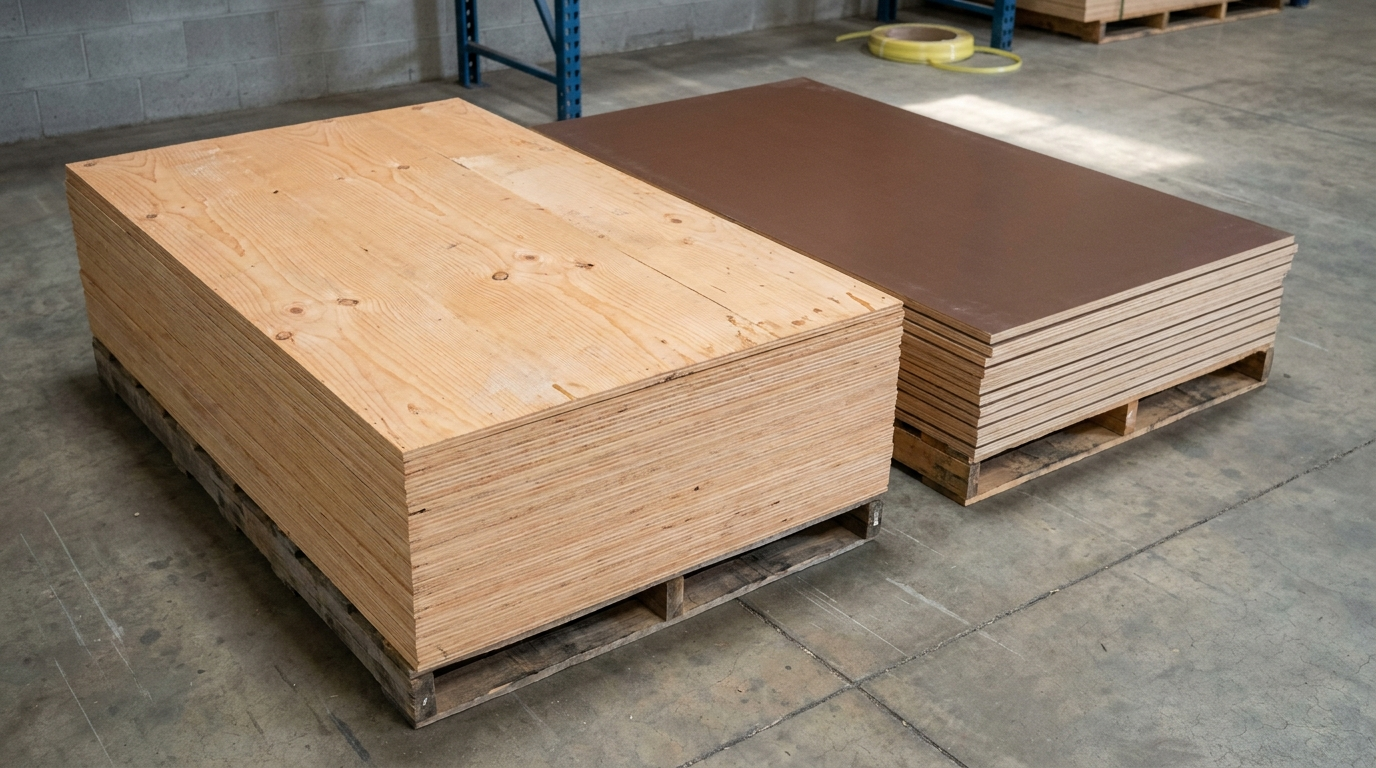
If a project drawing or supplier quote calls for "softwood plywood", the buyer is making a choice about face species, bond class, and price tier — all in one phrase. The phrase covers a wide spectrum: CDX wall sheathing at one end, sanded AC siding at the other, and a long middle of subfloor, roof decking, and packing-grade panels in between. The question this guide answers is not whether softwood plywood is "good," but where it fits and where a higher-density face panel makes more sense.
What softwood plywood actually is
Softwood plywood is a panel whose face and back veneers come from softwood species. In North America that almost always means Douglas fir or southern yellow pine, with spruce, hemlock, cedar, or redwood appearing in regional supply. The core can be the same species, or it can be a mixed-species cross-band assembly bonded under heat and pressure.
What makes a softwood panel a softwood panel is the face stamp — not the entire lay-up. A combination-core panel with a Douglas fir face and a poplar inner ply is still classified and sold as softwood plywood, because the face controls grading, span rating, and how the sheet behaves on the saw.
In the US, softwood plywood is governed by APA – The Engineered Wood Association under product standards PS 1 (construction and industrial) and PS 2 (performance-rated structural panels). Both standards specify veneer grading, glue bond, and dimensional tolerance. They do not specify density of the wood itself, which is one reason two CDX sheets from different mills can feel meaningfully different in the hand.
Softwood plywood grades — reading the APA stamp
APA stamps look busy at first read, but each block on the stamp carries one fact. Face grade letters (A, B, C, D) describe veneer appearance and the allowable defects. A is sanded smooth with minor patches; D is unsanded with knots and splits up to a defined size. The grade is written as a pair, face/back: AC is an A-face over a C-back, BC is B over C, CDX is C-face over D-back with Exposure 1 glue.
The exposure rating sits on a separate line. Exterior means the bond can stay wet permanently; Exposure 1 means the bond survives extended construction exposure but the panel is intended to be enclosed; Exposure 2 is interior with brief construction wetting; Interior is dry-service only. CDX, despite its name, is an Exposure 1 panel — the X stood for "exposure", not exterior.
Span rating is the pair of numbers like 24/16 or 32/16 stamped on sheathing-grade panels. The first number is the maximum roof-rafter spacing in inches, the second is the maximum floor-joist spacing. A 32/16 panel can span 32" on rafters and 16" on joists. That single stamp replaces a lot of back-and-forth with the engineer of record on routine framing.
| Face grade pair | Typical use | Surface |
|---|---|---|
| AA / AB | Cabinet backs, paint-grade finish work | Sanded both sides |
| AC | Siding, exposed underlayment | Sanded face, rough back |
| BC | Painted finish, hidden underlayment | Sanded face |
| CDX | Wall and roof sheathing, subfloor | Unsanded, Exposure 1 |
| Sheathing CC | Structural sheathing | Unsanded, no patches |
Where softwood plywood is the right call
Softwood plywood does most of the structural work in North American light-frame construction. Walls, roofs, and floors are sheathed and decked in CDX or rated sheathing. Subfloor underlayment, packing crates, temporary work platforms, light shop fixtures, and concrete pour decking on small jobs all live in the same product family.
The common thread across those uses is that the surface either stays hidden or gets covered with another finish: drywall, roofing felt, finished flooring, paint. Buyers paying for the panel are buying span rating, fastener-holding strength, and a known stiffness curve — not face appearance or repeated reuse.
That changes the moment a job needs a visible face, a fair-faced concrete finish, or more than a handful of pour cycles from a forming panel. At that point softwood plywood stops being the cheapest answer and starts being a false economy.
Softwood plywood vs hardwood plywood — different envelopes, not better or worse
Comparing softwood and hardwood plywood as if one is "better" misses how they sit in the market. Each one solves a different problem. The face species and density set the panel's natural application envelope.
| Property | Softwood plywood | Plantation hardwood-face plywood |
|---|---|---|
| Face species | Douglas fir, southern yellow pine, spruce | Acacia, eucalyptus, hevea (plantation-grown) |
| Face hardness (Janka, lbf) | Doug fir ≈ 660, SYP ≈ 690 | Acacia ≈ 1,750; eucalyptus ≈ 1,125 |
| Surface finish out of press | Open grain, often patched | Tighter grain, denser face plies |
| Typical reuse cycles in formwork | 2–5 | Up to 20 (Class 3 phenolic-film overlay) |
| Common applications | Sheathing, subfloor, packing | Concrete formwork, visible finish, marine, cabinetry |
| Price bracket | $ lower | $$ to $$$ for film-faced grades |
We've seen this routing pattern in our own export volumes. Buyers in the US Midwest who come to us for sheathing are usually better served by their local lumberyard's domestic CDX; buyers asking for sheathing "but with a smoother face that will last more than one pour" are the ones we route to plantation hardwood-face panels.
When softwood plywood is the right answer
Three jobs almost always come out cheaper with softwood plywood, and trying to upgrade the panel rarely pays back. Wall and roof sheathing is the first: an engineer sizes the panel by span rating and nailing schedule, not face appearance, so paying for a denser face is wasted spec. Subfloor under finished flooring is the second: the carpet, vinyl plank, or hardwood layer hides the panel face entirely. Packing crates and pallet decks are the third: those panels live one trip, get crushed by a forklift, and end up in a recycling stream.
If a project sheet calls for any of those uses by name, a sanded hardwood-face panel is a budget mistake, not a quality upgrade.
When to step up to plantation hardwood-face plywood
The point where softwood plywood stops being the answer is usually a surface or a reuse claim. Concrete formwork is the textbook case. A CDX panel can form one slab edge and walk away with a stripped face; it cannot deliver the matte, void-free finish a fair-faced wall needs, and it cannot survive 10 or 20 pours without the face plies lifting at the film line.
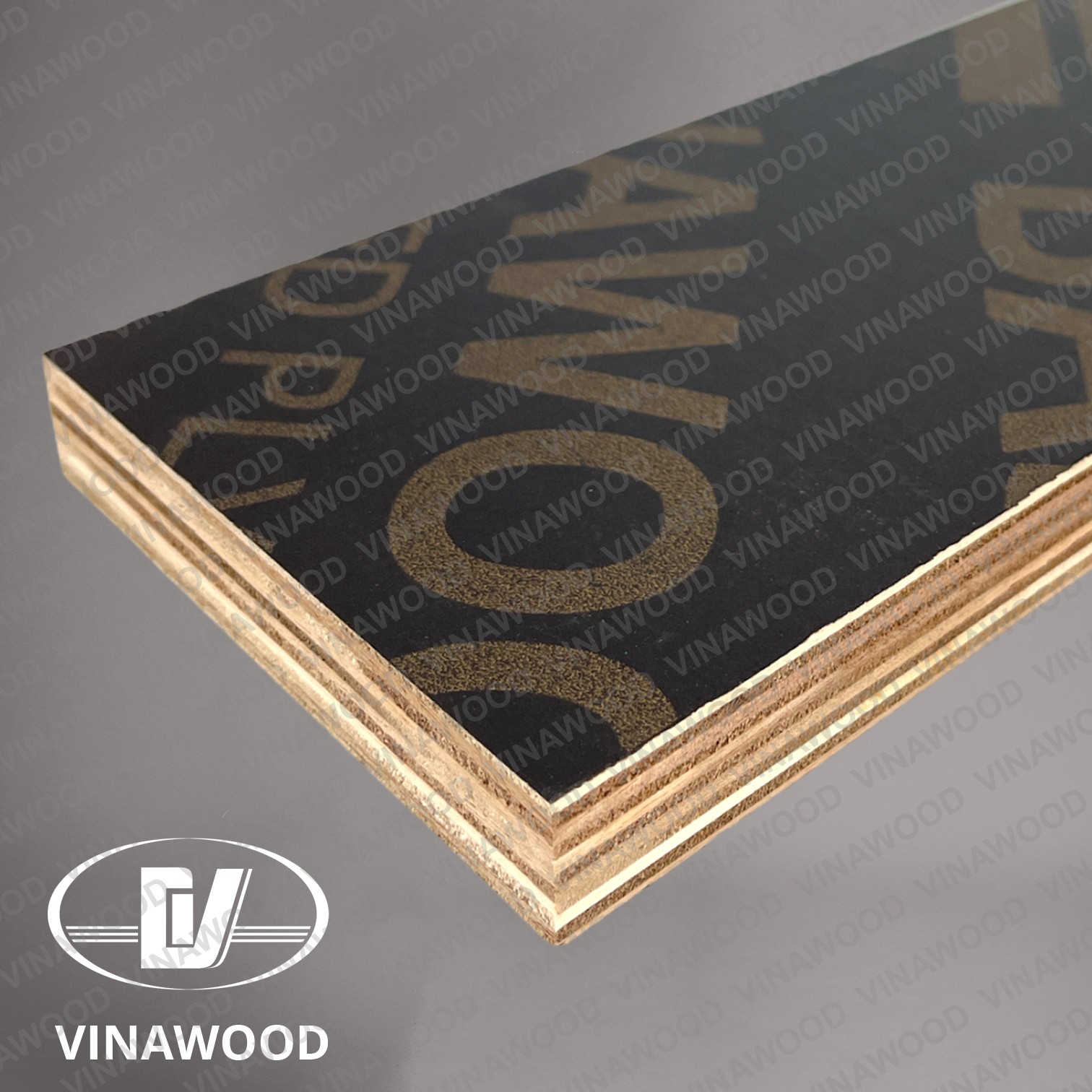
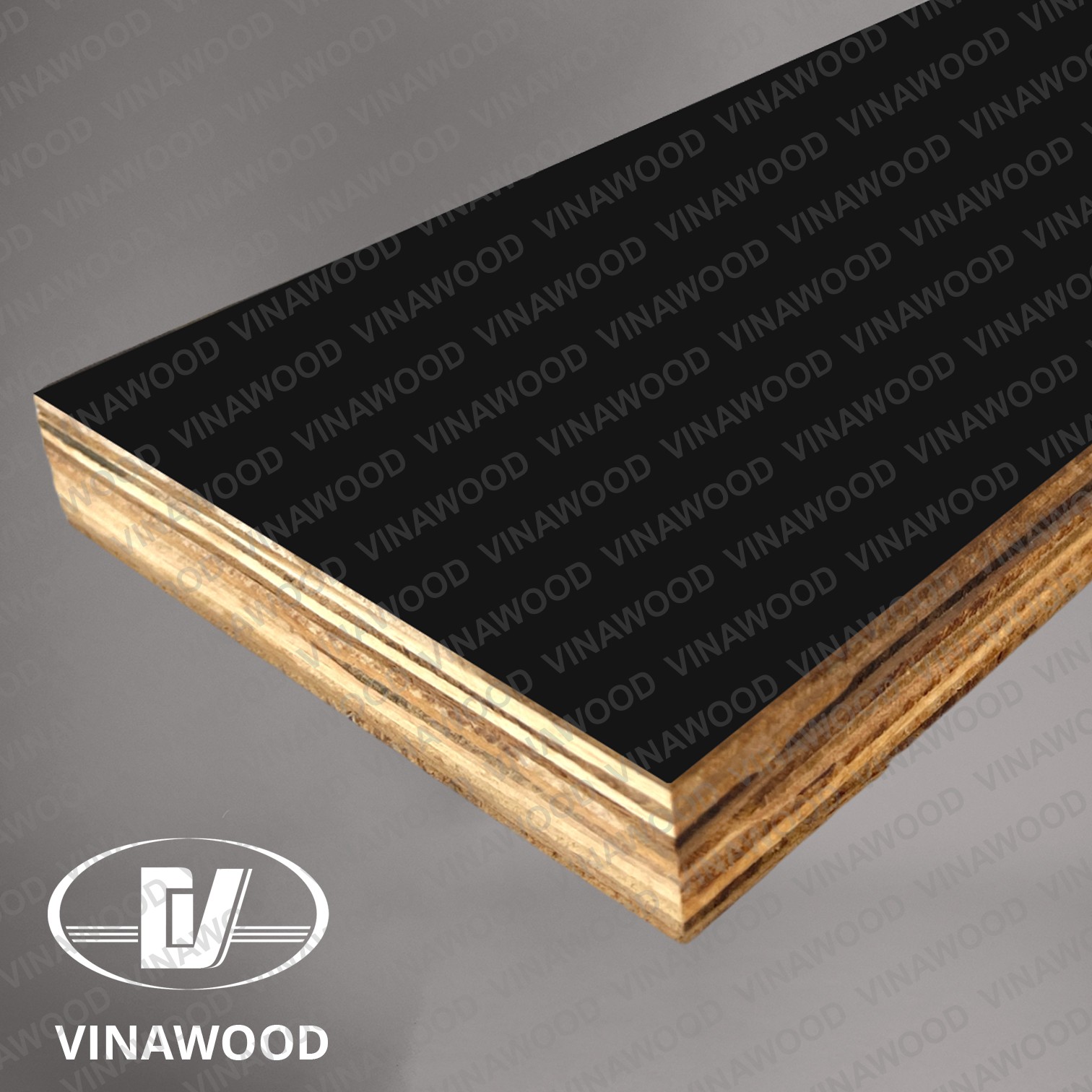
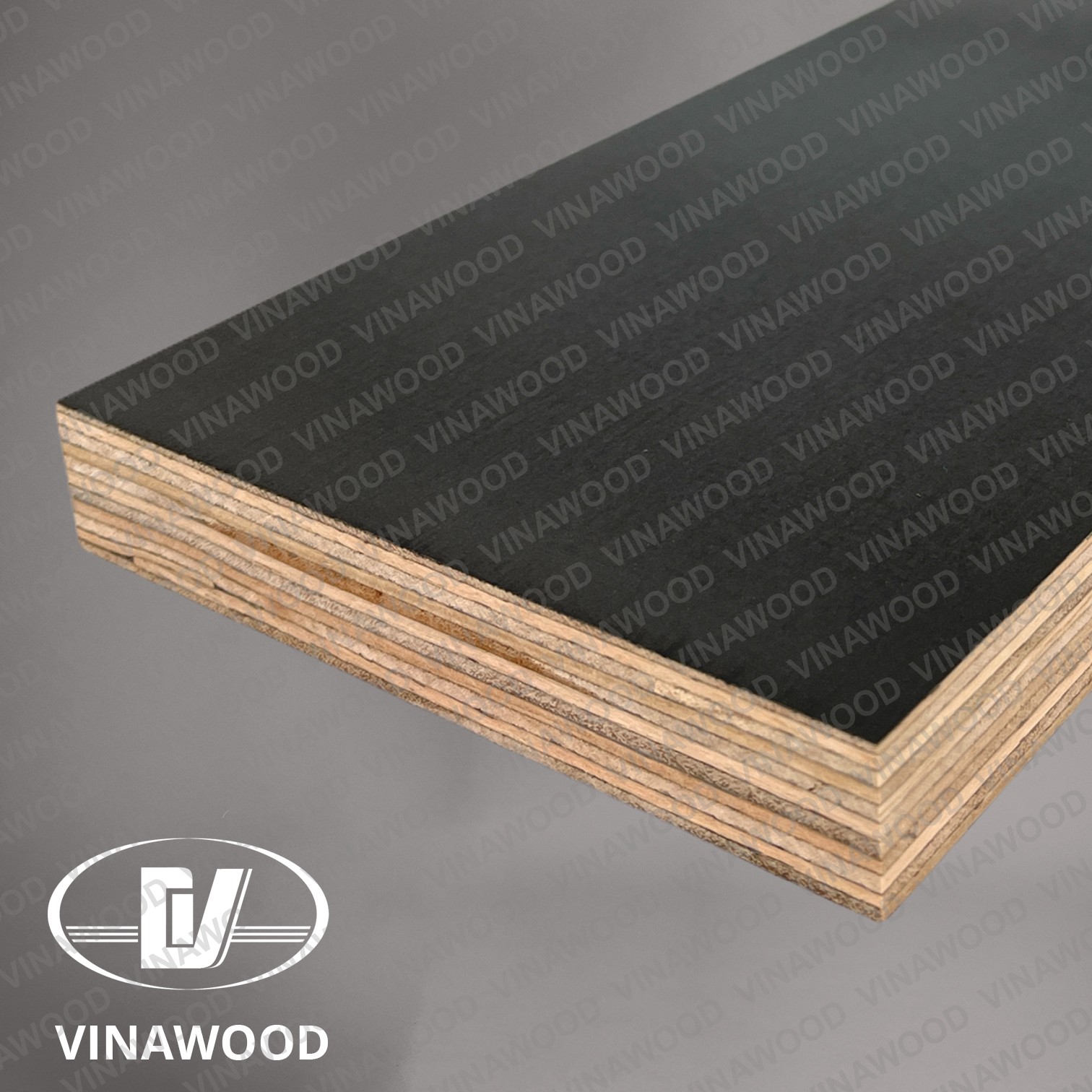
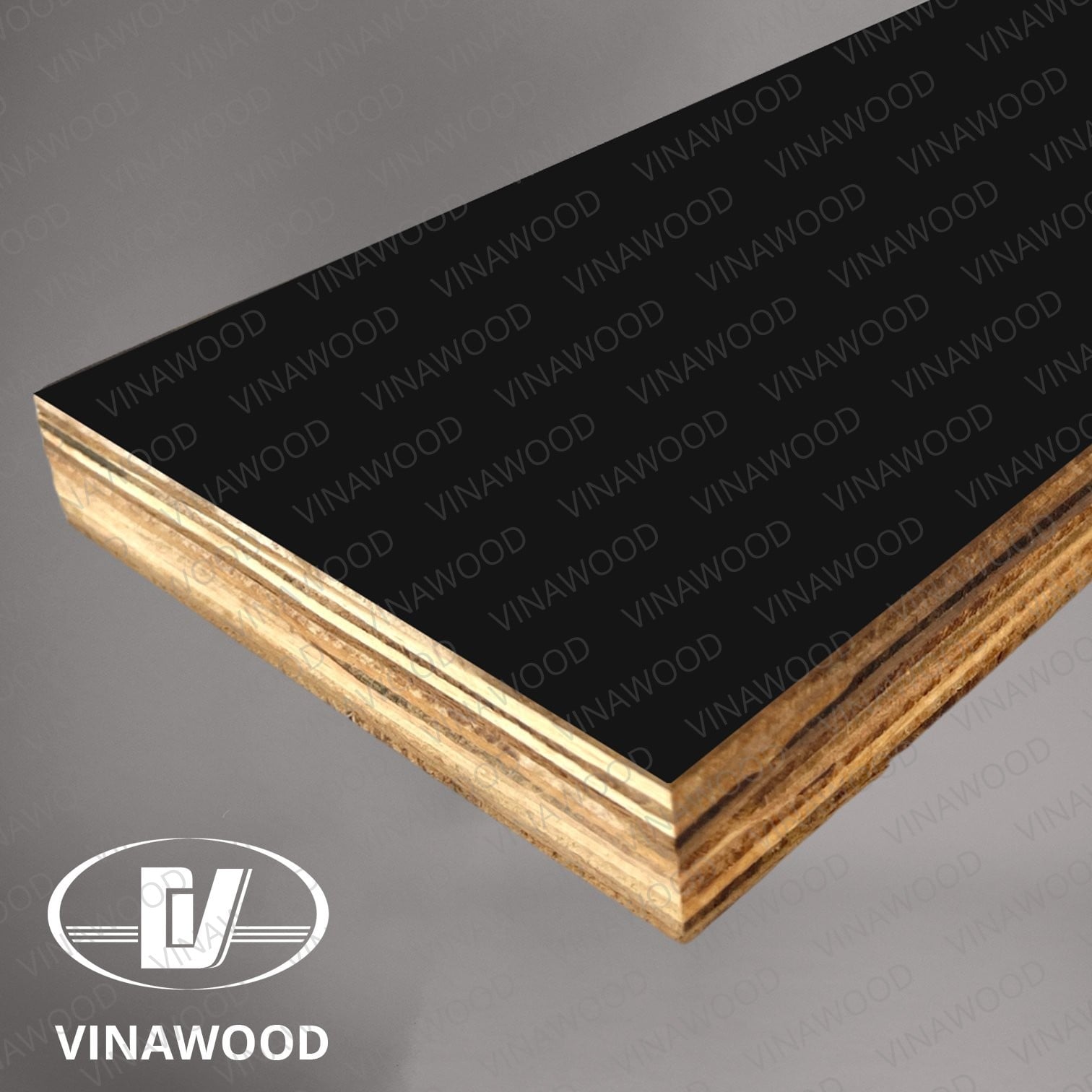
For formwork in North American buyer specs, that's where our HDO range fits — high-density overlay film over a plantation hardwood face, Exposure 1 glue, up to 30 reuse cycles for Premium 2S. For buyers on a tighter spec who still need a film-faced panel that outlasts CDX by an order of magnitude, the MDO range covers matte concrete finishes at up to 15 cycles. For European projects calling Class 3 / EN 636-3, Pro Form (WBP phenolic, EN 636-3) and Pro Form Lite are the right-tier panels — Pro Form Lite is our newer addition between Form Extra and Pro Form, sized for crews that want a Class 3 bond without paying for the full Premium spec.
None of those panels replace softwood plywood for sheathing. The split is by application, not by quality. Match the bond class and face density to what the job actually demands, and the cost difference resolves itself.
Standards quick-reference
| Region | Standard | Covers |
|---|---|---|
| US, softwood structural | APA / PS 1, PS 2 | Veneer grading, bond, span rating, Exposure / Exterior labels |
| US, formaldehyde | TSCA Title VI (supersedes CARB Phase 2 labelling) | Emissions ceiling for composite wood products |
| EU, plywood service class | EN 636-1 / -2 / -3 | Interior, semi-exterior, exterior service classes |
| EU, formaldehyde | REACH Annex XVII (6 Aug 2026) | 0.062 mg/m³ ceiling, EN 717-1 test |
Buyer's checklist on incoming softwood plywood
Verify on every shipment: the APA grade stamp matches the spec on the cut list; the panels are not face-down on a wet pallet; edges have not delaminated in transit; the bond line under a quick water spritz on a corner stays sealed for at least a few minutes. Verify the formaldehyde label on at least one bundle per container — TSCA Title VI in the US, REACH-compliant emissions documentation for any sheet arriving in the EU after 6 August 2026. None of those checks take more than a minute per pallet, and they are cheaper than rejecting a finished wall.
The short version
Specify softwood plywood when the face is hidden, the use is structural, and the panel works one trip. Specify a plantation hardwood-face panel when the face shows, the pour count exceeds three, or the spec calls Class 3 / EN 636-3. Vinawood's role in the second category — film-faced collection for buyers shopping the broad category, HDO range for the North American formwork market, Pro Form and Pro Form Lite for European Class 3 buyers — fills the gap that softwood sheathing was never meant to cover.
Category
how-to