Baltic Birch vs Vietnamese Plantation Hardwood Plywood: A US Buyer's Comparison
Baltic birch plywood has long been the default specification for visible cabinet faces, drawer boxes, and architectural-grade panels in North America — but supply since 2022 has been tight and pricing volatile. Vietnamese plantation hardwood plywood (acacia, eucalyptus, hevea cores) is the credible…
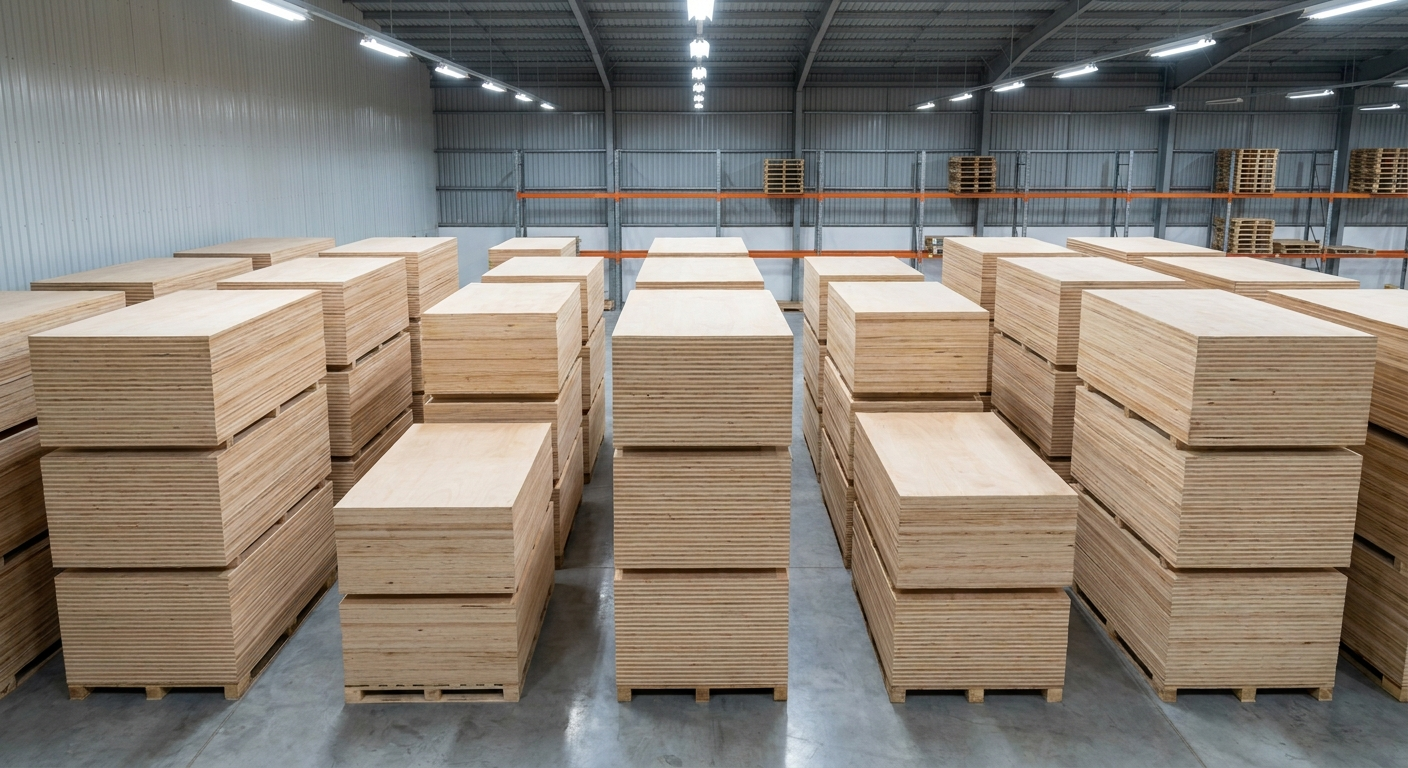
"Baltic birch" is the spec cabinet shops have written into POs for decades when they need void-free panels with dense, fine-grained face veneers. The post-2022 supply picture is meaningfully different. Russian and Belarusian birch is off the table for US buyers. Latvian and Estonian production continues at constrained volume. North American mills have stepped in with domestic substitutes priced 20 to 35 percent above pre-2022 Baltic. Lead times that used to be four weeks now run eight to twelve. US cabinet shops asking whether Vietnamese plantation plywood works as a substitute is the question we field every other week, and the honest answer is: depends on the cabinet job.
Buyers writing specs in 2026 are asking the practical question: when Baltic birch is the wrong tool for the job (or simply not available at the price and lead time), what's the next-best substitute? For a large slice of cabinet, structural, formwork, and architectural-substrate applications, the answer is Vietnamese plantation hardwood plywood. This guide compares the two head-to-head, in plain language, from a manufacturer's perspective.
At-a-Glance Comparison
| Property | Baltic birch (BB/BB) | Vietnamese plantation hardwood (Eucalyptus/Acacia core) |
|---|---|---|
| Face appearance | Light blonde, fine-grained, multi-ply edge stack | Light to medium tan; sanded face on mid-grade panels |
| Core consistency | Void-free standard; tight, uniform plies | Mid- to high-grade panels: minimal voids; standard commercial: occasional small voids |
| Density | ~680–720 kg/m³ | ~580–680 kg/m³ (hevea > eucalyptus > acacia) |
| Weight per 18 mm 4×8 sheet | ~62–67 lb (~28–30 kg) | ~57–62 lb (~26–28 kg) |
| Standard sheet size | 5×5 ft (1525×1525 mm) | 4×8 ft (1220×2440 mm) |
| Formaldehyde class | CARB P2 / TSCA Title VI achievable | CARB P2 / TSCA Title VI standard for North America |
| FSC availability | Yes — from select EU mills | Yes — standard from major Vietnamese export mills |
| Lead time (US delivery) | 2–6 weeks domestic / European stock | 5–7 weeks PO to dock for full container from Vietnam |
| Price stability (12-month) | Volatile; up 30–60% vs pre-2022 baseline | Stable; tracks freight and raw material with normal market drift |
The verdict: Baltic birch still wins for visible cabinet faces and architectural panels where the unique edge stack is part of the design. Vietnamese plantation hardwood wins for structural, covered-face, formwork, and high-volume applications where supply-cycle predictability matters more than face-veneer prestige.
What Baltic Birch Plywood Actually Is
Baltic birch is plywood manufactured in the Baltic region — historically Russia, Latvia, Belarus, and Estonia — from Betula pendula (silver birch) and Betula pubescens (downy birch). The construction has three signature attributes: thin (typically ~1.5 mm) face and core veneers stacked into a high ply count (13 plies in standard 18 mm material), tight veneer joints with virtually no voids, and uniform birch face species across both faces.
The grading system uses face/back letter pairs distinct from the APA A–D scale: BB/BB, B/BB, BB/CP, CP/CP — with B being the cleanest face grade and CP carrying more permitted patches and small repairs. The standard sheet size is metric 1525×1525 mm (5×5 ft), which differs from the 4×8 ft North American construction default. 4×8 ft Baltic birch is available from select distributors at premium pricing.
For the deeper underlying density and strength reference, see birch plywood density, weight and strength. For the broader birch plywood overview, see birch plywood.
Why Baltic Birch Supply Has Been Tight Since 2022
The Baltic birch supply chain depended heavily on Russian and Belarusian production. Sanctions and trade restrictions effective from 2022 onward have largely removed these volumes from US accessibility. Latvian and Estonian production has continued but at constrained capacity relative to historical export volumes. North American mills have expanded domestic production of comparable birch plywood, but at meaningfully higher pricing than pre-2022 imports.
The practical effect for US specifiers and cabinet shops: lead times have stretched, distributor stock varies week-to-week, and prices have run roughly 30–60% above pre-2022 baselines with periodic spikes during inventory squeezes. For volume buyers committed to ongoing programmes, the question of "what's the next-best substitute when Baltic birch is unavailable or impractical?" is now part of standard procurement planning.
Vietnamese Plantation Hardwood Plywood — What It Is
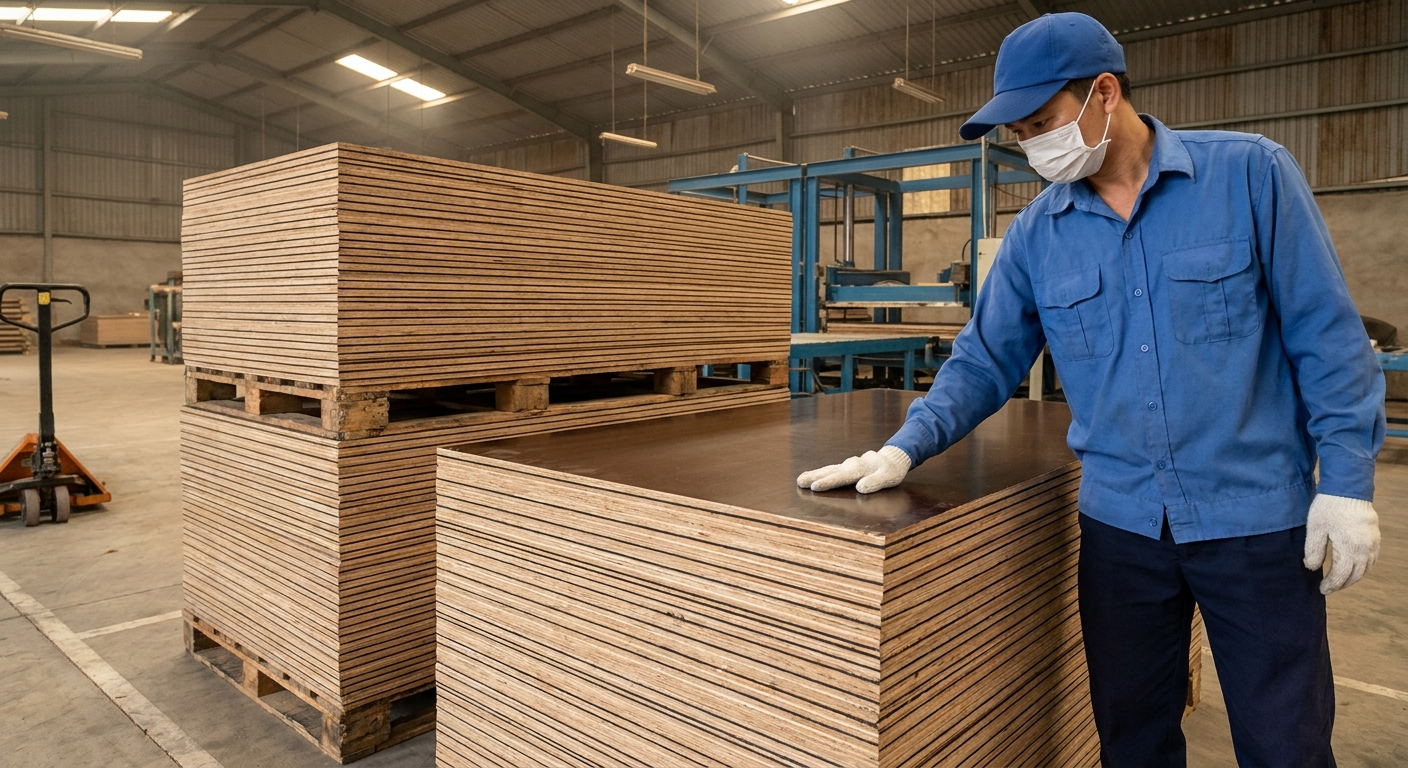
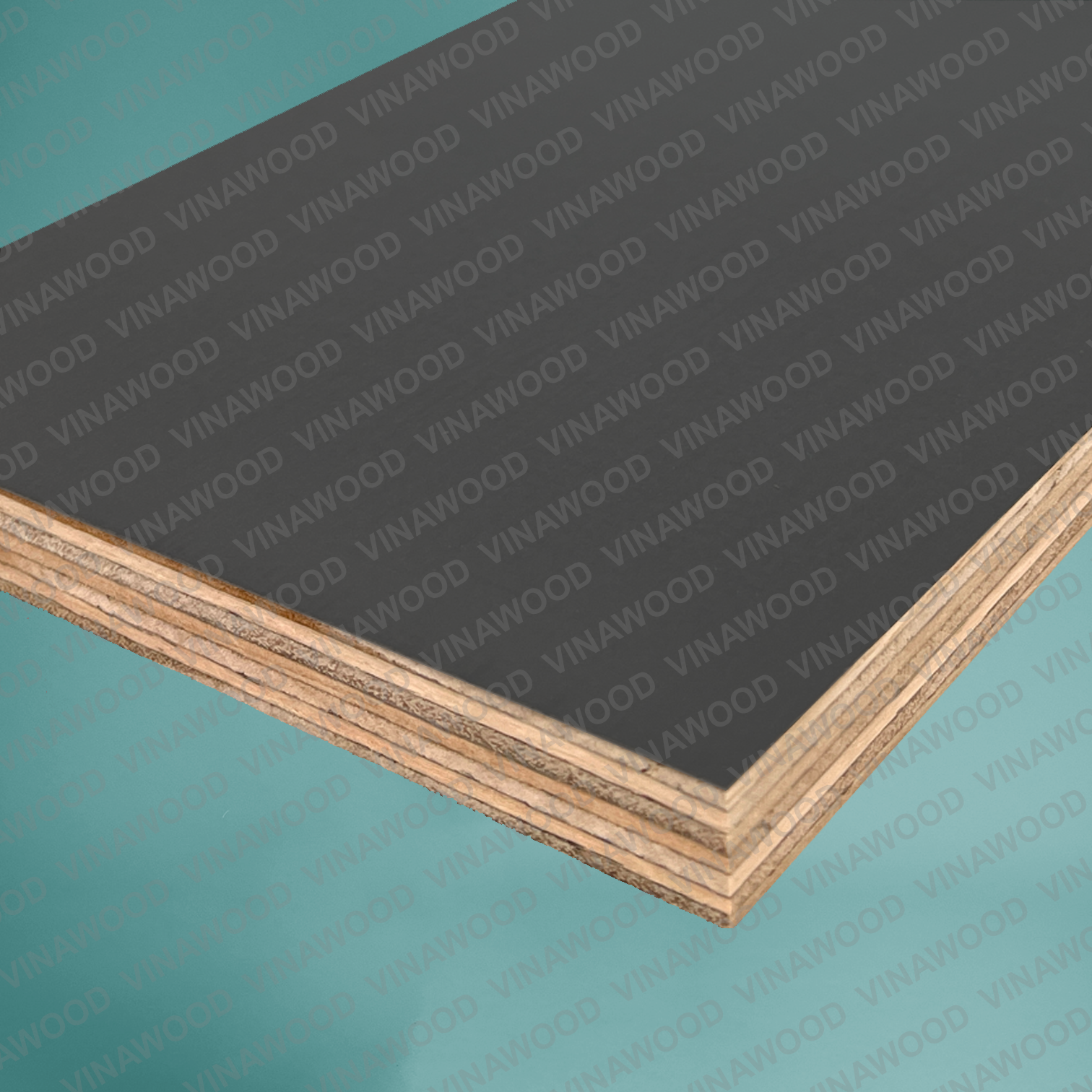
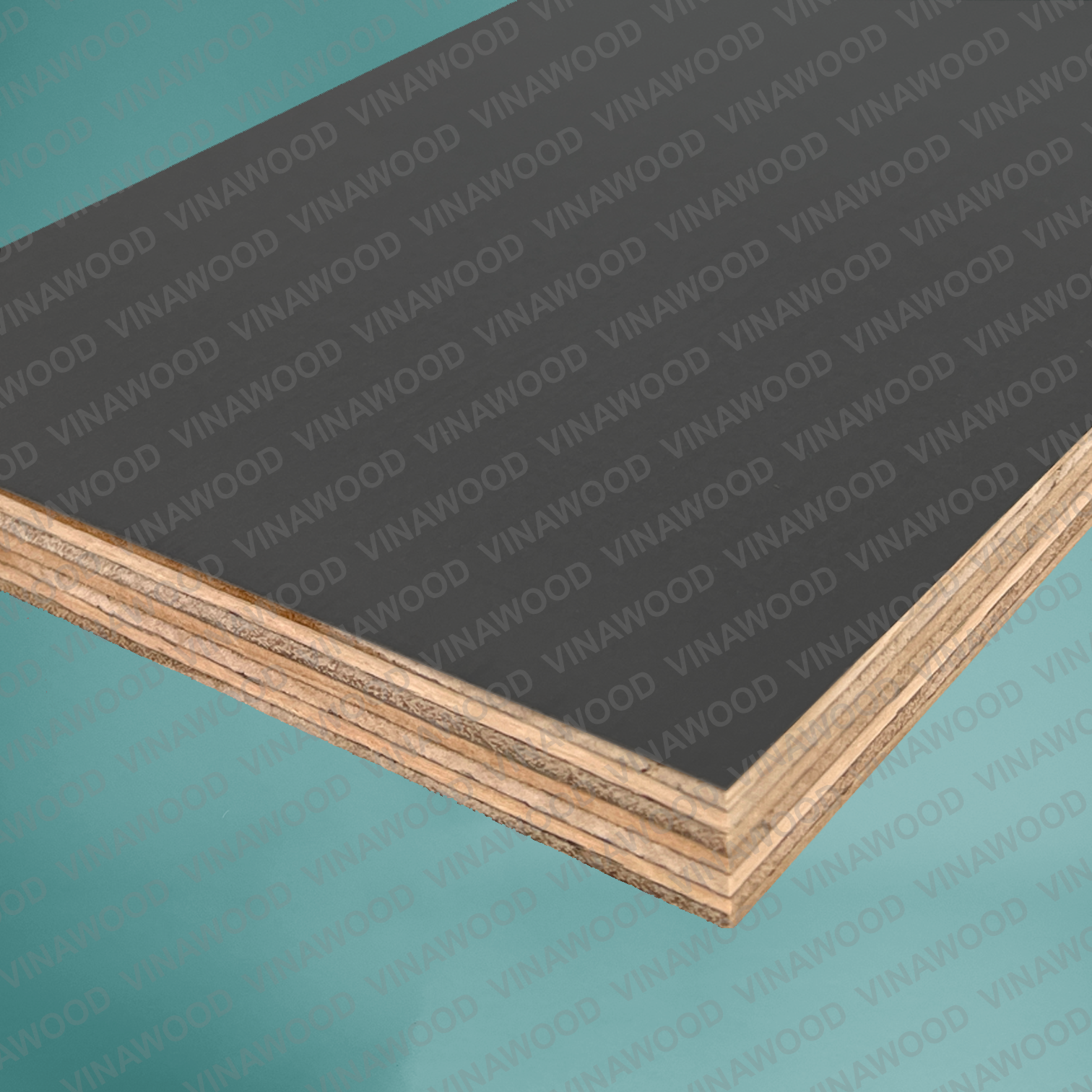
Vietnamese plantation hardwood plywood is plywood manufactured in Vietnam from plantation-grown hardwood species — primarily Acacia (Acacia mangium, A. auriculiformis), Eucalyptus (Eucalyptus urophylla, E. grandis), and Hevea (rubberwood, Hevea brasiliensis). All three species are grown on managed plantations under long-term forestry licenses, are FSC Chain-of-Custody traceable from major export mills, and are not harvested from natural tropical forest. The term "plantation-grown" is the accurate description; "tropical hardwood" is technically incorrect for these supply chains.
Density rankings in approximate order: hevea is densest (~620–680 kg/m³ in plywood form), followed by eucalyptus (~620–680 kg/m³), with acacia at the lighter end of the plantation hardwood range (~580–640 kg/m³). All three are mainstream species in the Vietnamese export plywood industry; acacia is not a lesser tier of the three.
Vietnam has roughly 30 years of export plywood manufacturing maturity. Vinawood, founded 1992, supplies more than 55 countries with CARB P2, EPA TSCA Title VI, CE-marked (EN 13986), and FSC-certified product lines as standard. Modern Vietnamese mills run hot-press infrastructure and QC tooling matched to global buyer requirements.
For the broader supplier landscape, see plywood supplier Vietnam. For the certification and compliance picture, see top certifications for Vietnam plywood exports.
Application Fit — When Each Is the Right Call
Baltic birch wins:
- Visible cabinet faces with no edge banding — the multi-ply edge stack is part of the design language
- High-end European-style furniture where face appearance is critical
- CNC-cut decorative architectural panels with exposed edges
- Drawer boxes where edge appearance is intentionally visible
- Jigs, fixtures, and templates where flatness across the sheet is the spec-critical attribute
Vietnamese plantation hardwood wins:
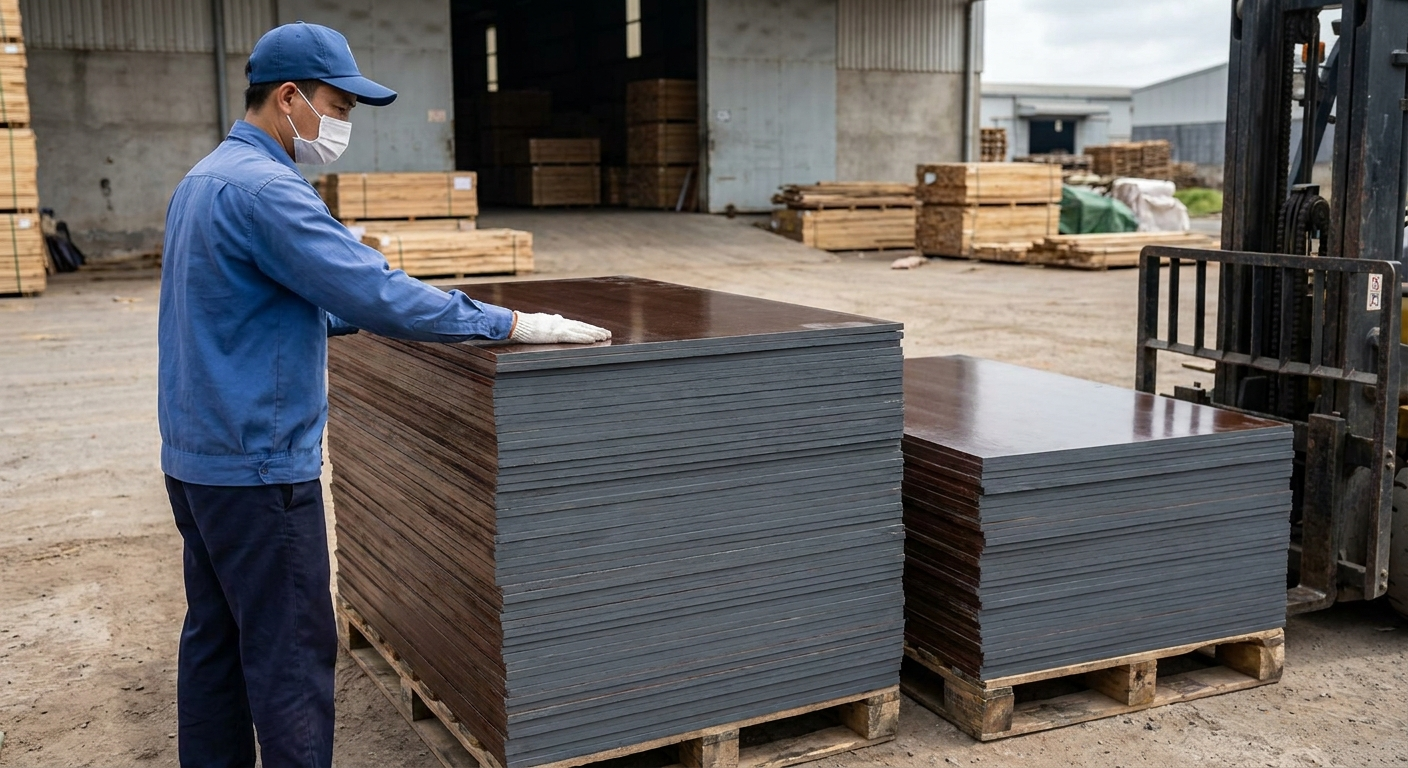
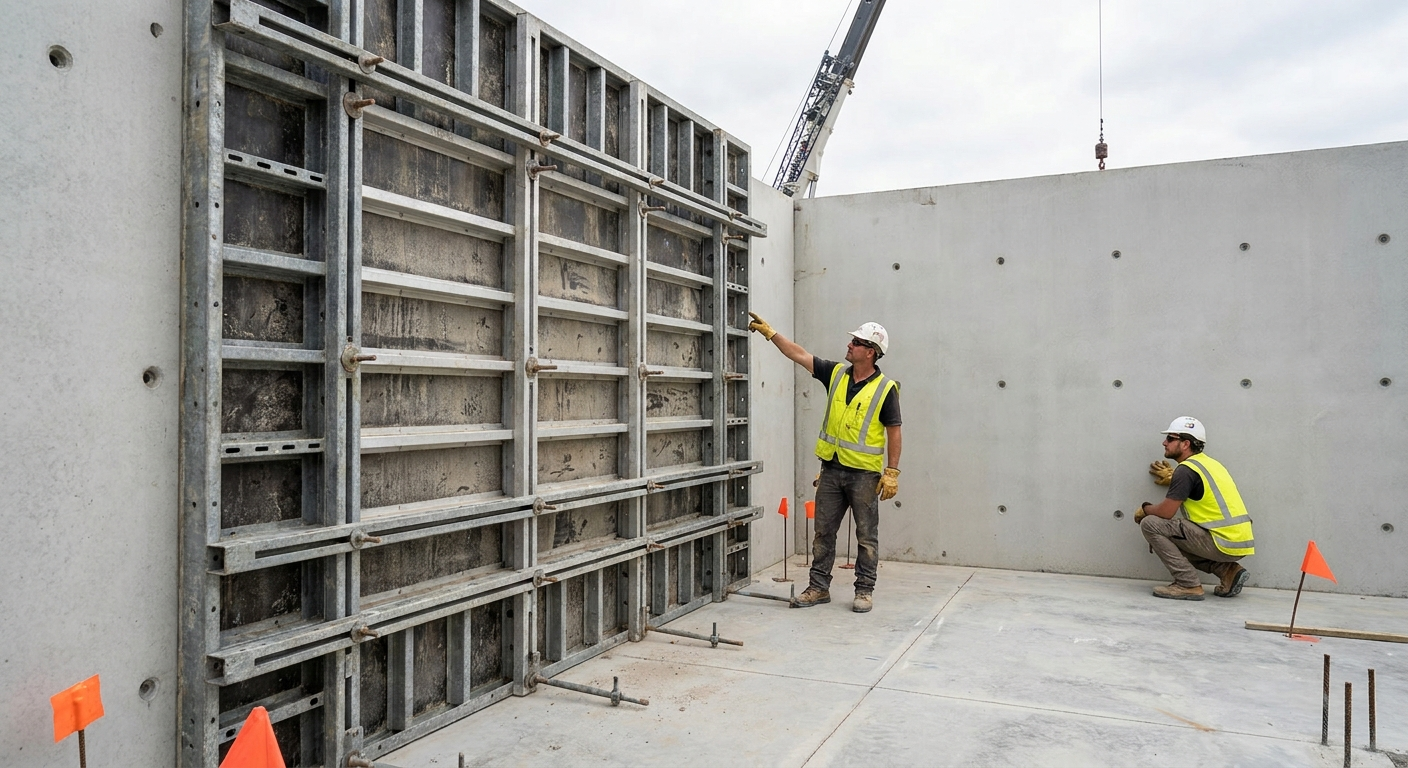
- Concrete formwork where film-faced overlay covers the face entirely (the underlying veneer grade is irrelevant once the phenolic film is on)
- Structural blocking, substrate, and concealed structural use
- Cabinet sides, backs, and toe-kicks that will be edge-banded, painted, laminated, or covered
- Packaging and crating
- Architectural applications where the face will be painted, wrapped, or laminated
- High-volume programmes where supply-cycle predictability matters more than face-veneer prestige
- Any application where total project cost favours stable container-volume pricing over premium domestic stock
For visible-face hybrid projects, a mixed strategy works: Baltic birch (or domestic birch substitute) on visible drawer fronts and exposed cabinet faces; Vietnamese plantation hardwood on cabinet sides, backs, and structural substrate. This is the dominant procurement pattern in 2026 for shops moving away from all-Baltic-birch builds.
Sheet Sizes and Thickness Options
Baltic birch. Standard sheet size is metric 1525×1525 mm (5×5 ft). 4×8 ft (1220×2440 mm) is available from select distributors at a premium. Common thicknesses are 6, 9, 12, 15, 18, and 25 mm (sometimes referenced as 1/4", 3/8", 1/2", 5/8", 3/4", and 1").
Vietnamese plantation hardwood. Standard sheet size is 4×8 ft (1220×2440 mm) — the dominant US-market dimension. This fits standard CNC tables, traditional shop layouts, and conventional cabinet box construction without trimming. 5×5 ft can be custom-ordered for direct comparison with Baltic birch dimensions. Metric 1250×2500 mm is available for European-spec applications. Common thicknesses match North American conventions: 12, 15, 18, 21, and 25 mm (1/2", 5/8", 3/4", and 1" approximations).
For 4×8 ft North American applications, the dimensional fit favours Vietnamese plantation hardwood. For 5×5 ft European-tradition cabinet shop builds, Baltic birch dimensions are still the easier fit unless 5×5 is custom-ordered from Vietnam.
Formaldehyde Compliance — a Tie at Top of Class
Both supply chains can deliver CARB Phase 2 and EPA TSCA Title VI compliant panels. Vietnamese export plywood mills run E1 (EU) and CARB P2 (US) as standard for North America destinations. Baltic birch from EU production likewise meets CARB P2 with current adhesive systems.
For phenolic-bonded plywood (the type used in formwork and structural applications), formaldehyde emission is inherently low once the resin has cured — phenolic adhesives release formaldehyde during cure but the cured resin is stable and emits at very low levels.
For NAF (no-added-formaldehyde) requirements — typically driven by indoor air quality programmes or LEED MR Credit requirements — both Baltic birch and Vietnamese plantation plywood can be sourced. Confirm specific compliance per panel with mill test reports for the exact lot. Avoid generic compliance assumptions — the certificate covers the specific batch, not the supply chain in general.
Pricing and Lead Time Reality
Baltic birch. Domestic stock is constrained, North American mill capacity is the bottleneck, and pricing has run roughly 30–60% above pre-2022 levels with periodic spikes when distributor inventory tightens. Lead times for non-stocked thicknesses or grades can stretch to 2–6 weeks. For small-quantity purchases (under 100 sheets), domestic Baltic birch typically still makes sense on logistics — the per-sheet shipping math doesn't favour overseas import at low volume.
Vietnamese plantation hardwood. Container shipping from Hai Phong or Ho Chi Minh City to US Pacific Coast ports runs roughly 25–35 days. Production lead time for a full container is typically 15–25 days from PO confirmation. Total dock-to-dock cycle is 5–7 weeks. For programmes consuming 1+ container per quarter (~600 sheets per 40HQ container at 18 mm), the per-sheet landed cost typically lands meaningfully below current US Baltic birch pricing.
The decision rule of thumb: under 100 sheets, domestic Baltic birch logistics typically wins. 200–500 sheets, run the math — it depends on the specific specification and current freight market. 600+ sheets (full container), Vietnamese plantation hardwood typically lands cheaper at acceptable lead time. For ongoing programmes consuming multiple containers per year, the logistics math typically heavily favours direct-from-Vietnam.
For US-market formwork applications specifically, Vinawood's HDO range (HDO Premium 2S Formply, up to 20 reuses) sits in the same plantation-hardwood-plus-overlay category and is the right product line for film-faced formwork projects. For commercial-grade plantation hardwood plywood, see the commercial plywood collection.
Baltic birch and Vietnamese plantation hardwood plywood are not the same product, but they are the two practical options on the 2026 spec sheet for most structural, cabinet, and architectural applications. Pick by application fit, not by reflex — "Baltic birch by default" was a reasonable spec in 2019, but in 2026, the right answer is application-driven and often a hybrid.
Category
guides
Related Markets
Related Countries
Related Products
▶Sources & References (4)
- Wood Handbook — Wood as an Engineering Material (Chapter 12: Mechanical Properties of Wood) — USDA Forest Products Laboratory (2021)
- TSCA Title VI Formaldehyde Emission Standards for Composite Wood Products — US Environmental Protection Agency (2024)
- CARB Composite Wood Products Airborne Toxic Control Measure — California Air Resources Board (2024)
- FSC Chain of Custody Standard FSC-STD-40-004 V3-1 — Forest Stewardship Council (2021)