Vietnam Plywood Supplier: Why Contractors and Importers Choose Vinawood
A comprehensive guide to sourcing plywood from Vietnam — covering industry scale, product types, supplier evaluation criteria, pricing, logistics, and why Vinawood is a trusted choice for importers and contractors worldwide.
Why Vietnam Has Become a Global Plywood Sourcing Hub
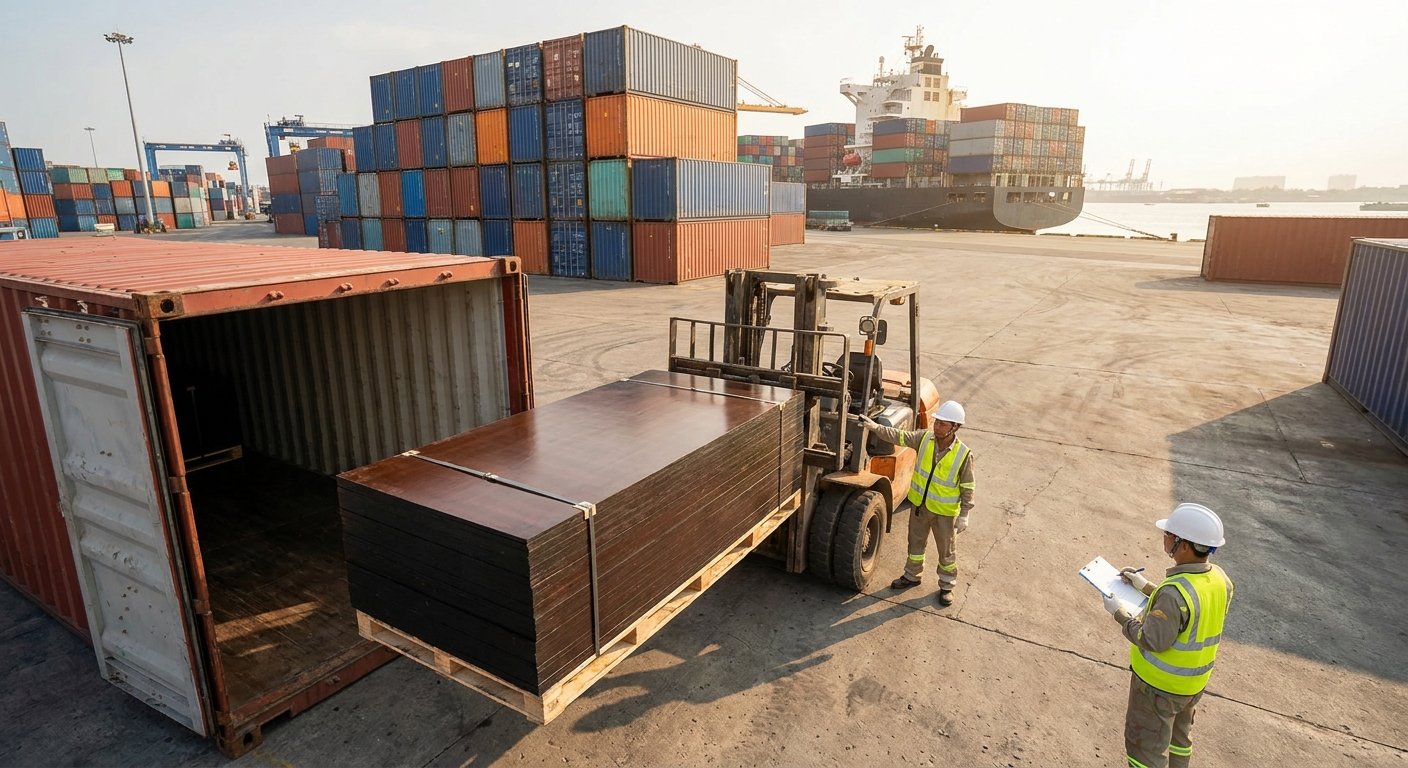
Vietnam shipped roughly five million cubic metres of plywood in 2024 and now sits inside the global top five exporters. The base for that volume is plantation-grown eucalyptus and acacia, two species that mills plant on a 5–7 year rotation specifically for veneer peeling. There is no native rainforest in the supply chain.
That plantation base, plus a tariff status that is cleaner than China's in several markets, is what brings most international buyers to Vietnam in the first place. Quality has caught up too, though it varies sharply between mills. The rest of this article walks through what we hear from contractors, importers, and procurement managers asking the same questions our export team handles every week.
Vietnam's Plywood Industry: Scale and Capabilities
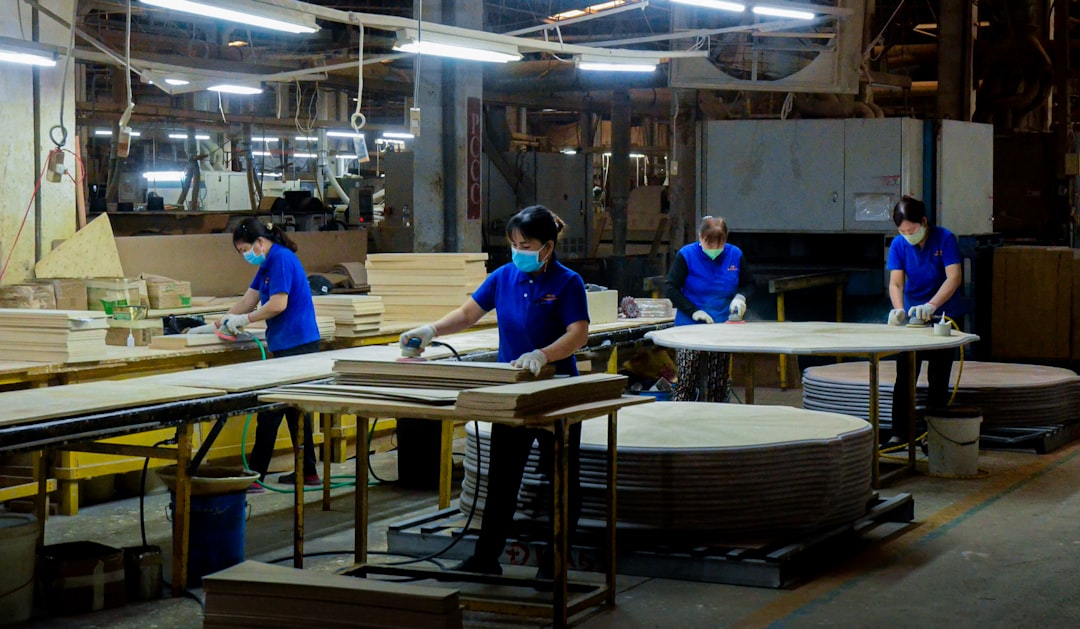
Several hundred mills are licenced to manufacture plywood in Vietnam. Capacity ranges from one-line workshops running a few thousand sheets a month up to integrated exporters running ten or more press lines. The two production clusters are northern Vietnam — Hai Phong, Bac Ninh, and Hai Duong feed Hai Phong port — and the south, which routes through Cat Lai in Ho Chi Minh City.
Our containers go out to the United States, India, the UAE, the United Kingdom, Australia, Japan, and Korea. Different mills specialise. The product range across the country breaks down roughly like this:
| Product Category | Primary Application | Key Standards |
|---|---|---|
| Film-faced formwork plywood | Concrete construction | EN 636-2, EN 636-3 |
| Commercial plywood | Furniture, interiors, packaging | CARB P2, E1 |
| Marine plywood | Boat building, marine environments | BS 1088 |
| HDO plywood | Heavy-duty formwork, signage | APA PS1, CSA O151 |
| Packing/industrial plywood | Crating, packaging, temporary use | ISPM-15 compatible |
Types of Plywood Available from Vietnam Suppliers
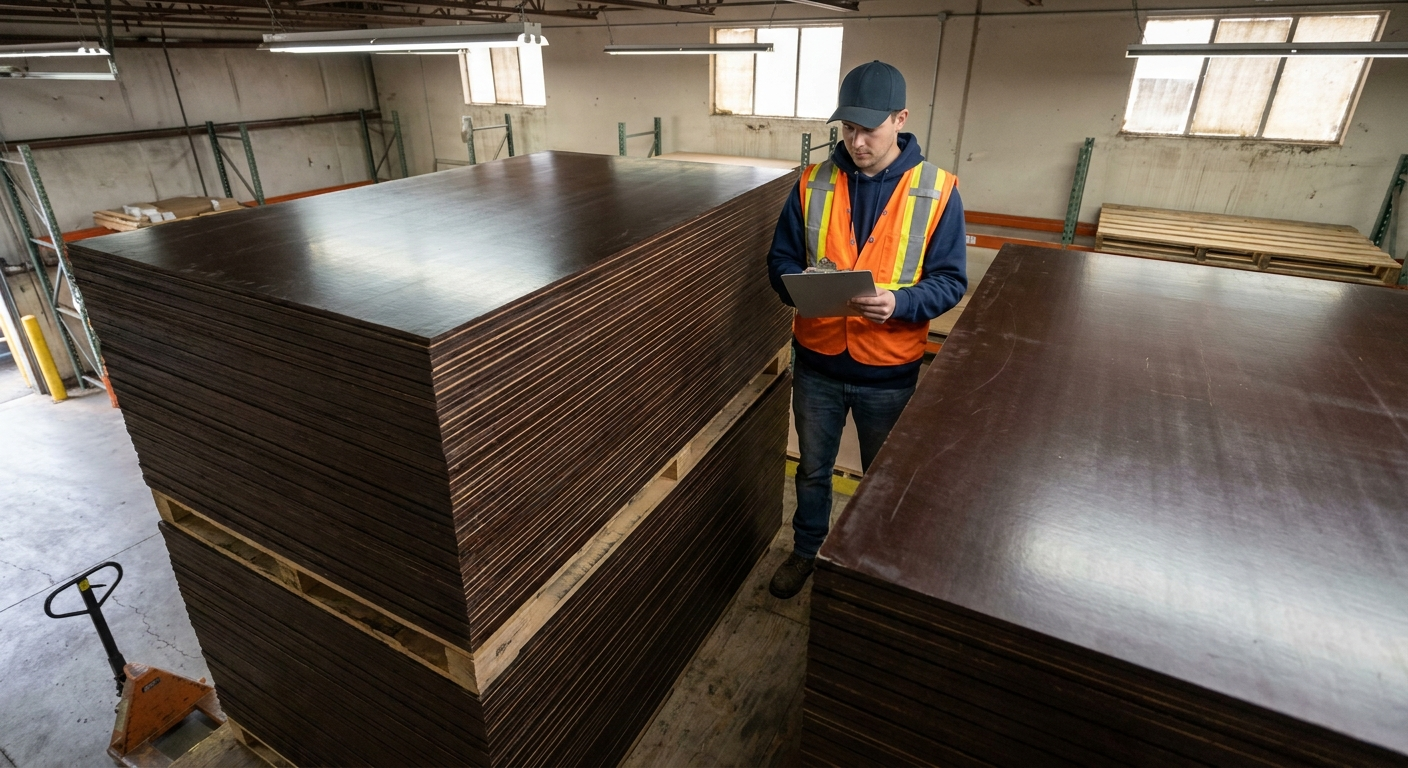
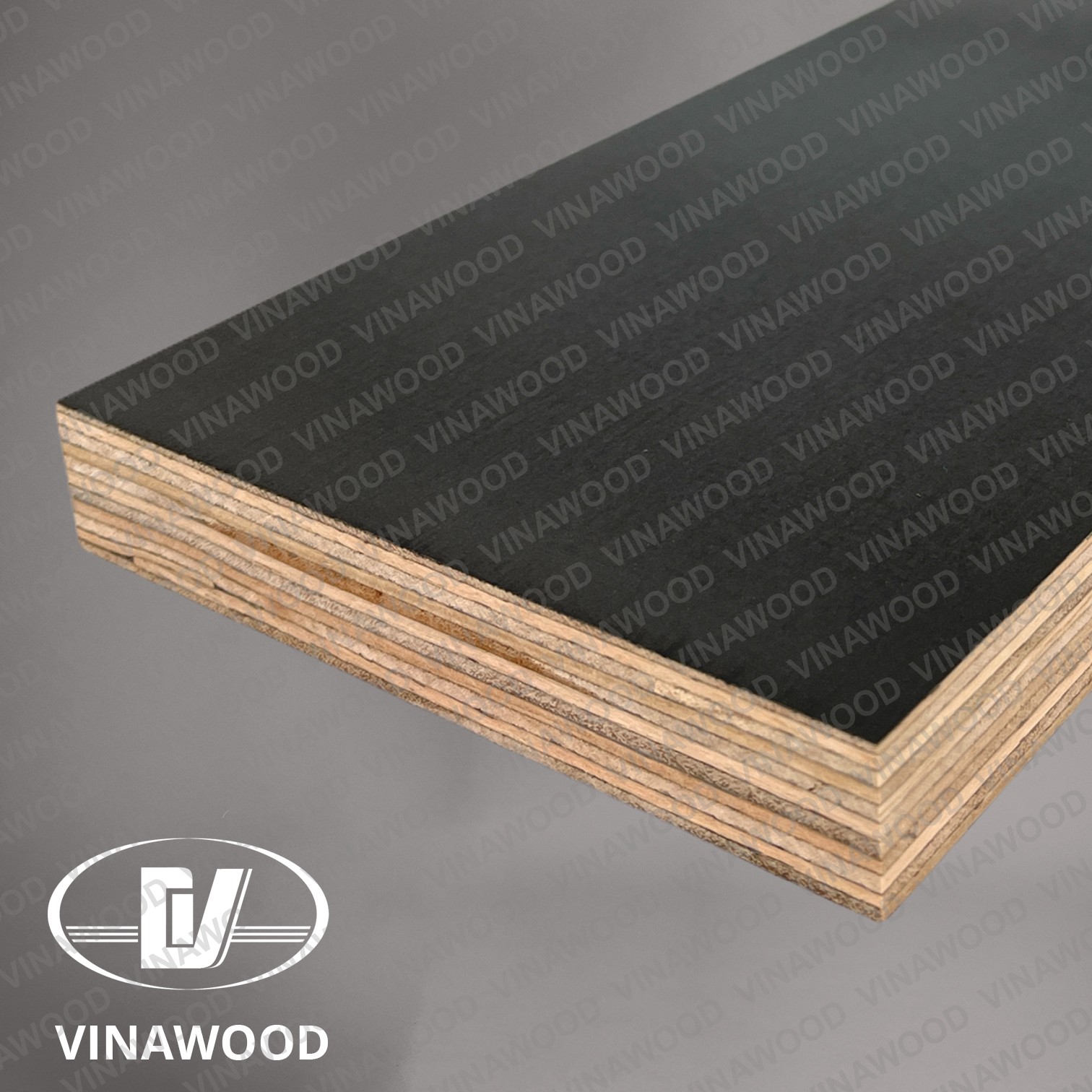
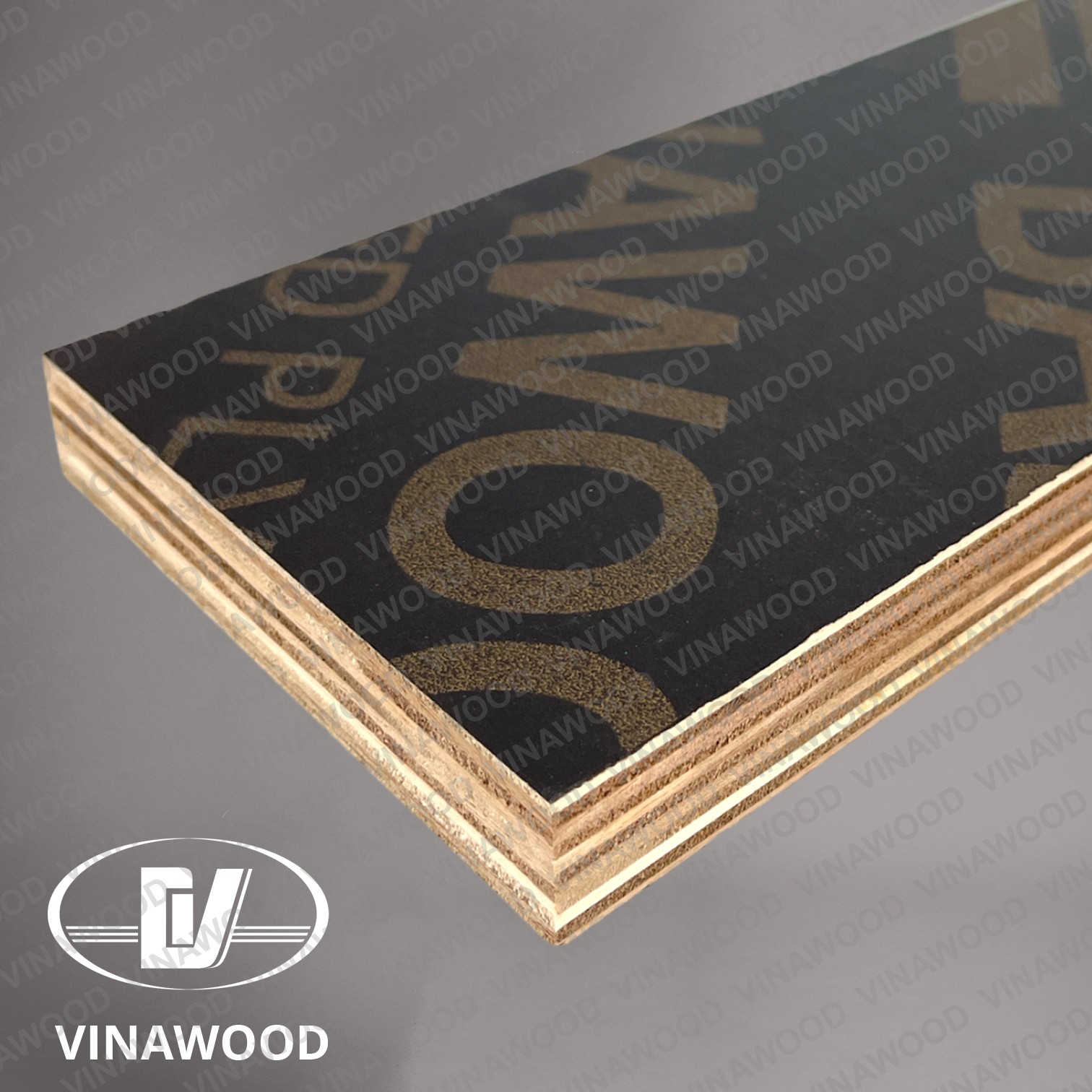
Film-faced formwork plywood is the largest export category by container count. The panel is a regular plywood substrate with a phenolic-impregnated paper film bonded to one or both faces under heat and pressure. Concrete releases off the film cleanly, and the panel can be reused — anywhere from a handful of pours to twenty, depending on the build quality. Browse Vinawood's film-faced plywood range for detailed specifications.
Commercial plywood is the furniture and fit-out grade. Bintangor, Okoume, or hardwood faces over a Hevea, eucalyptus, or acacia core. The buyer cares about face appearance and how the panel sands and accepts finish, not about pour cycles. See the commercial plywood collection for the available faces.
Marine plywood is built to BS 1088 for boats and permanent water exposure. Vietnamese marine panels typically run on a eucalyptus or acacia core with phenolic adhesive throughout. Explore the marine plywood range.
HDO plywood swaps the standard film for a higher-density resin overlay. Surface hardness is the point — abrasion-prone applications, signage, and the kinds of formwork jobs where you want to push the reuse count past what a standard film can handle. North American buyers ask for it most.
What to Look for in a Vietnam Plywood Supplier
Price first is how a lot of new buyers approach Vietnam. It almost always backfires. The criteria that matter:
Production capacity. For formwork plywood, look for mills running 3,000 or more containers a year. Below that level the production line is usually a single press, raw material is bought spot, and lead times slip the moment a larger order lands ahead of yours.
Certifications. ISO 9001 for quality management. FSC Chain of Custody for sustainable sourcing. CE marking for European markets. EPA TSCA Title VI (CARB Phase 2) for the United States. Ask for current dated certificates and check the certificate body's online registry — paper claims with no registry hit are common.
Adhesive systems. WBP phenolic (EN 636-3, Class 3) and WBP melamine (EN 636-2, Class 2) are not interchangeable. Phenolic carries permanent exterior exposure; melamine handles humid conditions but not continuous outdoor service. Confirm which class your project specification calls for before the PO goes out, not after the container lands.
Quality control. Ask the supplier what they actually test in-house. EN 314 bonding strength. Formaldehyde emission. Thickness tolerance. Moisture content. Then ask for third-party reports, not internal lab printouts.
Export experience. A mill shipping to twenty or more countries over five-plus years has done the documentation, the customs queries, the L/C amendments, and the angry-buyer-at-port phone calls. References from buyers in your target market are the fastest sanity check.
Communication. Quote turnaround under 48 hours, English-speaking sales contact, technical questions answered with specs not marketing. If the response feels translated through three layers, the post-sale experience will too.
Pricing: How Vietnam Plywood Compares to Other Origins
Versus China, Vietnamese formwork plywood lands at comparable quality on the better mills, with a much cleaner US tariff position. Versus Baltic plywood from Latvia, Finland, or the Russian-origin product still in circulation, Vietnam typically prices 20–35% lower for equivalent EN 636 certified panels.
Quotes come FOB Hai Phong or FOB Cat Lai by default. Five line items move the price more than anything else: core species (acacia is the cheapest, eucalyptus runs a premium), film type and weight, panel thickness, adhesive class, and order volume. Five-container-plus orders typically pick up volume pricing.
On US tariffs: Vietnamese plywood is broadly exempt from the anti-dumping and countervailing duties that hit Chinese hardwood plywood. "Broadly" is the operative word — not every product category and not every shipment. Confirm with your customs broker for your specific HTS code before you assume duty-free entry.
Shipping and Logistics from Vietnam
Hai Phong handles the northern volume. Cat Lai handles the south. Both have direct services to most major destinations. Typical transit times:
| Destination | Transit Time |
|---|---|
| US East Coast | 25–35 days |
| Middle East (UAE, Saudi Arabia) | 18–25 days |
| India (West Coast) | 15–20 days |
| UK and EU ports | 28–35 days |
| Australia | 12–18 days |
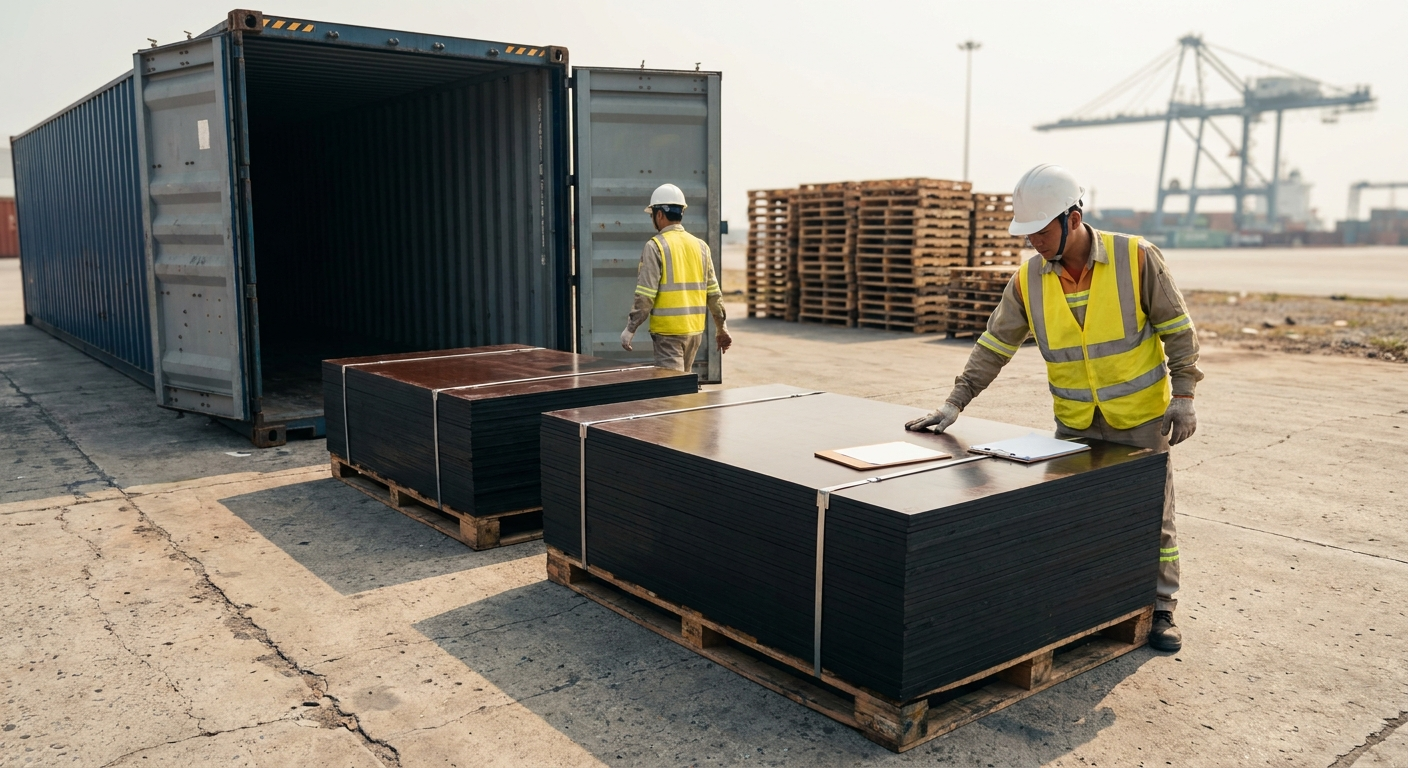
A 20ft container loads roughly 280–320 sheets of 18 mm plywood. A 40ft HC loads 600–650. Most shipments move FOB, though CFR and CIF are available if the buyer wants the supplier handling the freight booking.
30% deposit, 70% balance against Bill of Lading is the standard term for Vietnamese mills. Letters of Credit are accepted by established exporters. Every shipment ships with phytosanitary certificate, CE marking documents (EU), FSC certificate (where claimed), and Bill of Lading.
Quality Risks and How to Mitigate Them
Three risk areas come up in our QC team's reject reports more than any others. Core gap variations affect panel rigidity — the fix is to specify veneer grading on the PO line in plain English, not assume the mill knows your tolerance. Adhesive batch inconsistency shows up at the EN 314 boil test, so pull a per-shipment report rather than trusting a one-off production-run report from six months back.
Film adhesion is the third one. The film weight in the quote and the film weight pressed onto the panel are not always the same number. Verify against the production sample, not the quote. Moisture content sits at 8–12% for formwork plywood; panels packed wet develop bow and edge swell during a long ocean leg.
The mitigation that actually works combines three things: a factory audit (virtual is fine for the first round), a third-party pre-shipment inspection, and lab testing on a sample container before a forward order goes in. Reading how film-faced plywood is manufactured helps you ask sharper questions on the audit call.
Anti-Dumping Duties and Trade Compliance
Trade compliance is where new importers most often get burned. In the US, Chinese hardwood plywood faces stacked anti-dumping and countervailing duties, which is the original reason much of the importer base looked at Vietnam in the first place. Vietnamese plywood is generally exempt for most categories — not all, and not automatically. Your customs broker should confirm the current Federal Register status for your specific HTS code before you book the container.
For the EU, the EU Deforestation Regulation (EUDR) requires importers to demonstrate that wood products are not linked to deforestation. Suppliers with FSC Chain of Custody and a documented plantation source can supply the chain-of-custody documentation EUDR asks for.
India is its own case. The Bureau of Indian Standards (BIS) requires certification for plywood imports in several categories. Buyers shipping into Indian ports should confirm BIS coverage on their supplier's product list before the PO goes out.
Why Contractors and Importers Choose Vinawood
Our mill in Vietnam has been pressing plywood since 1992. Thirty-plus years of continuous production, 5,000-plus containers shipped a year, customers in 55+ countries. That makes us one of Vietnam's larger and longer-running exporters, not the largest — and the longevity is what most repeat buyers tell us they were checking when they shortlisted us.
The product range covers most of what construction and commercial buyers ask for. For formwork, that includes panels certified to both EN 636-2 (WBP melamine adhesive) and EN 636-3 (WBP phenolic adhesive). The Pro Form panel runs WBP phenolic adhesive (Class 3) and achieves up to 20 reuses, which is where high-cycle slab and column work usually lands. For standard formwork, Form Basic (up to 10 reuses) and Form Extra (up to 15 reuses) cover the cost-sensitive jobs on WBP melamine adhesive (Class 2).
What sets the export programme apart from a smaller mill: factory-direct pricing without an intermediary, full international certifications (ISO 9001, FSC-COC, CE, EPA TSCA Title VI, PEFC, EPD), an English-speaking export desk that answers the same week, and flexible order options — mixed-product containers, custom sizes, trial orders from a single 20ft container. Smaller mills can match one or two of those. Matching all four reliably is harder than it sounds.
How to Get Started: Ordering from Vinawood
The process is short. Identify the product specification: grade, thickness, panel size, adhesive class. Request a quote specifying quantity, destination port, and Incoterm. Samples ship before any bulk commitment.
Production lead time is 15–25 days once the deposit clears. Pre-shipment inspection runs through your preferred third-party agency on request. Full documentation — phytosanitary certificate, compliance documents, Bill of Lading — ships with every container.
For a longer walkthrough of the sourcing process end to end, see the complete guide to buying plywood from Vietnam.
Category
guides
Related Markets
Related Countries
Related Products
▶Sources & References (3)
- Vietnam Plywood Export Statistics — ITC Trade Map (2025-12-01)
- EU Deforestation Regulation (EUDR) — European Commission (2025-06-01)
- TSCA Title VI — Formaldehyde Standards for Composite Wood Products — US EPA (2024-03-01)