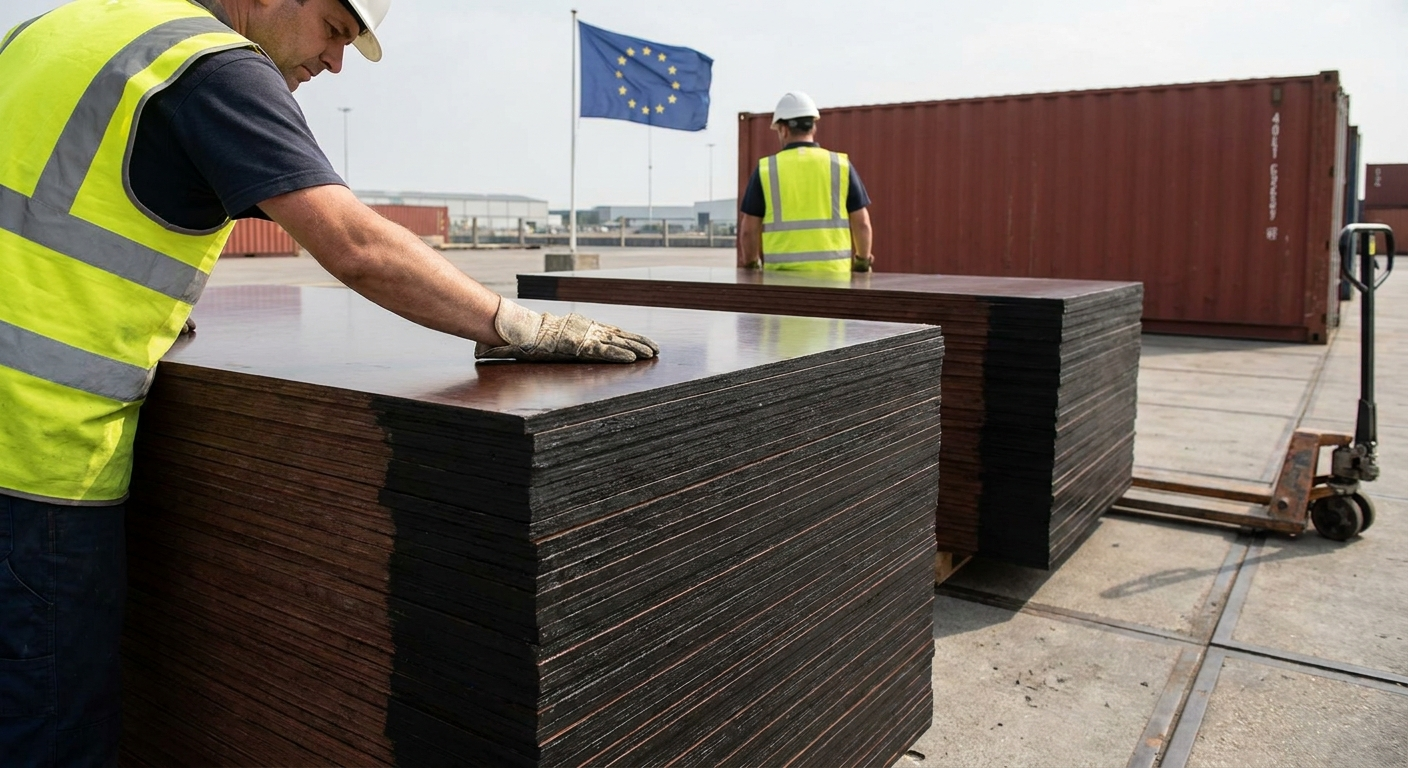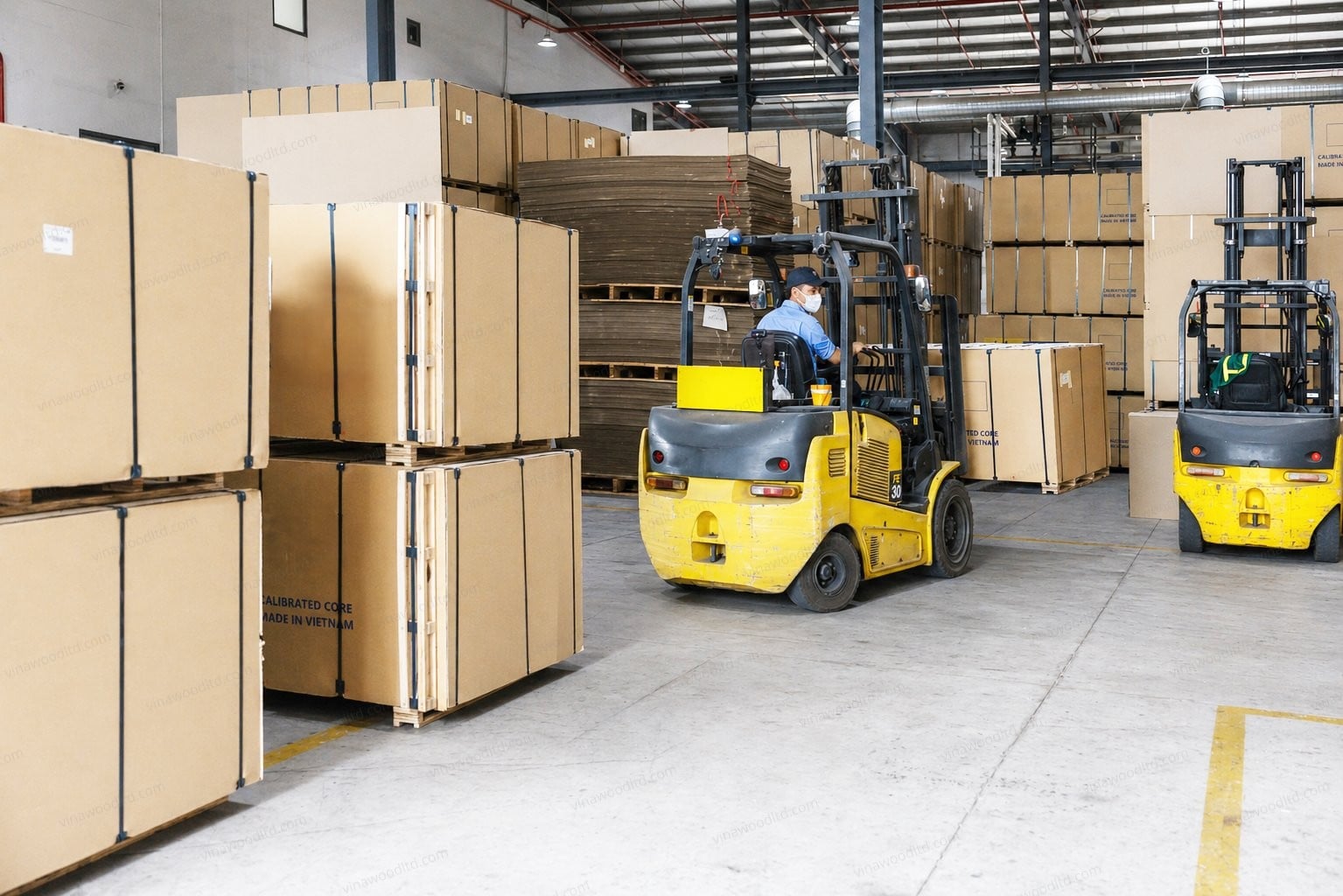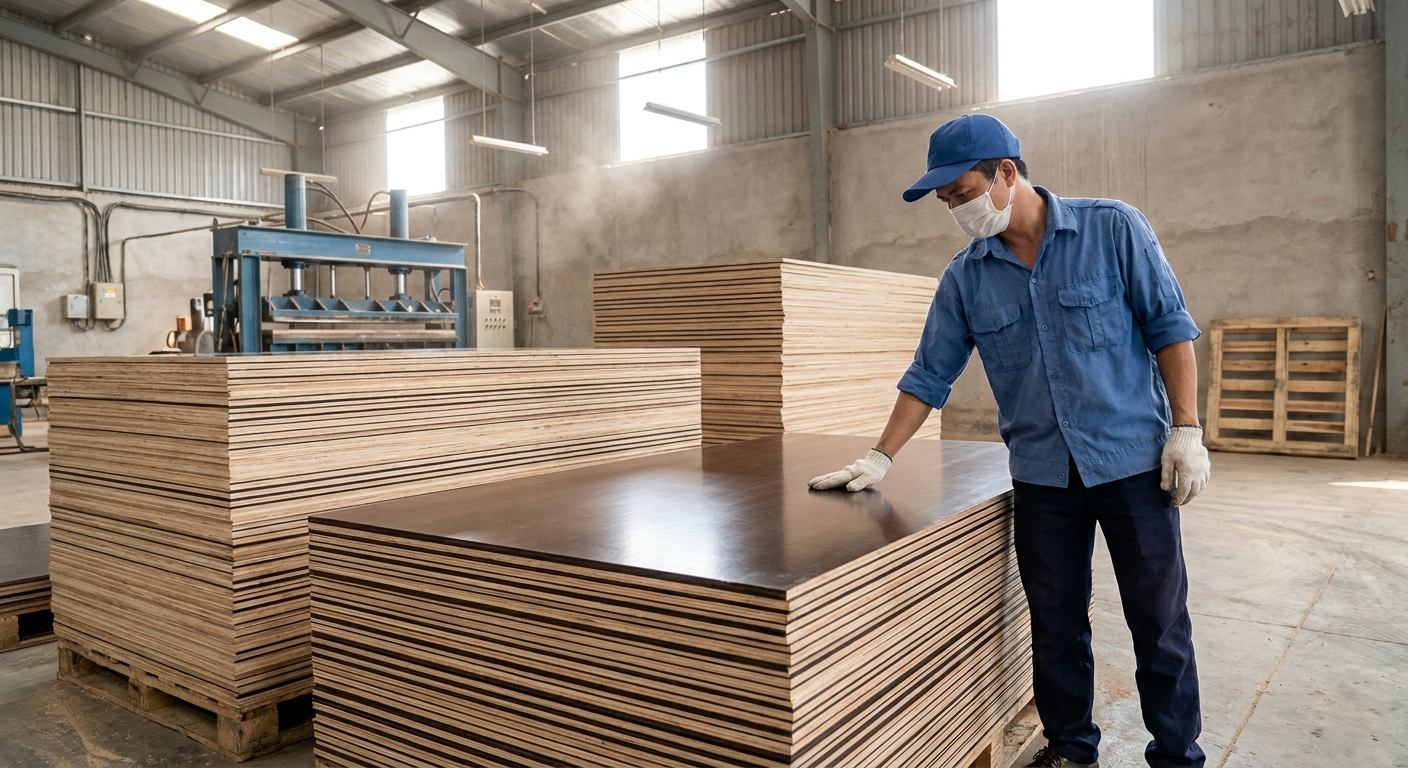
How to Calculate Plywood Container Loading (with Free Calculator)
Master plywood container loading calculations — understand weight limits, bundle configurations, and space optimization for 20ft, 40ft, and 40HC containers.
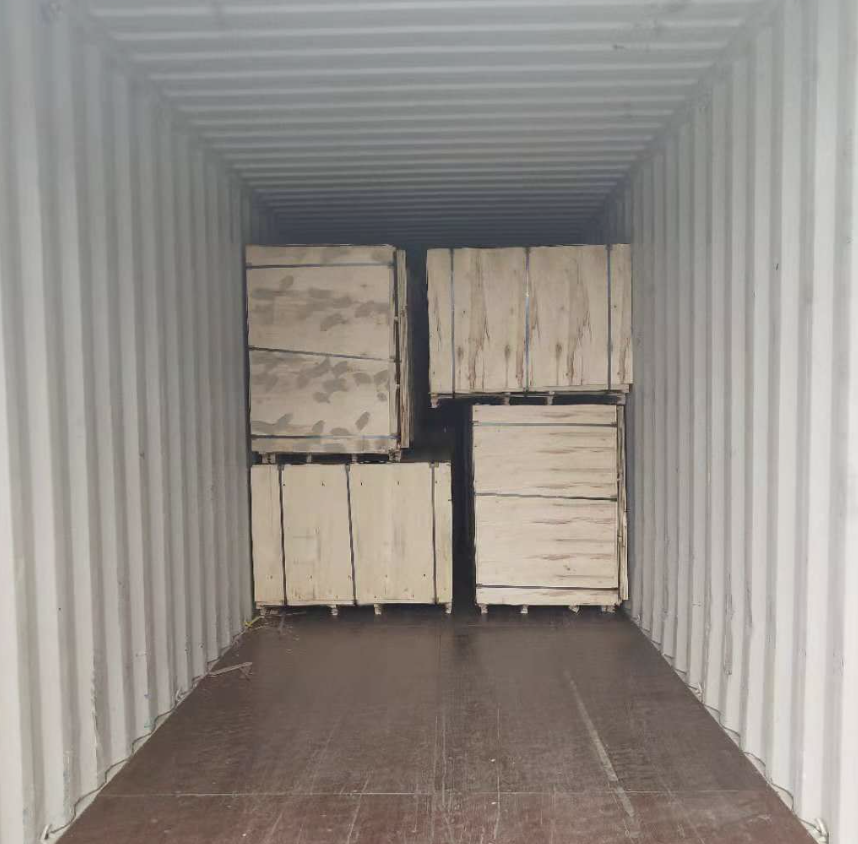
Why Container Loading Calculations Matter
Incorrect container loading calculations lead to costly mistakes: underloading wastes freight money, overloading risks container rejection at port, and poor packing causes transit damage. For plywood — which is heavy and bulky — getting the calculation right is essential for profitable importing.
This guide explains the formulas and factors you need, plus links to our free interactive calculators that do the math for you.
Container Dimensions and Capacity
| Container | Internal L×W×H (mm) | Volume (m³) | Max Payload (kg) |
|---|---|---|---|
| 20ft Standard | 5,898 × 2,352 × 2,393 | 33.2 | 28,200 |
| 40ft Standard | 12,032 × 2,352 × 2,393 | 67.7 | 26,680 |
| 40ft High Cube | 12,032 × 2,352 × 2,698 | 76.3 | 26,460 |
Note: The 40HC has the same length and width as the 40ft standard but is 305 mm (about 1 foot) taller — this extra height allows one or two more pallet layers of plywood.
The Two Constraints: Volume and Weight
Plywood container loading is governed by two constraints, and whichever is reached first becomes the limiting factor:
- Volume constraint: How many sheets physically fit in the container space
- Weight constraint: The maximum payload weight of the container (typically 26-28 tonnes)
For thin plywood (3-9 mm), volume is usually the constraint — you run out of space before hitting the weight limit.
For thick plywood (18-25 mm) with dense cores, weight is often the constraint — the container reaches maximum payload before all space is used.
Step-by-Step Calculation
Step 1: Calculate volume per sheet
CBM per sheet = (Length × Width × Thickness) ÷ 1,000,000,000
Example for 18 mm × 1220 × 2440 mm:
CBM = (2440 × 1220 × 18) ÷ 1,000,000,000 = 0.05358 m³/sheet
Use our CBM Calculator for instant computation with any dimensions.
Step 2: Calculate weight per sheet
Weight per sheet = CBM per sheet × Panel density (kg/m³)
Example for Acacia core at 620 kg/m³:
Weight = 0.05358 × 620 = 33.2 kg/sheet
Step 3: Determine sheets per container (volume)
Usable volume in a 40HC ≈ 28-30 CBM (accounting for pallets and gaps).
Sheets by volume = 29 ÷ 0.05358 = ~541 sheets
Step 4: Determine sheets per container (weight)
Max payload ≈ 26,000 kg (after pallet weight deduction).
Sheets by weight = 26,000 ÷ 33.2 = ~783 sheets
Step 5: Take the lower number
In this example, volume is the constraint at 541 sheets. For thicker or denser panels, weight would become the constraint first.
Skip the math — use our free Container Loading Calculator which handles all of this automatically for any panel size, thickness, and core species.
Bundle Packing Configuration
Plywood is shipped in bundles (pallets). Bundle configuration affects how efficiently space is used:
- Sheets per bundle: Varies by thickness — typically 30-60 sheets for 18 mm
- Bundle height: Usually 1.0-1.2 meters to allow stacking
- Bundles per row: For 1220 mm wide panels in a 2352 mm wide container: 1 bundle fits width-wise (2440 mm sheets placed lengthwise)
Plan your packing with our Container Packing Calculator which optimizes bundle size and stacking for maximum container utilization.
Common Loading Patterns
Standard 1220 × 2440 mm (4×8 ft) sheets
Sheets are placed flat on pallets with the 2440 mm dimension along the container length. Two pallets fit side by side across the container width (2 × 1220 = 2440 mm, fitting within the 2352 mm width with a small gap).
Long sheets (1220 × 2500 mm or 1250 × 2500 mm)
Similar orientation but slightly reduced packing efficiency due to the extra length.
Pre-Computed Loading Data
For quick reference without calculations, browse our Specifications Library which includes pre-computed container loading tables for all standard plywood thicknesses across different container types and core materials.
Frequently Asked Questions
How many sheets of 18mm plywood fit in a 40HC container?
Approximately 500-560 sheets of 1220×2440 mm 18mm plywood, depending on core density and bundle configuration. Heavier cores (Eucalyptus) may reduce this due to the weight limit. Use our Container Loading Calculator for your exact specification.
What is the weight of a full container of plywood?
A fully loaded 40HC container of plywood typically weighs 22,000-27,000 kg depending on panel thickness and core species. Thin panels (3-6 mm) are volume-limited and may weigh only 18,000-22,000 kg.
Should I use a 20ft or 40HC container?
For plywood, 40HC is almost always more cost-effective per CBM shipped. The extra height allows additional pallet layers. A 20ft container is suitable for trial orders or mixed shipments.
What about flatbed trucks?
Flatbed loading is common for domestic or overland delivery. Check our specs pages for flatbed loading tables, or use the calculator for custom dimensions.
Category
how-to