Phenolic Plywood UK: EN 314 Standards, CE Marking & Supplier Guide
Complete UK buyer's guide to phenolic plywood: EN 314 bond classes, EN 636 structural grades, post-Brexit CE and UKCA marking, standard sizes, reuse cycles, and direct sourcing from Vietnam.
Phenolic Plywood UK: EN 314 Standards, CE Marking & Supplier Guide
In the UK trade, "phenolic plywood" means film-faced concrete forming plywood. One label. Two core glues. Two EN 636 service classes. Two reuse envelopes — and most quote sheets never split them. This guide pulls those apart: what the name actually covers, the EN 314 class that should sit on every test certificate, EN 636 grades, post-Brexit CE / UKCA, sizes, reuse, and how to buy certified panels direct from a mill in Vietnam.
What Is Phenolic Plywood? (UK Definition)
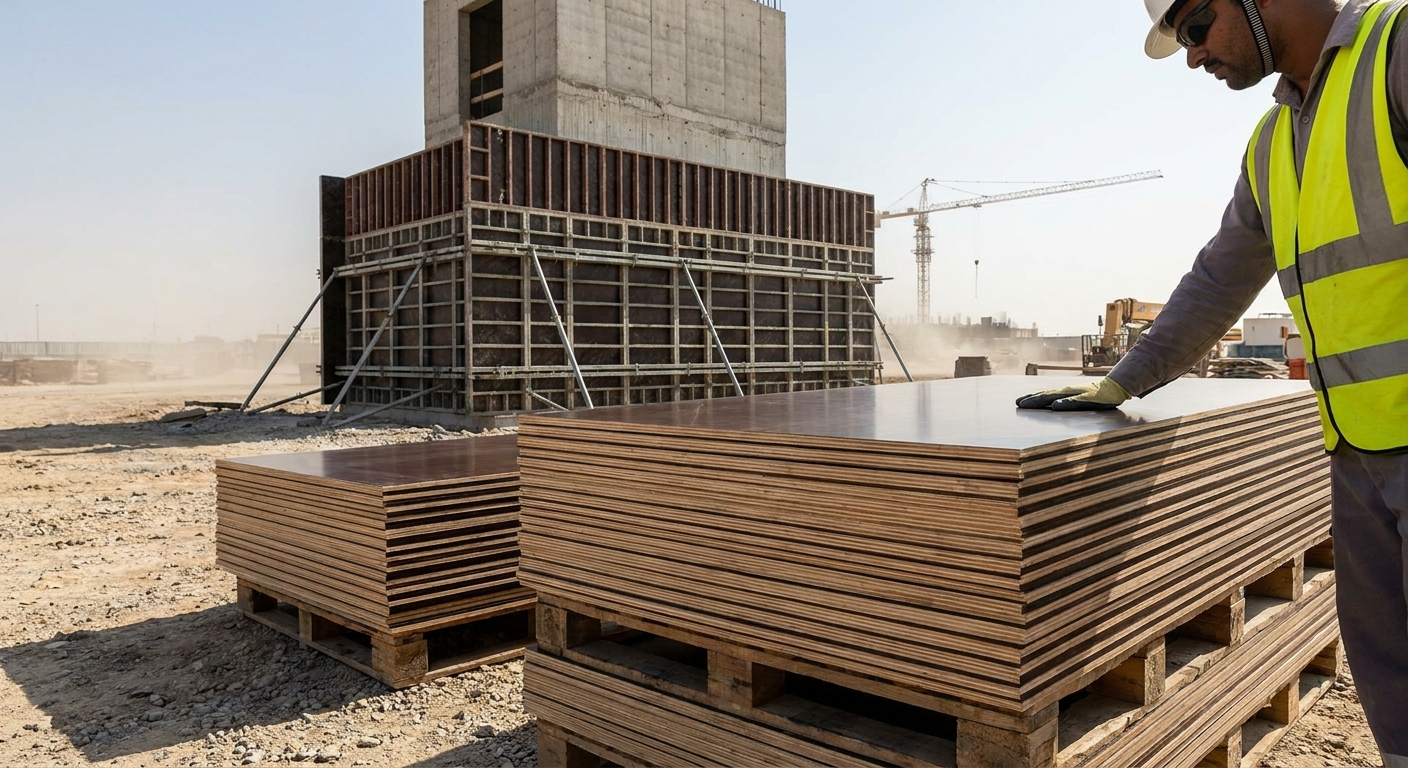
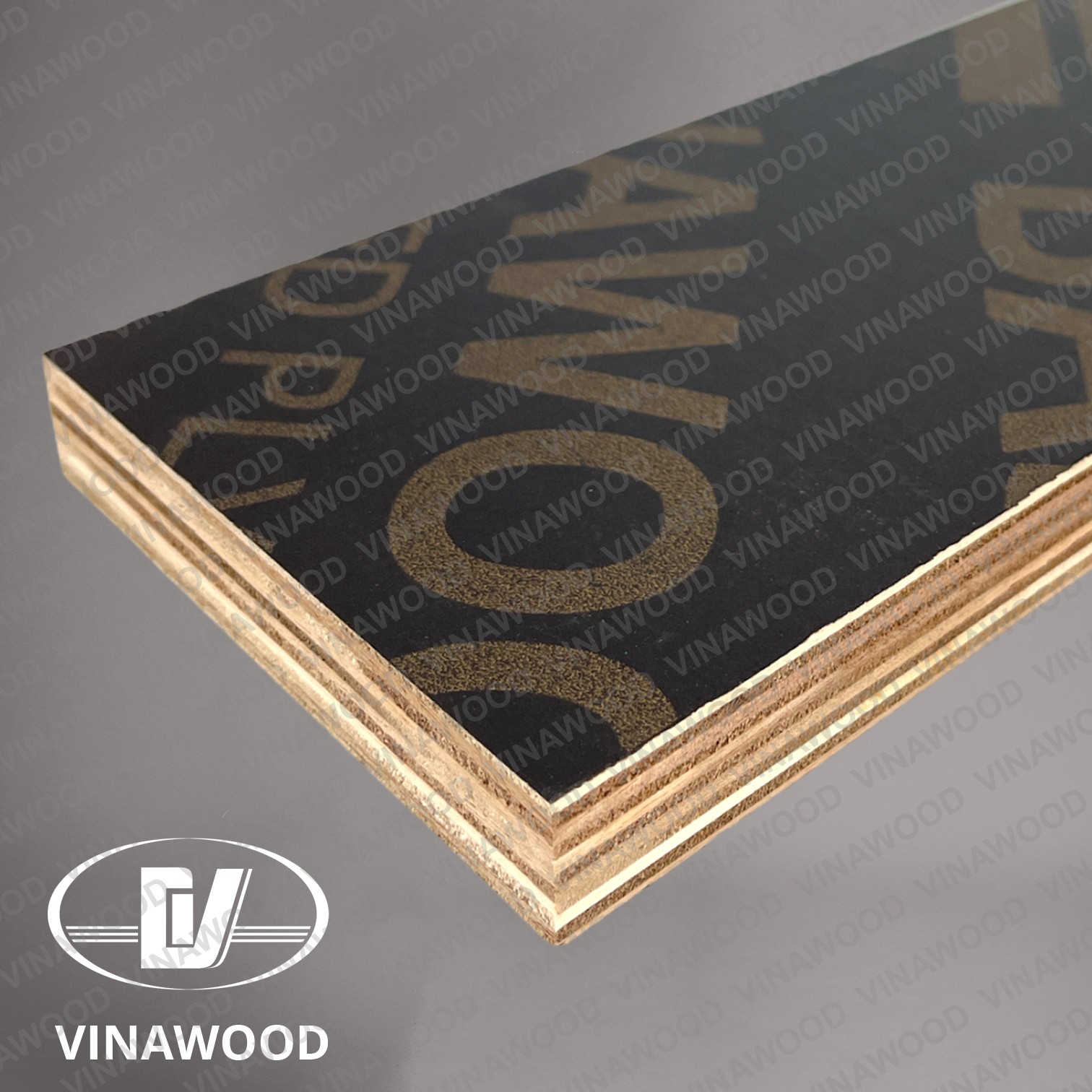
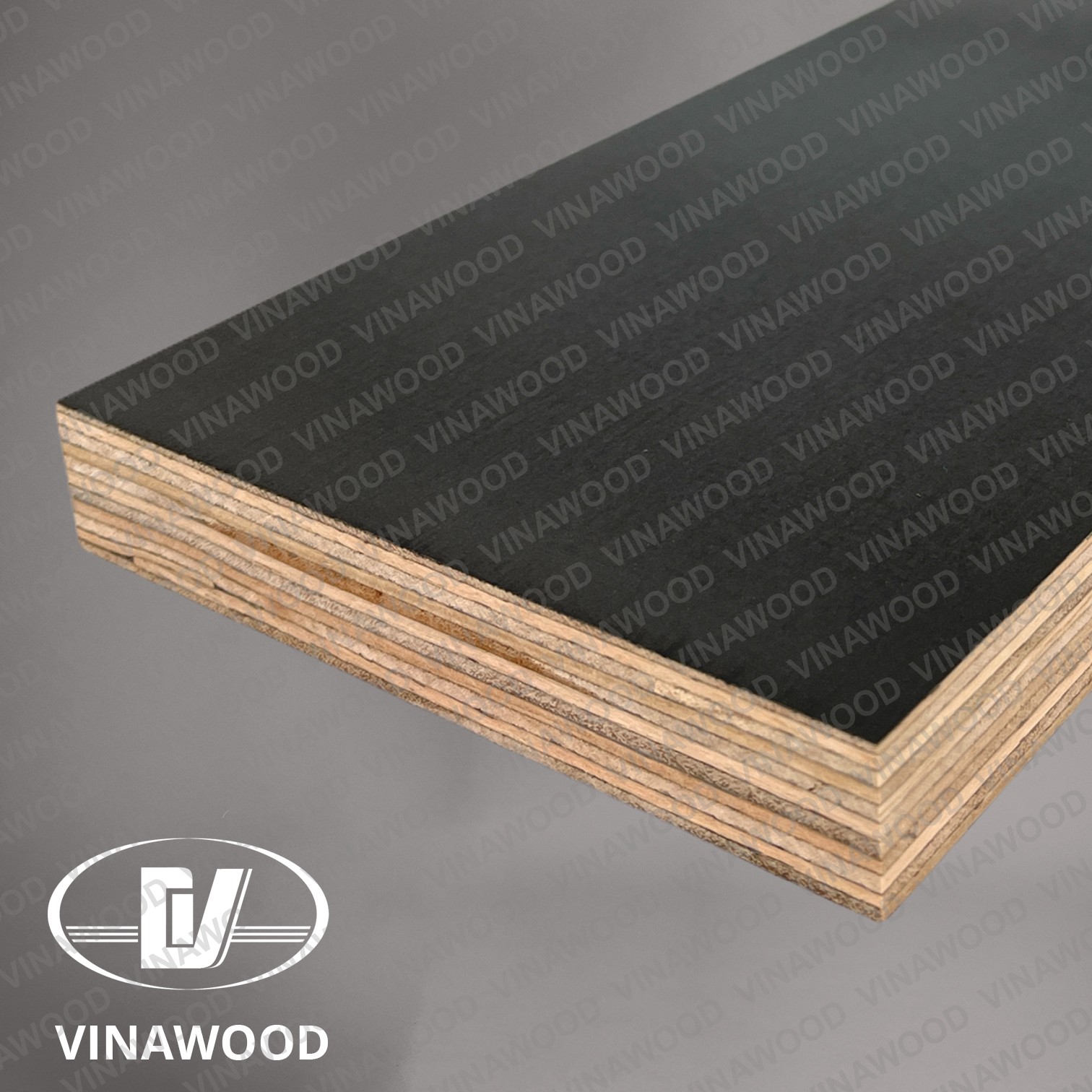
UK yards swap phenolic plywood, phenolic ply, phenolic board and shuttering plywood for the same thing: a hardwood-veneer panel with phenolic resin film on one or both faces, pressed against wet concrete. North America calls the same stack film-faced or HDO/MDO. Construction is the same.
The film is why the panel survives repeat pours. Smooth face. Clean release. Moisture stays out. Alkaline mix doesn't chew it the way bare construction plywood would.
What the trade name hides is the core glue. On a UK quote, "phenolic plywood" usually means the film. Under that film the veneers are bonded with either melamine-urea-formaldehyde (MUF / WBP melamine, EN 314 Class 2) or phenol-formaldehyde (PF / WBP phenolic, EN 314 Class 3). Both are real formwork panels. Different service class. Different reuse count. We keep them separate so the engineer's spec is visible up front.
For a broader overview of phenolic plywood properties and global product variants, see our guide to phenolic plywood properties. For the side-by-side comparison of the two core glue classes, see melamine vs phenolic film-faced plywood.
Why UK Contractors Specify Phenolic Plywood
UK formwork specs are tight. Concrete forming plywood has to meet EN 13986:2004 (wood-based panels in construction). Most jobs also want EN 636-2 (humid) or EN 636-3 (exterior). A film-faced panel with the right core glue covers both:
- EN 314 bond class — Class 2 for MUF-glued panels (humid-conditions service), Class 3 for PF-glued panels (full weather exposure).
- EN 636 structural grade — EN 636-2 or EN 636-3 to match the bond class above. The panel can safely support formwork loads at the matching exposure level.
- Phenolic film surface — the resin overlay that gives the cast surface its release behaviour and the panel its abrasion resistance.
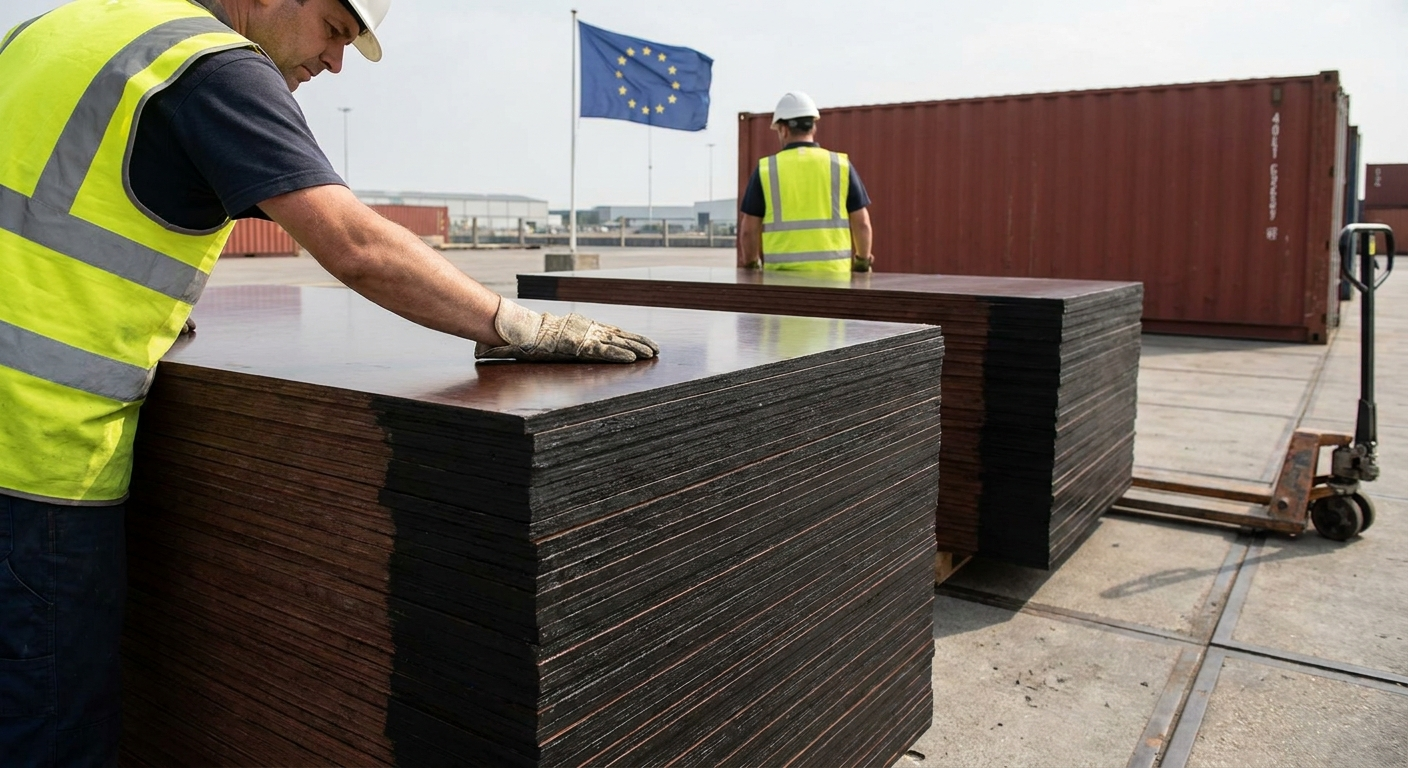
Latvia, Finland and the eastern Baltic used to own the UK shelf. Post-Brexit terms and higher Baltic freight have pushed more importers toward direct containers from mills in Vietnam — same EN 636 paperwork, often a sharper landed price.
Phenolic Plywood Grades and Reuse Performance
Not all film-faced "phenolic plywood" pours the same. Reuse hangs on core glue first, face film weight second. Get both right and cost-per-pour usually beats a one-grade-fits-all PO.
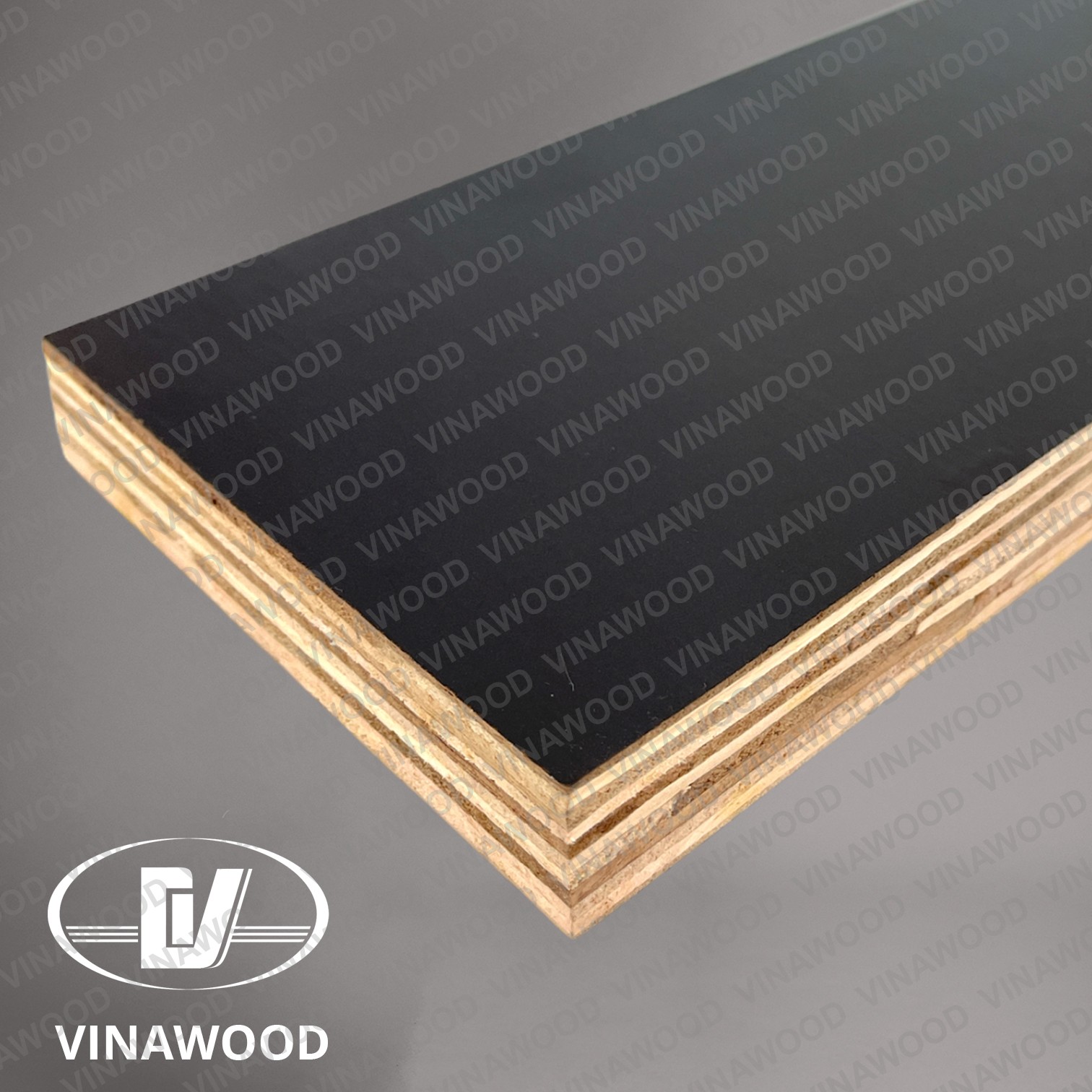
Vinawood ships four film-faced grades that fit common UK systems. Different core glue. Different film:
| Product Grade | Core Glue | Face Film | EN Standard | Reuse Cycles | Typical UK Application |
|---|---|---|---|---|---|
| Eco Form Plus | WBP MUF | Brown phenolic | EN 636-2 | Up to 8 | Residential foundations, light commercial slab |
| Form Basic | WBP MUF (standard) | Brown phenolic | EN 636-2 | Up to 10 | Multi-storey residential, standard commercial |
| Form Extra | WBP MUF (higher melamine content) | Brown phenolic (same as Form Basic) | EN 636-2 | Up to 15 | Moderate-cycle commercial, extended residential pours |
| Pro Form | WBP PF (phenolic) | Dark brown phenolic | EN 636-3 | Up to 20 | High-rise cores, long-cycle rental systems, fair-face concrete |
Three notes for the spec writer. Eco Form Plus, Form Basic and Form Extra wear phenolic face films — typically about 165 g/m² — but their cores are MUF, not PF. They sit in EN 636-2, not under "phenolic plywood" in the strict adhesive sense. Form Extra hits up to 15 reuses versus Form Basic's up to 10 because the glue recipe carries more melamine, not because the film is heavier — same film. Pro Form is the only row where both glue and film are phenolic: 125 g/m² face film, EN 636-3 / Class 3.
UK stock format is 2500 × 1250 mm, 18 mm as standard. 12, 15 and 21 mm on request.
EN 314 Bond Classes: Class 2 vs Class 3
EN 314-1 is the bond test. EN 314-2 sorts the bond into three classes by what it survives:
| Class | Pre-treatment | What it certifies | Typical glue chemistry |
|---|---|---|---|
| Class 1 | Cold water soak | Interior, dry-environment bond | Urea-formaldehyde (UF) — not suitable for formwork |
| Class 2 | 72-hour soak in 20 °C water plus boil-dry-soak cycle | Humid-environment bond | Melamine-urea-formaldehyde (MUF) |
| Class 3 | Boiling water immersion and drying cycles | Fully weather-resistant bond — the "WBP" tier | Phenol-formaldehyde (PF) |
UK yards still say "WBP" for both Class 2 and Class 3. Fine if everyone hears it as "water-resistant glue past Class 1." Trouble starts when the writer thinks WBP means Class 3 and the supplier ships Class 2. The class number on the EN 314-1 certificate is the only label that settles it.
Every Vinawood order ships with third-party EN 314-1 paperwork. Class 2 for Form Basic / Form Extra / Eco Form Plus. Class 3 for Pro Form. Put the class number on the PO — not just "WBP."
EN 636: Structural Grade and Service Conditions
EN 636-2 and EN 636-3 set where the panel can live and for how long:
- EN 636-2 ("Humid Conditions"): Suitable for interior and sheltered outdoor conditions where the plywood is not in continuous contact with water. Most UK residential and light commercial formwork uses EN 636-2.
- EN 636-3 ("Exterior"): Suitable for long-term outdoor exposure. Recommended for high-rise formwork systems, multi-storey car parks, and applications where plywood will be stacked outdoors for extended periods between pours.
EN 636 tracks EN 314: Class 2 (MUF) under EN 636-2; Class 3 (PF) under EN 636-3. Film weight and veneer grade then split panels inside each class.
CE Marking and Post-Brexit Certification (UKCA)
From 1 January 2021 the UK shifted some categories to UKCA. Plywood and wood-based panels still run on CE across the UK and EU.
CE on film-faced plywood means the maker or importer confirms EN 13986:2004. The mark is a conformity declaration; bond and durability still come from EN 314 and EN 636 tests.
UK importers buying from Vinawood: we supply third-party EN 314-1 and EN 636 reports for both MUF (Class 2) and PF (Class 3). Most UK importers apply CE themselves on import and register with UK timber authorities — they don't lean on the mill's mark. We send the full tech pack for your declaration.
Panel Size: Standard UK Formwork Dimensions
UK formwork default: 2500 × 1250 × 18 mm. Fits PERI, DOKA, HUNNEBECK and Horizon frames and wastes less on common grids.
Other thicknesses:
- 12 mm: Used in lightly-loaded applications, soffit formwork, and non-structural cladding systems.
- 15 mm: Intermediate option for medium-span formwork.
- 21 mm: Heavy-duty formwork for deep beams, prestressed systems, and long-cycle high-load applications.
We cut all those thicknesses in 2500 × 1250. First-time importers can mix thicknesses in one container.
Sourcing from Vinawood: Shipping to the UK
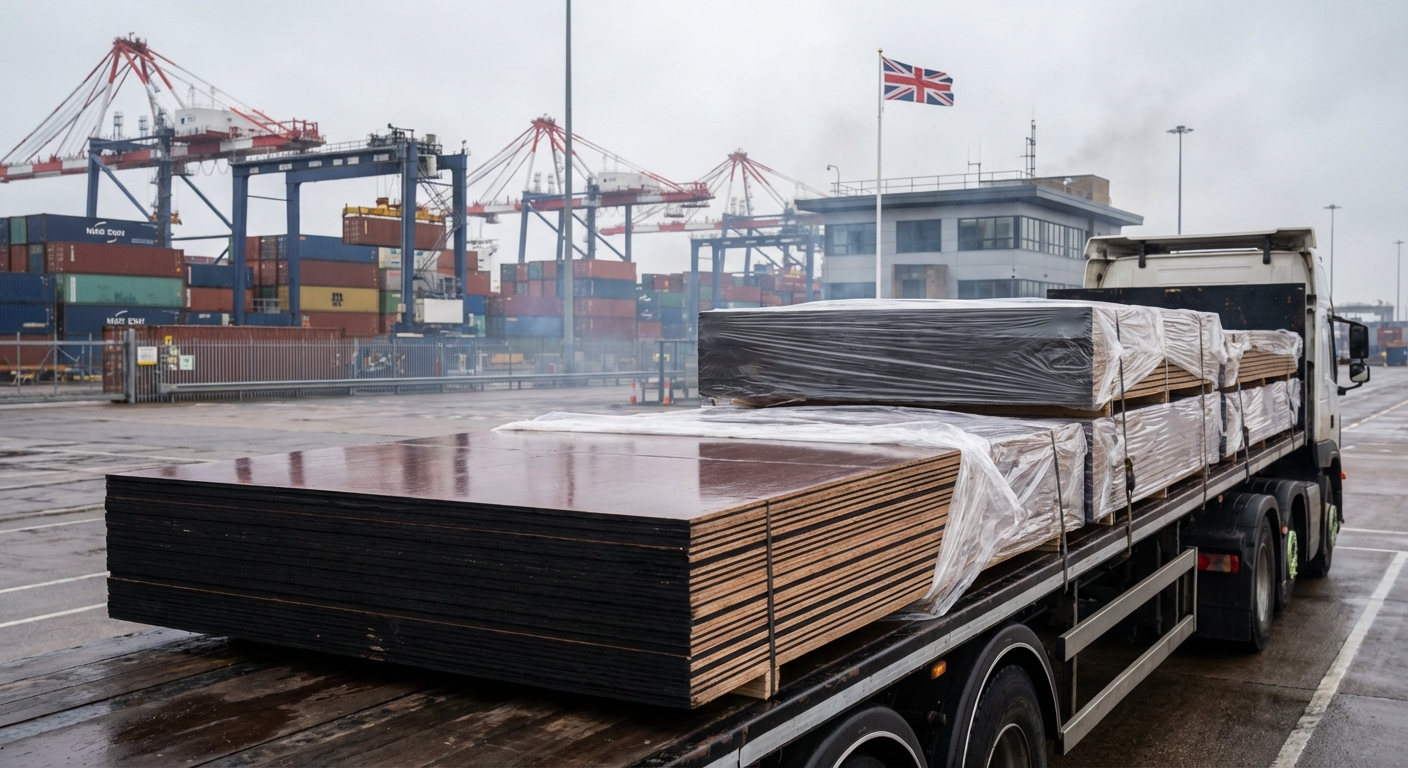
Shipments leave Hai Phong. Typical UK transit:
| Port of Discharge | Transit Time (FOB Hai Phong) | Incoterm Options | Typical Route |
|---|---|---|---|
| Felixstowe (or other UK east coast) | 25–28 days | FOB, CFR, CIF | Hai Phong → Rotterdam/Hamburg (transshipment) → Felixstowe |
| Southampton / Bremerhaven | 28–31 days | FOB, CFR, CIF | Direct (less common) or via northern Europe |
Most orders are one 40HC — about 32–34 m³ of 18 mm (roughly 85–95 panels, sort depending). Minimum is one 20-foot (18–19 m³).
Why UK Builders Are Sourcing Vietnamese Plywood
Baltic stock used to own the UK. Freight up, post-EU friction, currency swings — more buyers now open a Vietnam container. What they get from a mill like Vinawood:
- Landed cost — manufacturing and sea freight that often undercuts Baltic distributor quotes on like-for-like EN grades.
- Traceable plantation fibre — well-documented Vietnamese forestry; audit trails that hold up on green-building jobs.
- Both Class 2 and Class 3 in one box — EN 636-2 MUF (Form Basic, Form Extra, Eco Form Plus) and EN 636-3 PF (Pro Form) in the same container, which cuts sourcing overhead on mixed portfolios.
Frequently Asked Questions
Is Vinawood's film-faced plywood CE marked?
Full EN 314-1 and EN 636 reports ship with both Class 2 (MUF) and Class 3 (PF) ranges. UK importers use those for their own CE declarations. We don't pre-stamp CE — the importer owns conformity on the UK market.
Is Form Basic a phenolic-glued plywood?
No. Form Basic wears a phenolic face film (typically ~165 g/m²) over an MUF core — EN 314 Class 2 / EN 636-2. Trade name: phenolic film overlay. Strict adhesive sense: not phenolic-bonded. Need Class 3 / EN 636-3? Pro Form (PF core, 125 g/m² film). Want Class 2 with more cycles? Form Extra — same Class 2, higher-melamine MUF, up to 15 versus Form Basic's up to 10.
Can I import phenolic plywood from Vietnam directly?
Yes. Book sea freight (your forwarder or ours), clear UK customs, haul from the port to your yard. Plenty of UK importers run this through a broker; we work with theirs on the export pack.
What is the minimum order quantity?
Floor is one 20-foot (about 18–19 m³). Most UK buyers move 40HC for freight math. Mix thicknesses or grades in one box if you need to.
What guarantees does Vinawood provide on reuse cycles?
Reuse ratings assume normal forming conditions — temp, humidity, common release agents, typical cure times. Site practice, oil choice and handling move the number. We warrant the EN 314 / EN 636 class on the cert; reuse figures are indicative from tests and field jobs.
Can I use Vinawood plywood with my existing PERI / DOKA / HUNNEBECK formwork?
Yes. Same thickness film-faced plywood drops into standard UK/EU frames with no mods. 2500 × 1250 is the shared format across those systems.
Is there a cost advantage to buying direct from Vietnam?
Often, yes. FOB Hai Phong plus your own freight typically lands under a UK distributor quote on like-for-like EN grades — especially once you're past a couple of containers a year. Ask for a CFR/CIF quote on your next PO and compare line by line.
Category
how-to
Related Markets
Related Countries
Related Products
▶Sources & References (3)
- EN 314-2: Plywood Bond Quality — Classification — European Standards (2023-01-01)
- EN 636: Plywood — Specifications — European Standards (2023-01-01)
- UKCA Marking — Transitional Arrangements 2026 — UK Government (2024-01-01)