Formwork Plywood for GCC Construction: Film-Faced Panels, Specs & Supplier Guide
GCC formwork plywood for UAE, Saudi Arabia, Qatar, Kuwait, Oman, and Bahrain: EN 636-3 vs EN 636-2 for heat and sun storage, Vinawood film-faced ladder with HDO Basic as Class 2, sizes, and Vietnam-to-Jebel Ali planning ranges.
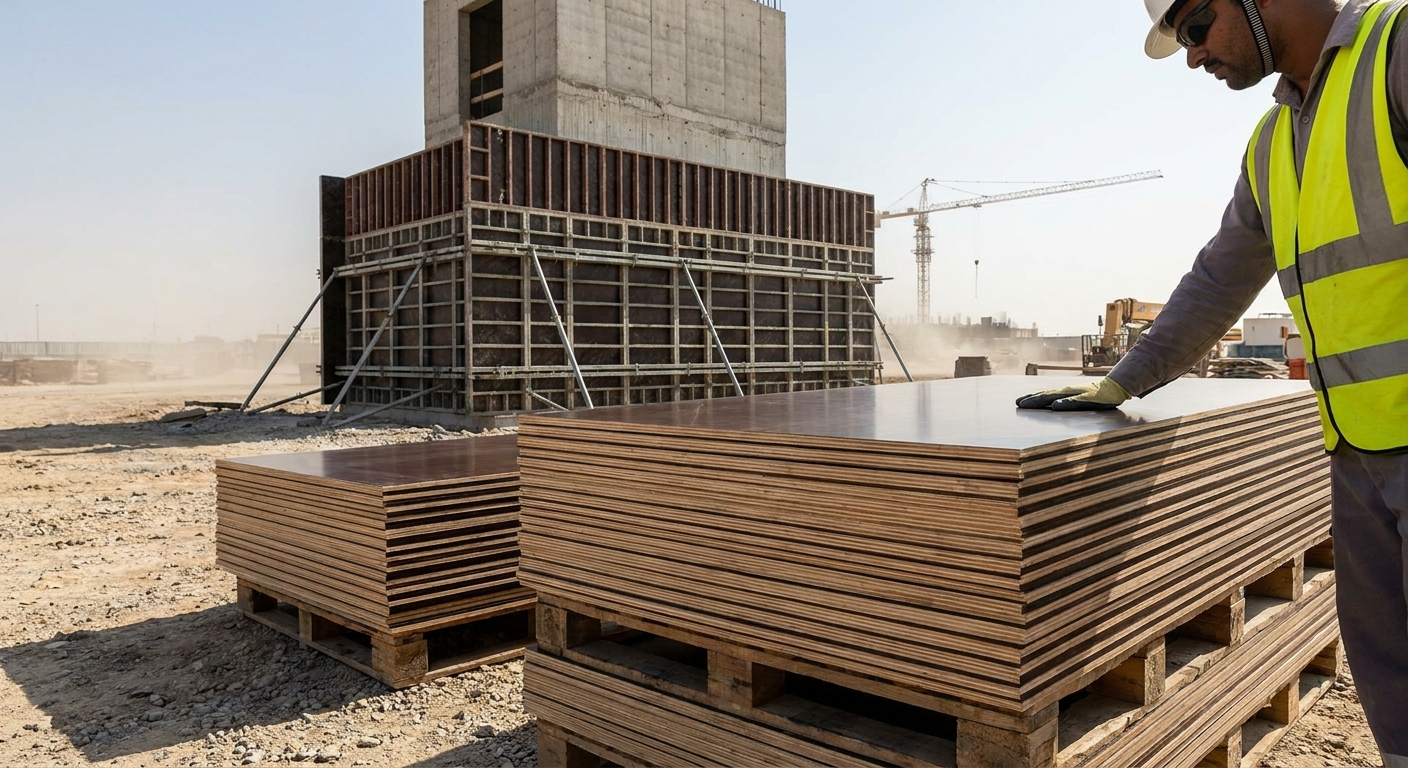
Sun storage and more than ten pours on a GCC site usually means one RFQ line: EN 636-3 / phenolic Class 3. That is Pro Form, Pro Form Lite, HDO Standard, or HDO Premium. HDO Basic is not in that set — it is Class 2. EN 636-2 core-MUF panels belong on shaded, lower-cycle work. An 18 mm sheet left bare on a Dubai or Riyadh deck in August can run a core temperature far above ambient. The bond class on the purchase order is what still holds the face on pour fifteen.
This page is for procurement managers, project engineers, and consultants buying formwork plywood into the UAE, Saudi Arabia, Qatar, Kuwait, Oman, and Bahrain. Heat, humidity cycling, and dust sit on every yard. So do the standards GCC tenders actually cite. Vinawood has manufactured plywood in Vietnam since 1992 and ships about 5,000 containers a year to 55+ countries, including regular runs into Jebel Ali and other GCC ports.
Why panel choice costs money on GCC jobs
Reuse counts die faster here than on temperate sites. High-rise cores in Dubai Marina and Business Bay, Etihad Rail and Riyadh Metro packages, NEOM and Red Sea giga-work, mass-concrete podiums, mid-rise mixed-use across the emirates and Saudi regions — many of those jobs run several tower cranes on tight pour cycles. The cycle only holds if the panels behind the system keep their face film through the planned reuse count.
Summer inland air regularly clears 45°C. Coastal yards add humidity on top of the heat. Stacks between pours often sit in direct sun, so cores cook past ambient. Fine sandstorm dust is the other killer. It abrades stored faces, and it gets worse when sheets stack face-to-face without cover sheets. Price the cost per square metre of formed concrete across the full pour programme, not the first dock quote alone. A panel that looks cheap at gate-in can still be the expensive choice by pour twelve if the face film is already chalking.
How the GCC formwork plywood market is supplied
No local mill of consequence. Every panel is imported. Chinese volume into Jebel Ali, Dammam, and Hamad Port used to dominate. Buyers have shifted toward Vietnam, Indonesia, and Malaysia over the last several years — price, certificates, and origin diversification. Doka, Peri, and Alsina still own a lot of high-rise core preference through their own systems. Loose-panel supply for table forms, climbing forms, and ordinary wall-and-column work stays open to direct import. Climate physics, grade selection, and tender language are the job of this page.
Standards GCC specifiers actually reference
Region specs cite a recognisable stack. Mixing up “marine plywood” with exterior bond class for formwork still burns a week on the first RFQ round.
BS EN 636 sets performance classes. EN 636-2 is humid. EN 636-3 is exterior. Most formwork starts on EN 636-2; EN 636-3 is the better call when panels sit in sun or run high reuse. BS EN 13986 covers wood-based panels in construction and drives the CE marking private projects usually accept. BS EN 314-1 Class 3 is the boil test for a durable WBP glue line under repeated wet concrete. Water-resistant. Not waterproof. Edges still need seal. Stacks still need to dry between pours.
US-engineered Saudi mega-projects sometimes add ASTM PS 1 or ASTM D5266. SABER gates plywood into Dammam, Jeddah, and Riyadh dry ports. ESMA / MOIAT covers UAE conformity. Neither is a quality grade. Both are registration gates. Miss them and the box sits.
What 45°C heat, humidity cycling, and dust do to panels
Three stresses. Spec for each.
Sustained heat. Core-MUF under EN 636-2 softens once site heat hangs above about 40°C. Failure is slow: bond shear drops, stiffness fades across the programme. Phenolic Class 3 holds higher because phenolic’s heat-deflection threshold sits above MUF. That is why sun-stored, high-reuse GCC work belongs on EN 636-3.
Humidity cycling. Dubai Marina, Doha Corniche, Manama, Salalah — morning dew, dry afternoon heat, fast evening cool-down. Unsealed edges let moisture wick in. The swell-and-dry cycle starts delamination from the edge inward. Factory edge sealing on all four sides is often the gap between a short reuse life and a programme near the published maximum.
Sandstorm dust. Dust on faces acts like sandpaper when crews stack panels face-to-face between pours. Heavier films survive longer than light films. Cover sheets and shade still buy more pours than film weight alone. I have walked yards where the same grade looked finished after six pours because covers never went back on after lunch.
Release agent timing matters more than most RFQs admit. Apply it cleanly before the pour, wipe excess, and keep dust off the wet film. A dirty face under a good phenolic sheet still leaves a cloudy pour. Crews that treat the overlay as disposable usually burn their reuse budget by mid-programme.
Grade ladder for GCC reuse targets
Match overlay, core glue, and bond class to the pour count you actually plan:
| Grade | Bond / standard | Reuse (maximum) | GCC fit |
|---|---|---|---|
| Eco Form Plus | EN 636-2 / core MUF | up to 8 | Short-cycle finishing forms, shaded storage |
| Form Basic | EN 636-2 / Class 2 / core MUF | up to 10 | Low-cycle residential, indoor finishing, shaded stacks |
| Form Extra | EN 636-2 / Superior Glue MUF (not Class 3) | up to 15 | Standard commercial under shade; same phenolic face film as Form Basic. Extra reuse is glue chemistry, not a heavier face |
| Pro Form Lite | EN 636-3 / PF Class 3 | up to 15 | Between Form Extra and Pro Form when sun exposure or coastal humidity starts to matter |
| Pro Form | EN 636-3 / PF Class 3 | up to 20 | High-rise cores, mega-projects, direct-sun storage, coastal humidity |
| HDO Basic | EN 636-2 / Class 2 (not Class 3) | up to 10 | HDO face on shorter reuse programmes |
| HDO Standard | EN 636-3 / PF Class 3 | up to 15 | HDO face with Class 3 bond for sun-stored or higher-reuse packages |
| HDO Premium | EN 636-3 / PF Class 3 | up to 20 | Architectural fair-face on prestige packages |
Class 3 phenolic is Pro Form, Pro Form Lite, HDO Standard, and HDO Premium only. HDO Basic is Class 2 under EN 636-2 (reuse up to 10). Form Basic, Form Extra, and Eco Form Plus stay on core MUF under EN 636-2 — good value when the work fits, wrong when the tender wants Class 3. On the RFQ, name which “melamine” you mean: core MUF adhesive, phenolic face film, or decorative laminate. Bare “melamine-bonded” language is how the wrong grade lands on the PO.
P-Form is polypropylene, not Pro Form. Consply is commercial Bintangor, not film-faced formwork. These grades use plantation-grown hardwood veneers and a water-resistant (WBP) glue line. Reuse is “up to N”, never a guarantee. Handling, release agent, and edge seal decide whether you land near the top of that band. Thickness for walls, slabs, and deep lifts sits in the concrete formwork plywood thickness guide. Bond chemistry detail is in phenolic plywood; the broader overview is concrete form plywood.
Sheet sizes and thicknesses common on GCC sites
1220 × 2440 mm (4 × 8 ft) is still the workhorse — Indian-origin labour crews, many Peri and Doka legacy decks, most loose-panel wall and column work. 1250 × 2500 mm (EU metric) shows up more on European-engineered megaprojects and facade packages where cut waste has to stay low. Thickness habits: 18 mm for walls and columns, 12 mm for slab edges and light forms, 21 mm for deep-lift walls and blind-side forming.
Both formats in one container still matter. Plenty of GCC distributors stock only one size. That forces cutting or a second supply line. Mixed-thickness containers (12 + 18 + 21 mm) are routine when one package spans wall, slab, and deep-lift work. Ask for the format mix on the first RFQ if the package already knows its wall and slab split — waiting until the second container is how sites end up with scrap on the floor.
Vietnam to GCC ports — planning ranges only
Ocean transit is a planning range, not a freight quote. Common scheduling windows: Jebel Ali about 15–22 days; Dammam about 18–25; Jeddah about 20–27; Hamad Port about 17–24; Sohar / Salalah about 14–20; Shuwaikh about 19–26. Factory production after confirmation usually adds a few more weeks. First container, RFQ to gate-in, is a multi-week commitment.
A 40HC often carries roughly 380–420 sheets of 18 mm film-faced. Treat that as a planning MOQ, not a commercial quote. Incoterms on this lane: FOB Vietnam when the buyer controls freight; CFR or CIF into Jebel Ali / Dammam / Hamad when landed-cost certainty matters; DDP for established accounts. SGS or Bureau Veritas pre-shipment inspection is worth keeping on first buys. For Saudi, SABER registration must be live before loading — a missing record holds the box.
What belongs in a GCC tender or RFQ
Write BS EN 314-1 Class 3 on the bond, and ask for a current third-party boil-test report from the production batch. Put EN 636-3 when panels sit in sun or clear ten pours. Put EN 636-2 with a short rationale when the work is shaded and low-cycle. State face film weight (for example 120 g/m² versus a heavier film for high-reuse packages) so a light film cannot substitute silently.
Require factory edge sealing on all four edges. Keep CARB Phase 2 / EPA TSCA Title VI if panels may later move indoors. Ask for FSC Chain-of-Custody where LEED or similar credit is on the table. Add a mill test report dated within 90 days of shipment, a pre-shipment inspection clause naming SGS or Bureau Veritas, thickness tolerance around ±0.5 mm, and a clear rejection path for out-of-tolerance sheets. Full sentences. Telegram punch lists lose fields when the PO is built. If the package will store panels in open sun, write that storage condition into the RFQ next to the EN 636 class — it is the line that stops a Class 2 substitution from looking “close enough.”
Vinawood for GCC buyers
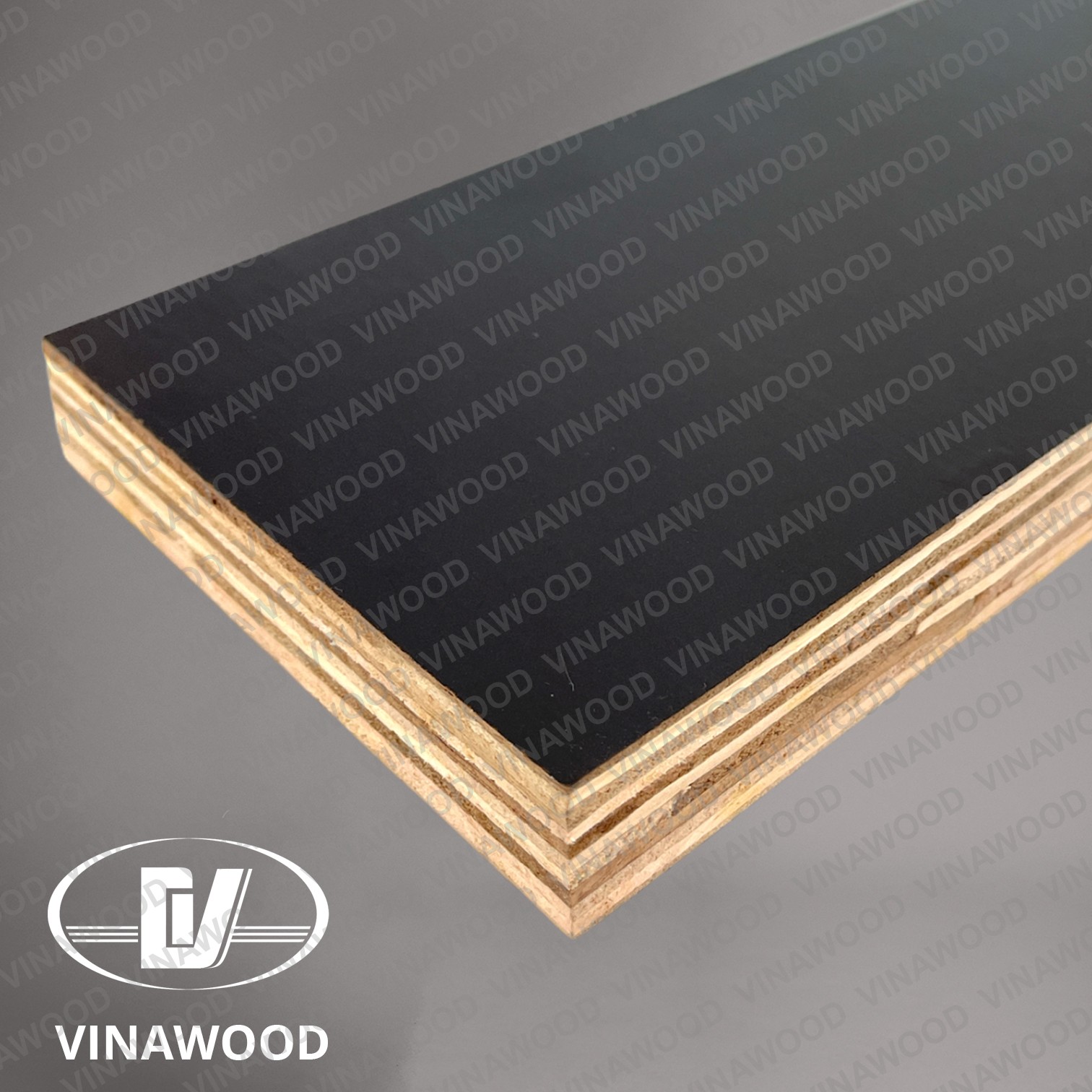
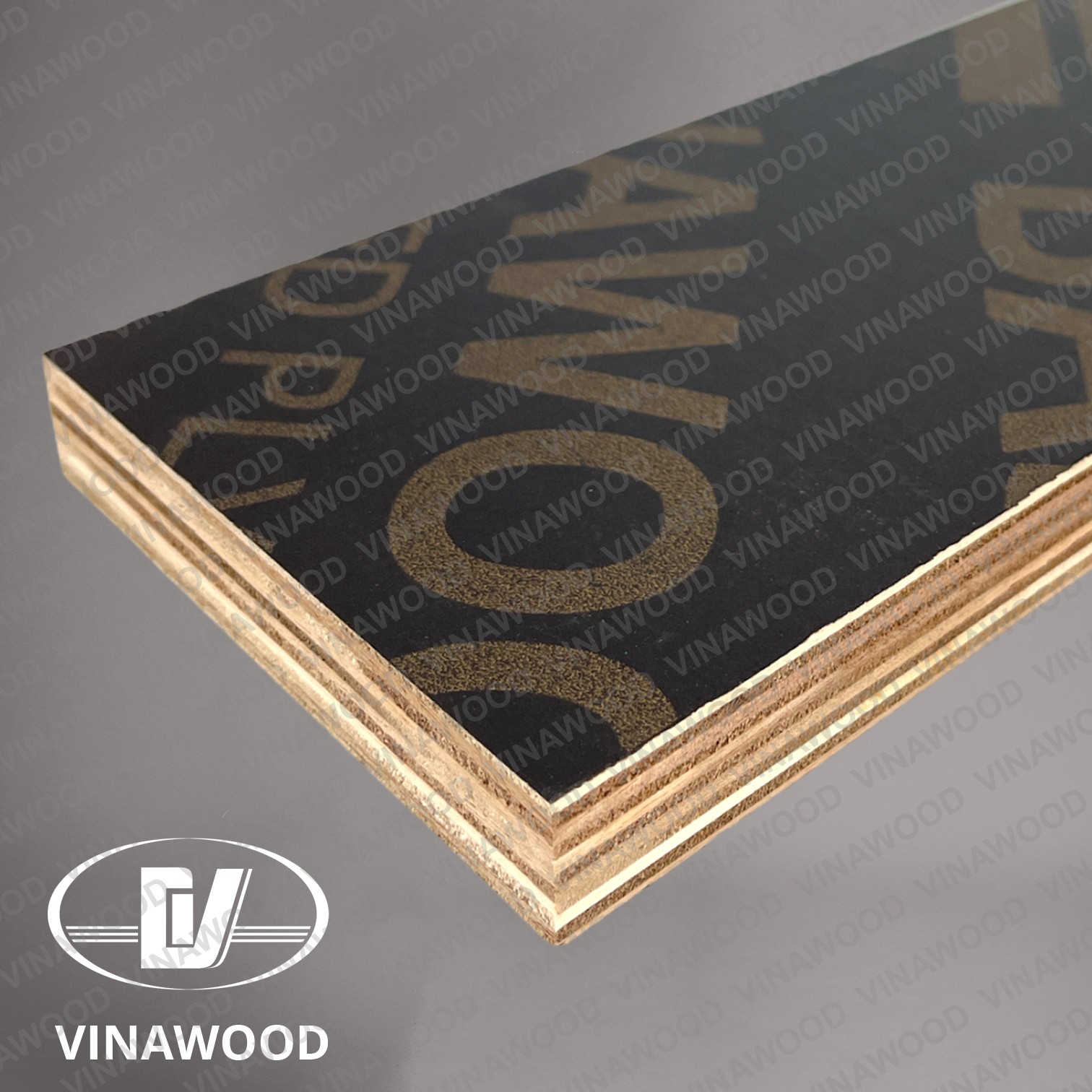
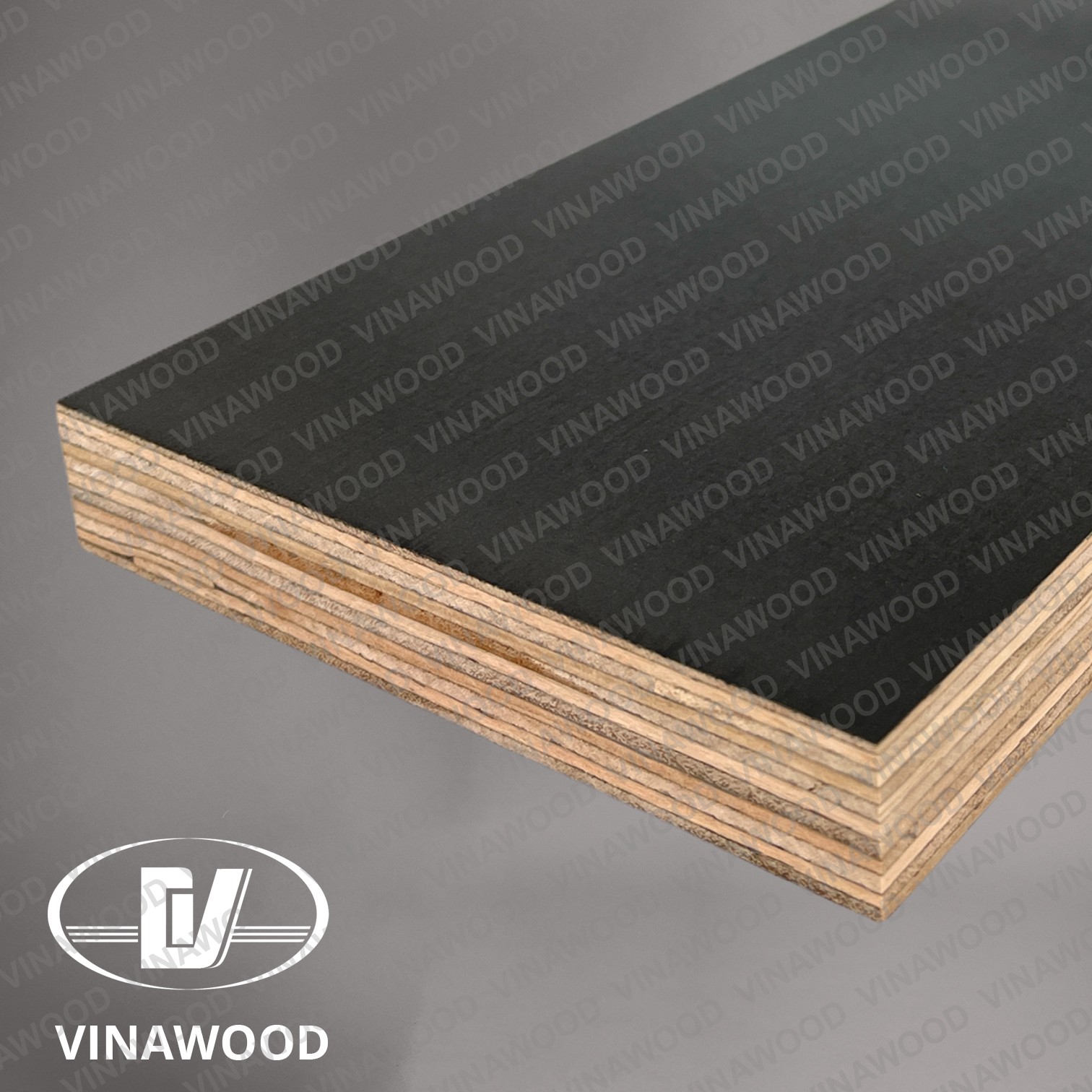
Vinawood has manufactured for international export since 1992. Regular runs into Jebel Ali and other GCC ports sit with CE under BS EN 13986, FSC Chain of Custody, CARB Phase 2 / EPA TSCA Title VI, and ISO 9001. The film-faced plywood collection covers Eco Form Plus, Form Basic, Form Extra, Pro Form Lite, and Pro Form alongside the HDO range, in both 1220 × 2440 mm and 1250 × 2500 mm.
Mixed-grade and mixed-thickness containers are available on first orders. Sample packs can go to GCC consignees before a full container, with certificate of origin, current certifications, and a recent mill test report. SGS or Bureau Veritas inspection is a standard option. If a mixed RFQ uses North American overlay search language, MatteFace Plywood (MTF) is the product name; MDO is a search or bridge term only — not a GCC default for this climate brief.
First-time buyers usually start with a small mixed sample pack against a draft RFQ, then lock grade and format before the first 40HC. That sequence costs a week of paperwork and saves a month of wrong panels on site.
Send overlay, EN 636 class, PF versus MUF core glue, thickness, sheet format, and reuse target. Then request a quotation or open an RFQ. Sales will map that brief to Eco Form Plus, Form Basic, Form Extra, Pro Form Lite, Pro Form, HDO Basic, HDO Standard, or HDO Premium without inventing cycle counts above the published maxima, and will send mill specs plus CE / FSC / formaldehyde documentation.
Category
guides
Related Markets
Related Countries
Related Products
▶Sources & References (5)
- BS EN 636:2012+A1:2015 Plywood Specifications — BSI / CEN (2015)
- BS EN 13986:2004+A1:2015 Wood-based panels for construction — BSI / CEN (2015)
- BS EN 314-1:2004 Plywood Bonding quality Test methods — BSI / CEN (2004)
- Saudi Product Safety Program (SABER) — SASO (2026)
- ESMA Conformity Scheme (UAE) — MOIAT (2026)