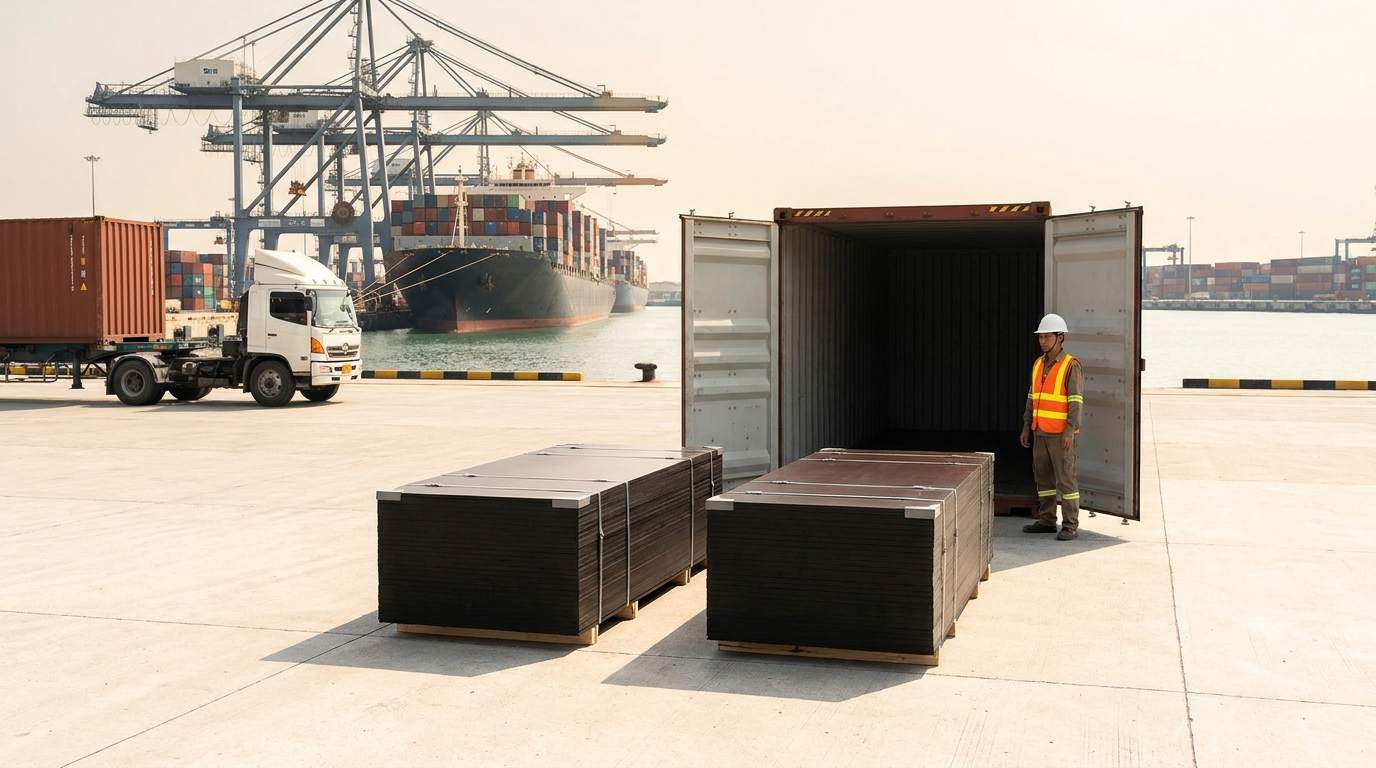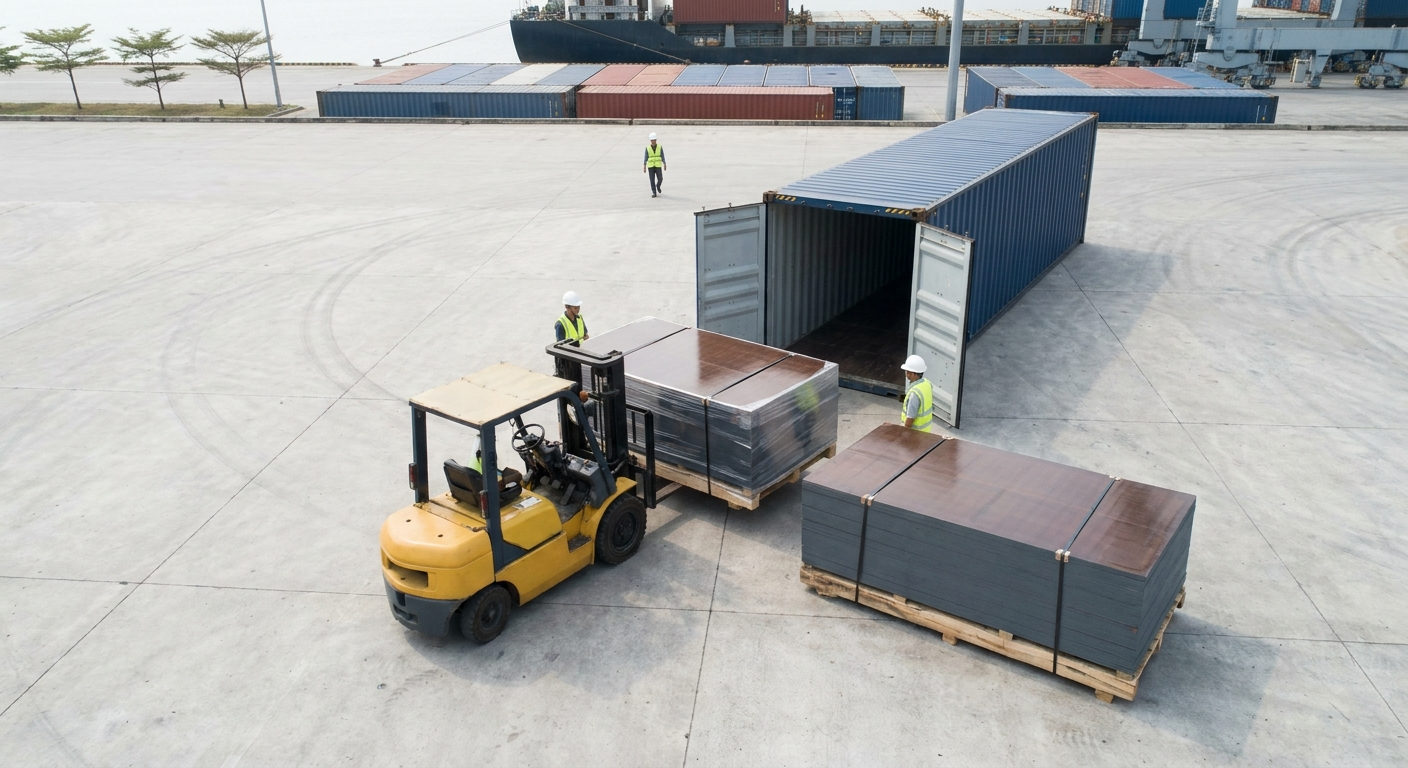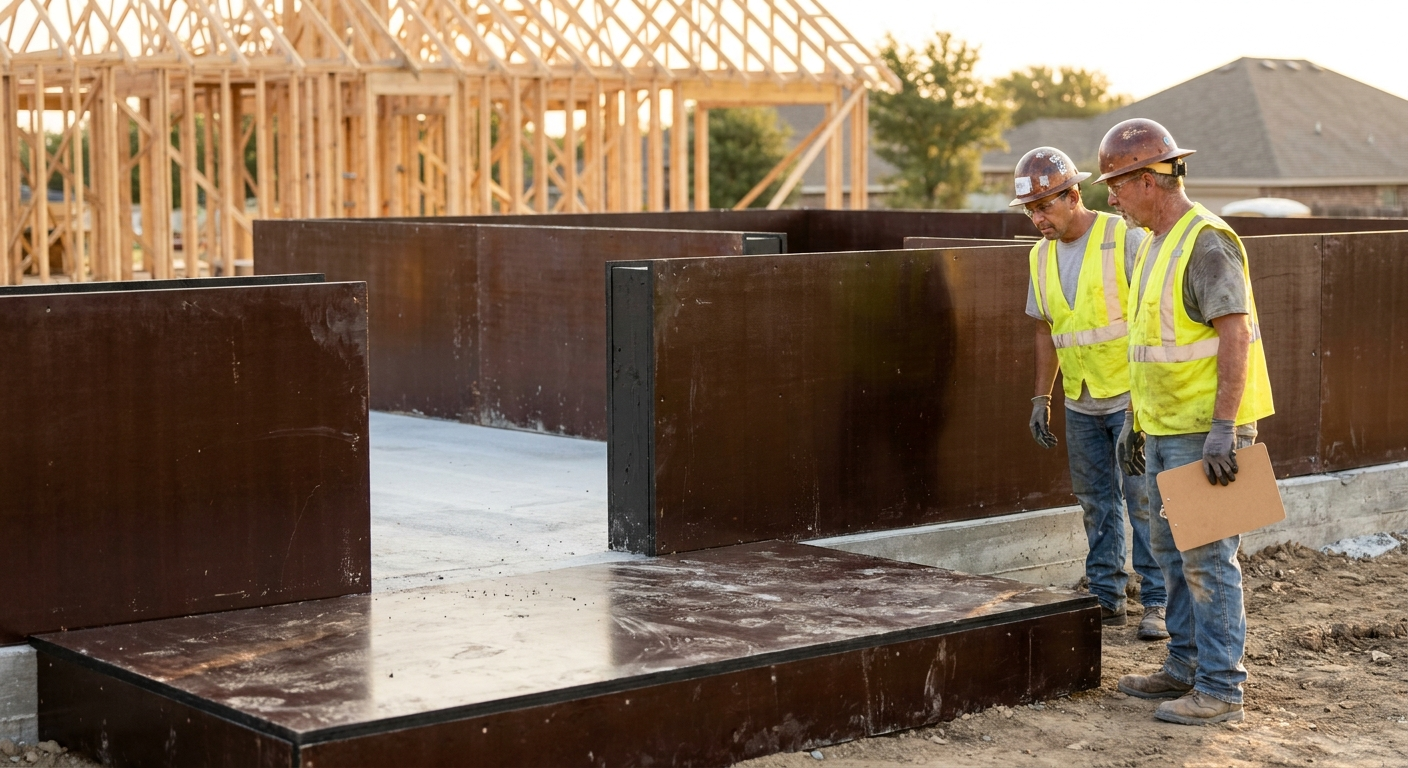
MDO Plywood Price (2026): Per-Sheet Cost & Per-Pour Math
What US and Canadian buyers actually pay for MDO plywood in 2026, the cost-per-pour math against HDO and CDX, and where direct-import from Vietnam pencils against domestic retail.
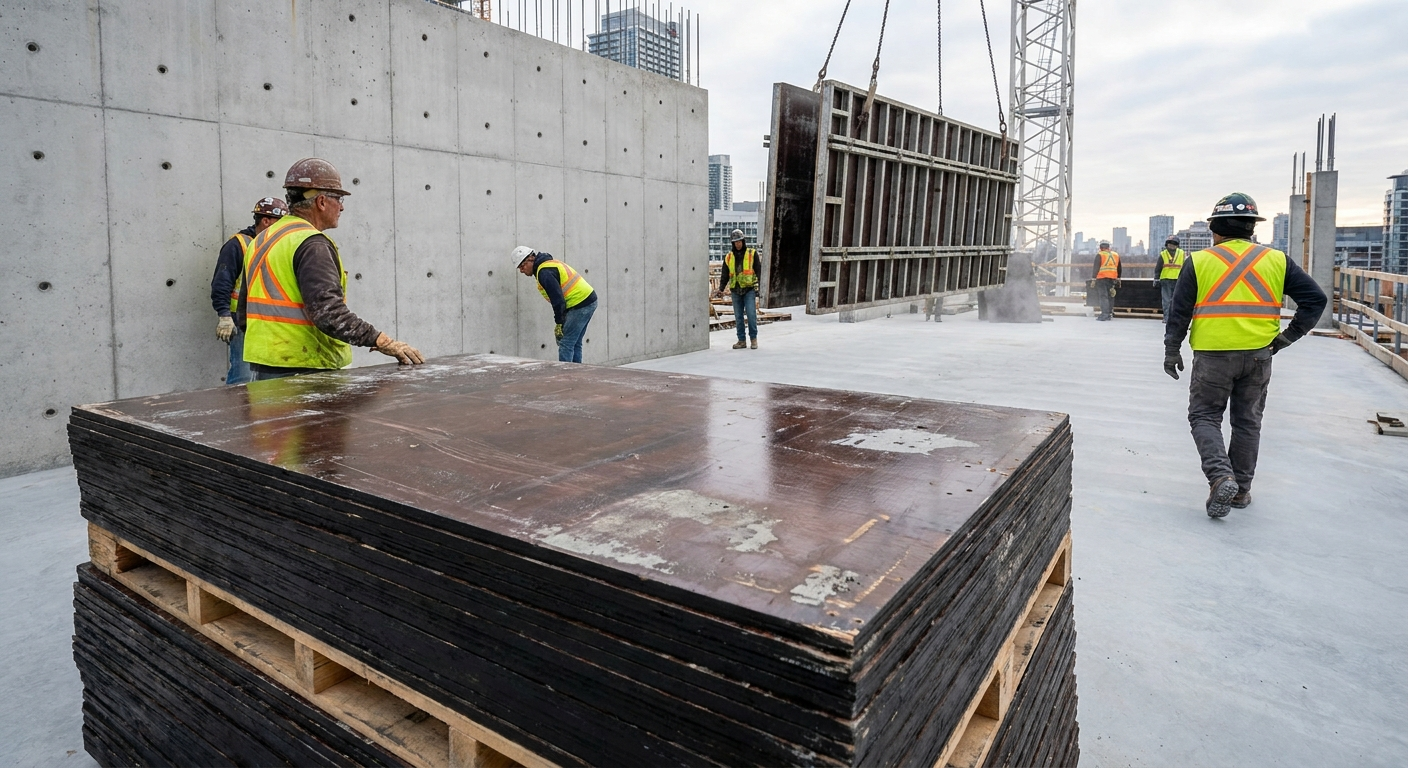
An AI Overview citation pegs MDO plywood at "$88+/sheet" with a smooth, paint-ready surface. That number sits squarely in the middle of where the 2S panel actually retails in 2026. Per-sheet pricing alone misleads on forming projects, though. The number that matters when you are pricing a build is cost-per-pour, and the cheaper-MDO-vs-pricier-HDO question only resolves when you run the math at fifteen pours.
This piece walks through what US and Canadian buyers actually pay for MDO plywood in early 2026, where the price gap to HDO disappears, when CDX plyform stops being a saving and starts being a problem, and where direct-import from Vietnam pencils against domestic retail. We have shipped formwork-grade panels into US and Canadian sites for years and the buyer questions are always the same: how much per sheet, how many pours, and at what volume does the import math start working. Below: the answers.
Current US MDO plywood price ranges, April 2026
Stratified by face configuration, since the 1S vs 2S vs 1SF distinction drives almost half the price spread. Per-sheet retail for 4×8×3/4″ panels:
- MDO 1S Panel (single-side overlay): $40–$60
- MDO 1SF Panel (single overlay + film backer): $50–$75
- MDO 2S Panel (double-side overlay): $55–$85
- MDO Premium HD 1SF (purple-impregnated, high-density): $80–$100
Big-box retail prices at the upper end. Contractor-account and lumberyard tonnage prices typically run 10 to 20% lower. The "$88/sheet" figure quoted in the AI Overview lands in the upper half of the 2S Panel range — a reasonable midpoint for buyers without a contractor account.
Volatility caveat. Plyform pricing moves week to week with raw-material costs (peeler logs, phenolic resin, kraft overlay), domestic mill capacity utilization, and import flow. Verify current quotes the day of order. The numbers here are early Q2 2026 surveys at the major plyform distributors.
What drives MDO plywood cost
Five levers stack on top of each other. Overlay resin loading is the first. Standard APA-domestic kraft-overlay MDO carries a 20–30 g/m² medium-density paper overlay. Premium HD kraft-overlay MDO doubles that to roughly 60 g/m² and impregnates the kraft layer with phenolic resin, giving the purple-tinted face with a much harder casting surface. The resin is the biggest contributor to that $80–$100 range.
Face count is the second. A 1S panel has overlay on one side; a 2S has it on both. The double-side panel costs more for the obvious reason but also for a less obvious one — 2S panels need tighter veneer grading on both faces, since the overlay only smooths small imperfections and large patches show through.
Adhesive class is the third. MDO for outdoor and forming work uses WBP exterior phenolic glue. Cheaper interior-grade MDO with melamine-urea bonding exists but is not formwork-grade and should not be priced against the panels in this guide.
Core species sits fourth on the list. Domestic US MDO uses softwood combi cores — Douglas fir, southern yellow pine. Imported MDO from Vietnam typically uses eucalyptus, acacia, or hardwood combi cores, which are denser at lower cost. The face overlay hides the core species, so buyers cannot see the difference; the core species shows up in panel weight, screw retention, and reuse cycle counts.
Origin and construction is the fifth. APA-trademarked kraft-overlay MDO from a US-domestic mill carries the trademark premium plus the domestic labour and freight stack. Container-direct matte phenolic surface film MDO from Vietnam (a different construction in the same trade-name category) lands below US retail at the dock, before inland trucking. Roseburg, Boulter, and a handful of regional mills cover the APA-trademarked kraft-overlay side; the matte phenolic surface film side runs through specialty distributors and full-container direct buys from Vietnamese manufacturers.
MDO cost-per-pour math
Per-sheet pricing is the wrong unit for forming buyers. What matters is what the panel costs after dividing by realistic reuse cycles. Worked numbers:
| Panel | Per-sheet (USD) | Realistic reuses | Cost per pour |
|---|---|---|---|
| CDX plyform (no overlay) | $50 | 2 | $25.00 |
| MDO 1S Panel (APA-domestic kraft, big-box) | $60 | 10 | $6.00 |
| MDO 2S Panel (APA-domestic kraft, contractor) | $80 | 15 | $5.33 |
| MatteFace 2S (matte phenolic surface film, Vietnam container-direct) | $55 | 15 | $3.67 |
| HDO Premium 2S (domestic, contractor) | $120 | 30 | $4.00 |
The break-evens are clean once you do the math. MDO beats CDX at pour four — anyone running a build past three pour cycles is paying a premium to use CDX. HDO beats kraft-overlay MDO at roughly pour twelve to fifteen, which is the threshold where the upgrade pencils. Below that, MDO is the right call. Above that, HDO is.
The Vietnam-direct row is worth a closer look. At $55 per sheet and 15 reuses, MatteFace matte phenolic surface film from a Vietnamese mill comes in below domestic HDO on cost-per-pour and well below domestic kraft-overlay MDO. The catch: you need full-container volume to land at $55. Single-pallet imports lose the freight efficiency that makes the math work. The break-even on importing is around 200 sheets, which we cover in the channel section.
MDO vs HDO — the upgrade decision
The 30 to 40% per-sheet premium for HDO buys roughly twice the reuse cycles. That headline ratio is the simple version. The textured version: where the project sits inside the reuse-count distribution determines whether the upgrade is the right call.
Below ten pours per panel, MDO is correct. The HDO premium is wasted because you will never use the extra reuse capacity. Ten to fifteen pours is the neutral zone — cost-per-pour is roughly even between MDO 2S and HDO Premium 2S, so the choice falls on finish quality. HDO produces a near-mirror fair-face concrete finish; MDO produces a matte finish that is smooth but not glossy. Architectural exposed concrete jobs that want glossy lean HDO. Architectural exposed concrete jobs that want matte lean matte phenolic surface film MDO. Standard structural pours that will be painted lean kraft-overlay MDO.
Above fifteen pours, HDO wins on cost. A high-reuse parking-deck or industrial form job will burn through three MDO panels in the time it burns through one HDO panel; the HDO premium pays for itself. For the deeper write-up on the choice between the two, the HDO vs MDO comparison runs the full decision tree.
MDO plywood cost in Canada (CSA market)
Domestic plyform retail in Canadian dollars: CAD $90–$140 per 4×8×3/4″ sheet, depending on the channel and face configuration. The Canadian retail premium over the US runs about 15 to 25% on plyform. CSA-graded plyform from Roseburg or Weldwood sits at the top of the range. The lower end is import-routed product at regional yards.
For Canadian buyers running 200+ panel jobs, the direct-import math from Vietnam tends to pencil sharper than for US buyers — landed cost in Vancouver or Halifax is closer to the FOB Hai Phong price plus freight. For specific landed-cost figures and tariff treatment, contact our sales team via the contact form; we will pair you with the right reference for your import situation.
Where to buy MDO plywood — channel cost positioning
Four channels, four price points:
- Big-box retail (Home Depot, Lowe's): 10 to 20% above contractor mid-point. Convenient for one-off sheets, expensive for project quantities.
- Regional lumberyards and contractor accounts: Baseline pricing. A standard contractor account at a regional yard prices at or just below the figures in the table above. Tonnage discounts kick in at 50 sheets.
- Specialty plyform distributors (Toledo Plywood, Sylvan, Weekes Forest Products): Competitive on 100+ sheets. Better selection of premium HD and 2S panels, knowledgeable on reuse-cycle warranties.
- Factory-direct from Vietnam: MatteFace matte phenolic surface film container-direct at competitive landed cost. The break-even versus domestic contractor pricing falls around 200 sheets — below that, freight and demurrage eat the discount; above it, the direct route compounds.
Most US contractors should be at a regional lumberyard with a contractor account. Above 200-sheet quantities, the direct-import comparison is worth running. Above 500 sheets, direct-import nearly always wins.
Hidden cost factors most estimators miss
Per-sheet pricing leaves out the running costs of using the panel. Release agent consumption is the first. MDO uses less form-release per pour than bare CDX plyform but more than HDO — the kraft overlay is more porous than the phenolic-impregnated HDO face. On a 1,000-pour job, the release-agent line item differs by hundreds of dollars between the two.
Disposal and tipping fees on prematurely failed panels are the second. A 200-sheet plyform inventory that fails at pour eight when the spec said fifteen needs disposal at landfill rates. Construction debris tipping fees in California, New York, and major metro areas have climbed sharply since 2022 — the panel that fails early costs you twice on the way out.
Snap-tie and she-bolt damage on splintered edges is the third. MDO panels with worn or splintered edges grab the tie hardware on stripping; the cost shows up as bent ties and scratched she-bolts that need replacement on the next pour. Disciplined edge sealing extends panel life and protects the hardware budget.
Insurance and OSHA exposure on panels pushed past their reuse life is the fourth and least-quoted cost. A panel that fails during a pour can drop fresh concrete and rebar onto the deck below. Insurance carriers have started writing exclusions for known-overused formwork; the cost of an incident dwarfs any savings from squeezing two extra pours out of a tired panel.
Waste and overhead allowance is the fifth — most estimators run 5 to 10% on any plyform line item to cover handling damage, end-cuts, and the panel that gets lost on the way to the site.
How to get the best price on MDO plywood
Five levers, in rough order of leverage:
- Buy by the bundle. 8 to 15% discount is typical at most lumberyards once the order moves from single-sheet to full-bundle (40–50 sheets).
- Open a contractor account. Even a single-job contractor account adds 5 to 10% on top of the bundle discount and unlocks tonnage tiers.
- Container-direct above 500 sheets. Same MOQ logic as HDO. Below 500, the freight efficiency is not there. Above, the math compounds.
- Sample before committing. We send 4-sheet samples to qualified buyers ahead of full-container commitments. The shipping cost is much less than the cost of a wrong-spec container at the dock.
- Plan reuse discipline into the project schedule. Panel longevity is mostly about edge sealing, careful stripping, and not using a panel for a job that needs the next grade up. Disciplined reuse on MatteFace 2S can hit twenty pours; careless handling can fail it at six.
Vinawood's MatteFace range — matte phenolic surface film
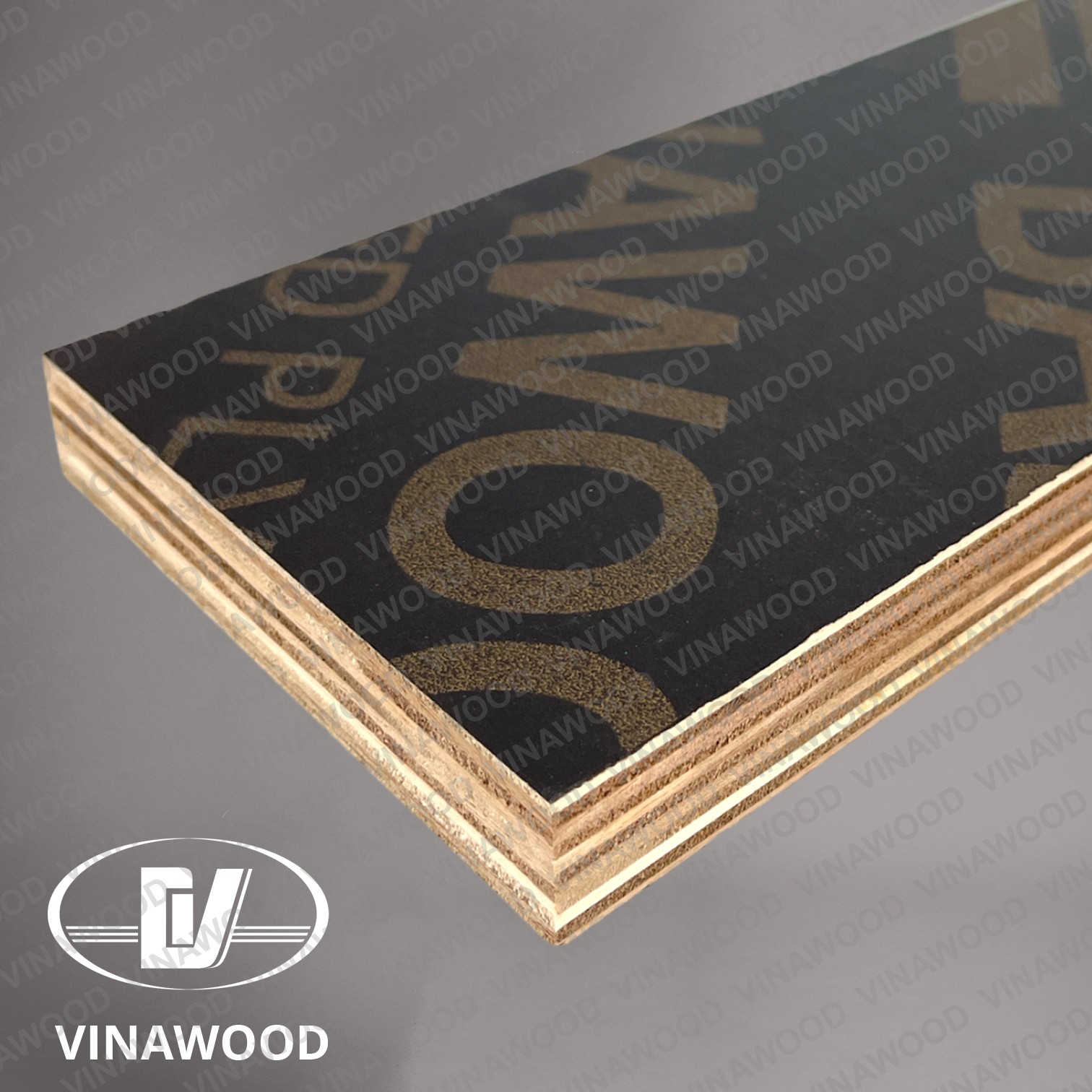
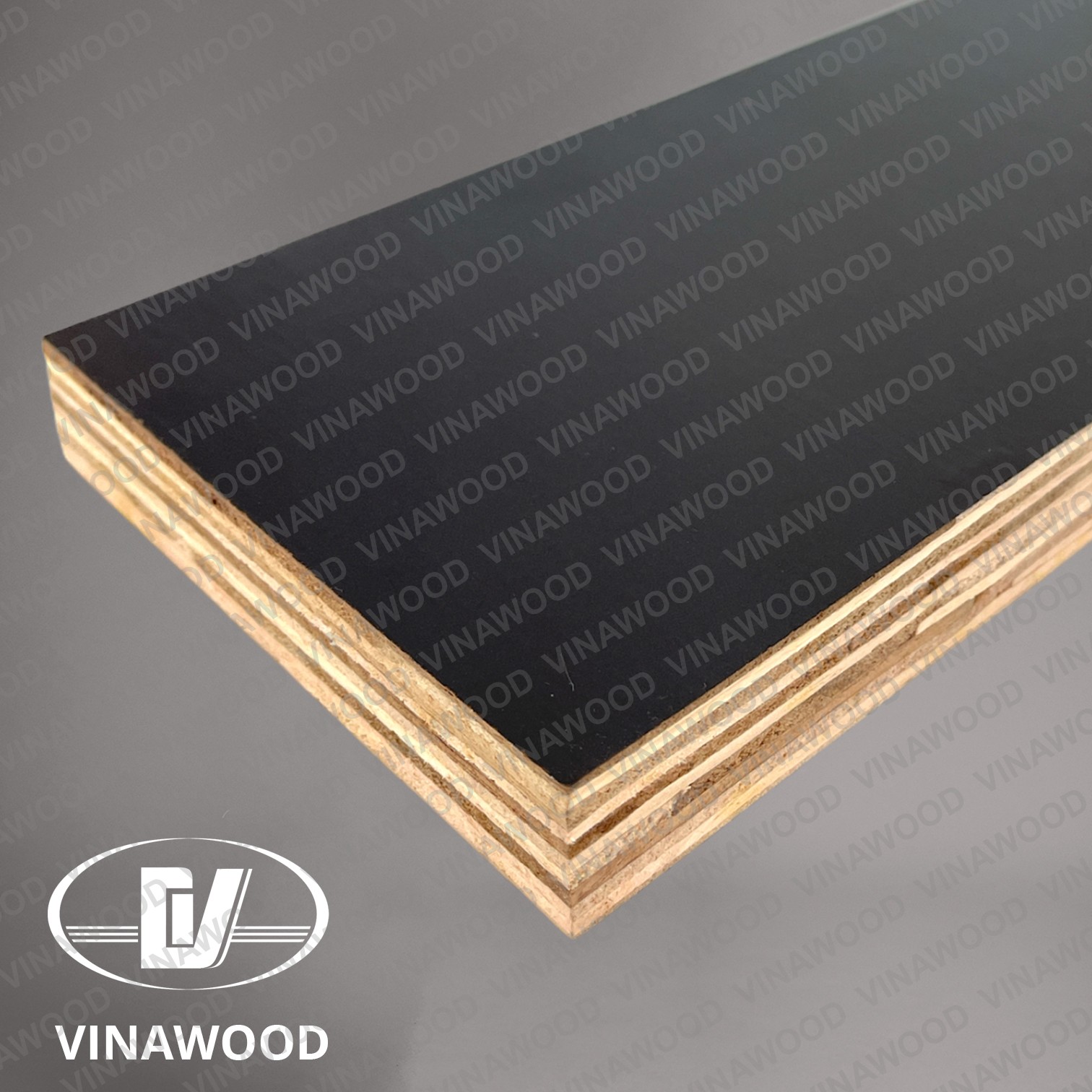
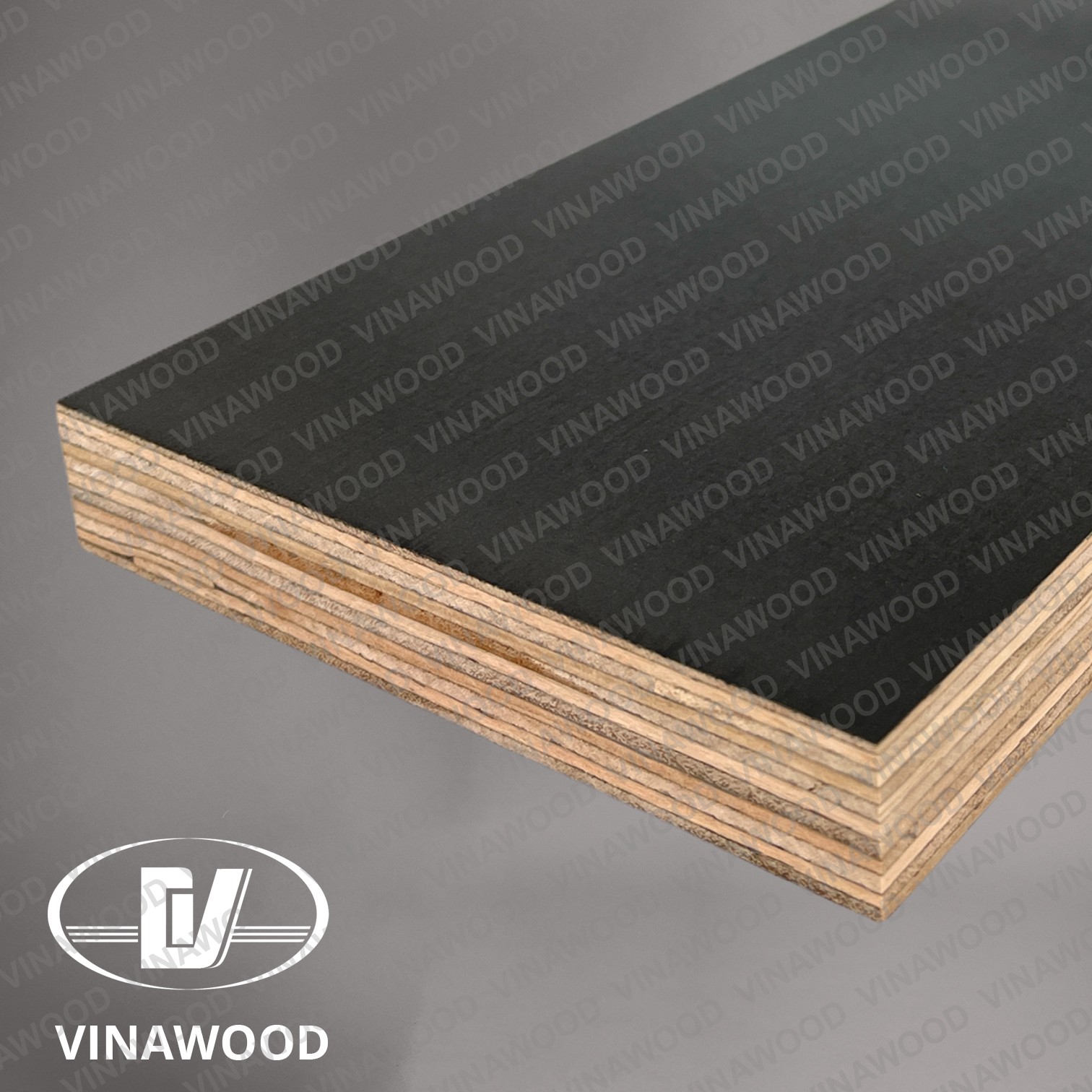
Vinawood manufactures MatteFace Plywood, a matte phenolic surface film formwork panel — the product the trade often searches for as "MDO formwork plywood." APA-domestic kraft-overlay MDO from Roseburg, Plum Creek, or Boulter is a different construction category; both produce matte concrete (or paintable-matte) surfaces, but the overlays underneath differ.
MatteFace panels use a thicker phenolic surface film with higher resin content than standard glossy phenolic film-faced plywood. The film is tuned to deliver a matte concrete finish where regular glossy film-faced (Pro Form, Form Extra) produces a shiny concrete face. The range covers 45 SKUs across five product lines: MatteFace Panel 1S (MTF1000), MatteFace Panel 2S (MTF2000), MatteFace Panel 1SF (MTF3000), MatteFace HD 1SF (MTF3HDP), and MatteFace Eco 1SF (MTF3ECO), with up to 15 reuse cycles. The full collection sits at /collections/matteface-plywood, in 12, 15, 18, and 21 mm thicknesses across both 1220×2440 mm and 1250×2500 mm formats. Available in kraft (light yellow), purple, and black colorways.
Application routing for buyers comparing on price:
- For paint-grade signage, soffits, or exterior trim, the APA-domestic kraft-overlay MDO from Roseburg / Plum Creek / Boulter is the right product. MatteFace is not paint-grade.
- For matte-finish concrete formwork in the 5 to 15 cycle range — the dominant use case for buyers reading a pricing guide — MatteFace is the cost-competitive Vietnam-sourced option.
- For glossy concrete formwork, our standard film-faced range (Pro Form, Form Extra, Form Basic) is the right call.
- For high-rotation formwork above the 15-cycle envelope, Pro Form (WBP phenolic, EN 636-3, up to 20 reuses) or our HDO range (25–50 cycles) is the upgrade.
MOQ is one full container (FCL), roughly 600 sheets at 18 mm. Standard delivery from Hai Phong to US west-coast ports is 25 to 30 days; East Coast is 35 to 45 days through Panama.
Frequently asked questions
Is MatteFace the same as MDO plywood?
MatteFace is Vinawood's brand name for a matte phenolic surface film formwork panel — the panel buyers often search for as "MDO formwork plywood." On a cost-per-pour basis it competes with domestic kraft-overlay MDO and HDO for matte-finish concrete forming at 5–15 reuse cycles. It is a different product from the kraft-paper-overlay MDO used for signage and painted trim, which is supplied by North American mills such as Roseburg and Plum Creek.
Category
market-insights
Related Markets
Related Countries
Related Products
▶Sources & References (3)
- Overlaid Plywood Standard ANSI/HPVA HP-1 — APA – The Engineered Wood Association (2024)
- CSA O121 Douglas Fir Plywood — Canadian Standards Association (2017)
- CPTPP Tariff Schedule for Wood Products — Global Affairs Canada (2024)