Plywood Importers in Korea: KS Tego Grades and Container Mix
Korean plywood importers need KS-marked Tego grades, clear formaldehyde classes and a workable container mix. This buyer guide explains the RFQ and document check.

Plywood importers in Korea are not buying a generic brown sheet. They are buying a panel that must fit Korean site practice, the requested KS grade and the importer's own warehouse plan. A useful quotation therefore starts with the product standard, formaldehyde class and thickness. Price comes after those details are fixed.
For concrete forming, Vinawood's Korea range centres on KS Tego Eco and KS Tego Premium. “KS” is the Korean Industrial Standards system. “Tego” is the trade name buyers use for a phenolic film-faced surface pressed onto formwork plywood. The exact product card, not the nickname, tells you what is being offered.
What a Korean importer is actually buying
The purchase order covers three layers of value. First is the plywood itself: core build, thickness and bond. Second is the face system that meets the intended concrete finish and reuse plan. Third is the document set that lets the importer identify the approved grade at customs, in the warehouse and during a customer audit.
That is why an RFQ reading only “12 mm film faced plywood” is incomplete. It leaves the supplier to guess the KS product, emission class and bundle plan. A better request names the grade family and gives the intended use.
- Application: wall, slab or general concrete formwork.
- Thickness and size, written in millimetres.
- Required KS mark and formaldehyde class.
- Target reuse range, written as up to N rather than a guaranteed minimum.
- Container type, destination port and unloading limit.
KS Tego, not a generic film-faced sheet
A phenolic face film protects the panel surface against wet concrete and repeated cleaning. It is separate from the glue that bonds the veneer core. The importer should ask which resin is used in the core, which face film is applied and which KS certification covers the shipment.
WBP means Weather and Boil Proof. It describes a bond test level, not an invincible panel. KS Tego plywood is water-resistant under its specified bond system, but exposed cuts can still absorb moisture. Edges should remain sealed, and every fresh site cut should be resealed.
SE0, E0 and E1 are formaldehyde emission classes used to describe how much formaldehyde a wood-based panel releases under the applicable test. The purchase order should state the required class. Do not assume that every product with a dark face has the same emission result.
Eco and Premium answer different buying plans
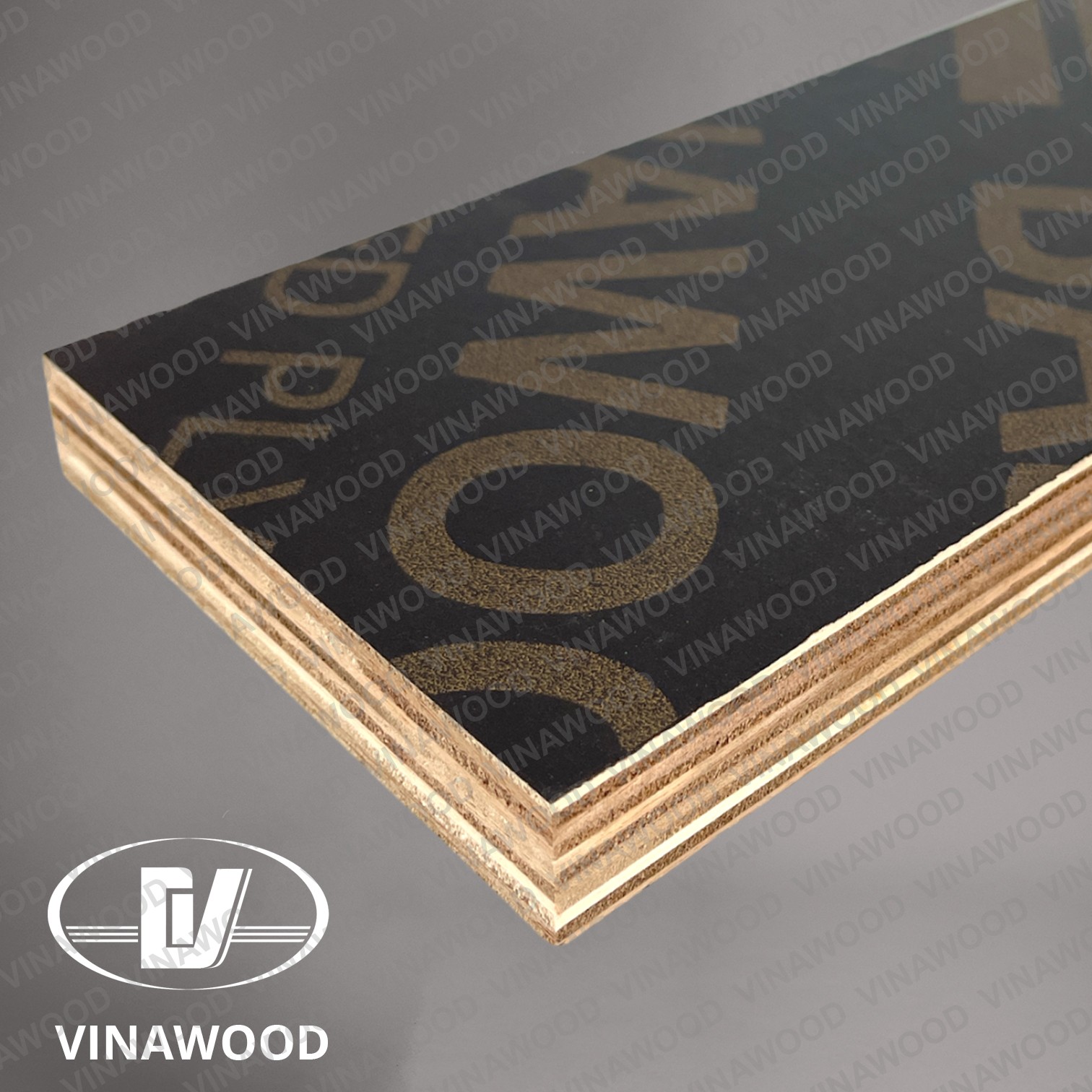
KS Tego Eco is the entry point for importers serving cost-controlled formwork programmes. It should be quoted against its own product card, current KS coverage and available thicknesses. It is not interchangeable with Eco Form, which belongs to another regional range.
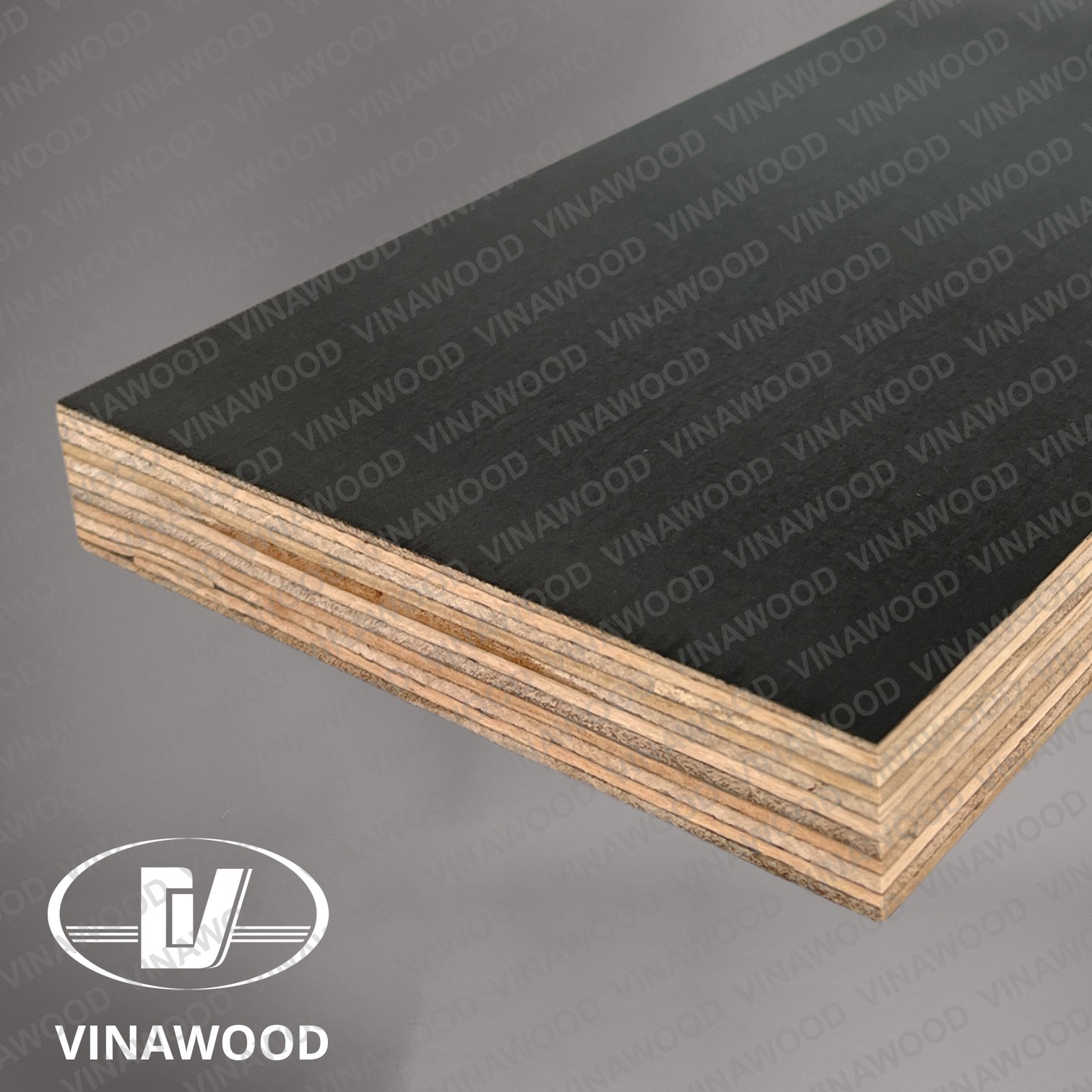
KS Tego Premium is specified where the buyer wants the higher grade in the Korean line. Premium may suit customers who place more weight on repeated use and surface consistency. The final number still depends on handling, release agent, concrete mix and site storage.
| Buying question | KS Tego Eco | KS Tego Premium |
|---|---|---|
| Role in range | Cost-controlled KS formwork grade | Higher KS Tego grade |
| Best RFQ basis | Exact thickness, emission class and product card | Exact thickness, finish expectation and product card |
| Document check | Current KS certificate plus shipment documents | Current KS certificate plus shipment documents |
| Reuse statement | Use the published up-to figure for the ordered specification | Use the published up-to figure for the ordered specification |
The KS plywood collection keeps Korean grades together. Other Asian or European panels should not be used as substitutes simply because the colour looks similar. HDO is a North American formply range. Form Basic and Eco Form serve different market specifications.
How a container is mixed
Container planning begins with thickness. Thinner sheets allow more pieces per bundle and more pieces per container, but the panel still has to meet the job's span and support spacing. Do not reduce thickness to improve the sheet count without checking the formwork design.
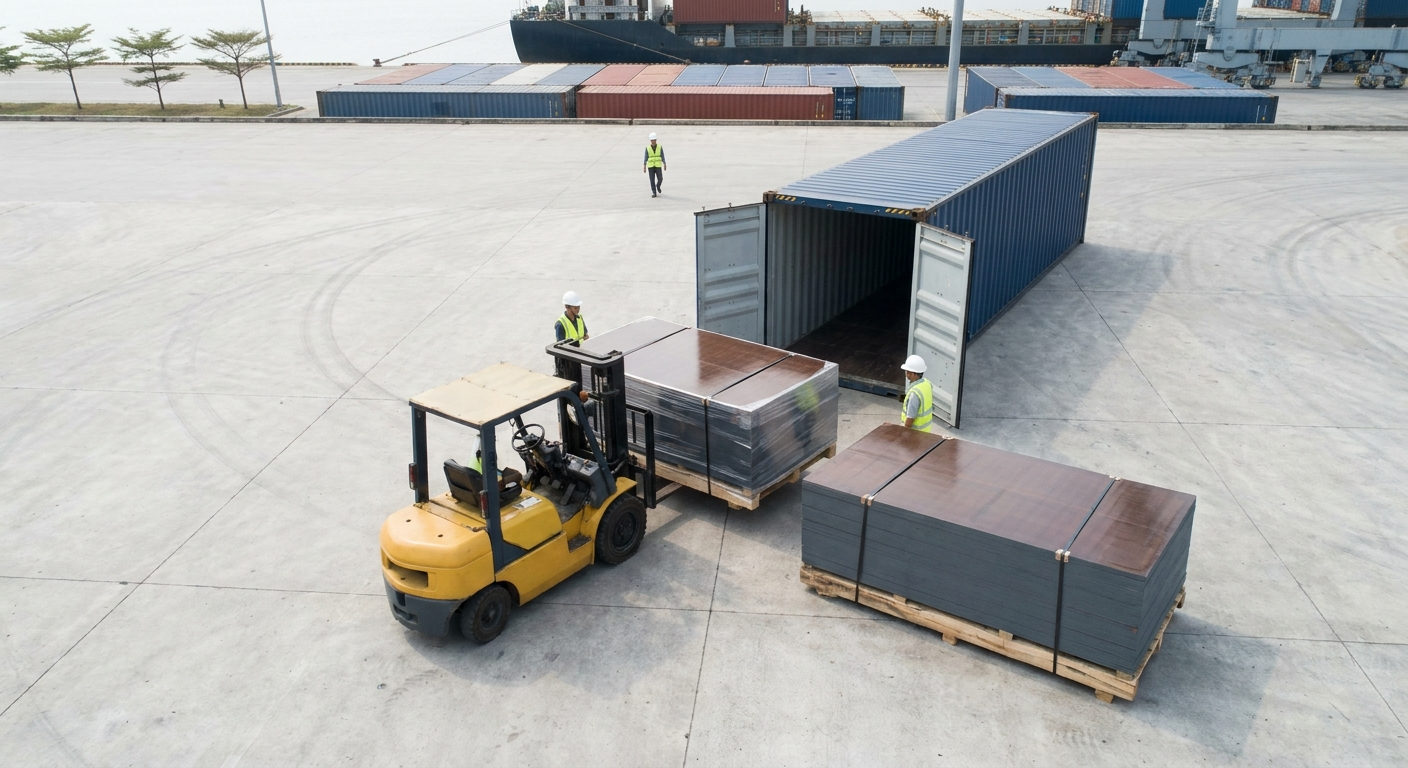
A published example for KS Tego Eco at 12 mm uses 75 sheets per bundle and 16 bundles in a 40 ft container. That equals 1,200 sheets for that exact configuration. Treat it as a planning example, not a universal loading rule. Other thicknesses, pallet heights and weight limits change the result.
Mixing Eco and Premium can make sense when one importer serves two contractor groups. The mill needs a line-by-line plan: product, thickness, bundles and pieces. A “half Eco, half Premium” instruction is not enough if bundle counts differ.
Check unloading before finalising the mix
Ask how the receiving warehouse unloads. Fork length, doorway height and maximum pallet mass may matter more than filling the final cubic metre. A practical container arrives in bundles the warehouse can move safely.
Marking also needs a written plan. The bundle label should connect the product, batch and purchase-order line. Readable traceability belongs on the shipment documents and mill labels, not in a generated marketing image.
Papers you should already have
The starting point is the current KS certification record. Confirm that its scope matches the product family being purchased. A logo copied into a quotation is not enough.
Next, open the exact product card for Eco or Premium. Check dimensions, core bond, emission class and face description. If the order changes thickness, request the card for that variant rather than assuming the 12 mm values carry across.
A normal shipment file may include the commercial invoice, packing list, bill of lading and certificate of origin where applicable. The importer should also retain the approved specification and inspection records. No new PDF needs to be invented when the existing certified documents and live spec cards answer the question.
What to inspect before shipment
Inspection should follow the purchase order. Measure thickness and dimensions, compare bundle counts and check face condition. Review edge sealing and pallet protection. Sampling should be agreed before production so both sides know the acceptance method.
Small veneer-core gaps can occur within grading tolerances and are not an automatic defect. If panels arrive bowed or with wet edges, review transport, cover and stacking history first. Uneven moisture after production is a common cause of distortion, especially in thinner sheets.
For formwork, a clean face, sealed edge and consistent thickness are practical checkpoints. The inspection report should identify the batch and sample size. Vague statements such as “good quality” do not help the importer settle a later claim.
How to write the RFQ
I would reject any comparison that hides the product card or leaves the KS scope unnamed. Those two details decide whether the offers are truly comparable.
Use one line per product. State “KS Tego Eco” or “KS Tego Premium,” then add size, thickness, emission class, face colour if relevant, pieces per bundle and the requested container mix. Include the destination and Incoterm. Ask the mill to confirm which values are standard and which require a production check.
FOB means Free On Board: the seller delivers the goods aboard the vessel at the agreed port. CIF means Cost, Insurance and Freight: the seller also arranges ocean freight and minimum insurance to the destination port. Neither term includes every destination charge, so ask your broker for the local cost list.
Do not request a promise that plywood is watertight. Request the WBP bond, KS scope and edge treatment instead. Do not request “50+ reuses” without a matching certified product specification. Reuse is a maximum influenced by the site.
Questions to settle before a purchase order
- Which KS certificate and product scope apply?
- Which emission class is required by the buyer's channel?
- How many sheets and bundles fit the chosen thickness?
- Can the receiving warehouse handle the proposed bundle mass?
- Which product card will be attached to the order?
- How will batch and bundle traceability appear?
These answers turn a general inquiry into a production instruction. They also make Eco-versus-Premium comparisons fair because both quotations use the same size and logistics assumptions.
Compare quotations on the same basis
Put every offer into one table before selecting a supplier. Keep product name, size, thickness, emission class, bundle count and Incoterm in separate columns. Add the KS certificate reference and the date of the product card. A low total can hide a different thickness, fewer pieces or a document scope that does not match the ordered panel.
Ocean freight should be separated from the panel value when possible. This makes it easier to see whether a price change came from the mill, the exchange rate or the shipping market. It also prevents an FOB offer from being compared directly with CIF without the missing freight and insurance.
Plan the first order as a verification lot
A first container should prove the specification and warehouse process. Agree the pre-shipment sample, bundle photos, piece count and document review before loading. On arrival, record seal condition, pallet state and moisture exposure before the container is stripped. That creates a clean baseline for the next order.
After the panels reach contractors, collect cycle data by product and application. Keep site handling notes beside the count. One project cannot establish a universal reuse figure, but it can show whether the chosen Eco or Premium grade fits that buyer's customer mix.
Buying from a Vietnam mill
Vinawood has manufactured plywood in Vietnam since 1992 and ships more than 5,000 containers per year to over 40 countries. Its Korea range includes KS Tego Eco and Premium, supported by the existing KS certification page and product cards.
Send the grade, thickness, emission class and draft bundle mix through the contact page. The mill can then confirm current loading data and the document set for the exact order. That is the right point to compare commercial terms.
Category
market-insights
▶Sources & References (3)
- KS certification — Vinawood (2026)
- KS Tego Eco product specification — Vinawood (2026)
- KS Tego Premium product specification — Vinawood (2026)