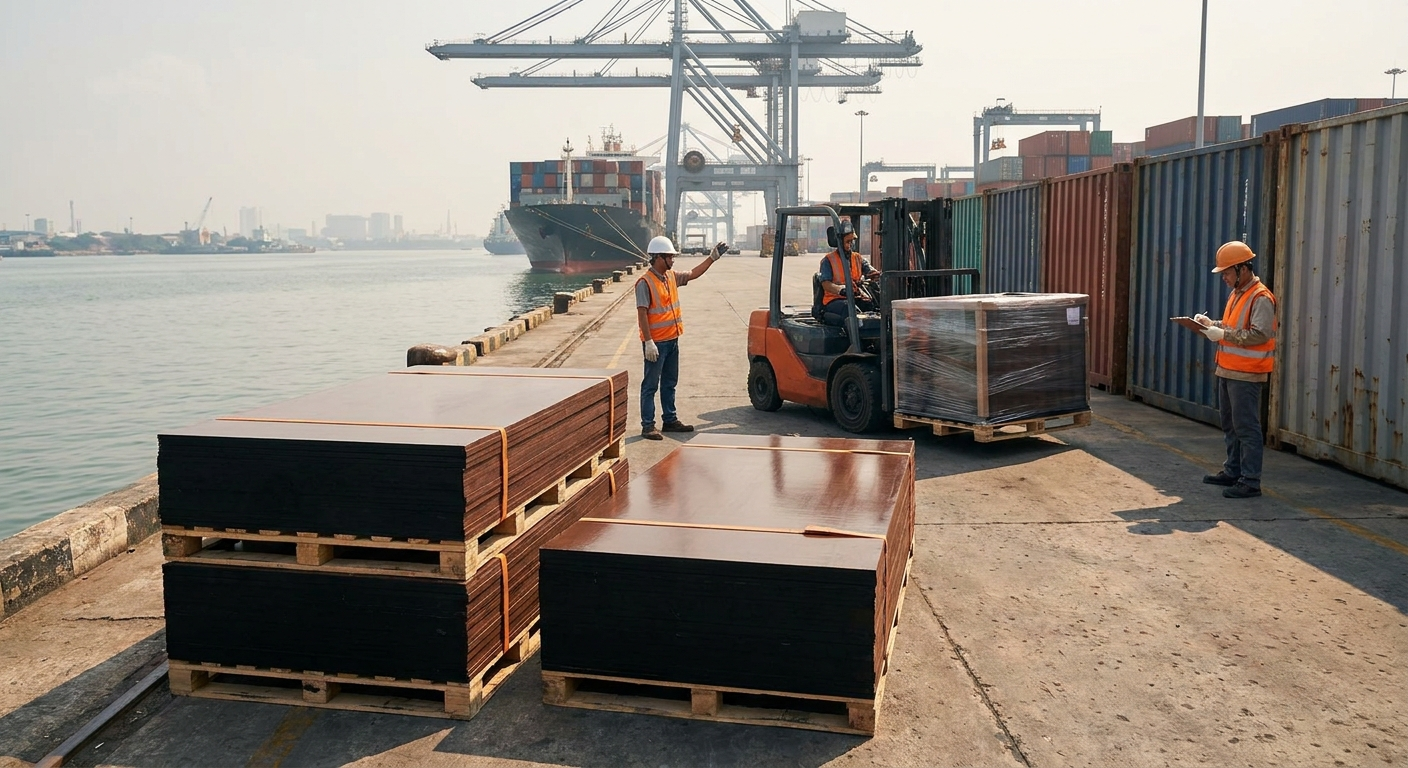
Southeast Asia & Europe Drive Plywood Markets in March 2026
Southeast Asian plywood exports surge to record levels as Vietnam targets zero-duty EU market amid US tariff investigations. Europe's construction recovery signals rising timber demand in 2026.

Market Overview
Southeast Asia's plywood market is experiencing tightening supplies as exports accelerate, while Europe signals recovery with increased construction activity and rising timber demand. According to industry pricing data, the U.S. Producer Price Index for hardwood plywood reached 156.86 (Dec 2012=100) as of May 2025, setting the tone for global pricing pressures. Vietnam's plywood exports to the EU surged significantly in 2025 at zero duty under the EVFTA, positioning the region to capture growing European demand in 2026.
Southeast Asia Supply Tightening
The Southeast Asian plywood sector is navigating a crucial inflection point. Vietnam's plywood exports are tracking 9-12% growth in 2025-2026, with the country consolidating its position as the world's second-largest exporter. According to trade data, Vietnam recorded $3.84 billion in wood exports for 2025, while Indonesia Eximbank projects plywood export growth of 8% in 2025 and 4% in 2026.
Critical to market dynamics: In January 2026, Indonesia became the largest supplier of plywood to the United States with 285,586 cubic meters (21.56% of total US imports), while Vietnam supplied 239,544 cubic meters (18.08%). This represents robust export momentum, though both nations face headwinds from US trade policy.
Asia Pacific is expected to account for more than 65% of global plywood volume in 2026, with approximately 80-90% of raw timber used in Vietnamese plywood production now sourced from domestic plantations (Acacia and Eucalyptus), insulating the industry from global supply chain shocks. This vertical integration supports pricing discipline as export volumes surge.
Vietnam Faces Critical Trade Challenge
A significant headwind has emerged for Vietnamese plywood exporters. The U.S. Department of Commerce issued preliminary anti-dumping determinations in March 2026, with duty rates ranging from 191.85% to 194.80% for mandatory respondents, potentially reaching 208.88% when combined with countervailing duties. The U.S. International Trade Commission will hold a hearing in connection with the final phase of these investigations on July 16, 2026, creating near-term uncertainty for North American market access.
However, Vietnam has signed 17-20 Free Trade Agreements connecting with over 60 global partners through major deals like CPTPP, EVFTA, UKVFTA, and RCEP, significantly expanding market access and diversifying risk. The European avenue is particularly attractive: Vietnamese plywood enters the EU at 0% duty with a valid Certificate of Origin, making EU market penetration a strategic priority as US tariff investigations advance.
Europe's Construction Recovery Driving Timber Demand
Europe's timber market is transitioning from contraction to growth. The EU construction sector is expected to grow by 1.5% in 2026, recovering from a 1.5% decline in 2024 and zero growth in 2025, with country-specific growth rates showing Germany and Spain at 2.5%, while France and the Netherlands are projected at 0.5%.
Residential construction is emerging as the growth driver. Housing permits increased 26% by September 2025 versus prior year, with EU construction confidence reaching -3.3 in December 2025—the highest in more than two years. The European Timber Trade Federation forecasts consumption will reach 43.9 million cubic meters in 2026, an increase of approximately 2.5% compared with 2024 levels.
Timber is central to European construction innovation. Modular timber construction has emerged as a promising solution for Europe's housing shortages, offering speed, scalability, and environmental benefits. A major example is the Xylino project in the Netherlands, completed in early 2026, a five-storey residential complex with 103 homes built using Laminated Veneer Lumber (LVL).
European Plywood Pricing Dynamics
European sawn timber prices remain under structural pressure despite improving demand signals. Pine oversupply is likely to pressure prices downward while spruce demand shows potential for modest firming, particularly in specialized segments such as lamellas and KVH material. European softwood lumber prices opened 2026 largely unchanged across main destinations, reflecting restrained construction demand and steady supply conditions following winter disruptions in northern Europe.
For Vietnamese plywood exporters, this creates an opportunity: European buyers seeking imported alternatives to domestic softwood face limited traditional suppliers, and Vietnam's zero-duty access under EVFTA combined with quality certifications (CE marking, FSC, PEFC) positions Vietnamese film-faced and structural plywood as compelling substitutes for both softwood and competing Asian suppliers.
Indonesia and Malaysia Consolidate US Market Share
In January-April 2025, Indonesia posted a 5% increase in volume and 4% increase in value compared to the same period in 2024, with total export volume of 1,174,446 cubic meters valued at $599,973,779. Malaysia's hardwood plywood shipments to the U.S. grew 41% in 2024, reaching 91,392 cubic meters.
This sustained momentum reflects ongoing US demand despite tariff headwinds. However, the preliminary anti-dumping determinations announced in March 2026 create uncertainty for all Southeast Asian suppliers. The investigations cover hardwood and decorative plywood from China, Indonesia, and Vietnam, suggesting potential duty impacts across the entire Southeast Asian supply base if final determinations are affirmative in July 2026.
Global Commodity Pricing Pressures
Lumber futures climbed above $600 per thousand board feet in January 2026, reaching nearly 3-month highs, but retreated to approximately $590 per thousand board feet by early February as housing demand weakened. North American softwood lumber faces a 10% base tariff (30% scheduled for January 2026 under Section 232 measures), though a recent Presidential proclamation delayed increases on upholstered furniture and kitchen cabinets, with current 25% tariffs remaining through 2026.
Tariff Negotiations and Market Outlook
The U.S. Trade Representative is required to provide the president with status updates on negotiations with trading partners regarding wood product tariffs by January 1, 2026, and again by March 28, 2026. These ongoing discussions create a window of opportunity for affected suppliers—particularly Vietnam—to advocate for negotiated resolutions before the July 2026 final hearing determines whether preliminary anti-dumping duties become permanent.
Key Takeaways for the Market
The bi-weekly plywood market brief for late March 2026 reveals three critical dynamics:
- Southeast Asia Supply Surge: Vietnam, Indonesia, and Malaysia are shipping record volumes, with Vietnam and Indonesia collectively controlling 40% of US hardwood plywood imports (Q1 2026). Domestic plantation timber insulates the region from log supply shocks.
- US Trade Policy Risk: The preliminary anti-dumping duties of 191-208% on Vietnamese plywood, with final determination due July 2026, will reshape Southeast Asian export strategies. Market diversification toward zero-duty EU market is underway and accelerating.
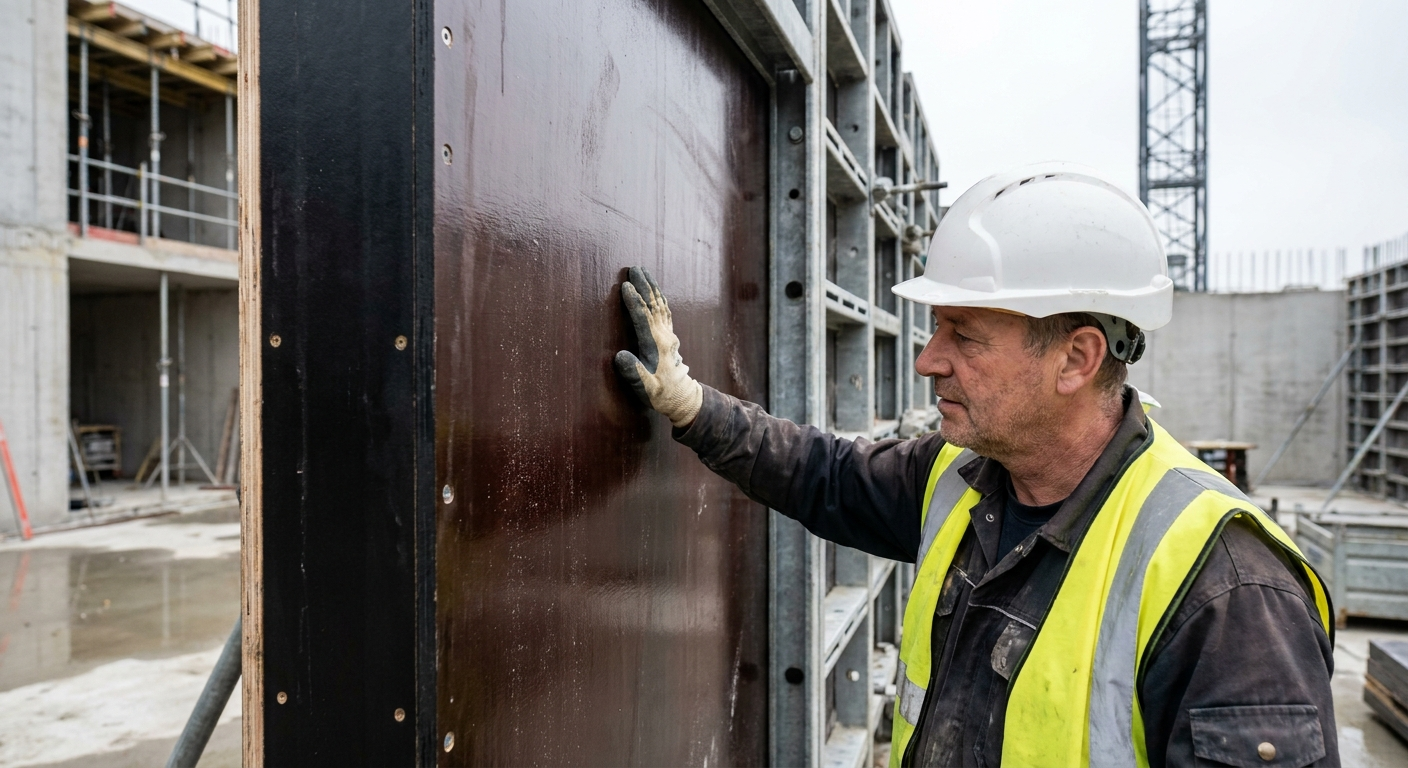
- European Demand Recovery: EU construction growing 1.5-2.5% in 2026 with housing permits up 26%, creating genuine demand lift. Vietnamese zero-duty access under EVFTA combined with CE/FSC certifications positions Vietnamese exporters to capture growing European import share, particularly in formwork and structural segments where softwood supply remains constrained.
For procurement managers and importers, the March 2026 market environment presents diverging opportunities by region: US market access faces tariff uncertainty (decision point: July 2026), while European markets offer duty-free access with rising construction demand and limited competing supply from traditional softwood suppliers facing structural challenges.
Category
market-insights
Related Markets
Related Products


▶Sources & References (9)
- Lumber Commodity Pricing Data — Trading Economics (2026-03)
- Anti-Dumping Investigation on Hardwood Plywood from Vietnam, March 2026 — Federal Register (via Justia) (2026-03)
- Adjusting Imports of Timber, Lumber and Their Derivative Products — Section 232 — Federal Register (2025-10)
- US Imposes Preliminary Anti-Dumping Duties of Nearly 195% on Vietnamese Plywood — Vietnam News (2026-03)
- 2026 Outlook: Growth Returns to the European Construction Sector — ING Economics (2026)
- 2026: Europe's Timber Sector Moves from Contraction to Cautious Recovery — Global Wood Markets Info (2026)
- Europe's Softwood Comeback Hinges on 2026 Housing Boom — Wood Central (2026)
- European Sawn Timber Market Trends and Outlook — Fastmarkets (2026)
- Top 5 Wood Exporting Countries 2025 Trends — TradeInt (2025)