Board-Formed Concrete: How the Form Face Shapes the Finish
Board-formed concrete gets its character from the timber boards it is cast against. This guide covers how the finish is made, how to build and seal the forms, what it costs, and where smooth film-faced plywood fits as the fair-faced alternative.
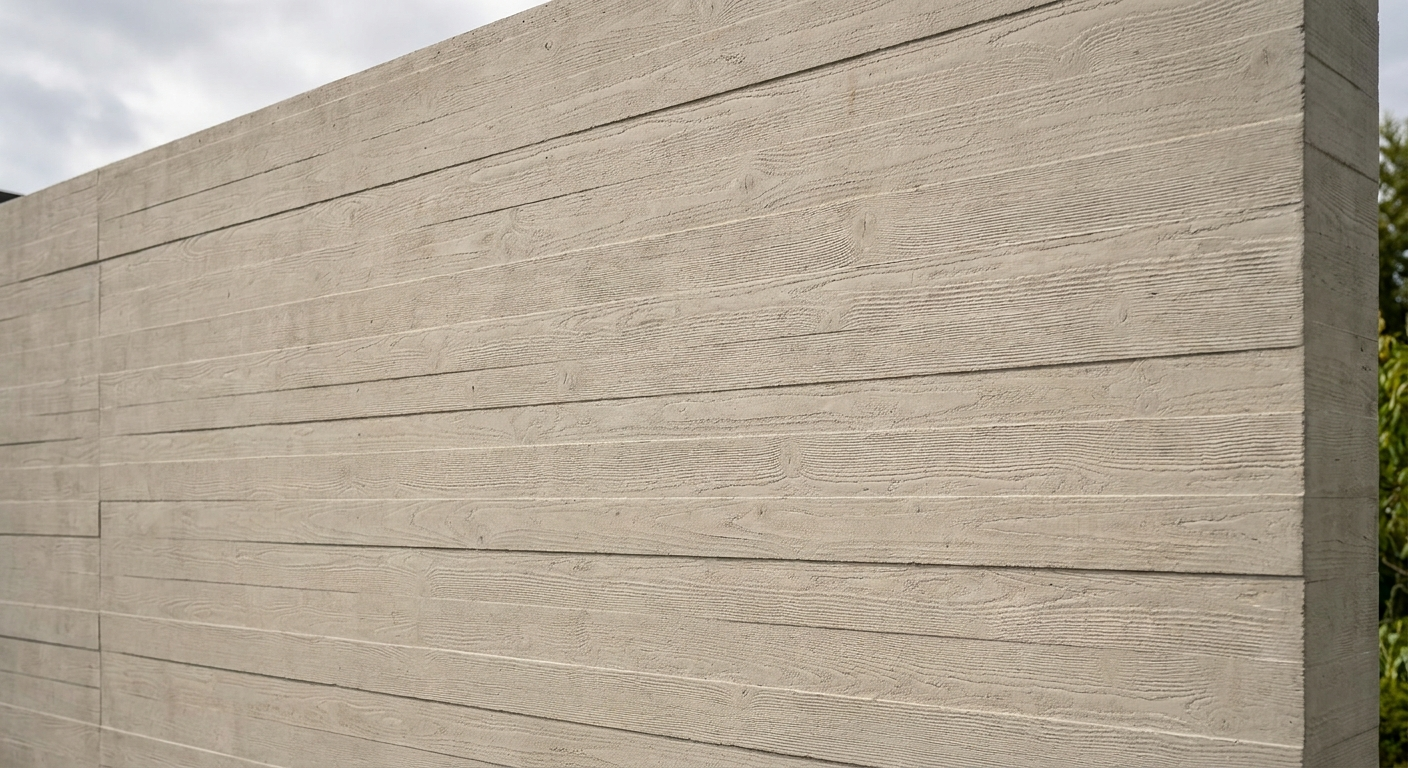
Pour concrete against rough-sawn cedar and it keeps the grain, the knots, and the fine ridge where two boards met. Not as a coating. As the wall itself, recorded once and locked in the moment it sets. Pour the same concrete against a sheet of smooth phenolic film and it comes out flat and almost glassy. Board-formed concrete lives at the textured end of that range, and architects have used it for decades to warm up a material that is otherwise cold and grey.
We make the panels that sit at the smooth end of that spectrum, so the form-face logic here is the logic we work with every day. The textured look is a timber-board job, not a plywood one, and we would rather be straight about where each belongs than pretend a sheet of ply can fake cedar grain.
What Board-Formed Concrete Is
Board-formed concrete is cast-in-place concrete poured against a form lined with timber boards instead of plywood or steel. As it cures, it picks up a negative imprint of the board faces. Grain, cupping, the occasional knot, the seam between two boards, all of it transfers into the finished surface. Strip the forms and you are left with a wall that reads as timber even though it is solid concrete.
The effect is permanent and structural. It is not a stamped overlay applied after the fact. The texture is the casting surface, and that is why board-formed work rewards careful form-building: every decision about the boards shows up in the wall, and there is no second pass to fix it.
How the Finish Is Produced
A board-formed finish is set at the form-building stage, before any concrete is ordered. Which way the boards run changes it. Whether they are rough-sawn or planed changes it again. So does the species of timber. Each of those leaves its own mark, and they stack.
Board orientation
Boards run horizontally on most projects, which gives the familiar stacked-plank read and emphasizes the joint lines as horizontal bands. Vertical boards stretch the wall and play down the seams. Some designers mix orientation panel by panel, or set the boards in a deliberate offset pattern, to break up a long elevation. Orientation is decided at the form-building stage, and it changes the character of the wall more than almost anything else.
Rough-sawn versus planed
Rough-sawn boards leave the deepest texture. The saw marks and raised grain press into the concrete and produce a heavy, rustic surface you can feel from across a room. Planed or dressed boards give a subtler, more modern texture, closer to a hint of grain than a relief carving. The same building can use both to signal a change between, say, a feature wall and a quieter circulation space.
Wood species
Cedar, pine, and Douglas fir are the usual choices. Softwoods with open, pronounced grain transfer more texture than tight-grained hardwoods. Some teams reuse boards across several pours so the grain softens slightly with each cycle, which can read as intentional weathering. Others want a crisp first-pour imprint and use the boards once. Either way, the board itself is the master copy, and its condition sets the ceiling on what the wall can look like.
The Form Face Is Everything
Step back from the timber-board detail and one rule runs the whole thing: concrete reproduces whatever touches it. A rough board makes a rough wall. A smooth panel makes a smooth one. Mold a pattern into a form liner and the concrete copies that too, faithfully and without complaint.
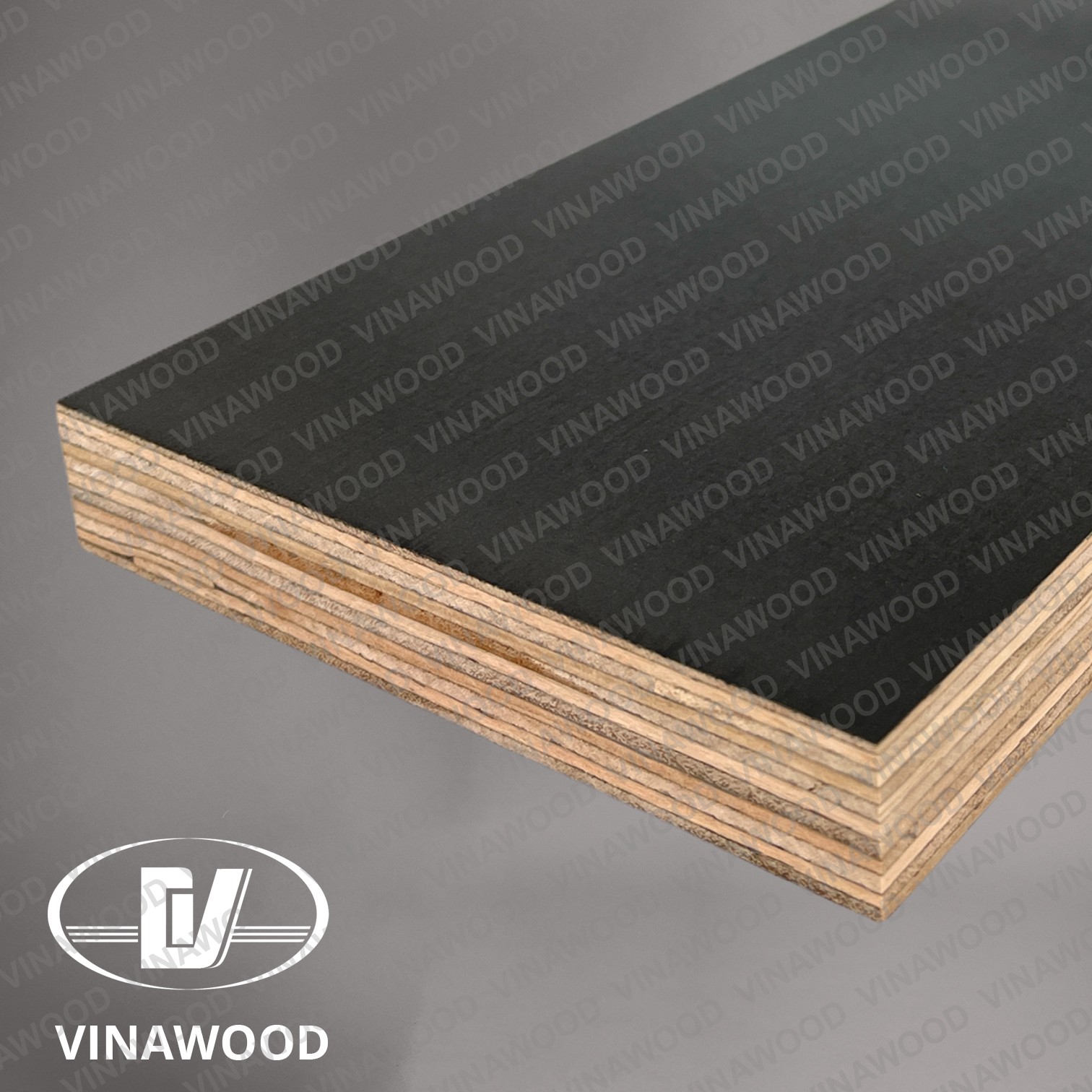
The fair-faced or smooth architectural finish sits at the opposite end from board-forming, and it comes from a smooth, sealed casting surface. That is the role of film-faced plywood and overlay panels. A phenolic film face leaves a flat, consistent concrete surface with very little grain and no joint texture beyond the panel seams. Board-forming and fair-faced forming are not better or worse than each other. They are two answers to the same question, and the answer is chosen at the form face long before any concrete arrives on site.
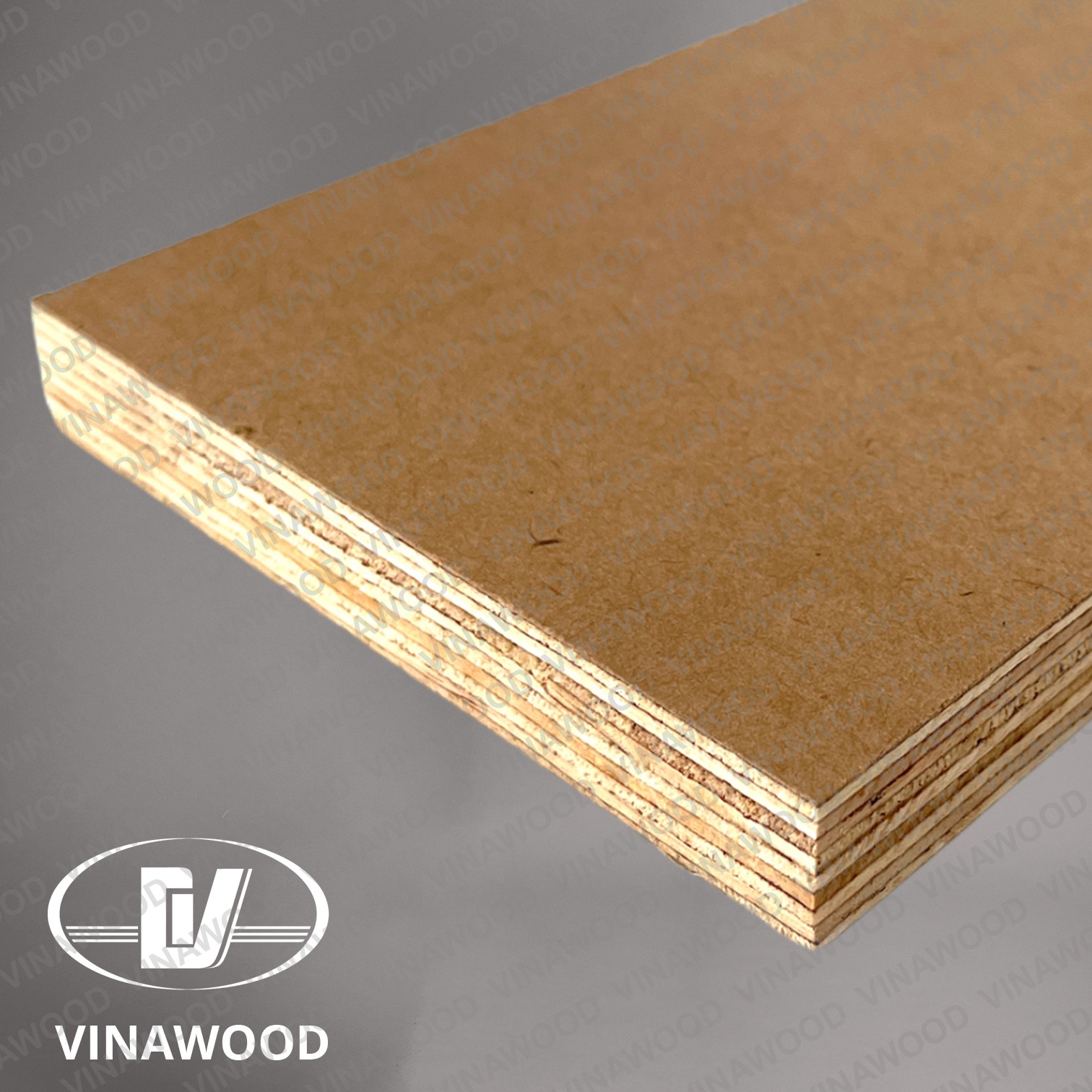
We do not make rough-sawn cedar cladding boards, and it would be dishonest to pretend the textured look is something a plywood panel delivers. What we make is the panel that produces the smooth alternative, plus the matte-finish overlay panels that land between glassy and grain. So when a project is weighing board-formed against a clean architectural face, the trade-off is real and we can speak to both sides of it.
Building and Sealing the Forms
Board-formed forms leak more readily than smooth panel forms because every board-to-board joint is a potential escape path for cement cream. Tight detailing is what separates a crisp wall from one streaked with grout lines.
Run a continuous silicone bead between boards before the pour. It keeps the fine cement paste from bleeding through the gaps and forming raised grout fins or pale leak streaks on the face. The bead is cheap insurance, and on a feature wall it is the difference between a clean imprint and a wall the architect rejects.
Fasten with screws rather than nails. Screws pull the boards tight against the backing frame, hold that tension through the pour, and back out cleanly at stripping without splitting the timber. Nails work loose under vibration and leave the boards free to shift, which opens joints exactly where you sealed them.
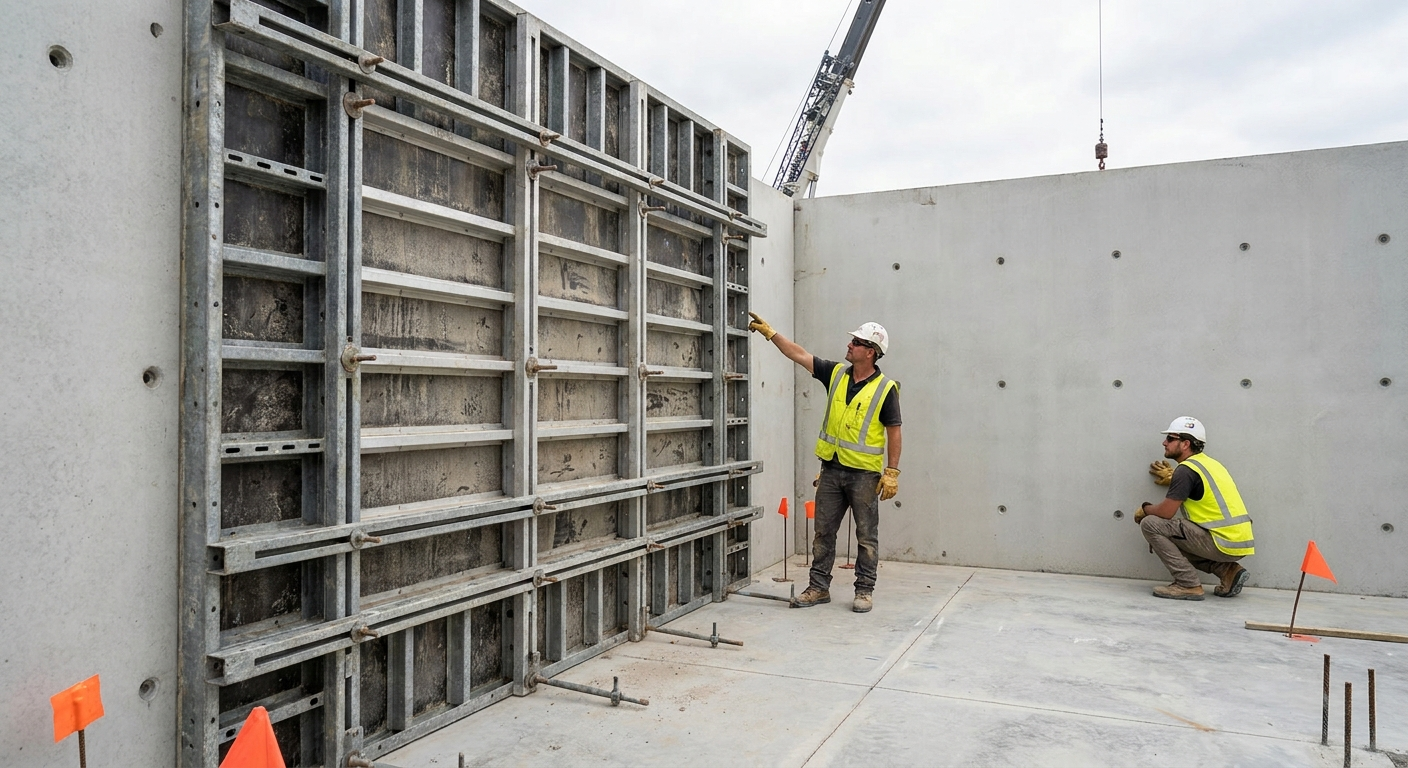
Brace heavily. Fresh concrete pushes hard against the form, and the pressure climbs with pour height and pour speed. Kickers, walers, and tie spacing have to be sized for that load. A blowout, where the form gives way and concrete escapes, is almost always an under-bracing problem rather than anything to do with the boards or the backing panel. We have seen perfectly good forms fail simply because the bracing was scaled for a shorter lift than the crew actually poured.
Release Agent and Clean Stripping
A thin, even coat of form release agent lets the boards pull away without tearing the concrete face or lifting fibers off the timber. The keyword is thin. Over-application is the usual culprit behind blotchy color and dark patches, because pooled release agent interferes with the way the surface cures and can leave an oily stain that shows for the life of the wall.
Apply just enough to see a faint sheen, never a wet film. Wipe down any pooling in the board grooves before the pour. Strip carefully and on schedule. Pulling forms too early can lift the surface; leaving them too long lets the boards bond. Color variation across a finished wall often traces back to uneven release-agent coverage rather than the concrete mix, so it is worth checking the application routine first when a pour comes out patchy.
Smooth Versus Board-Formed: Choosing the Look
The choice usually comes down to the read the architect wants and the budget the finish has to live inside.
| Factor | Board-Formed Concrete | Smooth Fair-Faced Concrete |
|---|---|---|
| Form face | Rough-sawn or planed timber boards | Film-faced plywood or overlay panel |
| Texture | Visible wood grain, knots, joint lines | Flat, consistent, minimal grain |
| Typical use | Feature walls, lobbies, civic and cultural buildings | Structural and architectural walls, columns, repeat pours |
| Form labor | High, board-by-board layout and sealing | Lower, panel-based with fewer joints |
| Reuse | Boards reused a few cycles, texture softens | Panels reused many cycles, finish stays consistent |
| Cost band | Premium, finish-driven | Lower per square metre at volume |
What It Costs
Board-formed concrete is a finish premium, not a base structural cost. US figures from HomeAdvisor put it in the range of about $30 to $50 per square foot, or roughly $60 to $280 per linear foot depending on wall height and complexity. Those numbers are indicative and move with region, labor rates, board species, and how much custom layout the design calls for. Treat them as a planning starting point and price the actual job locally.
The premium buys form labor more than material. Laying out boards, sealing every joint, and accepting that the forms get fewer reuse cycles than smooth panels all add hours. A smooth fair-faced finish costs less per square metre at volume precisely because panel forms go up faster and strip for more pours. Neither approach is the cheap option in absolute terms. Concrete that will be buried, clad, or painted does not need either finish and should not pay for one.
Common Issues Read Honestly
Most board-formed defects are detailing and site-discipline matters, not flaws in the boards or the backing panel. Reading them honestly saves crews from blaming the wrong thing.
Grout-line or cream leakage shows up as pale streaks or raised fins along the board joints, and it usually means a gap was left unsealed or the silicone bead broke under pressure. The fix is tighter sealing and firmer clamping, not different timber. Blowouts, where concrete escapes the form, point to under-bracing against the fresh-concrete pressure, especially on tall or fast lifts. Color variation across the face most often comes back to release-agent dosing, with over-application the frequent cause. None of these are a reason to reject a panel or a board batch. They are signals to tighten the form detail, add bracing, and even out the release coat.
Where Film-Faced Plywood Fits
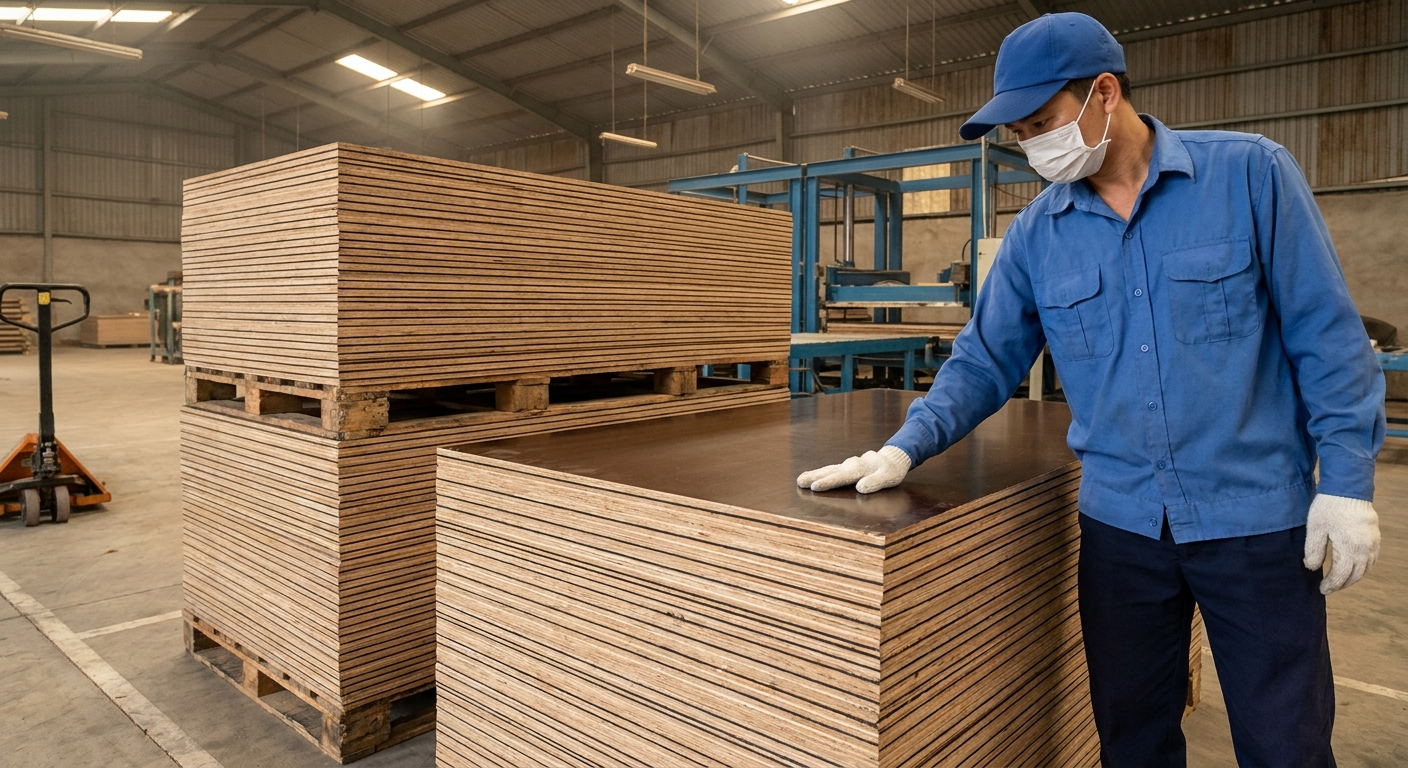
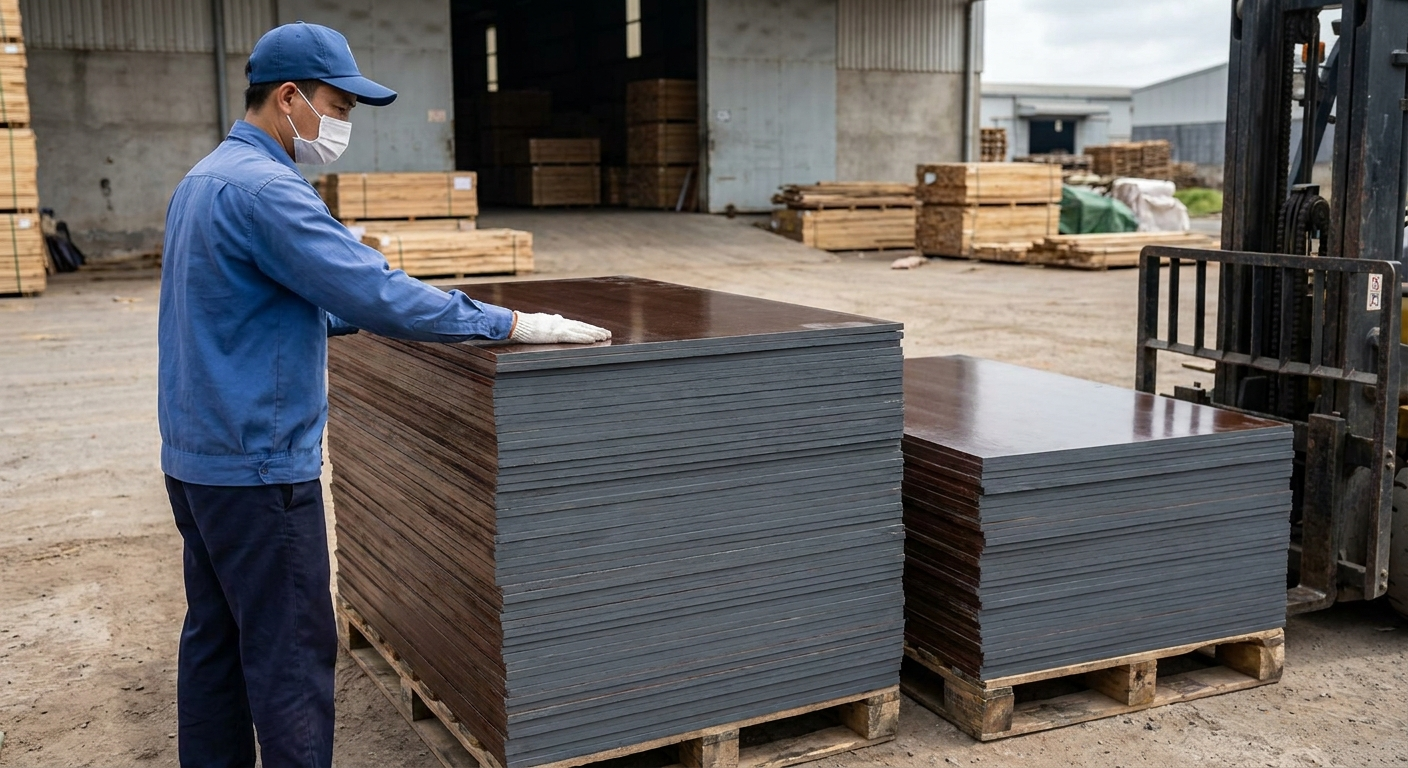
When the design wants the smooth architectural face rather than timber texture, the casting surface has to be smooth and sealed. Film-faced plywood is built for exactly that: a phenolic film face that leaves a flat, consistent concrete surface and holds up across repeated pours. For the North American market, our HDO plywood range gives a high-density overlay for crisp glossy fair-face work, while the MDO plywood range produces a matte concrete finish for designers who want smoothness without the sheen.
Where a project specifies a top-tier glossy fair-faced result and wants the most durable phenolic panel, Pro Form is the premium choice, built on a WBP phenolic core to EN 636-3 and rated for up to 20 reuse cycles. The reuse economics are the quiet advantage of smooth panel forming: a panel that strips clean and casts a consistent face across many pours spreads its cost over far more square metres of wall than a board set used a handful of times. For high-repetition architectural work, that cost-per-pour math is usually what decides the form face.
About Vinawood
Vinawood has manufactured film-faced and overlay plywood for concrete forming since 1992 from our factory in Vietnam, shipping to more than 55 countries and around 5,000 containers a year. Every sheet is inspected across a 12-step production process, and our panels carry CE marking to EN 13986 along with FSC and PEFC chain-of-custody certification. If your project is weighing a board-formed feature wall against a smooth architectural face, we can help you match the form face to the finish you are after. Reach out through our contact form to talk through panel selection for your pour schedule.
Category
guides
Related Markets
Related Countries
Related Products
▶Sources & References (2)
- How Much Does Board-Formed Concrete Cost? — HomeAdvisor (2025)
- ACI 347 Guide to Formwork for Concrete — American Concrete Institute (2014)