Formwork Plywood for GCC Construction: Standards, Climate & Sourcing Guide
GCC formwork plywood guide for procurement teams in UAE, Saudi Arabia, Qatar, Kuwait, Oman, and Bahrain. Covers BS EN 636 standards, climate performance, sizing, Vietnam-to-Jebel Ali shipping, and tender specification clauses.
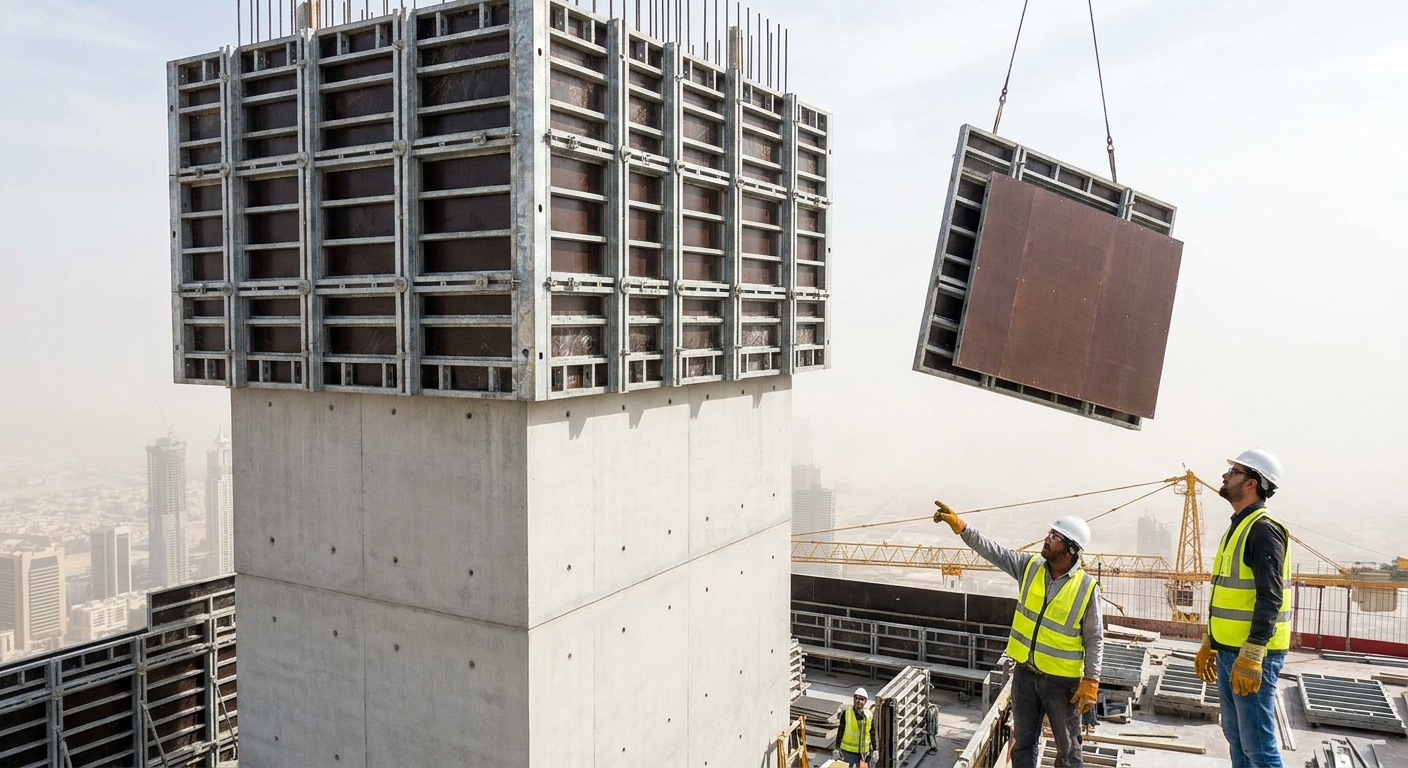
Formwork plywood is one of the highest-leverage decisions on a GCC construction site. The wrong panel softens in 45°C summer heat, delaminates after a handful of pours under coastal humidity, and disappoints on the architectural concrete that defines the towers, hotels, and infrastructure projects shaping Dubai, Riyadh, Doha, Muscat, Manama, and Kuwait City. The right panel cycles through twenty pours with the face film intact and arrives at Jebel Ali on a predictable timeline.
This guide is written for procurement managers, project engineers, and consultants specifying formwork plywood for projects across the United Arab Emirates, Saudi Arabia, Qatar, Kuwait, Oman, and Bahrain. It covers the standards GCC specifiers actually reference, what extreme climate does to wood-based panels, sizing conventions, shipping economics from Vietnam, and what to put in a tender to protect quality without inflating cost.
Why Plywood Choice Matters in GCC Construction
Across the GCC, formwork plywood is being specified into a building pipeline that is unusual in scale and intensity: high-rise residential and hotel towers in Dubai Marina and Business Bay, infrastructure programs like Etihad Rail and Riyadh Metro, the giga-projects of NEOM and the Red Sea, mass-concrete podiums for Qatar's stadia, and the steady stream of mid-rise mixed-use blocks across every emirate and Saudi region. Many of these jobs run multiple tower cranes and demand strict pour cycles, which only works if the formwork panels behind the system actually hold their face film through the planned reuse count.
Two job-site realities make the GCC harder on plywood than most regions. First, summer site temperatures regularly exceed 45°C in inland sites and 40°C with high relative humidity along the coast. Panels stored between pours sit in direct sun, and panel core temperatures climb well above ambient. Second, the dust load is significant — fine sandstorm dust is abrasive on stored faces and accelerates film wear if panels are not stacked properly with cover sheets. Choosing a panel built for these conditions, rather than the cheapest film-faced offering on the dock, materially changes the cost per square metre of formed concrete.
The GCC Formwork Plywood Market — A Quick Picture
The GCC has no plywood manufacturing of consequence. Every panel on every site is imported. Historically, supply was dominated by Chinese mills shipping into Jebel Ali, Dammam, and Hamad Port. Over the last several years procurement has visibly shifted: more buyers are sourcing from Vietnam, Indonesia, and Malaysia, partly on price, partly on certification quality, and partly on the desire to diversify away from a single origin. Korean PERI, German DOKA, and other system formwork houses operate the high-rise core market and have their own panel preferences, but the loose-panel supply behind table forms, climbing forms, and conventional wall-and-column work is open to direct import.
For a deeper read on how Vietnam slots into GCC procurement, our Vietnam plywood supplier guide covers certification, factory selection, and the logistics workflow most buyers eventually adopt.
Standards GCC Specifiers Use
Specifications across the GCC reference a recognisable set of standards. Knowing which standard governs which property prevents the "our spec calls for marine plywood" misunderstanding that delays many tenders.
- BS EN 636: Plywood specifications. EN 636-2 covers humid conditions, EN 636-3 covers exterior conditions. Most formwork is specified to EN 636-2 minimum, with EN 636-3 preferred for sun-exposed storage and high-reuse cycles.
- BS EN 13986: Wood-based panels in construction. Drives the CE marking that most private-sector projects accept as evidence of declared performance.
- BS EN 314-1 Class 3: Bonding quality, the boil test that confirms WBP phenolic adhesive performance. This is non-negotiable for any panel intended for repeated wet-concrete contact.
- ASTM PS 1 / ASTM D5266: Referenced on some Saudi mega-projects, particularly under US-engineered consultants. Useful as an alternative bond and grade specification when EN-family standards are not the preferred reference.
- SABER and ESMA / MOIAT: SABER (Saudi Product Safety Programme) governs imports into Saudi Arabia and is mandatory for plywood entering through Dammam, Jeddah, and Riyadh dry ports. ESMA / MOIAT covers UAE conformity. Neither is a quality standard in itself — both are registration and conformity schemes that import documentation must clear before customs release.
Climate Reality — What 45°C and 70% RH Do to Plywood
GCC climate stresses formwork plywood in three distinct ways, and panel selection should respond to each.
Sustained heat. Melamine-bonded panels (EN 636-2 / Class 2) soften measurably under sustained site heat above 40°C. The bond does not fail catastrophically, but bond shear strength declines and panel stiffness drops. Phenolic-bonded panels (EN 636-3 / Class 3) hold their mechanical properties at much higher temperatures because phenolic resin has a higher heat-deflection threshold than melamine.
Humidity cycling. Coastal sites in Dubai Marina, Doha Corniche, Manama, and Salalah cycle moisture daily — heavy morning dew, dry afternoons, then rapid evening cooling. This is the most damaging environment for plywood with unsealed edges. Moisture wicks into the core, and the swelling-and-drying cycle delaminates panels from the edges inward. Factory edge sealing, applied to all four sides on quality panels, is the difference between three pours and twenty.
Sandstorm dust. Fine dust on stored panel faces is abrasive. When site crews stack panels face-to-face during transport between pours, the dust acts like sandpaper on the phenolic film. Heavier film grades (220 g/m²) tolerate this better than lighter films (120 g/m²), but housekeeping — keeping cover sheets between stacks — matters more than film weight in practice.
Practical rule: for any GCC site running more than 10 pours per panel, or where panels will be stored in direct sun between pours, specify EN 636-3 / Class 3 phenolic plywood. For lower-cycle work (residential basements, low-rise commercial slabs) under shaded storage, EN 636-2 / Class 2 melamine plywood is acceptable and cheaper.
Grade and Product Comparison
| Grade | Standard | Reuse | GCC fit |
|---|---|---|---|
| Form Basic (melamine) | EN 636-2 / Class 2 | up to 10 | Indoor finishing forms, low-cycle residential, shaded storage |
| Form Extra (melamine) | EN 636-2 / Class 2 | up to 15 | Standard commercial under shaded storage; not recommended for direct-sun stacking |
| Pro Form (phenolic) | EN 636-3 / Class 3 | up to 20 | High-rise core walls, mega-projects, direct-sun storage, coastal humidity |
| HDO Premium 2S | EN 636-3 / Class 3 | up to 20 | Architectural fair-face concrete on prestige projects |
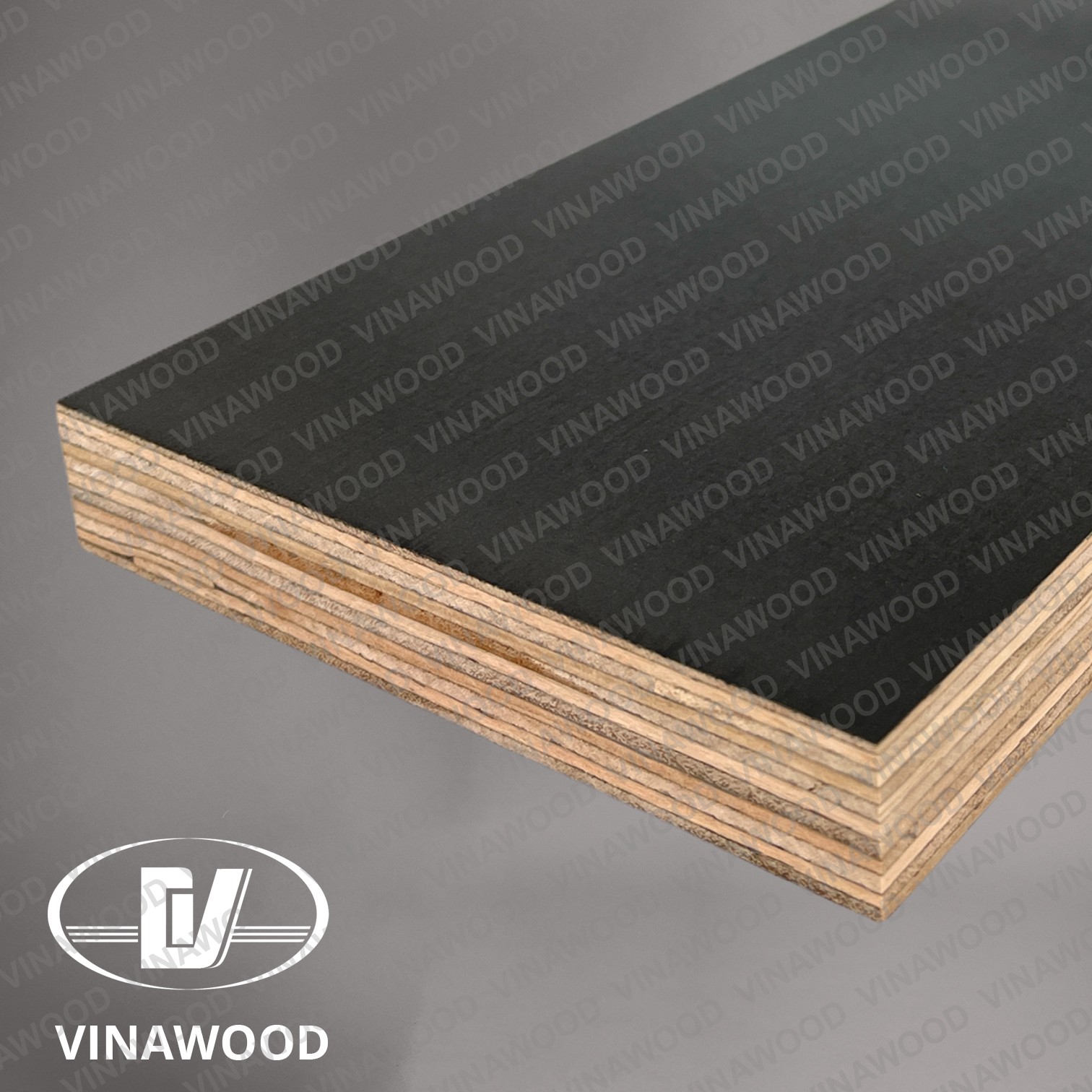
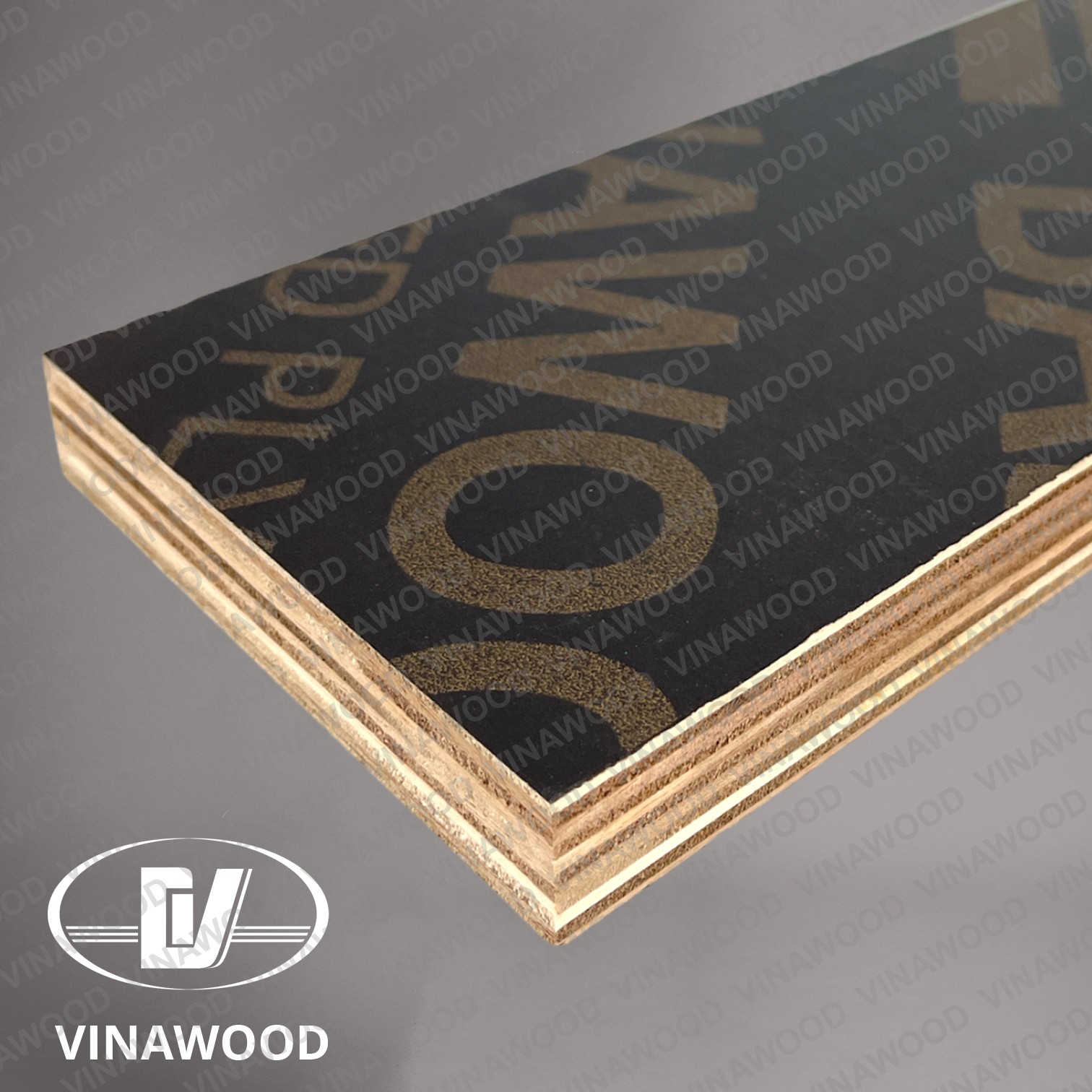
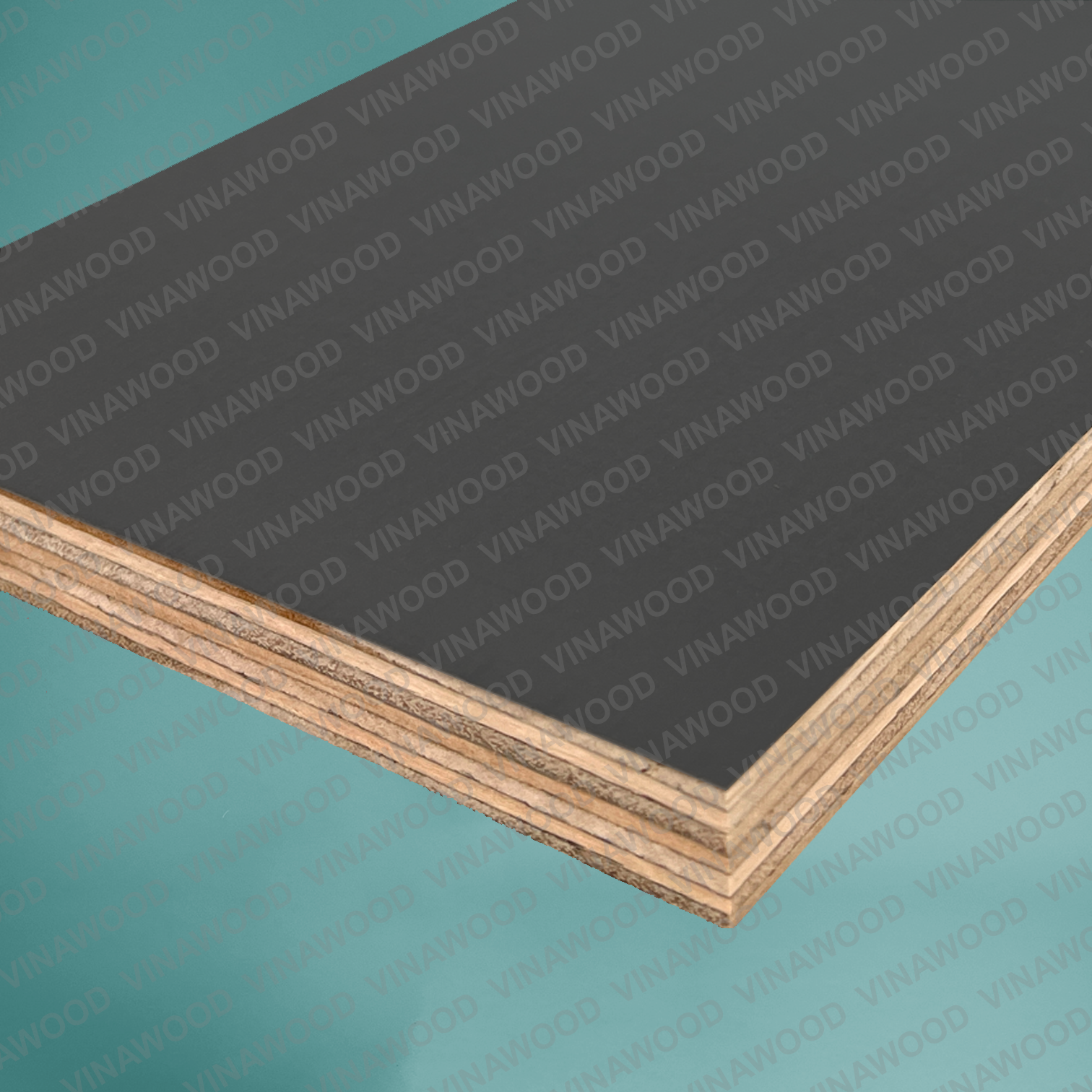
The Pro Form and HDO range are the two phenolic-bonded options in the Vinawood lineup. Form Basic and Form Extra are melamine-bonded — they are excellent value for the work they suit, but they should not be substituted into specifications calling for EN 636-3 / Class 3 performance. Form Extra's higher reuse count comes from heavier face film and tighter veneer grading, not phenolic adhesive.
Standard Sizes and Thicknesses for GCC Sites
Two sheet formats are common across GCC sites:
- 1220 × 2440 mm (4 × 8 ft): Dominant on projects with Indian-origin labour, on PERI and DOKA legacy decking, and on most loose-panel applications in conventional wall and column work.
- 1250 × 2500 mm (EU metric): Increasingly common on European-engineered megaprojects and on architectural facade work where minimal cutting waste matters. Vinawood's concrete form plywood guide covers sizing trade-offs in detail.
Standard thicknesses on GCC sites are 18 mm for wall and column forms (the workhorse), 12 mm for slab edges and lightweight forms, and 21 mm for deep-lift walls and blind-side forming where pressure and span demand more stiffness. Offering both 1220 × 2440 and 1250 × 2500 in a single container is a real differentiator — many GCC distributors stock only one format, forcing site teams to either cut down or wait for a separate supply line.
Shipping and Logistics — Vietnam to GCC
| Port | Country | Ocean transit (HCM) | Total lead time |
|---|---|---|---|
| Jebel Ali | UAE | 15–22 days | ~5–7 weeks |
| Dammam | KSA (East coast) | 18–25 days | ~6–8 weeks |
| Jeddah | KSA (Red Sea) | 20–27 days | ~6–8 weeks |
| Hamad Port | Qatar | 17–24 days | ~5–8 weeks |
| Sohar / Salalah | Oman | 14–20 days | ~5–7 weeks |
| Shuwaikh | Kuwait | 19–26 days | ~6–8 weeks |
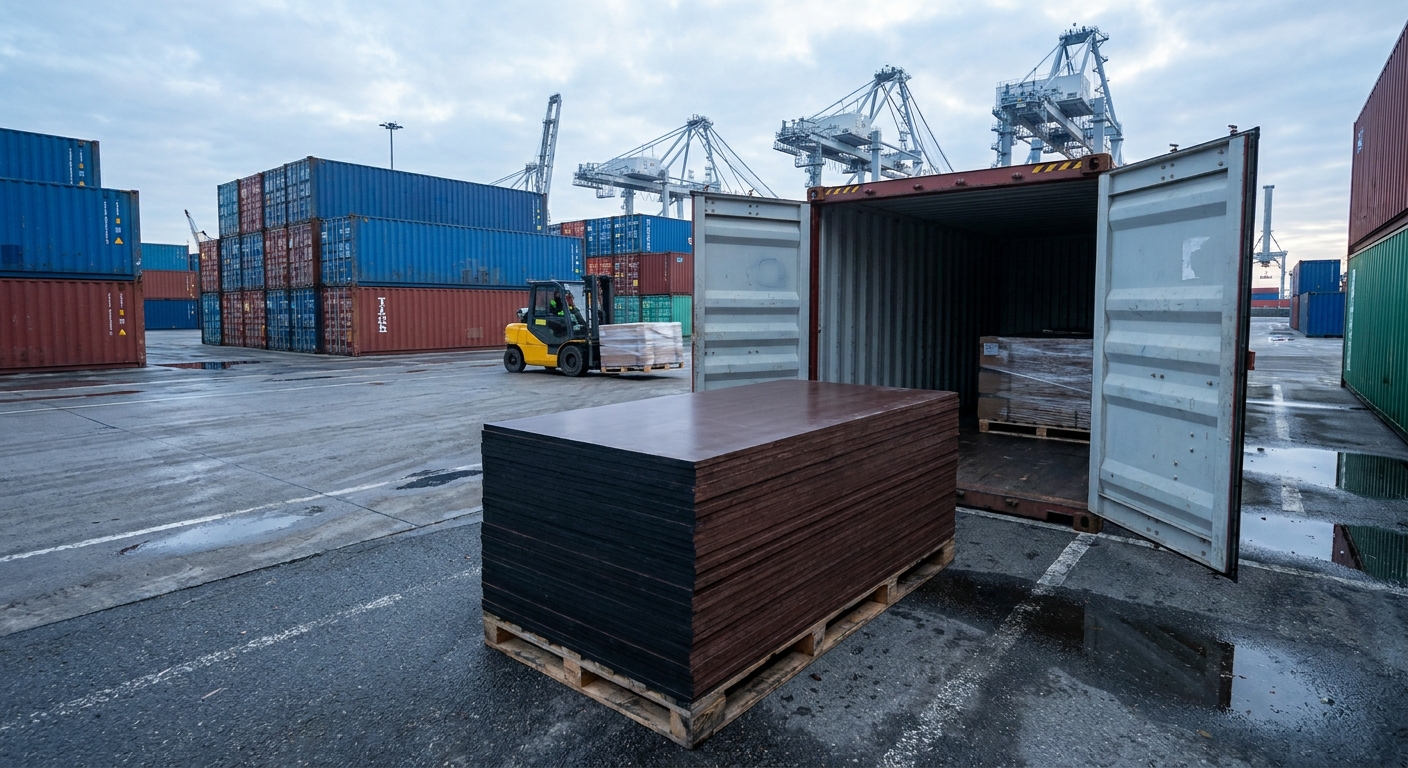
Total lead time includes 15–25 days of factory production after order confirmation plus the ocean freight transit shown above. A standard 40HC container holds approximately 380–420 sheets of 18 mm film-faced plywood, which is the practical MOQ for direct import. Mixed-thickness containers (12 mm + 18 mm + 21 mm) are routinely arranged when site demand spans wall, slab, and deep-lift work.
Incoterms most commonly used: FOB Ho Chi Minh City for buyers handling their own freight, CFR or CIF Jebel Ali / Dammam / Hamad Port for buyers who prefer landed cost certainty, and DDP for established accounts with ongoing volume. Pre-shipment inspection by SGS or Bureau Veritas is available as a standard option and is recommended for first-time buyers. For Saudi imports, SABER registration must be in place before the container is loaded — the certificate of conformity is checked at customs and a missing or invalid SABER record will hold the container.
What to Specify in a GCC Tender or RFQ
A defensible specification protects quality without inflating price. The clauses worth including:
- Bond class to BS EN 314-1 Class 3, demonstrated by a current third-party boil-test report.
- Performance class to EN 636-3 (preferred) or EN 636-2 with project rationale.
- Face film weight stated explicitly (120 g/m² for standard, 220 g/m² for high-reuse work).
- Factory-applied edge sealing on all four edges, matte black sealant.
- CARB Phase 2 formaldehyde class for any panels that will be repurposed into indoor fitout.
- FSC Chain-of-Custody where the project pursues LEED or similar certification credit.
- Mill test report (EN 314 boil) from the production batch, dated within 90 days of shipment.
- Pre-shipment inspection clause naming SGS or Bureau Veritas.
- Thickness tolerance ±0.5 mm and a clear rejection clause for out-of-tolerance panels.
Vinawood for GCC Buyers
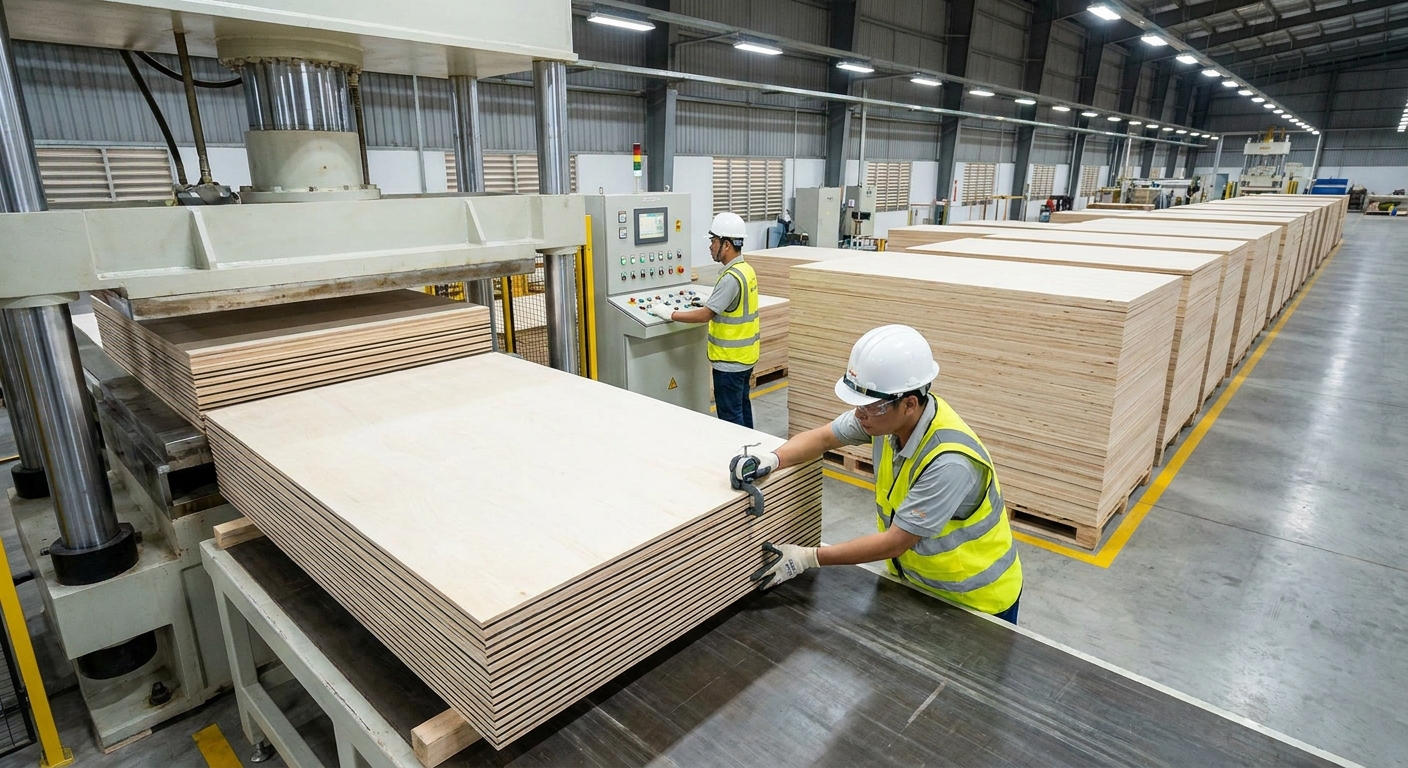
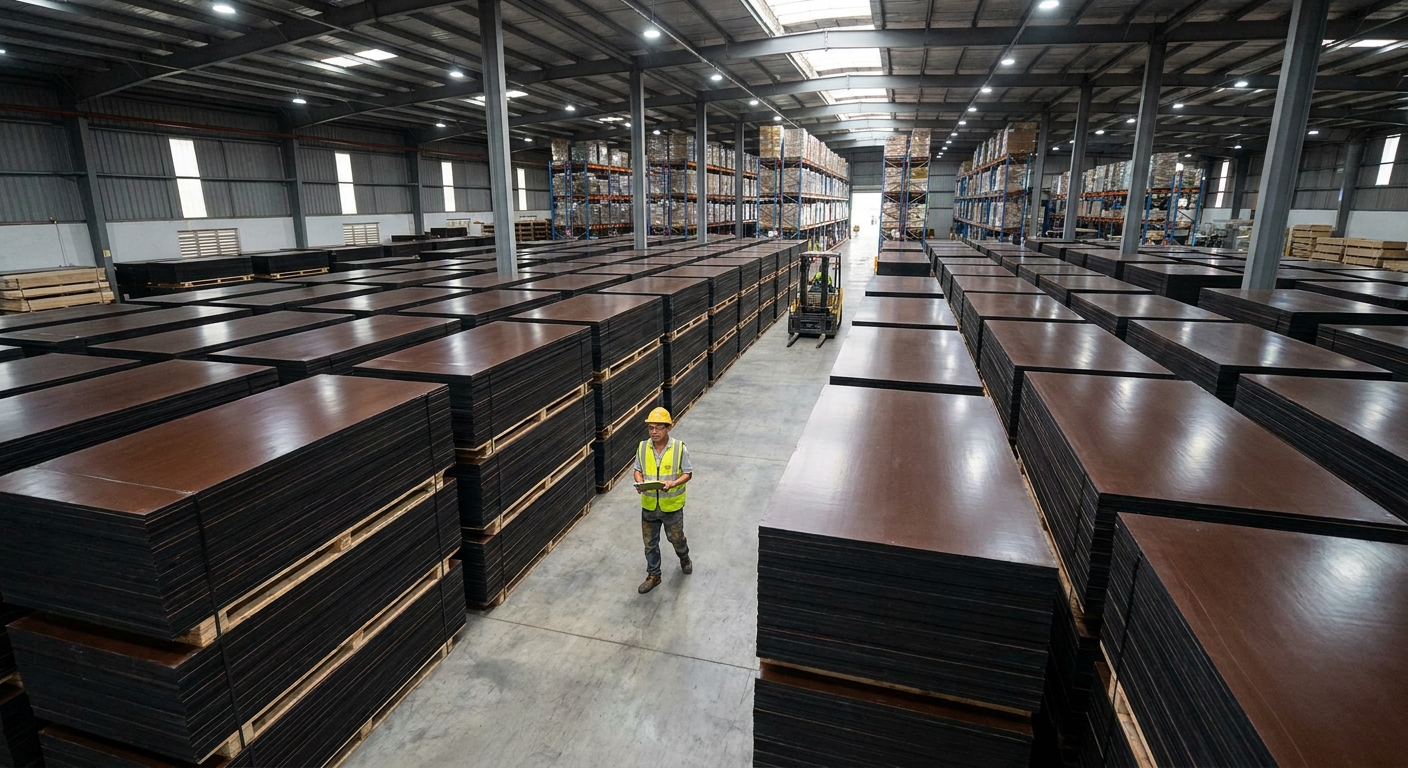
Vinawood has manufactured plywood for international export since 1992. The factory ships regularly to Jebel Ali and other GCC ports and holds the certifications GCC procurement teams ask for: CE marking under BS EN 13986, FSC Chain of Custody, CARB Phase 2 formaldehyde class, and ISO 9001 quality management. The film-faced plywood collection covers Form Basic, Form Extra, and Pro Form alongside the HDO range, in both 1220 × 2440 mm and 1250 × 2500 mm formats.
Mixed-grade and mixed-thickness containers are available on first orders. Sample packs (typically 2–4 sheets in the specified grade) are dispatched to GCC consignees before container commitments, with full documentation: certificate of origin, current third-party certifications, and a mill test report from a recent production batch. SGS or Bureau Veritas pre-shipment inspection is offered as a standard option on all containers.
Frequently Asked Questions
Is Chinese formwork plywood acceptable for GCC mega-projects, or is Vietnam a real alternative?
Both origins serve the GCC market. The practical question is which manufacturer holds current EN 314 Class 3 testing, EN 13986 CE marking, FSC Chain-of-Custody, and CARB P2 documentation, and has a track record of pre-shipment inspection by SGS or Bureau Veritas. Several Vietnamese manufacturers, including Vinawood, hold all of those simultaneously and ship to Jebel Ali on regular schedules.
What is the difference between EN 636-2 and EN 636-3, and which one do I need for a 50-storey Riyadh tower?
EN 636-2 panels are bonded for humid conditions; EN 636-3 panels are bonded for exterior conditions and pass a more demanding boil-test sequence. For a 50-storey Riyadh tower with sun-exposed panel storage and high reuse cycles, specify EN 636-3 / Class 3 phenolic plywood. EN 636-2 melamine panels are appropriate for lower-cycle work and shaded storage but should not be substituted into a high-rise core specification.
How long does container shipping from Vietnam to Jebel Ali take?
Ocean transit from Ho Chi Minh City to Jebel Ali runs 15–22 days. Adding factory production time of 15–25 days, total order-to-delivery is typically 5–7 weeks. Sohar and Salalah are slightly faster. Dammam and Jeddah, depending on routing, are 1–2 weeks longer.
Do I need SABER certification for plywood entering Saudi Arabia?
Yes. SABER (the Saudi Product Safety Programme) is mandatory for most imports including plywood. The certificate of conformity must be in place before the container is loaded, and customs in Dammam, Jeddah, and Riyadh dry ports check it on arrival. Vinawood's export team supports the SABER registration workflow for first-time KSA shipments.
Can Vinawood supply mixed thicknesses (12 mm + 18 mm + 21 mm) in a single container?
Yes. Mixed-thickness loading is routinely arranged, particularly for first containers where the buyer is balancing wall, slab, and deep-lift demand from a single shipment. The total volume must reach the 40HC container minimum (~22 m³) but the mix within that volume is flexible.
What is the minimum order quantity from Vietnam direct?
One 40HC container, approximately 380–420 sheets of 18 mm plywood or roughly 22 m³ by volume. LCL options exist for trial quantities through forwarders, but full-container loads remain the most cost-efficient unit for GCC buyers consuming a meaningful pour volume.
Category
guides
Related Markets
Related Countries
Related Products
▶Sources & References (5)
- BS EN 636:2012+A1:2015 — Plywood Specifications — BSI / CEN (2015)
- BS EN 13986:2004+A1:2015 — Wood-based panels for construction — BSI / CEN (2015)
- BS EN 314-1:2004 — Plywood: Bonding quality, Test methods — BSI / CEN (2004)
- Saudi Product Safety Program (SABER) — Saudi Standards, Metrology and Quality Org (SASO) (2026)
- ESMA Conformity Scheme (UAE) — UAE Ministry of Industry & Advanced Technology (MOIAT) (2026)