Formwork Plywood Romania: Placaj Filmat & Cofraje Supplier Guide
Placaj filmat for Romanian contractors: EN 636 Class 2 and Class 3 formwork plywood, CE marked, shipped in full containers to Constanța.

Romania Pours a Lot of Concrete
Romanian builders haven't had a quiet year since about 2007, when the country joined the EU. There's cohesion money going into motorways and bridges. Bucharest keeps sprouting office blocks, so does Cluj-Napoca, and apartment work came back hard after 2022. Go to Timișoara or Iași or Constanța and you'll see cranes there too, just fewer of them.
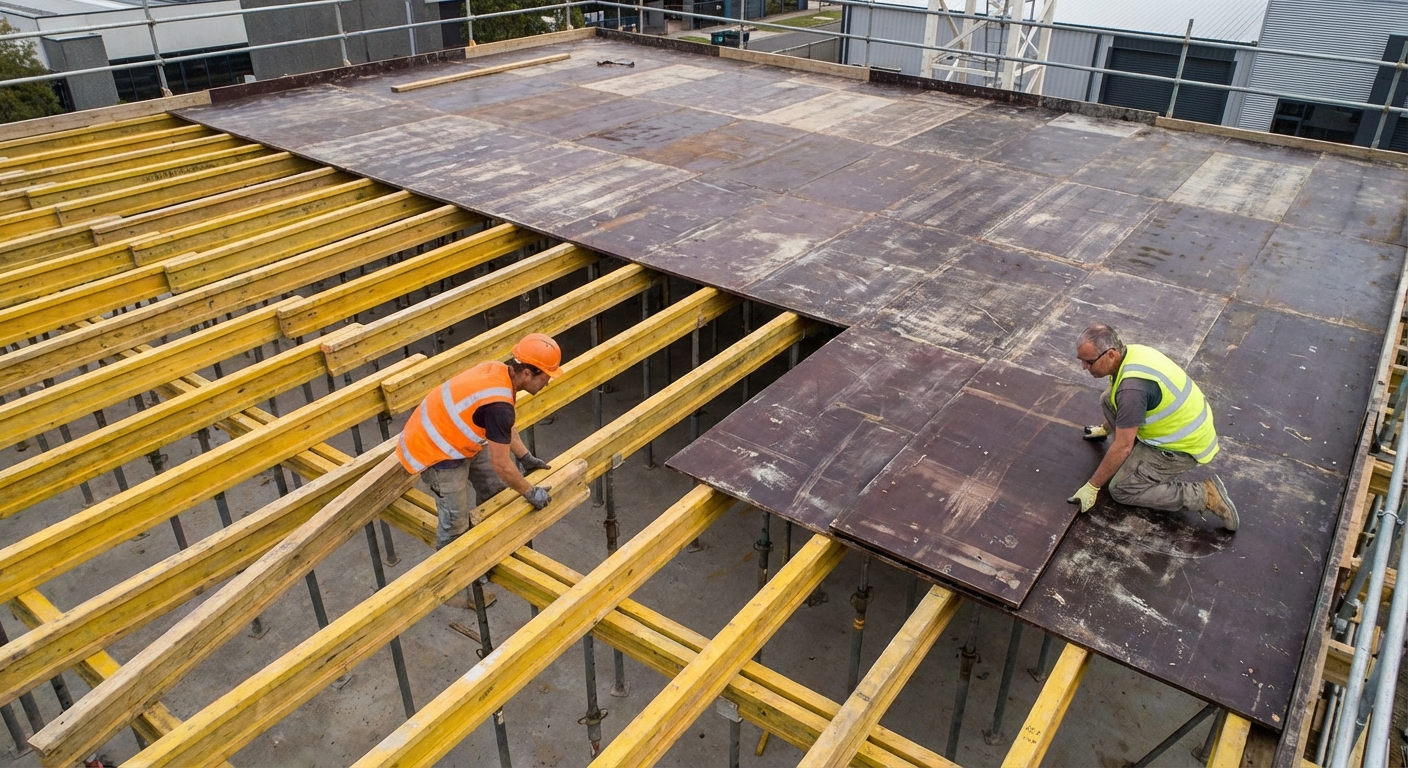
Every one of those pours needs placaj pentru cofraje, formwork plywood that can take wet concrete, vibration and a crew stripping it with a bar. For a long time Romanian contractors bought it from Turkey, China or nearby European mills. Some now buy direct from Vietnam instead, and that's where we come in.
Vinawood has made plywood in Vietnam since 1992. Around 5,000 boxes leave us every year for 55+ countries, and most of what's inside is film-faced formwork board. Below you'll find what a Romanian buyer usually wants to know, starting with vocabulary and ending with the boat.
Placaj, Cofraje, Placaj Filmat: Who Means What
We've seen foreign mills get these wrong more than once. Here's how we read them:
- Placaj (pl. placaje): just plywood. Could be anything from furniture board to sheathing.
- Cofraje (sing. cofraj): the formwork itself, i.e. the mould that holds concrete until it sets. British crews would call it shuttering.
- Placaj filmat: literally "filmed plywood". This is the film-faced board for concrete, and the term to put on an order.
- Placaj din lemn: "wooden plywood". Sounds redundant, but people use it to tell plywood apart from plastic or steel formwork.
So if you're talking to a Romanian distributor or site office, say "placaj filmat". It tells them you mean formwork grade, not sheathing.
What the Standards Say
Construction plywood in Romania falls under EN 13986, the harmonised EU standard behind CE marking. For formwork you also need a bond class from EN 636:
- EN 636-2: humid conditions. That covers most housing and commercial formwork.
- EN 636-3: exterior conditions. Longer projects, panels stored outdoors, rental fleets that go from site to site.
We make both. You'll see the class printed on the mill certificate for every grade, and our DoP rides along with the bill of lading. Formaldehyde is worth raising early, by the way. REACH dropped the ceiling for wood-based panels to 0.062 mg/m³ in August 2026. Tell us your project's limit and we confirm the emission class per grade on the quote.
Our Grades for Romanian Sites
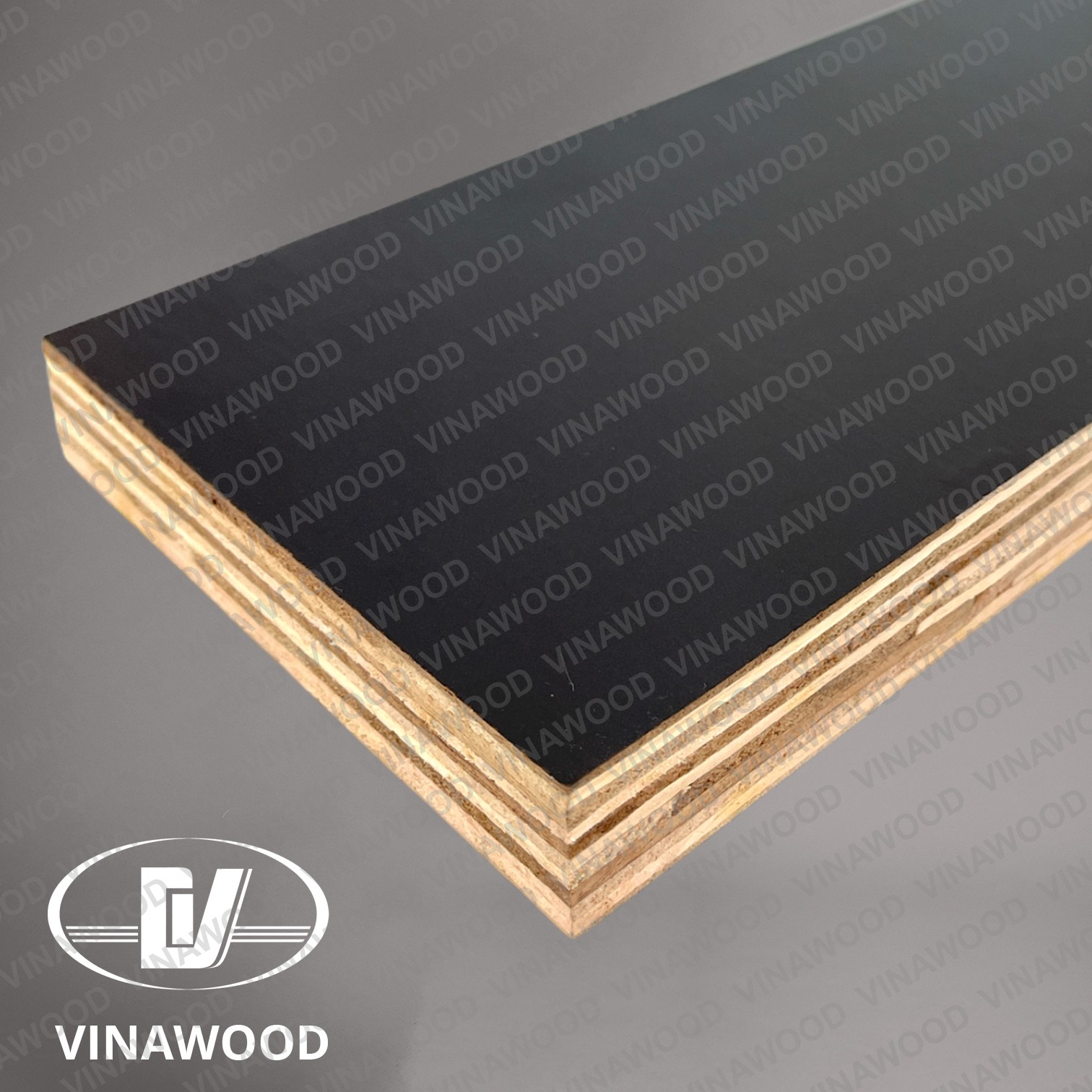
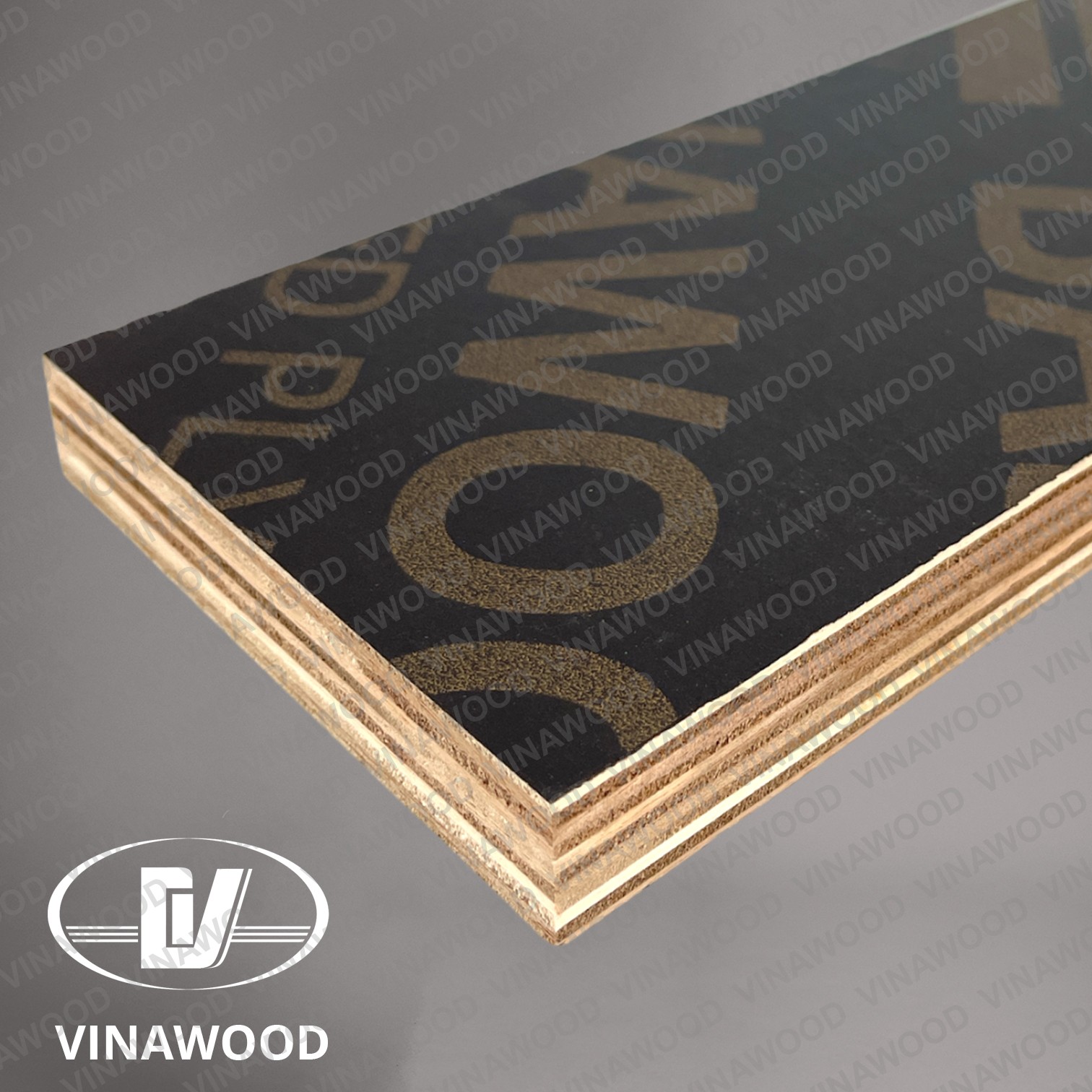
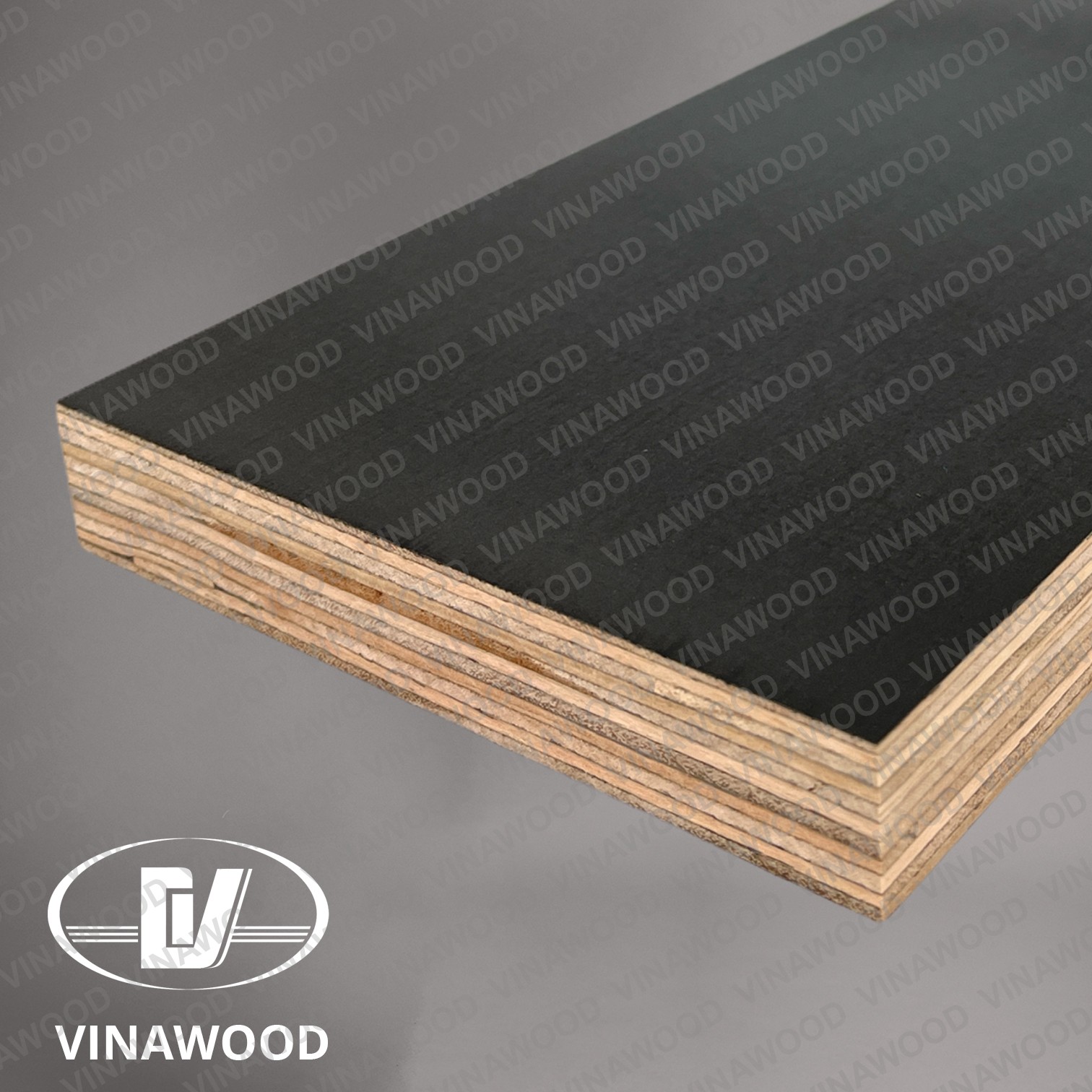
There are five film-faced grades to choose from. Eco Form Plus, Form Basic and Form Extra use melamine (MUF) glue and sit in Class 2. Pro Form Lite and Pro Form are phenolic, so Class 3.
| Product | Glue | EN Class | Face Film | Reuse | Typical Romanian Use |
|---|---|---|---|---|---|
| Eco Form Plus | MUF | EN 636-2 | 165 g/m² | up to 8 | Housing slabs and walls |
| Form Basic | MUF | EN 636-2 | 165 g/m² | up to 10 | Multi-storey residential, commercial |
| Form Extra | Melamine Top MUF | EN 636-2 | 165 g/m² | up to 15 | Busy commercial sites |
| Pro Form Lite | WBP phenolic | EN 636-3 | 165 g/m² | up to 15 | Class 3 work at a moderate pour count |
| Pro Form | WBP phenolic | EN 636-3 | 125 g/m² | up to 20 | High-rise cores, rental fleets, outdoor storage |
All of them come in the EU 2500 × 1250 mm sheet as well as 2440 × 1220 mm, in 12, 15, 18 or 21 mm. 18 mm is what most Romanian crews order.
If we had to give one piece of advice to a rental company, it would be this: don't put Class 2 board into a fleet that lives outside. Pro Form costs more per sheet and pays it back in pours.
From Hai Phong to Constanța
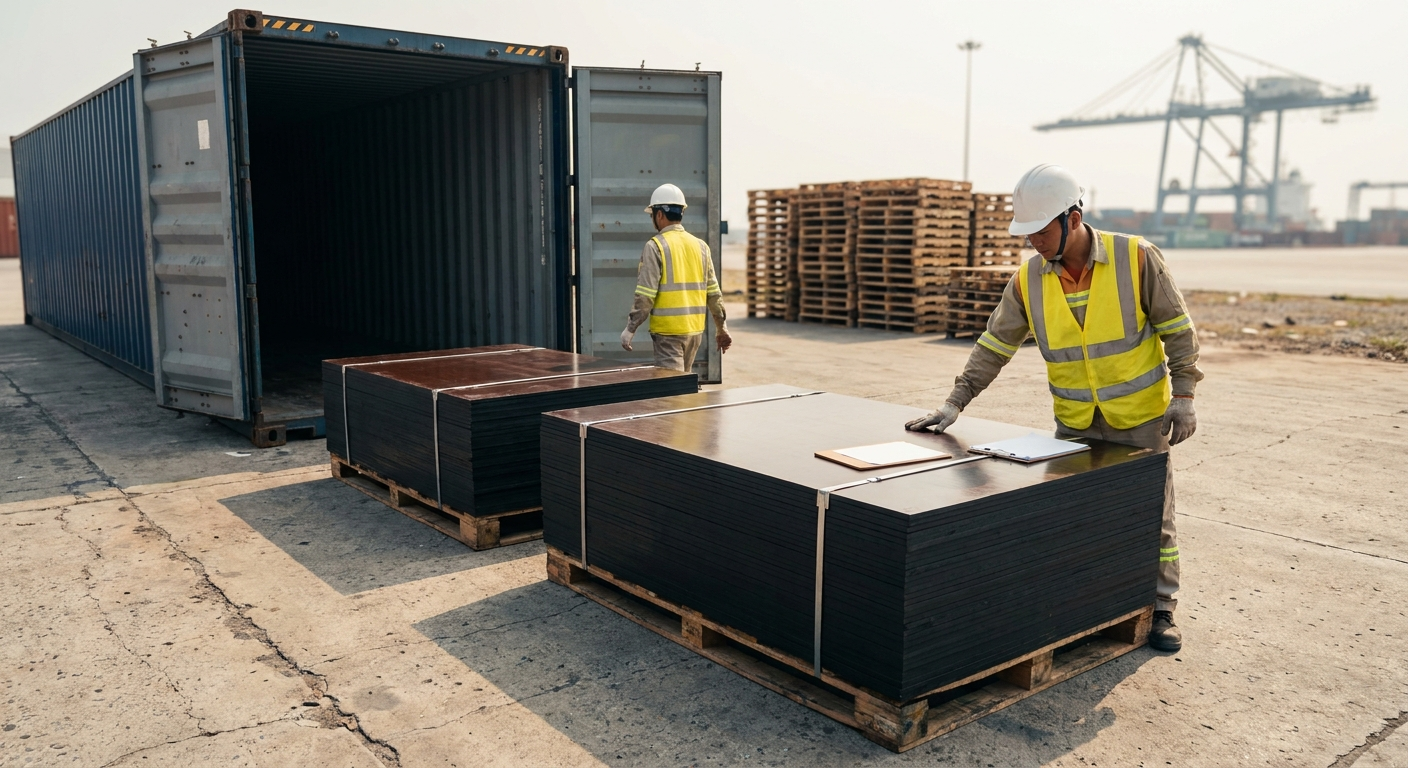
Containers leave from Hai Phong. Most Romanian buyers will want them in Constanța, which makes sense, though if your warehouses sit closer to the Hungarian border a Rotterdam or Hamburg routing plus rail can work out better. Which carrier, which routing, how many days at sea: all of that is confirmed at booking, because it changes more often than people expect.
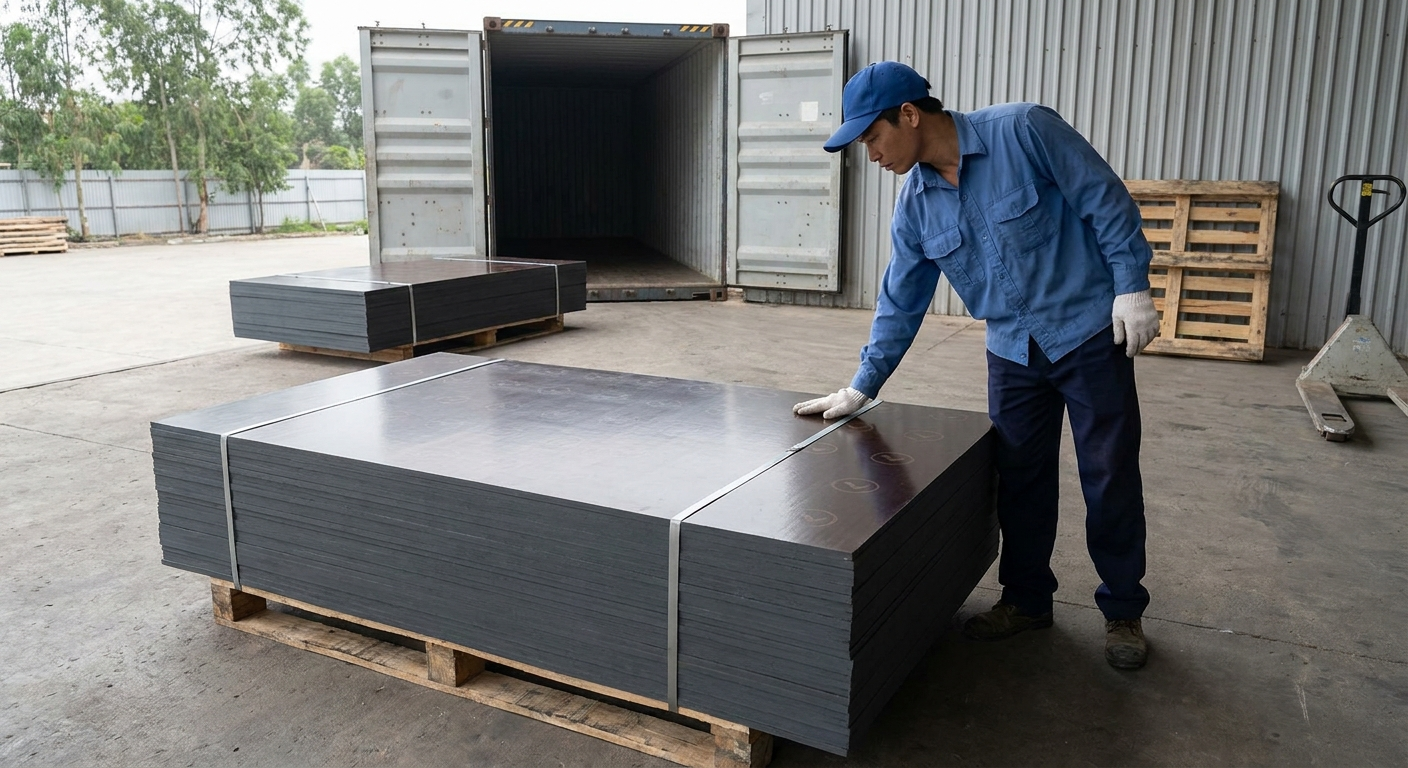
Our standard term is FOB Hai Phong, with CIF Constanța available on request. Sheets per container depend on thickness and format. The specs page has the yield tables, and the quote gives the exact count. Plenty of first orders are a single 20-foot box with a mix of grades, Form Basic and Pro Form together, say.
Why Romanian Buyers Try Vietnamese Board
- Price, quoted straight from the mill. No middle layer between our factory and your yard. We don't publish prices, but we'll quote any spec within 24 hours.
- Traceable wood. Everything we peel is plantation-grown Acacia, Eucalyptus or Hevea, with plot coordinates on file. That makes EUDR due diligence easy, and we send a Due Diligence Statement on request.
- Certificates EU projects ask for. We hold CE marking under EN 13986, plus FSC-COC, PEFC and ISO 9001. If the job is EU-funded, expect someone to ask for the FSC or PEFC certificate.
- Duty. The EU–Vietnam trade deal can lower the duty on our board, occasionally to zero, as long as you've got proof of origin (an EUR.1 normally). It all hinges on the HS 4412 line, though. Your broker can tell you.
Buying, Step by Step
- Pin down the spec. Pick a thickness; 18 mm is normal. Pick a class: 636-2 usually, 636-3 if panels live outside or go into a hire fleet. Have a rough pour count in mind.
- Get a quote. Tell us how much, which Incoterm, and which port.
- Check the papers. With the quote you get data sheets, the EN 636 class per grade and the DoP.
- Line up a forwarder. A Romanian forwarder handles customs and the truck to your yard.
- Order. We confirm the production slot and the sailing date when you place it.
Rental Companies
A lot of Romanian sites don't buy formwork at all. They hire it, by the pour or by the month, from companies that keep big pools of panels and frames. Those firms replace faces constantly, and we sell to them directly. For a rental pool the maths usually favours Pro Form: up to 20 reuses with good handling, a phenolic Class 3 glue line, and a face that copes with a winter in the yard far better than melamine board.
One honest caveat. Reuse numbers depend on your site, not just our mill. Release agent, cleaning between pours, sealed cut edges and dry stacking all count. We give the figures as "up to", and we mean it.
Category
guides
Related Markets
Related Countries
Related Products
▶Sources & References (3)
- EN 636: Plywood — Specifications — CEN European Committee for Standardization (2012-01-01)
- EN 13986: Wood-based panels for use in construction — CEN European Committee for Standardization (2004-01-01)
- EN 314-2: Plywood — Bonding quality — CEN European Committee for Standardization (1993-01-01)