Mass Plywood Panels (MPP) vs Commercial Plywood: When to Use Each
Mass plywood panels (MPP) and commercial plywood are both veneer-laminated, but they answer different design questions. A side-by-side from a commercial plywood manufacturer (Vinawood, no MPP in the catalog) on where each wins, the cost gap, and a three-line decision tree for AEC buyers.
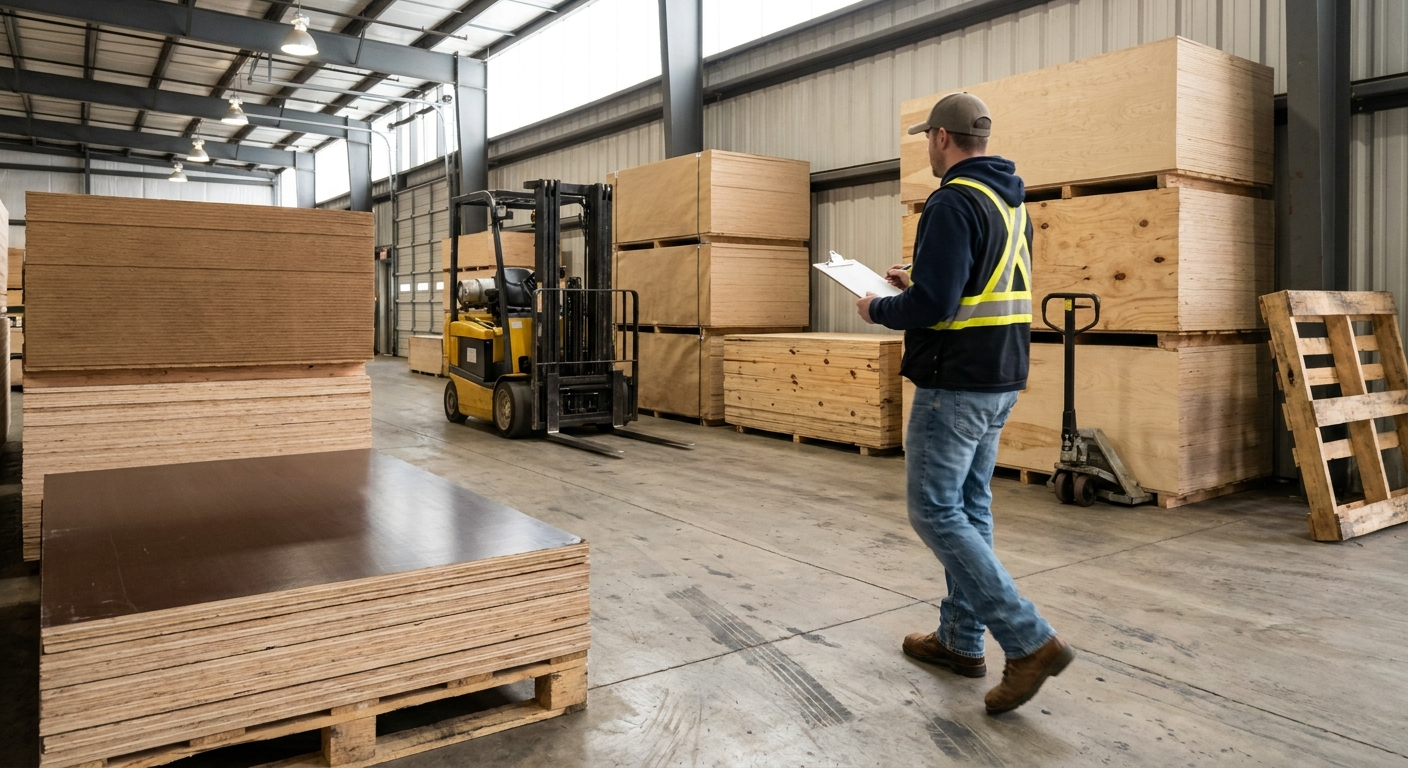
Mass plywood panels (MPP) and commercial plywood are both made by laminating wood veneers under heat and pressure. The shared physics ends there. MPP is a structural panel built at building-element scale — panels up to 60 ft long and a foot thick, carrying load like a wall or floor diaphragm in a tall-wood building. Commercial plywood is a sheet good. Mass-produced 4 ft × 8 ft, six to twenty-five millimetres thick, sold by the bundle for formwork, sheathing, container floors, signage, and a thousand other applications where a sheet is what the job calls for.
If you're a structural engineer or AEC researcher comparing MPP against CLT or glulam for a Type IV-B/C project, this article is the perspective from a commercial plywood manufacturer that doesn't make MPP. The gap in the SERP is real — Freres Engineered Wood, WoodWorks, the University of Oregon BUILD lab, and Lever Architecture all advocate for MPP in mass-timber contexts. None of them write the comparison from the volume-plywood side. We do, because Vinawood ships commercial plywood into the same construction projects that increasingly use mass timber on their headline floors. Both products belong in the building. Neither replaces the other.
What mass plywood panels actually are
MPP is a large-format engineered wood panel made by laminating wood veneers in alternating grain directions — the same construction principle as a sheet of plywood, but at a scale where the finished panel is a structural building element. Standard production sizes run roughly 4 ft wide by 24 to 60 ft long, with thicknesses from about 1 inch up to 12+ inches depending on the structural span and load. The veneers are typically Douglas fir, sourced from Pacific Northwest mills, and bonded with structural-grade adhesives qualified to APA / ANSI standards.
The product originated with Freres Engineered Wood in Lyons, Oregon, which received an ICC Evaluation Service Report (ESR-4954) for use in Type IV-B and Type IV-C tall-wood buildings under the 2021 IBC. As of 2026, Freres remains the production-scale source for MPP in North America. The category exists in the codes, but the supplier base is concentrated.
Why MPP rather than CLT or glulam? Veneer-based mass-timber utilises the wood fiber differently. Lower-grade logs that aren't suitable for dimension lumber can still produce structural veneer, which is part of why Freres' fiber economics differ from CLT manufacturers like Boise Cascade or DR Johnson, who source dimension-lumber boards. Whether veneer or board lamination is the right call for a specific project depends on span, fire rating, and the architect's exposure intent.
What commercial plywood is
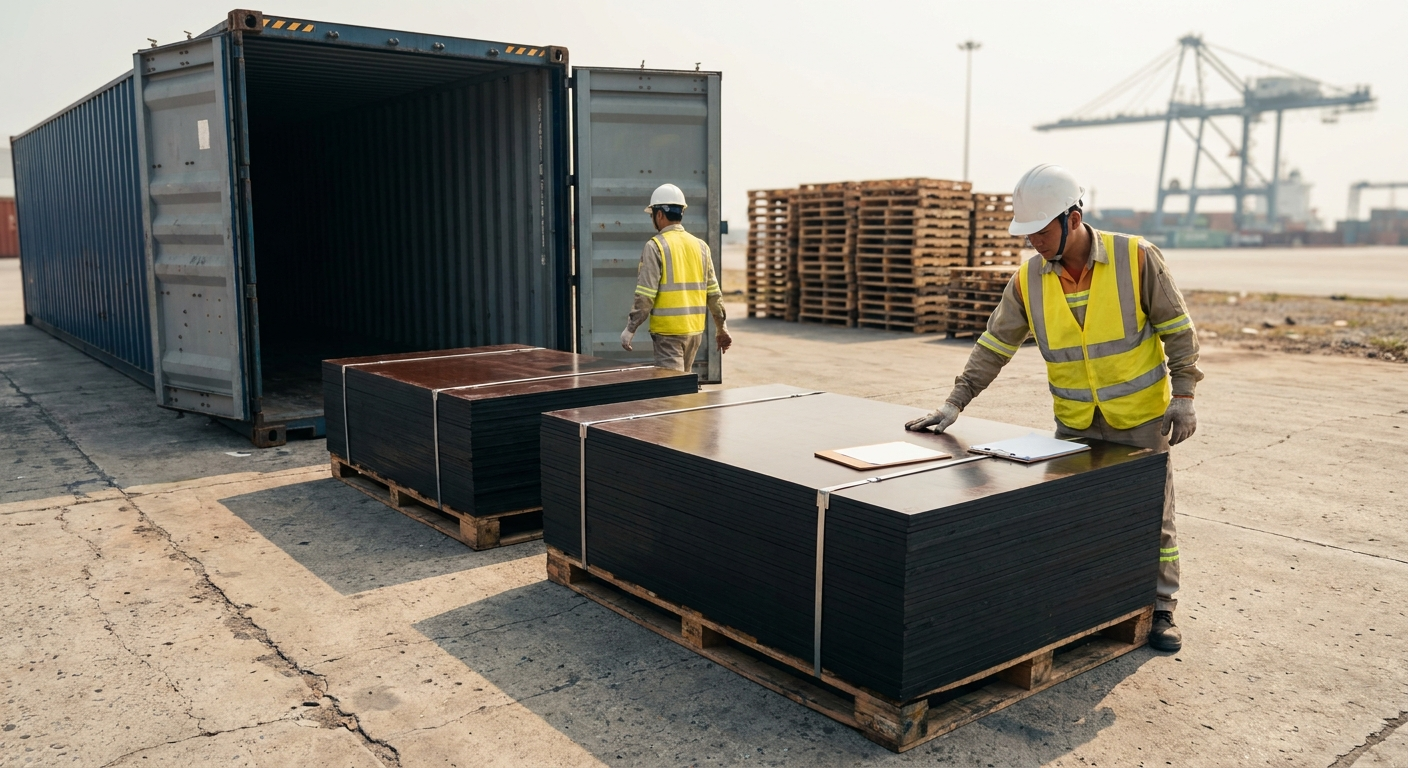
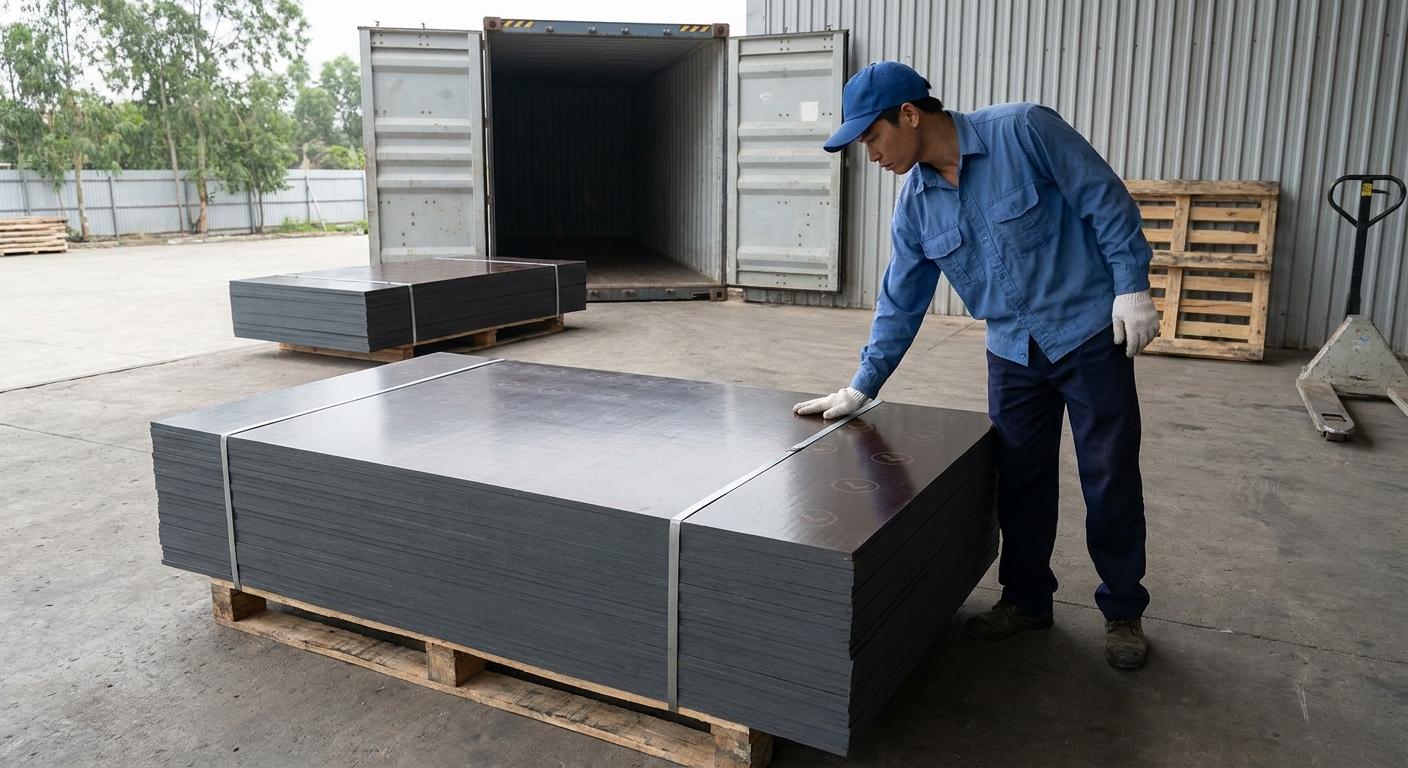
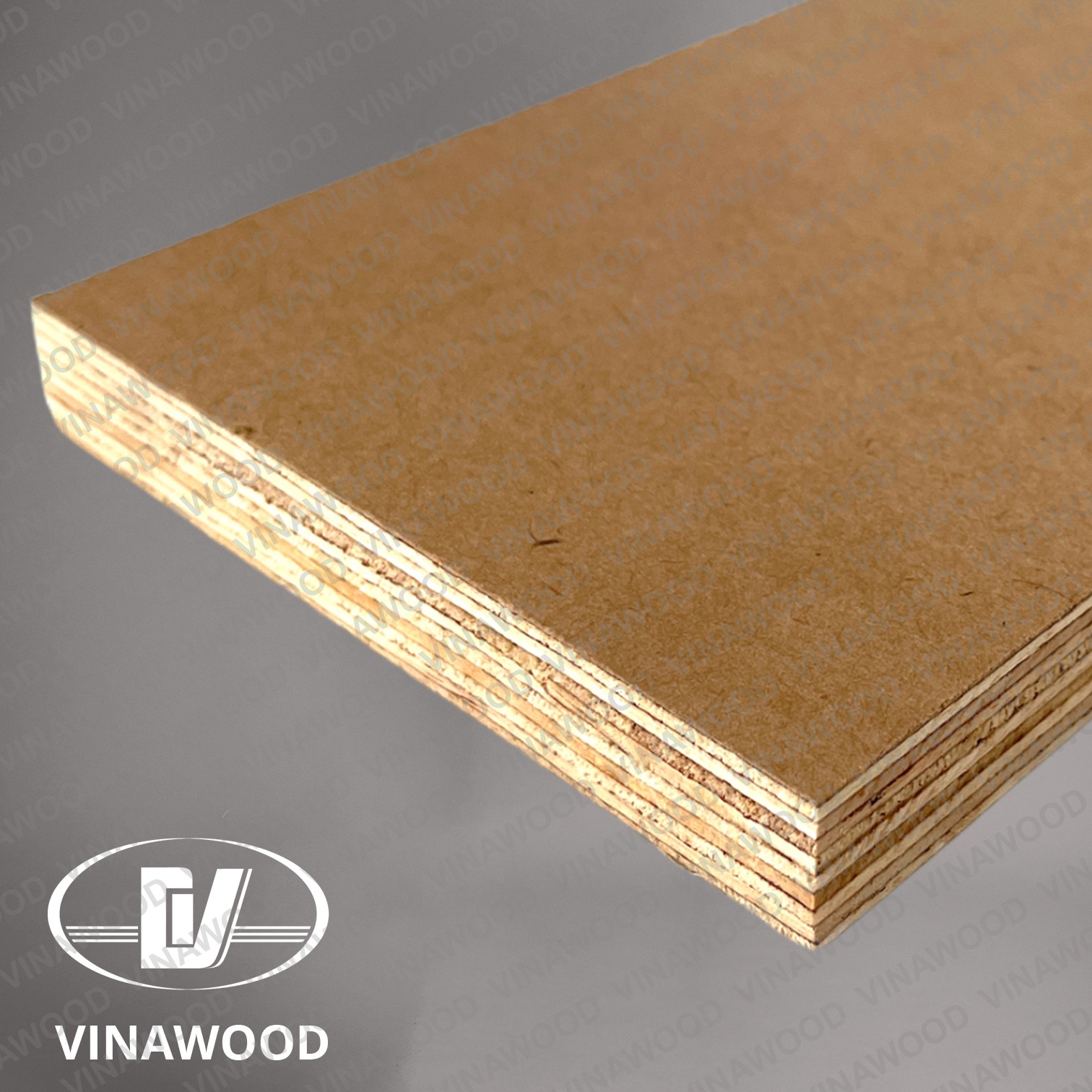
Commercial plywood is the global plywood category that Vinawood and most other plywood mills sit in. Standard 4 ft × 8 ft sheets (or metric 1220 × 2440 mm and 1250 × 2500 mm), thicknesses from 6 to 25 mm, hardwood or softwood faced, manufactured to APA PRP-210 (US), CSA O121 (Canada), EN 13986 (Europe), JAS (Japan), or IS 303 / IS 710 (India). The categories within commercial plywood are extensive: formwork plywood (HDO, MDO, film-faced), structural sheathing (CDX in the US, OSB-equivalent), marine plywood, hardwood plywood for furniture, and packaging-grade panels.
Volume scale matters here. Annual global commercial plywood production runs in the tens of millions of cubic metres. Annual MPP production in 2026 is a tiny fraction of that, concentrated at one US mill. The two products serve different markets, not the same market at different scales.
Side-by-side specification comparison
| Spec | Mass Plywood Panel (MPP) | Commercial Plywood |
|---|---|---|
| Typical panel size | 4 ft × 24–60 ft | 4 ft × 8 ft (or 1220×2440 / 1250×2500 mm) |
| Typical thickness | 1–12+ in (25–300+ mm) | 6–25 mm (1/4” to 1”) |
| Structural rating | Yes — panel itself carries load | Yes for sheathing/structural plywood; no for film-faced and decorative grades |
| Code pathway (US) | ICC ESR-4954, IBC Type IV-B/C | APA PRP-210, IRC residential, IBC commercial |
| Code pathway (Canada) | CSA / building authority approvals | CSA O121, CSA O151 |
| Code pathway (Europe) | Limited deployment to date | EN 13986 with CE mark |
| Typical density | 32–38 lb/ft³ (Douglas fir veneer) | 30–42 lb/ft³ (species dependent) |
| Fire rating | Char-rate calculations per NDS Chapter 16 | Tested per ASTM E84 for surface burn; not a primary structural fire rating |
| Manufacturing scale | Project-quantity, lead-time-driven | Container quantities, in-stock at distributors |
| Lead time (typical) | 8–16 weeks | Same-day to 4 weeks |
| Regional availability (US) | Pacific Northwest concentrated | National coverage, all major distributors |
The table reads as a different-products comparison, which is the correct read. Picking between them is not "which one is better" but "which one fits the application."
Where MPP wins
MPP is the right product when the panel itself is the structure. Five contexts where it lands cleanly:
- Type IV-B and Type IV-C tall-wood buildings. The IBC chapter on mass-timber construction recognises veneer-based panels alongside CLT and glulam. MPP qualifies under ESR-4954 for floor diaphragms, wall panels, and roof decks in this construction type.
- Prefabricated wall, floor, and roof panel assemblies. The 60-ft panel length supports multi-storey wall sections fabricated off-site and lifted into place. The construction speed advantage of mass timber over conventional framing is most pronounced in prefab.
- Architectural exposed ceilings and walls. The veneer face reads as wood; the panel is the finished surface as well as the structure. No drywall layer between the timber and the room.
- Educational and institutional buildings seeking biophilic design with structural mass timber. The Pacific Northwest has the most built examples; East Coast and Mountain West projects exist but with longer freight runs.
- Public and government projects with embodied-carbon targets. MPP and CLT both score well versus steel and concrete on whole-building life-cycle assessment, which is increasingly a procurement requirement on civic work.
The category is small but growing. WoodWorks and the AWC track adoption; the trend line points up, but the absolute volume against North American steel and concrete construction remains modest in 2026.
Where commercial plywood wins
Commercial plywood is the right product for the volume of construction work that happens at sheet scale. Six core application categories:
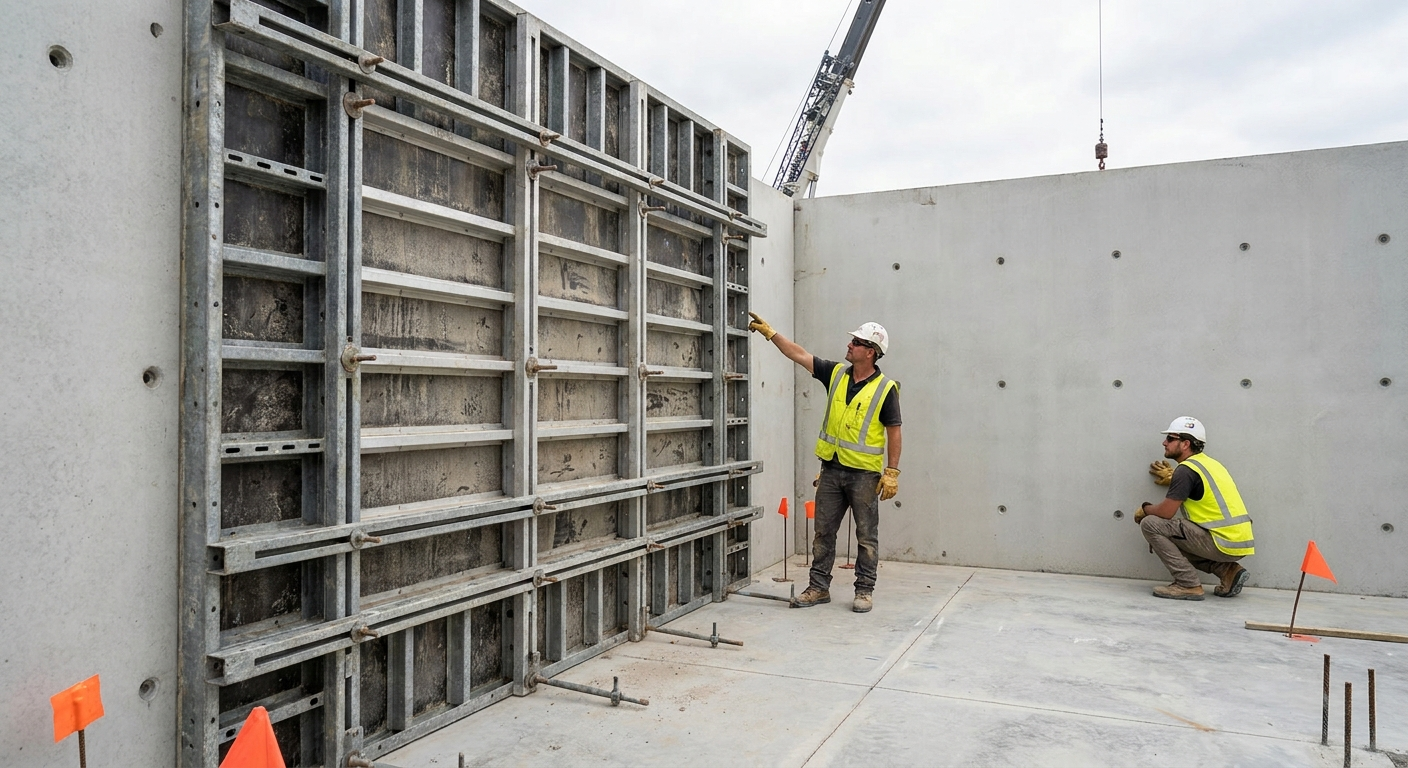
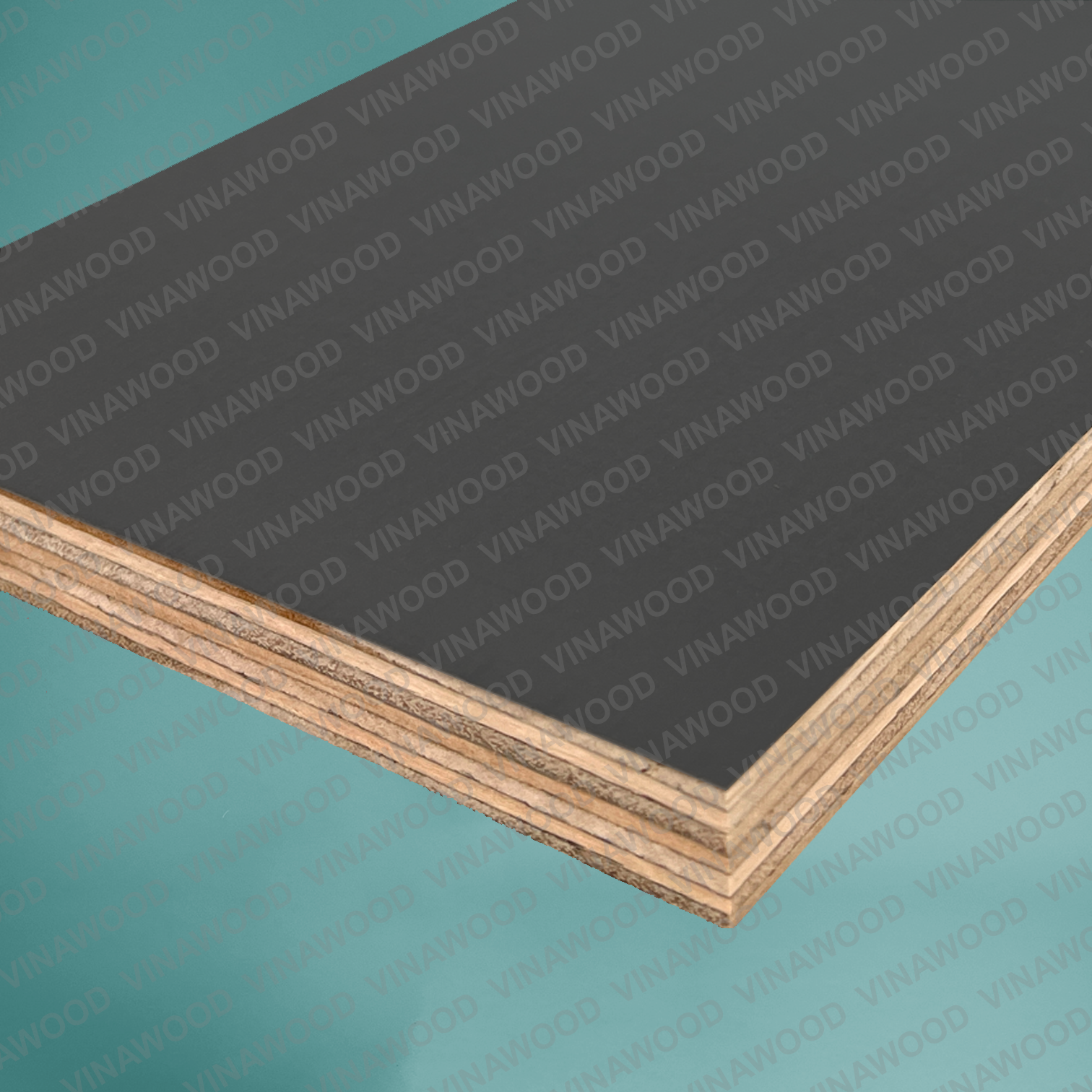
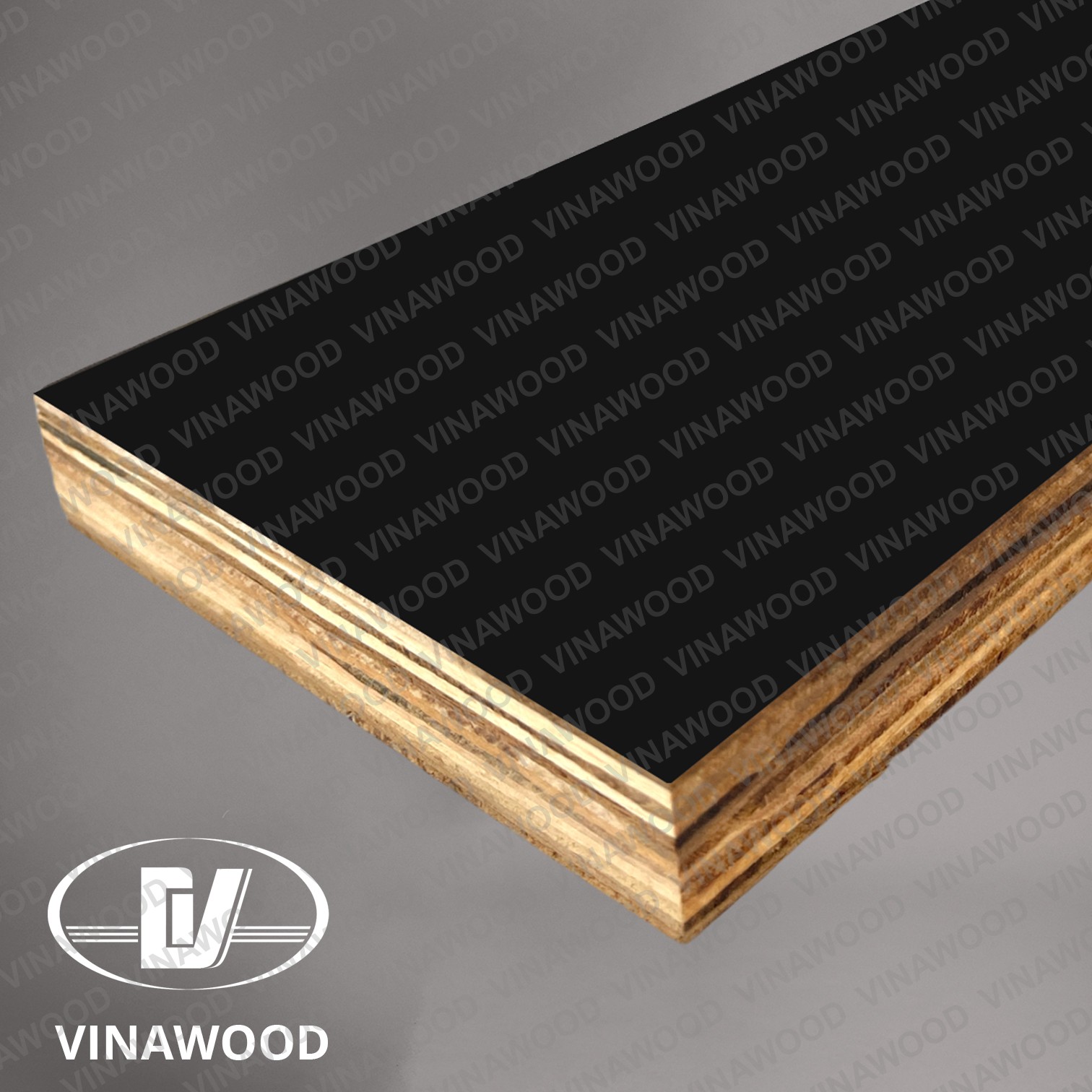
- Concrete formwork. The matte-finish formwork range covers MDO panels for low to medium reuse counts and HDO panels for high-rotation pours. The cost-per-pour math is what selects the panel grade.
- Structural sheathing. Wall and roof sheathing on conventional wood-frame and steel-frame construction, alongside OSB equivalents.
- Container and trailer floors. The standard 28-mm container floor panel is commercial plywood with a phenolic adhesive and a hardwood face.
- Signage and exterior trim. APA-trademarked MDO from Roseburg or Plum Creek dominates US signage; phenolic film-faced commercial plywood handles exterior architectural trim.
- Furniture cores and cabinetry. Hardwood plywood (birch, maple, oak face) is the workhorse for cabinet boxes and furniture across both built-to-order and mass production.
- Packaging and crating. Industrial export crating, machinery transit cases, packaging cores. The lowest grade in the commercial plywood spectrum.
From our own export volumes into North American distribution, the formwork side (HDO, MDO, film-faced phenolic) is the largest single use case for Vinawood-manufactured commercial plywood. Mass-timber projects sit on a separate procurement track from the form crews who pour the foundations and the sheathing crews who frame the walls. Both happen on the same job; both buyers are different people with different specifications.
MPP vs CLT — the mass-timber sibling comparison
Cross-laminated timber (CLT) is the mass-timber category MPP is most often compared against. Both are large-format structural panels. The construction differs:
- CLT uses dimension lumber boards (typically 2x4, 2x6, 2x8) laminated face-to-face in alternating directions. Three to nine layers, depending on panel thickness.
- MPP uses wood veneers (the same material plywood is built from) laminated in alternating directions. Many more layers per inch of thickness than CLT, which changes how the panel handles load and how the surface reads architecturally.
CLT is the broader category by volume globally — European production, especially in Austria and Germany, runs at scale that the North American MPP category does not approach. Within the US specifically, CLT has more supplier-base depth (Boise Cascade, DR Johnson, Smartlam, Sterling) than MPP. Per-square-foot pricing varies by panel thickness and project quantity; both products run several times the cost of conventional commercial plywood for similar-area coverage, because the comparison is structure to structure, not sheet to sheet.
The honest cost framing
MPP costs significantly more per square foot than commercial plywood. The numerical gap depends on thickness and project quantity, but at the panel-pricing level, an MPP panel runs in the range of dollars per board-foot of structural capacity, while a sheet of commercial plywood runs in the range of cents per square foot of sheathing coverage. The two are not substitutable on price.
The cost-justification for MPP is the structural and architectural function the panel performs. A Type IV-C building uses MPP to combine structure, fire performance, embodied-carbon score, and exposed-wood aesthetic in one element. Replicating that combination with conventional construction requires a steel or concrete frame plus interior wood finishes plus separate fire protection plus separate carbon offsets. The integrated performance is what the project is paying for, not the panel material itself.
Commercial plywood does not offer that integration and is not priced as if it does. It's priced as a sheet good. If a project is not in Type IV-B/C territory, the math points to commercial plywood for the job that commercial plywood is engineered to do.
North American availability and supply
Freres Engineered Wood in Lyons, Oregon, remains the production-scale MPP source as of 2026. Their facility is APA-certified and FSC chain-of-custody is available on request. East Coast projects book MPP with longer freight lead times than Pacific Northwest projects, which is one reason Pacific Northwest tall-wood buildings have led adoption — the supply is local.
Other engineered-wood producers have piloted veneer-based mass-timber products, but as of 2026 none are at production scale comparable to Freres on MPP specifically. CLT has more supplier-base depth in North America. Glulam is the most mature mass-timber category by far. Buyers researching MPP for a specific project should engage Freres directly; buyers with mass-timber requirements who haven't committed to veneer-based should also evaluate CLT and glulam against the project's structural and architectural needs.
The three-line decision tree
The question that resolves the spec, plain prose:
- Does the panel itself carry structure in a tall-wood building? MPP. Or CLT. Or glulam. The mass-timber category is correct.
- Are you forming concrete, sheathing a wall, fabricating cabinets, lining a container, building exterior signage, or any other sheet-good application? Commercial plywood. Match the grade to the application: HDO or MDO for forming, structural plywood for sheathing, hardwood for furniture, marine for water exposure.
- Want a mass-timber visual aesthetic for a non-structural application? Either could provide the look, but commercial plywood with a hardwood veneer face is dramatically less expensive, and a finish carpenter can build the wood-look ceiling out of standard sheets at a fraction of the MPP cost. The visual is achievable; paying for structural mass timber when the structure isn't needed is overspending.
Vinawood's category and what we route elsewhere
Vinawood is a commercial plywood manufacturer. We do not produce mass plywood panels and do not have a path to enter that category in the foreseeable future — the production scale and code-certification work is a different industrial track. Our catalog covers HDO, MDO, Pro Form, Form Basic, Form Extra, marine plywood, and the broader film-faced range, all at the 4 ft × 8 ft (or metric equivalent) sheet scale. For projects that need genuine MPP, the right next call is Freres Engineered Wood and other APA-certified mass-timber suppliers.
For the commercial plywood side of a mass-timber project — the formwork that pours the foundations, the sheathing on conventional wood-frame portions of the building, the marine plywood on any water-exposed elements, and the HDO Premium 2S Formply for high-rotation column or core forms — our catalog is the right starting point. We've shipped commercial plywood into 55+ countries since 1992 and the formwork side of US mass-timber projects is one of the application categories where Vietnam-sourced HDO compete on cost-per-pour with North American mills. Both Freres MPP and Vinawood HDO can ship to the same project; they're solving different problems.
Category
guides
Related Markets
Related Countries
Related Products
▶Sources & References (4)
- ESR-4954 — Mass Ply Panel (MPP) Structural Composite Lumber — ICC Evaluation Service (2024)
- Mass Plywood Panels (MPP) Product Documentation — Freres Engineered Wood (2024)
- Mass Timber in North America: 2024 Annual Report — WoodWorks Wood Products Council (2024)
- APA PRP-210 — Performance Standard for APA EWS Cross-Laminated Timber — APA — The Engineered Wood Association (2023)