Plywood for Hurricane Protection: A Manufacturer's Guide to Storm-Boarding Windows
How to pick, cut, install, and reuse plywood for storm-boarding windows. Thickness, grade, anchor systems by wall type, common installation mistakes, and the code context for when plywood is and isn't enough — from a Vietnamese plywood manufacturer with no impact-rated panels in the line.
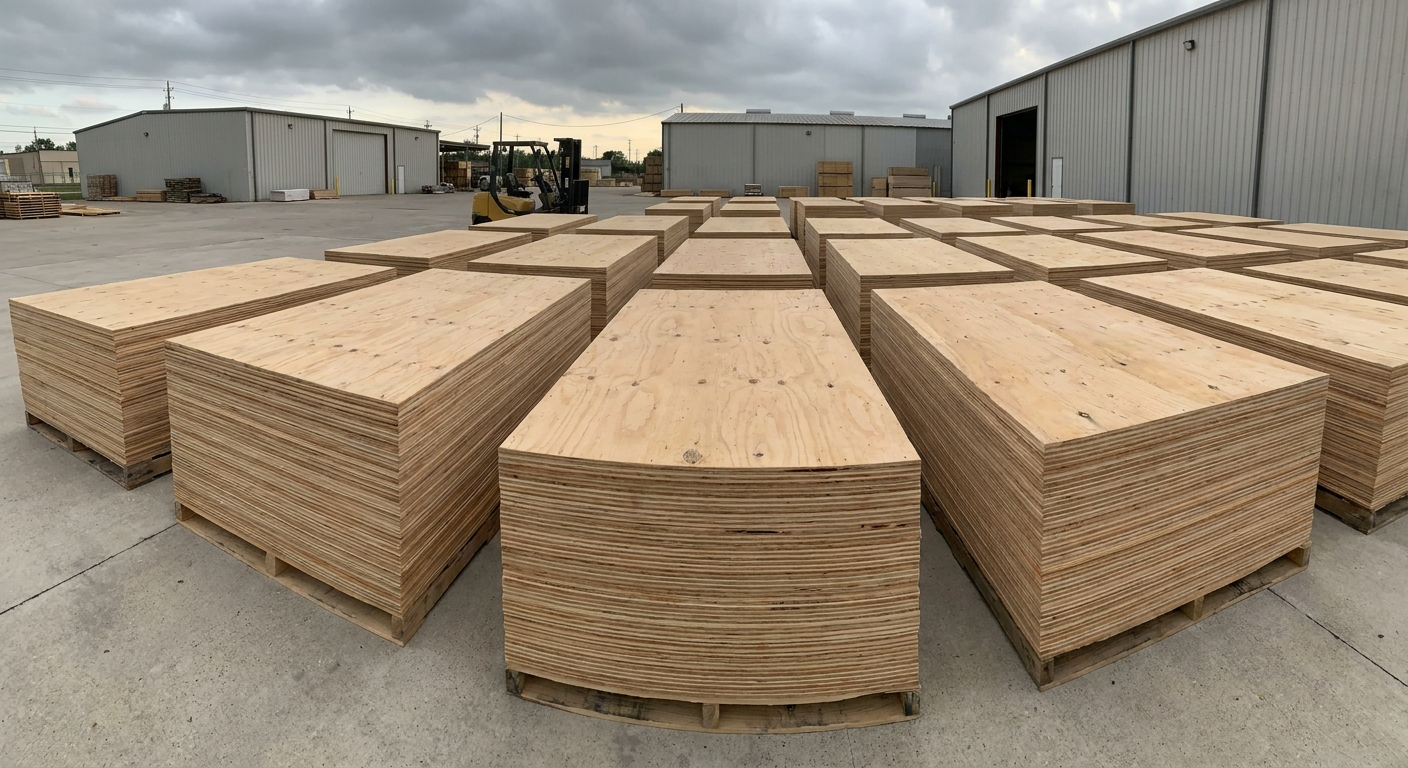
Plywood is the most common temporary hurricane shutter material in the United States, and there is a real reason for that. Sized and anchored correctly, a CDX panel screwed into framing absorbs much of the airborne-debris energy that would otherwise hit a window. Sized or anchored wrong, the same panel becomes a 35-pound projectile in a 100 mph wind, which is dangerous to whoever is downwind. The difference between those outcomes is thickness, fastener spacing, anchor type, and where the screws actually land.
This guide walks through grade selection, thickness rules, install patterns by wall type, reuse cycles, and one important caveat: plywood is not a substitute for permanent impact-rated shutters in jurisdictions that require them. Florida's High Velocity Hurricane Zone (HVHZ) is the obvious example. From a manufacturer's vantage point, we want to be clear about what plywood does and does not do, and where Vinawood's own product range fits and does not fit. The short version on Vinawood: we make formwork plywood and marine plywood, neither of which is a hurricane shutter. CDX from a domestic mill is the right substrate for window boarding.
Quick Reference: hurricane shutter plywood specs
The numbers most buyers want to confirm before a hardware-store run, sourced from Pinellas County guidance, FBC residential code references, and standard industry practice:
| Spec | Recommended | Notes |
|---|---|---|
| Thickness | 5/8” (15.5 mm) minimum; 3/4” (18 mm) for openings over 35” wide | 1/2” only acceptable for very small openings; never below 7/16” |
| Grade | CDX exterior, Exposure 1 or better | WBP phenolic glue line; not interior plywood |
| Fastener spacing (perimeter) | 12–16” on center | Wider spacing flexes the panel and risks failure |
| Fastener type | #8 or #10 wood screws, 3” minimum | Masonry anchors for CMU/stucco walls |
| Overlap onto framing | 4” minimum on each side | Anchors must reach wall framing, not window jamb |
| Code reference | FBC-R Section 1609 / IRC R301.2 | Verify with local AHJ; HVHZ has separate rules |
Verify with the local Authority Having Jurisdiction. Counties along the Gulf and Atlantic coasts run different versions of the residential code, and a single rule does not cover every jurisdiction.
Why plywood thickness matters
Impact resistance scales with thickness. The 5/8” floor is the threshold most jurisdictions accept for window protection because at that thickness, a CDX panel can absorb the kind of airborne-debris hit a typical residential storm produces. The 3/4” recommendation for openings over 35” wide reflects a span issue: as a panel gets larger, mid-span deflection under wind load increases, and a thinner panel can flex enough to crack at the fasteners or split in the field.
The engineering benchmark in code conversations is the ASTM E1996 large-missile impact test — a 9-pound 2x4 fired at 34 mph, simulating windborne lumber from a neighbor's deck or fence. CDX plywood at standard thickness is not certified to that test as an off-the-shelf product. With proper install, panels approach the protection level the test simulates, but the panel itself is not the rated assembly. This distinction matters for permit-required installs: if the AHJ requires a tested impact-rated assembly, plywood is not it.
What grade and species to use
CDX exterior plywood is the workhorse. The "C/D" face/back grades reflect softwood face quality (knots, patches allowed) and the "X" indicates exterior glue — the WBP phenolic adhesive that holds up under repeated wet-dry cycles. CDX has been the de facto standard for hurricane boarding in the US Southeast for decades because it balances strength against cost, and because the lumberyards and big-box retailers stock it deep all the way through hurricane season.
Pressure-treated CDX is acceptable but offers no impact-resistance benefit for shutters. The chemical treatment (ACQ, MCA, copper azole) is for ground-contact rot resistance and termite protection — it does nothing for debris impact. If the panels will be stored outdoors in a damp shed for years between storms, PT-CDX may extend usable life through fungal resistance during storage. For garage-stored panels, regular CDX is fine. Marine plywood is overkill for shutters — it shines in boat-up and freshwater applications, but the cost premium does not buy useful protection for window boarding. Save the marine grade for the dock or the transom.
Do not use: interior hardwood plywood, decorative panels, MDF, OSB rated for sheathing only, or any panel without an exterior glue line. Each of these fails differently — some delaminate, some swell, some crack — but all of them fail.
Why film-faced and overlay plywood are NOT shutters
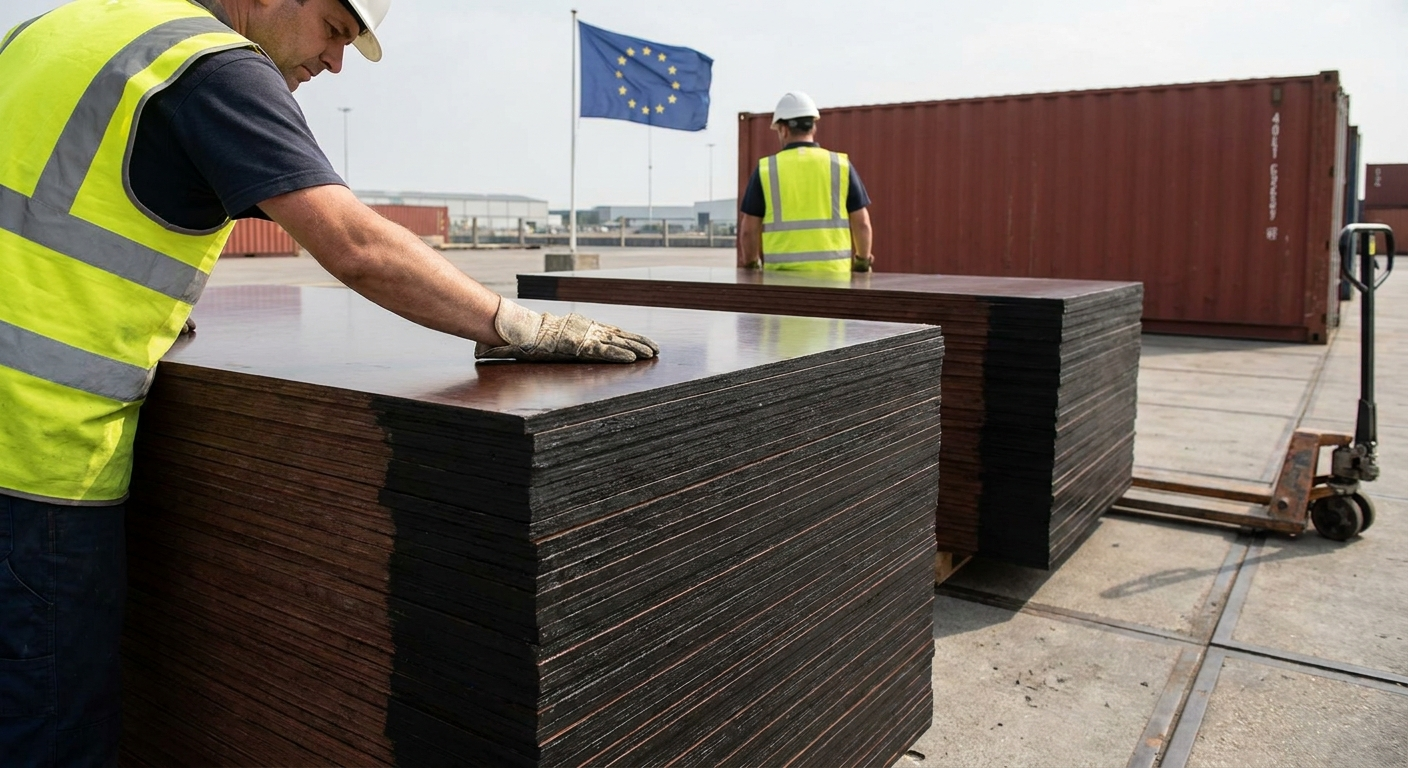
This is a manufacturer-perspective note that needs to be said clearly. Vinawood produces MDO, HDO, Pro Form, Form Basic, and other concrete formwork panels. Buyers occasionally ask whether these make better shutters because the smooth phenolic face looks tougher than CDX. They do not. Concrete formwork panels are engineered for compressive load against poured concrete, not impact load from airborne debris. They have not been tested per ASTM E1886, ASTM E1996, or Miami-Dade TAS 201/202/203, and we make no impact-rating claim for any of them.
Where film-faced plywood and CDX diverge is the failure mode under impact. CDX absorbs energy through wood crushing and ply deformation — a debris hit dents and splinters the panel but typically does not punch through. Phenolic-faced film panels are stiffer; under the same hit, they tend to crack and shatter rather than deform. Stiffer is not safer when the load is impact rather than steady pressure. From a Vietnamese mill perspective, we have shipped formwork panels into 55-plus markets for thirty-plus years and we have never positioned them as window protection. The right product for that job is CDX from a domestic mill.
Sizing and pre-cut strategy
Measure each opening with the panel extending 4” minimum past the frame on each side. A standard 4x8 sheet covers one to two windows depending on size. Picture windows or sliding glass doors larger than a single panel require joining: butt the panels onto a 2x4 backing brace, then fasten through both layers into framing. Do not rely on a flush butt joint without a brace — that joint will flex independently and one panel can lever the other off the wall.
Pre-cut and label every panel by location: "North Window 1," "South Door," "Master Bath." The labeling matters more than it sounds. The fastener holes drilled this year line up next year, which preserves panel life and shortens install time when the next storm warning hits at 7 PM on a Thursday. Seal the cut edges with primer or paint to slow water absorption during storage. Edge swelling is the single biggest reason a stored shutter panel does not fit when it comes back out.
Anchor systems by wall type
The right anchor depends on what is behind the wall finish. The three patterns that cover most US residential homes:
Wood-frame walls (most US homes outside South Florida): #8 or #10 wood screws, 3” minimum length, driven into the framing studs around the opening. The screws must reach actual framing — not the window sash, not the jamb trim, not the aluminum window frame, none of which will hold under sustained 100+ mph wind. A finishing nail through the trim is worthless here.
Concrete block (CMU) walls (Florida, Caribbean, parts of the Gulf Coast): Tapcon-style or sleeve anchors, 1/4” × 2-3/4” minimum. Pre-drill with a hammer drill into the block, set the anchor, drive the screw through the plywood face into the anchor body. The cost difference between proper masonry anchors and "close-enough" concrete screws is small; the failure mode for the wrong fastener is total panel detachment.
Stucco over wood frame (much of South Florida residential): Same screw type as a pure wood frame, but go up to 3-1/2” to penetrate stucco plus sheathing plus framing. The stucco itself does not hold; the screws must reach the wood underneath.
Plylox-type tension clips (a permanent retrofit option) compress against the window casing rather than penetrating the wall. They are limited to specific window depths and are not code-approved in all jurisdictions. Useful in some specific older home retrofits; not a universal replacement for screw anchors.
Why nails fail: prying force from sustained 100 mph wind extracts smooth-shank nails. Ring-shank nails or wood screws are required. Hurricane wind is not nail-pull-out-friendly, and a panel that pulls off in the storm becomes airborne debris itself.
The most common installation mistakes
Six failure patterns we see (and read about in incident reports) every storm season:
- Anchoring into the window frame or jamb trim instead of the wall framing. The trim tears off, taking the plywood with it.
- Spacing fasteners beyond 16” on center. The panel flexes at the unsupported span, splits, and becomes a projectile.
- Using interior-grade plywood that delaminates within 24 hours of wind-driven rain.
- Forgetting to seal cut edges before storage. The panel swells, refuses to fit next year, gets cut down to a non-spec size, fits this year, and is undersized the year after.
- Taping windows behind the plywood. Tape does not help — it can increase shard size if the window does break, which is a worse outcome than untaped glass.
- Storing panels flat on a damp garage floor. Warping ruins the fit and the panel goes from labeled-for-North-Window to scrap firewood.
Reuse cycles — how many storms can one panel survive?
CDX shutter panels typically endure up to 3 to 5 storm cycles if stored dry, edges sealed, and the panel has not been impact-damaged in the storm. Visible splits, edge swelling, or face delamination are retire signals. A panel that took a direct hit from a 2x4 and shows a star-fracture pattern around the impact point should not go back on the wall — the next hit at the same location is more likely to punch through.
Pressure-treated CDX may extend usable life through fungal resistance during storage, but the chemical treatment does nothing for impact resistance. A label-and-track system extends usable life because the screw holes match every year — the panel that goes on "North Window 1" stays "North Window 1" for its whole service life. Re-drilling fresh holes each season eats into the panel margins faster than the storm itself does.
When plywood is not enough
Code context, by jurisdiction. Florida's HVHZ — Miami-Dade and Broward Counties primarily — requires permanent windows or shutters tested to TAS 201, 202, and 203 protocols. Plywood does not meet HVHZ permanent shutter requirements. It is accepted in HVHZ as a temporary measure for older homes that have not yet been retrofitted, but new construction and significant remodels in those counties must use tested products. Outside HVHZ, the FBC and IRC accept plywood with prescribed thickness and anchor schedules.
Buyers in HVHZ planning permanent shutters should consult a licensed contractor and check with their local Authority Having Jurisdiction. Buyers outside HVHZ planning to use plywood as their primary protection should still check the local code — some non-HVHZ Florida counties have stricter rules than the statewide minimum, and rules in coastal North Carolina, South Carolina, and the Gulf states vary by county. The general rule: a permit-required install needs the AHJ's written approval; a temporary, no-permit install for a named-storm warning is the buyer's call.
Where to buy and when
Big-box retailers (Home Depot, Lowe's) and regional yards (84 Lumber, Carter Lumber, regional building-supply distributors in storm zones) stock CDX 5/8” and 3/4” year-round. Stocking levels rise in May and June ahead of Atlantic hurricane season. Last-minute runs in named-storm warning windows often see stockouts and price spikes; we have watched 5/8” CDX go from a normal price to two and a half times that within 36 hours of a Cat 4 forecast in the South Florida market.
The cost-effective approach is to pre-cut and store panels in early hurricane season — May or early June — before the first named system rolls. Marine-grade plywood is in short supply at consumer retail and rarely worth the premium for shutter use; marine specialty suppliers carry it for boat work. Always ask the supplier for the bond class label (Exposure 1 or EN 314 Class 2 / Class 3) before paying premium prices for vague "marine" or "exterior" stock. The label is the spec; the store's verbal description is not.
For deeper context on the related plywood categories that come up in these conversations, the pressure-treated plywood guide covers PT-CDX in detail and the marine plywood vs regular plywood comparison covers why marine grade is the wrong premium to pay for shutters. The outdoor plywood guide rounds out the broader category. None of these will replace the local code reference — verify with the AHJ before any permit-required install.
Vinawood's position on hurricane shutters
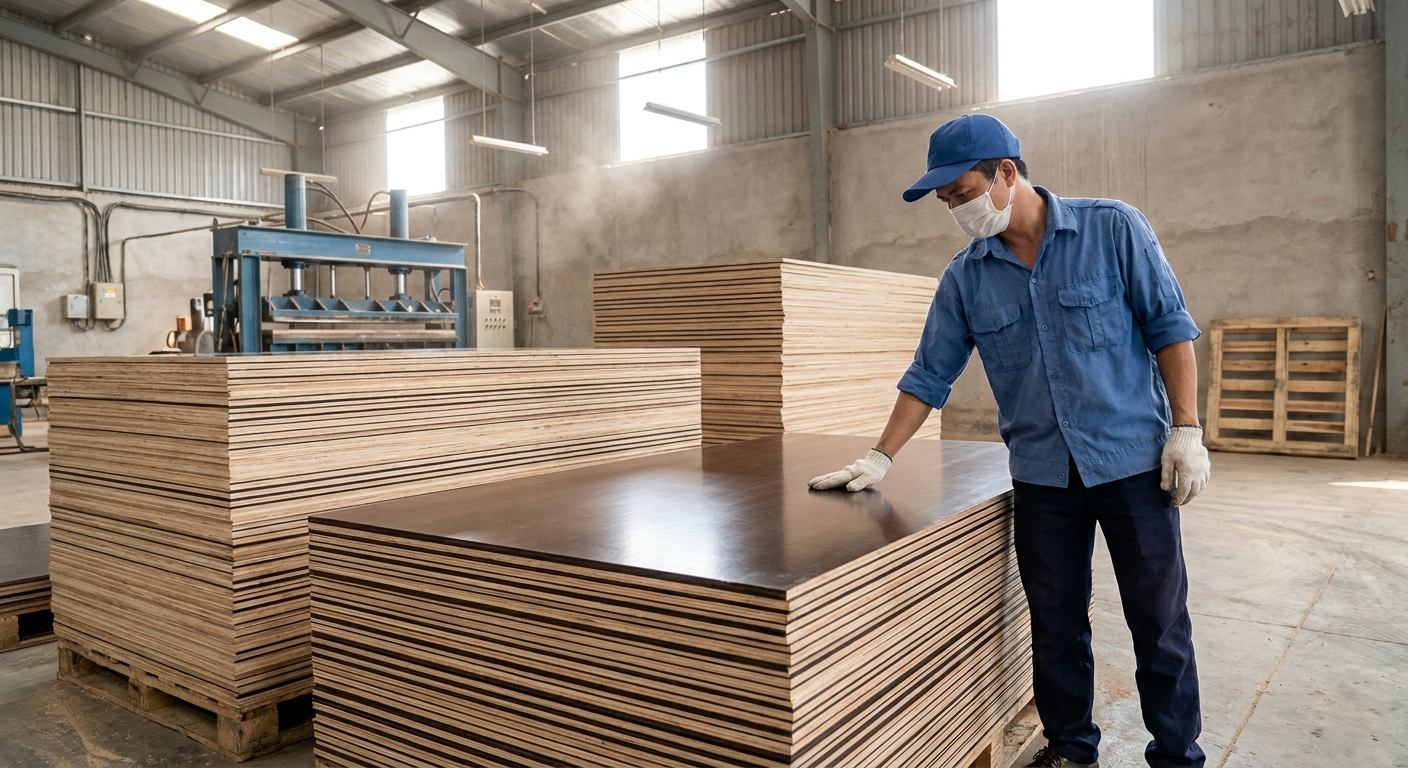
Vinawood manufactures formwork plywood, marine plywood, and hardwood plywood from our Vietnam factory — none of which is a hurricane shutter substrate. Our MDO, HDO, Pro Form, Form Basic, and Form Extra ranges are engineered for concrete formwork: compressive load, repeat reuse cycles, fair-face concrete finish. Our Marine Standard and Marine Extra ranges are engineered for above-waterline structural marine and exterior cladding work. We make no impact-rating claim for any of these in the context of windborne-debris protection, and they are not tested to ASTM E1886/E1996 or Miami-Dade TAS 201/202/203.
For US Atlantic and Gulf Coast residential hurricane preparation, source CDX exterior plywood from a domestic mill or domestic distributor, follow the local code references, and store panels labeled for their assigned windows. Vinawood has manufactured film-faced and marine plywood since 1992 and ships to contractors in 55+ markets globally; our role in this conversation is to help buyers choose the right panel for the job, including saying clearly when our own product range is not the right answer.
Category
how-to
Related Markets
Related Countries
▶Sources & References (4)
- Pinellas County — Requirements for Attaching Plywood as Storm Protection — Pinellas County Building Services (2022)
- Florida Building Code, Residential (FBC-R) — International Code Council / Florida Building Commission (2023)
- ASTM E1996-22 — Standard Specification for Performance of Exterior Windows, Curtain Walls, Doors and Impact Protective Systems Impacted by Windborne Debris in Hurricanes — ASTM International (2022)
- Miami-Dade Product Approval — TAS 201/202/203 Test Protocols — Miami-Dade County Department of Regulatory and Economic Resources (2024)