Imprinted Film-Faced Plywood: Manufacturer Marks, Custom Branding & Decorative Patterns
A practical reference for buyers and specifiers on the four kinds of imprints found on film-faced plywood — manufacturer marks, batch codes, grade declarations, and decorative patterns — plus the verification steps that go beyond reading the surface.
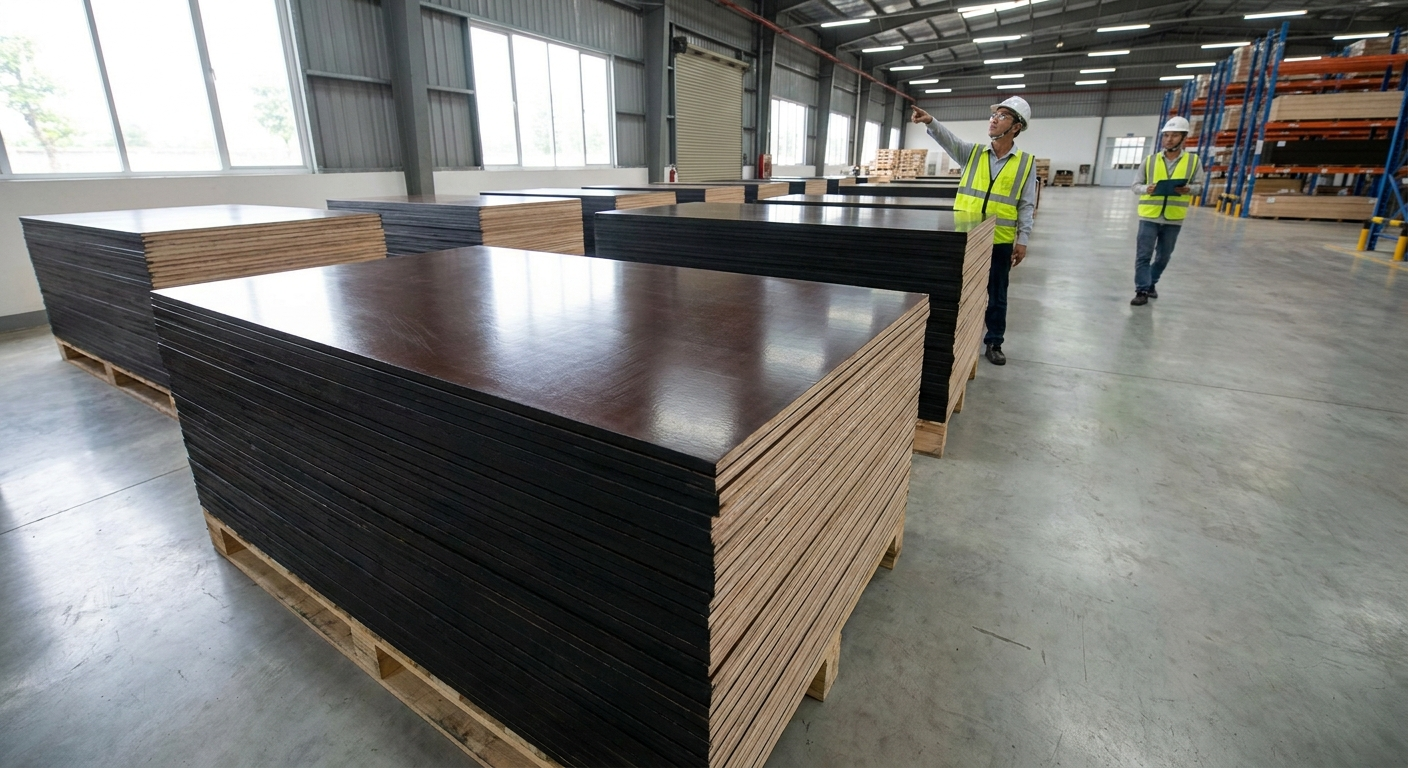
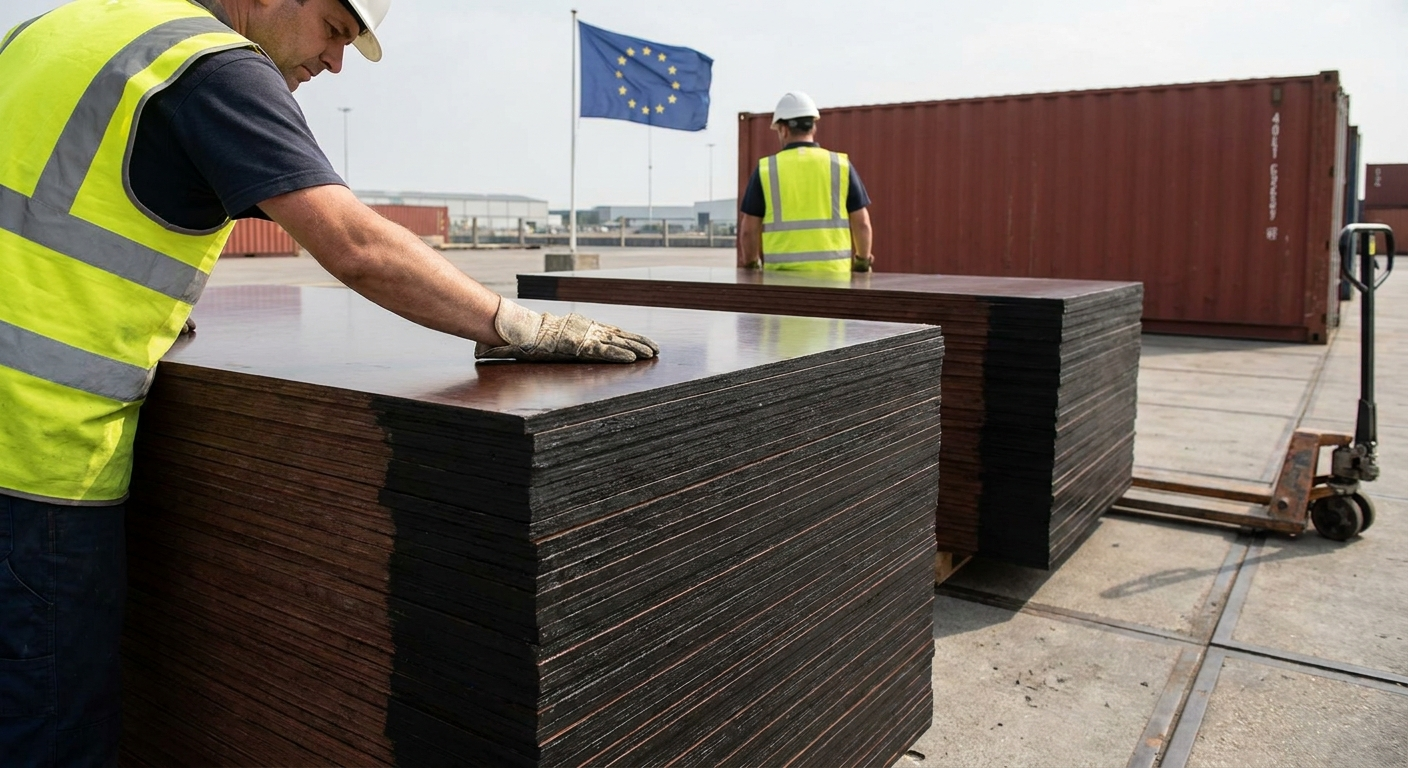
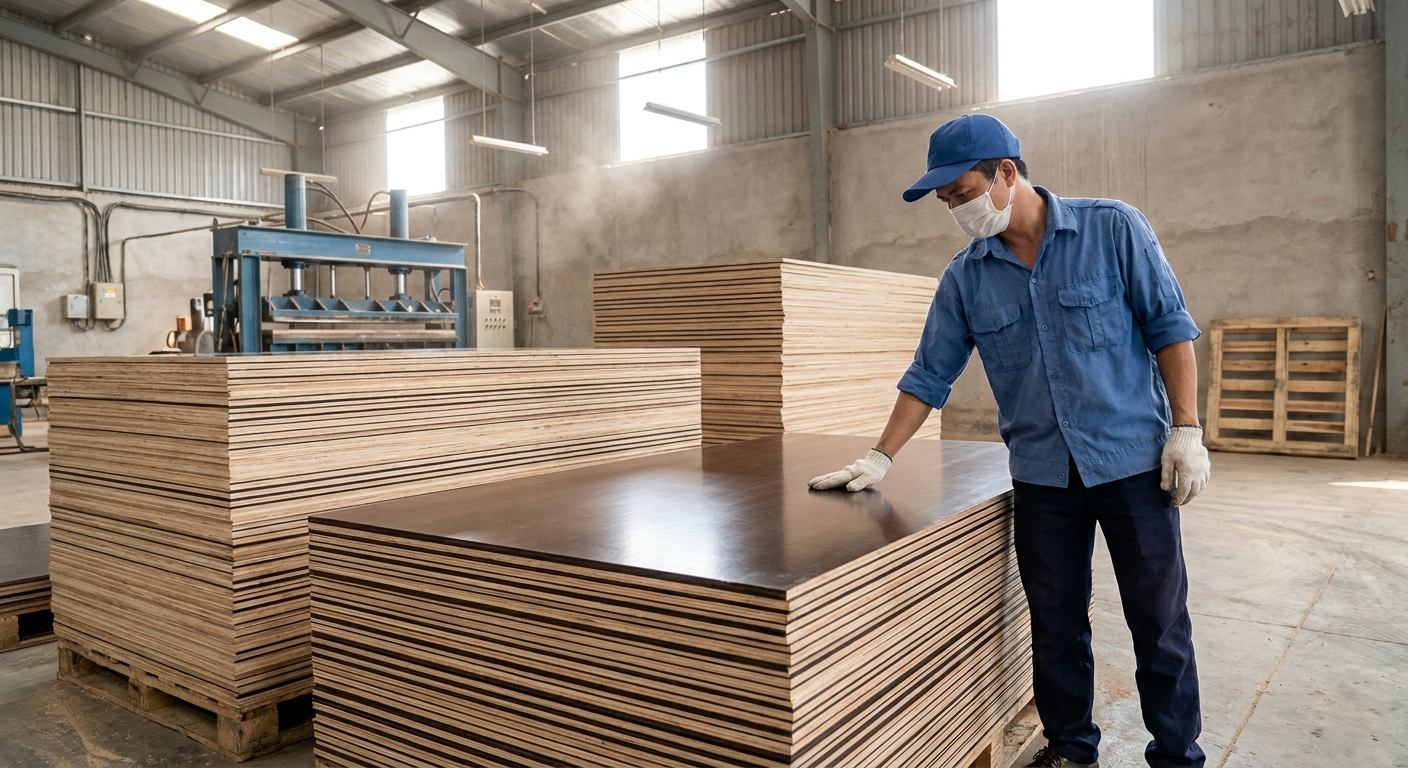
A pallet lands at the warehouse and the first thing the receiving team looks at is the face of the panel. A logo, a batch code, a grade stamp, sometimes a wood-grain print pressed into the film. The marks tell two different stories depending on who is reading them: a distributor checking that the panels are what the contract says they are, or a specifier evaluating panels for an architectural pour where the imprint will end up in the concrete. Both readings matter, and neither is standardised.
This guide separates the four kinds of marks a buyer commonly sees on film-faced plywood, what each one signals, and the verification steps that go beyond reading the surface.
What "imprinted" can mean on film-faced plywood
The word covers four very different things. They get bundled in product listings and supplier catalogues, which causes confusion when a buyer asks for "imprinted plywood" and the supplier sends something the buyer didn't expect.
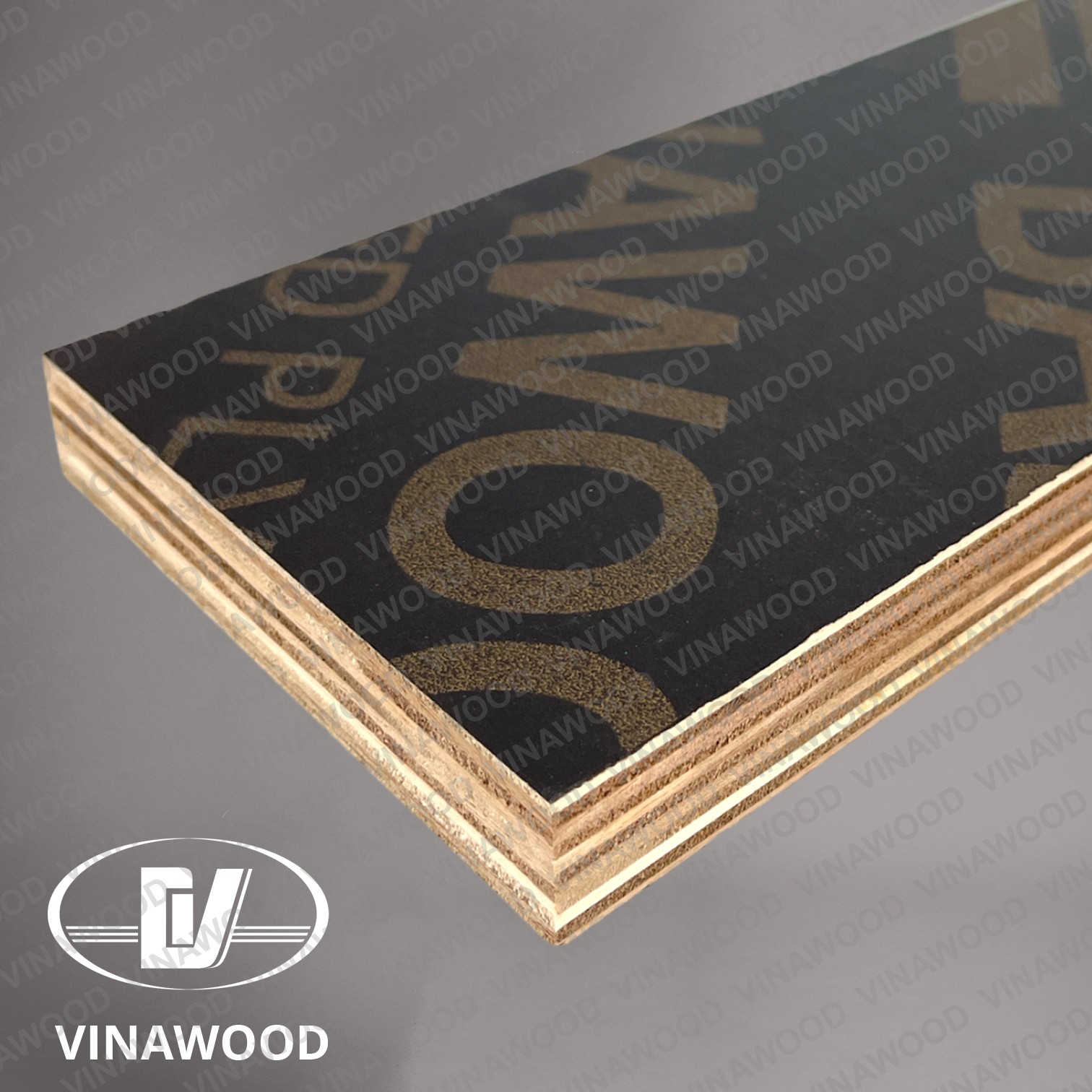
- Manufacturer logo or brand stamp. A factory mark printed on one face, usually in the corner. Identifies the producer and sometimes the production line.
- Batch or production code. A short alphanumeric string giving the production date, panel size, and grade designation.
- Grade or class marking. A printed declaration of bond class (EN 636-2, EN 636-3) or face grade (B/B, BB/CC).
- Decorative pattern. Wood-grain or geometric texture pressed into the film face, used in architectural concrete work to imprint the slab.
The first three are about the panel itself. The fourth is about what the panel does to the concrete after the pour. Different buyers, different conversations.
Manufacturer logo and batch code imprints
A typical manufacturer imprint includes the factory name or trademark, a production date code, the panel dimensions, and sometimes a grade designation. Vietnamese, Chinese, and Indonesian factories all use this convention. The location of the imprint on the panel face varies. So does the ink type. Heat-pressed imprints survive the panel's lifetime; ink-jet imprints can wear off after two or three pours.
Here is the part buyers miss: the imprint is a producer's self-declaration, not a third-party certification. A printed "EN 636-3" on the corner does not mean the panel has a current TÜV or BM TRADA test report on file. It means the factory believes its product would pass that test. Some factories test routinely. Some don't. The imprint alone tells you nothing about which.
For any importer evaluating a new supplier, the rule is straightforward. Ask for the actual conformity documentation that backs the printed claim. A real EN 636-3 test report names the lab, the test date, the sample count, the pre-treatment cycle (1, 4, 5, or 6 per ISO 12466), and the bond strength result. The imprint itself is just shorthand.
Custom imprinting and private label
Most established phenolic-glue manufacturers offer custom logo imprinting for distributors who want to build a local brand presence. The economics make sense at container quantity. A typical run threshold is one full 40-foot container per design, with setup costs amortised across the order. Lead time adds about a week to standard production.
From our side as a Vietnamese mill, the request comes up most often from European and Australian distributors who want to differentiate on the local pallet rather than competing as another commodity importer. The film face takes the imprint cleanly when the panel is destined for Pro Form-class or HDO-class production runs. Lower-grade economy panels are not great candidates because the film weight is lighter and the imprint can lift after the first pour.
Imprinted vs anti-slip — not the same thing
This pair gets confused in catalogues and on importer purchase orders. They are different products with different jobs.
Anti-slip film-faced plywood has a textured surface designed to give workers grip on a sloped or wet panel face, typically created by a wire-mesh impression during pressing or by a sand-coat overlay. The texture stays on the panel, gives traction, and is reused alongside the rest of the formwork stack. See our separate piece on anti-slip film-faced plywood for the spec details.
Imprinted is decorative or for branding. The pattern is part of the film, not a separate layer. It does not add friction in any meaningful way. If your spec calls for grip on a sloped pour, anti-slip is what you need. If your spec calls for a wood-grain texture in the cured concrete, that is the architectural decorative imprint, covered next.
Architectural concrete: imprints transferred to the cured face
This is the specifier conversation. Board-form concrete and wood-grain finishes show up in museum walls, gallery facades, and high-end residential. The textured film on the formwork plywood becomes the negative impression on the slab. After stripping, the cured concrete carries the pattern.
Two practical notes. The pattern depth on the film is shallow, typically 0.3 to 0.8 mm. That gives a soft texture in the slab — visible at arm's length, gentle to the touch, not a deep relief. For a deep textured finish, formliners (rubber or polyurethane sheets fixed to the back of standard plywood) are the more common solution. The plywood does the structural job; the formliner does the decorative one.
Reuse on architectural patterned panels is also lower than on plain phenolic. The pattern face wears unevenly under repeated stripping, and consistency drops after pour 6 to 8. Specifiers should plan for fresh panels per project section if the architect wants a uniform finish across a long facade.
What to verify before ordering imprinted product
Three checks. They sound basic. They catch most of the disputes that land back at the mill.
- Request a full physical sample with the actual imprint. A photo or a digital proof is not enough. Mill conditions, ink batch, and film weight all affect how the imprint lands. We have seen importers approve a digital proof and then reject a container because the imprint sat 4 mm off-square — fixable on a real sample, expensive to fix on a docked container.
- Ask for the conformity certificate that backs any standards claim in the imprint. If the panel is stamped EN 636-3, the test report should be available within 48 hours of request. A long delay is a signal worth investigating.
- Confirm reuse-cycle expectations match what the imprint implies. Some factory imprints reference a bond class that doesn't actually match the bond test result. The imprint may say "Class 3," but the panel may use a melamine adhesive system that is properly Class 2. The bond test report settles it.
Imprint quality as a proxy for QC
One quiet observation from years of receiving complaints and walking factory floors: the way a factory prints its own panels often tracks the way it presses its own panels. Sharp, legible imprints positioned consistently across a pallet may indicate a factory with steady process discipline. Smudged imprints, off-square placement, or a pallet where panels 1–10 carry a clean stamp and panels 11–40 carry a faded one may indicate a handling or pressing-line issue worth a question.
This is a soft signal, not a defect call. We have seen sharp-imprint pallets with veneer issues underneath, and we have seen faded-imprint pallets that performed fine for 18 pours. But it is worth a glance during receiving, because it costs nothing.
Vinawood's approach to imprinted production
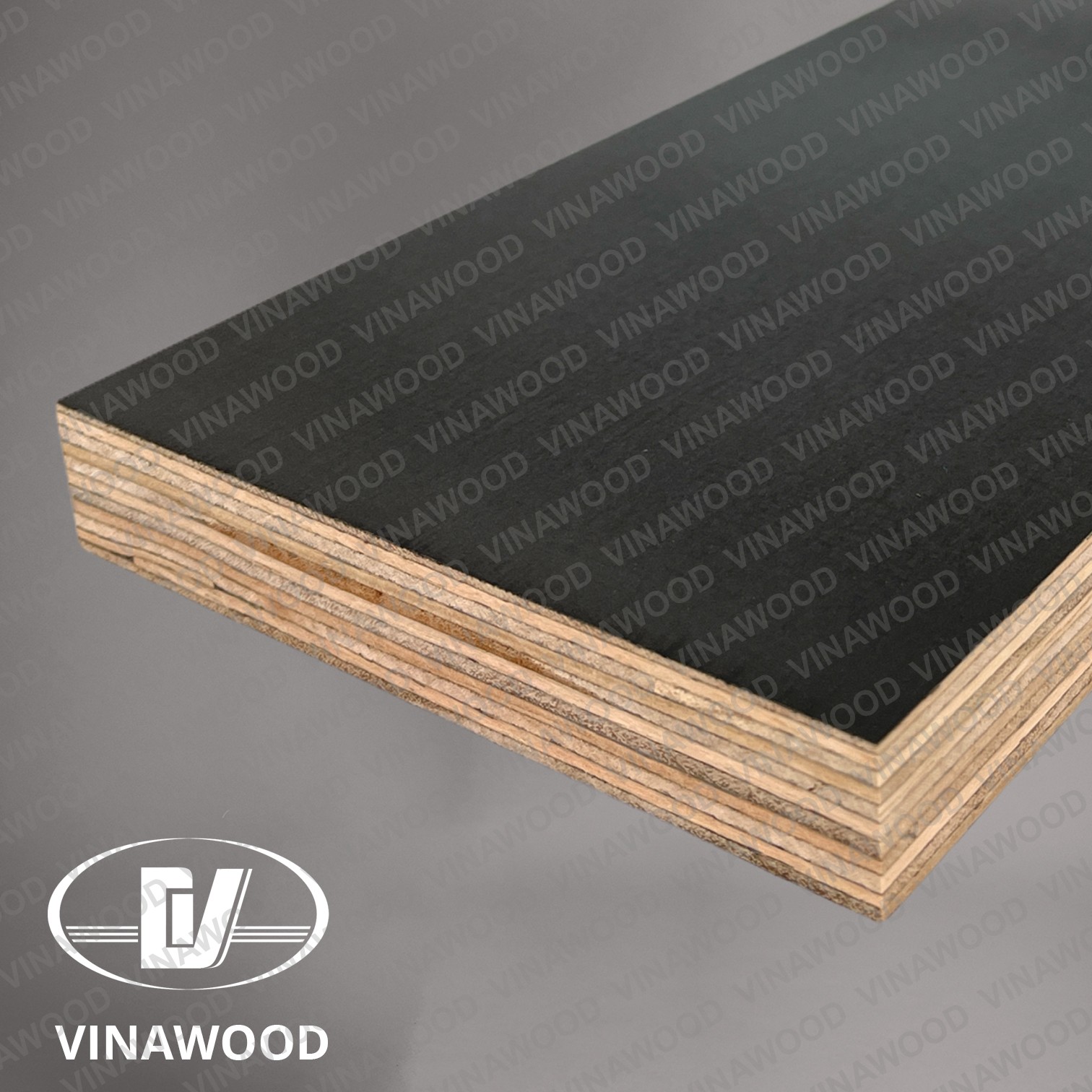
We offer factory-direct custom imprinting on Pro Form (EN 636-3, WBP phenolic, up to 20 reuses) and the HDO range for distributor partners. Setup is one design per order at minimum container quantity. The standard placement is one corner of the face; full-face wood-grain or pattern imprints on Pro Form are also available with a longer lead time on the film order.
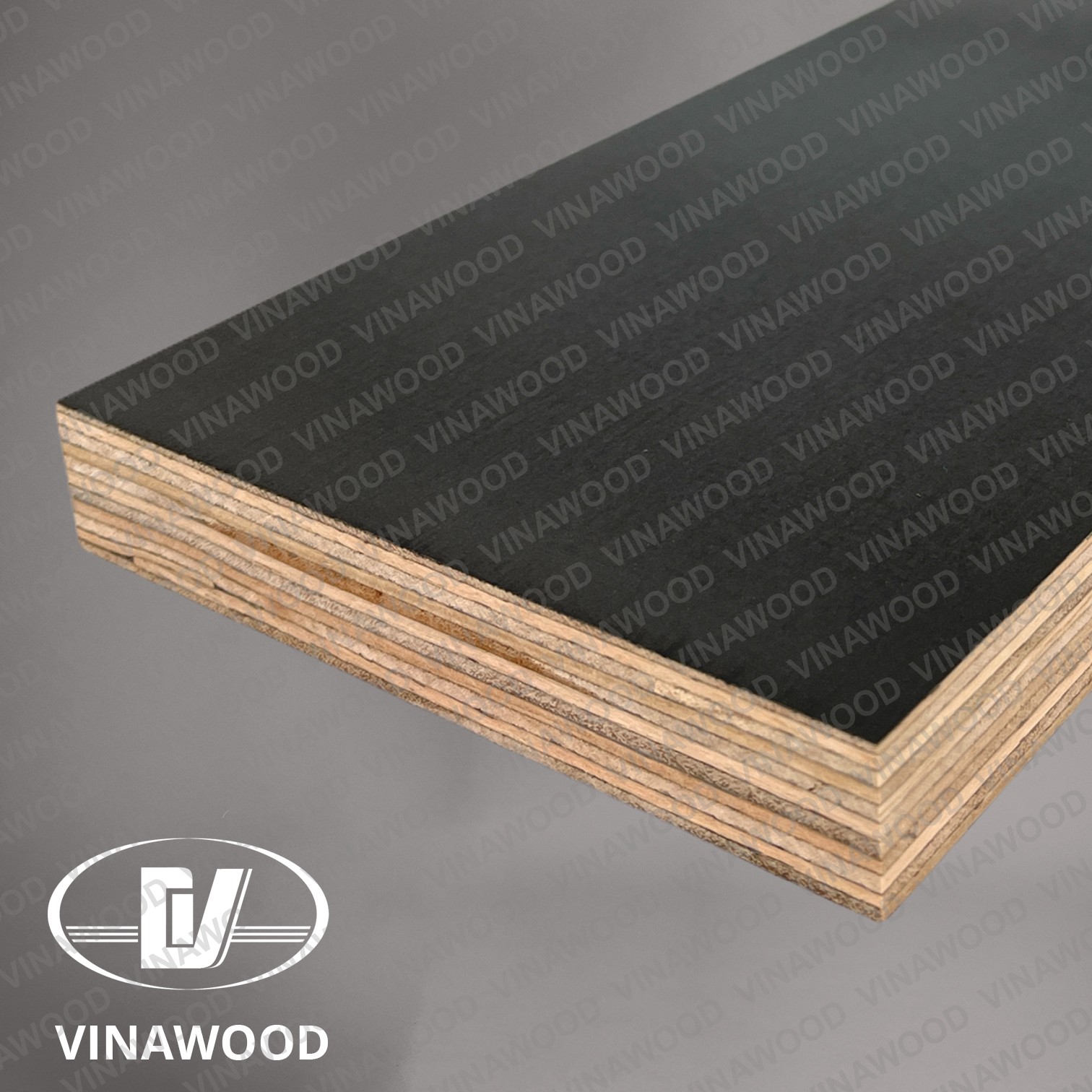
Our standard factory imprint includes the Vinawood mark, the panel dimensions, the production date code, and the grade designation. Conformity certificates against EN 636 (for the European market) and the ISO 12466-2 bond test report are issued per shipment and travel with the documentation pack. We don't print certifications we don't have, and we don't print a bond class our adhesive can't deliver.
For US-market distributors, the equivalent product line is the HDO range — see the Pro Form High Density page for the architectural-concrete tier.
At-a-glance: imprint types and what to verify
| Imprint type | What it tells you | What to verify |
|---|---|---|
| Manufacturer logo / brand | Producer identity, factory line | Match against pre-shipment sample; confirm via PI / shipping documents |
| Batch / production code | Production date, panel size, grade | Decode against producer's code key; check against packing list |
| Grade / class marking (e.g. EN 636-3) | Self-declared bond class | Request the actual ISO 12466-2 / EN 636 test report |
| Decorative pattern (wood-grain, geometric) | Architectural concrete intent | Sample on a 1×1 m mock pour before approving the order |
Category
how-to
Related Markets
Related Countries
Related Products
▶Sources & References (2)
- ISO 12466-2:2007 Plywood — Bonding quality — Part 2: Requirements — International Organization for Standardization (2007)
- EN 636:2012+A1:2015 Plywood — Specifications — European Committee for Standardization (CEN) (2015)