Anti-Slip Film-Faced Plywood: Specs, Use Cases & How It's Made
Anti-slip film-faced plywood presses a hexagonal wire-mesh into phenolic film for scaffold decks, bridge falsework, and walkways. Pro Form Anti-Slip sits on the Vinawood Class 3 ladder. Water-resistant WBP, reuse up to N, RFQ only.
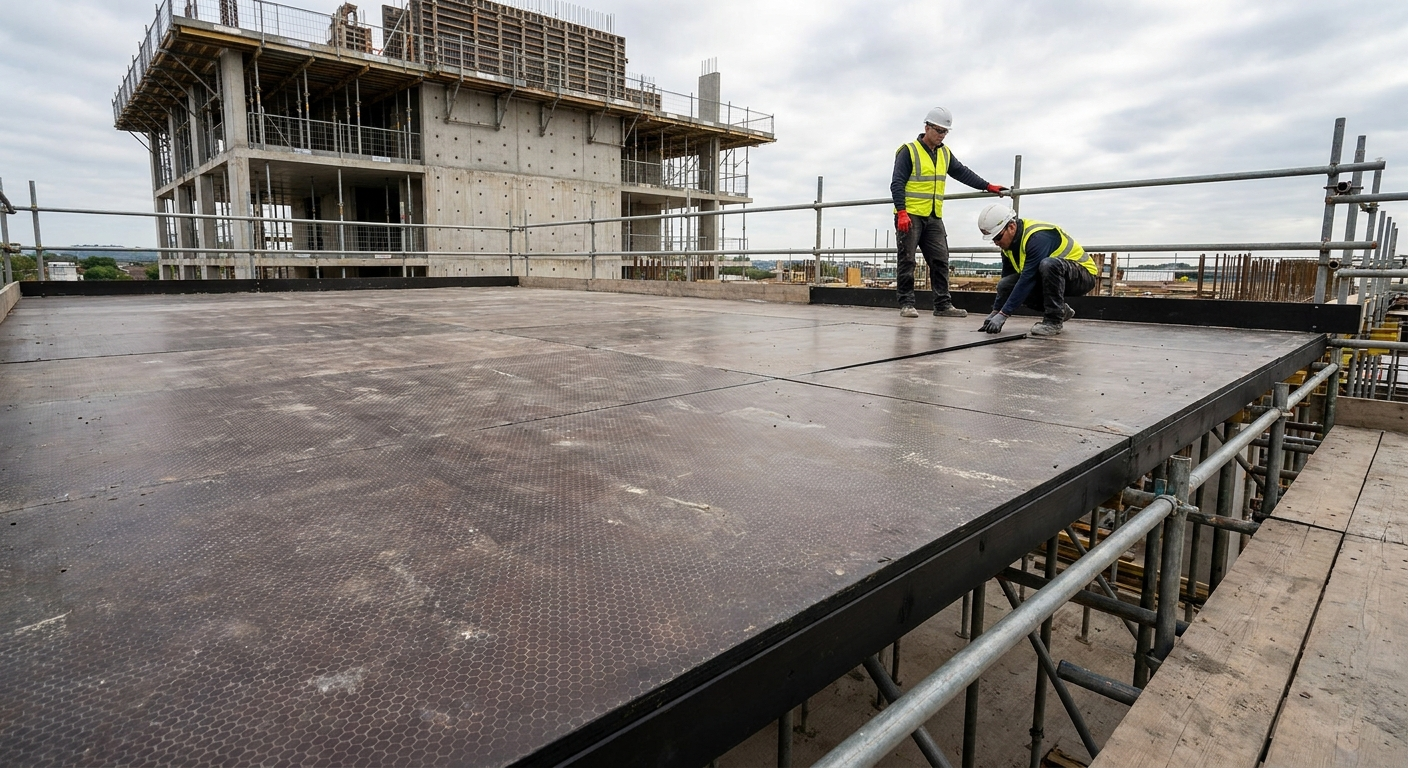
Scaffold platforms, bridge decks, and pedestrian formwork tops live or die by the surface underfoot. Smooth film-faced plywood releases concrete well, then turns slick the moment water, slurry, or oil hits the deck. Anti-slip film-faced plywood keeps the same phenolic-bonded core and presses a hexagonal wire-mesh texture into the phenolic face film in the hot-press cycle. The grip is the cured shape of the film. It is not a grit overlay that peels.
Vinawood is a Vietnam mill, established in 1992. We ship about 5,000 containers a year to 55+ countries across the film-faced formwork range. This page covers what the texture is, where crews specify it, how reuse compares to smooth film, and how Pro Form Anti-Slip sits on the Vinawood ladder.
What anti-slip film-faced plywood is
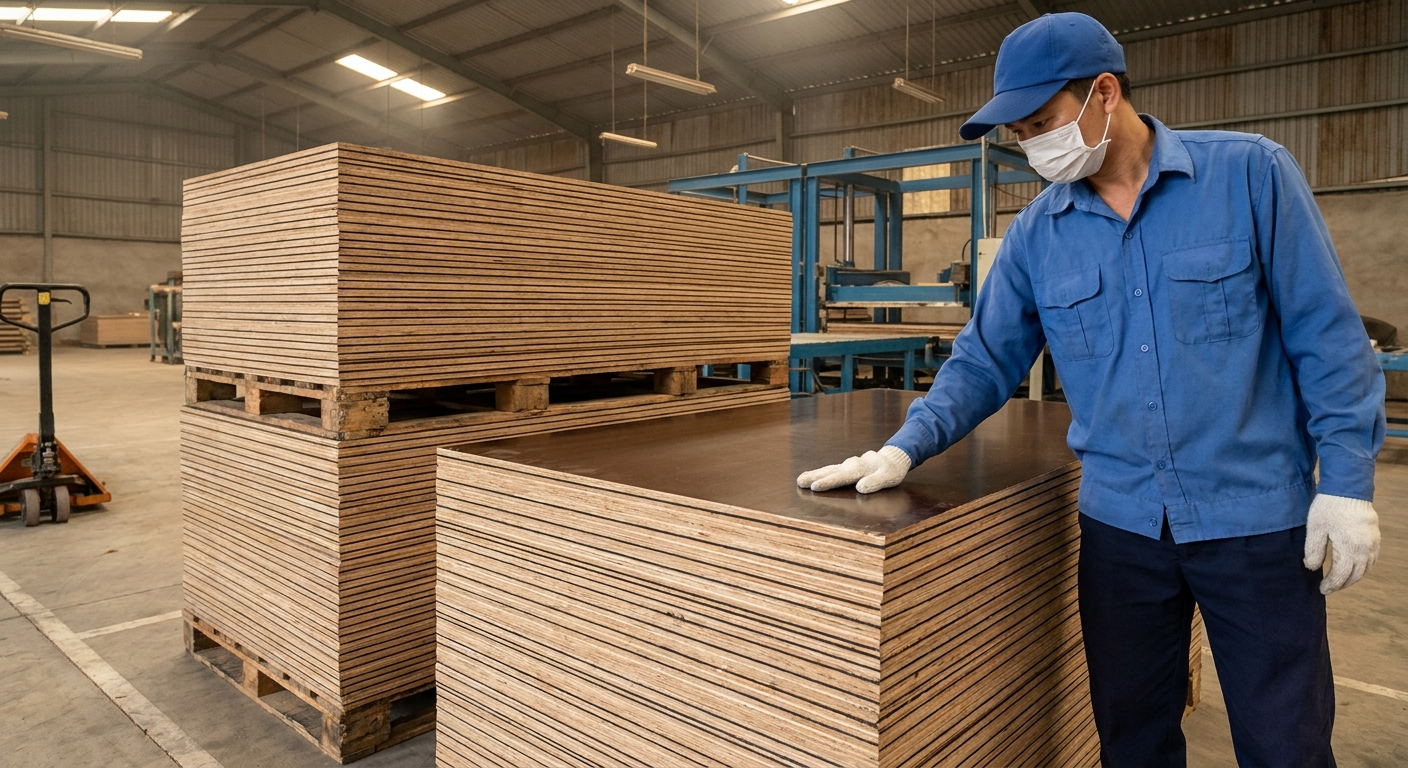
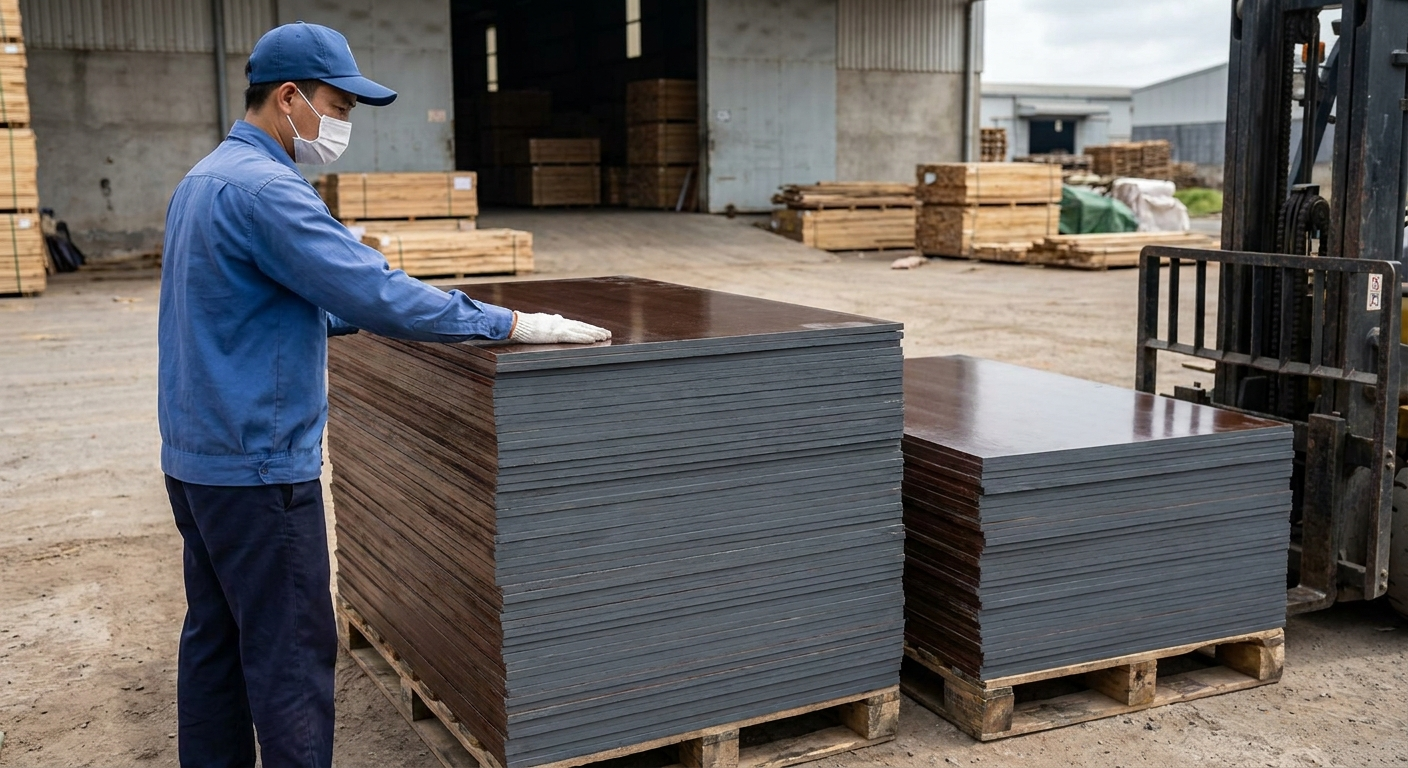
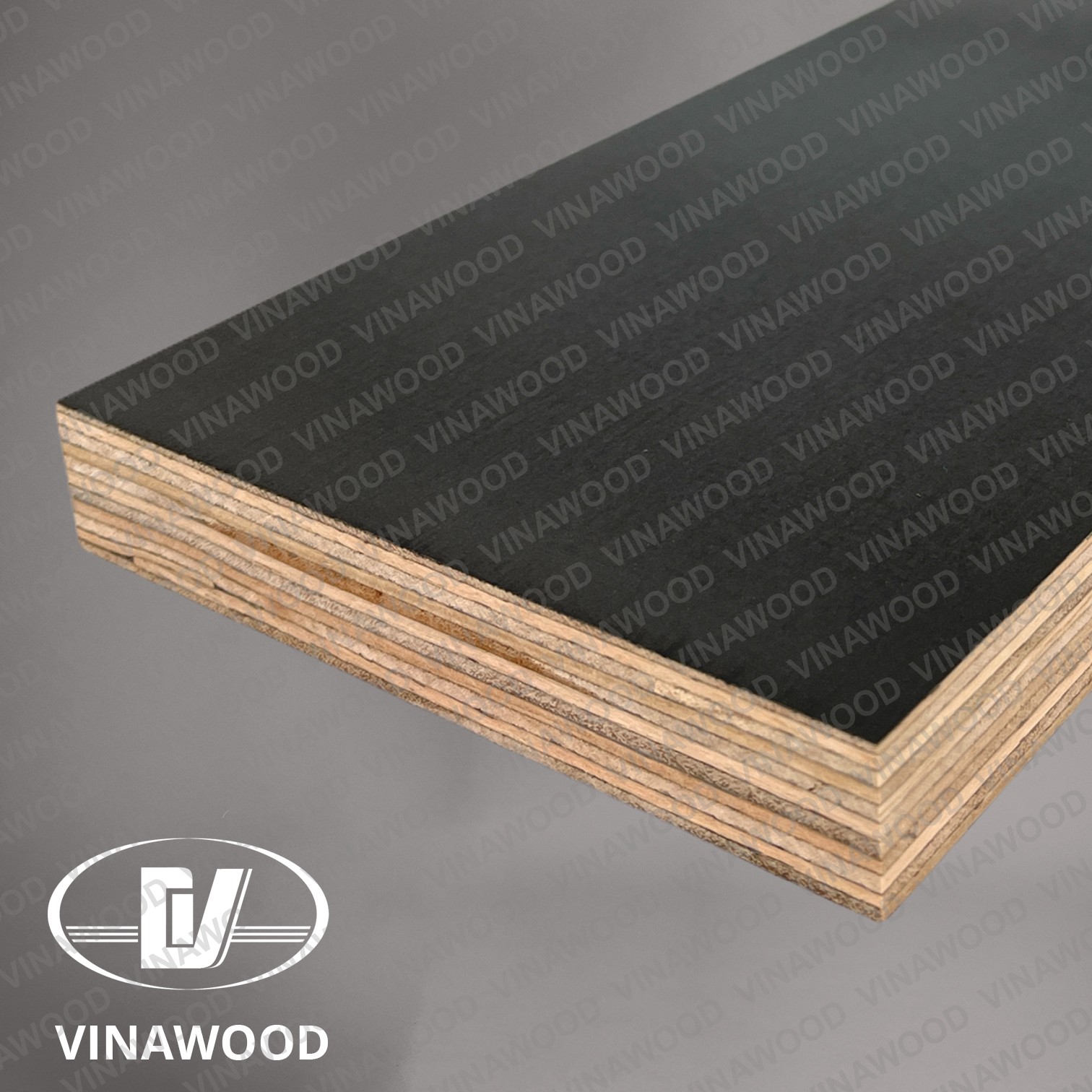
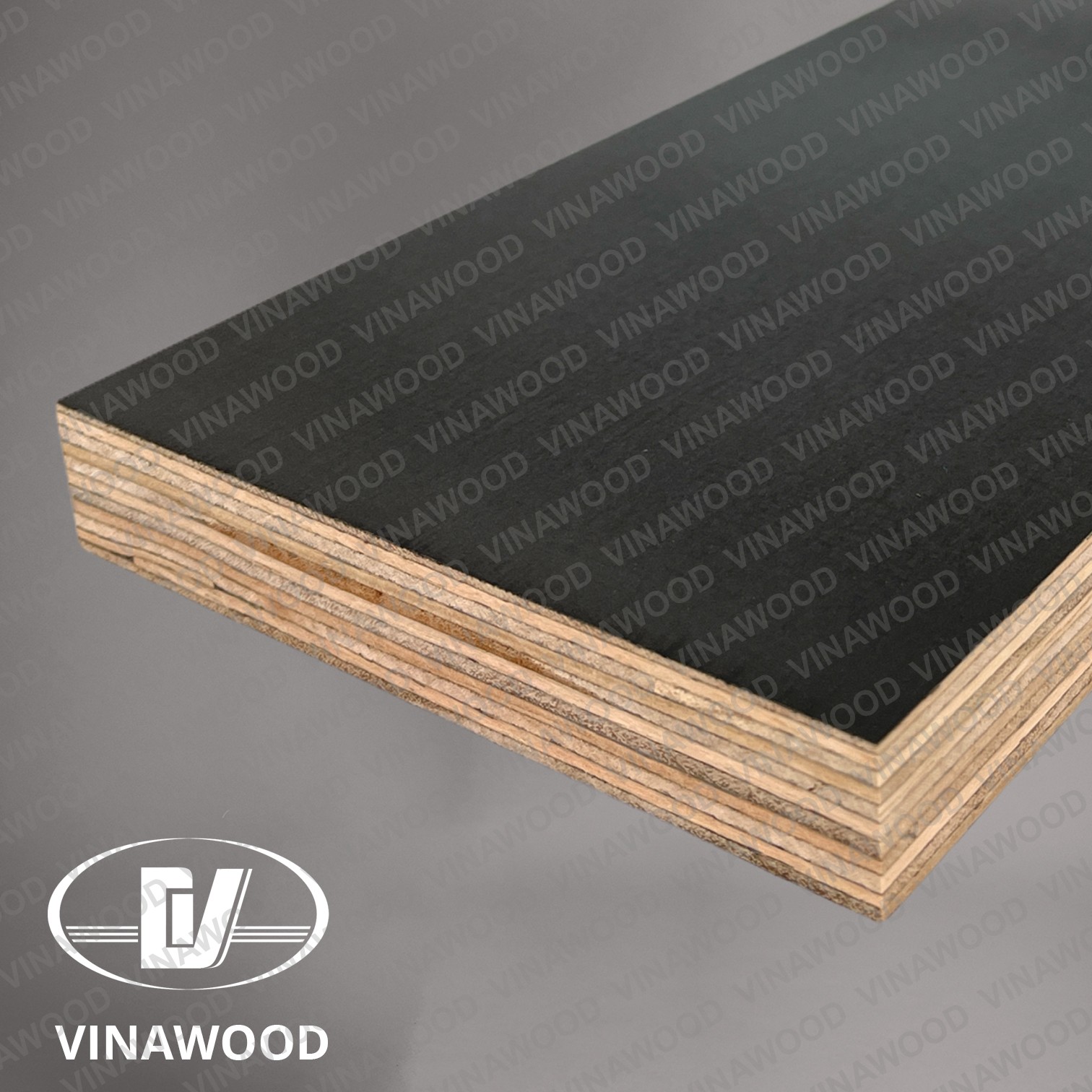
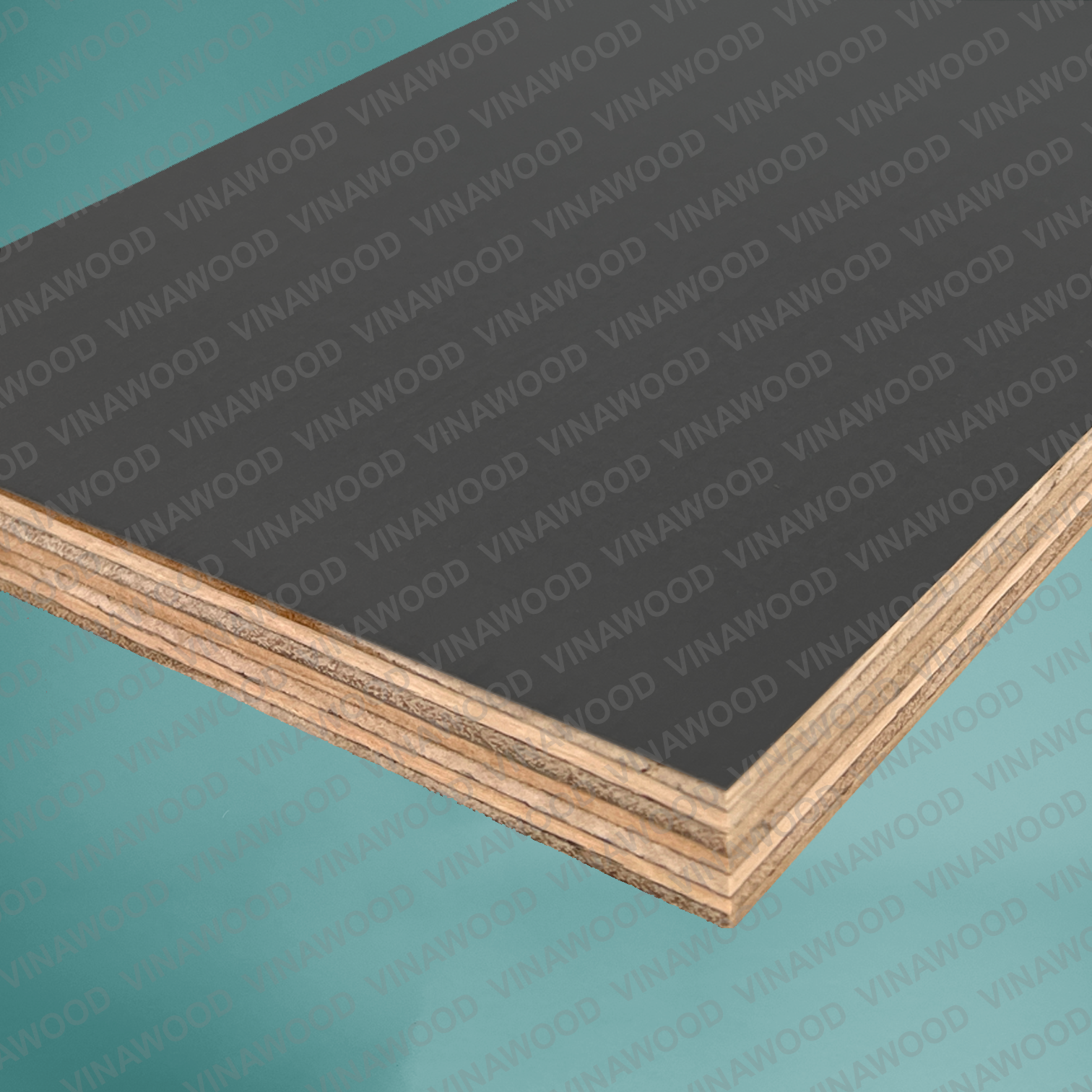
An anti-slip film-faced panel is a plywood core faced with phenolic-resin-impregnated kraft film, pressed with a steel platen that carries a textured pattern. Vinawood formwork cores use plantation-grown hardwood veneers. The texture is engineered into the film itself. Because the pattern is the cured shape of the phenolic film, it wears by flattening under load rather than chipping or shedding.
Common builds are double-faced anti-slip (2S) or single-faced anti-slip with a smooth concrete-side face (1S/A). Film weight on the Pro Form parent is in the phenolic family used for Class 3 work. Film weight is not bond class. A textured face on a Class 2 MUF core is still Class 2.
Ask which meaning of "melamine" a quote intends if someone writes the word bare: MUF core resin, a cheap market face film, or furniture laminate. Vinawood formwork faces are phenolic film. Core glue is MUF on Eco Form Plus, Form Basic, and Form Extra, or PF on Pro Form Lite, Pro Form, and HDO.
Call the panel water-resistant / WBP. The face film and WBP glue handle wet concrete and site rain. Edges still need seal. Permanent submersion is not the job.
For how the film is applied in the plant, see film-faced plywood for concrete formwork.
How the texture is created
The texture lands in the final hot-press cycle. After the core is laid up, the phenolic film sits on the face and a steel platen with a hexagonal wire-mesh pattern presses against the film side. Heat and pressure cure the resin and imprint the mesh into the face.
Hexagonal mesh is the usual formwork pattern because it balances grip, clean release, and cleaning between pours. Diamond and crosshatch show up on specialty lines. They are less common in the global formwork trade.
For phenolic face vs other formwork surfaces, see phenolic plywood.
Where anti-slip film-faced plywood is specified
Specs cluster wherever people and equipment move across the panel under wet or dusty conditions.
Scaffold platforms and working decks. The main use. Scaffold contractors and rental yards specify anti-slip film-faced plywood for working platforms on system scaffolds, suspended scaffolds, and tower scaffolds.
Bridge decks during construction. Working surface on bridge falsework and traveler systems while structural concrete is poured and cured.
Ramps and material-handling routes. Inclined paths for rebar, formwork parts, and material between levels.
Pedestrian formwork tops. The flat top of slab-edge formwork where crews walk during a pour. Spatter and intermittent water still need grip.
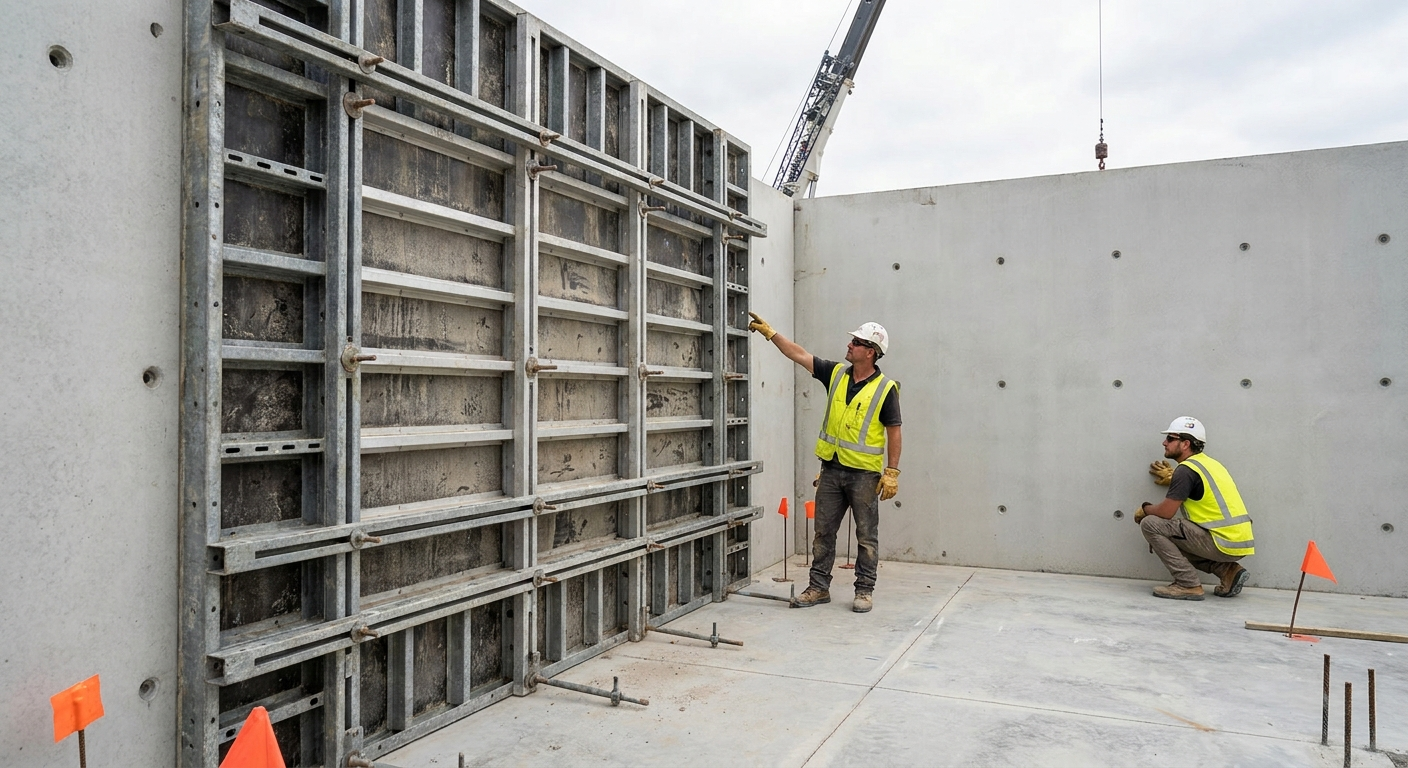
Walkway boards in multi-storey forming systems. Walkways inside table-form, climbing-form, and gang-form systems that must survive several floors of reuse with personnel traffic.
Boat-deck refits and marine working surfaces are a niche when the core construction matches the marine brief. That is a different RFQ from everyday scaffold decks.
Anti-slip vs smooth film
| Property | Standard smooth film | Anti-slip wire-mesh film |
|---|---|---|
| Surface texture | Glossy, flat phenolic film | Hexagonal mesh imprint pressed into film |
| Concrete release | Strong fair-face release | Adequate — texture can transfer slightly to the concrete face |
| Grip when wet | Poor when wet, oily, or dusty | High — built for slip resistance |
| Reuse (typical) | Follows the smooth-face parent grade (Pro Form up to 20) | Textured face: follows the Pro Form parent grade and site care |
| Cleaning | Wipe-down; debris releases easily | Brush-down; debris collects in mesh recesses |
| Weight rating | Core construction, not film | Same — core construction, not film |
| Typical use | Concrete-pour faces, fair-face walls and slabs | Scaffold decks, bridge decks, ramps, walkways |
| Price talk | Baseline RFQ | Qualitative RFQ only — no invented percent premium |
Concrete-pour duty wants smooth film on the pour face. Pedestrian and equipment duty wants anti-slip on the working face. The 1S/A build gives both: textured top for traffic, smooth bottom for fair-face release. We have seen crews flip a mid-life 1S/A panel from deck duty to pour duty once the mesh has flattened.
Reuse cycles and wear
Smooth-face Pro Form sits at up to 20 under good stripping and storage. The textured anti-slip face wears by progressive flattening of the mesh ridges under foot and equipment loads. Ask the mill for the reuse line on the Pro Form Anti-Slip card you are buying, and retire the face from anti-slip duty when texture depth is roughly half the original imprint.
A panel retired from anti-slip duty can still be a structurally sound film-faced sheet. On a 1S/A build, the smooth face may continue in pour service. Mixing deck traffic and pour duty on the same face flattens the mesh faster.
Site handling decides whether any "up to N" number holds. Crowbars, standing water, and unsealed cut edges erase the envelope. See formwork panel care for strip, clean, and stack discipline.
Cleaning, storage, and cutting
Brush the mesh after each work session. Loose concrete dust in the recesses kills grip. A flat scraper plus a stiff broom clears most spatter. Pressure washing should stay moderate. High pressure at exposed edges can erode cured film over time.
Standard form-oil release agents are compatible. Storage follows ordinary film-faced practice: stack flat, cover sheets between layers, off the ground, under cover, with airflow. UV hits textured and smooth film the same way. Cut with carbide blades and seal cut edges at once.
Slip-resistance standards context
Several standards talk about slip resistance for scaffold and temporary works. None publish one universal friction number for anti-slip plywood.
OSHA 1926.451 (US scaffolding). Requires slip-resistant scaffold platform surfaces without naming a single coefficient. Wire-mesh anti-slip plywood is a common industry answer.
EN 12810 / EN 12811 (European scaffolding). Reference slip resistance as a working-platform need and point to manufacturer test data.
BS 5975 (UK temporary works). Frames surface integrity and slip resistance in qualitative terms and again defers to mill test data.
Friction values depend on film weight, texture depth, contamination, and footwear. Request mill test reports for the exact panel on the RFQ. Skip generic compliance claims without that report.
Vinawood ladder and Pro Form Anti-Slip
Place anti-slip on the Vinawood film-faced ladder before you price a container:
- Eco Form Plus — WBP MUF, EN 636-2, phenolic face film, up to 8 reuses
- Form Basic — WBP MUF, EN 636-2, phenolic face film, up to 10 reuses
- Form Extra — Superior Glue MUF, EN 636-2, not Class 3, same phenolic face as Form Basic, up to 15 reuses
- Pro Form Lite — WBP phenolic (PF), EN 636-3 / Class 3, 165 g/m² film, up to 15 reuses. Sits between Form Extra and Pro Form
- Pro Form — WBP phenolic, EN 636-3 / Class 3, up to 20 reuses. Anti-Slip is a textured-face variant of this parent
- HDO Basic up to 10 / HDO Premium up to 20 — phenolic Class 3; see the HDO collection
Only Pro Form, Pro Form Lite, and HDO are phenolic Class 3. Form Extra is MUF. P-Form is polypropylene, not Pro Form. Consply is commercial Bintangor, not film-faced. Browse the film-faced plywood collection for the full range.
Pro Form Anti-Slip adds a hexagonal wire-mesh imprint to one or both faces in the final hot-press. Standard sizes include 1220×2440 mm and 1250×2500 mm. Thicknesses commonly run 12, 15, 18, and 21 mm. Spec the bond class and core the same way you would for smooth Pro Form. The texture keeps the crew upright; the PF Class 3 bond is what survives wet concrete.
Plantation-grown hardwood. Start an RFQ at /contact?type=quotation with application (scaffold deck, bridge falsework, ramp), 1S/A vs 2S, thickness, size, and reuse written as up to N.
Category
guides
Related Markets
Related Countries
Related Products
▶Sources & References (3)
- OSHA 1926.451 — Scaffolds (Construction Industry Standards) — Occupational Safety and Health Administration (2024)
- EN 12810-1:2003 — Façade scaffolds made of prefabricated components — European Committee for Standardization (CEN) (2003)
- BS 5975:2019 — Code of practice for temporary works procedures — British Standards Institution (2019)