Plywood Manufacturers in Vietnam: Importer Due Diligence & RFQ Guide
Importer due diligence for plywood manufacturers in Vietnam: mill versus trader, RFQ specs, certs, ports, MOQ, and the 2026 US hardwood CVD scope — written for buyers searching a Vietnam plywood supplier.
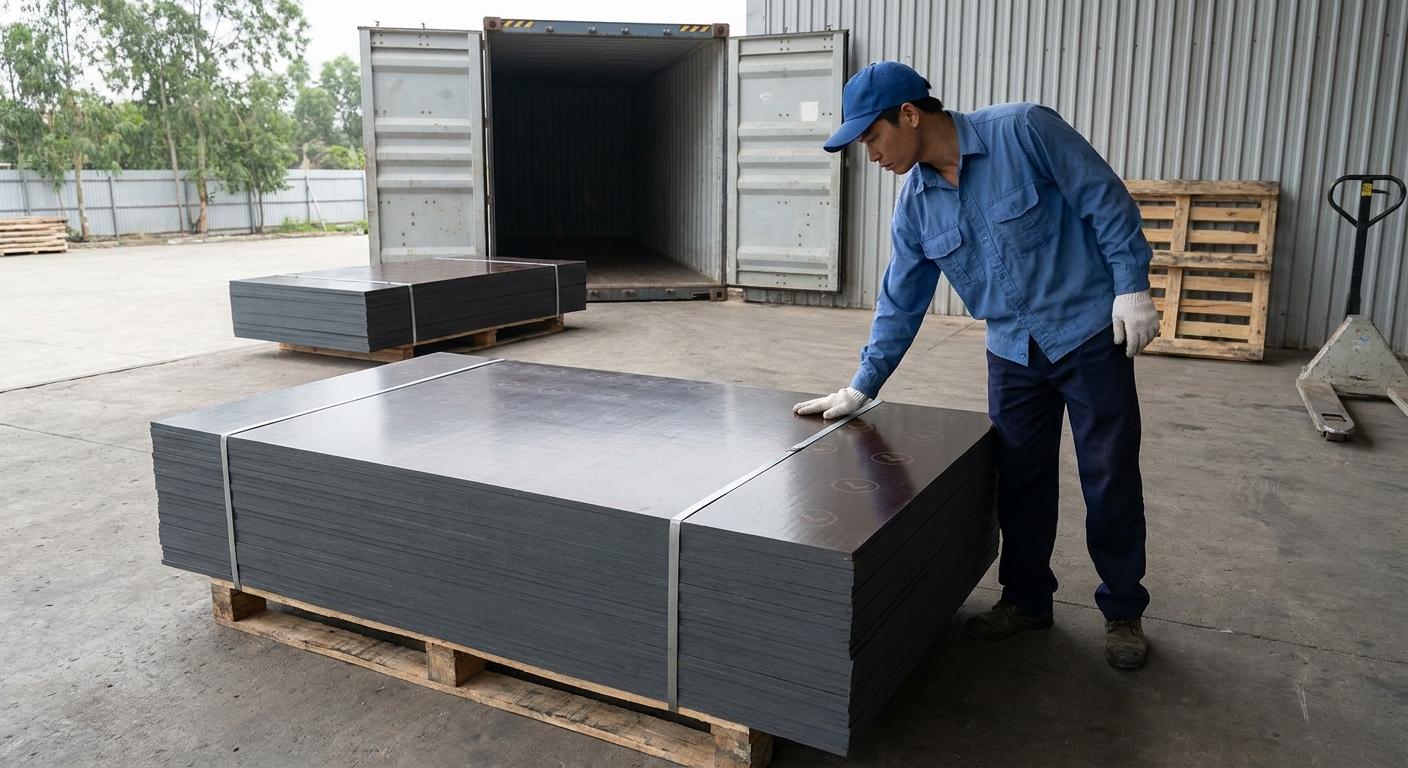
A Vietnam plywood supplier search should land on a mill you can inspect, not a ranked directory or a DIY sheet list. The work is glue class, overlay, core species, and documents that clear your market — plus an RFQ that a customs broker and a jobsite can both live with.
This page is the importer due-diligence version of that query. It is written for B2B buyers who already want plywood manufacturers in Vietnam and need a factory path that survives paperwork. Vinawood is one of those manufacturers: founded in 1992, factory-direct export, about 5,000 containers a year to 55+ countries. We do not publish sheet prices here. Quotes follow spec and destination.
What a Vietnam plywood supplier must prove
Ask who owns the hot press. The legal name on the proforma should match the mill that will load the container. Trading desks can be useful later. They are a poor first filter when you are still locking thickness, bond, and face film.
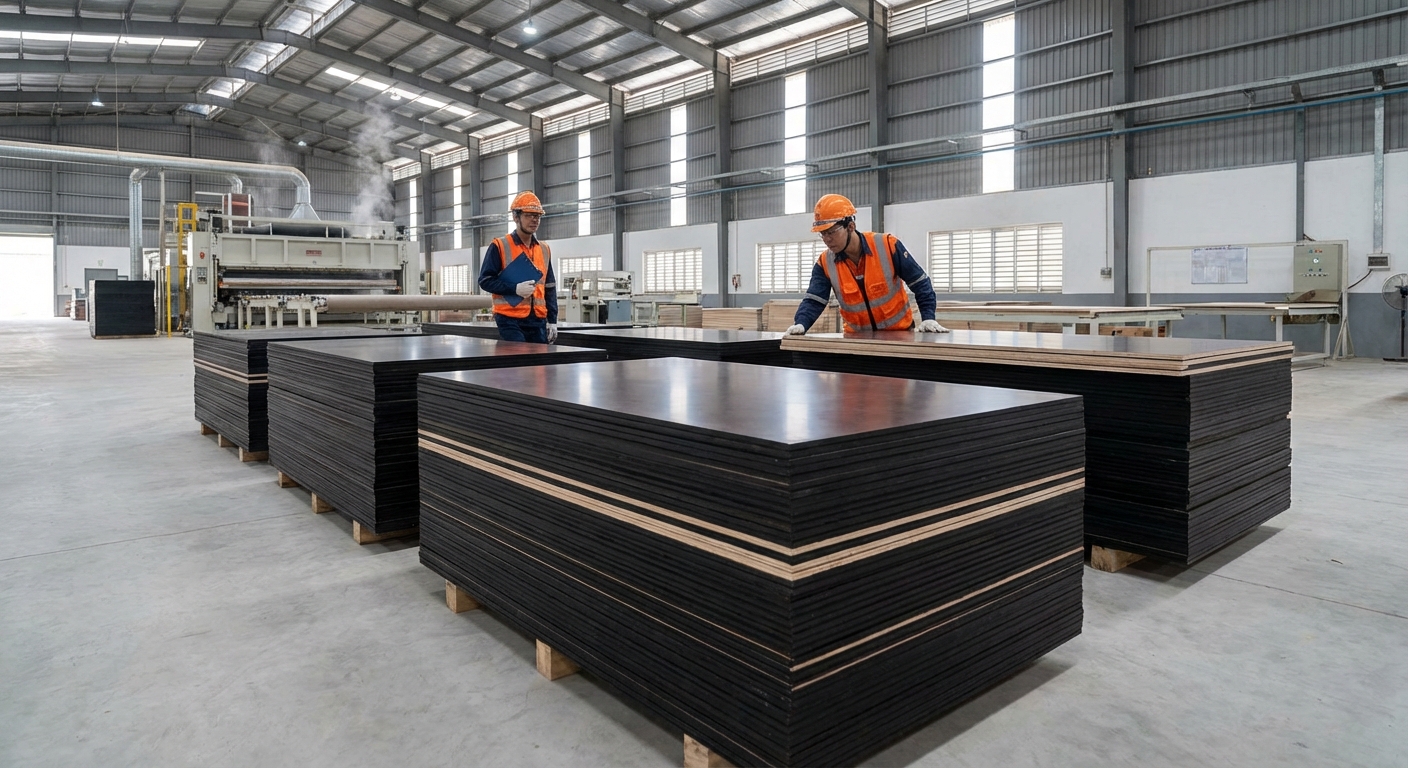
A live floor walk-through, date-stamped panels on the press, and a mill address you can map are the cheap tests. A real plant answers in numbers: daily sheets, press count, lead time from a confirmed PO. Vague answers are a pause, not a negotiation tactic.
Factory versus trader
Factories issue their own packing lists and mill test reports. Traders reuse someone else's. If the invoice entity cannot show a press hall, treat the offer as a reseller quote and price the extra layer into your landed cost. Do not wire a full T/T deposit to a company that will not show the floor.
I have sat on RFQ calls where the buyer had a clean price and still could not name the glue. That is the gap this checklist is for.
RFQ checklist before you compare quotes
Write these five lanes into the RFQ. Skip any one and two quotes that look close on a spreadsheet are not comparable.
- Documents. Current mill test report, glue class on the data sheet, chain-of-custody when the job asks for it, packing list, and an origin statement that names Vietnam. Logos on a website are not proof.
- Bond class. EN 636-2 / Class 2 for MUF cores. EN 636-3 / Class 3 for phenolic (PF) cores. Match the pour programme. Film colour is not bond class.
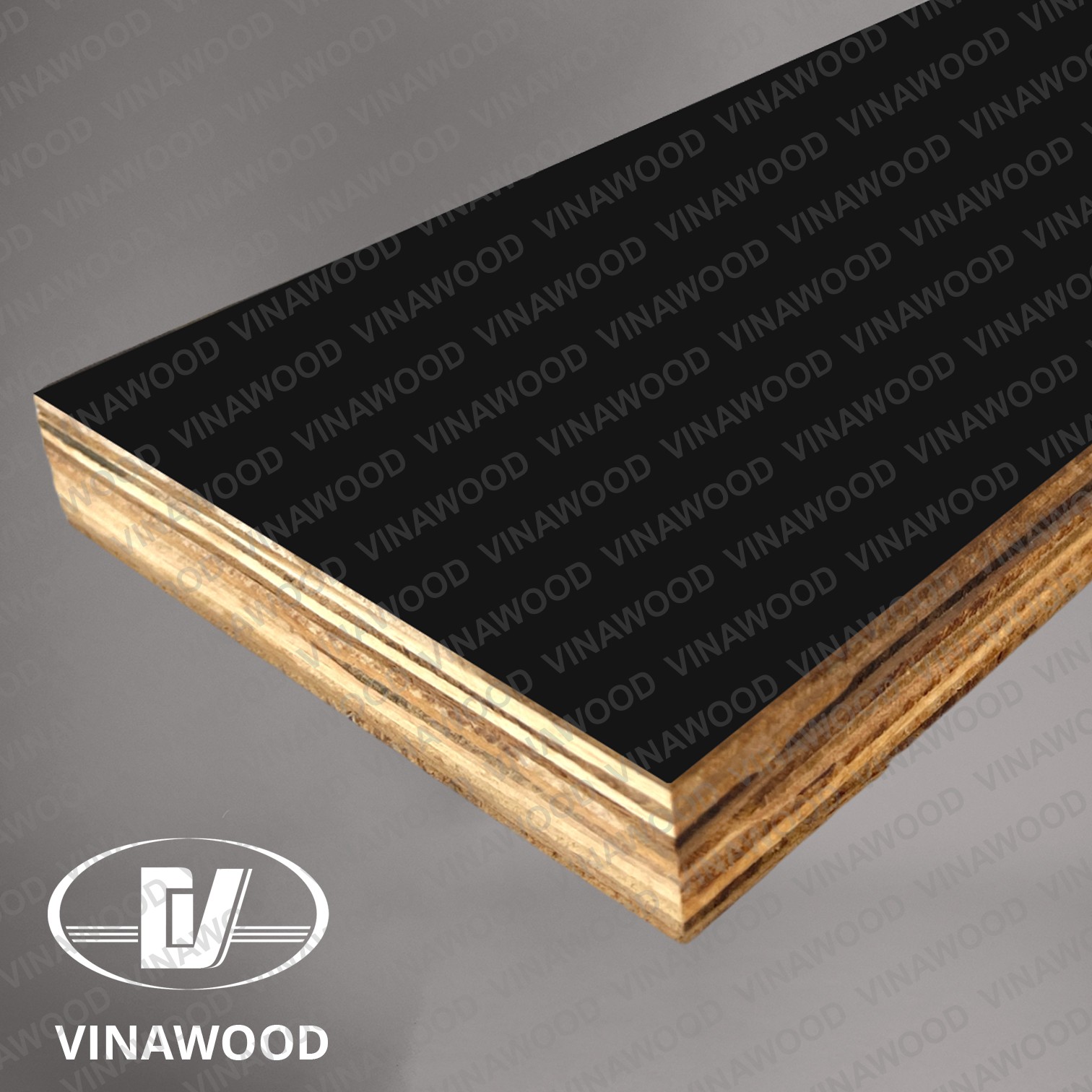
- Overlay. Phenolic film gsm, HDO, or MatteFace Plywood (MTF). Buyers who search MDO for a matte forming face should ask for the named product MatteFace.
- Lead time. Production weeks plus ocean for factory-direct. Partner-yard packs only when a short programme cannot wait for a container.
- Container. Usual unit is a 40-foot load. State pieces per bundle and size (often 2440 × 1220 mm). No sheet price tables on this page.
Specs that belong on every RFQ
Write the product as if a mill chemist will read it. Thickness in mm. Face and back grade. Overlay type and gsm if you buy film-faced. Core species and whether the core is combi. Glue in writing, not as slang.
Plywood is water-resistant when the bond is WBP and the construction matches the class you bought. It is not waterproof. Reuse claims on formwork must be written as "up to N" cycles. Anyone selling "N+" is selling a slogan.
Glue: name the resin, not "melamine"
Three different things get called that word. Core resin can be MUF (melamine-urea-formaldehyde) on EN 636-2 / Class 2 programmes. Face film can be a phenolic or other overlay sheet. Decorative laminate is a furniture face and does not belong on a formwork RFQ. Put the chemistry on the PO so nobody substitutes a cheaper core resin after you approved a sample.
Class 3 / EN 636-3 phenolic core is not the default on Vietnamese formwork. At Vinawood it sits on Pro Form, on Pro Form Lite, and on HDO. Form Extra uses a Superior Glue MUF system and stays EN 636-2. It is not Class 3. Pro Form Lite is the newer PF / Class 3 step between Form Extra and Pro Form. P-Form is a polypropylene overlay, not a short name for Pro Form. Consply is commercial Bintangor, not film-faced formwork.
Overlays: film-faced, HDO, and MatteFace
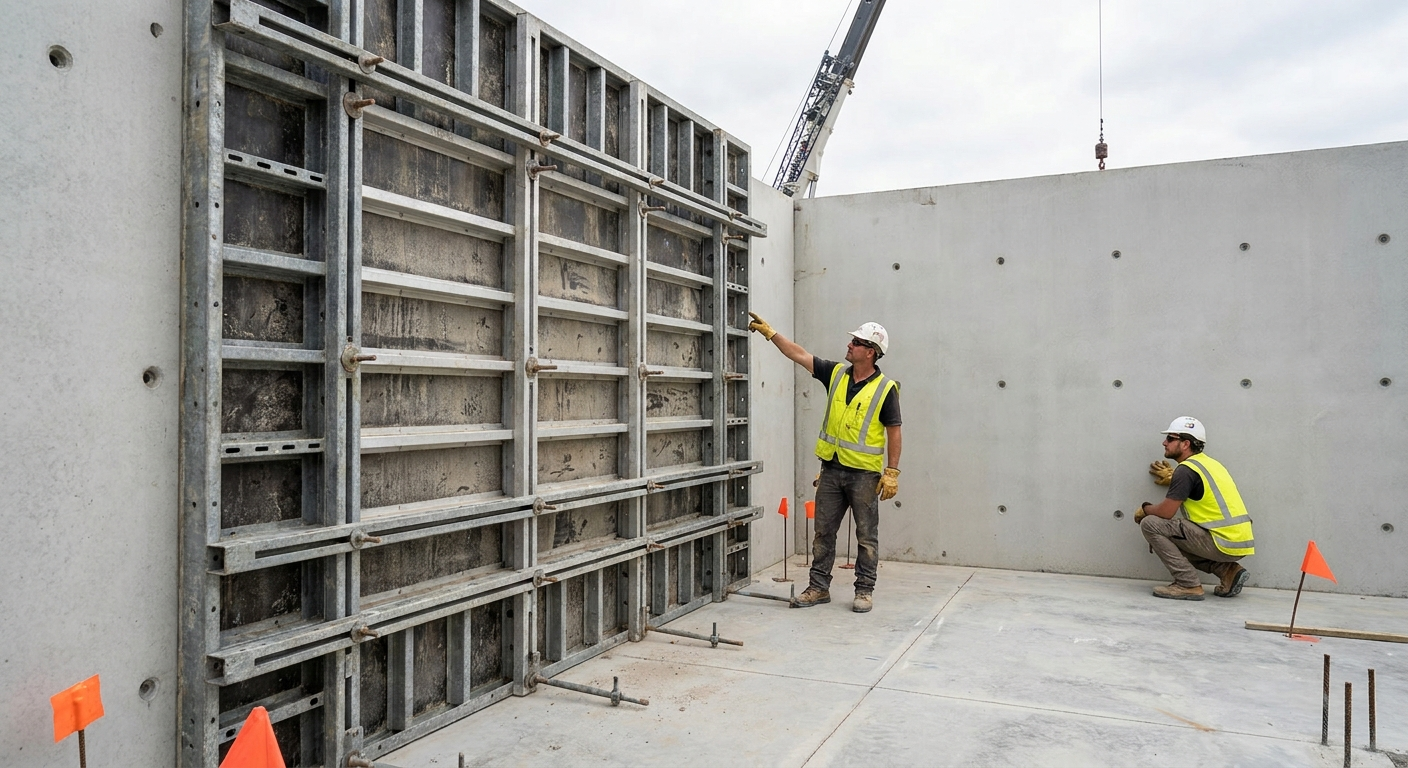
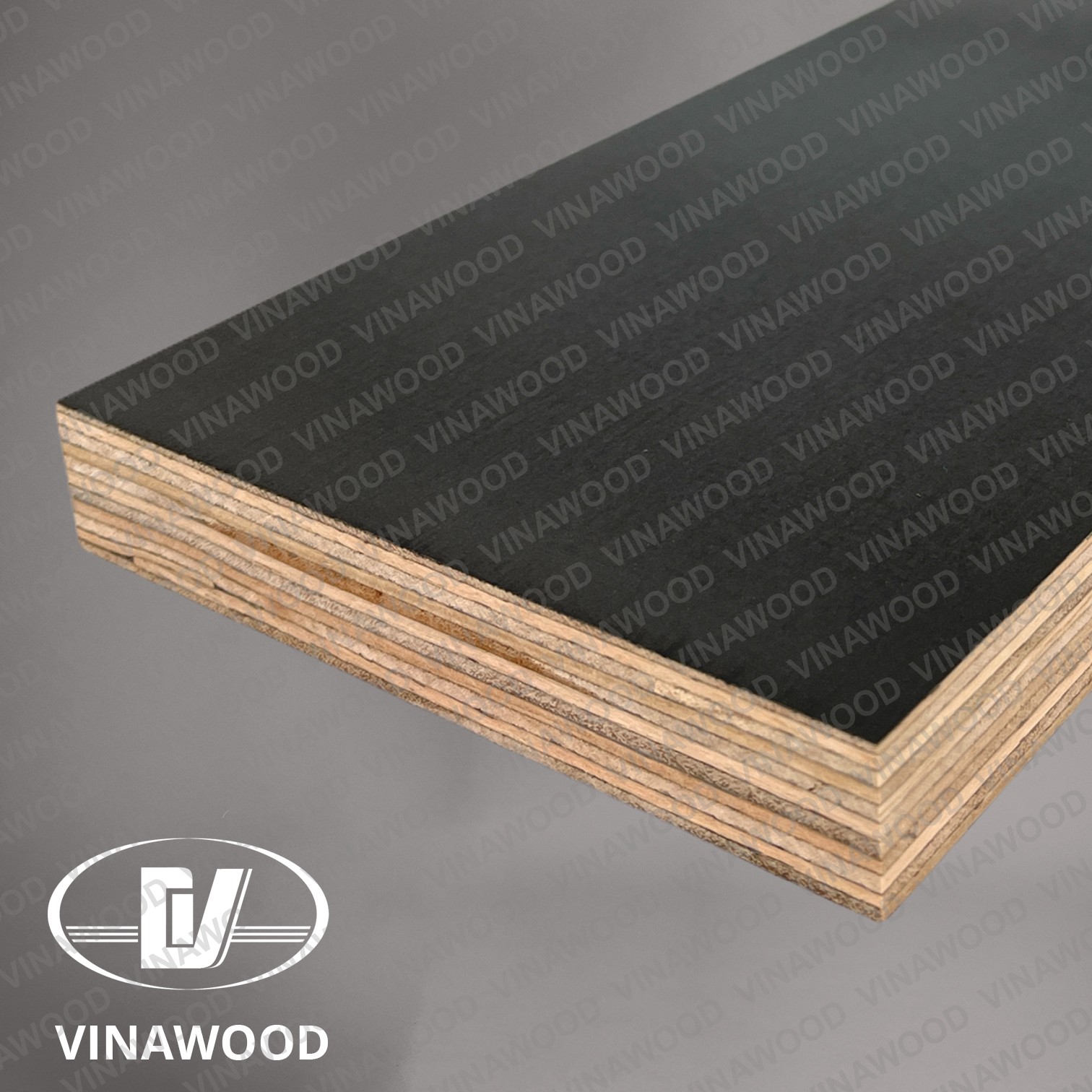
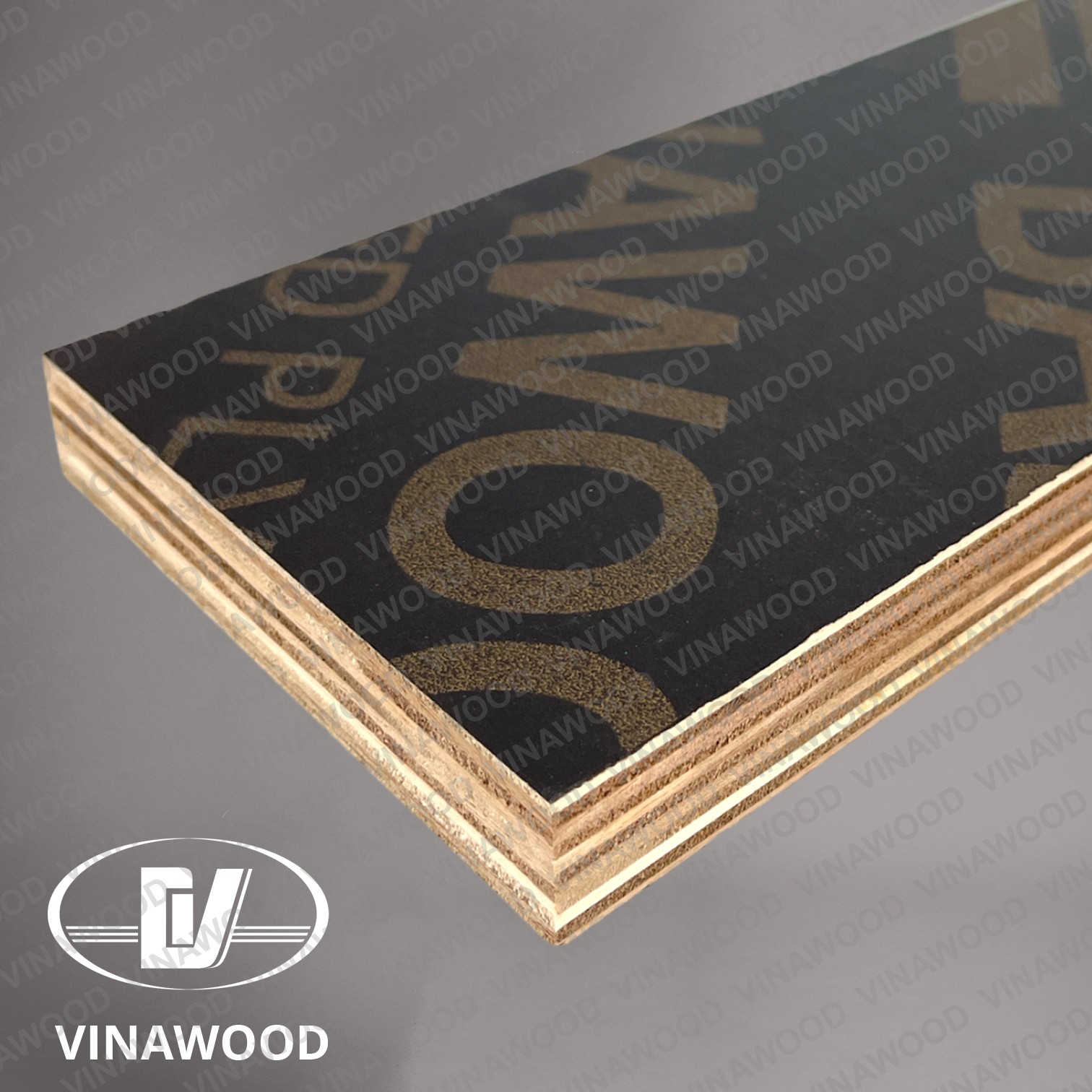
Film-faced formwork is the volume export from Vietnam: a dark phenolic film on a plantation hardwood or combi core, used for concrete forming. HDO is the high-density overlay programme aimed at North American high-cycle forming. Buyers who search "MDO" for a matte forming face should ask for film-faced or the named product MatteFace Plywood (MTF).
Wood is plantation-grown Acacia, Eucalyptus, or Hevea. Fast-grown plantation fibre is the supply that FSC and EUDR files can actually support.
Certifications by destination
Match the paper to the port of entry. ISO 9001 speaks to the quality system. FSC-COC or PEFC speaks to chain of custody. EPA TSCA Title VI / CARB P2 is the US formaldehyde file. Europe wants CE marking under EN 13986 with the EN 636 / EN 314 data that matches the glue class you bought. Korea wants KS. The UK wants UKCA. India wants BIS. Australia looks for AS/NZS on structural families.
Ask for current certificates, not screenshots of a 2019 audit. EU buyers should also request the EUDR pack: geolocation for plantation plots, a due-diligence statement, and a mill that will file into the importer's software. Vinawood runs that pack on request.
Ports, MOQ, and the container
Northern cargo usually loads Hai Phong. Southern cargo usually loads Cat Lai / Ho Chi Minh City. Da Nang handles some central volume. Transit is a schedule, not a promise: roughly 18–24 days to the US West Coast, 30–35 to the US East Coast or Northern Europe, shorter into India and the Gulf, longer into Australia. Confirm the booking, not a blog range, before you sell a date to your customer.
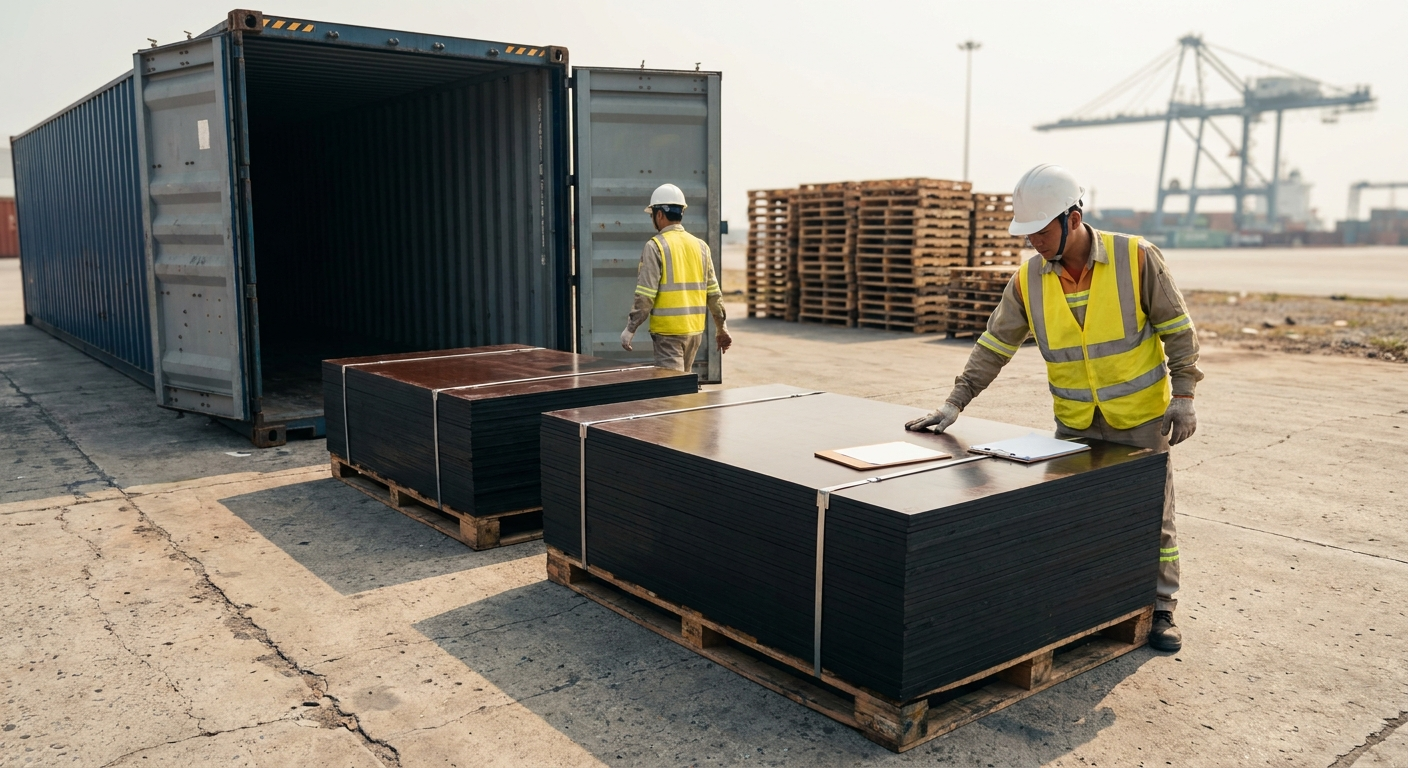
Most mills quote a container MOQ. A 40-foot high-cube of 18 mm, 2440 × 1220 mm sheets is weight-limited. Expect on the order of 540–620 sheets, then lock the stow with the mill. FOB is the cleanest first Incoterm if you have a forwarder. CIF bundles freight. DDP only helps if the mill actually clears your country.
Payment that protects both sides is an L/C at sight, or a deposit T/T with the balance against the bill of lading. One-hundred-percent upfront is a red flag unless you already run a long programme with that mill.
RFQ path that gets a usable quote
- Shortlist plywood manufacturers in Vietnam by product family and destination certs, not by a directory rank.
- Confirm the factory: live walk-through, mill name on the invoice, current certificates.
- Order samples. Full sheets by sea if the face and edge matter; courier swatches only for a first look.
- Send one RFQ: product code, thickness, overlay, glue class in writing, core, certs on the documents, MOQ, lead time, Incoterms, inspection house.
- Book SGS, Intertek, or Bureau Veritas before the doors close. Reluctance to inspect is a stop.
The longer walk-through sits in how to choose a plywood manufacturer. Use that page when you are still deciding whether a mill belongs on the shortlist at all. The why-Vinawood pitch lives on a sibling URL; this page stays on importer RFQ and manufacturer due diligence.
US hardwood CVD — keep it on the right SKUs
US buyers should treat duty as a per-SKU, per-entry question. The Commerce Department issued its final countervailing-duty determination on hardwood plywood from Vietnam on 21 July 2026. Hardwood plywood is in scope. Formwork and PS-structural families are treated outside that hardwood-plywood scope. The scope language decides the entry, not a slogan about origin.
Do not accept a blanket "Vietnam plywood is duty-free" line. Ask for the Commerce determination reference that covers the exact SKU, then run it past your broker before you commit a container. Sales can walk a specific PO.
Major Vietnam plywood manufacturers
An RFQ will meet mills in the north and the south. Some press formwork. Some press interior hardwood. Some run Korean-standard film. Ranking them in a public list does not help you buy. Matching spec, certs, and real export volume does.
Vinawood is the mill we can describe in first person. We press film-faced formwork, the HDO range, the EN set (Form Basic, Form Extra, Eco Form, Pro Form Lite, Pro Form), KS Tego for Korea, and commercial grades. Inspection is sheet-by-sheet on a 12-step line. We quote factory-direct. Other producers exist. We will not name them here, and we will not tell you to email them.
Send the RFQ
If you already have thickness, glue class, overlay, destination, and a target month, send that pack to /contact?type=quotation. You will get a mill quote, not a directory listing. If the pack is still loose, start with samples and the cert stack for your market. That is how a Vietnam plywood supplier should want to be hired.
Category
guides
Related Markets
Related Countries
Related Products
▶Sources & References (3)
- Hardwood Plywood from Vietnam: Final Affirmative Countervailing Duty Determination — US Department of Commerce, International Trade Administration (2026-07-21)
- EU Regulation 2023/1115 on deforestation-free products (EUDR) — European Union Official Journal (2023-06-09)
- CPTPP - Comprehensive and Progressive Agreement for Trans-Pacific Partnership — Australian Government Department of Foreign Affairs and Trade (2024-01-01)