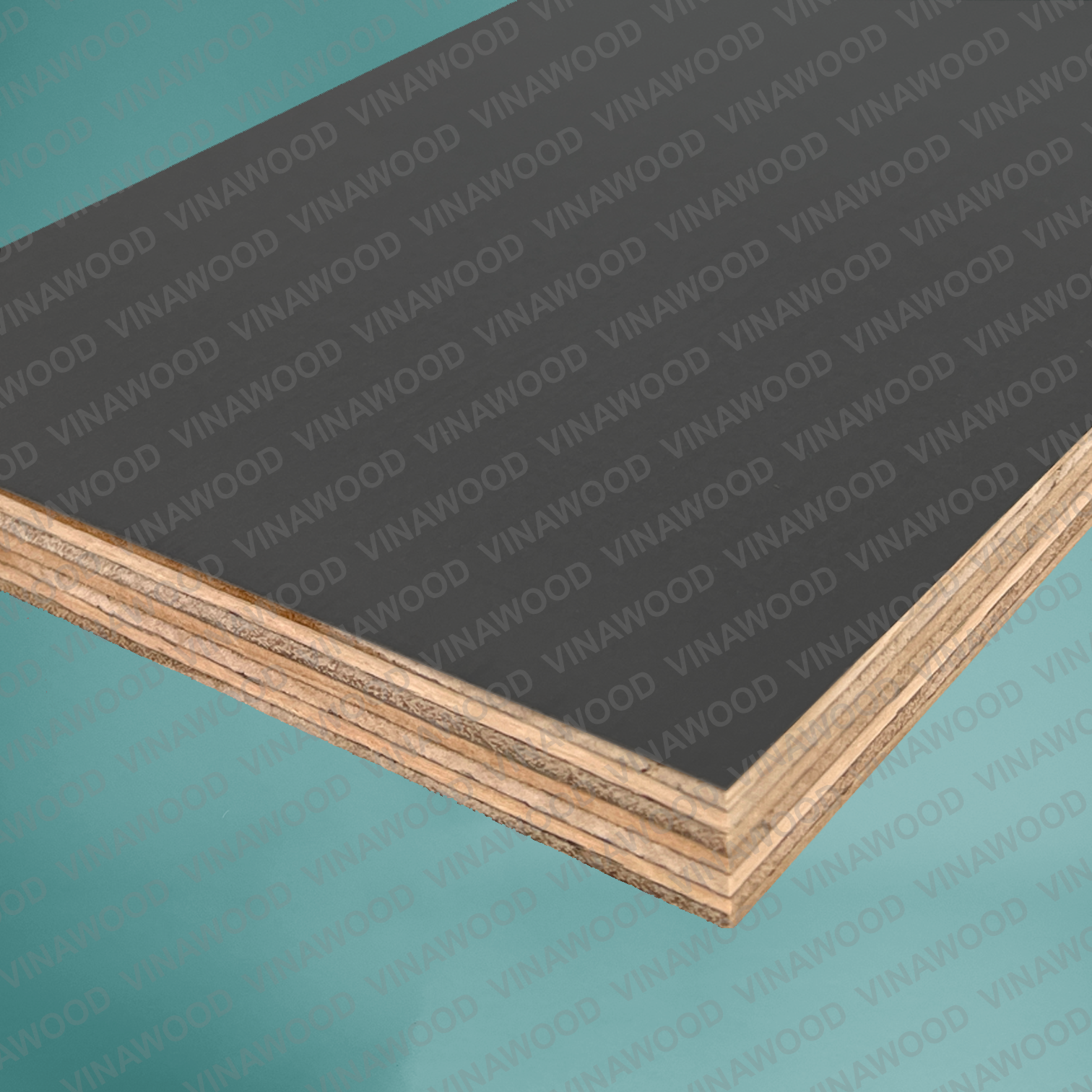
Plywood Wall Sheathing: Thickness, Code Requirements & Best Practices for 2026
Plywood wall sheathing in 2026 is a code-driven choice with regional variation. This guide covers IRC code-minimum thickness by stud spacing, the CDX vs structural plywood vs OSB comparison, hurricane-zone specifications, APA grade-stamp reading, and US retail pricing for buyers and contractors…
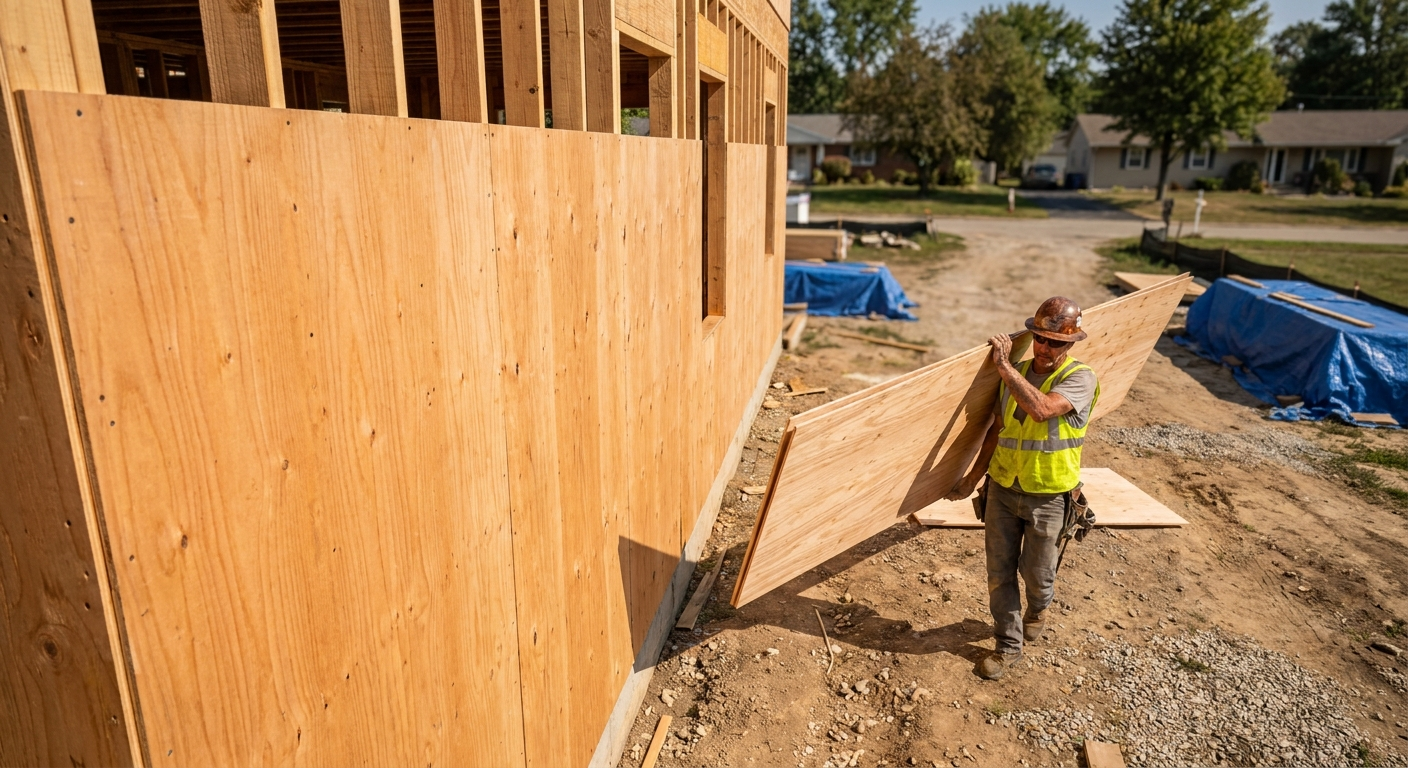
Wall sheathing is the panel layer that does the structural work in a typical US wood-framed wall — racking resistance, nail base for siding, substrate for the water-resistive barrier, and fastening surface for everything that hangs off the exterior. The choice between plywood and OSB, between 15/32" and 19/32", and between standard CDX and structural-rated plywood is driven by building code, regional wind exposure, and climate. Get any of those wrong and the wall fails inspection at minimum, fails structurally at worst.
This guide walks through the 2026 picture for plywood wall sheathing in US and Canadian residential construction: IRC code-minimum thickness by stud spacing, the plywood-vs-OSB comparison honestly framed, hurricane-zone overlays, APA grade-stamp reading, installation best practices, and indicative US retail pricing. Written from a manufacturer's perspective by Vinawood, a Vietnamese plywood mill exporting to North American buyers among 55+ markets globally.
TL;DR — the One-Paragraph Spec Answer
For US residential wall framing on standard 16" o.c. studs, 15/32" CDX plywood is the practical default and meets IRC R602 code minimums for most wall sheathing applications. For 24" o.c. stud spacing, 19/32" is the typical default. For shear walls and IRC-prescribed braced wall panels, 15/32" minimum, often stepped up to 19/32" or 23/32" depending on the engineered design. In hurricane wind zones (Florida HVHZ, parts of coastal Carolinas, Texas, Louisiana), structural plywood (PS 1 or PS 2 rated) at 19/32" or 23/32" is typically required, with ring-shank fasteners at tighter nail spacing per the local high-wind code amendments.
Always verify the specific specification with the project's local building official, the engineer of record (if any), and the local high-wind or seismic amendments to the IRC.
What Plywood Wall Sheathing Actually Is
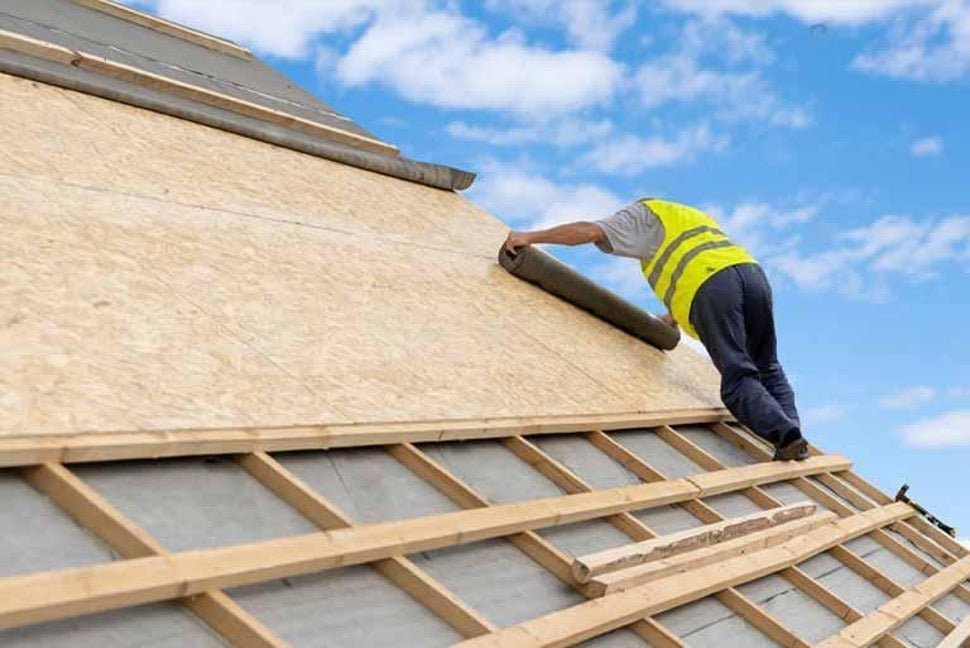
Plywood wall sheathing is structural plywood applied to the exterior face of wood-framed walls under siding or cladding. It serves four functions in a typical US framed wall:
Racking resistance. The sheathing panel ties the wall studs into a single shear-resistant diaphragm. Without sheathing or alternative bracing, a wood-framed wall has minimal resistance to lateral loads from wind or seismic events.
Nail base for siding. Vinyl, fiber-cement, wood lap siding, and stone veneer all need solid backing for fasteners. Plywood provides consistent fastener pull-out resistance across the wall surface.
WRB and house wrap substrate. The water-resistive barrier and house wrap layer are stapled or fastened to the sheathing, which provides the smooth, continuous surface needed for proper installation.
Continuous insulation backing. In walls using exterior continuous insulation, the sheathing becomes the structural plane while the insulation handles thermal performance — plywood provides the rigid base the assembly requires.
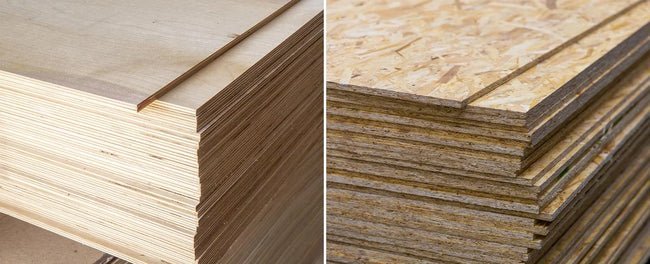
Plywood vs OSB for Wall Sheathing
The honest comparison — OSB is a legitimate sheathing material, and Vinawood does not manufacture OSB. The trade-offs:
Cost. OSB typically runs 10–20% cheaper than equivalent CDX plywood at the same nominal thickness. For production housing with tight margins, OSB is the budget-driven default.
Shear strength. OSB and structural plywood are roughly equivalent in shear when both meet PS 2 or APA-rated structural designations. OSB sometimes tests slightly stronger in laboratory shear; plywood holds an advantage in cyclical-load fatigue.
Moisture behaviour. The largest practical difference. Plywood absorbs moisture, swells slightly, and recovers most of its original thickness when it dries. OSB absorbs moisture, swells more, and does not recover — the swollen edge is permanent and progressively reduces nail-holding strength along that edge. For coastal climates, high-humidity regions, and any project where the sheathing will be exposed to weather for more than a few days before drying-in, plywood is meaningfully better.
Nail-holding under repeated load. Plywood holds fasteners better than OSB under cyclical loads, particularly important for siding and trim that experience thermal expansion cycles. OSB nail withdrawal strength can be 20–30% lower at equivalent edge distance.
Weight. Plywood is roughly 5–10% lighter at equivalent thickness, marginal but noticeable on full-day framing crews handling 50+ sheets.
The practical recommendation: OSB is the budget default for production residential and dry-climate inland builds; plywood is the moisture-tolerant upgrade for coastal builds, high-humidity climates, custom homes, and any project where the sheathing may sit exposed before the cladding goes on. For the broader OSB-vs-plywood comparison, see Vinawood's OSB vs plywood guide.
Code-Required Thickness — IRC 2024 / IBC 2024
Plywood wall sheathing thickness in the US is governed by the International Residential Code (IRC) for residential and the International Building Code (IBC) for commercial, plus state and local amendments. The 2024 editions carry forward the prior thickness tables with refinements. Code-minimum and practical-default thicknesses by stud spacing:
| Stud Spacing | Code Minimum | Practical Default | Shear Wall / Braced Wall |
|---|---|---|---|
| 16" o.c. | 5/16" (3/8" for nail base) | 15/32" | 15/32" minimum, often 19/32" |
| 24" o.c. | 7/16" | 15/32" or 19/32" | 19/32" or 23/32" |
| Hurricane wind zones | 15/32" | 19/32" | 19/32" or 23/32" structural plywood |
This table is a guidance summary, not a substitute for the actual code. Local amendments — particularly Florida's HVHZ (High Velocity Hurricane Zone), coastal North and South Carolina, Texas Gulf Coast, and Louisiana's hurricane wind regions — carry stricter overlay requirements that supersede IRC defaults. Always verify the specific specification with the project's local building official and any engineered shear-wall calculations.
For the broader thickness reference, see Vinawood's 3/4" plywood explained (covering 23/32" structural sheathing) and actual size of 1/2" plywood (covering 15/32" CDX).
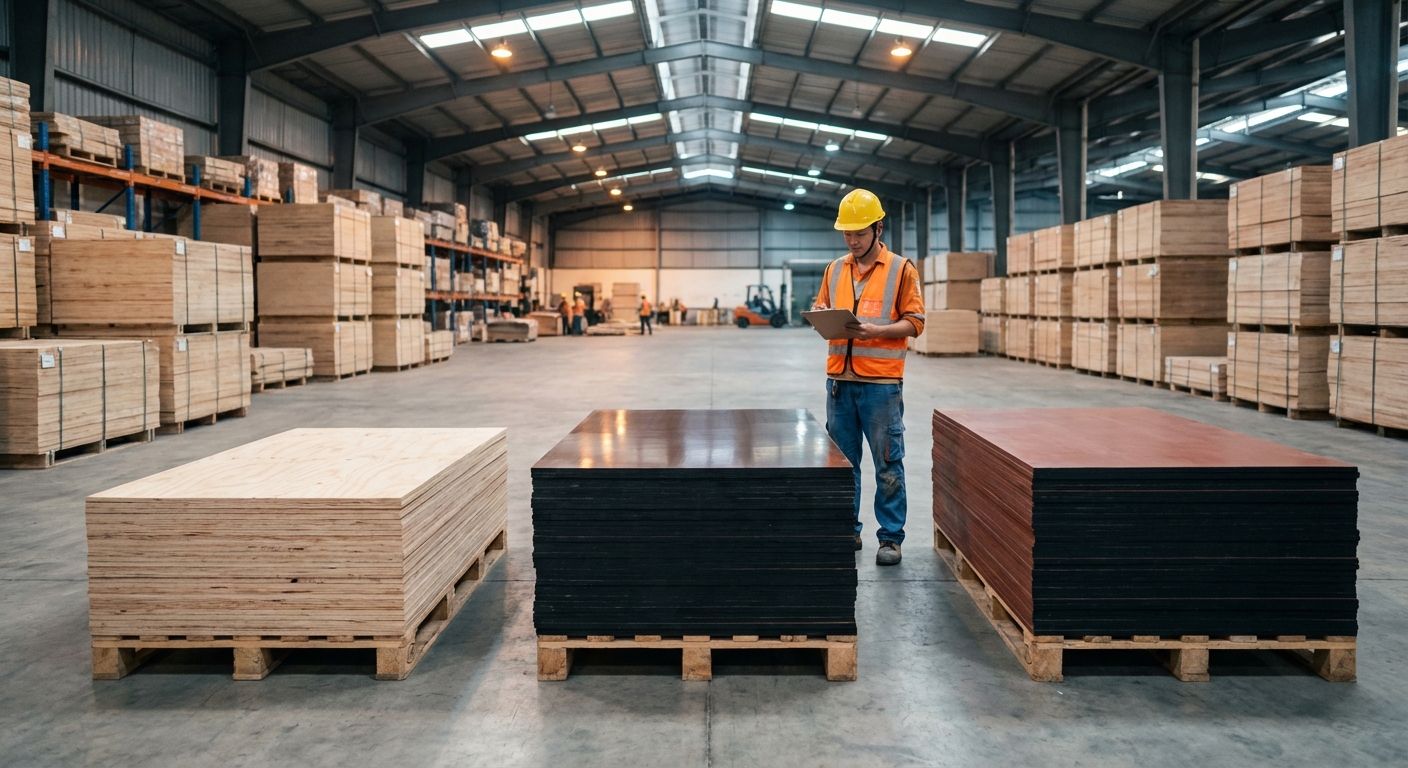
Common Plywood Sheathing Grades
The grades you'll see at lumber yards and big-box stores for wall sheathing:
CDX. The standard wall sheathing grade across most of the US. C-grade face, D-grade back, X = exterior glue (Exposure 1). The C-grade face is structurally sound but not finished — small open knots and patches are permitted. The face will be hidden behind WRB and siding, so the appearance grade is irrelevant for wall sheathing applications. CDX is the workhorse grade for residential wall sheathing.
Sheathing Panel (24/0, 24/16, 32/16 span ratings). Span-rated structural panels under APA Performance Standards. The two numbers are the maximum span (in inches) with face grain perpendicular to supports (first number) and parallel (second number). For wall sheathing on 16" or 24" o.c. studs, 24/0 or higher span ratings cover the application.
Structural I (Struc I). Higher-grade structural plywood for shear walls, braced wall panels, and high-wind areas. Group-1 species (Douglas fir, southern pine), tighter veneer grading, higher rated stress values. Structural I is the typical specification for engineered shear walls and IRC-prescribed braced wall panel construction.
PS 1 / PS 2 rated. The US Voluntary Product Standards. PS 1 covers veneer-faced structural plywood; PS 2 covers performance-rated structural use panels (which can include both plywood and OSB). For specifier-grade procurement, the PS 1 or PS 2 designation in the APA grade stamp confirms the panel meets the relevant structural rating.
For broader plywood grade context, see plywood grades explained and plywood grades for exterior use.
Reading the APA Grade Stamp
An APA-stamped sheathing panel carries a small rectangular mark with several pieces of information. The fields and what they mean:
- Grade designation: RATED SHEATHING (most common for wall sheathing) or RATED SIDING.
- Span rating: Two numbers (e.g., 24/16) indicating maximum span in inches. The first number is for face grain perpendicular to supports; the second for parallel.
- Thickness: Standard thickness (e.g., 15/32", 19/32", 23/32").
- Exposure category: EXPOSURE 1 (waterproof glue, rated for moisture during construction) or EXTERIOR (waterproof glue, rated for permanent outdoor exposure).
- Mill number: Unique identifier of the producing mill. Verify against the APA's online mill directory.
- PS 1 or PS 2 reference: Confirms the panel meets the relevant US Voluntary Product Standard.
The single most important field for wall sheathing is the exposure category. EXPOSURE 1 is the standard for wall sheathing — the panel will be covered by WRB and siding within weeks of installation, so permanent-exterior rating is not required. EXTERIOR-rated panels work but are typically over-spec for wall sheathing.
Installation Best Practices
Code-compliant wall sheathing installation across most US jurisdictions follows these guidelines:
Nail spacing. Typically 6" o.c. on panel edges, 12" o.c. in the field. Shear-wall designs can require tighter spacing — 4" or 3" o.c. on edges — per the engineered specification. Always verify the project-specific shear-wall schedule.
Fasteners. 8d common nails (0.131" diameter) or equivalent for standard sheathing. Hurricane wind zones typically require ring-shank or screw-shank nails for additional pull-out resistance. Pneumatic nailers should be calibrated to drive nails flush, not over-driven (which crushes the panel and reduces shear capacity).
Panel orientation. Vertical (long axis perpendicular to studs) is standard for most wall sheathing applications and provides best nail-base coverage. Horizontal orientation can be code-compliant where blocking is provided at horizontal panel joints — verify per the specific shear-wall design.
Expansion gap. 1/8" minimum gap between panel edges to allow for moisture-driven dimensional change. Tight-butted panels can buckle or warp when the panels swell from absorbed moisture.
Edge support. Panel edges that don't land on framing require blocking. The IRC permits unblocked panel edges in some configurations, but blocking is required for many shear-wall and high-wind designs. Read the project specification.
Weather exposure limit. Plywood sheathing typically carries a 30-day weather exposure rating from the manufacturer. Apply the WRB and finish cladding within that window. Longer exposure can cause edge swelling and reduce panel life.
Moisture Management — WRB, House Wrap, Panel Exposure Limits
Wall sheathing's job is structural; the water-resistive barrier (WRB) layer over the sheathing handles bulk-water management. Standard sequence: sheathing nailed to studs, WRB or house wrap stapled or taped over the sheathing with 6" minimum overlaps and shingle-style lapping, then finish siding installed with appropriate flashing at openings.
The plywood sheathing itself should not be exposed beyond the manufacturer's stated weather exposure limit (typically 30 days). Coastal builds and rainy-season construction in the Pacific Northwest sometimes push this limit; the consequence is edge swelling that compromises the panel's nail-holding strength and dimensional stability. Where extended exposure is unavoidable, switch to a permanent-EXTERIOR rated panel (typically a plywood with full WBP phenolic adhesive throughout) for the additional moisture tolerance.
Modern integrated WRB-sheathing systems (Huber Zip, etc.) combine the sheathing and WRB into a single panel with taped seams. These are an alternative to traditional plywood-plus-house-wrap assemblies and have growing acceptance in production residential. They are not plywood sheathing in the traditional sense and are not addressed by this guide.
Plywood Sheathing Prices in the US (2026)
Indicative retail pricing for plywood sheathing at US lumber yards and big-box retailers, mid-2026:
| Thickness | Grade | Indicative Price (per 4×8 sheet) |
|---|---|---|
| 15/32" (~12 mm) | CDX sheathing | ~$30–$45 |
| 19/32" (~15 mm) | CDX sheathing | ~$40–$55 |
| 23/32" (~18 mm) | CDX or Structural sheathing | ~$50–$70 |
| 23/32" (~18 mm) | Structural I (high-wind) | ~$60–$85 |
Indicative ranges only. Retail plywood pricing is commodity-driven and fluctuates with the lumber market. Verify current pricing with your local supplier before committing to a specification with cost implications.
OSB sheathing at equivalent thicknesses typically runs 10–20% below CDX plywood pricing, with Structural OSB pricing closer to CDX plywood for higher-grade products.
When Plywood Wall Sheathing Is the Right Choice
A practical decision framework for plywood vs OSB selection:
Choose plywood when:
- The build is in a high-humidity climate or coastal region (FL, GA, the Carolinas, Pacific NW, Gulf Coast)
- The project is a custom home or high-quality build where moisture tolerance matters
- The schedule may leave the sheathing exposed for more than a few days before drying-in
- The wall is in a hurricane wind zone requiring structural plywood (PS 1 or PS 2 rated)
- The cladding is cedar shake, masonry tie-back, or any specialty siding requiring dependable nail retention
- The project includes engineered shear walls with structural plywood specified
OSB is acceptable when:
- The build is production residential in a dry inland climate
- The schedule will dry the wall in within days of sheathing
- The cladding does not place high cyclical-load demands on fasteners
- The budget is tight and OSB delivers code-compliant performance for the application
For broader US-market structural plywood context, see Vinawood's roofing plywood guide (the companion piece for roof sheathing) and plywood grades for exterior use.
Vinawood's Capabilities for US Buyers
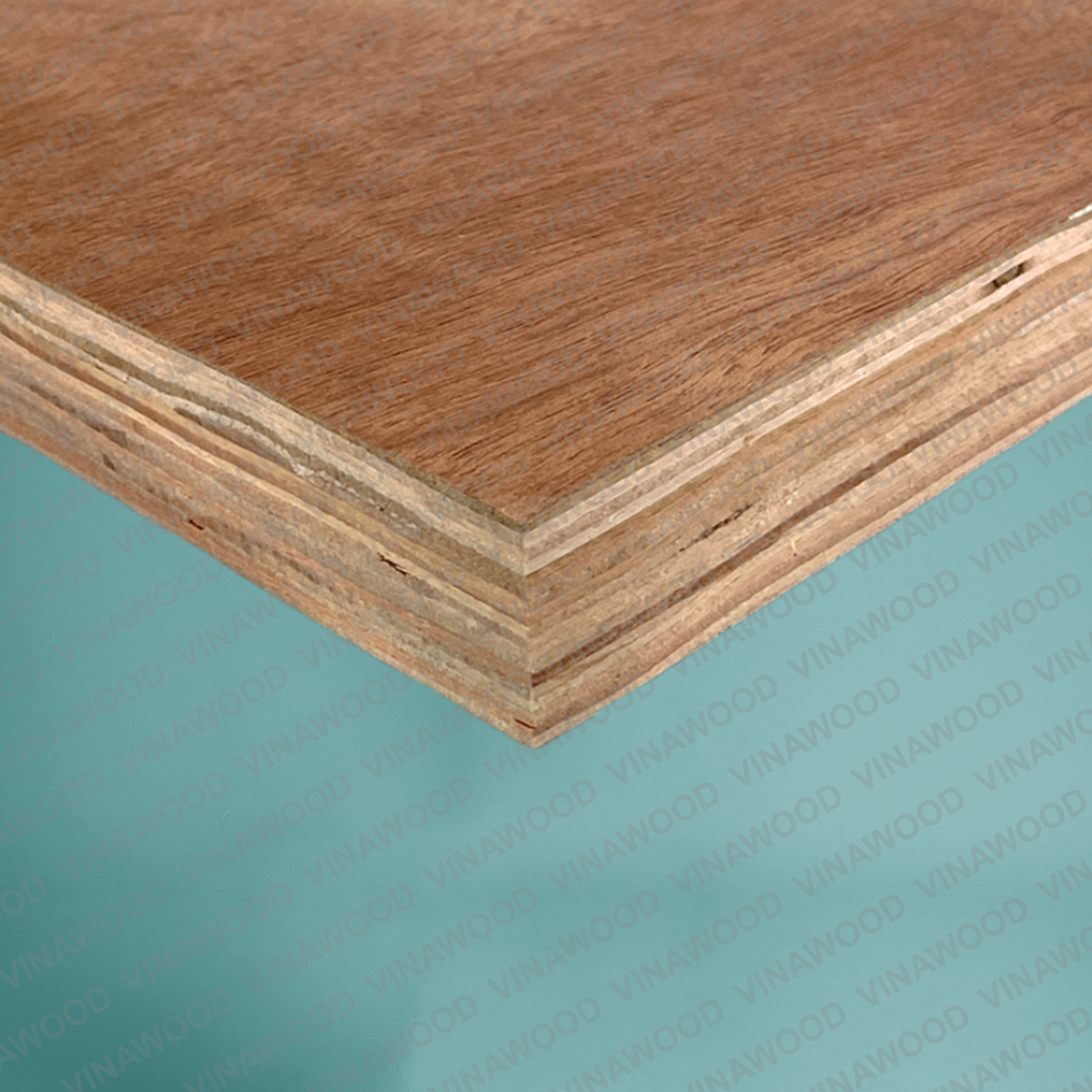
Vinawood's primary US-market product range is HDO formwork plywood for the concrete forming sector — see the HDO plywood collection. The same factory infrastructure (rotary peeling, hot pressing, full WBP phenolic adhesive on the structural grades) supports structural sheathing-grade plywood for commercial buyers and lumber yards interested in container-volume sheathing imports. Vinawood's commercial plywood range can be specified to PS 1 or PS 2 equivalents on bulk orders, with engineering spec data sheets and CARB Phase 2 / TSCA Title VI compliance documentation provided per shipment.
Container-volume direct imports (1 × 40HQ ≈ 600 sheets of 18 mm structural plywood) are typically the entry point for sheathing-grade procurement from Vietnam. For US buyers evaluating Vietnam-source sheathing alternatives to domestic supply, see also the commercial plywood collection.
Always verify any imported sheathing-grade plywood meets the specific PS 1 / PS 2 / APA designations required by the project's code official before specifying for a permitted build.
Frequently Asked Questions
What thickness plywood is used for wall sheathing?
For US residential wall framing on 16" o.c. studs, 15/32" CDX plywood is the practical default and meets IRC code minimums. For 24" o.c. studs, 19/32" is typical. Shear walls and braced wall panels often step up to 19/32" or 23/32". Hurricane wind zones typically require structural plywood at 19/32" or 23/32" minimum.
What is the difference between plywood and OSB for wall sheathing?
OSB is roughly 10–20% cheaper than equivalent CDX plywood at the same thickness. Plywood absorbs moisture and recovers when it dries; OSB absorbs moisture, swells more, and does not recover — the swollen edge is permanent. Plywood holds fasteners better under cyclical loads. For coastal climates, high-humidity regions, and custom builds, plywood is the moisture-tolerant upgrade. For dry-climate production housing, OSB is the budget-driven default.
What is CDX plywood?
CDX is the standard wall sheathing grade across most of the US. C-grade face, D-grade back, X = exterior glue (Exposure 1 bond — waterproof glue, rated for moisture during construction). The face appearance is irrelevant for wall sheathing because the panel will be covered by WRB and siding.
What does the APA grade stamp mean?
The APA grade stamp confirms a panel meets the rating shown. Key fields: grade designation (RATED SHEATHING for most wall sheathing), span rating (e.g., 24/16), thickness, exposure category (EXPOSURE 1 standard for wall sheathing), mill number, and PS 1 or PS 2 reference. Verify the panel matches the project specification before installing.
Can I use plywood for shear walls?
Yes — plywood is the standard material for residential and light commercial shear walls. Structural I plywood (Group-1 species, tighter veneer grading) is typical for engineered shear walls. Verify the specific thickness, nailing schedule, and panel grade against the engineered shear-wall design and local code amendments.
How long can plywood sheathing be exposed to weather?
Plywood sheathing typically carries a 30-day weather exposure rating from the manufacturer. Apply the WRB or house wrap and finish cladding within that window to prevent edge swelling and panel degradation. Where extended exposure is unavoidable, specify a permanent-EXTERIOR rated panel for additional moisture tolerance.
Is 1/2 inch plywood OK for wall sheathing?
15/32" plywood (the actual thickness of "1/2 inch" sheathing) is the practical default for wall sheathing on 16" o.c. studs and meets IRC code minimums for most applications. For wider stud spacing (24" o.c.), shear walls, or hurricane wind zones, step up to 19/32" or 23/32" per the project specification.
What is the price of plywood sheathing in 2026?
Indicative US retail pricing in 2026: 15/32" CDX sheathing at ~$30–$45 per 4×8 sheet, 19/32" CDX at ~$40–$55, and 23/32" structural sheathing at ~$50–$70. Pricing is commodity-driven and fluctuates with the lumber market — verify current pricing with your local supplier.
Do hurricane zones require structural plywood?
Most US hurricane wind zones — including Florida HVHZ, parts of coastal Carolinas, Texas Gulf Coast, and Louisiana hurricane wind regions — require structural plywood (PS 1 or PS 2 rated) at 19/32" or 23/32" with ring-shank fasteners and tighter nail spacing. Verify the specific code amendments with the local building official before specifying.
Plywood wall sheathing is one of the most thoroughly specified components in US residential framing. Get the thickness right for the stud spacing and code zone, choose plywood over OSB where moisture or cyclical-load tolerance matters, follow the nailing schedule the engineered design or code requires, and dry the wall in within the manufacturer's weather exposure limit. Code compliance, structural performance, and panel life all follow from those four discipline points.
Category
guides
Related Markets
Related Countries
Related Products
▶Sources & References (7)
- International Residential Code (IRC) 2024 — Section R602 Wood Wall Framing — International Code Council (2024)
- International Building Code (IBC) 2024 — International Code Council (2024)
- APA Form L870 — Engineered Wood Construction Guide — APA — The Engineered Wood Association (2024)
- PS 1-19 — Structural Plywood — U.S. Department of Commerce / APA (2019)
- PS 2-18 — Performance Standard for Wood Structural Panels — U.S. Department of Commerce / APA (2018)
- ASCE 7-22 — Minimum Design Loads and Associated Criteria for Buildings — American Society of Civil Engineers (2022)
- Building America Solution Center — Structural Sheathing — Pacific Northwest National Laboratory / U.S. Dept of Energy (2024)