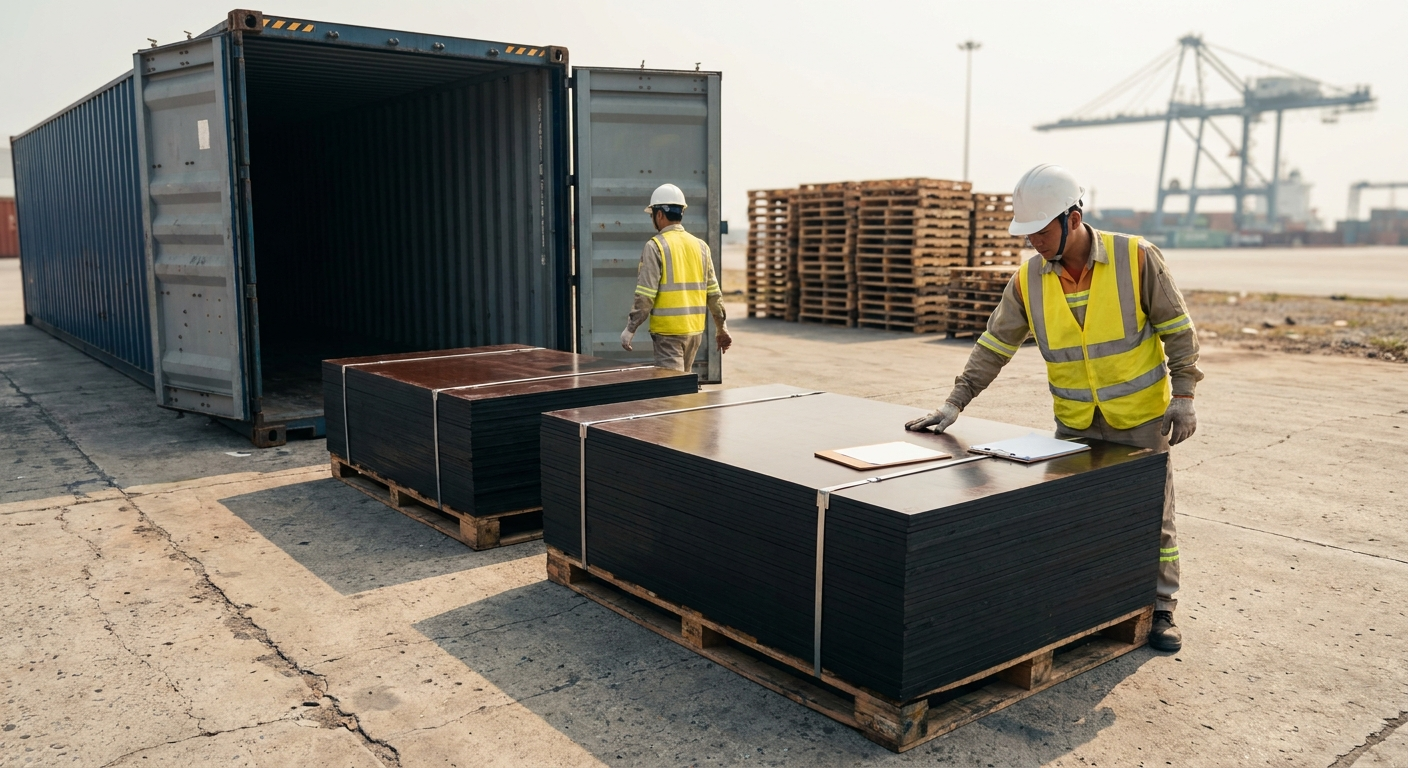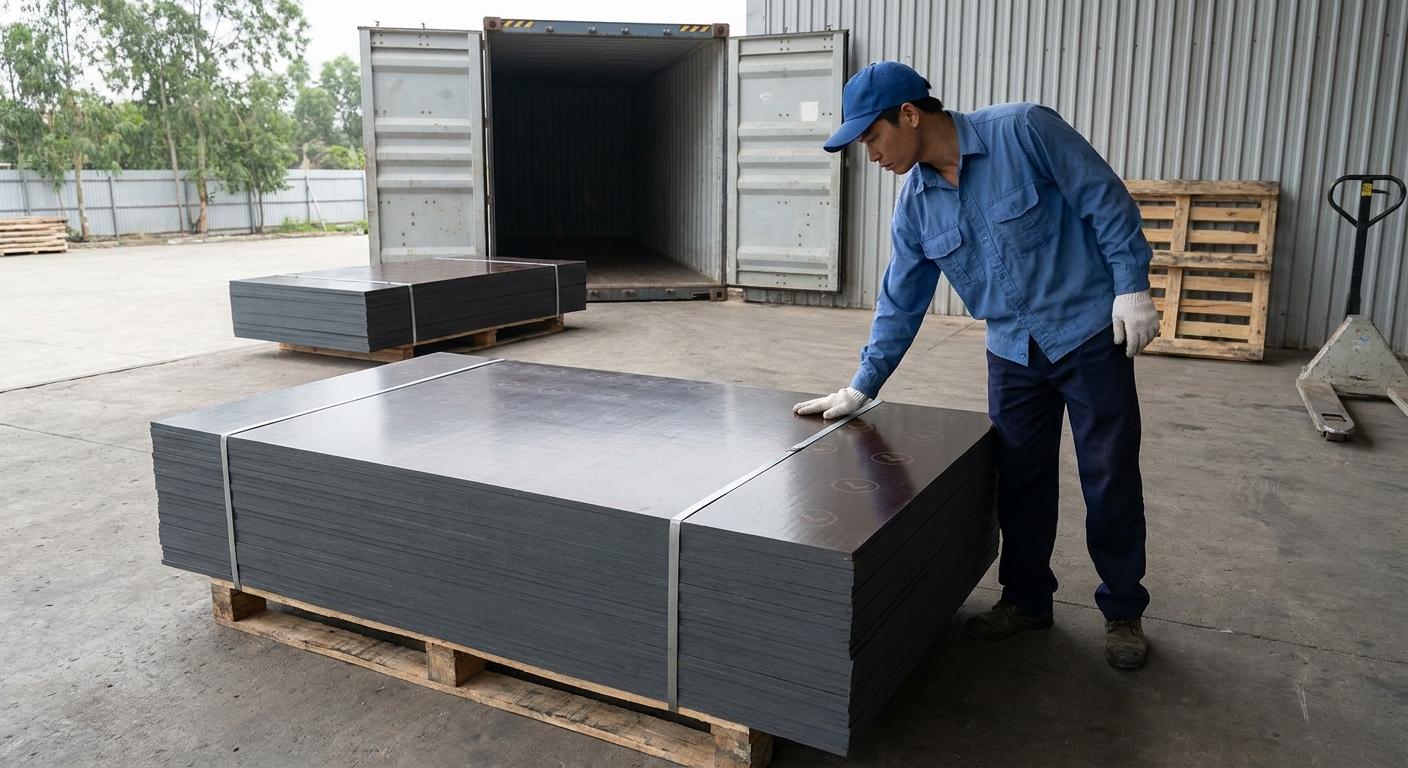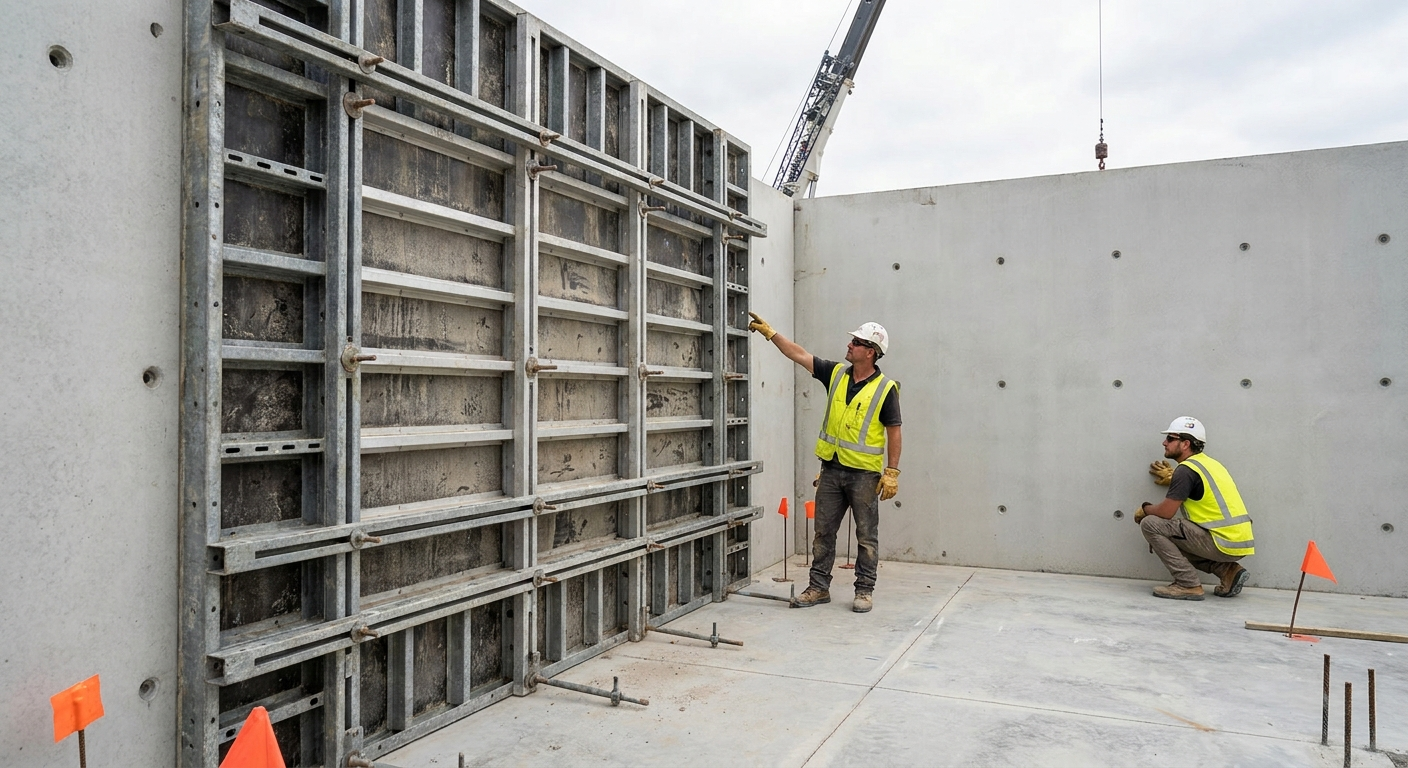
Anti-Slip Plywood: Hex-Pattern Phenolic for Formwork Decks, Scaffold Boards & Van Floors
Anti-slip plywood explained from a manufacturer's perspective: hex vs wire-mesh face patterns, the EN 636-2 vs EN 636-3 distinction, thickness selection for formwork decks, scaffolding, and trailer floors, and the buyer questions that separate a real Class 3 panel from melamine-glued surface…
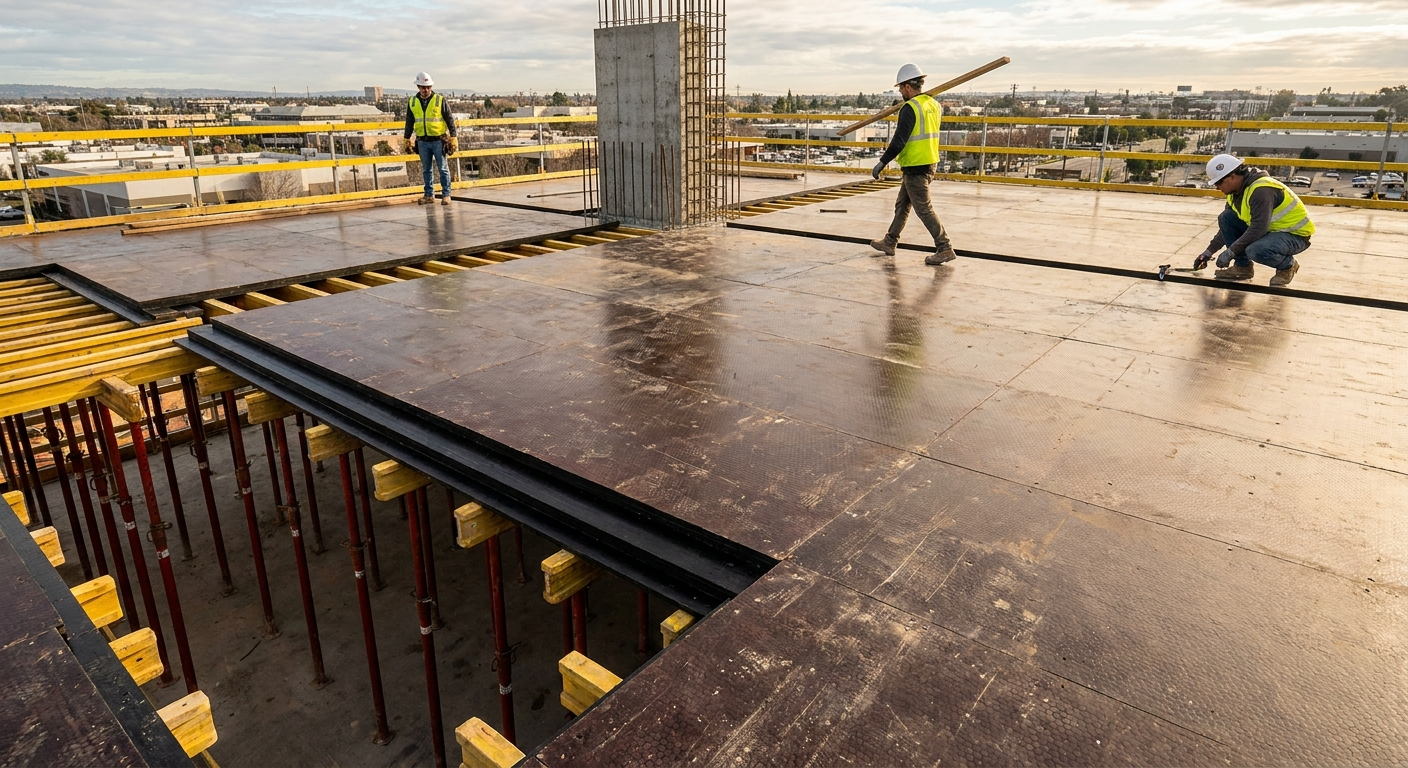
Anti-slip plywood is what you walk on when concrete crews top out a deck pour, when scaffolders rig boards above stamped concrete, when campervan builders need a non-slick subfloor, or when livestock trailers see manure traffic in winter. The defining feature is a textured face — hex, wire-mesh, or pyramid pattern — pressed into a phenolic film during hot pressing. The texture turns a slick film face into a high-friction working surface, even when wet.
The US SERP for this category is dominated by resellers who carry imported birch-core hex panels and price by sheet. What's missing is a manufacturer-grade explanation of how the panel is built, which adhesive class actually delivers wet-condition performance, and which texture matches which job. From a Vietnamese plywood mill's perspective, we've shipped phenolic film-faced panels into US distributors for thirty-plus years and the buyer questions are remarkably consistent: face pattern, bond class, thickness, expected reuse cycles. The article walks each one.
What "anti-slip plywood" actually means
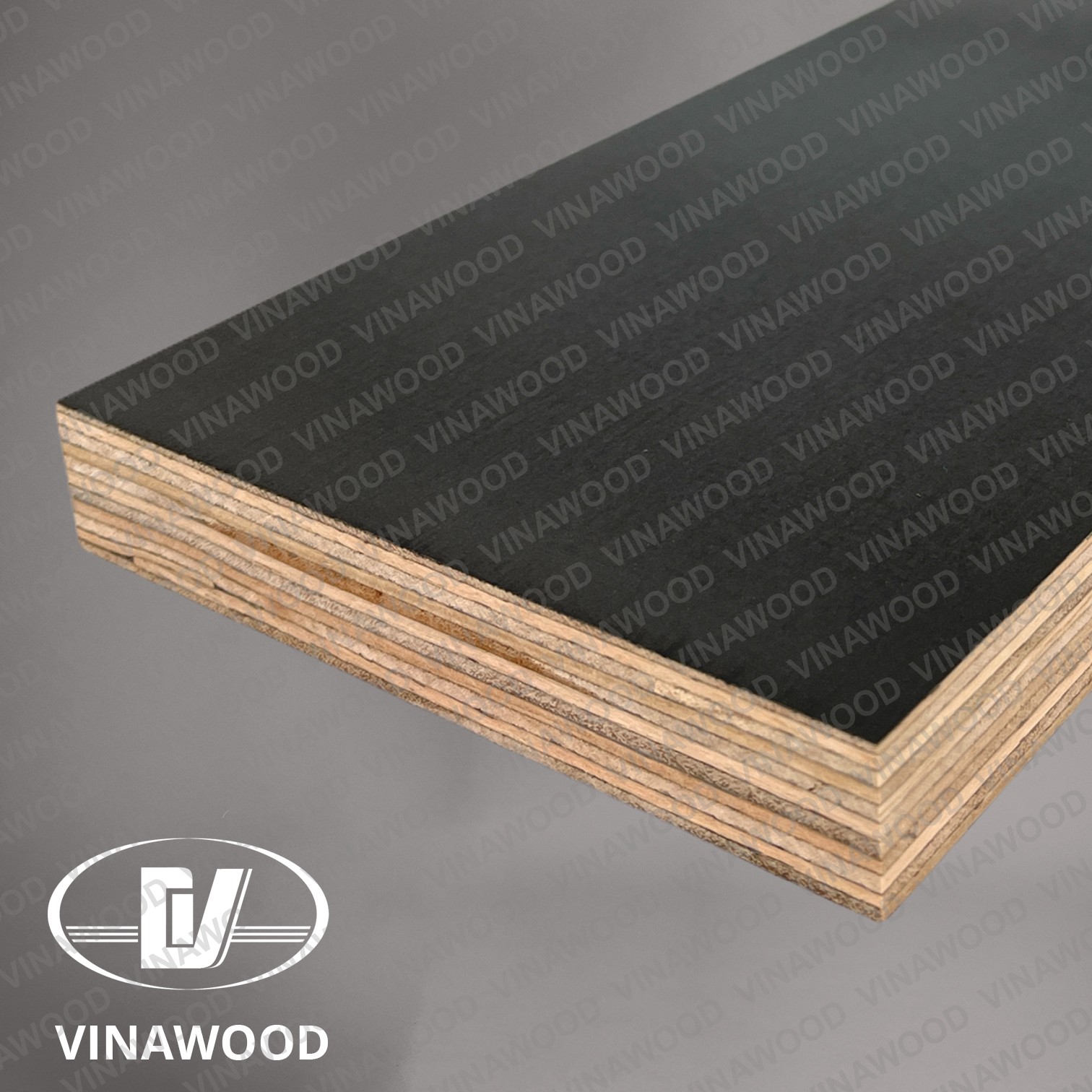
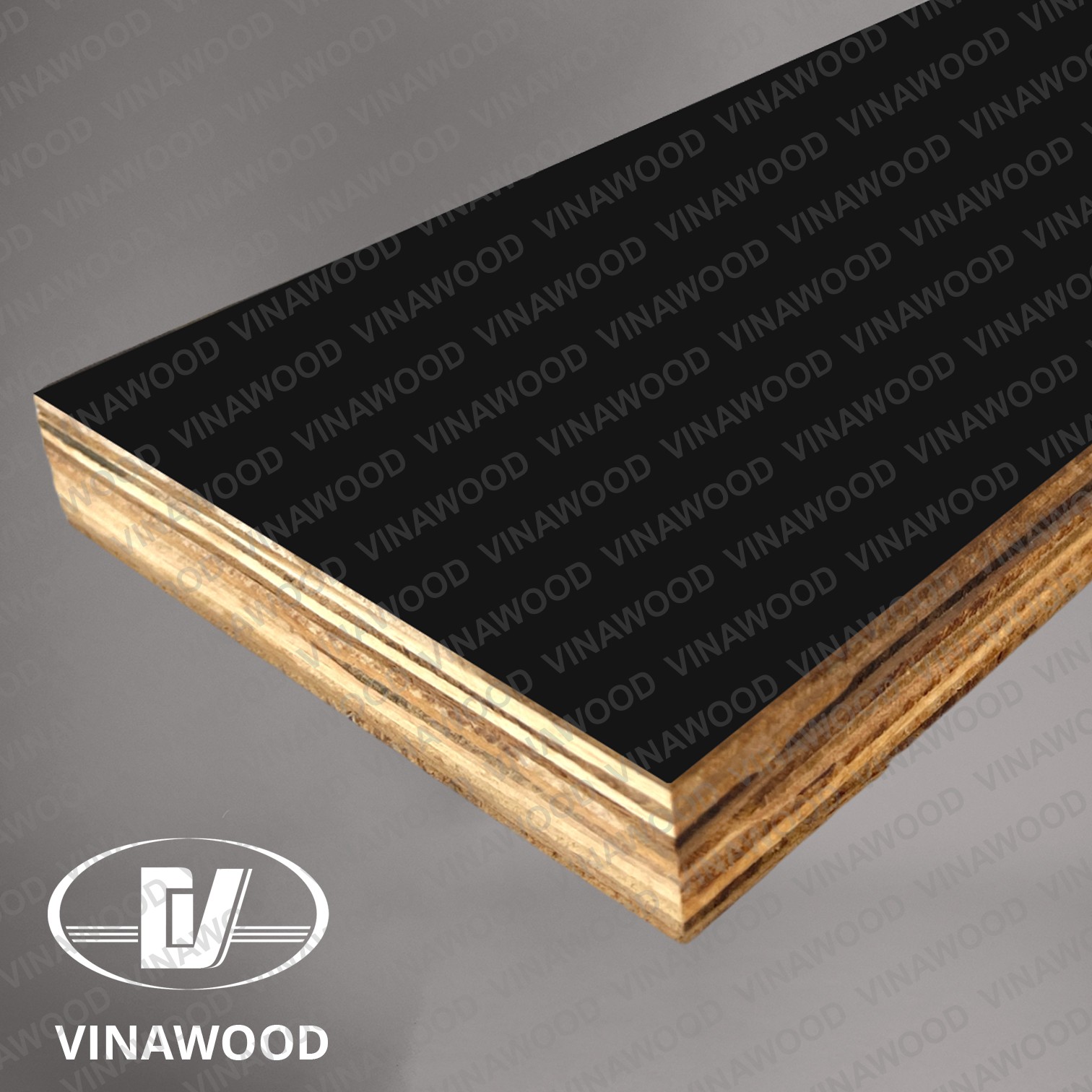
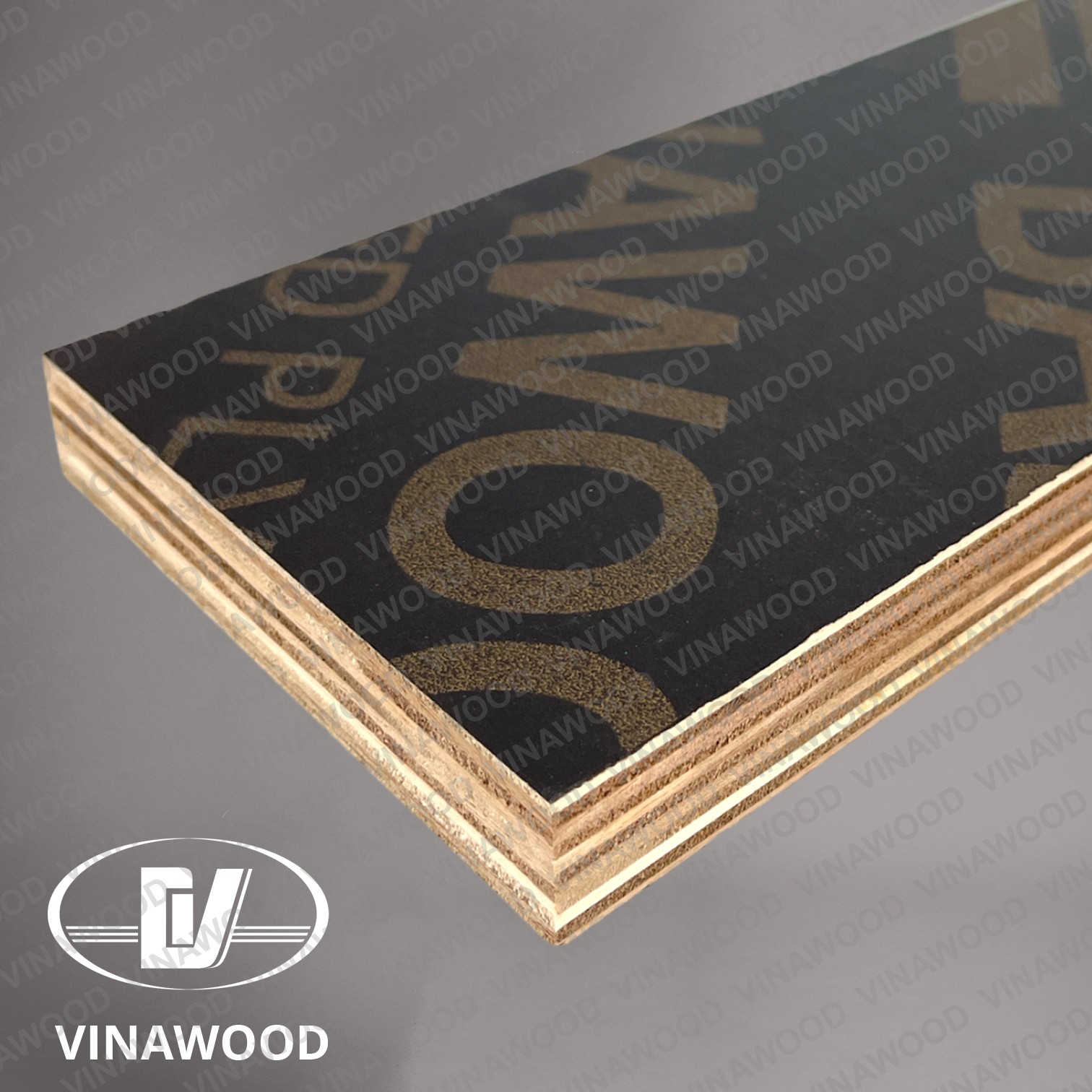
The base sheet is a hardwood plywood core, cross-laminated, with a phenolic-resin-impregnated kraft paper film bonded to one or both faces under heat and pressure. On a standard smooth phenolic panel, the film cures glass-flat. On an anti-slip panel, a steel-mesh or honeycomb-pattern caul is pressed against the film during the hot-press cycle, and the texture becomes part of the cured film face. Once cooled, the texture is permanent — it doesn't peel off, doesn't sand off (unless you grind through the entire film layer), and provides mechanical grip independent of any wax, sand, or coating.
The distinction worth keeping in mind: surface texture and adhesive class are two separate specifications. A hex-textured face on a panel with WBP melamine adhesive (EN 636-2, Class 2) gives grip but isn't rated for sustained outdoor wet exposure. The same hex face on a panel with WBP phenolic adhesive (EN 636-3, Class 3) gives grip and survives outdoor weather cycles for several years on a tarped storage stack. Confuse the two and the panel fails early.
Texture types compared — hex, wire-mesh, pyramid
Three patterns dominate the global market, each with practical trade-offs:
- Wire-mesh: orthogonal grid pattern, common on European phenolic panels (often called "netted" or "steel-mesh"). Slightly directional grip — friction is highest perpendicular to the wire orientation. Standard pattern for formwork decking in DACH markets and Eastern Europe.
- Hex / honeycomb: six-sided cells, the dominant pattern on US Hex-Ply variants and on Riga-style birch hex panels resold by UltraLightPly, MakerStock, and Woodcraft. Provides all-direction grip because the cell geometry has no preferred axis. The most common request from US buyers.
- Pyramid / diamond: less common, raised micro-pyramids in a diagonal pattern. Found on a handful of specialty van-build panels and on some heavy-duty trailer floors. Slightly higher initial grip than hex but wears faster under boot traffic.
Picking between hex and wire-mesh comes down to direction-of-travel on the working surface. A formwork deck where crews walk in random directions favours hex. A scaffold board where traffic moves end-to-end is fine with wire-mesh, with the wire orientation set perpendicular to the walking direction.
Construction stack — what's under the texture
A real anti-slip phenolic panel is built in four layers, working from the inside out:
- Hardwood plywood core — typically 7 to 13 plies of plantation-grown Acacia or Eucalyptus for Vinawood Pro Form, cross-laminated at 90-degree alternating grain. Birch-core variants exist on the European side (Latvia, Finland) and ship at a premium.
- WBP phenolic glue line through every ply boundary. For Class 3 / EN 636-3 rating, the adhesive is fully cross-linked phenol-formaldehyde. Melamine-urea-formaldehyde glue gives Class 2 — fine for short-cycle dry work, not for sustained outdoor wet exposure.
- Phenolic resin film, typically 120 to 220 g/m², bonded to one or both faces. Heavier films give better wear resistance; the 220 g/m² spec is what Pro Form uses on the smooth face for high-cycle formwork.
- Texture-pressed face on one side (or both, in some heavy-duty truck-floor variants). The hex or wire-mesh pattern sits on the same phenolic film as the smooth side, just textured during pressing instead of left flat.
The Pro Form anti-slip variant runs WBP phenolic adhesive, EN 636-3 / Class 3 bond, with a 220 g/m² phenolic film on the smooth face and a 120 g/m² textured film on the anti-slip face. We've seen this build hold its grip well past the smooth-side reuse count on formwork programs, because the textured face sees less repetitive contact pressure than the concrete-cast face.
Where it's used — six application categories
Anti-slip plywood shows up wherever the working surface is elevated, wet, or both:
- Formwork decking on multi-level pours. Hex face up where crews stand and walk, smooth face down to cast a clean concrete soffit. Up to 20 reuses on the smooth side; the textured face wears earlier under boot traffic.
- Scaffold boards and platform decking. Required on most jobsites in the EU and UK; the OSHA equivalent in the US sets slip-resistance language that hex-pattern panels comfortably meet.
- Trailer and livestock truck floors. The texture handles wet hooves, manure, and water washdowns. 18 to 21 mm is the common spec; thinner panels fail quickly under livestock weight.
- Campervan and van conversions. 12 to 15 mm hex panels are a standard subfloor in DIY and pro van builds where the floor sees rain through open doors and wet boots from outdoor activities.
- Temporary jobsite walking surfaces and ramps. Excavation crossings, mud-soaked yard paths, pedestrian routes around active concrete pours.
- Machinery deck plating. Service decks on industrial equipment, agricultural attachments, marine machinery rooms (above-waterline).
Reuse expectation drops on heavy boot-traffic applications. A hex panel that holds 20 cycles in formwork-deck service might give 8 to 12 cycles as a primary scaffold board, because the textured face sees direct foot contact every shift instead of the protected reverse face seen by a cast deck.
Thickness selection by application
Match thickness to span and load, not to "biggest available":
| Thickness | Typical use |
|---|---|
| 9 mm | Lightweight deck overlay, machinery service plates, temporary path surfaces |
| 12 mm | Van and campervan subfloors, light scaffold platforms, trailer underlayment |
| 15 mm | Standard scaffold boards (UK / EU), light-duty trailer floors |
| 18 mm | Formwork decking, livestock trailer floors, heavy van conversions |
| 21 mm | Heavy formwork loads, multi-shift scaffold platforms, equipment service decks |
| 24–30 mm | Heavy-duty industrial scaffolding, machinery deck plates, structural ramps |
The 18 mm spec covers about two-thirds of the working applications. Going thicker on a scaffold board where 15 mm is rated adds weight that crews have to carry up; going thinner on a formwork deck where 18 mm is the right call adds deflection that telegraphs into the cast concrete face.
Slip resistance vs duration — what to expect over time
Hex texture wears with traffic. Out of the box, a good 220 g/m² phenolic film with a sharply pressed hex pattern delivers strong grip at coefficient-of-friction values that comfortably exceed dry-condition requirements and hold up reasonably well on a wet surface. After 3 to 5 reuse cycles in formwork service, the texture starts to round off at the high points; after 8 to 10 cycles in scaffold-board service, the texture is visibly worn but still functional; past 15 cycles in heavy boot traffic, the texture is mostly polished out and the panel reads as a worn smooth-face panel.
The numbers are maximums, not averages. Site discipline matters more than spec sheet for delivered performance — disciplined crews who store panels flat, seal cut edges with primer, and rotate which face goes up routinely hit the upper end of the cycle count. Crews who leave panels stacked outdoors uncovered between jobs cut the count in half. We've seen both ends of that spread on the same panel SKU.
Standards and certifications
Five documents matter for buyers in the US, UK, Australia, and Canada:
- EN 13986 — CE marking for construction-use wood-based panels. Required for most EU and UK installations.
- EN 636-3 — exterior wet-condition rating. The right specification for formwork, scaffolding, and outdoor use.
- EN 314-2 Class 3 — bond quality requirement, the certification that confirms WBP phenolic adhesive performance.
- EN 717-1 Class E1 — formaldehyde emission class. CARB Phase 2 (US) and TSCA Title VI compliance pair with this for indoor van-build applications.
- FSC chain-of-custody — for plantation-source verification. Vinawood ships with FSC documentation on request, and EUDR due-diligence statements are built into our 2026 export documentation.
The two checks worth doing on every purchase: confirm the bond class on the supplier's data sheet (not just the marketing label), and confirm the formaldehyde class for any panel going into an enclosed living space.
Buying questions — what to ask the supplier
Six questions separate a properly specified panel from a mismatched one:
- Face pattern: hex, wire-mesh, or pyramid? Which face is textured (one side or two)?
- Face/back film weight: 120 g/m² baseline, 220 g/m² heavy-duty, mixed combos like 220/120 g/m² for one-side-cast formwork.
- Core species: hardwood plywood (Acacia, Eucalyptus, Birch) or softwood. The core species drives weight, screw holding, and price.
- Glue class: WBP phenolic (EN 636-3 / Class 3) for outdoor wet, WBP melamine (EN 636-2 / Class 2) for dry interior or short-cycle.
- Thickness tolerance: ±0.3 mm is normal for European-spec panels, looser for Asian-import-without-spec.
- Edge sealing: factory-painted or open. Open edges absorb water and need site-applied primer or polyurethane within a day of cutting.
One trap to flag. Anti-slip panels with WBP melamine adhesive (Class 2) are often sold under generic "anti-slip plywood" labels for indoor or short-cycle applications. They're real products, fine for trailer floors that live under cover or for one-pour formwork programs. They're the wrong call for any installation that sees rain, weeks of standing exposure, or sustained wet-cycle service. If the spec sheet doesn't say "phenolic" and "Class 3" or "EN 636-3" explicitly, treat the panel as Class 2 by default.
At-a-glance reference
| Spec | Vinawood Pro Form (anti-slip variant) |
|---|---|
| Face pattern | Hex or wire-mesh, customer choice |
| Film weight | 120–220 g/m² phenolic |
| Core | Plantation Acacia or Eucalyptus, 7–13 plies |
| Glue class | WBP phenolic, EN 636-3 / Class 3 |
| Thickness range | 9, 12, 15, 18, 21, 24, 27, 30 mm |
| Standard format | 1220×2440 mm; 1250×2500 mm available |
| Reuse cycles (formwork, smooth face) | up to 20 |
| Reuse cycles (scaffold, textured face) | up to 12 |
| Certifications | EN 13986 CE, EN 636-3, EN 314-2 Class 3, EN 717-1 E1, FSC on request |
For phenolic-film context across the broader product family, the phenolic plywood manufacturing guide covers hot-press cycle and face-paper grades; the concrete formwork panels piece runs the cost-per-pour math for adhesive class selection. The Pro Form spec sheet is the primary product reference for buyers ready to spec, with the broader phenolic film-faced plywood range covering smooth-face variants for cast-concrete-only applications.
About Vinawood
Vinawood manufactures film-faced and phenolic plywood from our Vietnam factory, established 1992. The catalog covers Pro Form (WBP phenolic, EN 636-3, Class 3, anti-slip variant available with hex or wire-mesh face), HDO Premium 2S Formply for North American markets, and the broader film-faced range. Plantation-source Acacia and Eucalyptus cores, FSC chain-of-custody on request, EUDR due-diligence documentation included with 2026 shipments. We ship to construction, formwork, and trailer-floor distributors in 55+ countries. For an anti-slip Pro Form spec match against your job — face pattern, film weight, thickness, sample request — see Pro Form.
Category
guides
Related Markets
Related Countries
Related Products
▶Sources & References (3)
- EN 636:2012+A1:2015 — Plywood. Specifications — European Committee for Standardization (2015)
- EN 314-2:1993 — Plywood. Bonding quality. Requirements — CEN (1993)
- EN 13986:2015 — Wood-based panels for use in construction — CEN (2015)