Film Faced Plywood vs Marine Plywood: Which Do You Need?
Film faced vs marine plywood: phenolic film for formwork reuse vs void-free marine core for permanent wet duty. Water-resistant WBP, EN 636 class by grade, Vinawood product map.
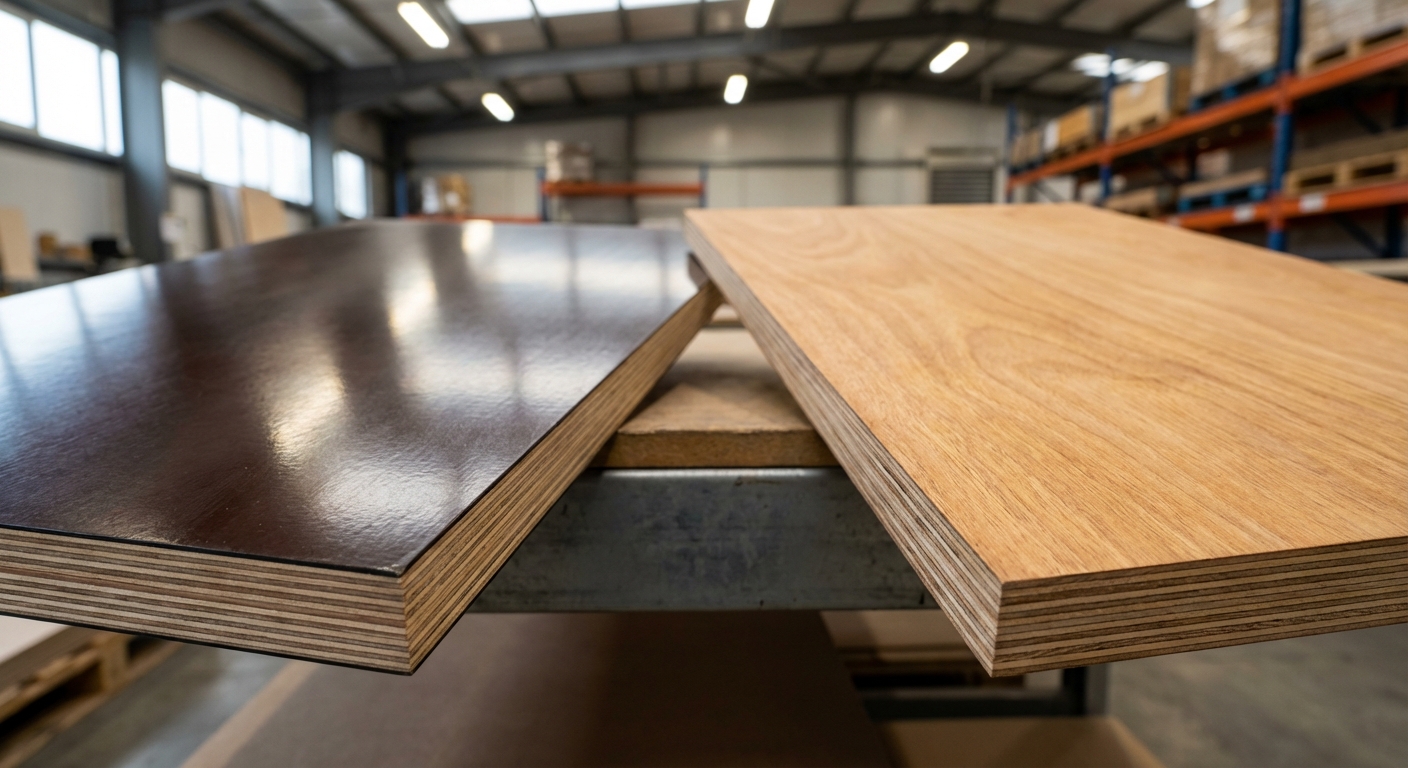
Film-faced plywood and marine plywood both use water-resistant WBP adhesive. That shared bond class is where the overlap stops. Film-faced panels carry a phenolic face film built for concrete formwork: clean release, smooth cast surfaces, and reuse across pour cycles. Marine plywood is a void-free core panel for permanent wet duty — boats, docks, outdoor joinery — with no pour film on the face.
Mixing them up burns money. Specifying marine for formwork raises sheet cost, roughs up the concrete face, and wastes reuse. Putting film-faced into a permanent wet structure asks a pour panel to do a job it was never designed for. Match the product to the job. Vinawood has manufactured plywood in Vietnam since 1992 and ships about 5,000 containers a year to 55+ countries.
Film-faced plywood in one screen
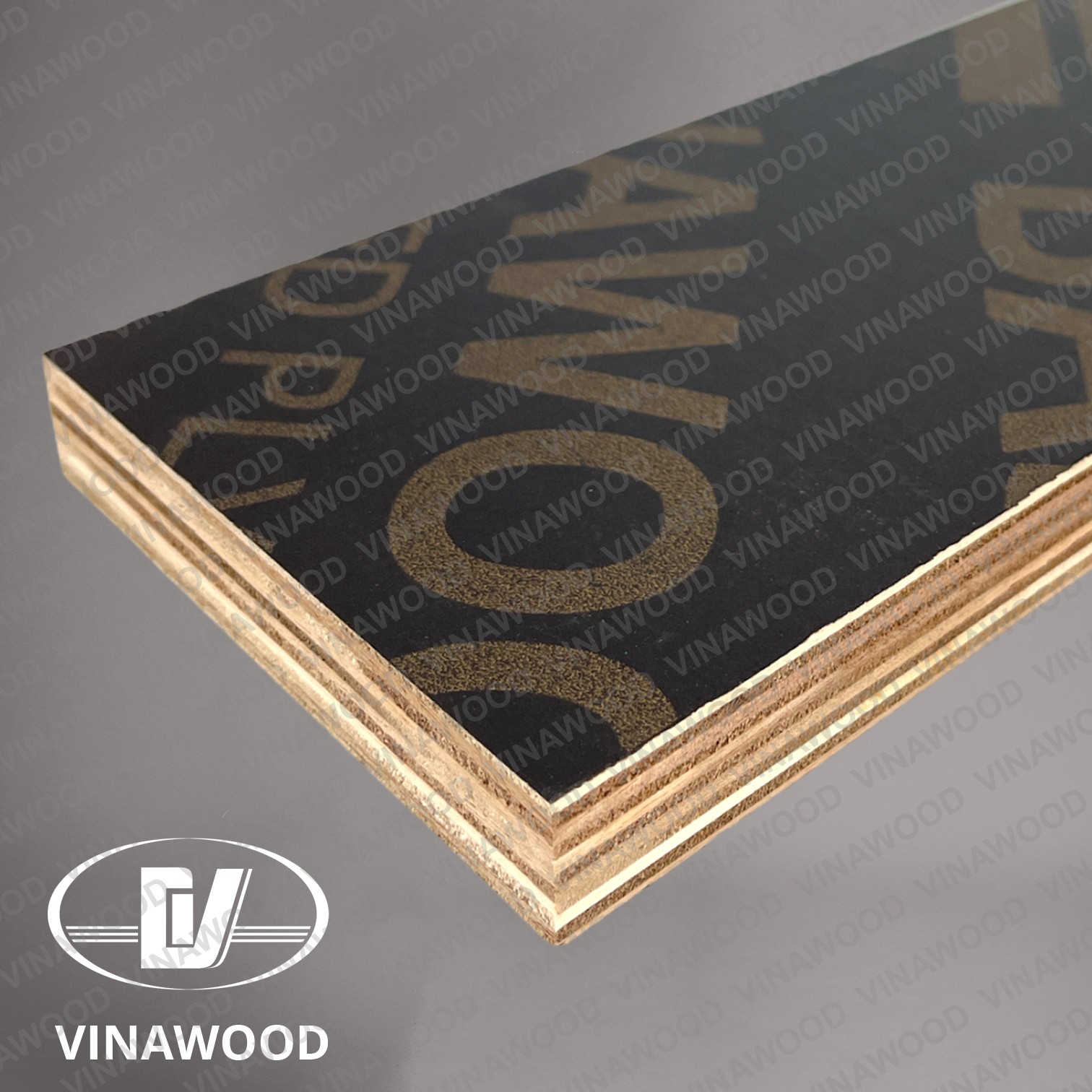
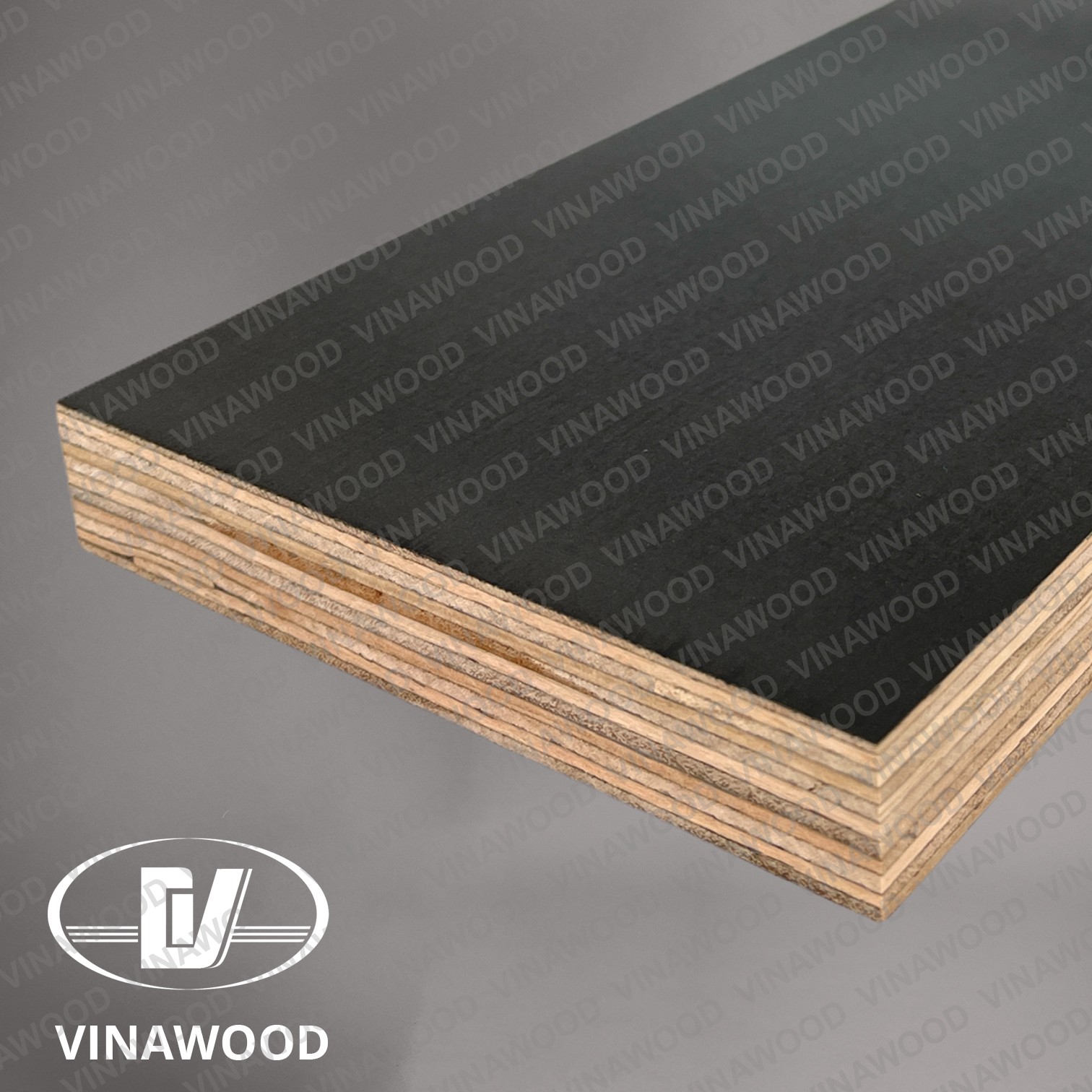
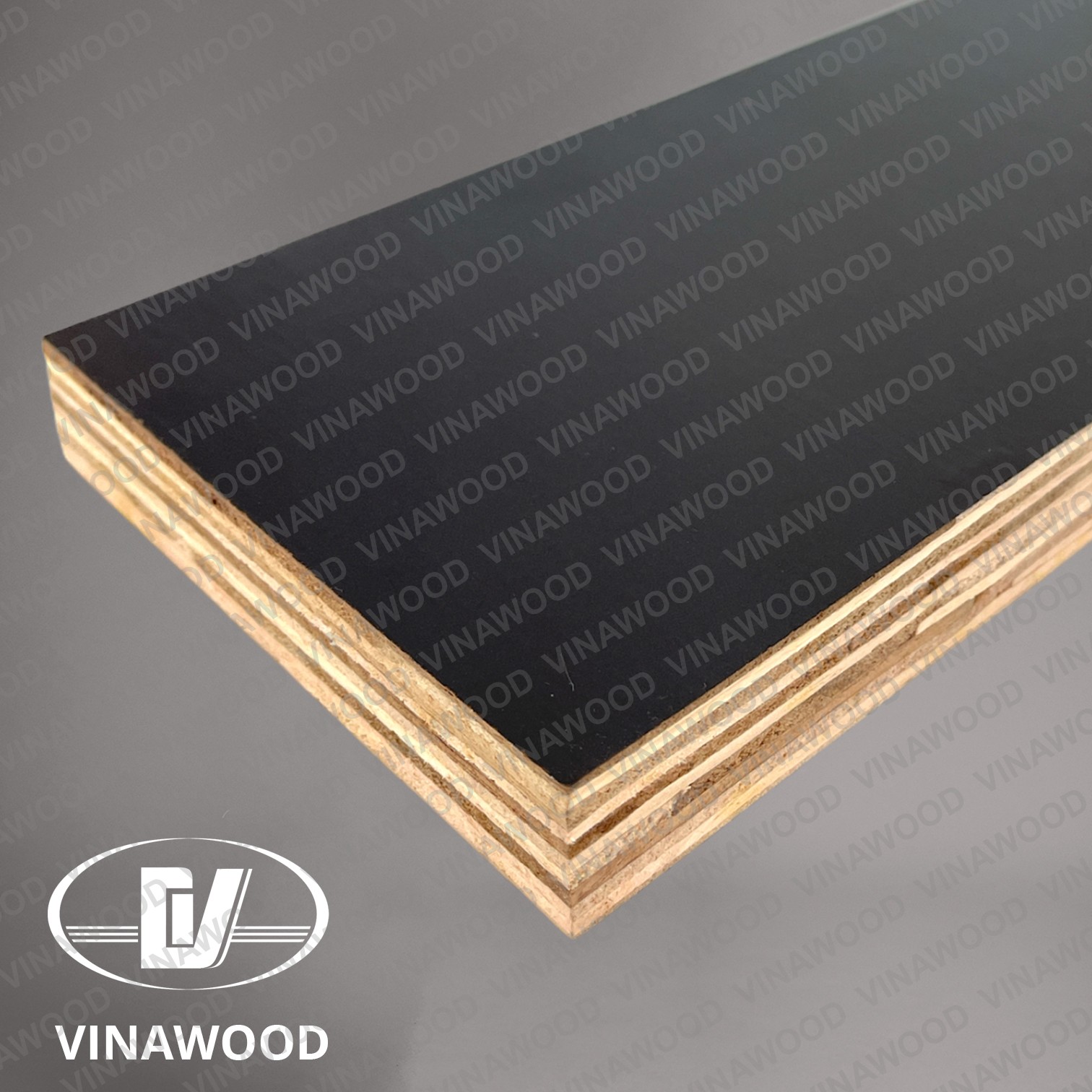
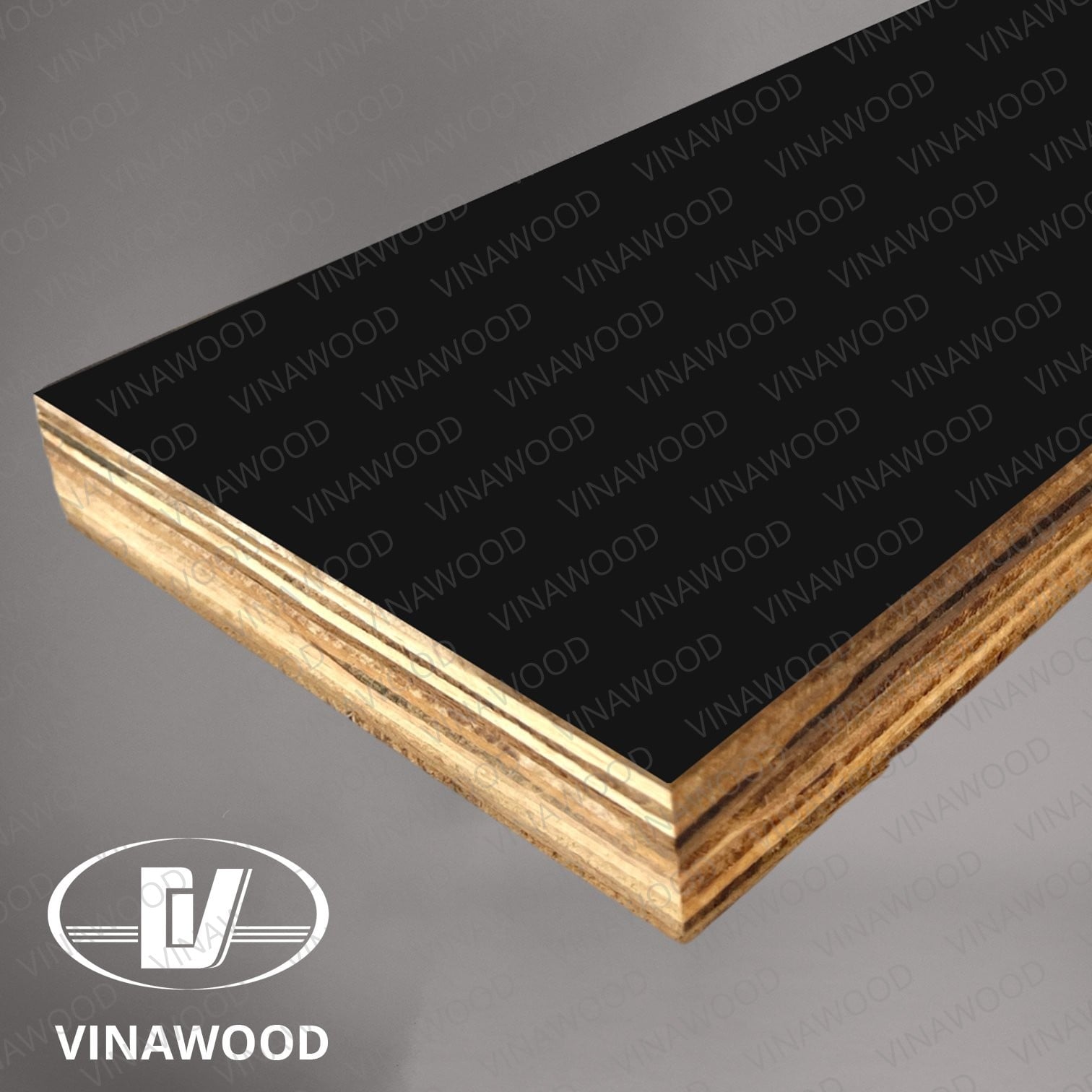
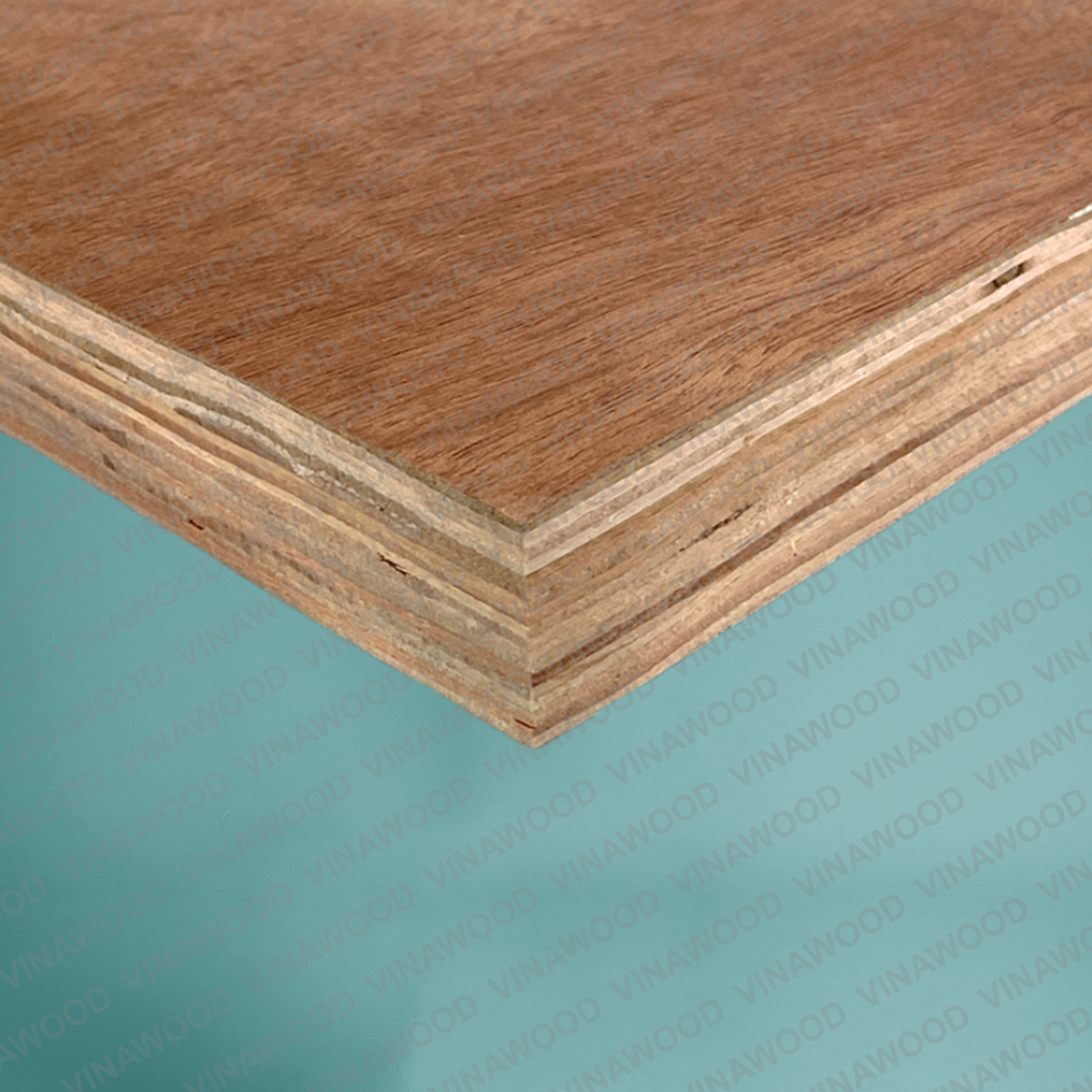
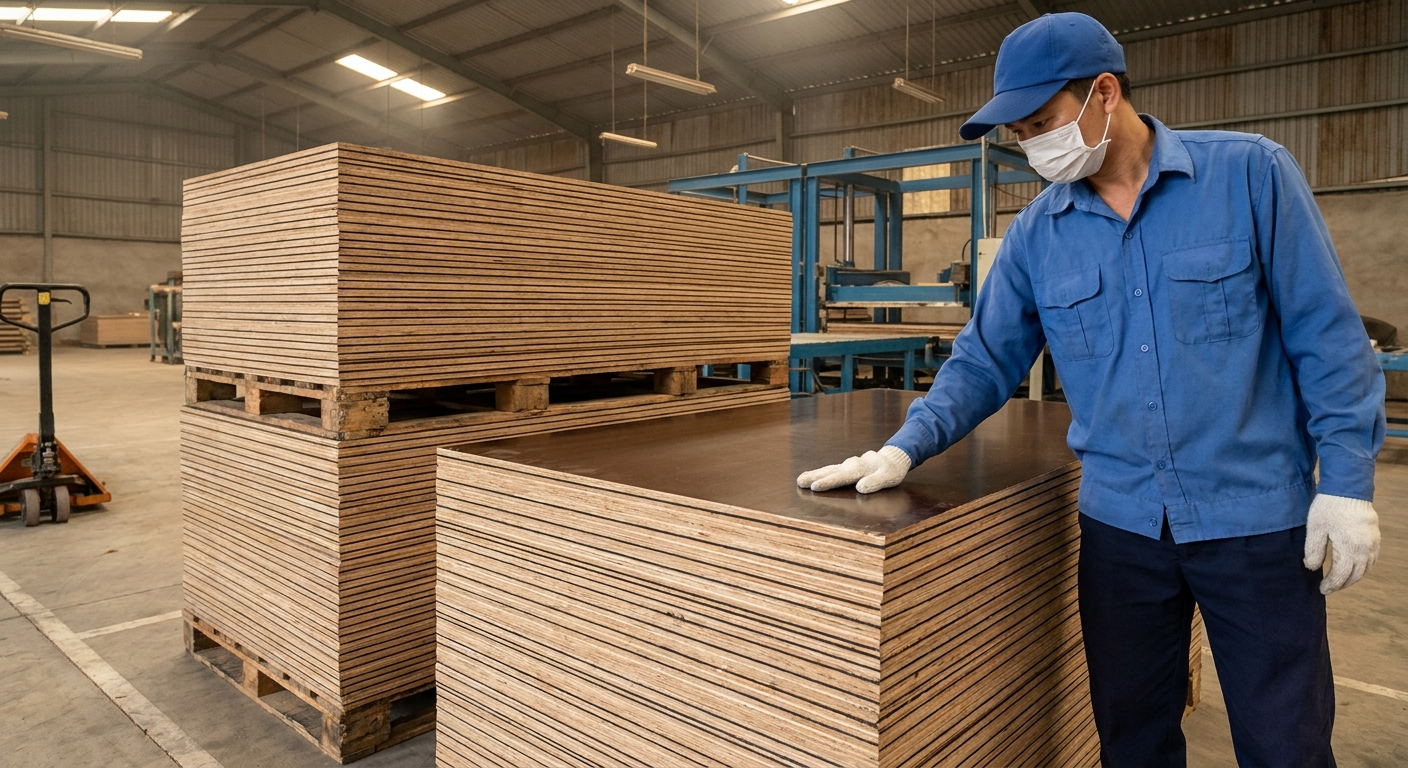
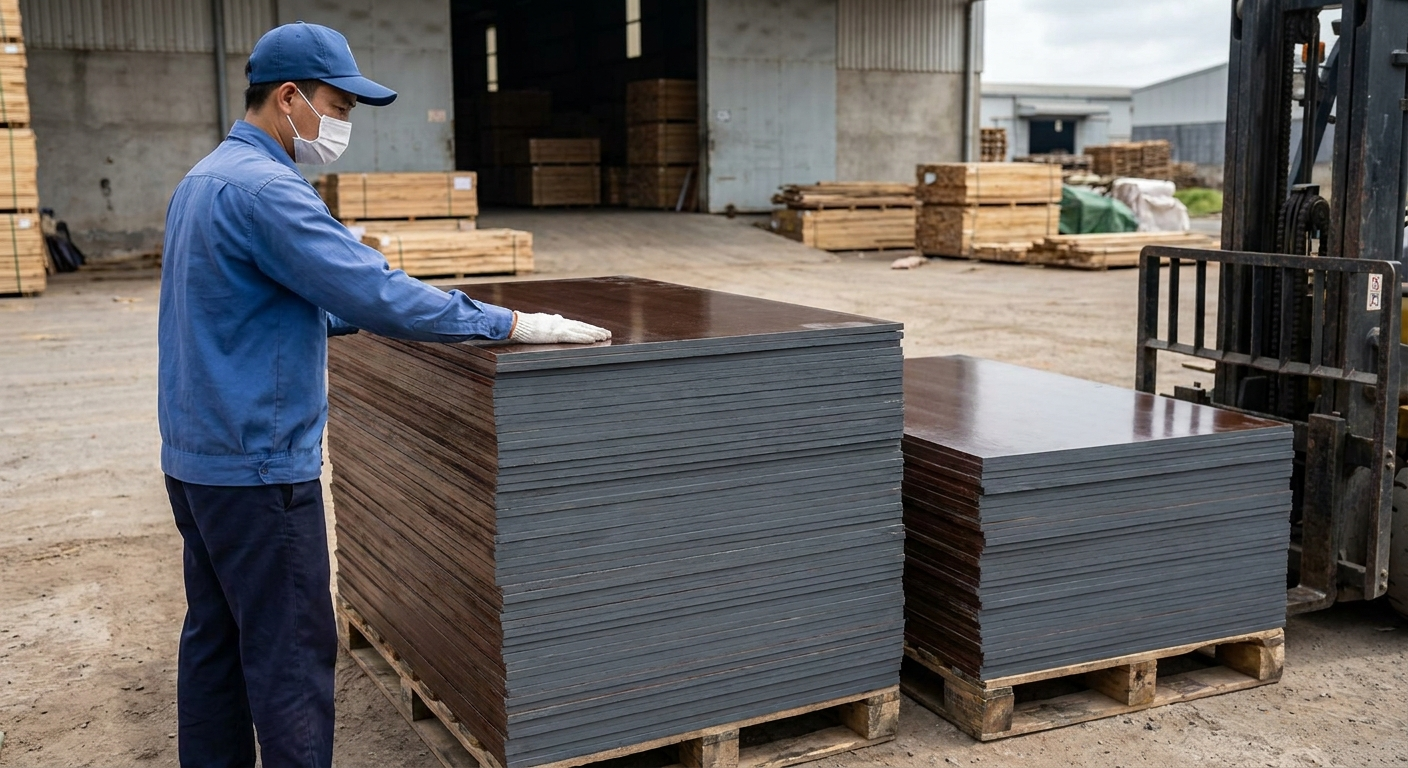
Film-faced plywood is a hardwood veneer panel with a phenolic resin face film on one or both sides. Film weights commonly sit between 120 g/m² and 220 g/m². The film seals the face, resists wet concrete, and releases cleanly after cure. The core is cross-laminated plantation-grown hardwood bonded with WBP adhesive — either MUF (melamine-urea-formaldehyde core glue) or PF (phenol-formaldehyde), depending on grade.
Formwork is the primary job. The phenolic face film stops concrete from locking onto the panel, transfers a smooth finish to the pour, and shields the core between cycles. Premium grades reach up to 20 reuses when stripping and edge care stay disciplined. Published reuse figures come from mill product fields (maximum repetition), not from a brochure guess — and mid-funnel compare tools on this site read the same PIM glue class and reuse values.
European buyers usually see EN 636-2 (humid) or EN 636-3 (exterior) on the data sheet, with CE marking for construction use. Regional labels include phenolic plywood, shuttering plywood, and formwork plywood. Face film and core glue are separate specs. Do not read one as the other. Our melamine vs phenolic film-faced guide walks that split. For phenolic grades and film weight detail, see the phenolic plywood guide.
Marine plywood in one screen
Marine plywood is a structural panel with premium veneers on face, back, and core, bonded with WBP phenolic adhesive. The defining trait is a void-free core: every ply is graded to cut internal gaps and knot holes where water could sit and start rot.
Permanent wet exposure is the home turf — hulls, transoms, decks, docks, jetties, outdoor furniture, wet-area substrates. Governing references include BS 1088 internationally and AS/NZS 2272 in Australia.
Marine plywood does not wear a phenolic pour film. "Marine" names core quality and bond, not a surface overlay. The face is bare sanded veneer, usually B-grade or better. That helps painting and laminating. It hurts formwork, where you need a sealed, non-stick face. Browse Vinawood's marine plywood collection for Marine Standard and Marine Extra.
Key differences at a glance
| Feature | Film-faced plywood | Marine plywood |
|---|---|---|
| Surface | Phenolic resin film (smooth, sealed) | Bare sanded veneer (no film) |
| Core quality | Construction-grade veneers for formwork | Void-free, B-grade or better on all plies |
| Adhesive | WBP (MUF or PF, grade-dependent) | WBP phenolic (always) |
| Primary use | Concrete formwork | Boats, docks, permanent wet environments |
| Reusability | Up to 8–20 cycles by grade | Not designed as a pour-cycle panel |
| Concrete finish | Smooth, sealed film face | Wood grain transfers to concrete |
| Moisture behavior | Water-resistant film face; edges need sealing; WBP core glue | Core-level durability; all plies resist moisture |
| Typical thickness | 12–21 mm | 6–25 mm |
| Relative cost | Lower at equal thickness for formwork duty | Higher (void-free veneer selection throughout) |
Is film-faced plywood waterproof? No. Call it water-resistant. The face film and WBP glue handle cyclical wet exposure on site. Permanent submersion and decades of outdoor structural duty still belong to marine-grade core construction.
When to choose film-faced plywood
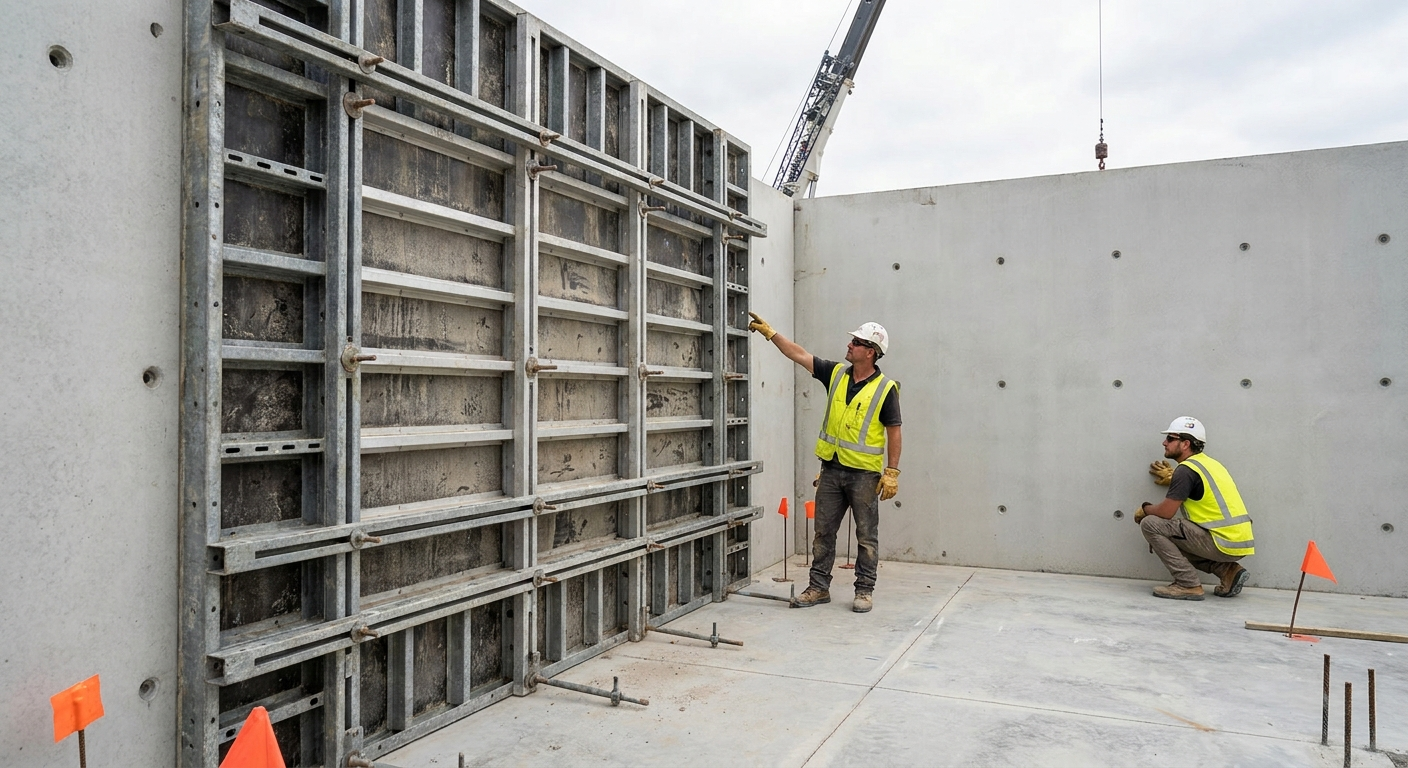
Choose film-faced whenever concrete forming is the job: wall forms, slabs, columns, foundations, precast casting. Reuse economics and strip discipline matter here. Industrial floors, trailer decks, and temporary site enclosures also fit when you need a smooth, abrasion-resistant face for a temporary or semi-permanent run.
Vinawood's film-faced ladder runs by glue class and reuse envelope (PIM maxima):
- Eco Form Plus — WBP MUF, EN 636-2, up to 8 reuses
- Form Basic — WBP MUF, EN 636-2, up to 10 reuses
- Form Extra — Superior Glue MUF, EN 636-2 (not Class 3), up to 15 reuses; same phenolic face film family as Form Basic, longer life from glue chemistry
- Pro Form Lite — WBP phenolic, EN 636-3 / Class 3, up to 15 reuses, PF mid-ladder between Form Extra and Pro Form
- Pro Form — WBP phenolic, EN 636-3 / Class 3, up to 20 reuses
HDO Basic reaches up to 10 reuses. HDO Premium / Premium HD reaches up to 20. Only Pro Form, Pro Form Lite, HDO Standard and HDO Premium are Class 3; HDO Basic is Class 2. P-Form is polypropylene, not Pro Form. Consply is commercial Bintangor, not film-faced.
Full sizes and overlays sit in the film faced plywood collection. For North American formwork overlays, buyers often specify HDO or MatteFace Plywood (MTF). Buyers often search MatteFace as MDO formwork plywood. MatteFace is a matte phenolic surface film for formwork only. Keep MDO wording on ranking comparison pages. More formwork technique sits in the concrete formwork guide.
Wrong product, wrong bill. Using marine on forms burns premium core cost for a finish the bare face cannot deliver. Using a Class 2 MUF panel where the engineer wrote EN 636-3 fails the bond class on paper before the first pour.
When to choose marine plywood
Choose marine when the panel stays wet for years and structural integrity, not pour cycles, is the priority. The void-free core blocks internal moisture pockets that rot standard cores over time.
Core uses: boat building, docks and jetties, long-life outdoor furniture, bathroom and wet-area substrates, exterior joinery that is a permanent member rather than a temporary form.
Vinawood offers Marine Standard Plywood for general marine and outdoor work, and Marine Extra Plywood with premium keruing faces for harder marine duty. Both use WBP adhesive and a void-free hardwood core. For adjacent marine vs commodity framing, see marine plywood vs regular plywood.
Can you use marine plywood for formwork?
You can pour against it. You should not plan to.
Without a phenolic film, wet concrete grips bare wood. Stripping gets messy and often scars both the concrete and the panel. The finish shows veneer grain — wrong for smooth or architectural faces. Marine also costs more per sheet at equal thickness, yet the bare face wears out faster under repeated concrete contact than a film-faced grade built for reuse.
Film-faced is engineered for formwork: cleaner finish, easier strip, more cycles at a lower total program cost. If a project needs both forming panels and marine structural panels, specify each for its job. Do not force one sheet to cover both.
Adhesive and bond class
Both families use WBP adhesive. Marine panels stay on WBP phenolic for long water exposure. Film-faced panels split by grade.
Form Basic, Form Extra, and Eco Form Plus use WBP MUF and sit in EN 636-2 / Class 2 — humid conditions and standard formwork. Form Extra is Superior Glue MUF, not phenolic Class 3. Pro Form Lite, Pro Form, HDO Standard and HDO Premium use WBP phenolic and sit in EN 636-3 / Class 3; HDO Basic sits in EN 636-2 / Class 2. When a spec calls for Class 3 or EN 636-3, do not substitute Form Basic or Form Extra.
I still see RFQs that say "phenolic" when the buyer only wants a dark film face. Ask for the EN 636 line on the data sheet. Film color is not bond class.
Edge sealing still matters on film-faced sheets. The face film covers the broad faces; cut edges and drilled holes are the usual moisture paths between pours. Seal edges before the first pour, strip in the post-pour window, and store panels flat off the ground. That discipline is what lets catalogued reuse numbers hold up on site. Timing the strike itself is a separate calendar decision — see our guide on formwork removal time when the crew is planning vertical vs slab releases.
Film weight is another RFQ lever. Lighter films suit short commercial programs. Heavier films help longer reuse and fair-face work. Pair film weight with the correct core glue class — a heavy film on an EN 636-2 MUF panel does not turn it into Class 3. Pro Form Lite and Pro Form already carry WBP phenolic cores when the engineer names exterior bond.
Size and thickness follow the form system, not habit. Many EU buyers prefer 2500×1250. North American gangs often stay on 1220×2440. Common formwork thicknesses run 12–21 mm. State size and thickness on the RFQ so mill packing and container loading match the site plan.
Procurement language should name the glue class, not just the face. Write EN 636-2 or EN 636-3 on the RFQ. Add the target reuse band and whether the pour is covered or weather-exposed. That three-line spec stops a mill from substituting a cheaper MUF core under a phenolic face when the engineer named Class 3.
Field crews still decide whether catalogue reuse numbers hold. Crowbars on strip day, unsealed cut edges, and panels stacked in standing water erase the chemistry advantage of either glue class. Train the strip crew and the store yard together. The panel grade alone cannot carry a sloppy form cycle.
Catalogue reuse vs site care
Every published reuse figure for film-faced grades is a maximum under disciplined conditions. Strip in the post-pour window. Seal edges before first pour. Store flat off the ground.
On a mixed crew with midweek weather, plan 60–80% of the catalogue number. Marine panels are not scored on pour-cycle reuse at all. Comparing "marine longevity" to "formwork reuse" mixes two different life models. One is permanent wet duty. The other is repeated concrete contact and release.
North America note
Formwork and PS-structural plywood are outside the Vietnam hardwood CVD final determination dated 21 Jul 2026. That is a product-class exclusion, not a blanket duty-free claim. MatteFace stays a formwork surface conversation only.
Request a quote checklist
Send application first: formwork reuse program or permanent marine wet duty. Then overlay: film-faced grade ladder, HDO, or MatteFace for NA formwork. Then bond class: EN 636-2 vs EN 636-3. Add film weight where the catalog lists it, thickness, and sheet size (1220×2440 or 2500×1250). Plantation-grown veneers. Water-resistant WBP, never waterproof. Start an RFQ at /rfq or /contact?type=quotation.
Category
guides