Formwork Plywood Norway: Forskalingsplater & Forskalingsfiner Supplier Guide
Vietnam film faced plywood supplier for the Norwegian construction market. Vinawood forskalingsplater meet EN 636-2 and EN 636-3 standards, available in 2500×1250mm EU format, shipped FOB Oslo at factory-direct pricing.

Why Norwegian Contractors Are Sourcing Forskalingsplater from Vietnam
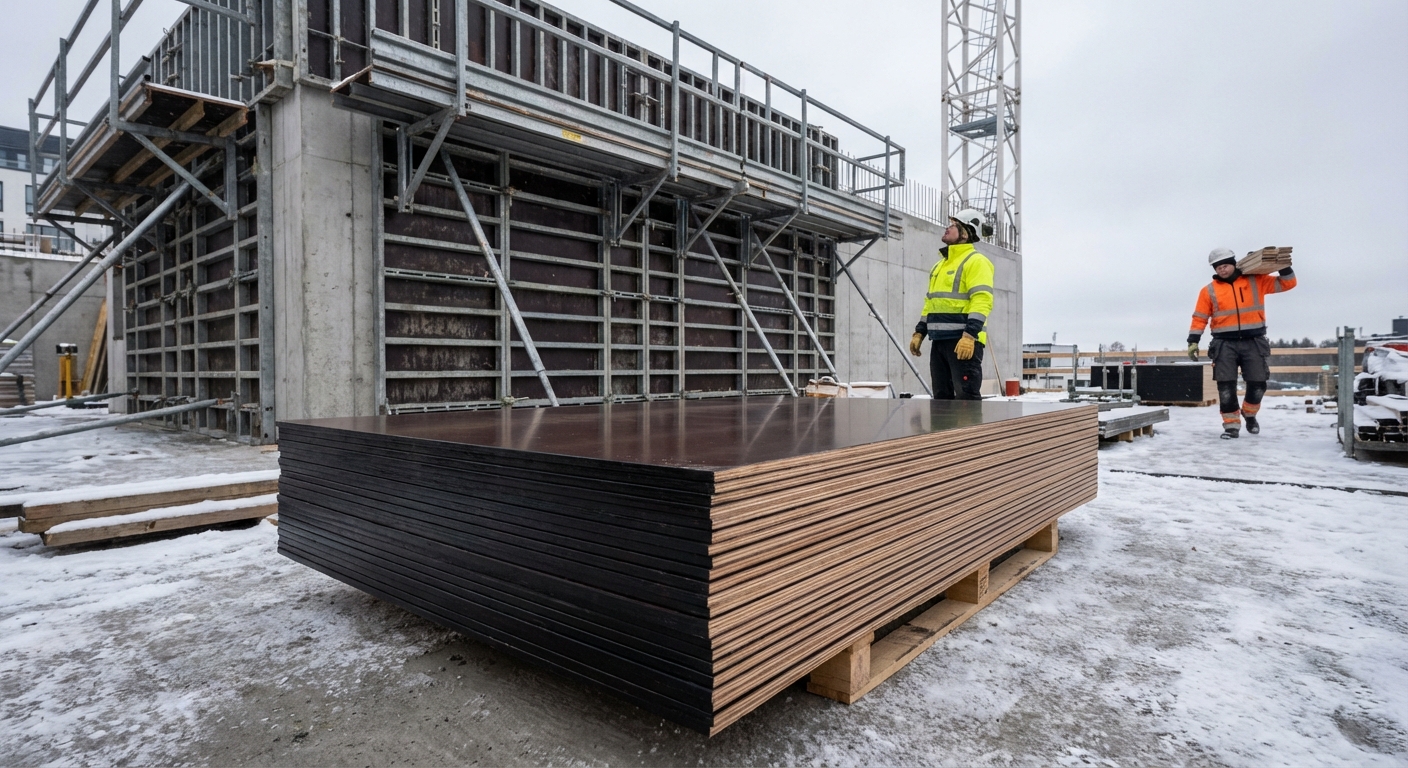
A 21mm forskalingsplate in 2500×1250mm format is easy to buy in Norway. Byggmakker, Optimera, XL-BYGG and Maxbo all keep it on the shelf, and for a small job that is exactly where it should come from. Large-volume buyers see it differently. Anyone forming 500 m² or more on a project starts asking whether the same EN 636-certified panel can come straight from the mill by the container, and that question is what has moved a growing share of Norwegian buyers into direct sourcing.
The retail market itself is fine for small jobs and last-minute top-ups. It just is not built for project economics. Tunnel linings on the E39 coastal highway, foundation slabs in Trondheim and offshore caisson work all run at volumes where buying at the source starts to make sense.
We've been pressing plywood since 1992 and ship to Scandinavia regularly. The product line carries EN 636-2 and EN 636-3 certification, comes in 2500×1250mm EU format, and ships FOB Hai Phong. The rest of this article is what Norwegian procurement managers ask us during the first call.
Norwegian Terminology: Forskaling, Forskalingsplater, Kryssfiner
Norwegian construction terms for plywood panels are specific enough that mis-specifying once on a PO will get the wrong product on the container. Quick reference:
- Forskaling (singular: forskaling): Formwork — the temporary mould system used to shape poured concrete. Forskaling encompasses both the plywood panels (forskalingsplater) and the supporting framework of walers, soldiers, and ties.
- Forskalingsplater (also forskalingsfiner): Formwork boards — plywood panels with a film face used as the concrete-contact surface in formwork systems. The direct equivalent of formwork plywood or shuttering plywood.
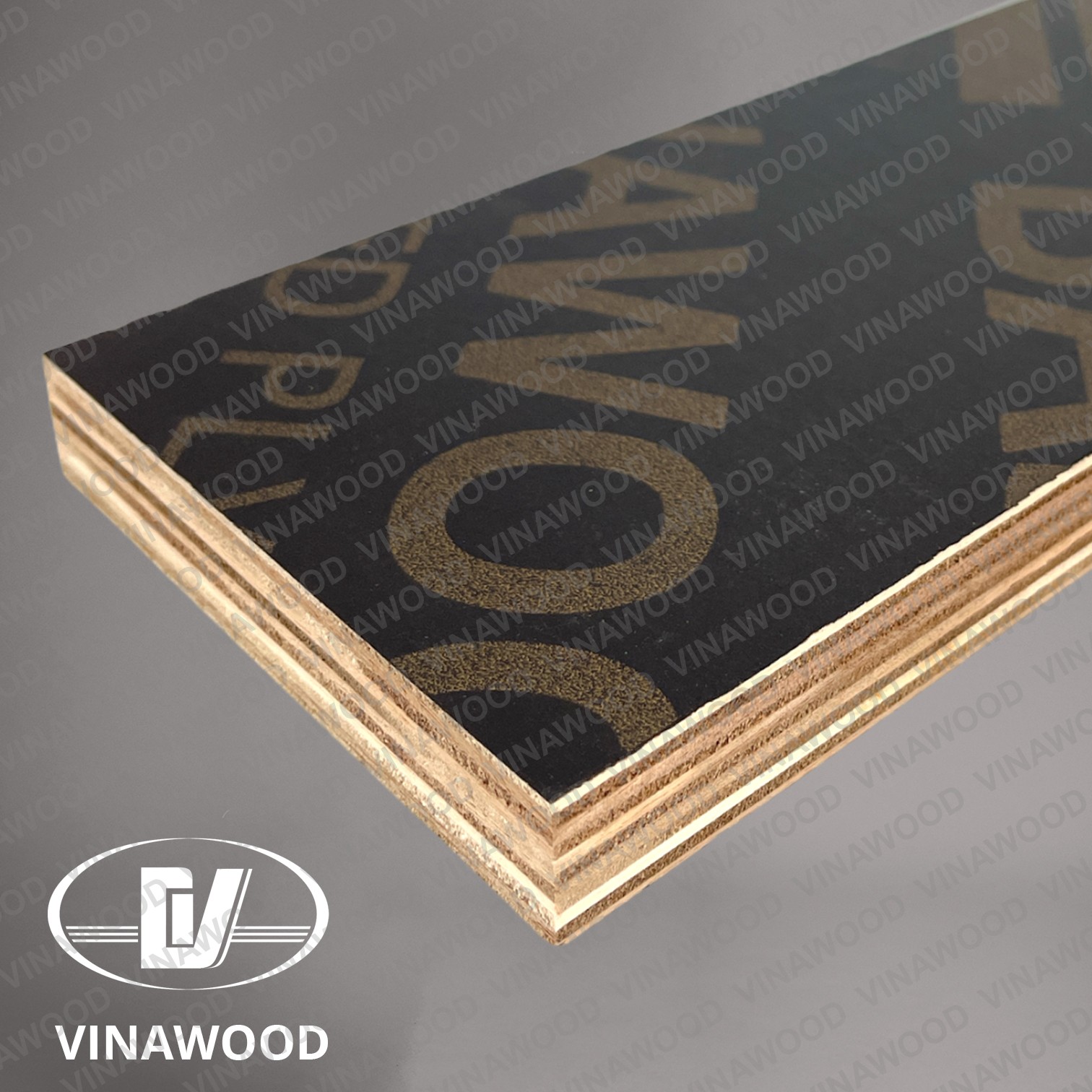
- Filmbelagt kryssfiner: Film faced plywood — plywood with a phenolic resin film bonded to both faces for moisture protection and clean concrete release. This is the product category we manufacture.
- Kryssfiner: The general Norwegian term for plywood, meaning cross-laminated veneer panels. Not all kryssfiner suits forskaling. A forskalingsplate needs an exterior-rated glue line (melamine MUF for EN 636-2, WBP phenolic for EN 636-3) and a protective film overlay.
- Vannfast kryssfiner: Water-resistant plywood. The word describes the bond rather than a guarantee, so check the EN 636 class: a WBP phenolic bond is the Class 3 option for sustained moisture.
- Finer: Veneer — the thin wood layers that make up a plywood panel. Norwegian specifiers may refer to kryssfiner as finerplater (veneer boards).
Specify "filmbelagt forskalingsfiner" with EN 636 certification on the PO and you'll get the right product.
Vinawood Products for Norwegian Construction
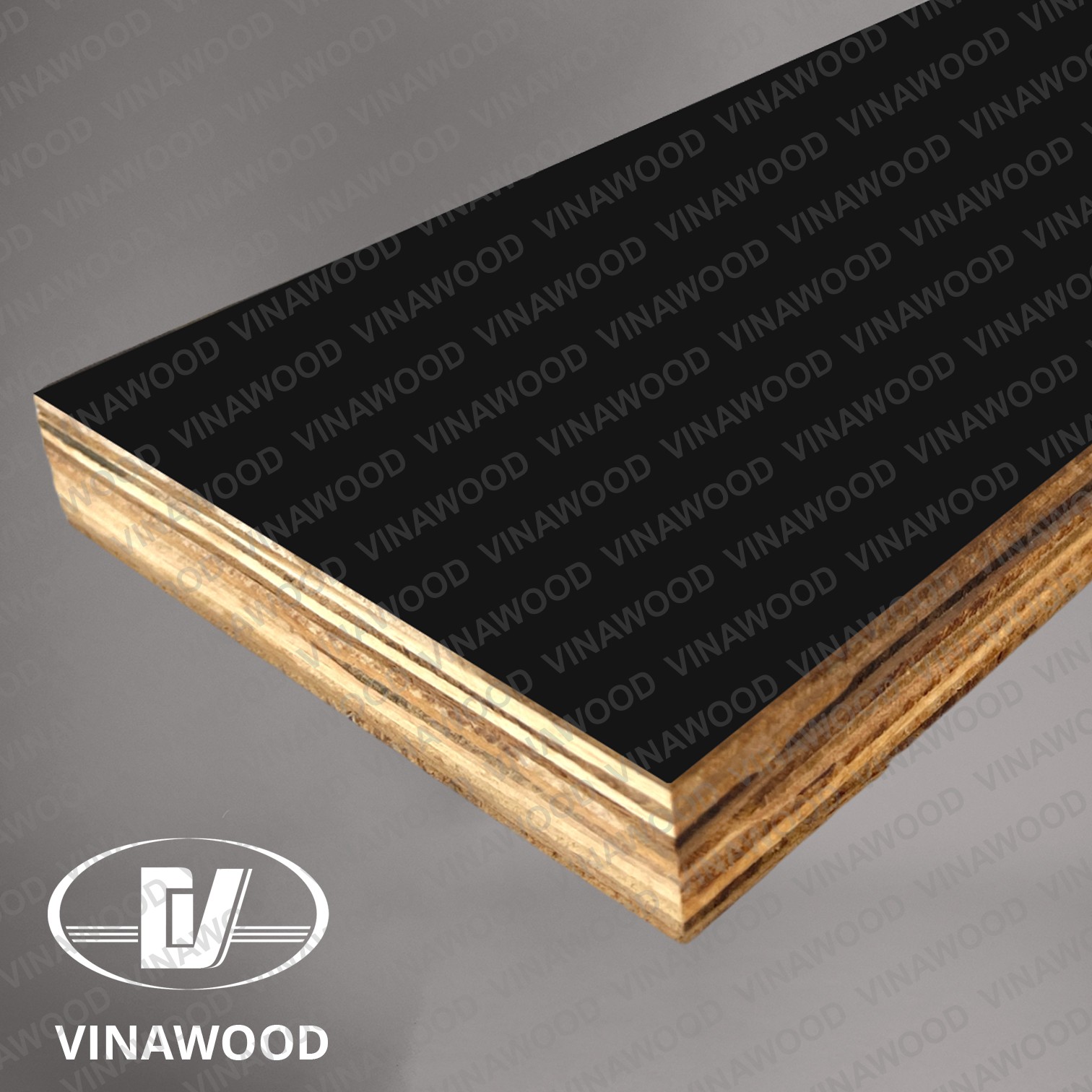
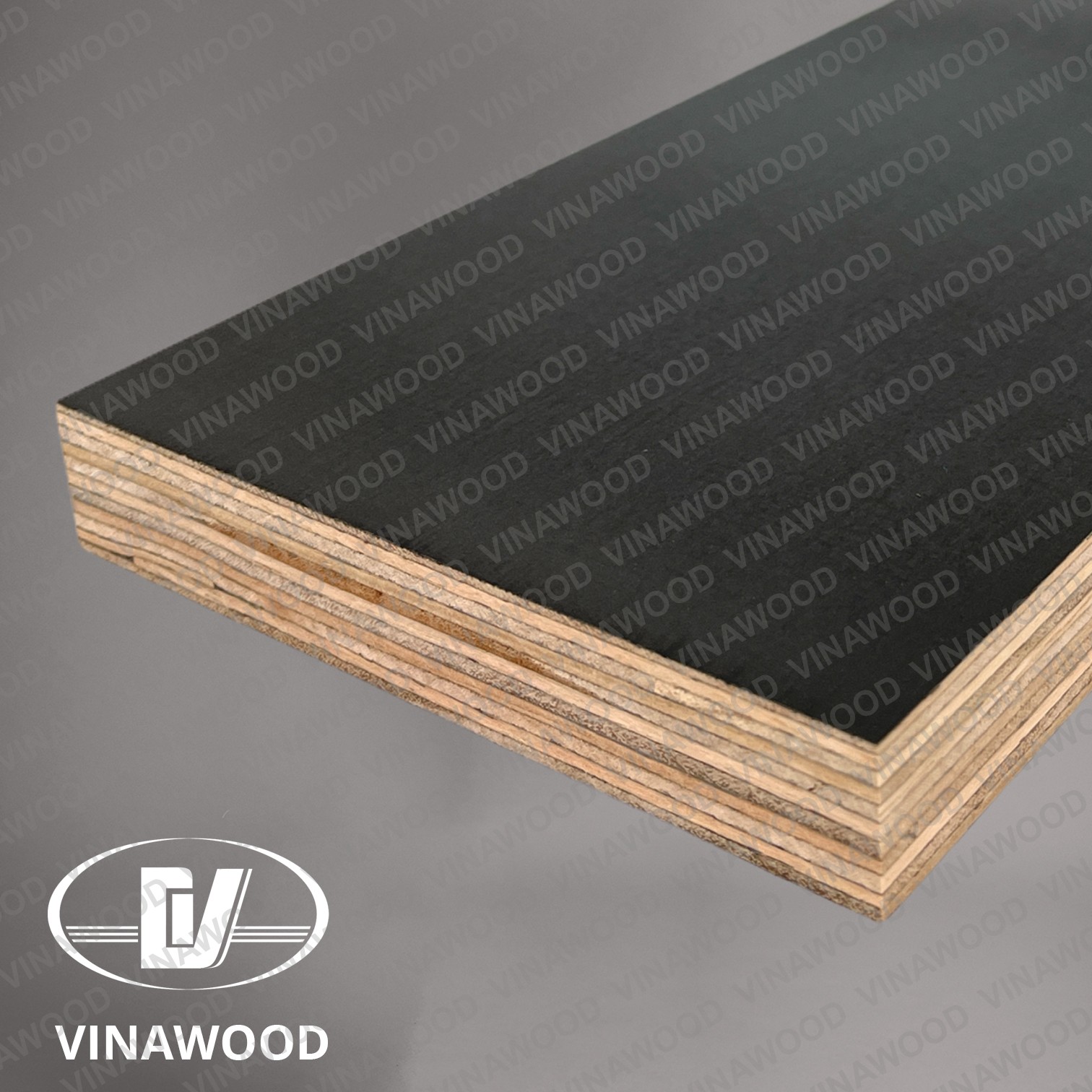
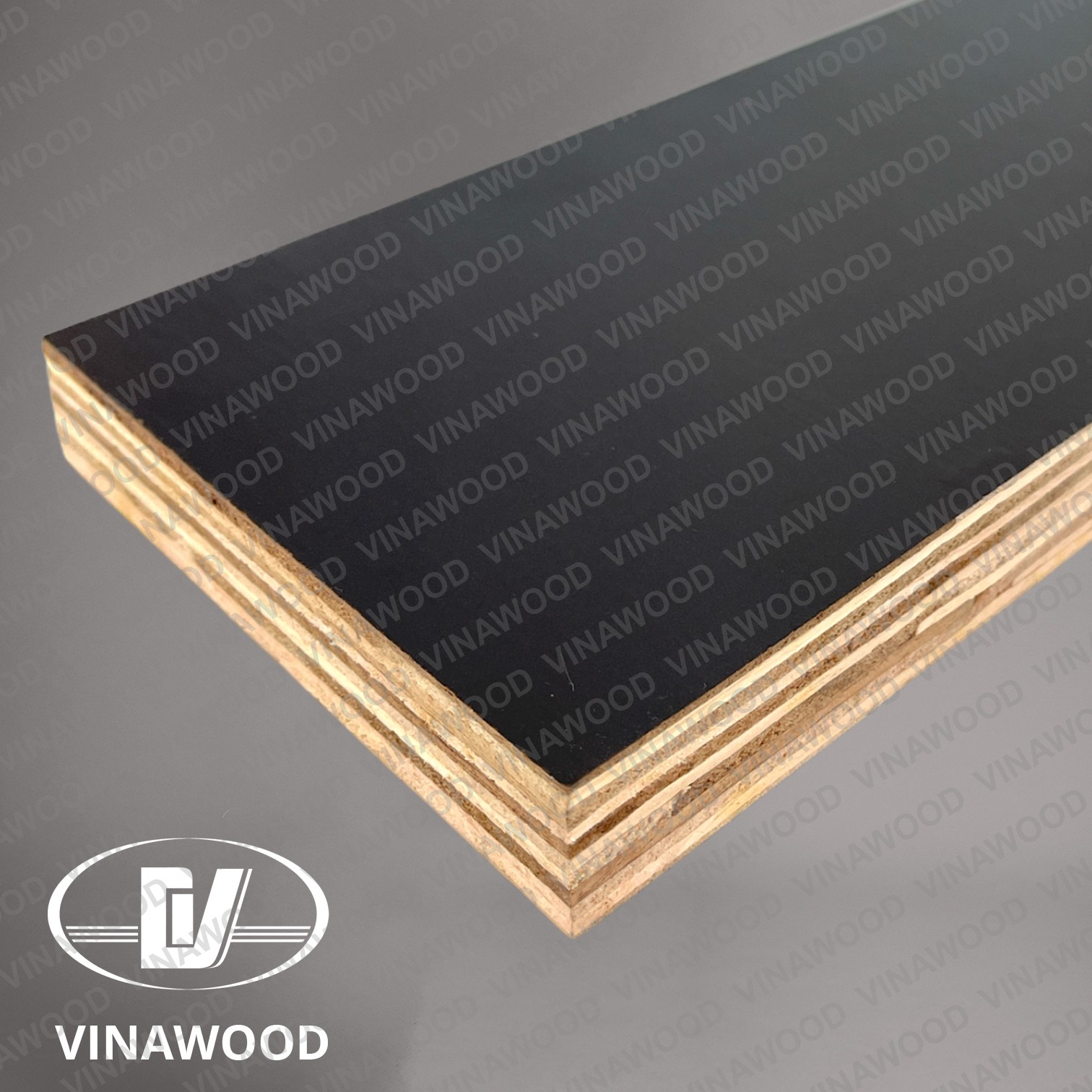
Five film faced plywood grades cover the Norwegian market. The three Class 2 grades (EN 636-2) are bonded with melamine (MUF) glue, while Pro Form and Pro Form Lite are the Class 3 grades (EN 636-3) with WBP phenolic glue. The EU 2500×1250mm sheet is available across the range.
| Product | EN Standard | Glue Type | Face Film | Reuse Cycles | Thickness | Best For |
|---|---|---|---|---|---|---|
| Eco Form Plus | EN 636-2 | Melamine Standard (MUF) | 165 g/m² | Up to 8 | 12–21 mm | Budget residential projects |
| Form Basic | EN 636-2 | Melamine Standard (MUF) | 165 g/m² | Up to 10 | 12–21 mm | Standard commercial forming |
| Form Extra | EN 636-2 | Melamine Top (MUF) | 165 g/m² | Up to 15 | 12–21 mm | Heavy-duty, high reuse |
| Pro Form Lite | EN 636-3 | WBP phenolic | 165 g/m² | Up to 15 | 12–21 mm | Class 3 work at a moderate pour count |
| Pro Form | EN 636-3 | WBP phenolic | 125 g/m² | Up to 20 | 12–21 mm | Tunnels, infrastructure, Class 3 |
All thicknesses available in 2440×1220mm (standard) and 2500×1250mm (EU format). 21mm is the most popular thickness for Norwegian contractors working with standard frame formwork systems.
NS-EN Standards and TEK17 Building Regulations
A Norwegian site will ask about three sets of rules when the panels come from overseas. None of them is hard to meet, but each one needs its paper:
NS-EN 636 — Plywood for Structural Use
Norway adopts European standards through the NS-EN prefix. NS-EN 636-2 covers plywood panels for use in humid conditions; NS-EN 636-3 covers panels for exterior and sustained-moisture environments. Eco Form Plus, Form Basic and Form Extra meet EN 636-2 with a melamine (MUF) glue line, which makes them Class 2. Pro Form and Pro Form Lite meet EN 636-3 with a WBP phenolic glue line, Class 3, and that is the right call for tunnel linings, bridge decks, offshore foundations and anything else with extended outdoor exposure.
NS-EN 13986 — Wood-Based Panels for Construction
EN 13986 is the harmonised standard for wood-based panels in construction across the EU and the EEA. A panel CE-marked under it meets the Construction Products Regulation (CPR), and Norway, as an EEA member, accepts that marking through its DOK rules (Dokumentasjon av byggevarer). In practice the Declaration of Performance is the document your site manager will want to see.
TEK17 — Norwegian Building Regulations
Byggteknisk forskrift 2017 (TEK17) is the main Norwegian building regulation. It does not name a plywood standard. What it asks for is proper CE marking on structural and semi-structural materials, and EN 636 plus EN 13986 covers that. For fire, standard film faced plywood is Euroclass D-s2,d0 under EN 13501-1.
Formaldehyde Emissions
Formaldehyde emission class is stated per grade on the mill certificate. The phenolic grades, Pro Form and Pro Form Lite, are listed at E1, while the melamine (MUF) bonded Class 2 grades are listed at E2, so name the class your project needs on the enquiry and we confirm it on the quotation. For BREEAM-NOR projects that set an emission requirement, put it on the enquiry. Vinawood also holds CARB P2 and TSCA Title VI certification, plus FSC-COC and PEFC chain-of-custody certification.
Cold-Climate Performance: Formwork Plywood in Norwegian Conditions
Buyers from warmer markets often underestimate what a Norwegian winter does to a panel. Here is what we see go wrong:
- Freeze-thaw cycling: Panels in Norwegian winter conditions hit repeated freeze-thaw cycles. Both glue lines, melamine (MUF) on the Class 2 grades and WBP phenolic on the Class 3 grades, hold their bond through it, but storage matters — saturate a panel and freeze it, and you can develop micro-delamination at veneer interfaces before the panel ever sees concrete.
- Low-temperature concrete curing: Norwegian winter pours run heated formwork or insulated blankets, so panels can be in contact with warm concrete on one face and sub-zero air on the other. That thermal gradient stresses the bond. Pro Form, with its EN 636-3 water-resistant phenolic bond, is the panel for those pours.
- Extended stripping times: Cold weather slows curing, and panels stay in position 3–7 days rather than the 1–2 typical in warm climates. An exterior-rated bond is non-negotiable here, ideally a WBP phenolic Class 3 panel. MR (moisture-resistant, interior-grade) panels would delaminate inside that window.
- Snow and rain exposure: Panels left on site get rain one week and snow the next. Store them flat on bearers, off the ground, under a tarpaulin. Edge sealing after every site cut is the other half of the job — moisture enters through exposed core veneers first.
Vinawood panels run plantation-grown Acacia and Eucalyptus cores from Vietnamese mill plantations. Both are denser than many temperate species, which buys some moisture resistance and dimensional stability margin under Norwegian site conditions.
Formwork Applications in Norwegian Construction
Where Vinawood forskalingsplater actually go on Norwegian projects:
- Residential foundations (grunnmur): 18–21mm panels for strip and raft foundations on enebolig and apartment blokk. Form Basic at up to 10 reuses handles most residential forming economically.
- Commercial slab forming (dekkeforskaling): 21mm panels for floor slab pours in multi-storey commercial and residential buildings. The film face releases cleanly and cuts stripping time on the tight Scandinavian schedules.
- Tunnel construction: Norway runs the world's highest density of road tunnels per capita. Tunnel lining formwork sits on continuous moisture exposure with extended stripping times — EN 636-3 Class 3 panels are the spec. Pro Form at up to 20 reuses, with its WBP phenolic glue line, is what we ship for that work.
- Bridge and infrastructure (bru og infrastruktur): The E39 coastal highway and the regional bridge programmes keep a steady call on heavy-duty panels. 21mm panels in Pro Form grade carry the structural loads and exposure conditions.
- Offshore energy support structures: Oil, gas and offshore wind all need concrete somewhere, whether in gravity-based structures, caissons or the onshore yards that support them. EN 636-3 Class 3 panels are the standard specification for marine-adjacent applications.
Logistics: Shipping Forskalingsplater from Vietnam to Norway
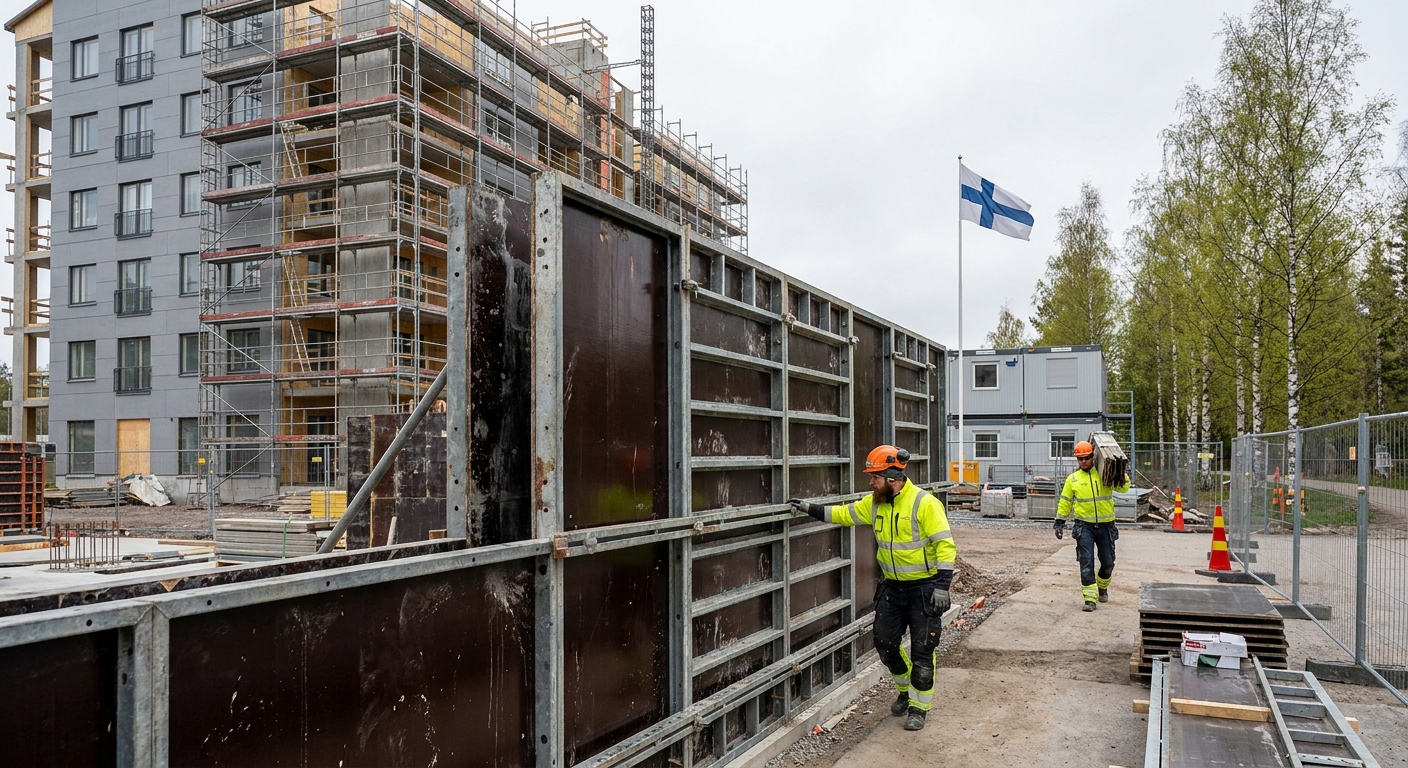
We ship film faced plywood to Scandinavian ports regularly, including existing customers in Sweden, Finland, and Denmark. Hai Phong to Oslo runs about 28–35 days via Singapore or Port Klang transhipment. Bergen is 30–37 days. For projects on the western coast, Bergen routes more directly.
Standard terms are FOB; CIF Oslo or Bergen is available on request. HS heading 4412 (plywood) applies, and the exact subheading follows the face veneer species declared on the commercial invoice. Order size, container loading and payment terms, including any deposit, are confirmed on your quotation, and Letters of Credit are accepted.
If this is your first direct container, we can introduce you to forwarders who know the Vietnam to Scandinavia lanes and Norwegian customs. Every shipment carries English paperwork: mill certificates, EN 636 test reports, the Declaration of Performance and the phytosanitary certificate. One point catches people out. Norway is in the EEA but not in the EU customs union, so the goods clear under Norwegian rules, and your forwarder should confirm any duty under HS 4412 before the container sails.
Request a Quote for Forskalingsplater — FOB Oslo
Vinawood supplies formwork plywood to construction companies and timber importers across Norway and Scandinavia. Certified EN 636 forskalingsplater direct from the mill with full documentation. The European formwork range:
- Pro Form — EN 636-3, up to 20 reuses, WBP phenolic glue (Class 3), 125 g/m² film
- Pro Form Lite — EN 636-3, up to 15 reuses, WBP phenolic glue (Class 3), 165 g/m² film
- Form Extra — EN 636-2, up to 15 reuses, 165 g/m² film over a Melamine Top (MUF) core
- Form Basic — EN 636-2, up to 10 reuses, standard commercial forming
- Eco Form Plus — EN 636-2, up to 8 reuses, best value
Category
guides
Related Markets
Related Products
▶Sources & References (3)
- NS-EN 636: Plywood Specifications — CEN European Committee for Standardization (Norwegian adoption: Standard Norge) (2012-01-01)
- NS-EN 13986: Wood-based panels for use in construction — CEN European Committee for Standardization (2004-01-01)
- TEK17 — Byggteknisk forskrift 2017 — Norwegian Directorate of Building Quality (DiBK) (2017-07-01)