MDO vs MDF: Differences, Costs & When to Use Each Panel
MDO vs MDF for cabinets, signs, and formwork — a side-by-side comparison covering composition, weight, moisture resistance, screw retention, cost, and a decision matrix to spec the right panel for every project.
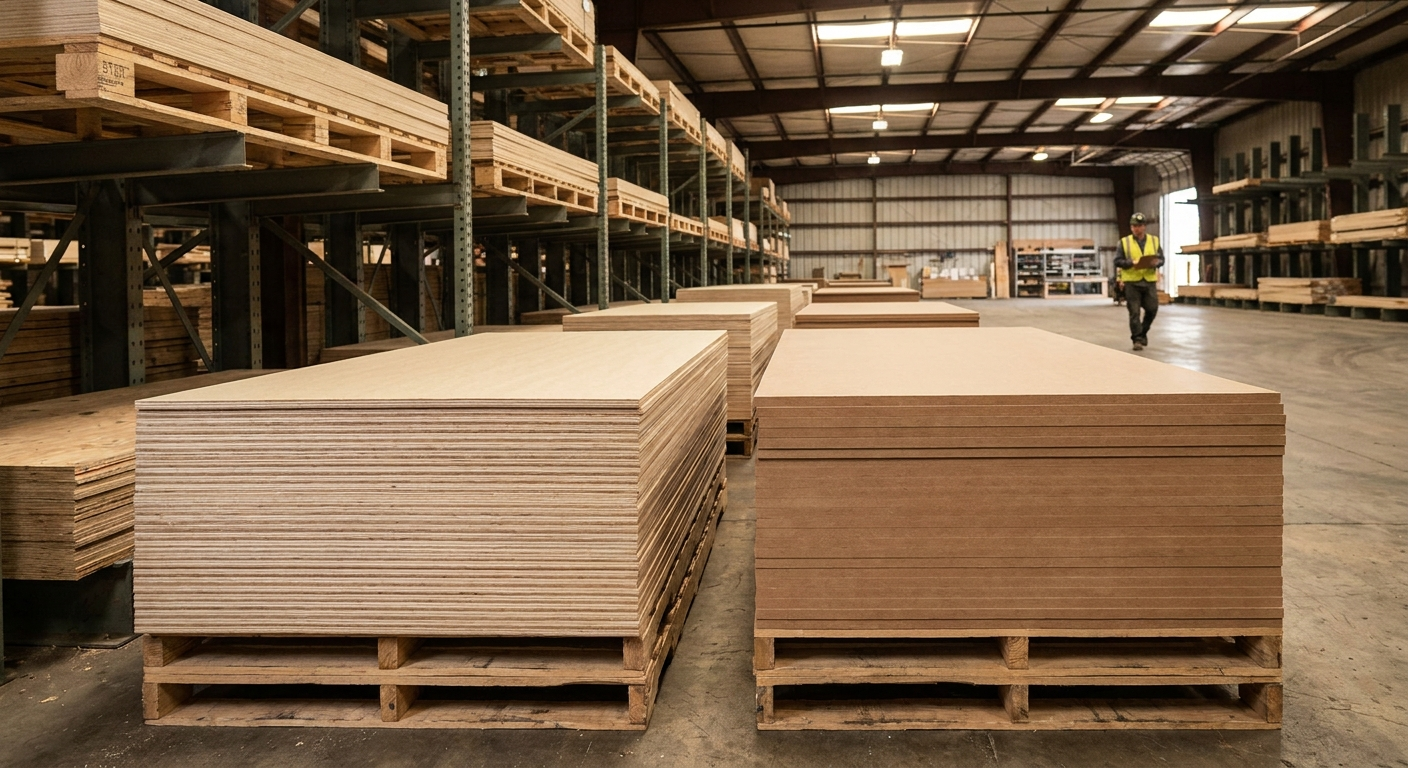
The thirty-second answer is short. MDO is plywood with a resin-paper overlay; MDF is compressed wood fiber. MDO is exterior-grade, lighter, stronger, more expensive. MDF is interior-only, denser, cheaper, smoother to paint. Use MDO for outdoor sign panels, soffits, fascias, and humid-area cabinets. Use MDF for indoor cabinet doors, moldings, and detailed routed work where the substrate will live in a climate-controlled room.
The longer answer is what most contractor-targeted SERPs miss. Both panels paint well. Both are smooth. Both come in 4×8 sheets. Where they diverge is structural behaviour and moisture response, and that's where mismatched specs cost real money. A cabinet shop ordering MDF for a bathroom vanity is buying a three-to-five-year furniture piece, not a fifteen-year one. A sign painter ordering MDO for a barn-wall display is paying for performance the application will never use. Both are mistakes. The decision framework below sorts them out.
Quick reference: MDO vs MDF compared
| Property | MDO Plywood | MDF |
|---|---|---|
| Composition | Plywood core + resin-impregnated kraft paper overlay | Compressed wood fibres + UF or MUF binder, uniform throughout |
| Density | 500–600 kg/m³ (softwood core) | 700–850 kg/m³ (denser) |
| Weight, 4×8×3/4″ | ~60 lb / 27 kg | ~95 lb / 43 kg |
| Moisture resistance | Exterior-rated (WBP adhesive); needs sealed edges | Interior only; fibres swell irreversibly when wet |
| Exterior use | Yes, with primer + paint | No (MR-MDF is for damp interiors only) |
| Paintability | Excellent; durable under weather | Excellent; no grain telegraphing |
| Screw holding | Like plywood: good with pilot holes | Face screws OK; edge screws split readily |
| Routed/machined edge | Plywood layers visible at the edge | Smooth; ideal for shaped profiles |
| Cost per 4×8×3/4″ (US 2026) | $75–$110 (1S); $95–$140 (2S) | $35–$55 |
| Primary use | Exterior signs, soffits, fascias, formwork | Cabinet doors, moldings, painted furniture, speaker cabinets |
Numbers are indicative, early Q2 2026 US distributor channel. Prices vary by region and supply chain — verify on the day of order.
What MDO actually is
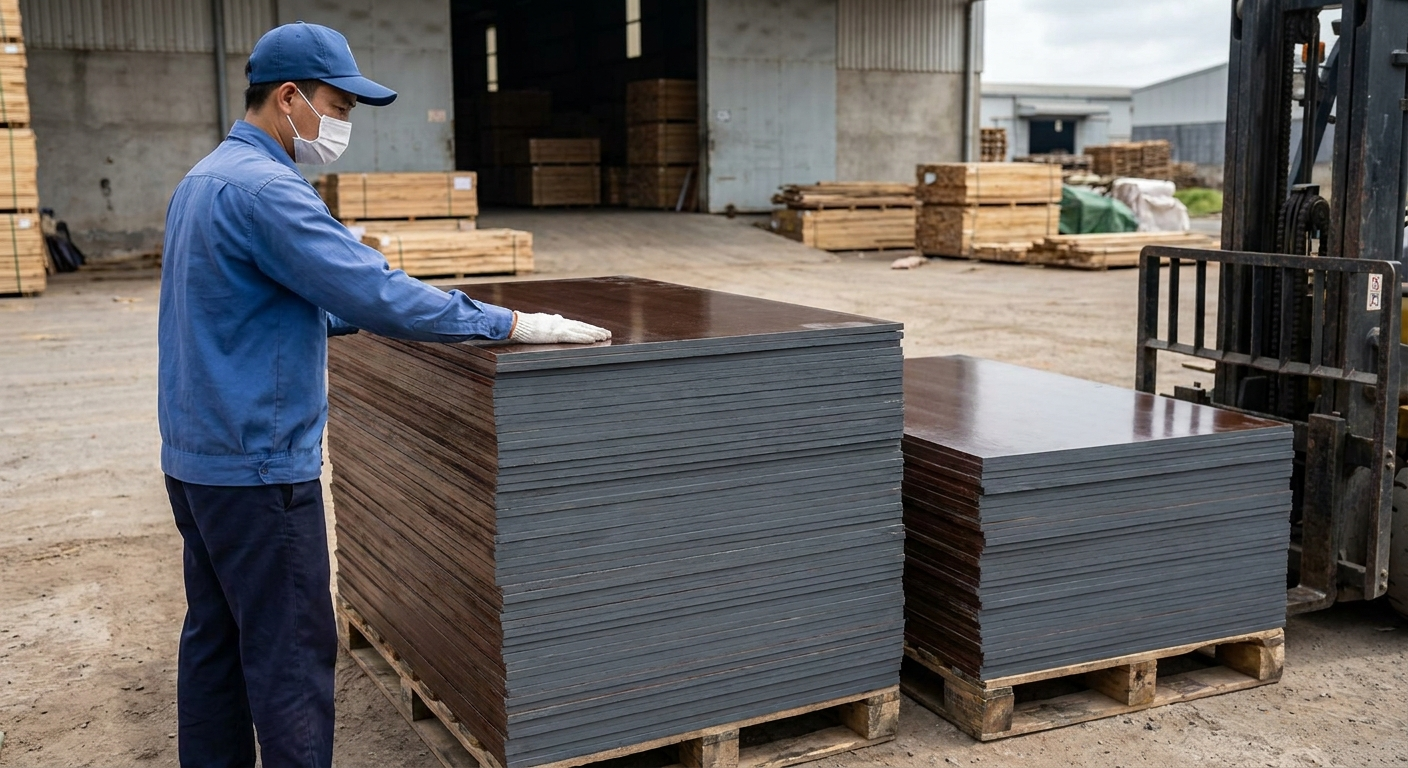
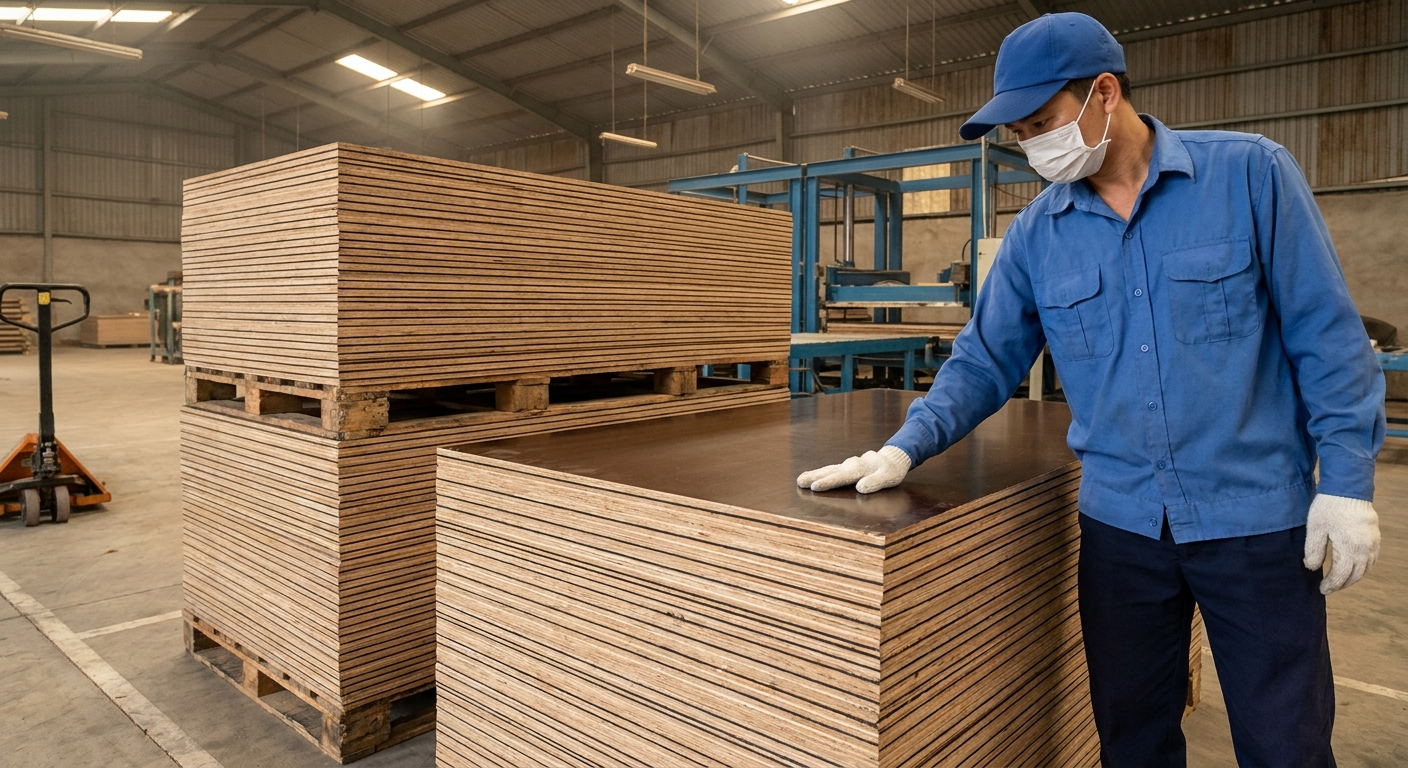
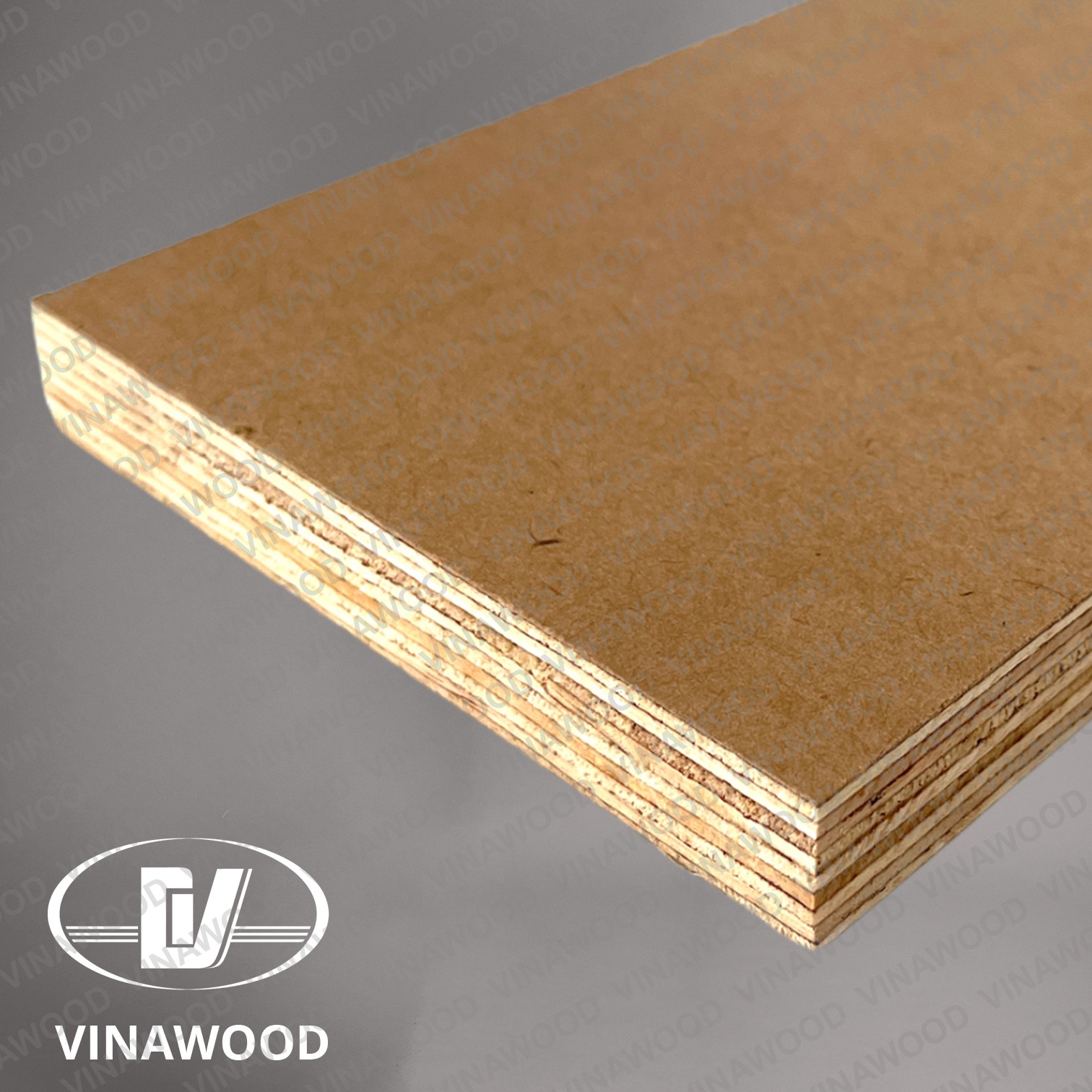
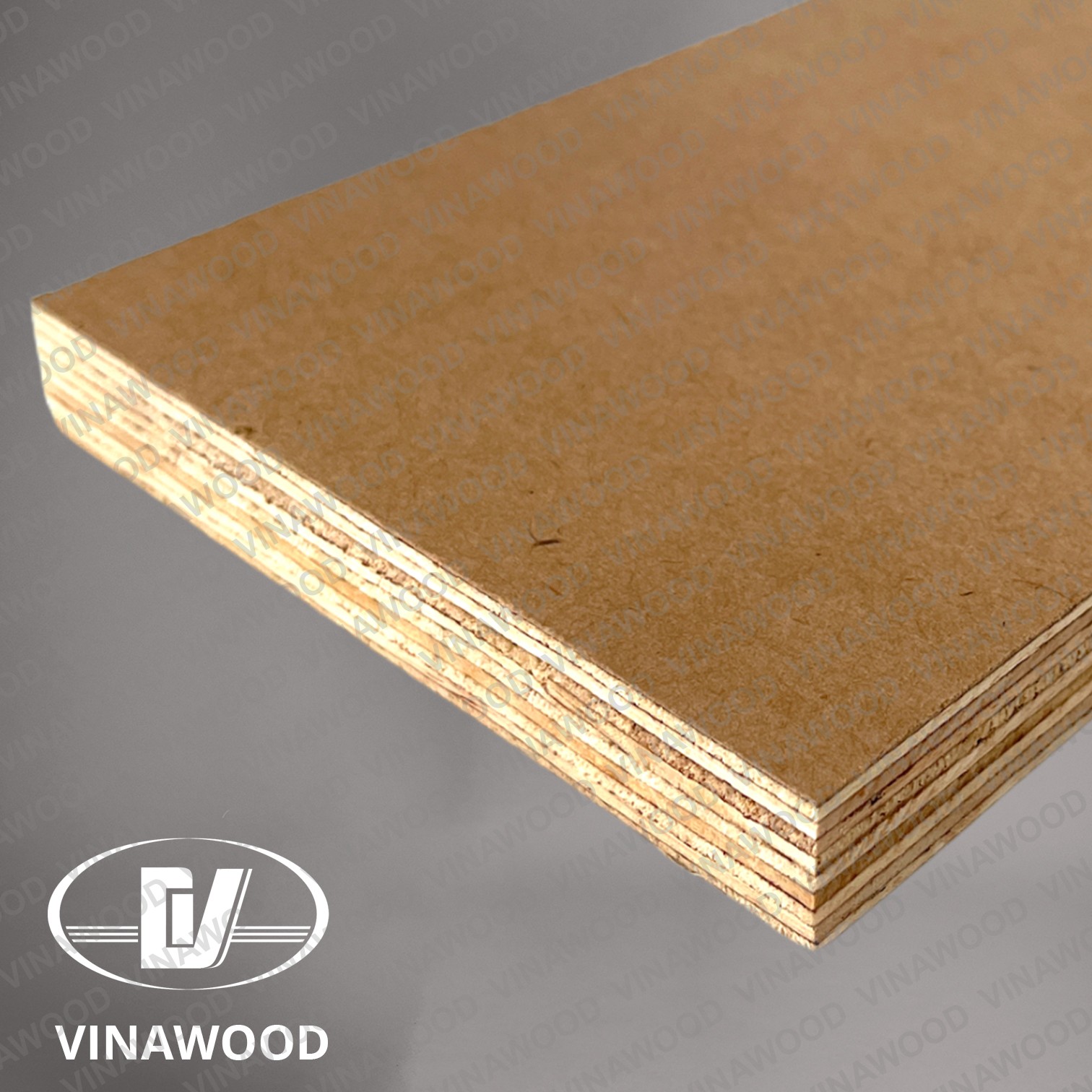
MDO stands for medium-density overlay. The construction: a structural plywood core, typically Group 1 species like Douglas fir or southern yellow pine, faced with a resin-impregnated kraft paper overlay bonded under heat and pressure. The overlay isn't a thick coating, it's a paper layer impregnated with phenolic or melamine resin that becomes integral to the panel face after pressing.
APA-trademarked MDO is the North American reference. Two manufacturing routes exist. One-step MDO bonds the overlay to the veneer face during the same press cycle that lays up the plywood. Two-step MDO applies the overlay to a finished plywood panel in a separate press operation, which produces a slightly more uniform face but at higher cost. Domestic mills like Roseburg run both processes; the data sheet usually states which.
Why the overlay exists: structural plywood faces show wood grain, knots, patches, and any minor defects under paint. The overlay hides all of it. The result is a paint-grade exterior panel with the structural backbone of plywood and the surface uniformity of a manufactured face.
What MDF actually is
MDF stands for medium-density fibreboard. It's an engineered panel: hardwood and softwood fibres broken down to fibre length, dried, mixed with a binder resin (most commonly urea-formaldehyde, sometimes melamine-urea-formaldehyde for moisture-resistant grades), then formed and pressed under heat into a uniform dense sheet.
The result has no grain, no plies, no voids — the cross-section is identical from face to face. That uniformity is what makes MDF the favourite of cabinet shops doing painted doors and detailed routed mouldings. A profiled edge in MDF reads cleanly because there are no exposed plies to chip out. The same profile in plywood would show alternating ply layers.
The formaldehyde question is older than the current product. Modern MDF sold in the US is regulated under EPA TSCA Title VI and CARB Phase 2, both of which set strict emission limits for indoor use. Compliant panels meet residential indoor air standards. The pre-regulation product from 20 years ago is what the cautionary stories are about.
Composition driving behaviour
The structural difference is everything. MDO is plywood with a paint-grade face; it carries load like plywood, holds screws like plywood, takes humidity like plywood. MDF is fibre cement with a wood binder; it carries load like fibre cement, fails on edge screws, and absorbs water like a sponge.
Picture a cross-section. MDO shows alternating thin veneer plies, cross-laminated, with a paper-thin overlay on the face. MDF shows a uniform brown solid mass, denser at the surface from the press cycle but homogeneous throughout. Every behavioural difference downstream traces back to that picture.
Moisture and exterior performance
This is the most important practical difference. MDO is rated for exterior use. The plywood core uses WBP adhesive, the kraft paper overlay sheds direct rain when primed and painted, and well-built MDO signage routinely lives 5 to 10 years on outdoor display with maintenance. The vulnerability is the edge: cut MDO without sealing the edge with primer or polyurethane and the unsealed edge soaks water until the plywood delaminates from the inside.
MDF is designed for interior use. The fibres swell irreversibly when they take on moisture, and the swelling doesn't reverse when the panel dries. A bathroom vanity in MDF that gets a sink leak is replaced, not repaired. Even moisture-resistant MDF (the green-tinted MR-grade) is for damp-area interior use like bathrooms and kitchens — not outdoor exposure. MR-MDF will tolerate humidity better than standard MDF; it will not tolerate rain.
Sign painters and exterior cabinet shops rarely make this mistake. Where it shows up is in DIY contexts and in workshops where someone substituted MDF because it was on hand and the project description sounded similar. The substitution fails within one wet season.
Strength, weight and screw retention
A 4×8×3/4″ MDO panel weighs about 60 pounds. The same MDF sheet weighs about 95. That extra 35 pounds isn't free — it shows up in shipping cost, in installer fatigue, and in the structural design of cabinets. A double-stack of MDF cabinet doors on the upper run of a kitchen needs different hinges and rail support than the same doors in plywood-cored construction.
Screw retention diverges sharply at the edge. MDO holds screws like plywood: good face retention, good edge retention with proper pilot holes, behaves predictably under repeated assembly. MDF holds face screws acceptably but edge screws split readily without confirmat-style threaded fasteners and pilot holes drilled to spec. Drawer boxes in MDF are the canonical example — the corner joints need different hardware than the same joint in plywood, and the upgrade is a real line item on every drawer.
Stiffness over a span is the third axis. MDO has noticeably better load capacity over a 24-inch run than MDF of the same thickness. For shelves under load, this is the deciding factor. MDF shelves at full load sag visibly within a few months; MDO shelves at the same load behave like plywood shelves, which is to say they sag eventually but slowly.
Paintability and finish
Both substrates take paint well, but they win on different metrics. MDF wins on smoothness. The fibre face is paint-ready as-is, no grain telegraphing, no patch shadows under high-gloss finishes. For interior cabinet doors with a sprayed acrylic finish, MDF is the substrate that delivers a glass-flat result.
MDO wins on paint durability under abrasion and weather. The same painted finish on MDO holds up to handling, to weathering, to the kind of light scuffs an exterior sign or a workshop tabletop sees. Indoor MDF cabinet doors don't get that abuse, so MDO's durability advantage doesn't pay back in that application — the smooth MDF face wins on the metric that matters there.
Quick rule. Interior, painted, climate-controlled, no abuse: MDF. Exterior or interior with humidity, paint, abuse: MDO. The cost gap follows the use case correctly.
Cost comparison (2026 US market)
4×8 sheet, 3/4-inch thickness, indicative US distributor channel pricing for early Q2 2026:
- MDF, standard interior: $35–$50
- MDF, moisture-resistant (MR-MDF, green-tinted): $50–$75
- MDO 1S Panel: $75–$110
- MDO 2S Panel: $95–$140
- MDO Premium HD: $140–$180
The headline ratio: MDO runs roughly two to three times the price of standard MDF at 3/4-inch. Verify on the day of order — plyform pricing moves week to week with raw material costs and import flow. The deeper pricing breakdown is in the MDO plywood cost guide.
Cost-per-cycle math kicks in for repeat use cases. A sign repainted twice over a 10-year display run amortises across three rounds of finishing on the same MDO substrate. A formwork panel reused 5 to 10 times divides the per-sheet cost by that factor. MDF doesn't get this option because the substrate doesn't survive multiple-use cycles in the same way — single application is the expected lifecycle.
Decision matrix: which panel for which project
| Project | Choose | Why |
|---|---|---|
| Interior cabinet doors, painted | MDF | Smooth paint face; cost-effective; no humidity exposure |
| Bathroom vanity | MDO or plywood | Moisture exposure; MDF fails on a sink leak |
| Outdoor sign, painted | MDO | Exterior-rated; durable painted finish under weather |
| Workshop bench top | MDF | Smooth, flat, replaceable; cost-effective for short life |
| Detailed routed moulding | MDF | No ply chip-out on shaped edges |
| Painted exterior trim | MDO | Holds paint and dimension under weather |
| Speaker cabinet | MDF | Damping properties from density; no resonance from plies |
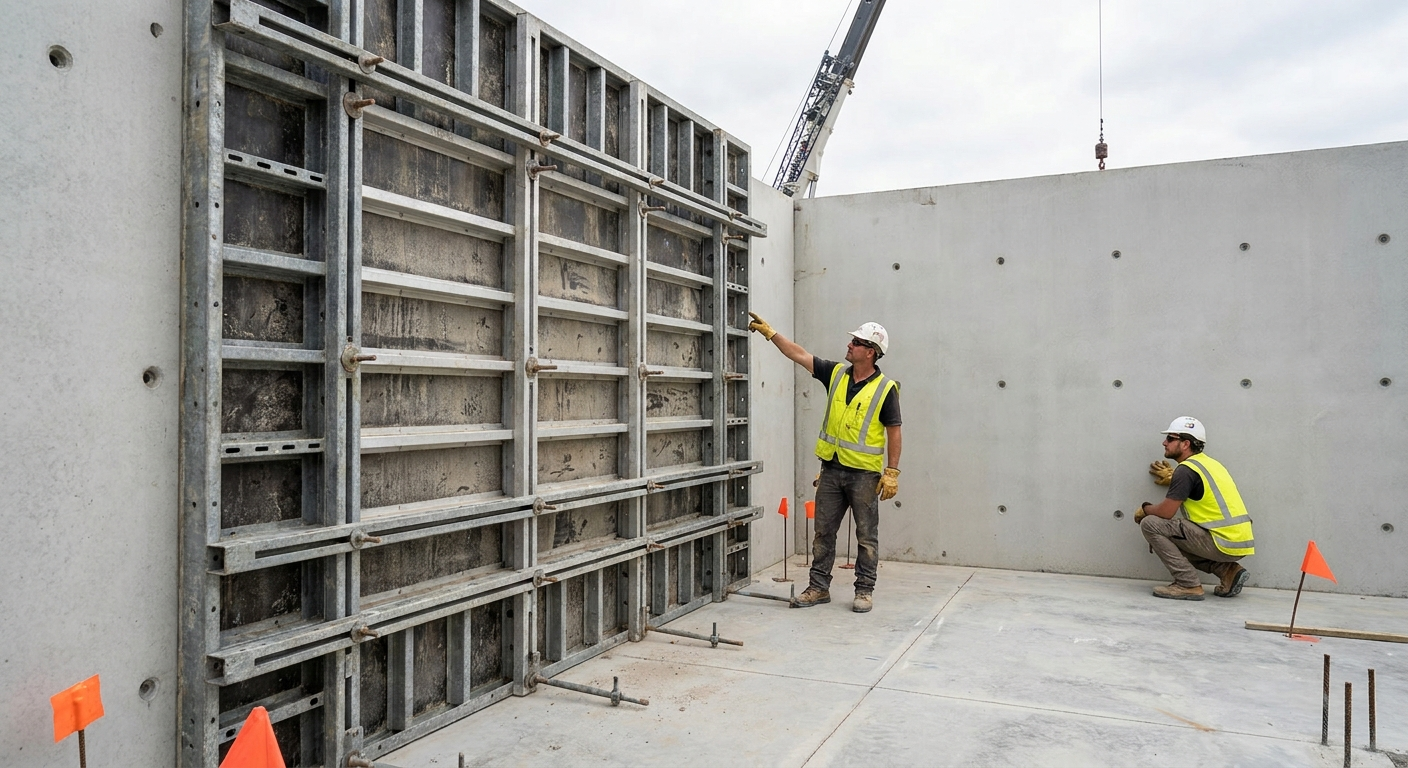
| Concrete formwork (low cycle) | MDO | 5–10 reuses with edge sealing |
| Concrete formwork (high cycle) | HDO or film-faced phenolic | 20+ reuses; MDO won't survive that count |
| Soffits and fascias on a residential build | MDO | Exterior-rated, paint-grade; long service life under primer |
The pattern: any moisture exposure pulls toward MDO; any climate-controlled smooth painted application pulls toward MDF. Mixed-use projects sometimes specify both — MDF for interior cabinet faces and MDO for the soffit run that ties into the exterior. That's the right read of the decision framework.
MDO vs MDF for concrete formwork
The manufacturer-protective answer here is short: MDF is unsuitable for concrete forms. The fibres swell on first contact with concrete moisture, the panel deforms, and the cast surface picks up the deformation. We've seen people try it on small DIY pours; it doesn't work and it stains the concrete on the way out.
MDO works for matte-finish formwork at 5 to 15 reuse cycles depending on overlay weight and edge-sealing discipline. The kraft paper overlay holds up to release agent and to repeated stripping reasonably well in that range. Above 15 cycles the cost-per-pour math starts to favour HDO with a phenolic film face, which delivers up to 25 to 50 cycles. For high-volume projects, the HDO upgrade pays for itself by pour 12 to 15. The full breakdown is in the MDO vs HDO comparison.
Vinawood and the formwork side of this decision
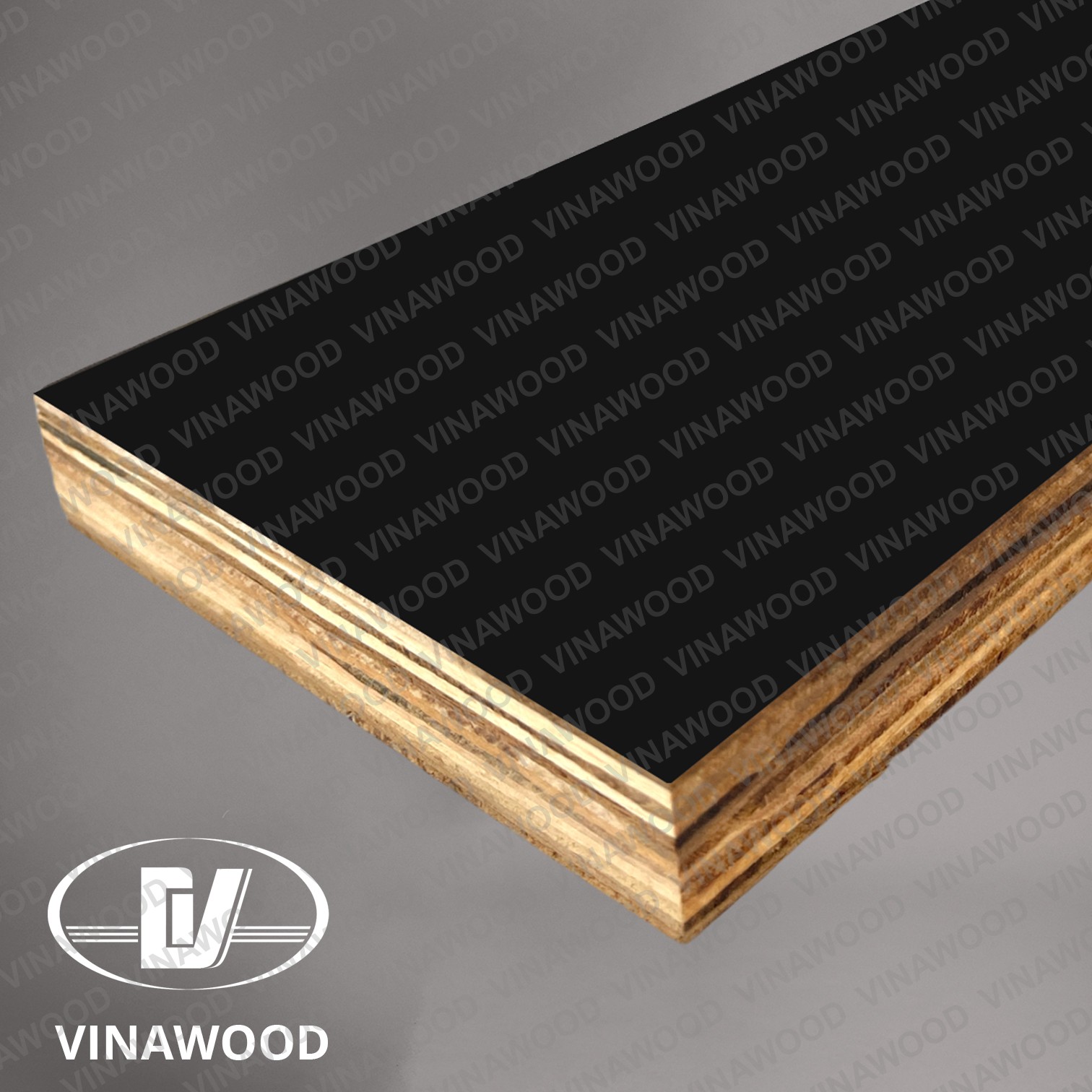
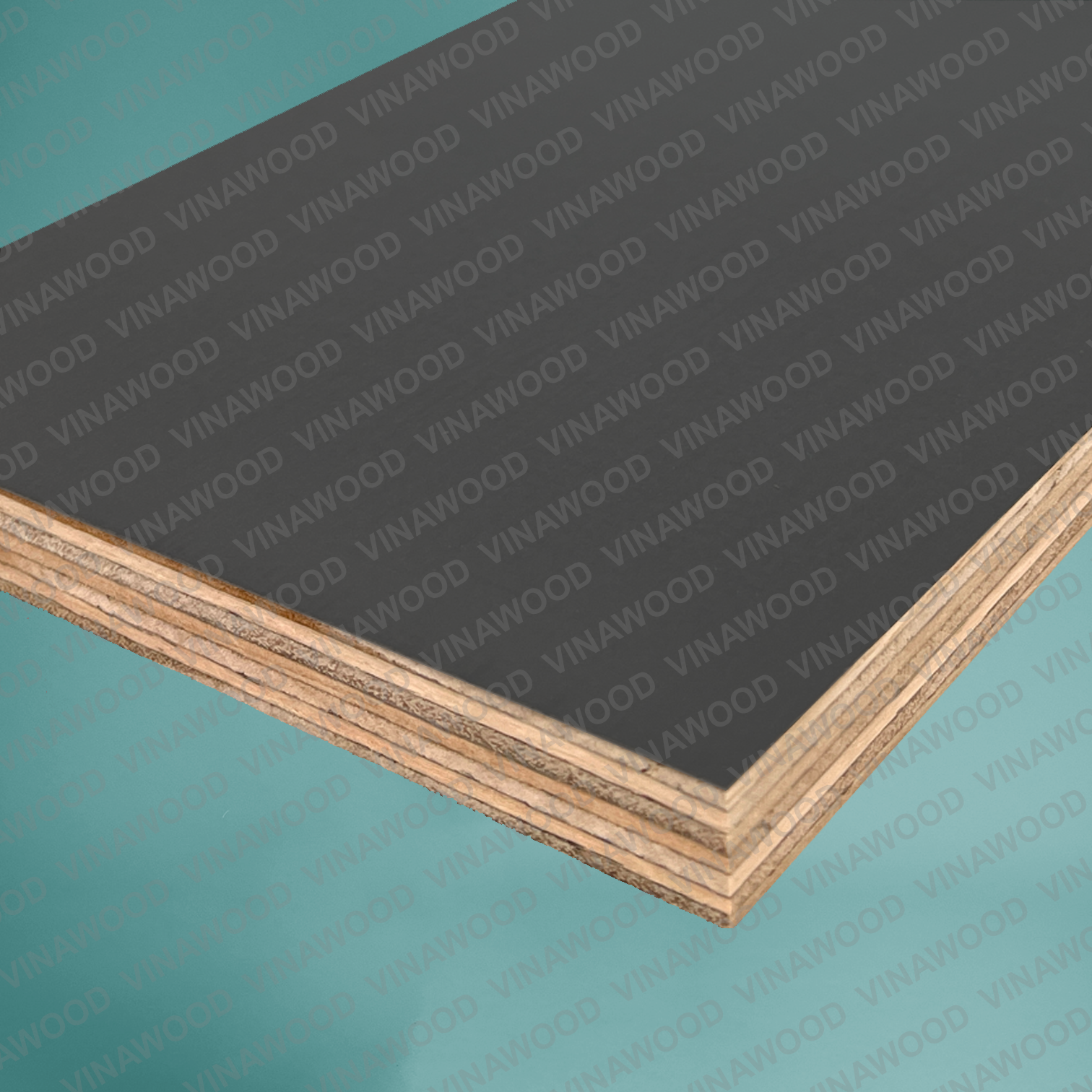
From the manufacturer side: Vinawood produces a MatteFace range and an HDO range from our Vietnam factory, plus film-faced phenolic plywood. MatteFace is our matte phenolic surface film forming panel — the product the trade often searches for as "MDO formwork plywood." We don't make MDF — different supply chain, different category. The MatteFace range covers 45 SKUs across five product lines (MatteFace Panel 1S / MTF1000, MatteFace Panel 2S / MTF2000, MatteFace Panel 1SF / MTF3000, MatteFace HD 1SF / MTF3HDP, MatteFace Eco 1SF / MTF3ECO) at the MatteFace collection, in 12, 15, 18, and 21 mm thicknesses across 1220×2440 mm and 1250×2500 mm formats. They're engineered for matte-finish concrete formwork with up to 15 reuse cycles when edges are sealed and release agent is applied each pour.
What the MatteFace range is not: paint-grade signage panels or paintable cabinet substrate. The kraft-paper overlay on APA-trademarked US-domestic MDO is tuned for paint adhesion and outdoor weather; MatteFace is tuned for cast concrete. For exterior signs, painted soffits, or paintable cabinetry, APA-domestic MDO from Roseburg or Plum Creek is the right product, not ours. For matte concrete formwork in the 5 to 15 cycle range, MatteFace is the cost-competitive overseas option. Above 15 cycles, our HDO Premium 2S Formply takes over — 220 g/m² phenolic film, hardwood core, full APA-equivalent forming performance at Vietnam-sourced economics. We've manufactured film-faced and phenolic plywood since 1992, and our panels ship to contractors in 55+ markets globally.
Frequently asked questions
Is MatteFace the same as MDO plywood?
MatteFace is Vinawood's brand name for a matte phenolic surface film formwork panel — the product buyers often search for as "MDO formwork plywood." It delivers the matte concrete finish associated with MDO forming panels, at up to 15 reuse cycles. It is not the kraft-paper-overlay MDO used for exterior signage and painted trim; that paint-grade product comes from North American mills such as Roseburg and Plum Creek.
Category
guides
Related Markets
Related Countries
Related Products
▶Sources & References (4)
- Overlaid Plywood Standard ANSI/HPVA HP-1 — APA — The Engineered Wood Association (2024)
- Formaldehyde Emission Standards for Composite Wood Products (TSCA Title VI) — US EPA (2024)
- MDF Product Standards — Composite Panel Association (2024)
- What's the difference between MDO and MDF? — WOOD Magazine (2024-12-18)