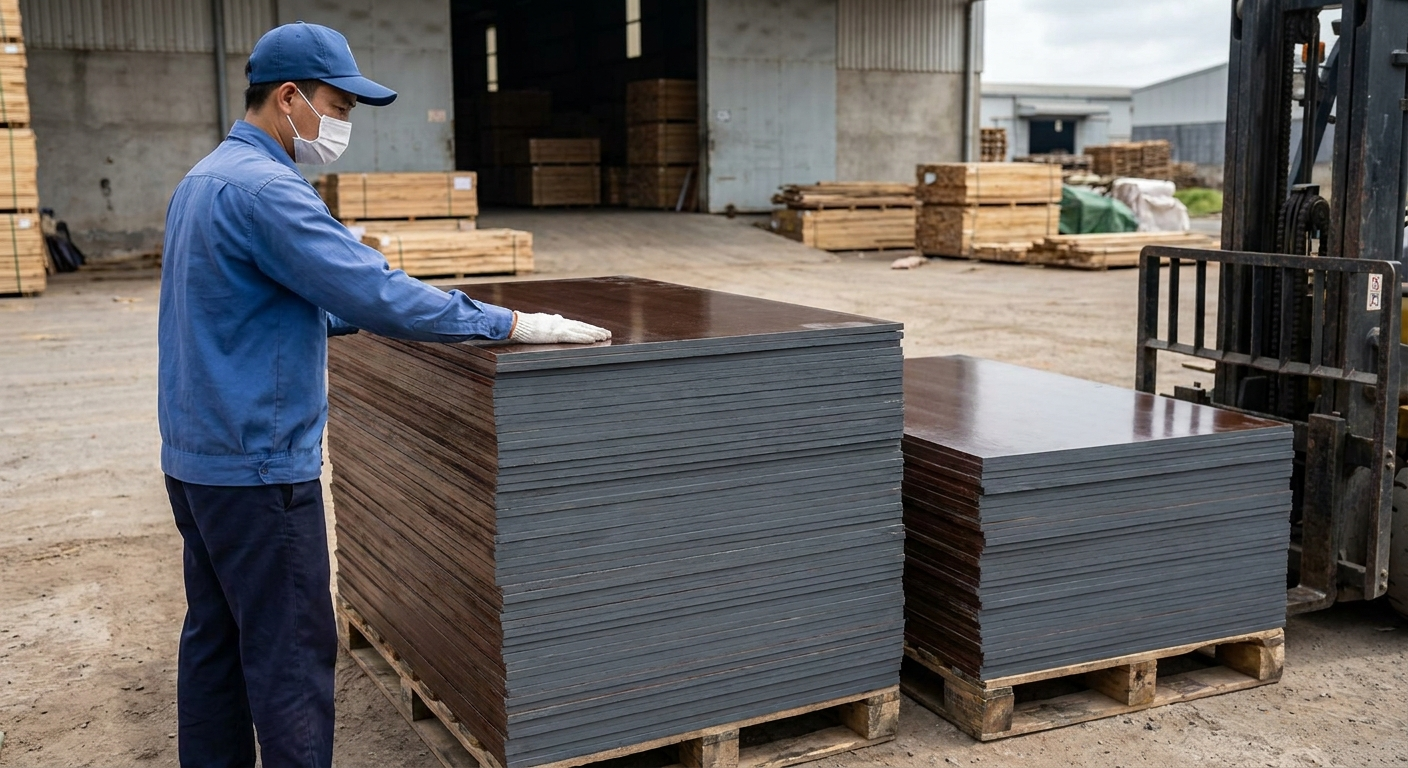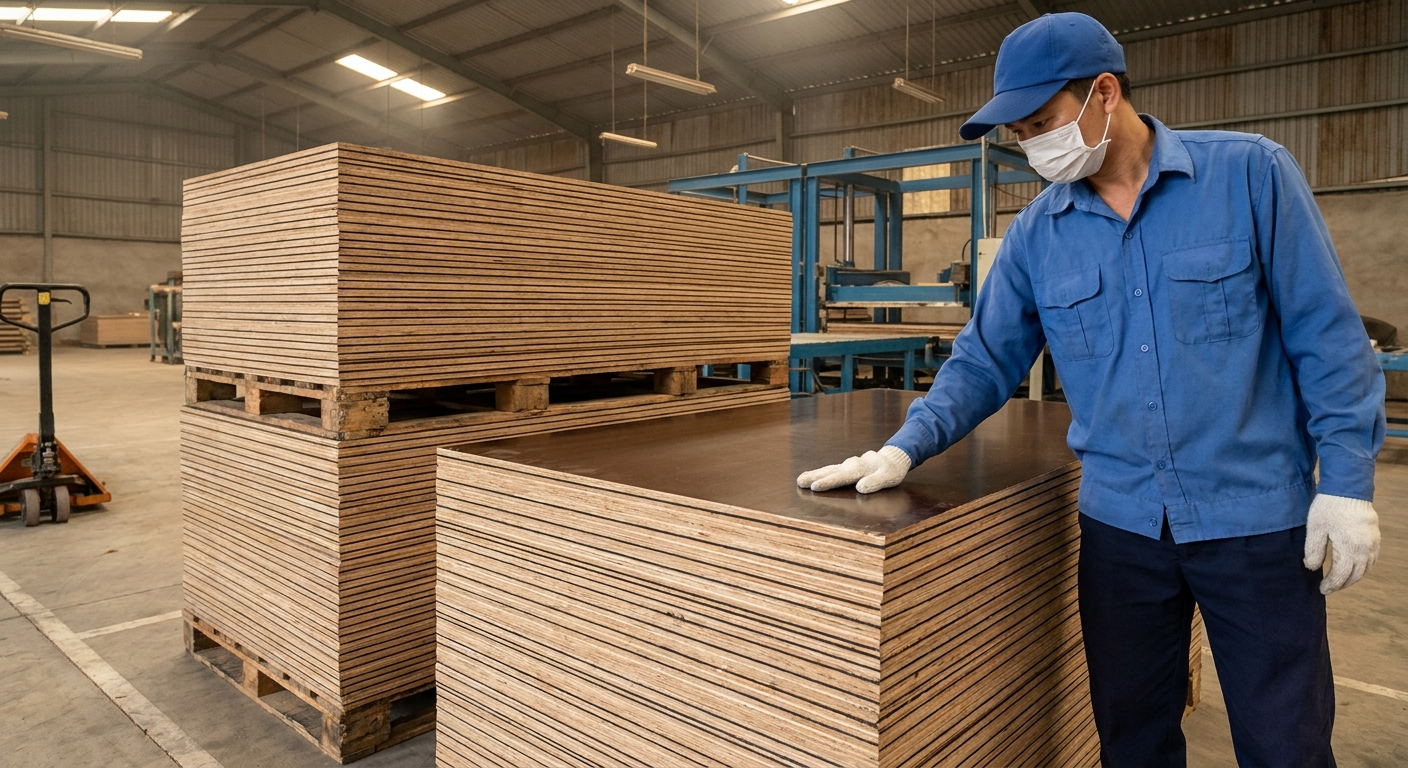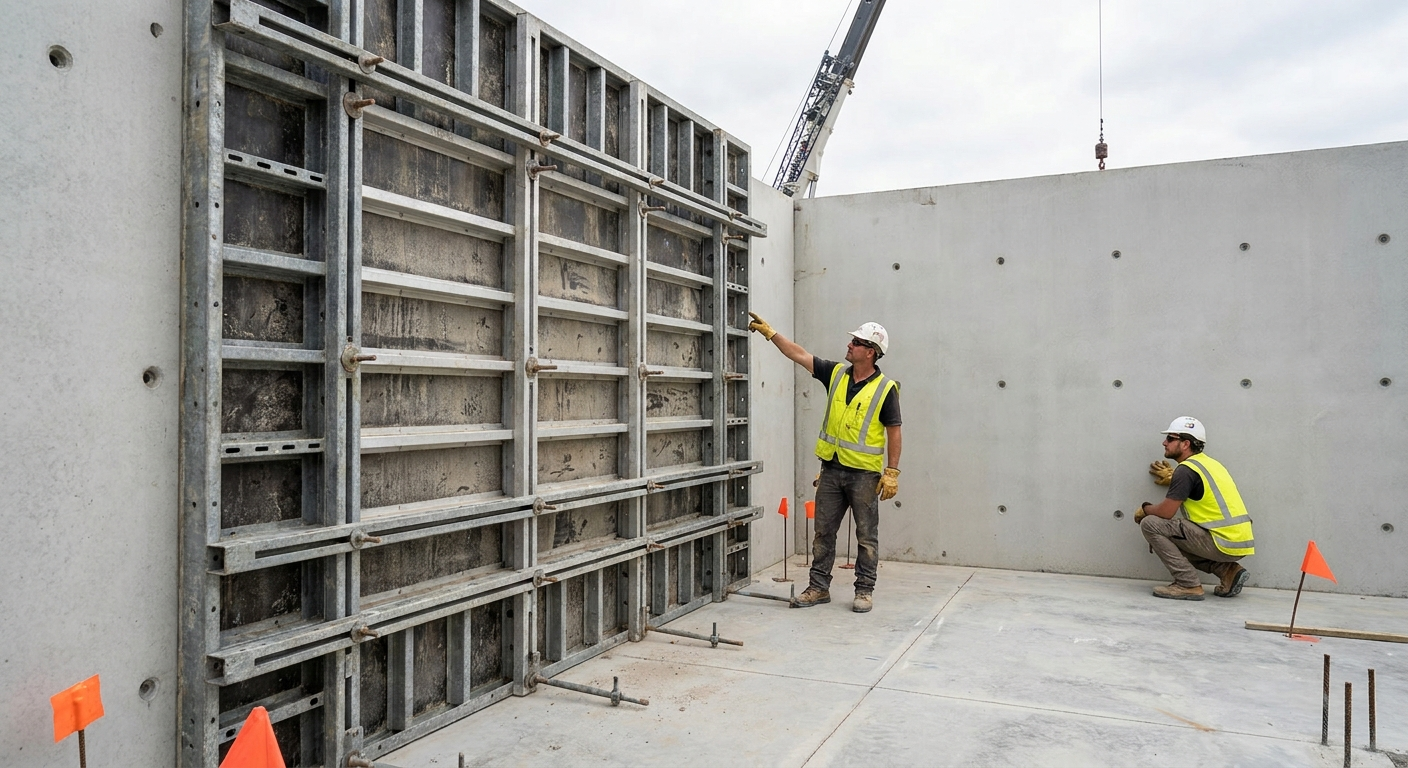
What Is MDO Plywood? Properties, Uses, Grades & When to Choose It
MDO plywood explained: what it is, how it's made (1-step vs 2-step), grades and overlay options, common uses, and how it compares to HDO, phenolic film-faced, and MDF. Includes sourcing guidance and the formwork decision framework.
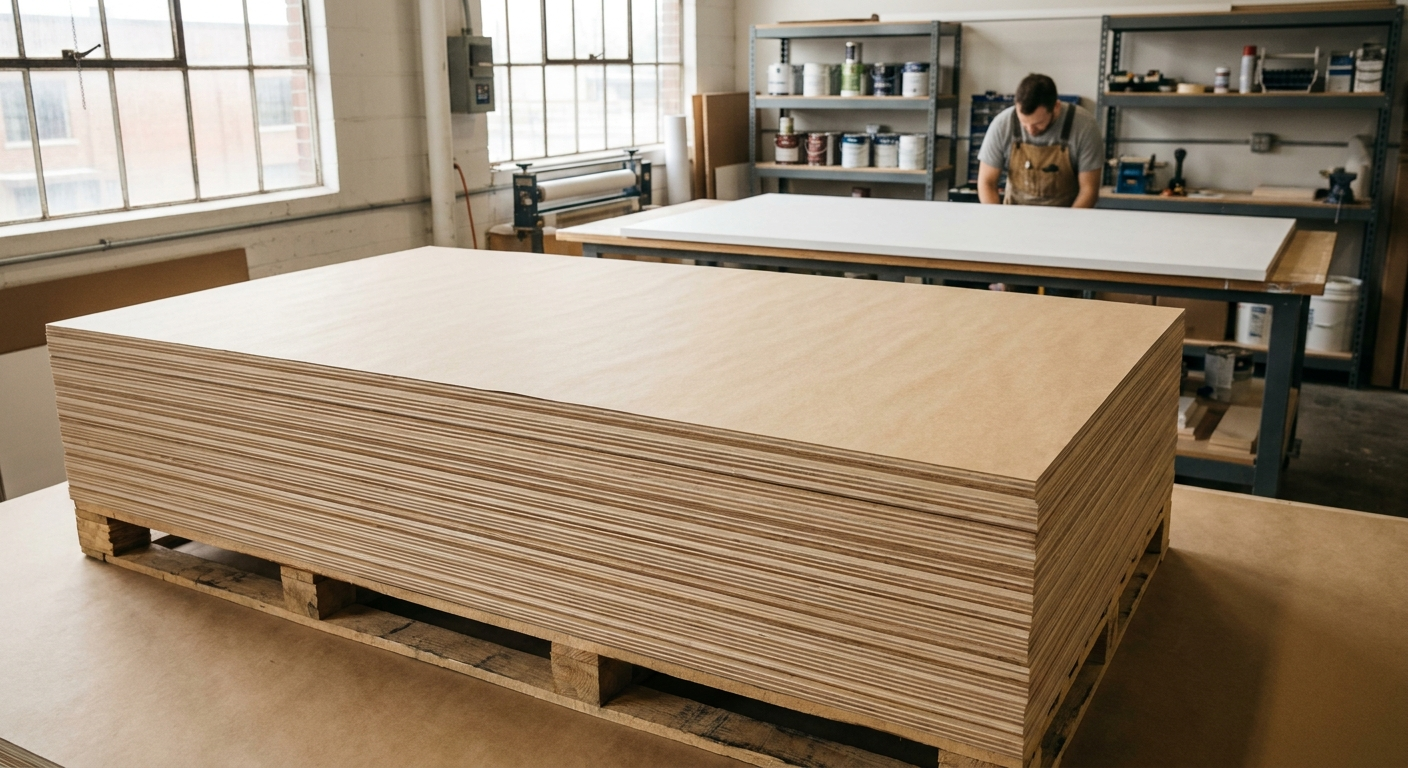
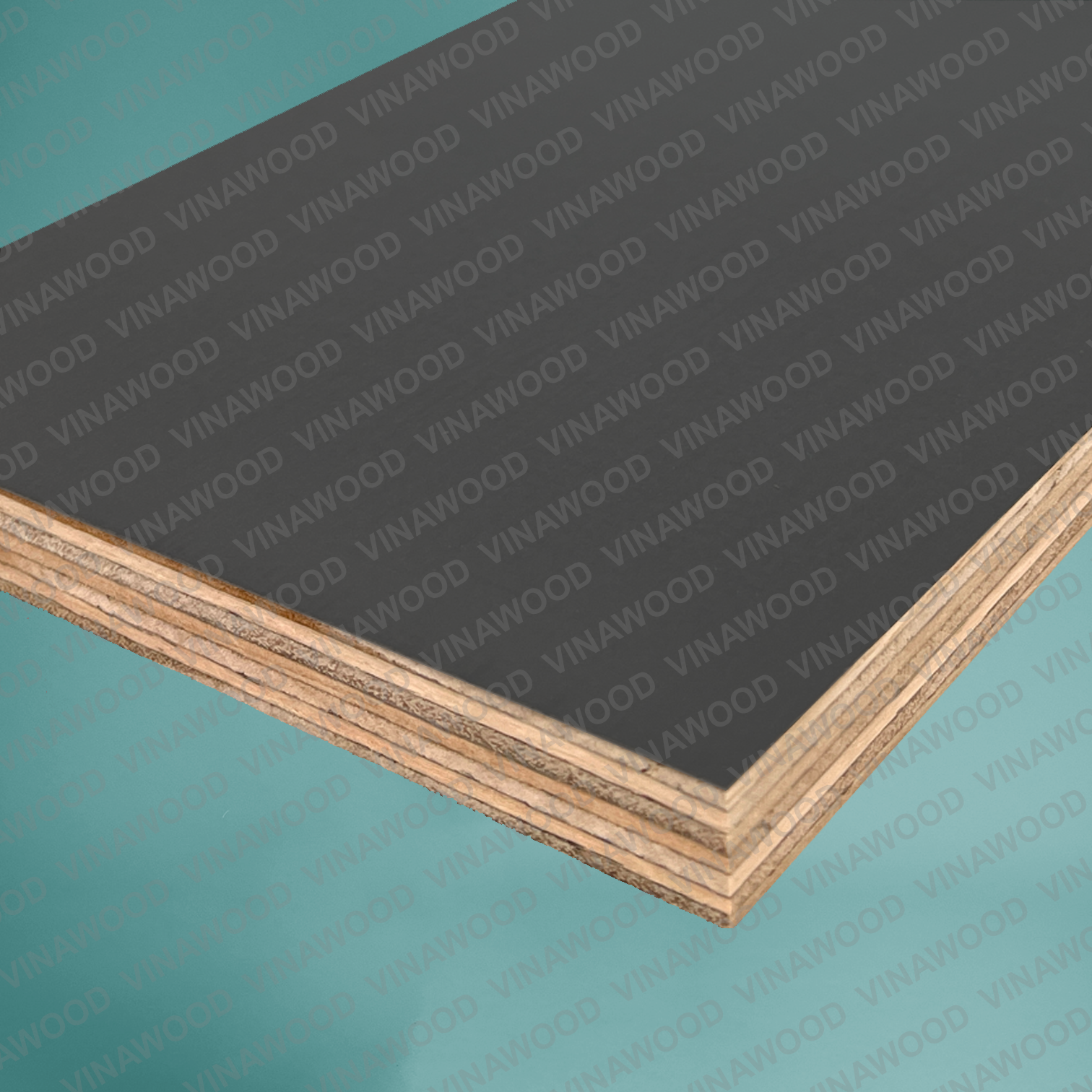
MDO plywood is the trade name for exterior-grade plywood with a resin-impregnated overlay bonded to one or both faces under heat and pressure. The acronym stands for medium-density overlay. There are two distinct constructions sold under that name, and the confusion between them is the most useful thing for a buyer to clear up before specifying a panel.
The North American mainstream version uses a kraft-paper overlay tuned for paint adhesion: APA-trademarked, primarily for exterior signage, soffits, and painted architectural trim. Roseburg, Plum Creek, and Boulter are the reference mills. There is also a phenolic-surface-film version that produces a matte concrete finish: thicker film, higher resin content than standard glossy film-faced plywood, and the panel of choice when the cast concrete needs a matte rather than glossy surface. Both are called MDO in the trade, both deliver an overlaid plywood face that hides the underlying veneer grain, both are exterior-rated through WBP core glue. They are different constructions for different applications.
This guide covers the broader MDO category first, then the Vinawood MatteFace positioning at the end.
What MDO actually is
The construction is layer-by-layer. A structural plywood core, typically Group 1 species like Douglas fir or southern yellow pine in the APA-domestic version, sits in the middle. An overlay sits on top of the face veneer (and on the back, for 2S panels). In the APA-domestic mainstream, the overlay is a resin-impregnated kraft paper saturated with phenolic or melamine-urea resin that bonds to the veneer under hot press conditions. In the phenolic-surface-film version, the overlay is a paper-saturated phenolic film, thicker and higher in resin content than the film used on standard glossy film-faced plywood, tuned to produce a matte concrete surface.
The overlay carries the panel's identity in either construction. It is what hides the wood grain, what holds paint (in the kraft-paper version) or releases cleanly from concrete (in the phenolic-film version), and what resists abrasion when forms strip after a pour. The plywood underneath is structural fir, pine, or plantation hardwood plywood graded to an exterior standard.
WBP adhesive runs through every glue line of the plywood core, which is what makes MDO exterior-rated. Without WBP throughout, the panel would fail at the inner glue lines under prolonged moisture exposure, no matter how good the overlay was. The combination of WBP plywood plus the overlay is what defines the product category in either construction.
1-step vs 2-step manufacturing (APA-domestic kraft overlay)
This distinction applies to the kraft-paper-overlay version of MDO. Roseburg's product literature draws it sharply, and it is worth understanding because the data sheet states which process produced the panel.
1-step MDO bonds the overlay to the veneer face during the same press cycle that lays up the plywood. The plywood and overlay come out of the press as a single integrated panel. Faster, less expensive, slightly less uniform face quality because the press conditions are optimised for plywood pressing rather than overlay perfection.
2-step MDO applies the overlay to a finished plywood panel in a separate press operation. The plywood comes out of one press, gets sanded and inspected, and then the overlay goes on in a second press cycle optimised specifically for overlay-to-veneer bonding. The result is a more uniform face, fewer surface defects telegraphing through, better consistency for premium architectural applications. More expensive because of the extra production step.
For most commercial paint-grade and forming applications using kraft-overlay MDO, 1-step is fine. For high-end painted finishes, exposed architectural cladding, or signage where surface uniformity is the deliverable, 2-step is the upgrade. The data sheet usually states which.
Key properties
The performance characteristics that drive specification:
- Paintability: Excellent in the kraft-overlay version (the overlay is designed as a paint substrate). The phenolic-surface-film version is not a paint-grade product.
- Concrete release: Both versions release from cured concrete. The kraft-overlay version produces a matte finish suitable for painted concrete; the phenolic-film matte version produces a cleaner matte finish suitable for exposed matte concrete.
- Dimensional stability: Good. The cross-laminated plywood core resists warping better than solid wood; the WBP adhesive holds dimensional stability under humidity cycles.
- Weather resistance: Exterior-rated. Properly sealed and painted kraft-overlay MDO routinely lives 5 to 10 years on outdoor signage and architectural exposure.
- Abrasion resistance: Moderate for kraft-paper overlay; higher for phenolic-surface-film overlay. The phenolic-film matte version handles more reuse cycles in concrete forming than the kraft-paper version.
- Water resistance: Water-resistant, NOT waterproof. The face overlay sheds direct rain; cut edges absorb water and need primer or polyurethane sealing.
- Face grade under the overlay: Typically B-grade veneers. The overlay hides minor defects.
MDO grades and overlay options
Two main configurations dominate the market.
1S (one-side overlay) has the overlay on a single face. Used where only one side is visible after installation — the overlay side faces the painted surface or the concrete, the back is plain plywood. Lower cost than 2S because the overlay is on one face only.
2S (two-side overlay) has the overlay on both faces. Used where both sides are visible (a sign that's read from both sides, formwork that strips and resets with either face contacting concrete), or where moisture protection on both sides matters. Higher cost, broader application range.
Sign-grade MDO is sometimes referred to as Plyform Class I and conforms to APA PRP-108 (Performance Standards and Qualification Policy for Structural-Use Panels). Most US-domestic MDO is Group 1 species (Douglas fir, southern yellow pine), Structural 1, with B-grade face veneers under the overlay. The grade stamp on the panel edge tells you which.
Premium HD MDO sits at the top of the matrix in the kraft-overlay version. Heavier overlay loading, more uniform face, often called "signboard grade." Used for premium painted exterior signage and architectural panels where the finish quality is the deliverable. Roseburg's Premium HD line is the reference; the resin-impregnated kraft layer produces the characteristic purple tint.
Common uses
Five primary application categories. The first three are paint-grade applications where APA-trademarked kraft-overlay MDO is the industry standard. The last two are concrete formwork applications where the choice between kraft-overlay and phenolic-surface-film MDO matters.
Exterior signage: highway signs, commercial signage, real estate signs, painted display boards. The combination of paintability and weather resistance is the right fit. APA-domestic kraft-overlay MDO is the reference here. Service life on outdoor signs typically runs 5 to 10 years with maintenance.
Exterior cabinets, soffits, fascias: residential and commercial exterior trim work where the panel will be primed and painted. APA-domestic kraft-overlay MDO is the standard. Vulnerable points: cut edges, joints, corners.
Painted furniture, exterior cabinetry: kitchens that face an exterior wall, outdoor cabinetry on a covered porch, painted furniture that lives in a humid environment. Same paint-grade reasoning as the soffit work above.
Concrete forms — matte finish: this is the application where the phenolic-surface-film matte MDO category fits. For 5 to 15 reuse cycles producing a matte concrete face (where standard glossy phenolic film-faced plywood would produce a shiny concrete face the project does not want), matte phenolic surface film MDO is the right panel. The kraft-paper overlay version of MDO also handles light forming work in the same cycle range, but the cast surface finish differs.
Trailer linings, truck body panels: the abrasion resistance and weather rating handle the use case. Not the dominant use, but a steady niche.
MDO vs HDO vs phenolic film-faced vs MDF — quick comparison
| Panel | Face overlay | Reuse cycles (forming) | Concrete finish | Cost per 4×8×3/4″ | Primary use |
|---|---|---|---|---|---|
| MDO (kraft-overlay, APA-domestic) | 20–30 g/m² medium-density kraft paper | 5–15 | Matte (paintable) | $75–$140 | Exterior signs, soffits, paint-grade forming |
| MDO / MatteFace (matte phenolic surface film) | Thicker phenolic film, higher resin content than glossy film-faced | 5–15 | Matte (clean, exposed) | Container-direct from Vietnam | Matte-finish concrete formwork |
| HDO | 45+ g/m² high-density phenolic | 25–50+ | Near-mirror glossy | $110–$180 | High-volume formwork, exposed architectural concrete |
| Phenolic film-faced (standard glossy) | 120–220 g/m² phenolic film | 10–20 | Glossy | $45–$90 (Vietnam direct) | European/Asian formwork standard, glossy concrete |
| MDF | None (uniform fibre) | 0 (interior only) | n/a | $35–$55 | Indoor cabinet doors, painted mouldings |
The pattern. MDO is a category name covering two distinct constructions: kraft-overlay (paint-grade) and matte phenolic surface film (concrete forming). HDO is one step up in overlay density and reuse capacity. Standard glossy phenolic film-faced is the same construction family as matte phenolic surface film MDO but produces a shiny concrete face instead of matte. For the deeper MDO vs HDO decision, see the comparison guide.
Sizes, thicknesses and where to buy
Standard format is 4×8 (1220×2440 mm). Thickness range runs 3/8 inch to 1 inch, with 3/4 inch as the dominant size for forming, signage, and architectural applications. Thinner panels (1/4”, 3/8”, 1/2”) are common for backing applications and lighter signage. Container-direct matte phenolic surface film MDO from Vietnam adds the EU 1250×2500 mm format alongside the imperial 1220×2440.
Sourcing splits by application. APA-trademarked kraft-overlay MDO for signage and architectural paint applications is stocked at specialty plywood distributors and sign-supply yards (Toledo Plywood, Sylvan, Weekes Forest Products, regional sign-supply distributors). Big-box retailers carry it inconsistently. Lead time at specialty distributors is typically same-day to a few days.
For matte-finish concrete formwork, container-direct from Vietnam is a competitive option for volume buyers. Container quantities of matte phenolic surface film MDO panels engineered for forming land below US retail. Break-even on the import math sits around 200 sheets — below that, freight and demurrage eat the discount; above it, the direct route compounds.
MDO for concrete forming — when to use vs HDO
The manufacturer-honest read on this is simple. MDO works for matte-finish forming at 5 to 15 reuse cycles. Both the kraft-paper-overlay and the matte phenolic surface film versions handle that range, with the phenolic-film matte version delivering a cleaner exposed-matte concrete face. Above 15 cycles, both overlay types start to wear and the cost-per-pour math favours HDO with a heavier phenolic film face.
HDO with a 220 g/m² phenolic film is the upgrade for high-rotation formwork. 25 to 50 cycles is realistic with proper handling. The break-even point at which HDO's higher upfront cost pays back through extra reuse cycles is around pour 12 to 15 — below that, MDO wins on cost-per-pour; above, HDO wins.
For one-off pours where a painted concrete finish matters (an architectural column that will be painted after stripping), kraft-overlay MDO is the right call. For matte exposed concrete (a feature wall that will not be painted but the spec calls for a matte rather than glossy face), matte phenolic surface film MDO is the right call. For glossy exposed concrete, standard phenolic film-faced or HDO is the right call. For full breakdown of the pour-count math, see the HDO vs MDO plywood guide.
Vinawood's MatteFace range — the matte-finish forming panel
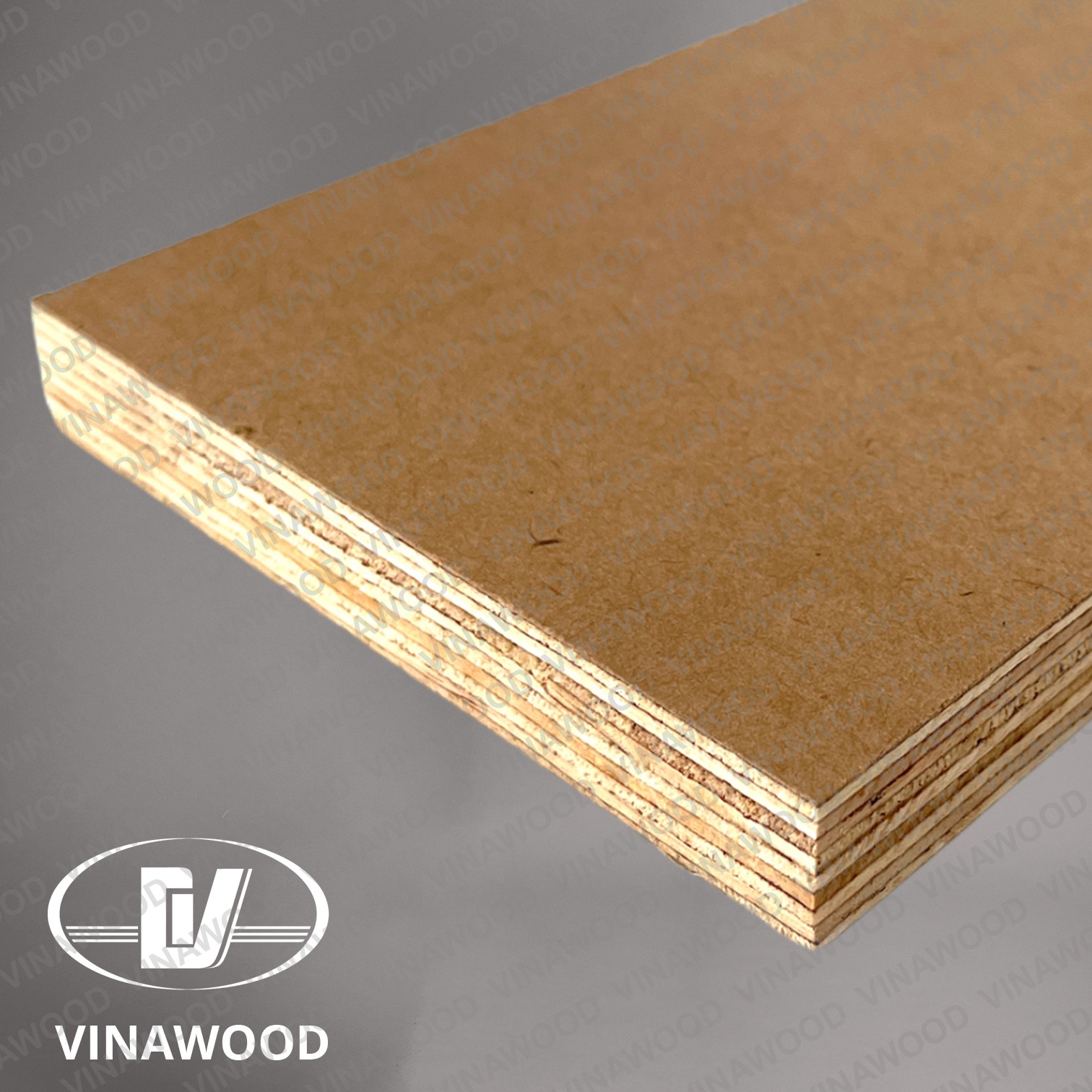
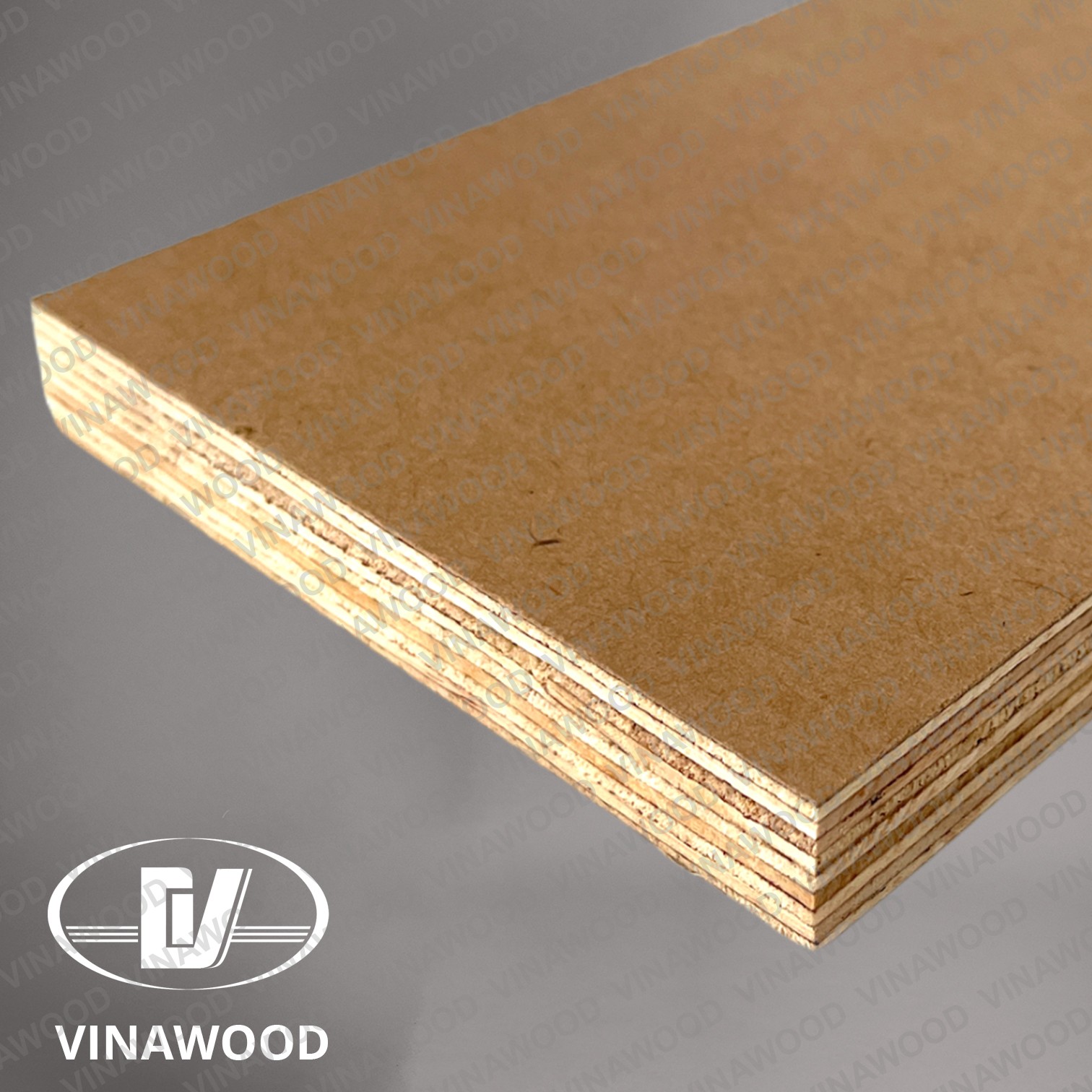
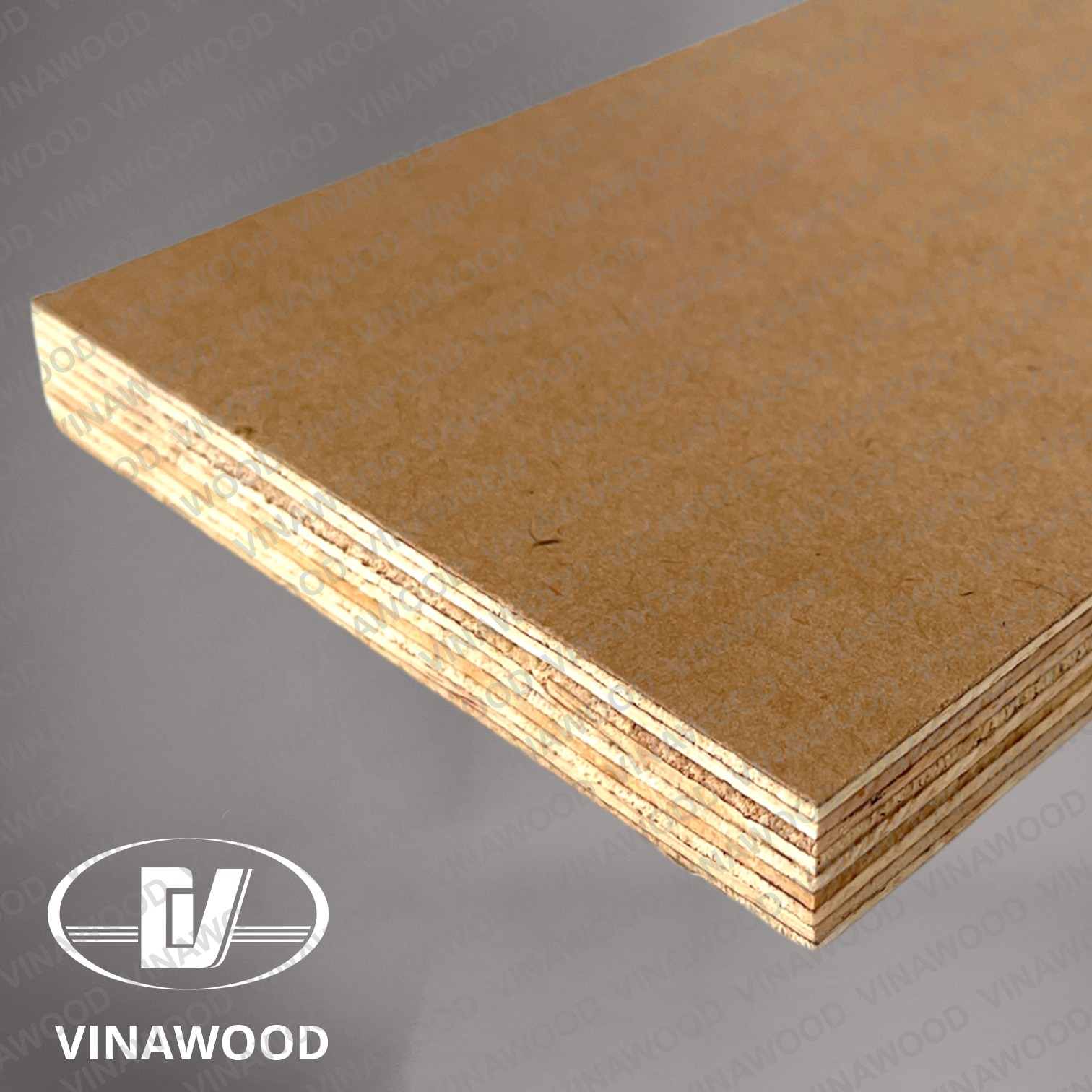
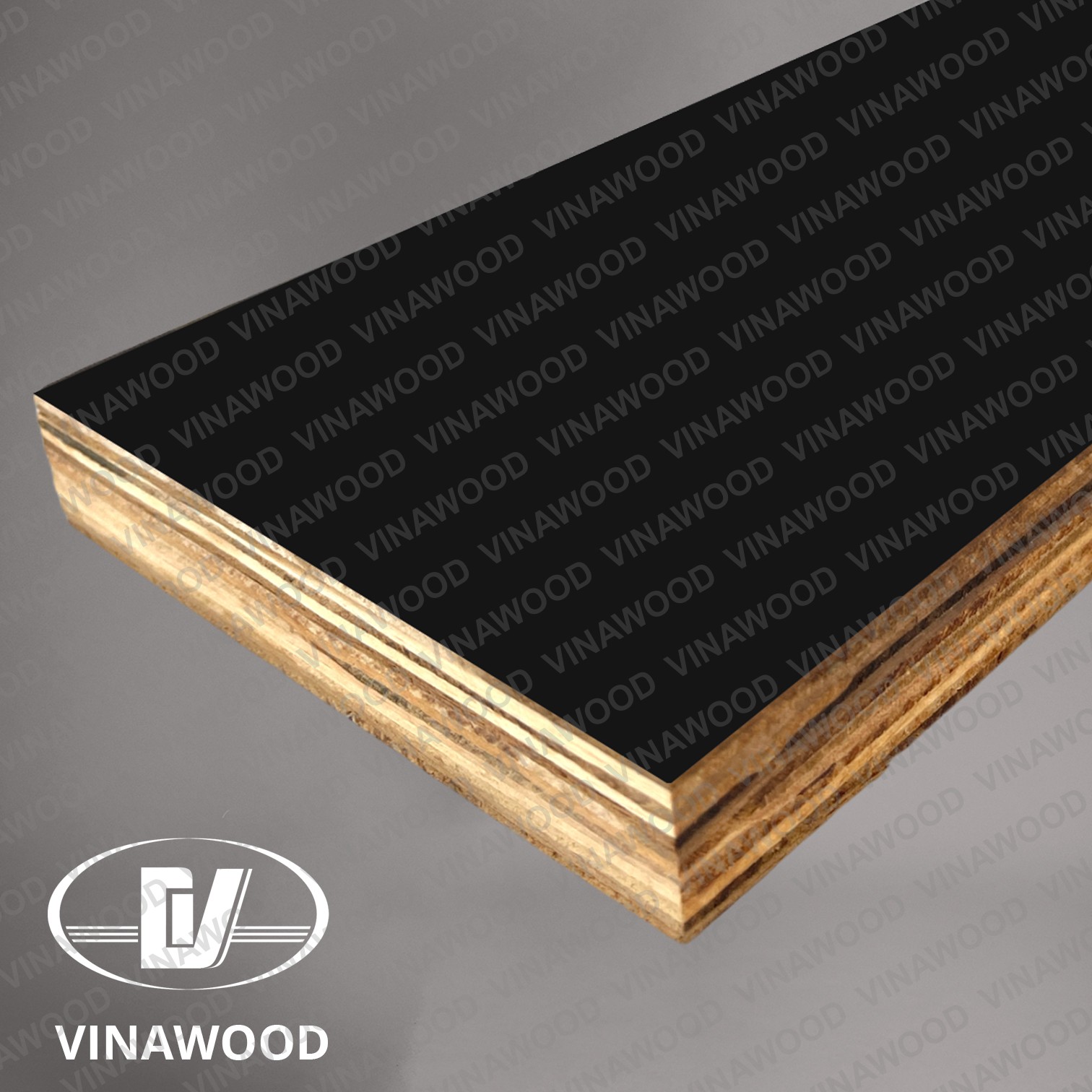
Vinawood manufactures MatteFace Plywood, a matte phenolic surface film formwork panel — the product the trade often searches for as "MDO formwork plywood." MatteFace uses a thicker phenolic surface film with higher resin content than standard glossy phenolic film-faced plywood. The film is tuned to deliver a matte concrete finish where regular glossy film-faced (Pro Form, Form Extra) produces a shiny concrete face. Both are in the same construction family; the difference is the film tuning and the cast surface it produces.
The range covers 45 SKUs across five product lines: MatteFace Panel 1S (MTF1000), MatteFace Panel 2S (MTF2000), MatteFace Panel 1SF (MTF3000), MatteFace HD 1SF (MTF3HDP), and MatteFace Eco 1SF (MTF3ECO). The full collection sits at /collections/matteface-plywood, in 12, 15, 18, and 21 mm thicknesses across both 1220×2440 mm and 1250×2500 mm formats. Available in kraft (light yellow), purple, and black colorways for different forming and architectural specifications. Up to 15 reuse cycles with disciplined edge sealing and release agent application.
From a Vietnamese mill perspective, the routing is straightforward. For paint-grade signage, painted soffits, exterior trim, or any application where the panel will be painted, APA-domestic kraft-overlay MDO from Roseburg, Plum Creek, or Boulter is the right product — that is a different construction category from ours. For matte-finish concrete formwork in the 5 to 15 cycle range, the Vinawood MatteFace range is the cost-competitive overseas-sourced option. For glossy concrete formwork, our standard film-faced range (Pro Form, Form Extra) is the right call. For high-rotation forming projects that have grown past the 15-cycle envelope, our HDO Premium 2S Formply is the upgrade — 220 g/m² phenolic film, hardwood core, full APA-equivalent forming performance at Vietnam-sourced economics.
We have manufactured film-faced and phenolic plywood from our Vietnam factory since 1992, and our panels ship to contractors in 55+ markets globally. MatteFace fills the gap between kraft-overlay MDO (paintable, light forming) and standard glossy film-faced (high-cycle glossy forming); Vinawood manufactures a strong version of that matte-finish forming category — the panel buyers often reach for as MDO formwork plywood.
Frequently asked questions
Is MatteFace the same as MDO plywood?
MatteFace is Vinawood's brand name for a matte phenolic surface film formwork panel — the panel buyers often search for as "MDO formwork plywood." It delivers the matte concrete finish associated with MDO forming panels at up to 15 reuse cycles, in kraft, purple, and black colorways. It is a different product from the kraft-paper-overlay MDO used for exterior signage and painted trim; that paint-grade product comes from North American mills such as Roseburg, Plum Creek, and Boulter.
Category
guides
Related Markets
Related Countries
▶Sources & References (4)
- Overlaid Panels (HDO and MDO) — APA — The Engineered Wood Association (2024)
- APA Standard PRP-108 — Performance Standards and Qualification Policy for Structural-Use Panels — APA (2023)
- Medium density overlay panel — Wikipedia (2024)
- What is MDO? 2-step vs 1-step Medium Density Overlay — Roseburg Forest Products (2025)