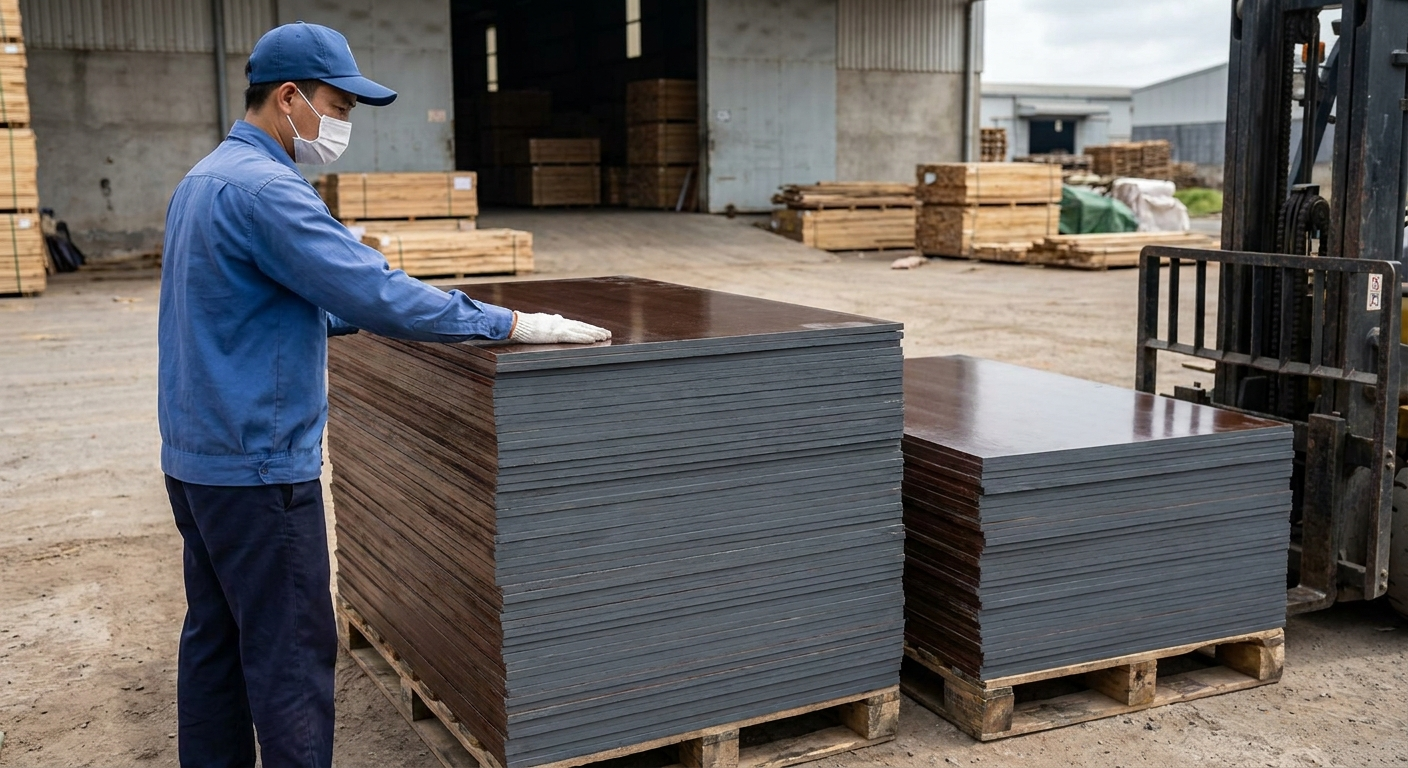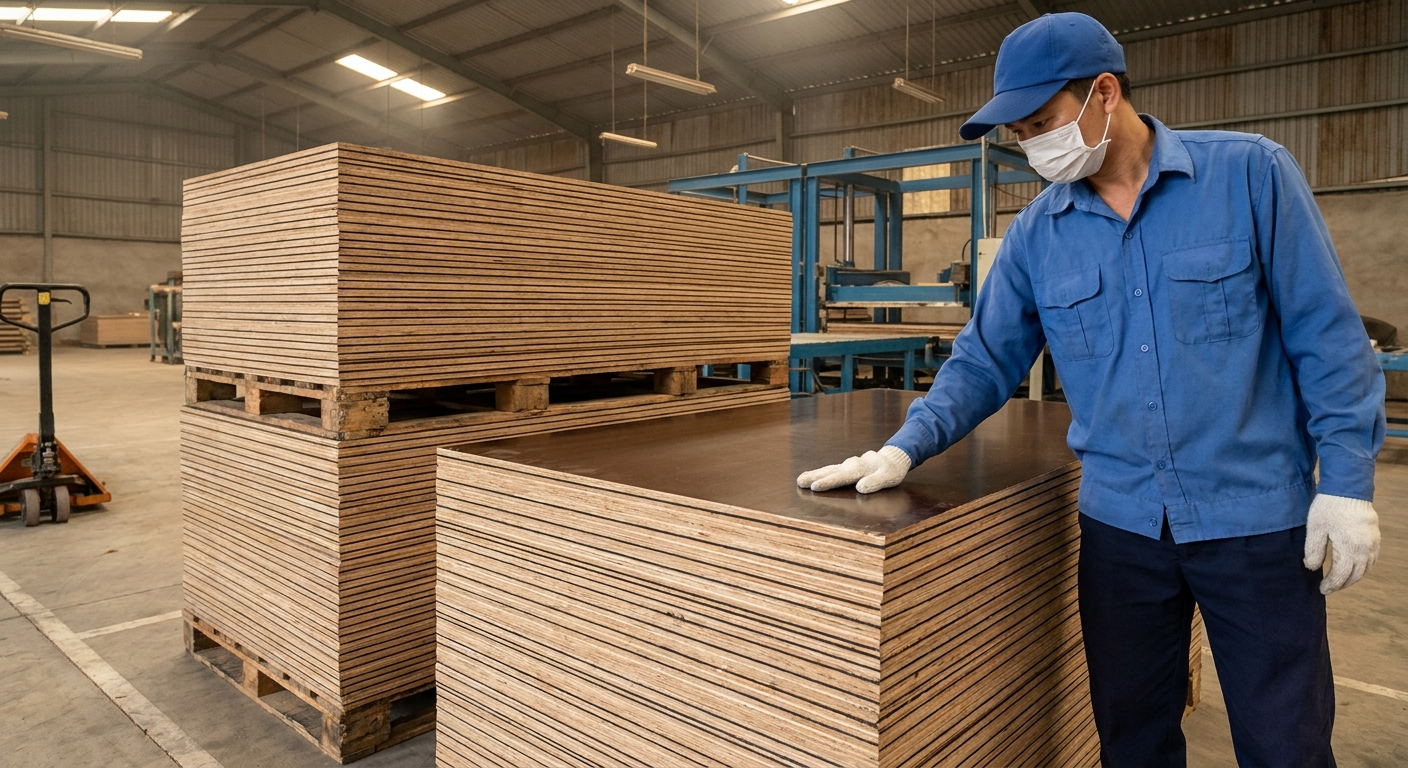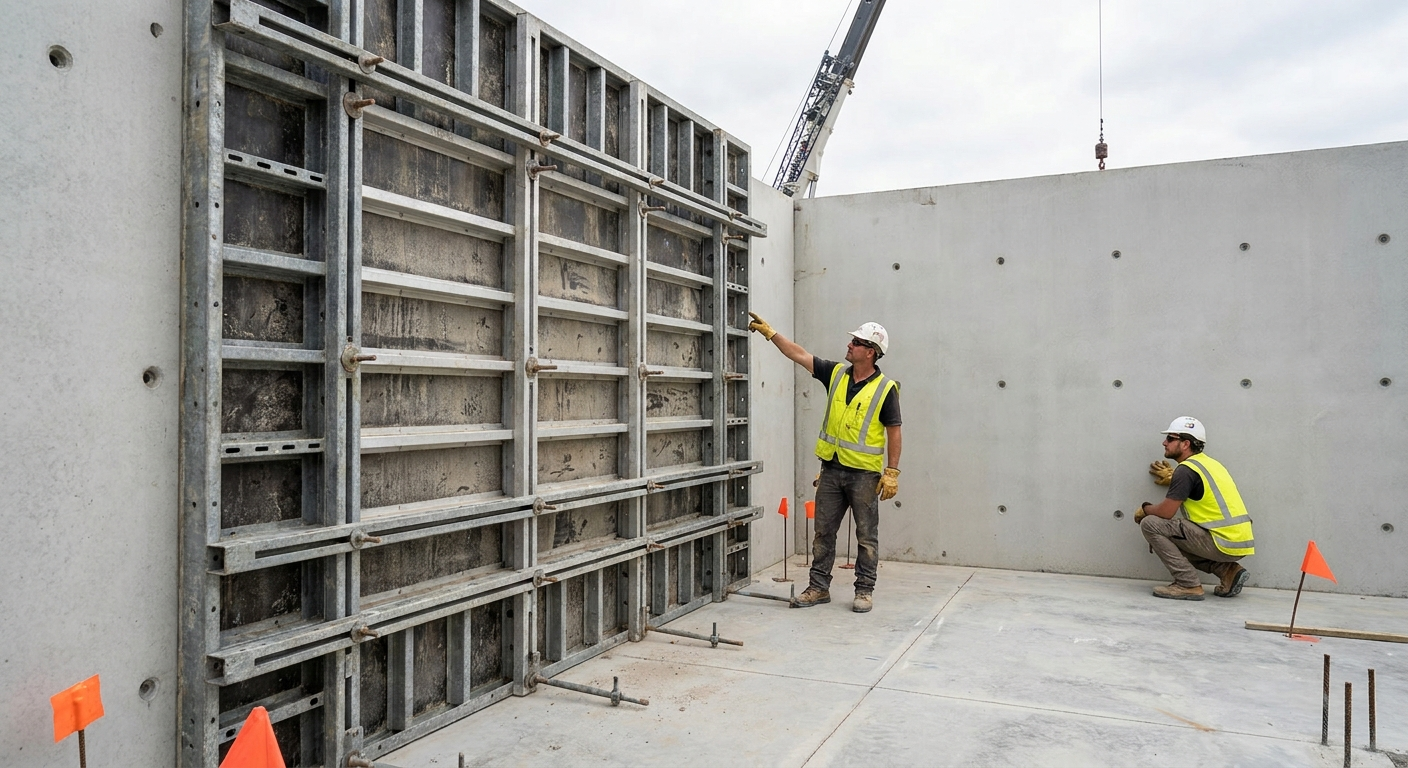
Lightweight Plywood: Types, Weight Savings & When to Choose Each
Lightweight plywood compared across six categories — poplar, paulownia, okoume, honeycomb-core, foam-core, and engineered alternatives — with weight savings, strength tradeoffs, and use-case mapping for RV, cabinet, and marine builds.
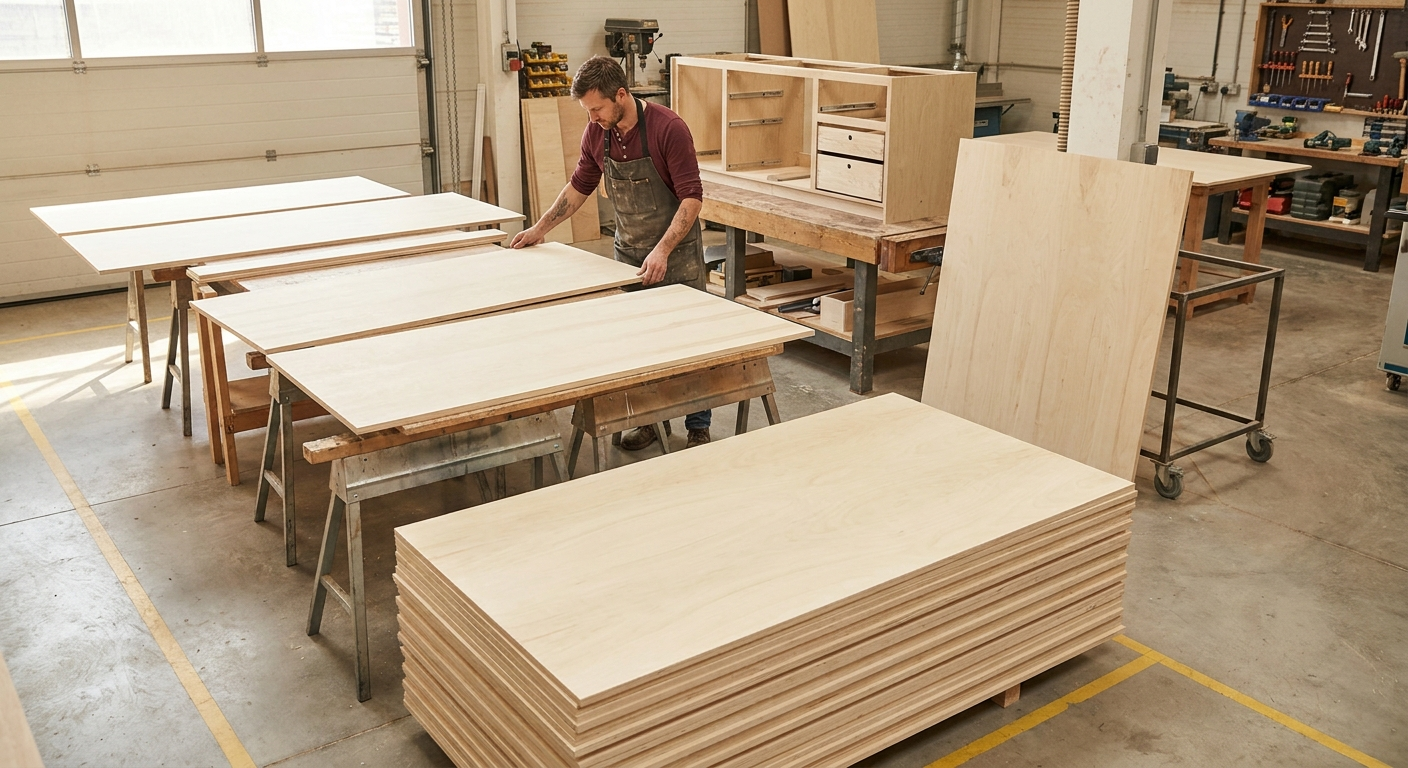
Lightweight plywood is one of those phrases that gets used three different ways depending on who you ask. To an RV builder it means anything under 18 kg per 4×8 sheet. To a cabinet shop it means "poplar instead of birch." To a yacht-interior carpenter it means okoume or balsa-core composite. The article below sorts the categories by what they actually weigh and what they give up to weigh that.
Quick Reference: Lightweight Plywood Categories
| Category | Density (kg/m³) | Weight per 4×8×3/4″ sheet | Strength rating | Best use |
|---|---|---|---|---|
| Standard birch (reference) | 650–760 | 30–35 kg / 66–77 lb | High | Cabinetry baseline |
| Poplar plywood | 410–450 | 19–21 kg / 42–46 lb | Mid | Cabinets, drawer boxes, wardrobes |
| Okoume marine plywood | 400–430 | 18–20 kg / 40–44 lb | Mid | Boat interiors, coastal cabinets |
| Paulownia plywood | 260–310 | 12–14 kg / 26–31 lb | Low–Mid | RV, surfboard cores, model work |
| Honeycomb-core plywood | 180–250 (effective) | 8–12 kg / 18–26 lb | Low (face-bound) | Furniture doors, large flat panels |
| Foam-core composite | 200–350 (effective) | 10–16 kg / 22–35 lb | Low (face-bound) | Marine bulkheads, architectural panels |
The headline number is weight per sheet. The hidden number is what each category gives up to land there.
What "Lightweight Plywood" Actually Means
There is no industry-wide threshold for the term. Most cabinet shops use "lightweight" loosely for anything under 500 kg/m³ — noticeably lower than the 650–760 kg/m³ of standard birch. RV and marine work pushes the bar lower, treating anything over 450 kg/m³ as standard. The chart above respects both definitions by showing density alongside per-sheet weight, so the buyer can pick the threshold that matches their use case.
Two things drive plywood weight down: the species used (paulownia, poplar, okoume all grow fast and finish lighter than birch) and the construction (a honeycomb or foam core replaces solid veneer with mostly air). Both work. They have different tradeoffs.
Category 1: Poplar Plywood
Poplar plywood is the workhorse lightweight option for cabinet shops. Density runs 410–450 kg/m³ — about 30% lighter than birch on the same thickness. A 3/4″ sheet weighs roughly 19–21 kg, against 30–35 kg for birch.
The tradeoff is moderate. Modulus of rupture (MOR) drops about 20–25% versus birch. Screw-holding stays workable for cabinet hardware. The face is paler and more uniform than birch, which finishes nicely under stain. For wardrobes, drawer boxes, modular case goods, and any cabinet where someone has to lift the carcass into a van, poplar is the sensible default. Read more in poplar plywood for grade and supply detail.
Category 2: Paulownia Plywood
Paulownia is the lightest solid-veneer plywood you can buy commercially. Density 260–310 kg/m³ — less than half of birch. A 3/4″ sheet runs 12–14 kg.
You give up a lot to get there. MOR drops about 50% versus birch. Screw-holding is poor; threaded inserts are the safe answer for any load-bearing connection. Edge density is soft enough that flush trimming with a router needs care. None of that disqualifies it for the work it's actually used for: surfboard and paddleboard cores, model aircraft, lightweight RV interiors where panels are bonded into the structure rather than fastened by screws.
Category 3: Okoume Marine Plywood
Okoume is the lightweight option in marine grades. Density 400–430 kg/m³, comparable to poplar, but built to BS 1088 with WBP phenolic adhesive and rotary-cut okoume face veneer. A 3/4″ sheet weighs 18–20 kg.
The use case is narrow but well-defined: boat interiors, locker doors, coastal cabinetry where weight matters and humidity is a permanent factor. Standard plantation-hardwood marine plywood (poplar or eucalyptus core, BS 1088) sits a touch heavier and a touch cheaper. For the broader marine option set, see the marine-grade lightweight plywood range.
Category 4: Hollow-Core / Honeycomb-Core Plywood
Honeycomb-core panels sandwich a paper or aluminium honeycomb between two thin face veneers. Effective density drops to 180–250 kg/m³ in the typical 1″ thickness format — roughly a third the weight of a solid panel.
The face panel does the work. Bending stiffness is high relative to weight because the two skins are spaced far apart. But screw-holding is essentially zero except where the panel has a solid wood insert in the edge or face. Hardware mounting needs solid edge-banding strips bonded into the panel during fabrication, or surface-mounted plates that distribute load across both faces. Common applications: oversized furniture doors, lightweight desktop surfaces, exhibit panels.
Category 5: Foam-Core Composite
Extruded polystyrene (XPS) or polyurethane (PU) foam between veneer or fiberglass faces. Effective density 200–350 kg/m³ depending on foam choice and skin thickness. Used in marine bulkheads, architectural cladding, and lightweight production-trailer interiors.
The strength profile is similar to honeycomb but the foam adds a thermal-insulation benefit honeycomb does not. Cost runs higher than wood-only options. From a Vietnamese mill perspective, we see steady demand for foam-core composites from yacht builders in Florida and the Mediterranean, but the volumes are small enough that custom-build is the norm rather than catalogued stock.
Category 6: Lightweight MDF and Engineered Alternatives
When the project allows for a non-plywood substrate, lightweight MDF deserves a look. Density 500–550 kg/m³ against standard MDF's 720–800. The face is smoother than any plywood, paint finishes are easier, and per-sheet cost is lower. The tradeoffs: lower screw-holding than plywood, no edge-grain showing for furniture detail, and worse moisture performance.
For cabinet doors and large painted panels, lightweight MDF often wins on a like-for-like comparison. For drawer boxes and carcasses, plywood still wins on durability per kilogram saved.
Strength Tradeoffs
Going lighter costs you four things, in roughly this order:
Modulus of rupture (MOR) drops with density. Poplar gives up 20–25% versus birch. Paulownia gives up about 50%. Honeycomb has high stiffness-to-weight but low absolute MOR.
Screw-holding drops faster than MOR. A standard #8 screw in birch holds 200–250 lbf in withdrawal. In poplar, 130–160 lbf. In paulownia, under 100 lbf. Honeycomb edges hold essentially nothing without solid inserts.
Edge density matters for any flush-trim or banding operation. Birch edges machine cleanly. Paulownia edges crush easily under a router bearing. Plan the joinery and edge-banding strategy around the species.
Surface hardness matters for utility panels. Lightweight species dent easily. Birch and HDF stay flat under abuse; poplar and paulownia don't.
The compounded reference for weight per sheet across standard birch thicknesses is in birch plywood weight per sheet — useful for direct A/B comparisons when you're weighing whether the lighter option is worth the strength loss.
Lightweight Plywood by Application
RV / camper / van builds. Paulownia for any panel that's structural-bonded into the chassis. Poplar for everything else — cabinet sides, drawer boxes, fold-out tables. Honeycomb for fixed furniture surfaces (counter tops, overhead bunk faces) where weight savings stack up. Total weight savings on a typical 19-foot van interior switch from birch to poplar is 35–50 kg.
Cabinet shops on transport-sensitive jobs. Poplar throughout. The 30% weight reduction shows up at install — fewer second-person lifts, easier hand-load into elevators, less back strain on a long-day install. Stain and paint finishes look the same as birch under most finish schedules.
Furniture and large panels. Poplar for solid-veneer construction. Honeycomb-core when the part is large and flat (wardrobe doors over 7 ft tall, custom headboards) and the load is distributed.
Marine. Okoume marine ply for any application that combines weight sensitivity with long-term moisture exposure. For broader weight context, see plywood density by type.
Cost Comparison
Ballpark per-sheet pricing in the US market for 4×8×3/4″, late 2025 / early 2026:
- Standard birch plywood: $50–$70
- Poplar plywood: $40–$55
- Okoume marine plywood: $90–$140
- Paulownia plywood: $80–$120 (specialty supplier; not stocked at big-box retailers)
- Honeycomb-core plywood: $90–$160 depending on face thickness
- Foam-core composite: $120–$220
Poplar is the only category that costs less than birch. Everything below poplar in weight costs more, sometimes a lot more. Decide whether the weight savings is worth the extra dollars per sheet — for most cabinet shops it isn't, for most RV builders it is.
At-a-Glance Reference Card
| If your priority is… | Pick… | Weight saved vs birch | Watch for |
|---|---|---|---|
| Cheapest weight savings | Poplar plywood | ~30% | Lower screw-holding than birch |
| Maximum weight savings | Paulownia plywood | ~55% | Poor screw-holding; bonded joinery only |
| Marine + lightweight | Okoume marine ply | ~35% | Premium price; specialty supplier |
| Large flat panels | Honeycomb-core | ~70% | Need solid edge inserts for hardware |
| Marine bulkheads + insulation | Foam-core composite | ~60% | Custom builds, low stock availability |
| Painted cabinet doors | Lightweight MDF | ~25% | Worse moisture performance than ply |
Category
guides
Related Markets
Related Countries
Related Products
▶Sources & References (3)
- FPL Wood Handbook — Wood as an Engineering Material — USDA Forest Products Laboratory (2021)
- APA Plywood Design Specification — APA — The Engineered Wood Association (2024)
- EN 13986: Wood-based panels for use in construction — CE marking — European Committee for Standardization (CEN) (2015)